Key takeaways
- Nobody controls what ChatGPT, Gemini or Perplexity says, so any guaranteed citation, mention count or "#1 in AI" promise is a sales device.
- A visibility score with no published method, prompt list or sampling approach is a number you cannot audit.
- Vendors that cannot show prompt-level data, crawler evidence or traffic attribution are selling a dashboard, not outcomes.
- Results in AI search play out over 60 to 90 days, so be wary of week-over-week victory laps and press-release blitzes.
- Ask for data ownership, named specialists, and a contract you can leave. Most of these flags show up before you sign.
Why AI SEO needs its own red-flag list
The generic agency red-flag lists are still correct. Guaranteed rankings, vague deliverables, hidden account ownership and bait-and-switch staffing all apply. Crowjack's nine SEO agency red flags and UpBusiness's 15-point checklist cover that ground well, and I would read both before any sales call.
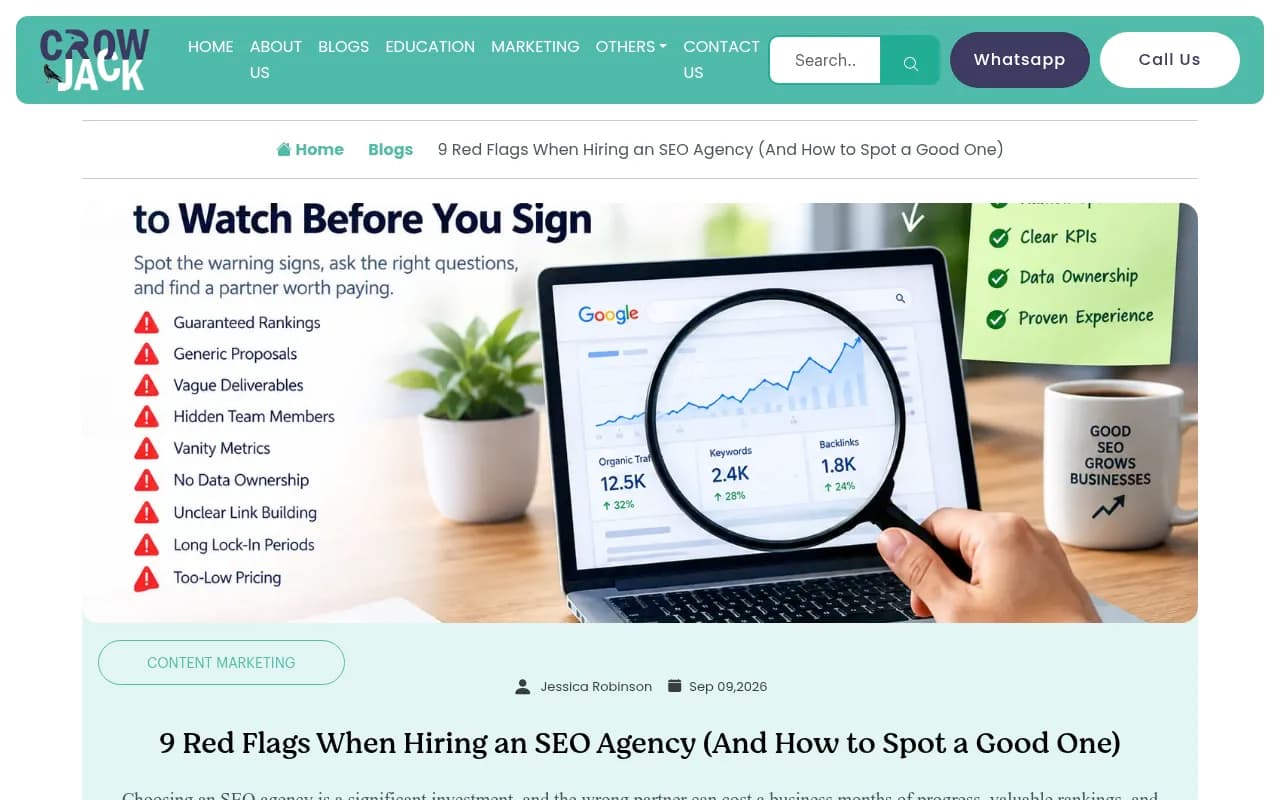
But AI SEO (also called GEO or AEO) adds new ways to get fooled. The field is young, the metrics are invented by each vendor, and the engines change behavior without notice. A buyer cannot lean on a decade of shared industry norms. That gap is exactly where weak vendors thrive. The red flags below are the AI-specific ones, with the classic ones folded in where they still bite.
This applies whether you are buying software or hiring an agency. The software version of the problem is a dashboard you cannot verify. The agency version is a retainer you cannot measure.
1. They guarantee citations, mentions or a top spot in AI answers
This is the classic "guaranteed #1" pitch in new clothes. No vendor controls ChatGPT's retrieval. The numbers they would be promising also move constantly.
Promptwatch Data on average sources per response shows ChatGPT cites roughly 5 sources per web-search answer, and that average drifts with model and retrieval updates. Google AI Overviews cites about 10. Copilot's average swung from under 2 to nearly 17 sources within a few weeks before settling low. With only about 5 slots in a typical ChatGPT answer, promising you one of them is promising something nobody can deliver.
A fair version of the promise exists: a target agreed in advance, measured over a stated window, with the method written down. "We will get you cited in ChatGPT" is not that. "We will work on these 40 pages and report citation rate against this prompt set monthly" is.
2. The visibility score has no methodology
Every platform has a headline number now. Some are useful. Some are a random-looking 0 to 100 with a green arrow.
Ask these questions and watch how they respond:
- Which prompts feed the score, and can I see and edit them?
- How many times is each prompt run, and in which countries and languages?
- Is the data from the real ChatGPT or Google interface, or from an API that can answer differently?
- What does a score of 62 mean compared to 58? Is that noise?
If the answer is "proprietary," be suspicious. Proprietary is fine for the weighting. It is not fine for the inputs. A score you cannot decompose into placement, share of voice, position and sentiment cannot tell you what to fix.
3. Monitoring is sold as if it were optimization
A lot of the market is prompt tracking with a nice chart. That answers "was my brand mentioned?" It does not answer why, or what to do next. If the proposal is mostly screenshots of dashboards and a monthly PDF, you are paying for observation.
Look for a clear path from finding to fix to verification: a content gap, a brief or draft, a published page, and then evidence the page was crawled, cited and clicked. If any link in that chain is missing, ask who is responsible for it.
Tools like Promptwatch are built around that loop (gap analysis, content generation, publishing and tracking whether the page earned citations), which is the bar I would hold other vendors to.

Monitoring-first products still have a place if you have an in-house team to act on the data. Just do not pay optimization prices for them. Compare a few at the GEO software directory before you commit.
| Vendor type | What you actually get | Question to ask |
|---|---|---|
| Prompt tracker | Mentions and scores over a fixed prompt set | Who acts on this data? |
| Traditional SEO suite with AI add-on | AI tracking bolted onto rank tools | How deep is the AI-specific data? |
| Content generator | Drafts without visibility data | What evidence grounds the content? |
| Full optimization platform or agency | Tracking, content, publishing, measurement | How do you prove a page worked? |
4. No prompt-level data, no crawler evidence, no traffic attribution
Three pieces of evidence separate real work from theater.
Prompt-level data tells you which questions you win and lose, and which sources the AI used. Crawler logs tell you whether AI bots can even read your site. Traffic attribution tells you whether any of it makes money.
A vendor who only reports brand mentions cannot tell you if a poor result is a content problem or a blocked-crawler problem. Those need completely different fixes. I have seen teams spend months rewriting pages that GPTBot was getting a 403 on.
Ask to see a sample report that includes all three. If they offer only mentions, plan to bolt on your own analytics. Platforms such as Peec AI and Otterly.AI are honest about being trackers. That is fine, as long as nobody pretends otherwise.


5. They sell llms.txt or markdown pages as the fix
This one is pure snake oil when it is the whole pitch. An llms.txt file is cheap, harmless and worth a few minutes. It is not a strategy.
Promptwatch's markdown in AI search report found markdown files make up just 0.05% of AI search citations. Markdown serves AI agents, not AI search. A vendor charging a monthly fee to "convert your site to AI-readable markdown" is selling you something the engines barely cite.
The same applies to any single-trick fix: schema alone, a magic prompt, a one-time "AI optimization package." Ask what share of citations the tactic actually earns, and where they got that number.
6. A press-release blitz is presented as lasting visibility
Some vendors lean on news and syndication because it is easy to produce and easy to report. The data says it does not last.
Promptwatch's content half-life study tracked every page ChatGPT cited on July 6, 2026, for 90 days. News pages lost half their citations within 36 days, and almost a quarter were never cited again after day 0. Landing pages, docs and comparison pages held up far better: 78% of landing pages and 76% of docs were still cited after 30 days, and about 69% and 67% after 60.
Press has a role, as a short burst around a launch. But if the plan is mostly news placements, ask what happens in week six. The durable assets are landing pages, docs, pricing pages and comparisons, and they need to be kept current. Ask whether the vendor will update prices, features and specs on cited pages, because stale pages are where citations get lost.
7. Reporting covers weeks, not months
AI answers are noisy. A vendor who reports a big win from a single week is showing you noise, or showing you a cherry-picked prompt.
Citation behavior unfolds over months. A fair review window is 60 to 90 days, with trends rather than snapshots. This is also why the common vanity-metric flag matters here: follower counts and raw mention totals do not equal revenue.
A few habits that protect you:
- Insist on monthly trend lines against a fixed prompt set.
- Treat sudden swings with skepticism. A jump on Copilot is more likely a Microsoft retrieval change than the vendor's doing.
- Use a stable engine as a control. Perplexity cites almost exactly 10 sources every day, so if your citations there move after a content change, the change is the likely cause.
- Ask for conversions or AI-referred traffic, not just mentions.
8. The proposal arrives before anyone looks at your site
Crowjack flags this in the general SEO context and it is worse in AI search. A proposal with no mention of your crawl access, your existing citations, your competitors' share of voice or the prompts your buyers actually use was written from a template.
A decent vendor will run a quick audit first: are AI crawlers allowed in, which of your pages are cited today, which prompts are you absent from. Many offer a free scan. Use it as a filter. If the audit is generic, the work will be too.
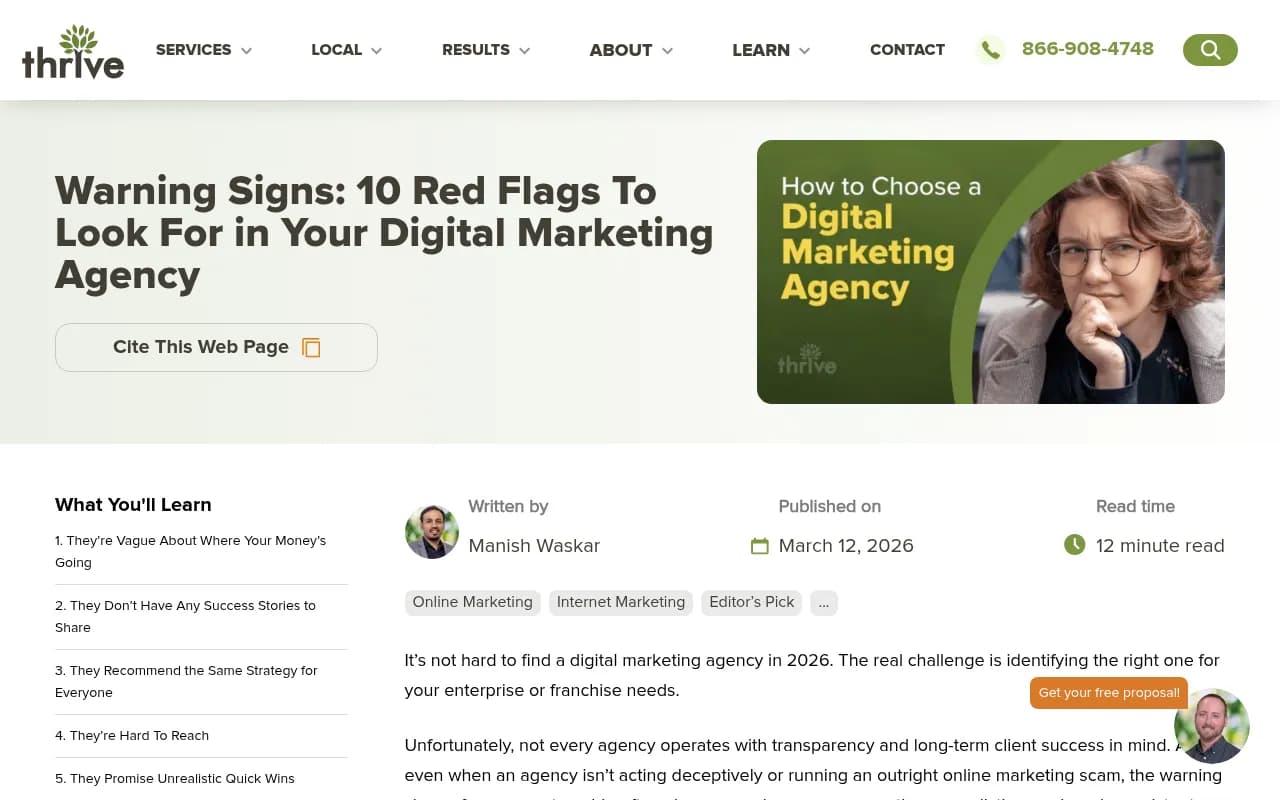
The same Thrive piece lists recommending one strategy for every client as a red flag. In AI search that shows up as identical prompt lists, identical content briefs and identical "AI-ready" checklists across industries. Citation patterns differ a lot by vertical. Promptwatch Data shows healthcare prompts lean on government and public health sites, travel prompts lean on booking and search sites, and software prompts lean on documentation and help centers. A vendor with one playbook for all three is guessing.
9. Vague deliverables, locked-in data and hidden costs
The old flags still hold, and AI vendors add a few twists.
- Deliverables like "AI optimization" with no quantities cannot be checked later. Ask for pages per month, prompts tracked, audits run.
- Ask who owns the accounts, the workspace, the published content and the tracking history. You should be able to leave with your data.
- Watch for usage meters. Some platforms price by responses or credits, and costs climb fast once you add countries and models.
- Beware senior-to-junior bait and switch. Get the names of the people doing the work.
- Treat long lock-in contracts as a flag for a field that changes quarterly.
Software pricing is easy to check. Compare published plans, not sales-call quotes, and confirm current numbers on each vendor's pricing page before committing.
Questions to ask on the sales call
Print this list. A good vendor enjoys these questions.
- Which engines do you track, and is the data from the real interface or an API?
- Can I see, edit and export the full prompt list?
- How is your visibility score calculated, and what is its noise level?
- How do you know AI crawlers can read my site?
- How will you connect citations to traffic and revenue?
- What is your measurement window, and what counts as success at 90 days?
- Who owns the data, the content and the accounts if we leave?
- Which pages will you update, and how often?
- Show me a client report in my industry, with raw data behind the headline numbers.
A quick scorecard
| Red flag | Severity | Quick test |
|---|---|---|
| Guaranteed citations | Walk away | Ask for the contract language |
| Opaque visibility score | High | Request prompt list and method |
| Monitoring sold as optimization | Medium | Ask who publishes and who verifies |
| No crawler or traffic data | High | Request a sample report |
| llms.txt as the fix | High | Ask for citation share evidence |
| News blitz as strategy | Medium | Ask about week six |
| Weekly win reporting | Medium | Ask for 90-day trends |
| Template proposal | Medium | Check for site-specific findings |
| Vague scope and lock-in | High | Read the deliverables and exit terms |
What a good setup looks like
A solid AI SEO engagement, whether software, agency or both, tends to look like this: a baseline audit of your crawl access and current citations, a prompt set built from real buyer questions, content work focused on durable page types, and monthly reporting that ties citations to visits. Everything is documented, exportable and yours.
If you want an agency partner, 1001 SEO Media works on technical SEO, content and GEO with no long-term contracts and transparent monthly reporting, which are the same criteria used in this checklist. Hold any agency to it, including us.
If you are comparing software, browse the AI rank tracking directory and shortlist two or three tools. Then run the same real prompts through each trial and see which one explains its numbers. Platforms like Profound and Scrunch AI are strong on monitoring, so check whether the action and measurement steps in your plan are covered elsewhere.


The short version
The pattern behind all nine flags is the same. Someone is asking you to trust a number, a promise or a tactic that you cannot check. Make them show you the prompts, the crawler evidence, the 90-day trend and the exit terms. Vendors who can do that are rarer than the marketing suggests, and they are the ones worth paying.