Key takeaways
- A startup can run a credible AI SEO program for $0 to $100 a month if it picks one research tool, one content tool, and one AI visibility tracker. Not three of each.
- Product pages and landing pages earn about 39% of ChatGPT citations, so fix your own pages before you buy more software (Promptwatch Data, Sep 28 to Oct 4, 2026).
- Almost half of ChatGPT responses cite 10 or more domains, which means third-party listicles and comparison pages are your cheapest way into the answer.
- Skip anything that promises hands-off ranking at scale. Skip Reddit seeding if ChatGPT is your main target.
- Pricing in this guide is from third-party roundups and changes often. Check each vendor's pricing page before buying.
What a tight budget really means for SEO
Most startups reading this have somewhere between zero and a few hundred dollars a month for SEO software, and one person (often the founder) doing the work. That changes which advice is useful. Enterprise suites with 40 modules are out. So are agencies at $5,000 a month.
A budget guide for AI SEO solutions has to answer three questions:
- What do I need to find keywords and prompts worth targeting?
- What helps me write and improve pages faster without producing generic filler?
- How do I know whether ChatGPT, Perplexity and Google AI Overviews mention me?
One reference point on budgets: a Stackmatix roundup puts solo and startup stages at roughly $0 to $100 a month, focused on core optimization and basic research. That is a sensible ceiling. I'd go a step further and say most startups should spend under $50 for the first three months, then raise spend only when something is working.
What actually earns AI citations (and why it shapes your spend)
Before buying tools, look at what AI engines cite. Promptwatch Data analyzed ChatGPT citations from Sep 28 to Oct 4, 2026:
| Content type | Share of ChatGPT citations |
|---|---|
| Product pages | 22.4% |
| Landing pages | 16.8% |
| Listicles | 13.6% |
| How-to guides | 8.7% |
| Documentation | 7.5% |
| General articles | 6.1% |
| Comparisons | 5.9% |
| News | 5.7% |
| FAQ | 3.3% |
| Reviews | 1.7% |
For commercial prompts like "best CRM for small businesses", product pages take 26.0% and landing pages 20.6%. Those two types, plus listicles and comparisons, make up almost 70% of commercial citations.
What this means for a cash-strapped startup: your product and landing pages are the main surface. A $300 a month content machine producing generic blog posts is a worse bet than spending a weekend making your product page clear, specific and crawlable. Tools should serve that, not replace it.
Two more findings worth knowing:
- 47.6% of ChatGPT responses cite 10 or more unique domains. You will share almost every answer with many other sites, so getting included in third-party roundups and comparison pages matters as much as your own content.
- News content fades fast. The half-life data shows news pages losing half their citations in about five weeks, while landing pages and docs hold for months. Evergreen pages are the better investment on a budget.
The budget stack, tier by tier
Tier 0: free and near-free ($0 to $30)
You can do real work here.
- Google Search Console and Bing Webmaster Tools. Free, and the only source of truth for what you rank for.
- ChatGPT, Claude or Gemini on a standard plan for drafting outlines, rewriting, and generating FAQ ideas. You already pay for these.
- Manual prompt checks. Write 15 to 20 prompts your buyers would ask, run them weekly in ChatGPT, Perplexity and Google, and log whether you appear in a spreadsheet. Crude, but it works for the first month.
- Free audit tools. Geoptie offers free GEO audit tools plus basic AI engine tracking, and Promptwatch has a free AI visibility report scan that needs no login.
For keyword research on the cheap, LowFruits finds low-competition opportunities, which is what a new domain needs. A new startup site cannot win head terms, so go after long-tail phrases where forum posts and weak pages currently rank.

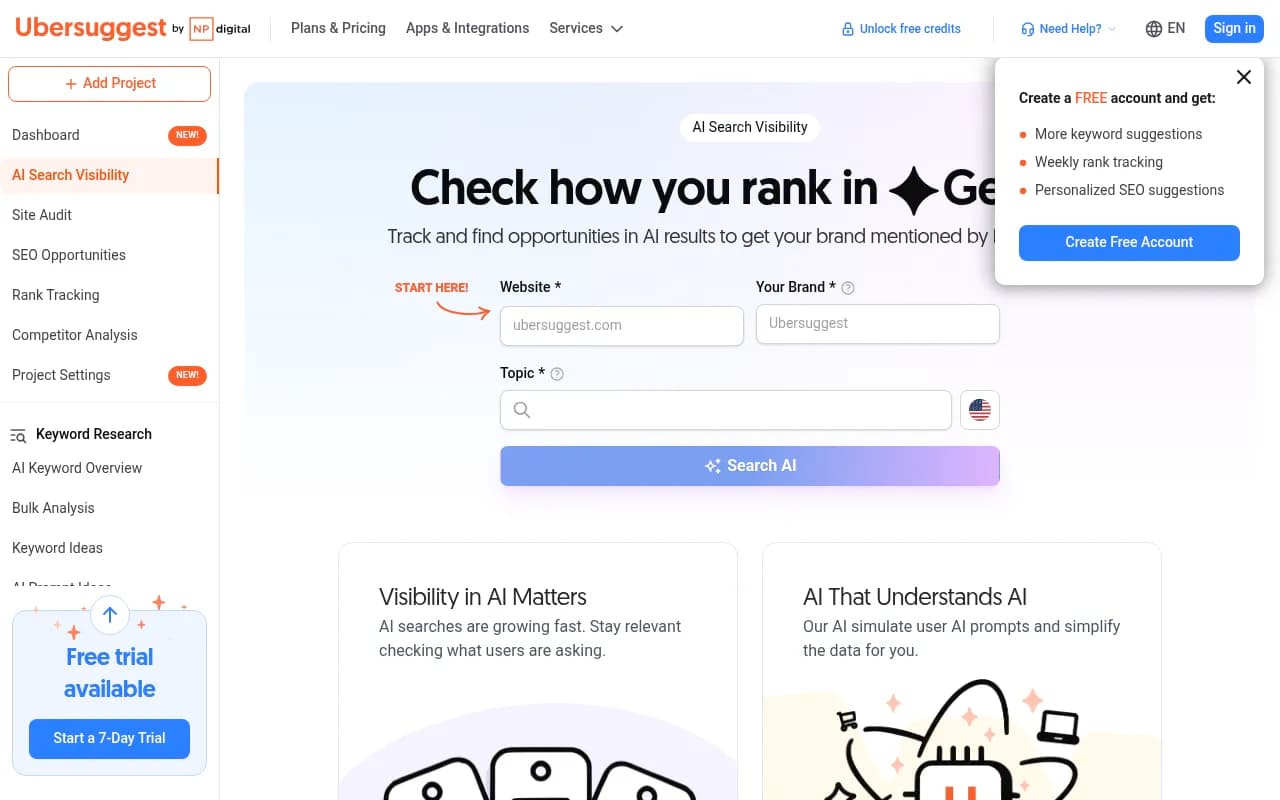
Ubersuggest is another low-cost option that now includes AI brand visibility alongside keyword research.
Tier 1: one all-in-one SEO platform ($50 to $120)
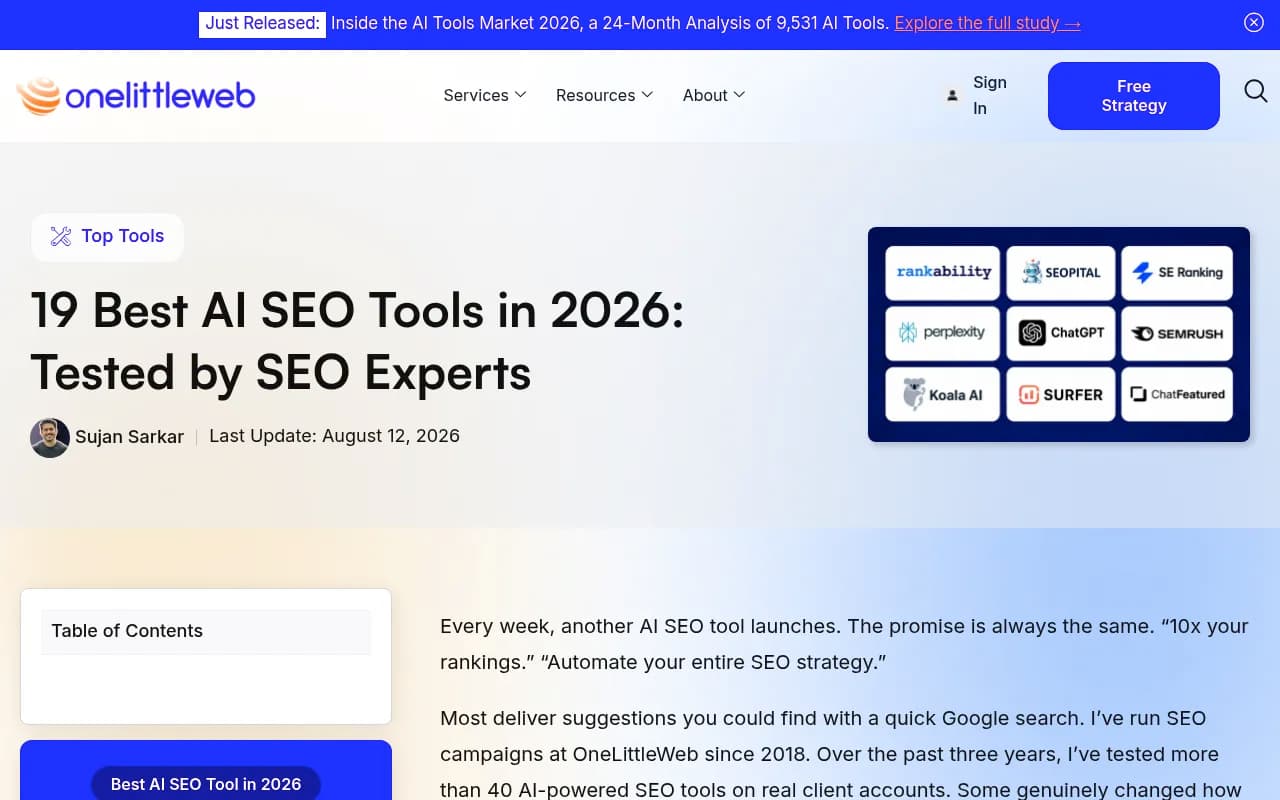
If you buy only one paid SEO product, make it a general platform with keyword data, rank tracking and site audits. Search Atlas gets recommended often as an affordable alternative to Ahrefs and Semrush, particularly for startups and small in-house teams, per the OneLittleWeb roundup (which, to be fair, carries affiliate links and is worth reading with that in mind).
SE Ranking sits in a similar price bracket and now includes AI visibility research, which is handy if you want one invoice.
Semrush and Ahrefs are the heavyweight names, and both have added AI tracking (Semrush AI Visibility Toolkit and Ahrefs Brand Radar). They are strong, but their prices climb fast. Note that the most-cited roundup on this topic is written by Ahrefs' CMO, so treat its comparisons as coming from someone with a horse in the race.
Morningscore and GrowthBar are cheaper still. GrowthBar has a Chrome extension and is aimed squarely at budget users.
Tier 2: content optimization ($30 to $100)
Only buy this after you have a keyword list. Three practical choices:
- Surfer SEO for on-page recommendations and content structure. It is the best known, and not the cheapest.
- NeuronWriter, an NLP-based optimizer that is usually kinder to small budgets.
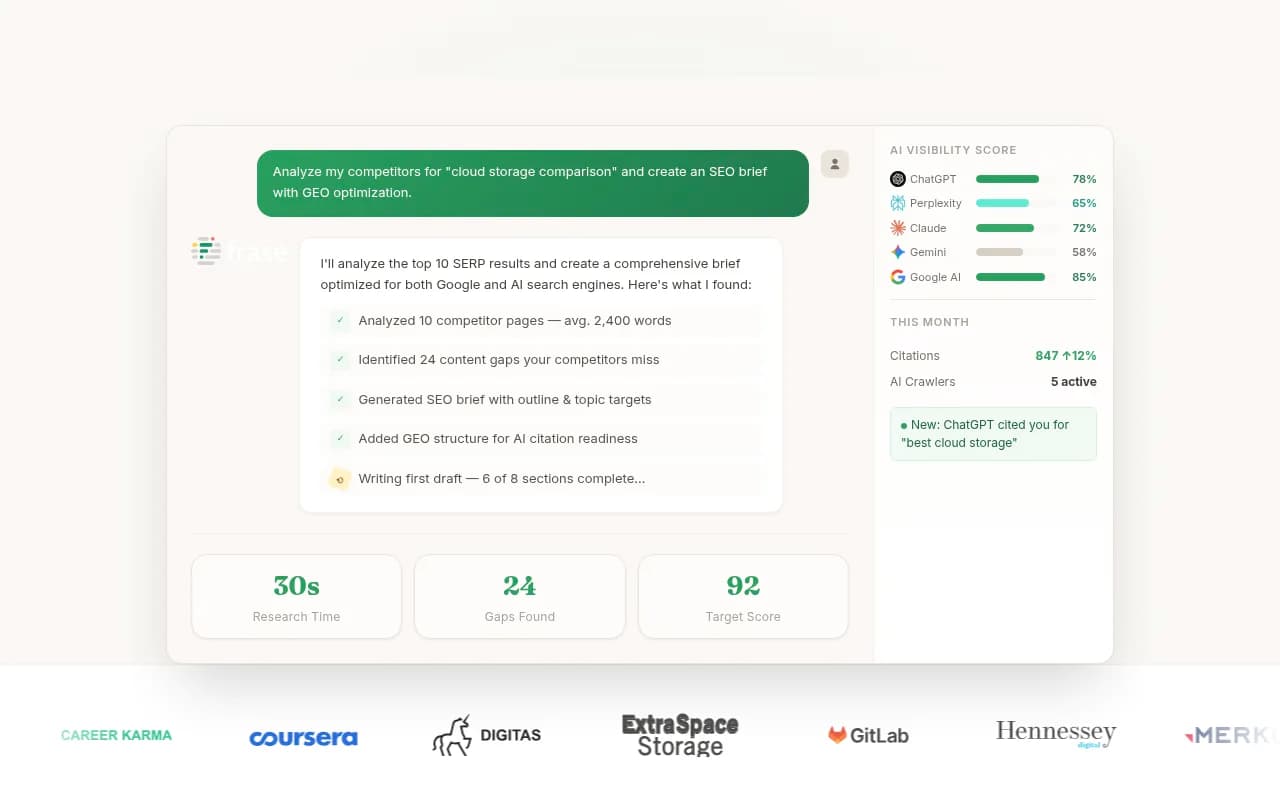
- Frase, which combines research and briefs, so it covers some of what a separate research tool would.
If you want a stronger editorial lean, Clearscope is excellent but priced for teams with a content budget, not for a two-person startup.
A word of caution on the fully automated category (Outrank, SEO.AI, Autoblogging.ai, Article Forge and similar). They publish a lot, quickly. For a brand-new domain with no authority, that often means a pile of thin pages that neither Google nor AI engines want to cite. I would try one of these on a subdomain or a small test batch before committing the main site. Human review of every page is not optional.

Tier 3: AI visibility tracking ($29 to $100)
This is the newest category and the most crowded. Figures from the Medium roundup (unverified, tool names were missing from the excerpt) show the typical bands:
- About $29 a month for a lite plan with 15 prompts and daily tracking
- About $52 (EUR 49) for 40 prompts with weekly tracking, rising to about $315 for 300 prompts with Looker Studio and API
- About $94 to $210 a month for Starter and Pro tiers
- $99 a month for ChatGPT-only tracking at 50 prompts, and $399 for three engines and 100 prompts
The pattern: cheap plans track few prompts on few engines. That is fine, because a startup only needs a few dozen prompts. What you should check is whether the tool tests real user interfaces or just API calls, since answers often differ.
Budget-friendly trackers in the catalog worth a look:

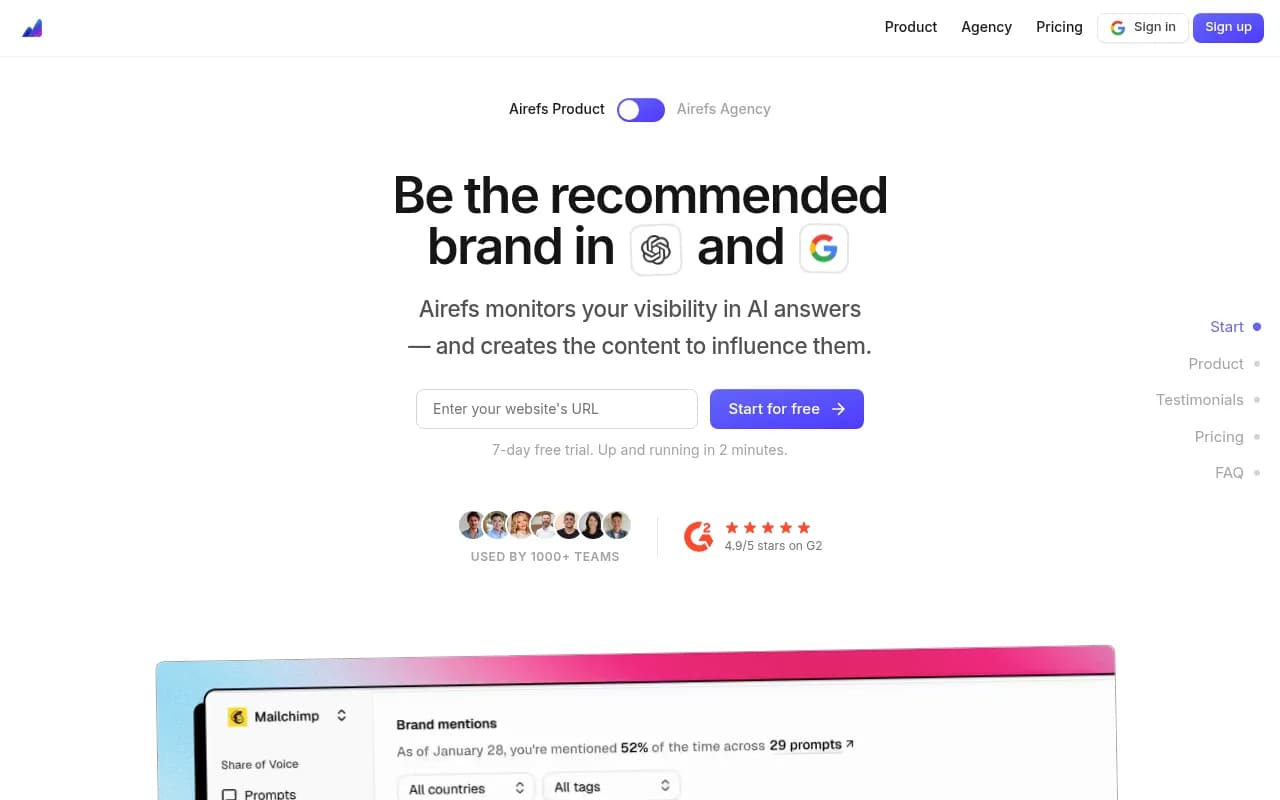

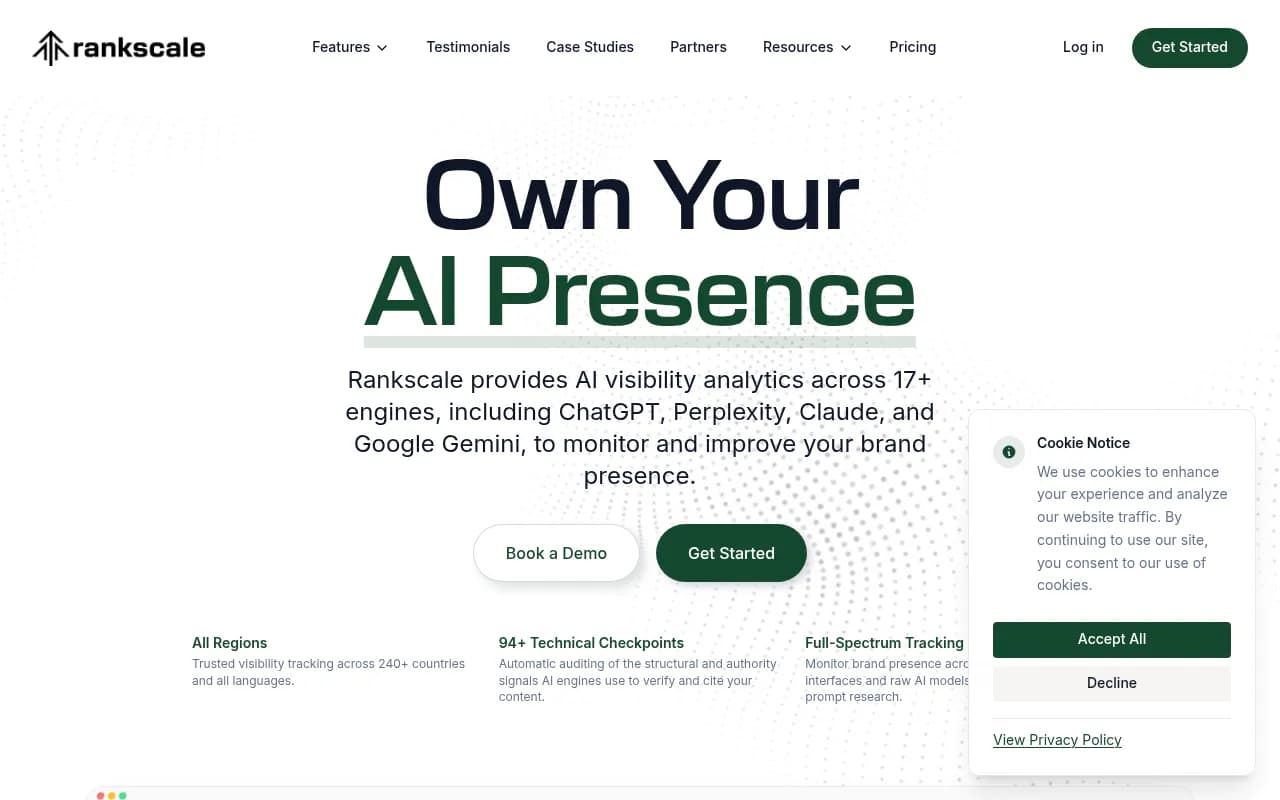
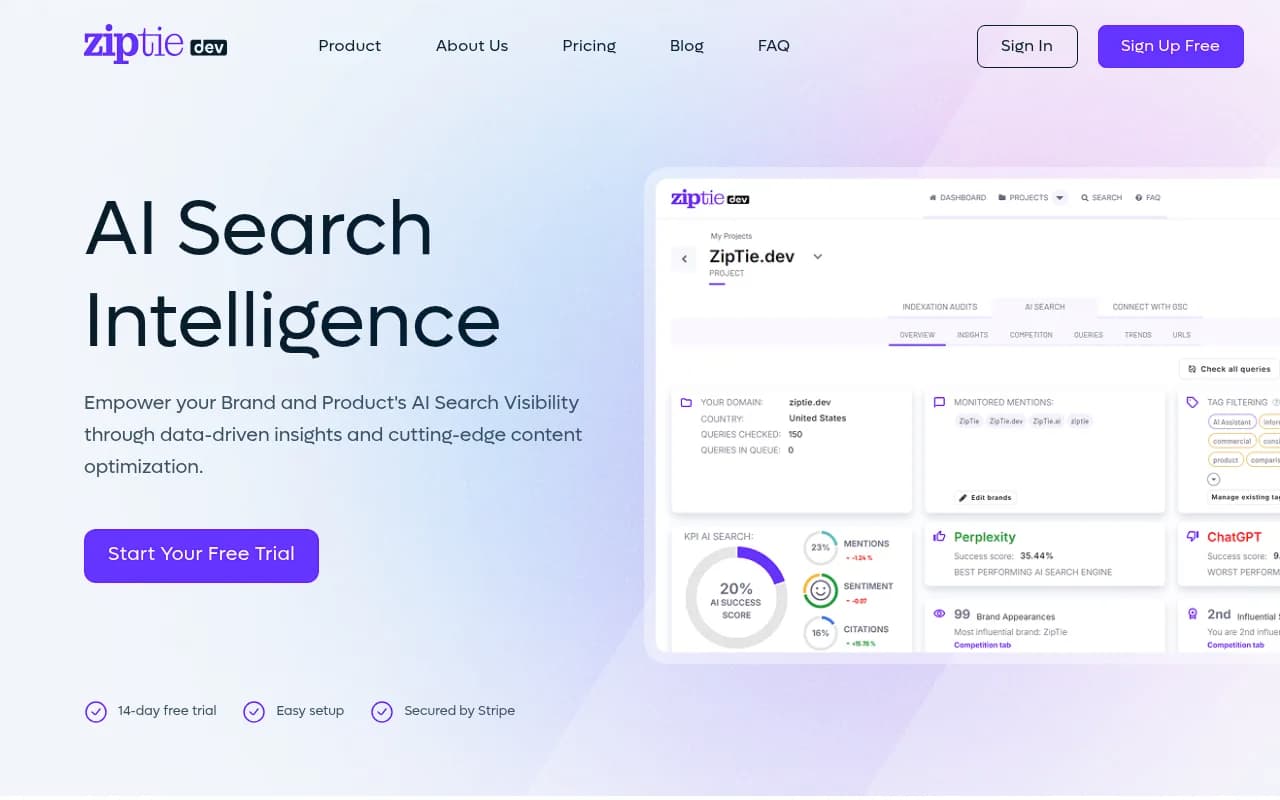
Elmo is open source and self-hosted, so it is free if you can run it yourself.

Otterly.AI, Peec AI and Rankscale are mostly prompt trackers: they tell you whether you were mentioned. That is a legitimate need at the start. The gap shows up later, when you want to know why you are not cited and what to change.
For teams that want the diagnosis and the fixing in the same place, Promptwatch is the option I would step up to. It starts with a free Explore plan (1 project, 10 prompts, ChatGPT only), and Essential is $95 a month with 50 prompts, all AI models, a site audit, AI crawler visibility and content gap analysis. Confirm current pricing at promptwatch.com/pricing.

Comparison of the budget options
| Need | Cheap option | Spend level | Watch out for |
|---|---|---|---|
| Keyword discovery | LowFruits, Ubersuggest | Under $50 | Limited data depth |
| All-in-one SEO | Search Atlas, SE Ranking | $50 to $120 | Learning curve; check limits |
| Content scoring | NeuronWriter, Frase, Surfer SEO | $30 to $100 | Scores can push you to over-optimize |
| Auto-publishing | Outrank, SEO.AI | $50 to $150 | Thin content risk on new domains |
| AI visibility (monitoring) | Otterly.AI, Airefs, Peec AI | $29 to $100 | Prompt caps; API-only data |
| AI visibility plus action | Promptwatch Essential | $95 | Verify trial and plan details |
| Manual fallback | Spreadsheet + Search Console | $0 | Your time |
A sample startup plan by monthly budget
$0 a month
Use Search Console, a free AI model, and a spreadsheet of 20 prompts. Rewrite your homepage, pricing page and top three product pages. Add an FAQ section. Run the free Promptwatch AI visibility report once a month. This is not a joke tier, since the biggest gains usually come from your own pages.
About $50 a month
Add one keyword or content tool (LowFruits plus the AI model you already pay for, or NeuronWriter). Publish two comparison or alternatives pages a month. The research I cite above shows comparisons and listicles together earn about 28% of ChatGPT citations, so they are worth the effort.
About $100 a month
Add a real AI visibility tracker with a prompt set of 40 to 50. Pick based on whether you need monitoring only (Otterly.AI, Airefs, Peec AI) or monitoring plus a to-do list and crawler data (Promptwatch Essential). Add a site audit if your host or CMS is unfamiliar. Connect Search Console to whichever tool you pick.
About $250 a month
Only reach for this once you have traffic or demos coming from AI search and want to scale. Add a general platform like Search Atlas or SE Ranking, plus a content optimizer. At this point, move from tracking to publishing a steady cadence of pages tied to your visibility gaps.
Where to spend effort that costs nothing
Get into third-party lists
Because nearly half of ChatGPT answers cite 10 or more domains, being named inside other people's pages is cheap leverage. Find the listicles and comparison posts AI engines already cite for your category, then pitch the authors with something useful: data, a free trial, a clear differentiator. This is slower than buying a tool, but it is the same thing that works for classic link building.
Be careful with social seeding
The October 2026 social citation data is blunt. ChatGPT gets 0.46% of its citations from social platforms, and Reddit fell to 0.09% of ChatGPT citations following the August collapse. Google AI Overviews, by contrast, draws 12.2% from social, led by YouTube at 4.28%. So:
- If your buyers are on Google, a few YouTube videos are worth more than a Reddit campaign.
- If your target is ChatGPT, skip Reddit seeding.
- LinkedIn is the top social source for both ChatGPT (small) and Perplexity.
- X is basically irrelevant at about 0.1%.
This also means that tools built on Reddit audience research are a poor use of budget right now. GummySearch, for one, closed in November 2025.
Keep your site readable by AI crawlers
Check robots.txt, make sure key pages render without JavaScript, and keep docs public. Markdown files make up only 0.05% of AI search citations, so do not spend time on markdown-only versions of your site for search purposes. Spend it on clean HTML.
What I would skip
- Enterprise suites such as BrightEdge, Conductor, Botify, Profound and Adobe LLM Optimizer. They are built for teams with six-figure SEO budgets.
- Any tool that promises rankings without human review.
- Paying for tracking before you have fixed your product page. You would be measuring an empty room.
- Annual plans on day one. The 12-for-10 months discount is good, but only once you know the tool fits. Most trackers have a trial; use it.
How to choose without wasting money
A quick checklist before you click buy:
- Do they test real AI interfaces or only API responses?
- How many prompts and how many engines does the plan include?
- Does it connect to Search Console, so you can see what ranks but never gets cited?
- Can you export data, in case you switch?
- Is there a free trial, or a free tier you can test properly?
If you want to compare more options, the GEO software directory at bestgeosoftware.com lists dozens of AI visibility tools, and surferstack.com covers the wider SEO tool category.
Reference screenshots
The OneLittleWeb roundup is one of the more thorough third-party lists, with test criteria like accuracy, pricing and integrations:
The Medium roundup from Ahrefs' CMO has the pricing bands I referenced above. Read it with the author's employer in mind:
Bottom line
For most startups, the right 2026 stack is small: Search Console, one keyword or content tool, and one AI visibility tracker with a modest prompt list. Fix your product and landing pages first, publish comparison content second, and pay for monitoring third. Raise the budget only when AI search starts sending you real visitors or demo requests.