Key takeaways
- A free stack of Google Search Console, an AI assistant (ChatGPT, Claude or Perplexity) and one or two free-tier SEO tools covers most keyword, content and technical needs for a small site.
- Free AI visibility checks are usually snapshots, not monitoring. They tell you whether you show up today, not why, and they rarely cover more than one or two AI engines.
- Engine coverage matters more than it sounds. Promptwatch Data shows Google AI Overviews gets 12.2% of its citations from social platforms, while ChatGPT gets 0.46%, so a ChatGPT-only check can mislead you.
- Free plans run out at predictable points: prompt limits, credit caps, no crawler data and no content execution. Know which wall you will hit first.
- Pricing and free-tier limits change often. Confirm every number on the vendor's pricing page before you commit.
What "free" actually means in AI SEO
The word covers four very different things, and mixing them up is how people end up with a credit card on file for a tool they meant to try for free.
- Permanently free tools. Google Search Console, the free versions of ChatGPT, Claude and Perplexity, and a handful of lightweight analyzers.
- Free tiers with hard caps. Five searches a month, a few hundred credits, a limited number of tracked prompts.
- Free trials. Usually 7 or 14 days, sometimes without a card. Useful for a one-off audit, useless as a long-term plan.
- Free scans or scorecards. A single report that checks a few questions and hopes you will upgrade.
None of these is bad. They just do different jobs. A permanent free tool is infrastructure. A trial is a short project. A scorecard is a lead magnet that happens to be informative.
One caveat before we go on: the pricing details in the roundups I drew on (Stackmatix, Single Grain, OneLittleWeb, Marketer Milk) were not all verified against vendor pages, and free tiers get trimmed quietly. Treat any number below as a starting point.
The free foundation: tools that stay free
Google Search Console
Still the single best free SEO tool, and it has nothing to do with AI hype. It tells you which queries and pages earn impressions and clicks, which pages are not indexed, and what Google is complaining about. Every AI workflow below gets better when you feed it a Search Console export.
AI assistants as SEO helpers
ChatGPT, Claude and Perplexity all have free versions, and the roundups consistently put them at the top of free lists. Single Grain's list opens with ChatGPT as an on-demand strategist for outlines, entity suggestions, heading structures and meta descriptions. Claude's free tier handles similar work, and Marketer Milk lists a Pro plan at $20/month if you hit the limits. Perplexity is the better pick when you want sourced research.
What they are good at: clustering a keyword export, drafting briefs, rewriting titles, spotting subtopics you missed. What they are bad at: knowing search volume, knowing your site's technical state, or telling you the truth about what is ranking. Pair them with real data and they are very good. Alone, they hallucinate confidently.
Free keyword and audit tools
The free accounts of the big suites are more useful than people assume, as long as you accept the caps.
A free Semrush account gives limited keyword and domain reports. Single Grain's view, which I share, is that for a small team the limited reports are enough to sanity-check ideas, then you hand the exports to an AI assistant for clustering and prioritization.
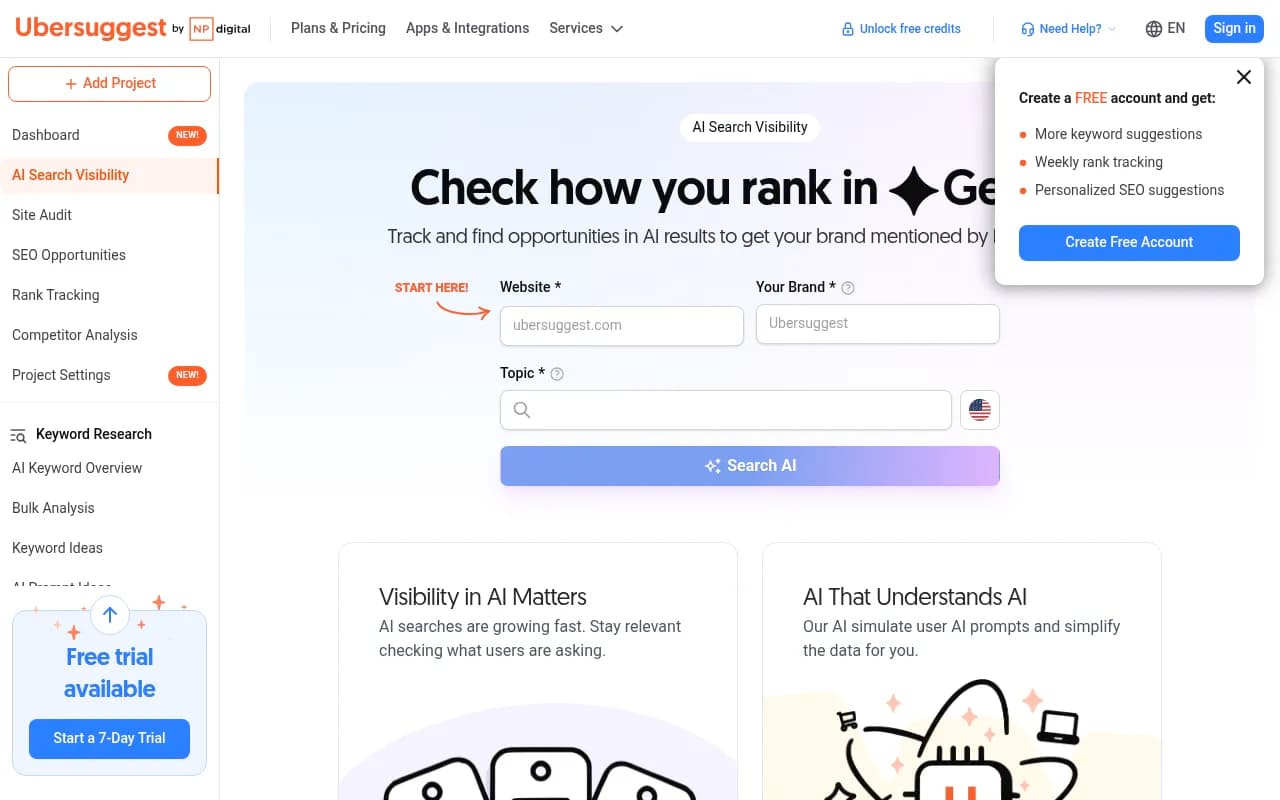
Ubersuggest's free tier is good for quick-win keyword ideas and content angles, and it now also includes an AI search visibility view. The combination of lightweight keyword numbers plus a chatbot's contextual reasoning is a surprisingly capable research stack for nothing.
Stackmatix also flags the AIOSEO analyzer (no login, instant on-page audit) and seo.ai's set of free utilities, and SparkToro's free plan at five searches a month for audience research. Those are worth a look, but verify the current limits.

Free tiers and trials for AI-powered SEO work
This is the middle tier: real products with real limits. They are good enough to run an actual project on, if you stay small.
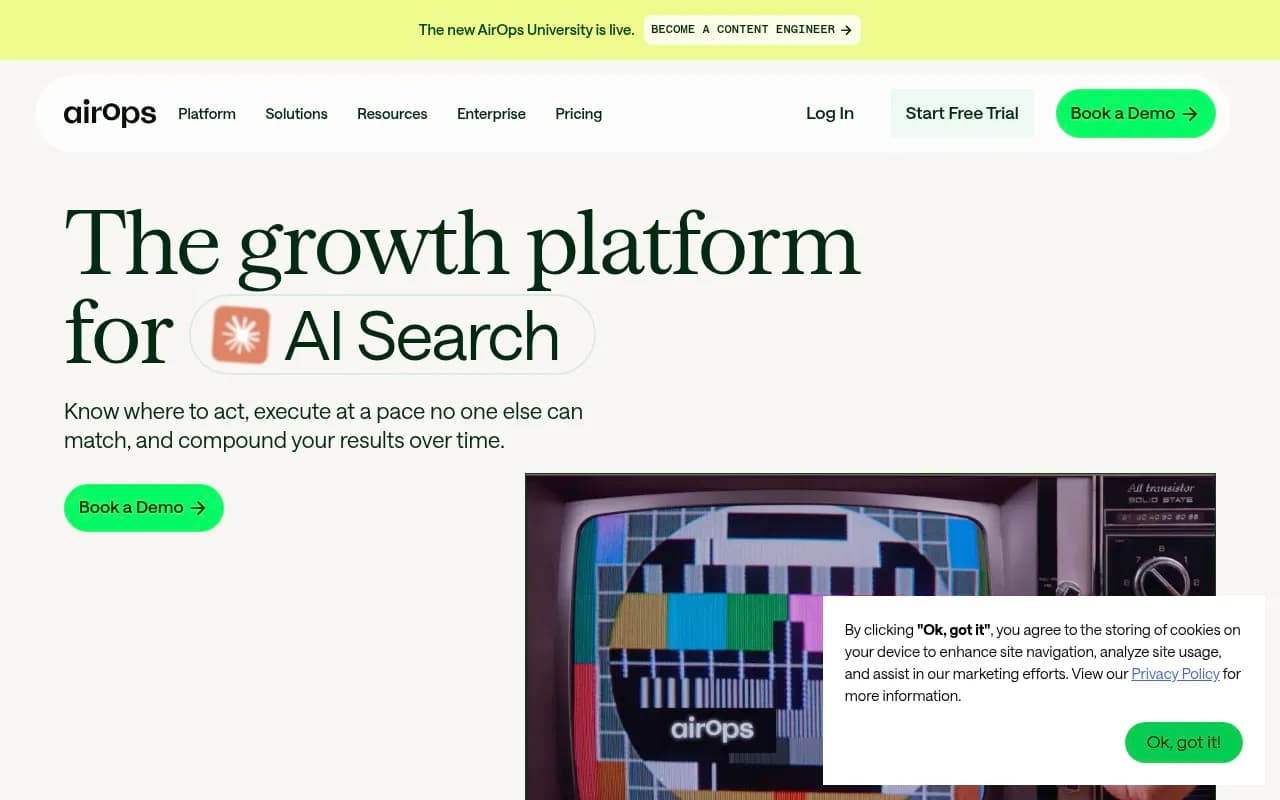
AirOps has a free plan and custom pricing above it, according to Marketer Milk. It is built for content workflows, so expect to spend time building before you see output.
Gumloop is another one from the same roundup: a free plan with 5,000 credits, enough to build a first SEO automation flow. It is not in our catalog, but it is a reasonable sandbox if you like building agents.
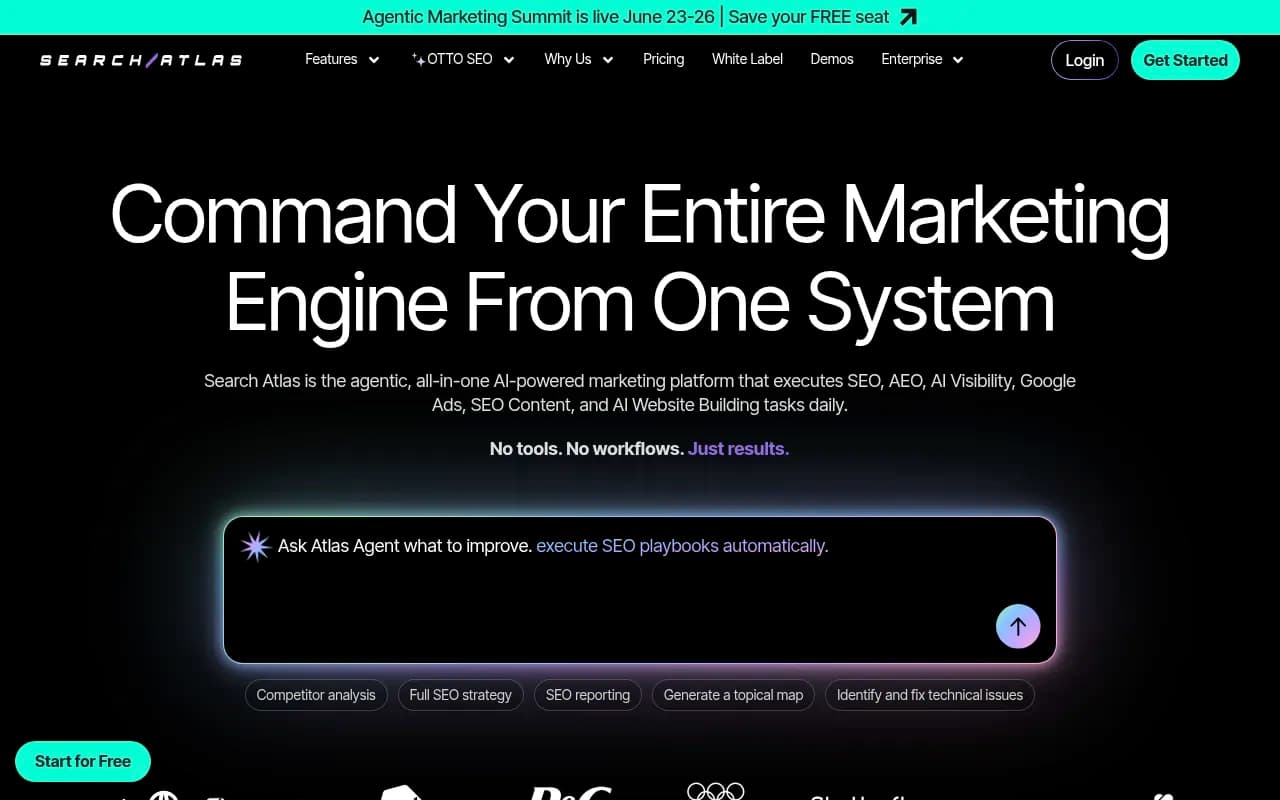
Search Atlas is pitched as an affordable alternative to Ahrefs and Semrush, with a 7-day free trial. That is a window to run a full audit and a keyword pull, not a place to live.
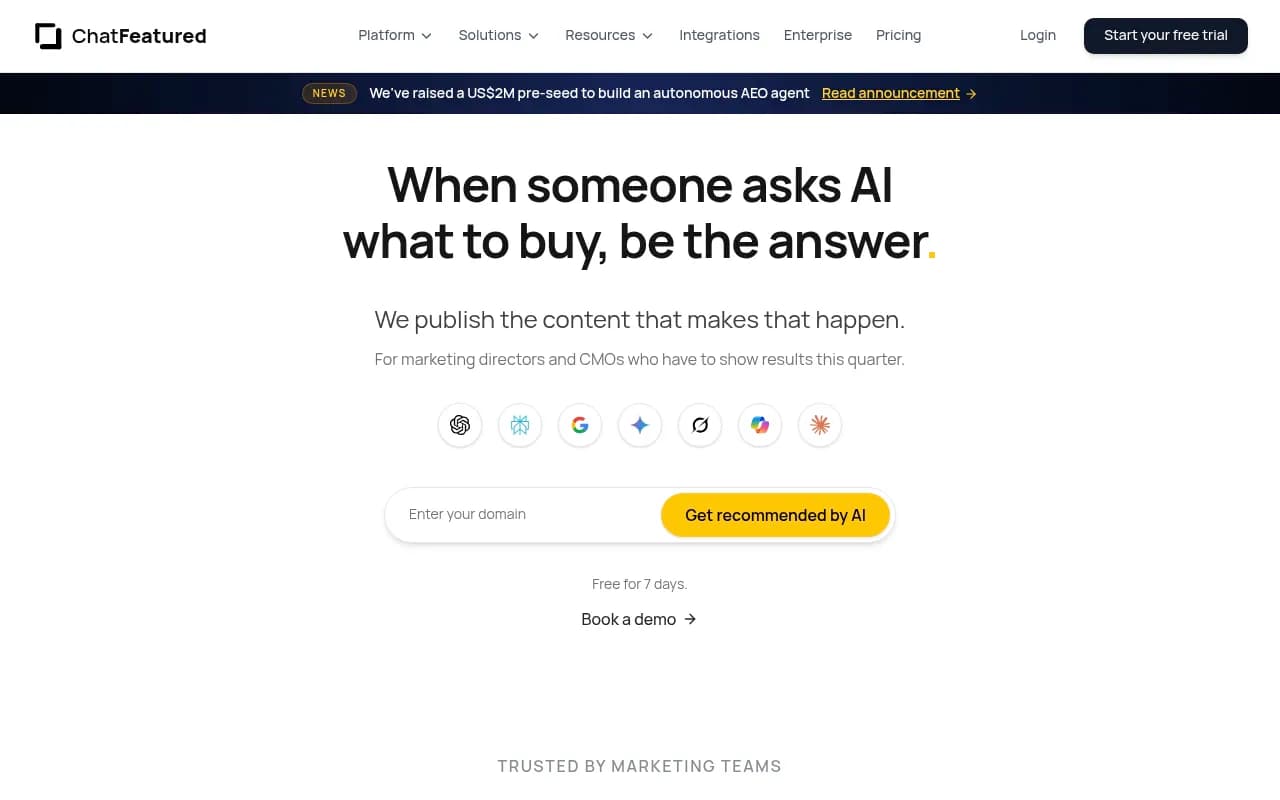
ChatFeatured also runs a 7-day free trial and positions itself around AI search analytics and execution.
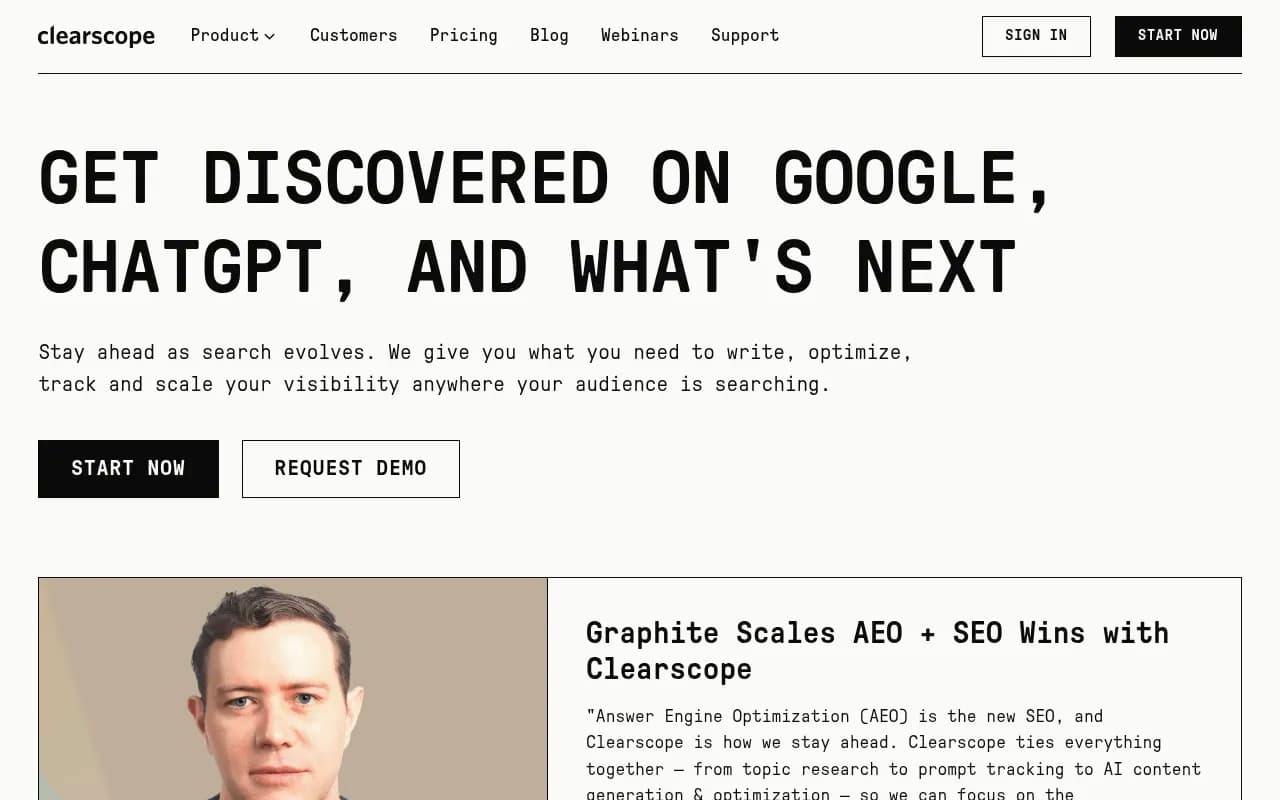
Clearscope is worth naming mostly as a contrast. Marketer Milk lists it from $189/month, so it is not a free option. If your plan involves content optimization and money is tight, free alternatives like an AI assistant plus Search Console cover a lot of the same ground.
Free AI visibility checks
This is the newest category, and the one where free tools are most limited. The question: does ChatGPT, Perplexity or Google's AI Overviews mention my brand when someone asks about my category?
Free options generally fall into three shapes:
- No-login scans that test a handful of prompts and give you a one-time score.
- Scorecards, such as SourceSignal's free report, which the OneLittleWeb roundup says checks up to three buyer questions and shows visibility, competitors named and sources to inspect. They also offer a 14-day trial with no card.
- Free tiers of monitoring tools with a tiny prompt allowance.
If you want a quick starting point, Promptwatch offers a free tier (one project, 10 prompts, ChatGPT only) and a no-login Free AI Visibility Report. Confirm the current terms at promptwatch.com/pricing.

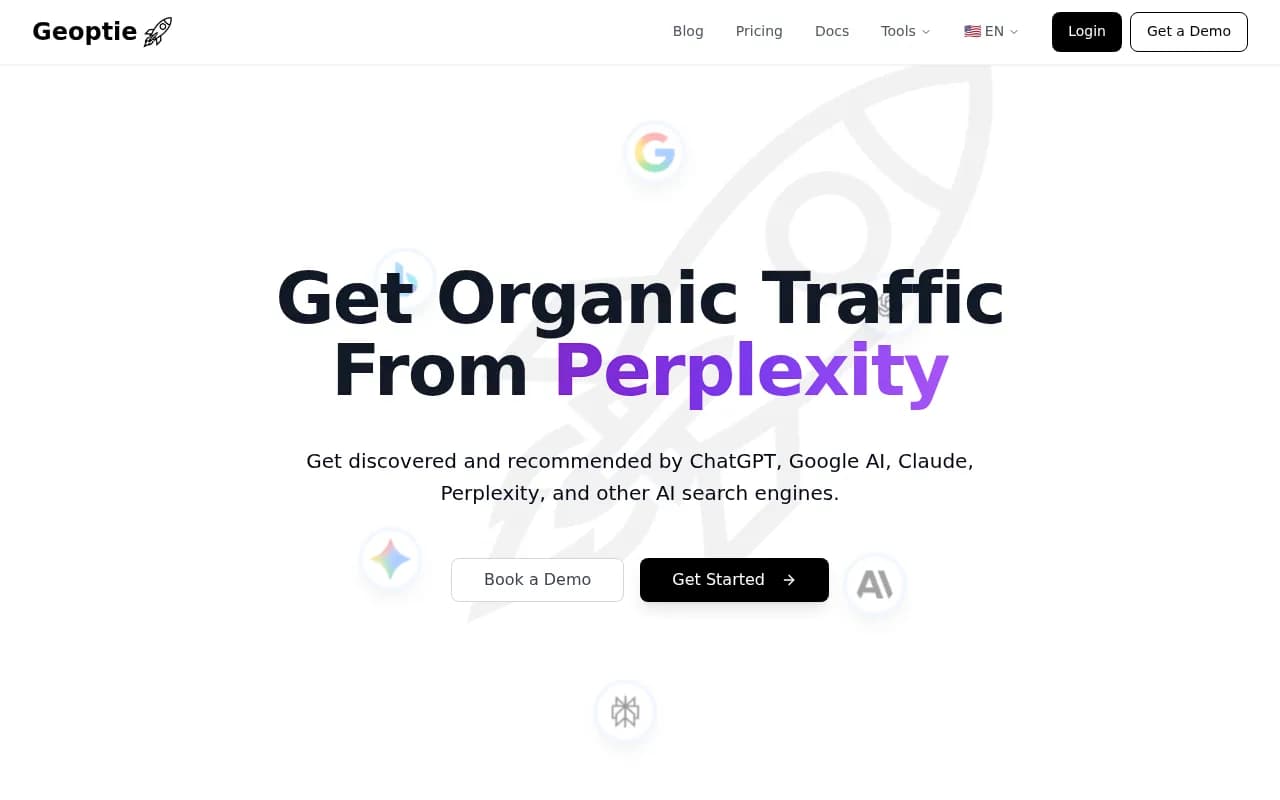
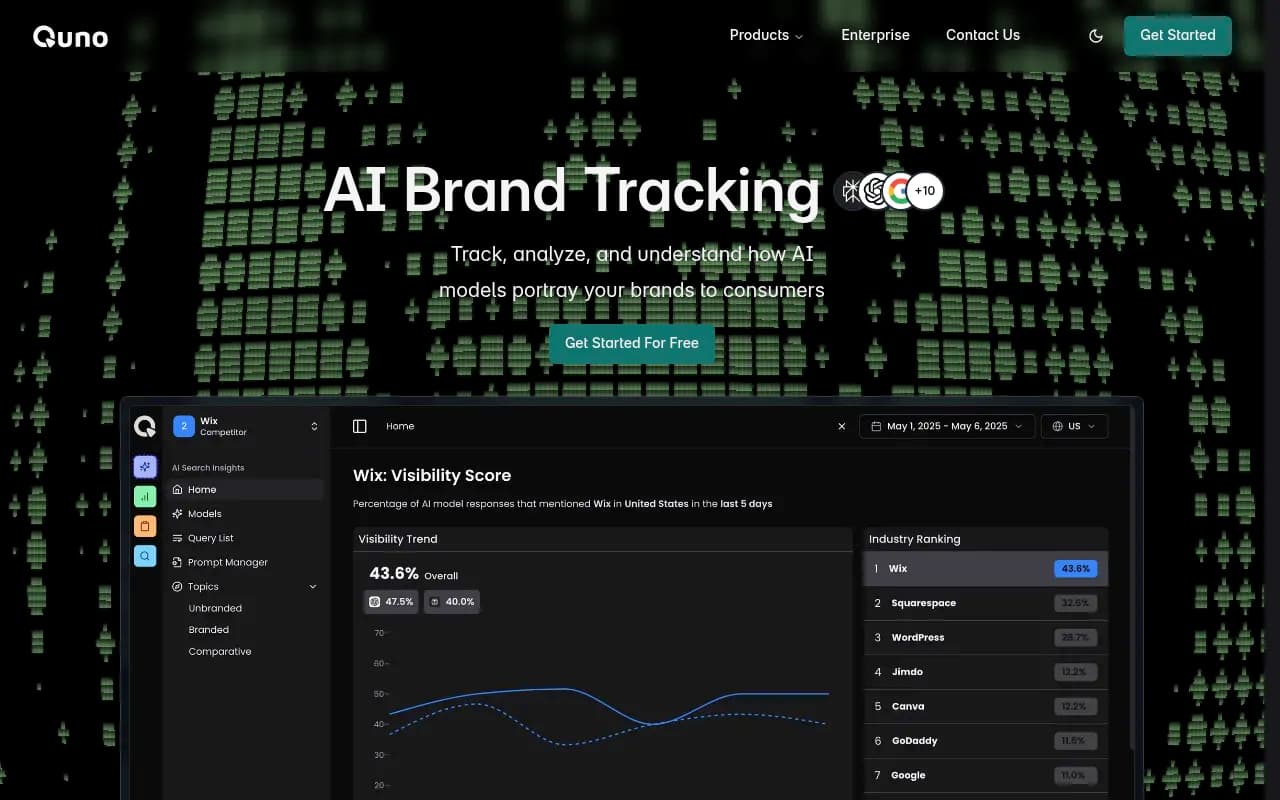
Other tools in this space with free scans, free modes or open-source options include Geoptie (free GEO audit tools), Quno.ai (a scorecard and prompt tester), and Elmo and AI Monitor, which are open source and self-hosted if you are comfortable running your own setup.

Why engine coverage matters
A free scan that only checks ChatGPT tells you about one engine, and engines behave differently. In Promptwatch Data's social media citations report for Sep 28 to Oct 4, 2026, social platforms made up 0.46% of ChatGPT's citations but 12.2% of Google AI Overviews' citations, roughly 26 times higher. Perplexity sat at 2.7%. Reddit's share in ChatGPT specifically collapsed after August 14, 2026, as documented in Promptwatch's Reddit citation data.
Practical consequence: if your plan was "get mentioned on YouTube and Reddit so AI cites us," a ChatGPT-only free check will quietly undersell that tactic for AI Overviews. Ask any free tool which engines it covers before you trust the score.
What to fix with free tools right now
Free visibility scans are only useful if you act on them. The content types AI cites most give you a short to-do list. According to Promptwatch Data's content type report for Sep 28 to Oct 4, 2026, product pages were 22.4% of ChatGPT citations and landing pages 16.8%. Listicles were 13.6%, documentation 7.5% and how-tos 8.7%. For commercial prompts like "best CRM for small businesses," product pages, landing pages, listicles and comparisons add up to almost 70%.
You can act on that without paying for anything:
- Make sure product and landing pages state plainly what you sell, for whom, and at what price range.
- Publish one honest comparison and one listicle for your category.
- Keep documentation public and crawlable.
- Add an FAQ section to key pages.
- Check your robots.txt is not blocking AI crawlers by accident.
On freshness, the content half-life report found news pages lose half their citations within about 36 days, while landing pages and docs stay cited far longer. Evergreen pages are the better bet when your budget is zero.
Comparison: free options at a glance
| Tool | What you get free | Main limit | Best for |
|---|---|---|---|
| Google Search Console | Full query and page data | No AI engine data | Everyone |
| ChatGPT / Claude / Perplexity | Free chat tiers | Usage caps, no live SEO data | Briefs, clustering, research |
| Semrush free | Limited keyword and domain reports | Few daily queries | Sanity-checking ideas |
| Ubersuggest free | Keyword ideas, content angles | Daily limits | Quick wins |
| AirOps free | Starter plan | Workflow setup time | Content workflows |
| Gumloop free | 5,000 credits | Credits run out fast | Building SEO automations |
| Search Atlas trial | 7 days, full platform | Time-limited | One-off audit |
| SourceSignal scorecard | 3 buyer questions, 14-day trial | Snapshot only | Quick visibility check |
| Promptwatch Explore | 1 project, 10 prompts, ChatGPT | One engine | First AI visibility baseline |
Check vendor pages for current limits, since several of these have changed in the past year.
A free stack that works
Here is the setup I would recommend to a small site with no budget:
- Connect Search Console and export your top queries and pages monthly.
- Use a free keyword tool (Ubersuggest or Semrush free) to add volume and difficulty context.
- Paste both exports into Claude or ChatGPT to cluster topics and draft briefs. Write the content yourself or edit hard.
- Run a free AI visibility scan once a month and log the results in a spreadsheet: engines covered, prompts tested, brands named.
- Fix the one page type that is weakest, then re-scan.
That last step is the part people skip. A scan without a fix is a screenshot.
Where free stops working
You will know it is time to pay when one of these happens:
- You need to track more than a dozen prompts, or more than one country.
- You want to know why a competitor is cited and you are not, which needs citation and source data rather than a yes/no answer.
- You want to see whether AI crawlers actually reach your pages. Free tools almost never give you crawler logs.
- You are spending hours stitching exports together by hand.
- You need to tie AI traffic to conversions.
At that point, a paid AI visibility platform is the natural step. Entry-level plans from the monitoring tools start in the double digits per month, and Promptwatch's Essential plan is listed at $95/month with a 7-day trial on monthly billing, verify on its pricing page. If you want to compare more options first, the GEO software directory lists a long catalog of trackers, many with free tiers.
If what you need is not software but someone to run the program, agencies exist for that. 1001 SEO Media is one example that covers technical SEO, content and AI search optimization with no long-term contracts.
Red flags with free AI SEO tools
- A scorecard that will not say which engines it queried.
- "Unlimited" content generation with no editing step. Mass-produced AI drafts are a quality risk, not a strategy.
- Free tiers that require a card up front and auto-renew after a trial.
- Rankings or traffic promises. Nobody can promise those.
- Data from API calls presented as what users see. Answers in the real chat interface can differ from API output.
Bottom line
Free gets you further than it used to. Search Console plus an AI assistant plus one keyword tool handles research and drafting, and a free visibility scan gives you a baseline. What free cannot do is monitor continuously, explain causes or close the loop from insight to published fix. Start free, write down what you could not answer, and let that list tell you which paid plan, if any, is worth it.