Key takeaways
- Feature lists don't tell you which AI SEO tool writes the best draft. Running every tool on one identical brief and scoring the output on one rubric does.
- We have not published numeric scores for the 10 tools below. A score I couldn't back with a saved draft would be made up, so this guide gives you the method and an honest read on each tool's positioning instead.
- The rubric weighs factual accuracy, original information, and editing effort more heavily than keyword coverage, because those decide whether a draft is publishable.
- Several tools in this category are optimizers, not writers. Compare them on the right job.
- Scoring for Google is only half of it. Check whether the page is built to be cited by AI answers too.
Why a same-brief test beats a feature list
Search for an AI SEO content generator and you get dozens of listicles that say Surfer is great, Jasper is great, Frase is great, followed by an affiliate link. Practitioner write-ups like Alex Berman's guide (March 2026) make the same complaint: the tools usually aren't the problem. Treating them like a vending machine is, where you put a keyword in, take an article out, and publish.
That's also why vendor demos mislead. Every tool looks good on a keyword it was tuned for. The only fair comparison is one brief, one set of inputs, one rubric, and one person scoring blind.
I'm going to be upfront about something. This article was written without access to a saved 10-draft test set, and I didn't research current pricing for individual tools. So you won't find a leaderboard with fake numbers here. What you will find is the exact process I'd run, a scorecard you can copy, and what I'd expect from each tool based on how it is built. Run it yourself in an afternoon and you'll have scores that are actually yours.
The brief: one input for every tool
The brief is the whole experiment, so make it specific enough that a weak tool can't hide. A good test brief has a commercial angle, a defined reader, and facts that can be checked. Here is a template:
Keyword: best project management software for small agencies
Search intent: commercial investigation
Reader: agency owner, 5-15 staff, currently using spreadsheets
Length: 1,800 words
Required sections: how we evaluated, comparison table, who each tool fits, pricing caveats, FAQ
Must include: one original example (a real agency workflow), at least 3 verifiable facts with sources
Must avoid: invented statistics, unsourced claims, generic intros
Tone: direct, practitioner voice, no hype
Internal links: 2 supplied URLs
Pick a topic where you personally know the facts. If you can't spot a wrong claim, you can't score accuracy.
Rules that keep the test fair
- Use each tool's default or recommended workflow, but feed it the same keyword, outline, and word count.
- Give every tool the same one revision pass. If a tool needs five rounds of prompting to behave, that is a finding.
- Strip tool names from the drafts before scoring, and have someone else do it if you can.
- Save every draft, every prompt, and the date. Models and features change monthly, and your scores go stale.
- Verify current pricing and limits on the vendor pages. Plans change, and I'd rather you check than trust a number here.
The 100-point scoring rubric
Weights matter. Most comparisons overweight keyword coverage because it's easy to measure. I'd weight what costs you time later.
| Criterion | Points | What you're checking |
|---|---|---|
| Brief adherence | 15 | Required sections present, length hit, tone right, links placed |
| Factual accuracy | 25 | Every claim checked. One invented statistic costs 10 points |
| Original information | 20 | Does anything here go beyond what the top 5 results already say? |
| On-page SEO | 15 | Title, headings, entity and topic coverage, internal links, no stuffing |
| AI-citation readiness | 10 | Clear definitions, comparison tables, FAQs, specifics a model can quote |
| Editing effort | 15 | Minutes to get it publishable. Under 30 is full marks, over 120 is zero |
For editing effort, time yourself. It's the closest thing to an honest ROI number the test produces.
Why accuracy gets the biggest weight
A draft with a confident, wrong number is worse than a draft with a gap, because the gap is visible. Check every statistic, every product claim, every date. Where a tool cites sources, click them. Some of those links won't say what the draft claims.
The 10 tools and what to expect
These are the tools to put through the test. I picked them because they cover the main approaches in the category: optimizer-first, writer-first, and autopilot. The expectations below come from how each product describes itself and how practitioners position it, not from my scores.
| Tool | Primary approach | What to watch in the test |
|---|---|---|
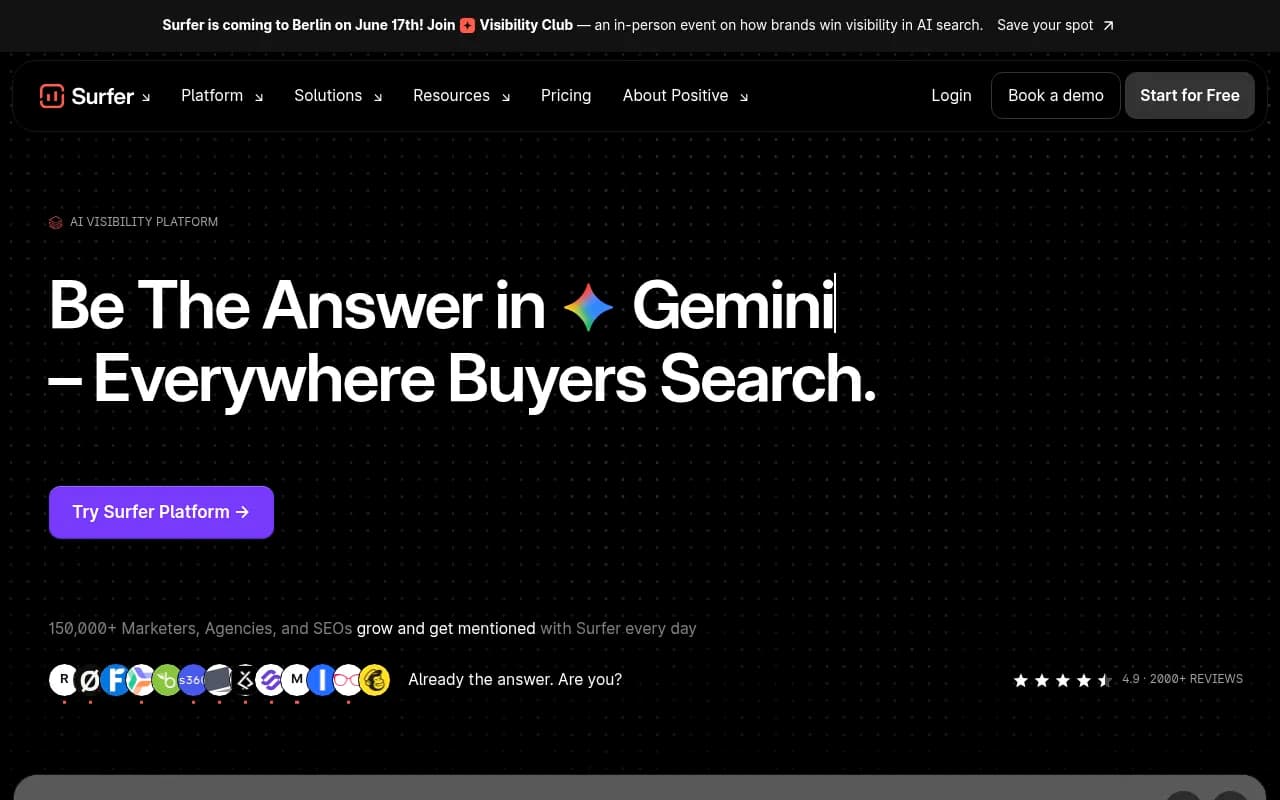
| Surfer SEO | Content optimization against SERP data | Is it drafting or scoring? Test the draft and the editor separately |
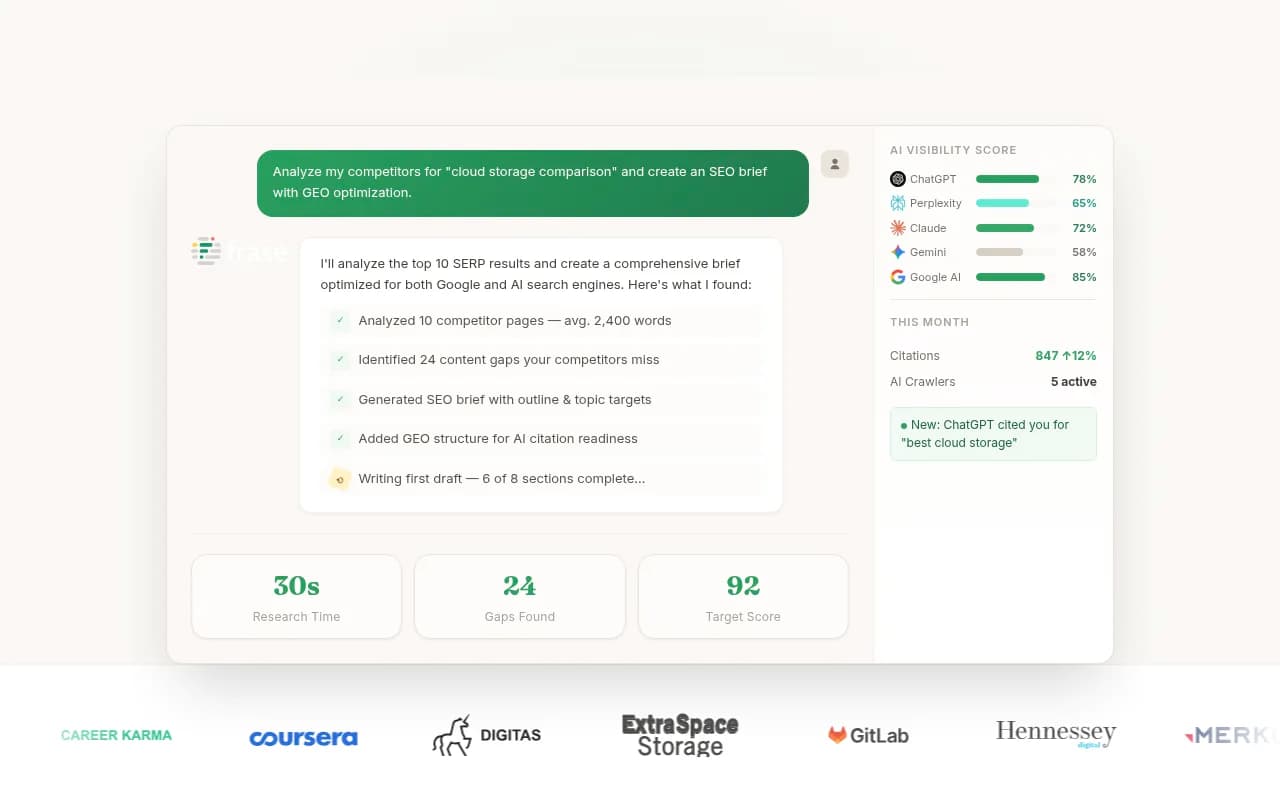
| Frase | Research, brief, write, and optimize loop | Brief quality and whether it covers AI-answer optimization |
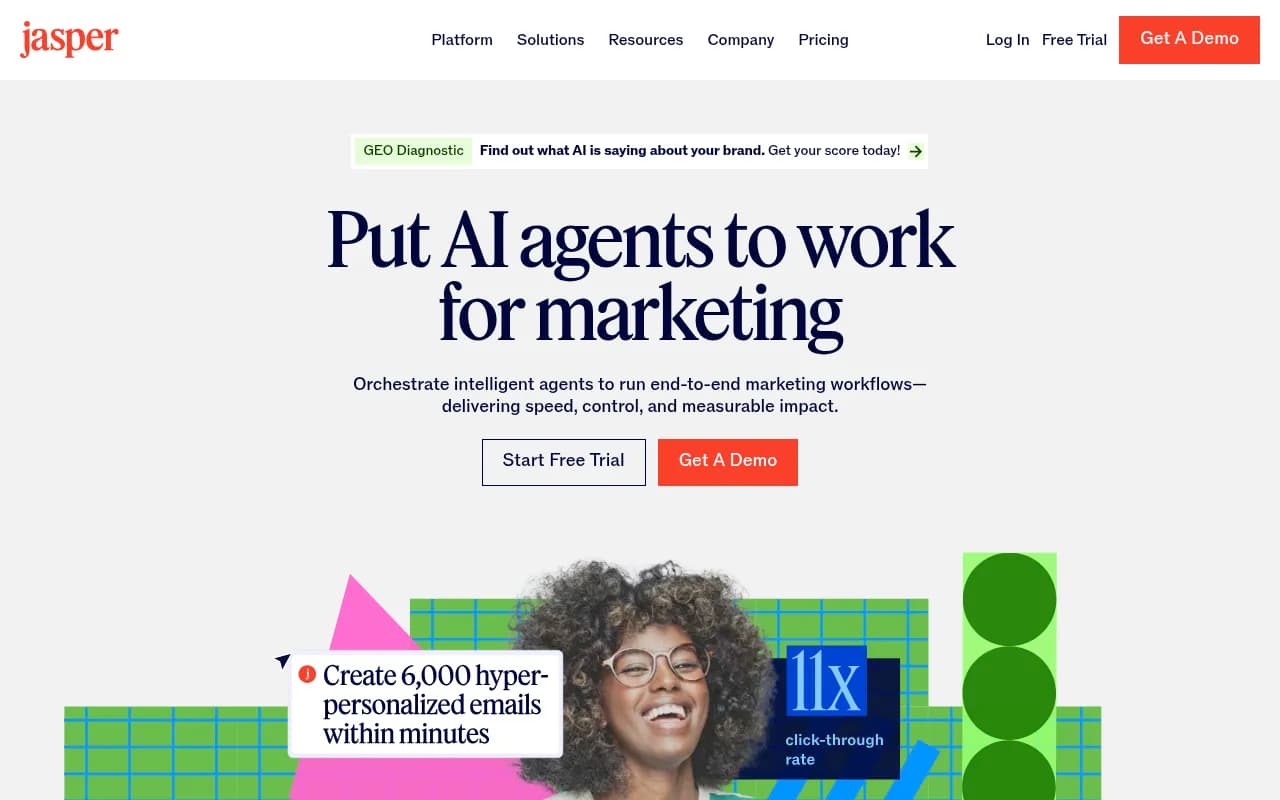
| Jasper | Marketing writing with brand controls | Voice consistency, but check SEO depth on long-form |
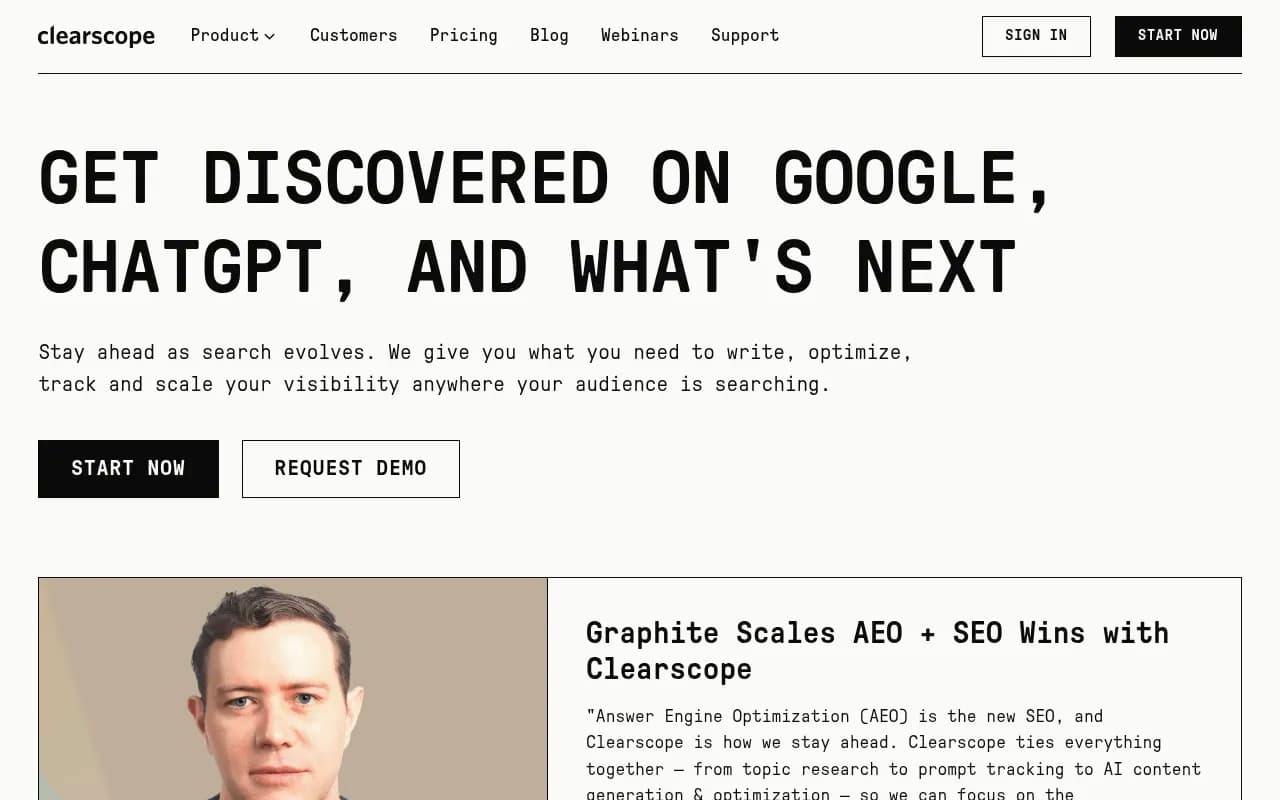
| Clearscope | Search-data-driven optimization | An optimizer. Score it on the editing pass, not raw generation |
| NeuronWriter | NLP-based term optimization | Term coverage versus readability. Watch for stuffing |
| Koala Writer | Articles pulling live SERP and product data | Freshness and factual grounding |
| BrandWell | Long-form AI SEO engine with detection checks | Length versus substance |
| Junia AI | SEO agent with competitor gaps and autopublish | How good the gap analysis is before you trust autopublish |
| Writesonic GEO | Content plus AI visibility monitoring | Whether GEO output differs from standard SEO output |
| Scalenut | Content lifecycle from planning to optimization | Workflow friction and how much the brief shapes the draft |
Optimizers versus generators
This is the mistake that ruins most comparisons. Surfer SEO and Clearscope are built around scoring and improving content against search data. Putting them head to head with a pure generator on raw drafting isn't fair to either. Run them two ways: score what they draft (if they draft at all), and score what a generic LLM draft looks like after you push it through their editor. The second test is usually the more useful one.
Research-and-write platforms
Frase describes itself as covering research, writing, and optimization for both Google and AI citation in one loop. Scalenut positions around the whole content lifecycle. These tend to reward a good brief more than the pure writers do, so this is where your brief template pays off most.

Writers and agents
Jasper is built for marketing teams with brand controls, so test voice consistency across two or three runs, not one. Koala Writer pulls live SERP and product data, which should help with freshness and hurt nothing on accuracy, but verify. BrandWell leans long-form. Junia AI adds competitor gap analysis and autopilot publishing, which is exactly the kind of feature I'd keep switched off during a quality test. Autopublish skips the one step that protects you.


Term-based optimizers and GEO-aware tools
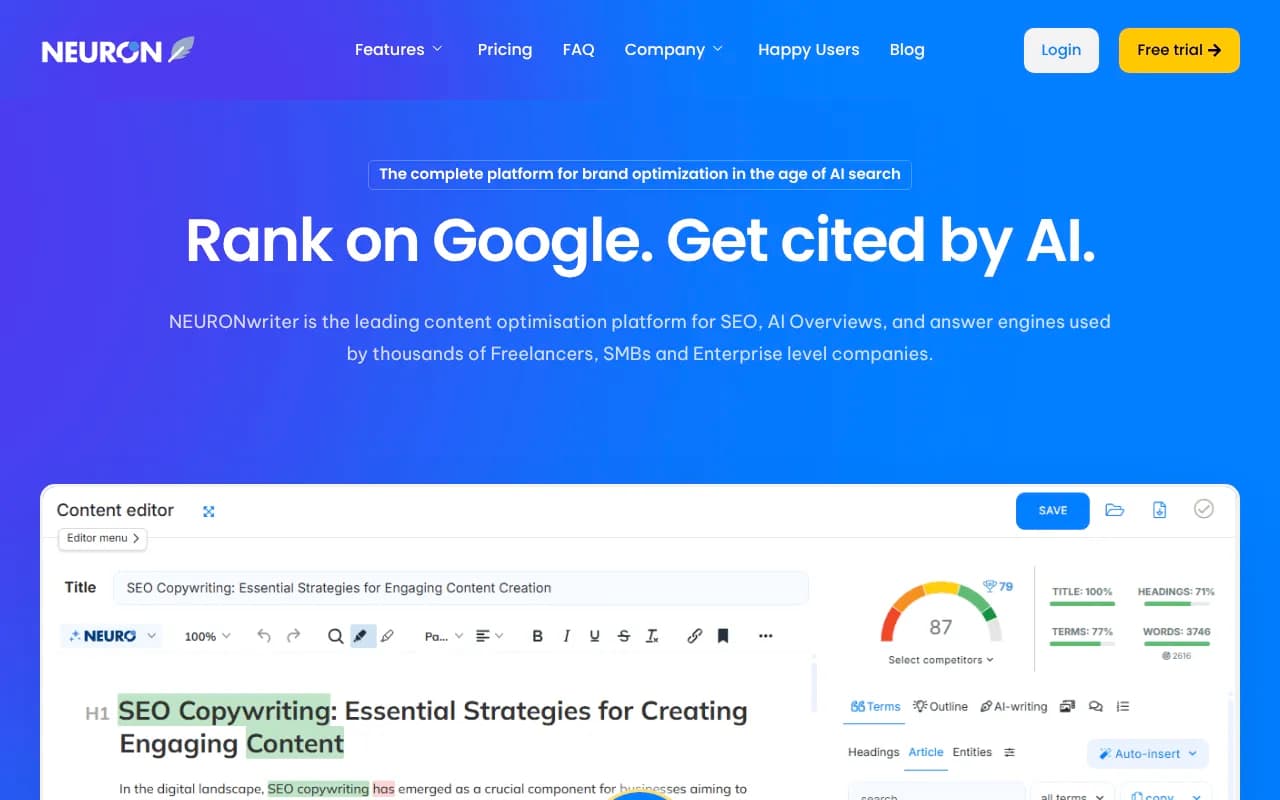
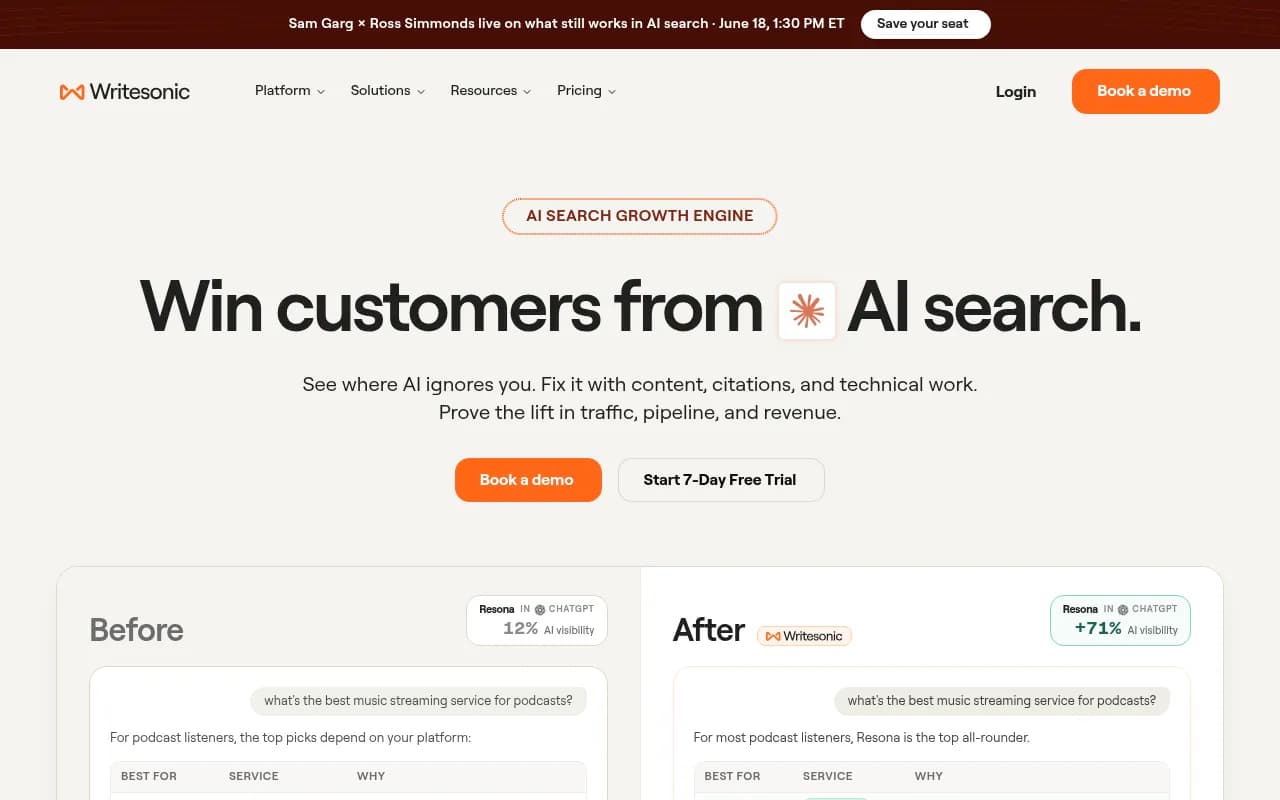
NeuronWriter works from NLP term suggestions. It's easy to hit a score by cramming terms in and produce something unreadable, so score readability separately from the tool's own number. Writesonic GEO combines content generation with AI search visibility monitoring, so check whether its output actually differs when you ask for GEO content.
How to run the test step by step
- Write the brief and freeze it. No edits after the first tool runs.
- Run all 10 tools in one sitting so the SERP is the same for each.
- Export each draft as plain text and strip tool names and formatting quirks.
- Fact-check first, before you read for style. Style bias is real.
- Score on the rubric. Do the accuracy column on its own pass.
- Time the edit. Take the best two or three drafts and edit them to publishable, with a stopwatch.
- Record the cost per usable draft: plan price divided by drafts you'd actually publish.
Step 7 is where the ranking often flips. A tool that costs less per month but produces one usable draft in five is more expensive than it looks.
What good output looks like in 2026
AI answers favor a specific kind of page, and it isn't the generic blog post most generators default to. Promptwatch Data's report on which content types ChatGPT cites (Sep 28 to Oct 4, 2026) found product pages took 22.4% of classified citations and landing pages 16.8%. Listicles, how-tos, and comparisons together earned about 28%. For commercial prompts like best CRM for small businesses, product pages, landing pages, listicles, and comparisons made up almost 70% of citations.
So when you score a draft, ask whether it is the kind of page a model would quote. Does it have a clear comparison table? Complete, factual specs? A definition in the first lines of a section? A draft that only paraphrases the top 10 results will rank poorly and get cited rarely.
Durability matters too. In Promptwatch's content half-life study, which tracked pages ChatGPT cited on July 6, 2026 for 90 days, landing pages and docs stayed cited longest (78% and 76% still cited after 30 days). News-style pages decayed fastest, with half gone after 36 days. If your AI tool churns out thin news-style or quick how-to posts, expect them to fade, and plan refreshes for product and how-to pages.
Measuring whether the content worked
A scored draft is a prediction. The result is whether the published page gets crawled, ranked, and cited. For the AI side, tools like Promptwatch can show whether your pages are being cited for the prompts you care about and whether AI crawlers are reaching them. Classic rank tracking and Search Console cover the Google side.

If you want to browse more options, the GEO software directory lists visibility tools, and SurferStack covers content and SEO software more broadly.
Common mistakes in AI content tests
- Judging on the first run. One draft per tool is a coin flip. Run two topics if you can.
- Scoring with the tool's own content score. Every tool grades its own homework well.
- Ignoring originality. If every draft is a blend of the same top results, the winner is just the least bad copy.
- Skipping the human layer. The practitioner advice is consistent: heavy editing, original examples, real expertise. A tool that gets you a good skeleton fast has done its job.
- Publishing from the test. Your test draft was written to be graded, not to win, so rewrite it for the real brief.
A quick decision guide
| If your bottleneck is | Start by testing |
|---|---|
| Briefs and research | Frase, Scalenut |
| Improving drafts you already have | Surfer SEO, Clearscope, NeuronWriter |
| Brand voice across a team | Jasper |
| Volume with a review step | Koala Writer, BrandWell, Junia AI |
| AI visibility alongside content | Writesonic GEO, plus a dedicated tracker |
This table is a starting hypothesis, not a result. Your own scores should override it. Pick two tools from your bottleneck row, run the brief, time the edit, and keep the one that gets you to a publishable page in the fewest minutes with no invented facts.