Key takeaways
- Governance is now three jobs: writing guardrails (brand voice, compliance), technical SEO at scale, and AI visibility measurement. No single tool does all three well.
- The pages ChatGPT cites most are product and landing pages, so accuracy controls on those pages directly shape what AI says about you.
- Writer, Jasper, Slate and Markup AI-style platforms cover voice and approvals. Conductor, BrightEdge, Botify and seoClarity cover enterprise SEO. Promptwatch covers AI visibility and the fix loop.
- Vendor rankings are biased (Conductor ranks itself first, Slate ranks Slate first). Verify SOC 2, SSO and pricing on each vendor's trust page before you buy.
- Build a refresh cadence. Product pages lose half their citations in roughly 74 to 77 days.
Why governance became the hard part
The tooling problem at large companies is rarely "we can't produce content." It is that 50+ contributors, several CMSs, regional teams and now AI drafting tools all publish things that legal, brand and SEO never see together. One team says a product costs X, another says Y, and a language model reads both.
xSeek's 2026 CMO playbook splits enterprise SEO into three parallel programs: technical SEO at scale, AI search visibility tracking, and content governance with compliance built in (GDPR, CCPA, brand voice control across regional teams). I think that framing is right. Skip one and the other two leak.
What AI answers actually quote
Governance matters more once you see what AI cites. In Promptwatch's data on ChatGPT citation share by content type (Sep 28 to Oct 4, 2026), product pages were the most cited type at 22.4% and landing pages were next at 16.8%. Together that is about 39% of citations going to pages describing what a company sells. For commercial prompts, product pages hit 26.0% and landing pages 20.6%.
So your pricing page, spec sheets and positioning copy are not just conversion assets. They are the source material for what AI tells buyers. An outdated price or an off-brand claim on those pages is a governance failure with a direct audience.
Content decays faster than teams assume
Promptwatch's content half-life study tracked pages ChatGPT cited on July 6, 2026 through Oct 4, 2026. Product pages, reviews and how-tos reached their half-life after about 74 to 77 days, and 55% of product pages were still cited at day 60. Landing pages (78% at day 30) and docs (76%) lasted longer, and news decayed fastest, with half gone after 36 days.
The governance takeaway: set review cadences by content type. Product pages need frequent fact checks. Docs and landing pages are long-lived assets that deserve stricter change control, because a mistake there sticks around.
The four layers of an enterprise governance stack
It helps to stop shopping for one platform and instead cover four layers.
- Authoring controls: brand voice, terminology, banned claims, approval workflows.
- Enterprise SEO platform: crawling, rank and content intelligence across markets.
- Technical automation: schema, internal linking, structured data from a single source of truth.
- AI visibility and feedback: what AI engines say about you, which pages they cite, and whether fixes worked.
Layer 1: brand voice and compliance at the point of writing
This is where most governance either works or doesn't, because it is the only layer that acts before publication.
Writer
Writer is built around enterprise brand controls: style rules, terminology, and knowledge grounding so generated copy stays on message. It is the tool I would shortlist first for regulated industries where wording has to be defensible.
Jasper
Jasper has strong brand-voice features and is easier for marketing teams to adopt. It leans toward campaign and marketing content rather than heavy compliance workflows, so check how its approval and audit features fit your legal team's needs.
Slate
Slate positions itself as an AI-search-first content operations platform, with a governance framework, brand voice enforcement and editorial guardrails for multi-team workflows. Note that its own 2026 guide ranks Slate first among 15 tools, so treat the comparison as vendor-authored and test it yourself.

Grammarly and lighter-weight options
Grammarly Business covers tone and clarity checks at low friction and works as a baseline for teams that don't need full workflow control. Markup AI, Textio and similar quality platforms show up in enterprise content quality comparisons for compliance-style checking. Verify their SEO relevance, since they are quality tools rather than SEO tools.

Layer 2: enterprise SEO platforms
Conductor's 2026 ranking lists Conductor, Semrush Enterprise, Botify, seoClarity, BrightEdge, Siteimprove, Ahrefs, Moz Pro and Sistrix, scored on scalability, insight quality, content optimization, AEO support, workflow and executive reporting. Again, Conductor ranks itself first, so read it as a feature checklist, not a verdict.
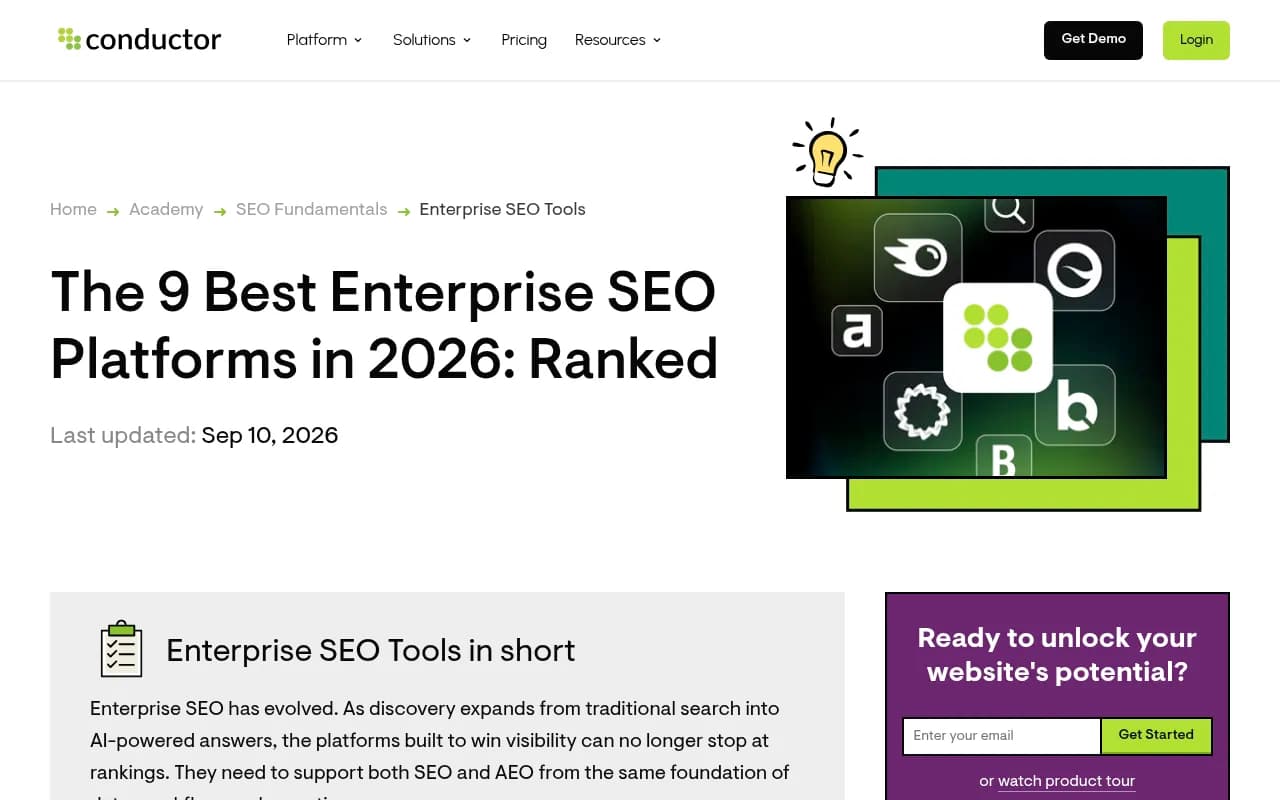
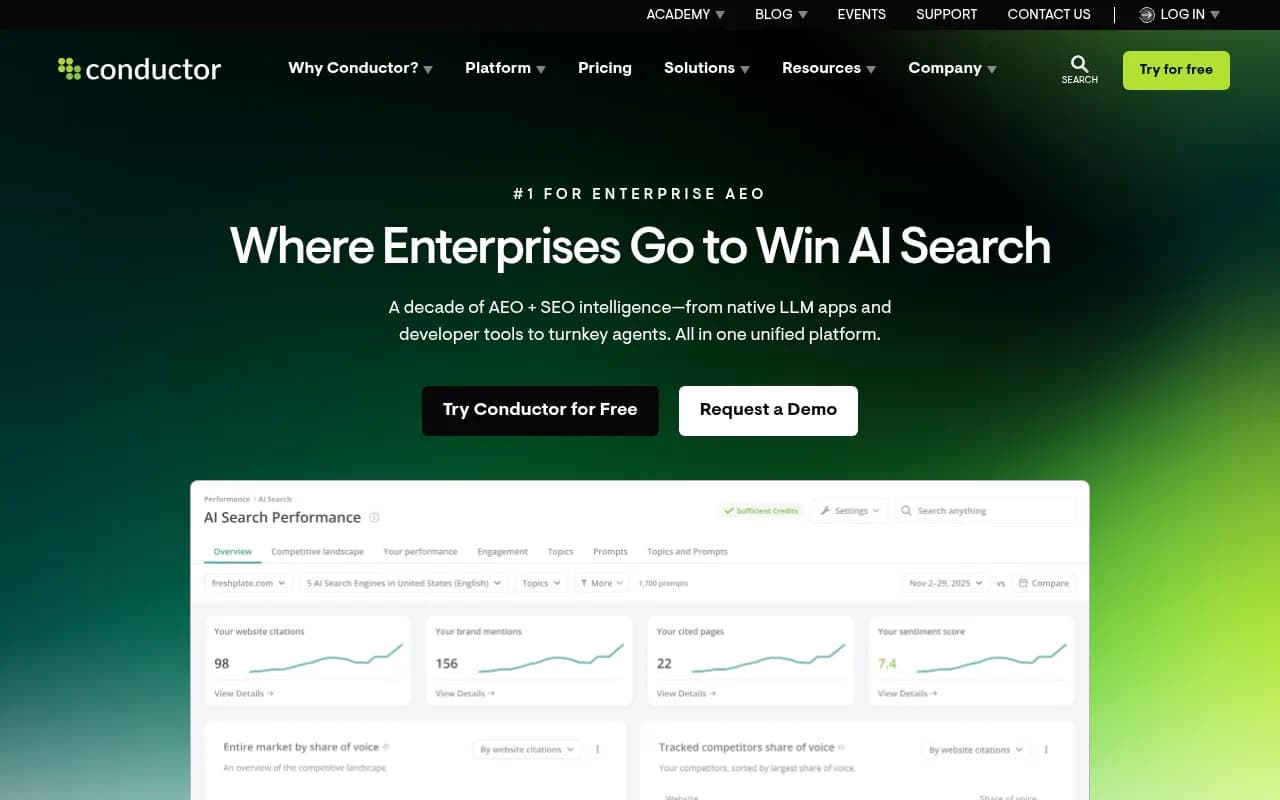
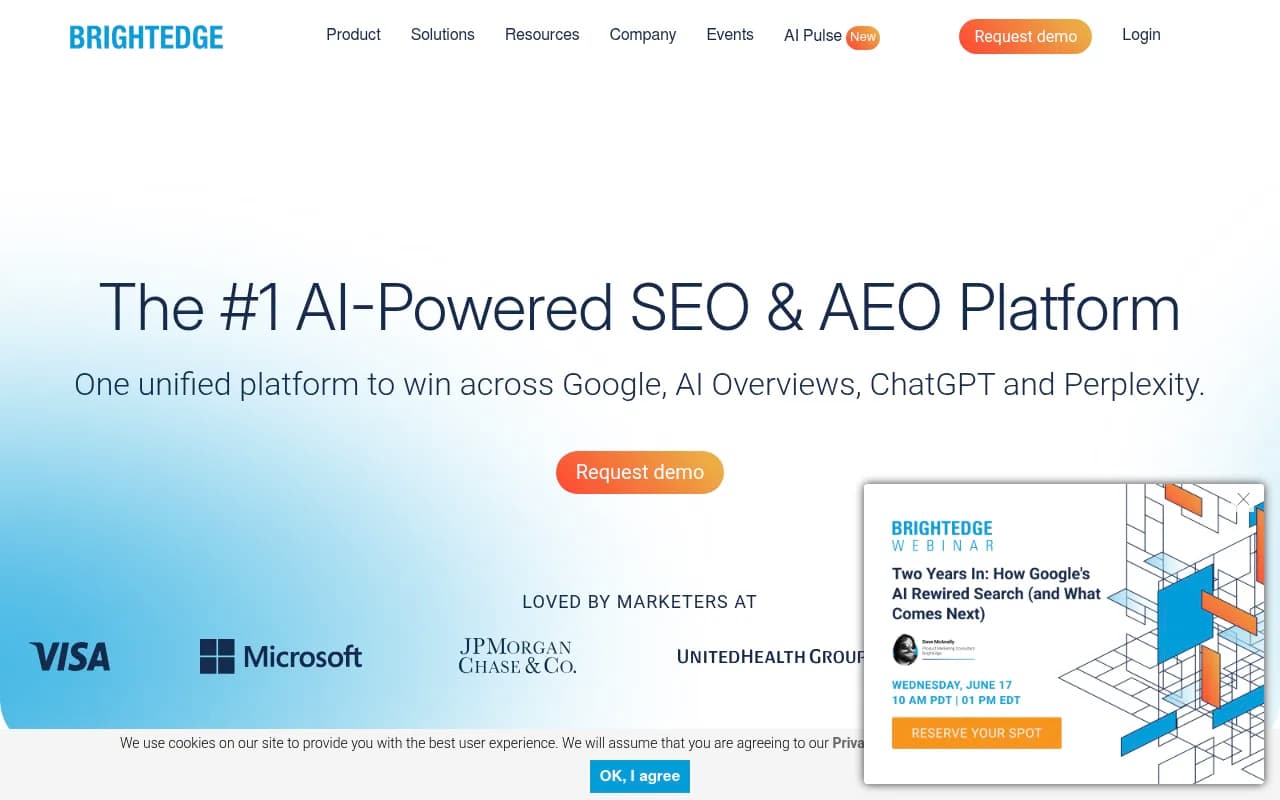
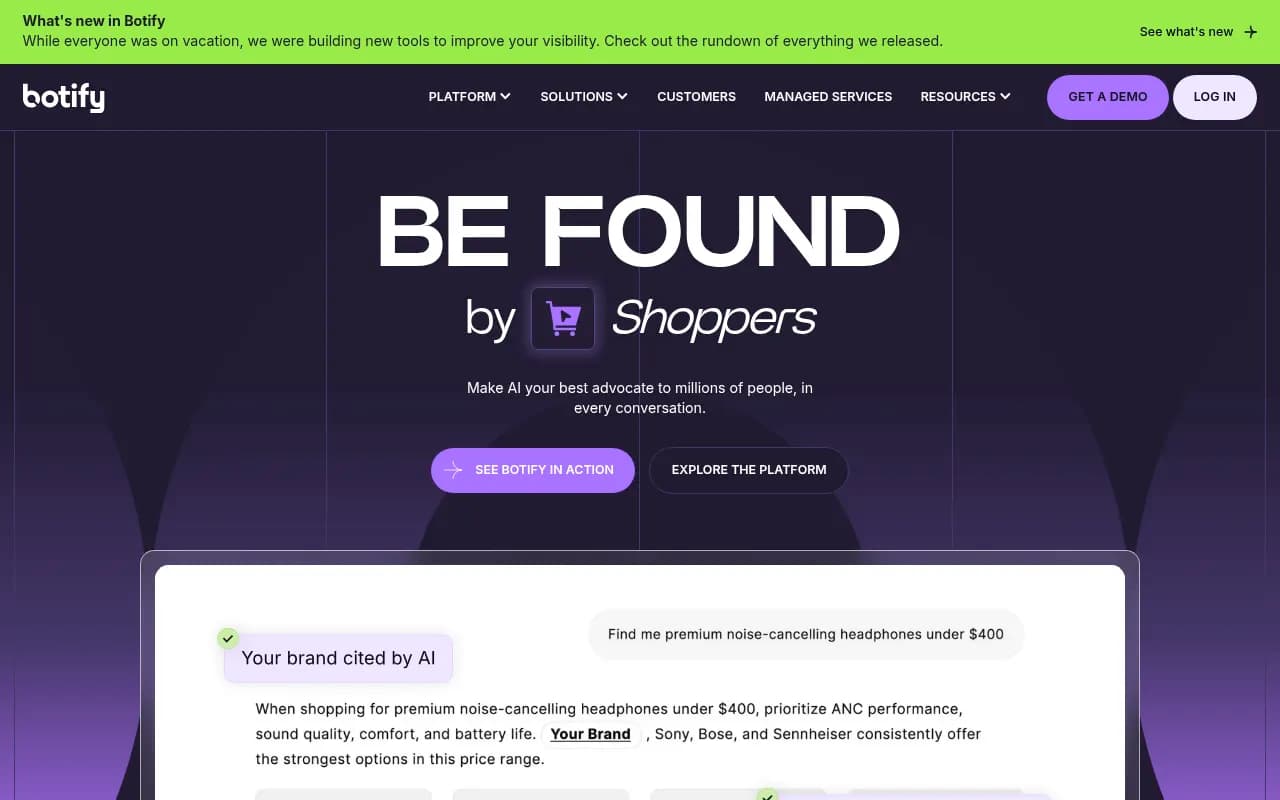
In practice: Conductor and BrightEdge suit marketing-led organizations that want workflow and executive reporting. Botify is the pick when crawl scale and technical SEO on huge sites is the pain. seoClarity fits teams that want flexible data and its AEO additions. Semrush Enterprise works when you want breadth and a familiar interface.
Layer 3: structured data and internal linking automation
xSeek makes a point I agree with: hand-coded JSON-LD does not scale past a few thousand pages. Schema should be generated from one source of truth and injected at build time. Tools such as InLinks (entity-based internal linking and schema automation) and WordLift (AI schema and content tagging) exist for this.

For content scoring and briefs at scale, Clearscope, MarketMuse and Surfer SEO are the usual names. They help writers hit topical coverage, but none of them is a governance tool on its own.

Layer 4: AI visibility, measurement and fixing
This is the layer most governance programs forget, and it closes the loop. Once your content rules are in place, you need to know whether AI engines are repeating your facts or someone else's.
Promptwatch is the one I would put first here, because it goes past monitoring. It tracks real ChatGPT, AI Overviews, AI Mode, Gemini, Perplexity and Copilot interfaces, shows IP-verified AI crawler logs so you can see which pages bots read and where they hit errors, and ties citations to actual AI-driven traffic. Its Action Board and Content Agent then turn gaps into prioritized work and can publish to WordPress, Webflow or Framer through a review inbox, which fits governance needs because a human can approve before anything goes live. Its Brand Book and Knowledge Base also keep generated content on-brand. Check promptwatch.com/pricing for current plans; Business at $579/mo includes the automated Content Agent.

Other enterprise-oriented AI visibility options in the catalog:

Adobe LLM Optimizer


Profound is a strong monitoring product at a higher price point. Adobe LLM Optimizer makes sense if you already live in Experience Cloud. Brandlight and Bluefish target enterprise brand teams, though both have narrower feature sets. For more options, the GEO software directory at bestgeosoftware.com lists the wider field.
Comparison table
| Layer | Tool | Strongest at | Watch out for |
|---|---|---|---|
| Authoring | Writer | Brand controls, grounded generation | Less SEO depth |
| Authoring | Jasper | Marketing-team adoption, brand voice | Lighter compliance workflow |
| Content ops | Slate | Multi-team governance, AI-search focus | Vendor-authored rankings |
| Enterprise SEO | Conductor | Workflow, executive reporting | Self-ranked #1 in its own guide |
| Enterprise SEO | BrightEdge | Enterprise SEO and AI intelligence | Cost and onboarding time |
| Enterprise SEO | Botify | Technical SEO at crawl scale | Less content-writing help |
| Enterprise SEO | seoClarity | Data flexibility, AEO additions | Learning curve |
| Technical | InLinks / WordLift | Schema and internal link automation | Need clean source data |
| AI visibility | Promptwatch | Crawler logs, citations, traffic, Content Agent, Action Board | Needs a content process to act on insights |
| AI visibility | Profound | Monitoring depth | Price, less execution |
A governance checklist that holds up
Write the rules down before buying anything
Terminology lists, claims that need legal sign-off, regional variants, and who approves what. Every tool above is only as good as these inputs.
Put accuracy controls on money pages first
Based on the citation data, product, landing, pricing and docs pages deserve the strictest review. Keep specs, prices and positioning complete and factual, keep documentation public and crawlable, and add FAQ pages where buyers ask repeat questions.
Make AI crawlers part of the technical audit
If bots hit errors or can't reach key pages, your governance work is invisible to them. Crawler log visibility catches that. Promptwatch's AI crawler traffic data shows how much verified bot traffic enterprise sites now see.
Set refresh cadences by content type
Monthly for product and pricing pages, quarterly for how-tos and reviews, event-driven for docs and landing pages, and fast turnaround for news. The half-life numbers above give you a reasonable starting point.
Do the compliance paperwork yourself
SOC 2, SSO, data residency and retention terms vary by vendor and change. I could not verify them for the tools above, so confirm each on the vendor's trust page and in the security questionnaire. Pricing too.
Where an agency helps
Some enterprises don't have the people to run all four layers. A team like 1001 SEO Media combines technical SEO, content strategy and GEO work, and can own the audit and reporting while your legal and brand teams keep sign-off. That is a staffing decision, not a tooling one, and it is worth weighing before you sign three platform contracts.
How to choose
- Regulated industry with heavy legal review: start with Writer or Slate, then add an enterprise SEO platform.
- Huge site, technical debt: Botify or seoClarity first.
- Marketing-led, executive reporting matters: Conductor or BrightEdge.
- AI answers misquote you or you can't tell what's driving AI traffic: add Promptwatch for the measure-and-fix loop.
Pick one tool per layer, run a 60 to 90 day pilot on a single market, and measure whether AI citations and organic conversions move. If you want a wider list of tools by category, the software directory at surferstack.com is a decent next stop.