Key takeaways
- These tools aren't really competitors -- Promptwatch is an AI search visibility and GEO platform; NeuronWriter is an SEO content editor for Google rankings. Most teams that need both use them together.
- NeuronWriter is much cheaper: plans start at $23/mo vs Promptwatch's $99/mo entry point.
- If you want to know how your brand appears in ChatGPT, Perplexity, or Gemini, NeuronWriter can't help you. That's Promptwatch's core job.
- If you want to write content that ranks on Google with NLP-guided term recommendations, Promptwatch isn't the right tool. NeuronWriter is.
- Promptwatch goes beyond monitoring -- it includes content gap analysis, AI content generation, and crawler logs that show how AI engines discover your pages. NeuronWriter's strength is the writing and optimization workflow, not post-publish tracking.
- The overlap is narrow: both touch on AI Overviews and answer engine optimization, but from very different angles.
Overview
Promptwatch
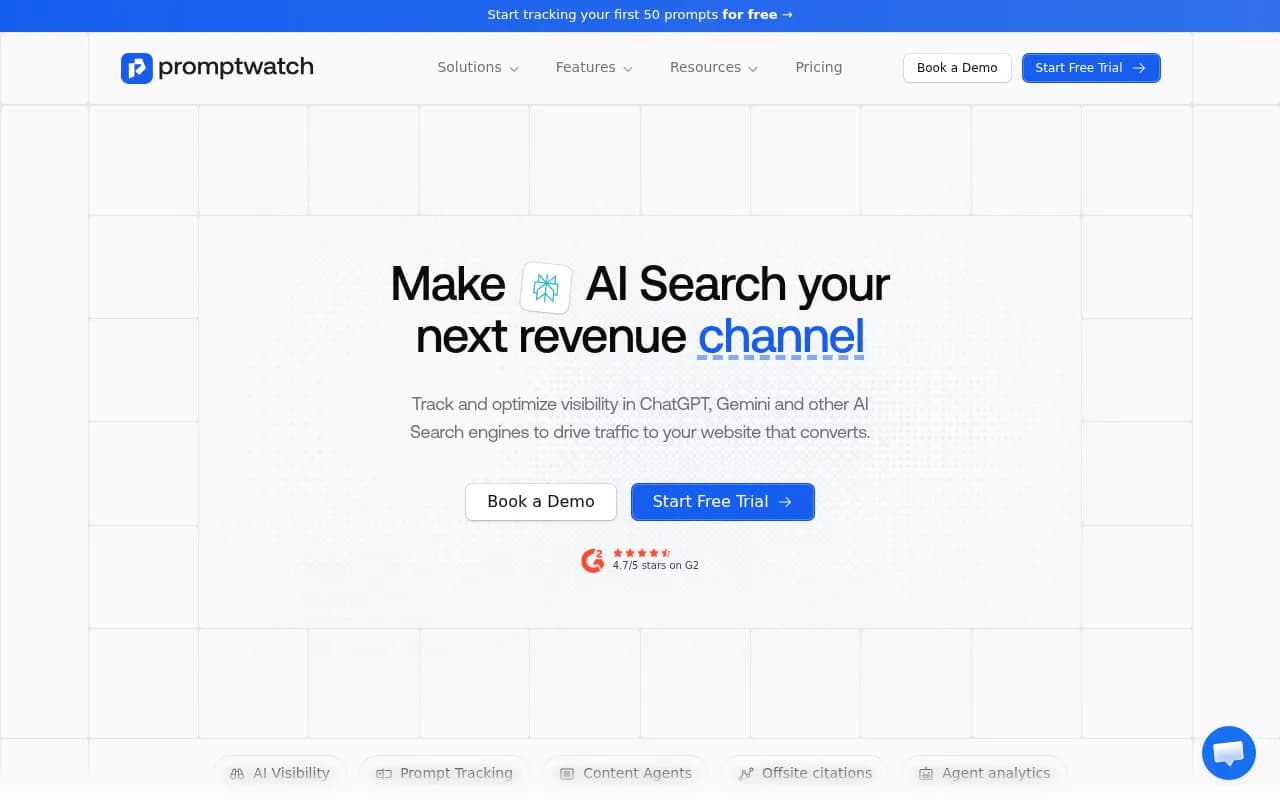
Promptwatch is an end-to-end GEO (Generative Engine Optimization) platform built specifically for the AI search era. It tracks how your brand appears across 10+ AI models -- ChatGPT, Perplexity, Claude, Gemini, Grok, DeepSeek, Copilot, Meta AI, Mistral, and Google AI Overviews -- and then helps you do something about the gaps it finds. That last part is what separates it from most monitoring tools: it doesn't just show you a dashboard, it helps you create content engineered to get cited.
Used by 1,480+ brands and agencies including Booking.com, Duolingo, Typeform, and Yelp, Promptwatch has processed over 4.5 billion citations and prompts. It's rated 4.7/5 on G2 and has been covered by the Wall Street Journal and Axios.
NeuronWriter

NeuronWriter is a content optimization platform focused on helping writers and SEO teams produce content that ranks on Google. It pulls live SERP data for your target keyword, analyzes the top-ranking competitors, and gives you NLP-based term recommendations inside a built-in editor. The idea is simple: write content that semantically matches what Google's algorithm expects to see, and your rankings improve.
It's been around since before the AI search wave and has a large user base among freelancers, SMBs, and content agencies. More recently, it's added features aimed at AI Overviews and answer engine optimization -- but its DNA is still traditional SEO content editing.
Side-by-side comparison
| Feature | Promptwatch | NeuronWriter |
|---|---|---|
| Primary use case | AI search visibility & GEO | SEO content optimization for Google |
| AI model tracking | 10+ (ChatGPT, Perplexity, Gemini, Claude, Grok, DeepSeek, etc.) | Limited (AI Overviews focus) |
| Brand citation monitoring | Yes -- page-level, model-level | No |
| Content gap analysis | Yes -- prompt-level gaps vs competitors | Basic keyword gap |
| AI content generation | Yes -- articles, listicles, comparisons | Yes -- AI writing assistant in editor |
| NLP term recommendations | No | Yes -- core feature |
| SERP competitor analysis | No | Yes -- pulls live top-10 data |
| Crawler / agent logs | Yes -- real-time AI crawler logs | No |
| Prompt volume & difficulty | Yes | No |
| Reddit & YouTube insights | Yes | No |
| ChatGPT Shopping tracking | Yes | No |
| Google Search Console integration | Yes | Yes |
| WordPress integration | No | Yes |
| Multi-language support | Yes | Yes |
| Free tier / trial | Free trial (50 prompts) | 7-day free trial |
| Starting price | $99/mo | $23/mo |
| G2 rating | 4.7/5 | Not listed |
| Target user | Marketing/SEO teams, agencies focused on AI search | Content writers, SEO specialists, agencies |
Head-to-head feature deep-dive
AI search monitoring
This is where the gap between the two tools is widest.
Promptwatch tracks your brand's visibility across 10 AI engines in real time. You can see which prompts your brand appears in, which competitors are getting cited instead of you, and which specific pages on your site are being referenced. The crawler logs go even deeper -- you can see when ChatGPT or Perplexity's crawlers visit your site, which pages they read, and how long it takes for a crawled page to start generating citations.
NeuronWriter doesn't do this. It has added some optimization guidance for AI Overviews, but it doesn't track whether your brand actually appears in AI-generated answers, and it has no visibility into LLM citation behavior.
Verdict: Promptwatch by a wide margin. NeuronWriter isn't in this category.
Content creation and optimization
Here the tables turn.
NeuronWriter's content editor is genuinely good. You enter a target keyword, it pulls the top-ranking pages from Google, runs NLP analysis, and gives you a list of semantically relevant terms to include. The editor scores your content in real time as you write, showing you which terms you've covered and which you're missing. It also suggests headings, questions to answer, and content structure based on what's working for competitors. For traditional SEO writing, this workflow is hard to beat at $23/mo.
Promptwatch's content generation works differently. Its Content Agents create articles, listicles, and comparison pages grounded in actual prompt data -- the specific questions real users are asking AI engines, combined with citation data, competitor analysis, and brand guidance you provide. The output is designed to fill AI citation gaps, not to rank on Google's blue-link results. It's a different goal entirely.
If you're writing a blog post to rank for "best project management software," NeuronWriter's NLP-guided editor is the right tool. If you're trying to get cited when someone asks ChatGPT "what's the best project management software," Promptwatch's content agents are more relevant.
Verdict: NeuronWriter for Google SEO writing. Promptwatch for AI search content strategy. Neither replaces the other.
Competitor analysis
NeuronWriter's competitor analysis is SERP-based: it shows you who's ranking for your target keyword, what terms they use, how long their content is, and what questions they answer. This is directly actionable for writing a piece that outranks them.
Promptwatch's competitor analysis is citation-based: it shows you which brands are getting mentioned in AI responses for specific prompts, how often, and across which models. The Answer Gap Analysis feature specifically shows you prompts where competitors appear but you don't -- which is a different kind of competitive intelligence.
| Dimension | Promptwatch | NeuronWriter |
|---|---|---|
| Competitor data source | AI model responses | Google SERP |
| What it shows | Citation share, visibility scores | Rankings, term usage, content structure |
| Gap analysis | Prompt-level gaps vs competitors | Keyword/term gaps |
| Actionability | Shows missing content topics for AI | Shows missing NLP terms for Google |
Verdict: Different data, different use cases. Both are strong in their respective domains.
Pricing and value
NeuronWriter is substantially cheaper, and for what it does, the value is solid.
Promptwatch's higher price reflects a fundamentally broader platform -- real-time AI monitoring across 10 models, crawler logs, prompt intelligence, Reddit/YouTube tracking, and content generation all in one place. Whether that's worth it depends entirely on whether AI search visibility is a priority for your business.
See the full pricing breakdown below.
Integrations and workflow
NeuronWriter integrates with WordPress (direct publishing), Google Search Console, and has a Chrome extension. For content teams working in a traditional SEO workflow, this is practical.
Promptwatch integrates with Google Search Console, Cloudflare, Fastly, Vercel, server logs, and a tracking snippet for crawler attribution. It also has a Looker Studio integration and an API for custom reporting. The integrations are more infrastructure-oriented -- they're about connecting AI visibility data to your existing analytics stack.
Verdict: NeuronWriter wins for content workflow integrations. Promptwatch wins for data infrastructure and reporting.
Ease of use
NeuronWriter has a fairly shallow learning curve. You enter a keyword, get recommendations, write. The interface is clean and the scoring system gives you immediate feedback. Some users find the sheer number of term suggestions overwhelming at first, but you get used to it quickly.
Promptwatch has more depth, which means more to learn. Setting up prompt tracking, configuring personas, interpreting crawler logs, and running content agents all take some onboarding. The platform has gotten more polished over time, but it's a more complex tool solving a more complex problem.
Verdict: NeuronWriter is easier to get started with. Promptwatch rewards the investment in learning it.
Pricing comparison
| Plan | Promptwatch | NeuronWriter |
|---|---|---|
| Free / trial | Free trial (50 prompts) | 7-day free trial |
| Entry plan | Essential: $99/mo (1 site, 50 prompts, 5 articles) | Bronze: $23/mo |
| Mid plan | Professional: $249/mo (2 sites, 150 prompts, 15 articles, crawler logs) | Silver: ~$45/mo |
| Upper plan | Business: $579/mo (5 sites, 350 prompts, 30 articles) | Gold: ~$69/mo |
| Top plan | Agency/Enterprise: custom pricing | Diamond: $117/mo |
| Annual discount | Yes | 20% off |
NeuronWriter is clearly the more affordable option. For a solo content writer or small SEO team focused on Google rankings, the Bronze plan at $23/mo is genuinely good value. Promptwatch's pricing is justified by the scope of what it does -- 10 AI models, crawler logs, content agents, prompt intelligence -- but it's a bigger commitment.
Pros and cons
Promptwatch
Pros:
- Tracks brand visibility across 10 AI models in one platform
- Content agents generate AI-optimized content grounded in real prompt data
- Crawler logs show exactly how AI engines discover and cite your pages
- Prompt volume and difficulty scoring helps prioritize what to target
- Reddit and YouTube insights surface external citation opportunities
- ChatGPT Shopping tracking is unique in the market
- Strong customer base (Booking.com, Duolingo, Typeform) and G2 rating
Cons:
- More expensive than most content SEO tools ($99/mo minimum)
- Not a replacement for traditional SEO content tools -- no NLP term recommendations
- Steeper learning curve than NeuronWriter
- No WordPress integration for direct publishing
NeuronWriter
Pros:
- Very affordable entry point ($23/mo)
- NLP-based term recommendations are genuinely useful for Google SEO
- Live SERP competitor analysis built into the editor
- WordPress integration for direct publishing
- Clean, focused writing workflow
- Good for freelancers and small teams who need a practical content tool
Cons:
- No LLM citation tracking -- can't tell you if your content is being cited by ChatGPT or Perplexity
- No crawler logs or AI agent analytics
- No prompt volume data or AI search intelligence
- AI Overviews optimization is surface-level compared to dedicated GEO platforms
- Limited competitive intelligence for AI search
Who should pick which tool
Pick Promptwatch if:
- You want to know how your brand appears in ChatGPT, Perplexity, Gemini, or other AI engines
- You're running a GEO or AI search optimization program
- You need to identify which content gaps are causing you to lose AI citations to competitors
- You're an agency offering AI search visibility services to clients
- You want to connect AI visibility to actual traffic and revenue
Pick NeuronWriter if:
- Your primary goal is ranking on Google's traditional search results
- You write a lot of content and need an NLP-guided editor to speed up the process
- You're a freelancer or small team with a tight budget
- You want a practical, focused tool for keyword-driven content creation
- You're not yet investing in AI search optimization
Use both if:
- You're running a full-stack SEO and GEO program
- You want NeuronWriter to optimize content for Google rankings and Promptwatch to track whether that same content gets cited by AI engines
- You're an agency that needs to deliver both traditional SEO results and AI visibility reporting
Worth noting: if you're already using NeuronWriter for content creation and starting to think about AI search visibility, Promptwatch is the natural next step -- it picks up where NeuronWriter's AI Overviews features leave off.
Final verdict
Promptwatch and NeuronWriter are solving different problems, and the "which is better" question mostly depends on which problem you have. NeuronWriter is a well-priced, focused content editor for Google SEO -- it does that job well and costs very little. Promptwatch is a full GEO platform for the AI search era -- it costs more, does more, and is the right tool if AI citation visibility is something you're actively trying to improve. For teams that care about both Google rankings and AI search, running them together makes more sense than choosing one over the other.