Key takeaways
- Promptwatch and NytroSEO are not really competing for the same job. Promptwatch tracks and improves AI search visibility (ChatGPT, Perplexity, Gemini, etc.), while NytroSEO automates traditional on-page SEO like meta tags and titles for Google.
- If your goal is to appear in AI-generated answers and LLM citations, NytroSEO won't get you there. It has some AEO marketing language but no actual AI citation tracking.
- Promptwatch is the more expensive option ($99/mo vs ~$49/mo to start), but it covers a fundamentally broader and more complex problem.
- NytroSEO is genuinely useful for agencies doing high-volume on-page SEO work across many sites -- it automates repetitive tasks that would otherwise eat hours.
- Promptwatch includes content generation, crawler logs, competitor heatmaps, and prompt intelligence. NytroSEO's scope is narrower by design.
- For teams that need both traditional SEO and AI visibility, these tools complement each other rather than compete.
Overview
Promptwatch
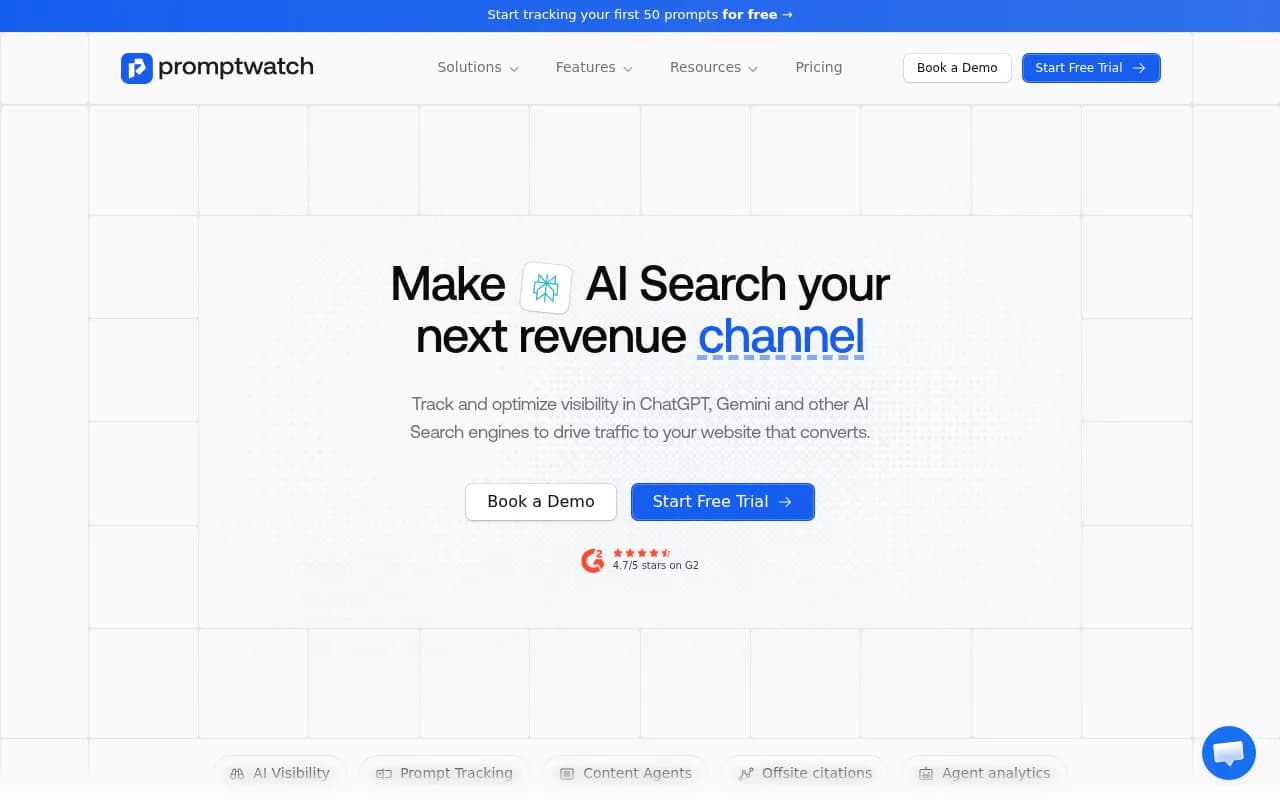
Promptwatch is an end-to-end AI search visibility and GEO (Generative Engine Optimization) platform. It tracks how your brand appears across 10+ AI models -- ChatGPT, Perplexity, Gemini, Claude, Grok, DeepSeek, and more -- and then helps you do something about it. The "do something about it" part is what separates it from most tools in this space: Content Agents generate articles grounded in real prompt and citation data, Answer Gap Analysis shows which prompts competitors are winning that you're not, and AI Crawler Logs show exactly which pages AI bots are reading (and which ones they're ignoring).
It's used by 1,480+ brands and agencies including Booking.com, Duolingo, Typeform, and Yelp. G2 rating sits at 4.7/5.
NytroSEO
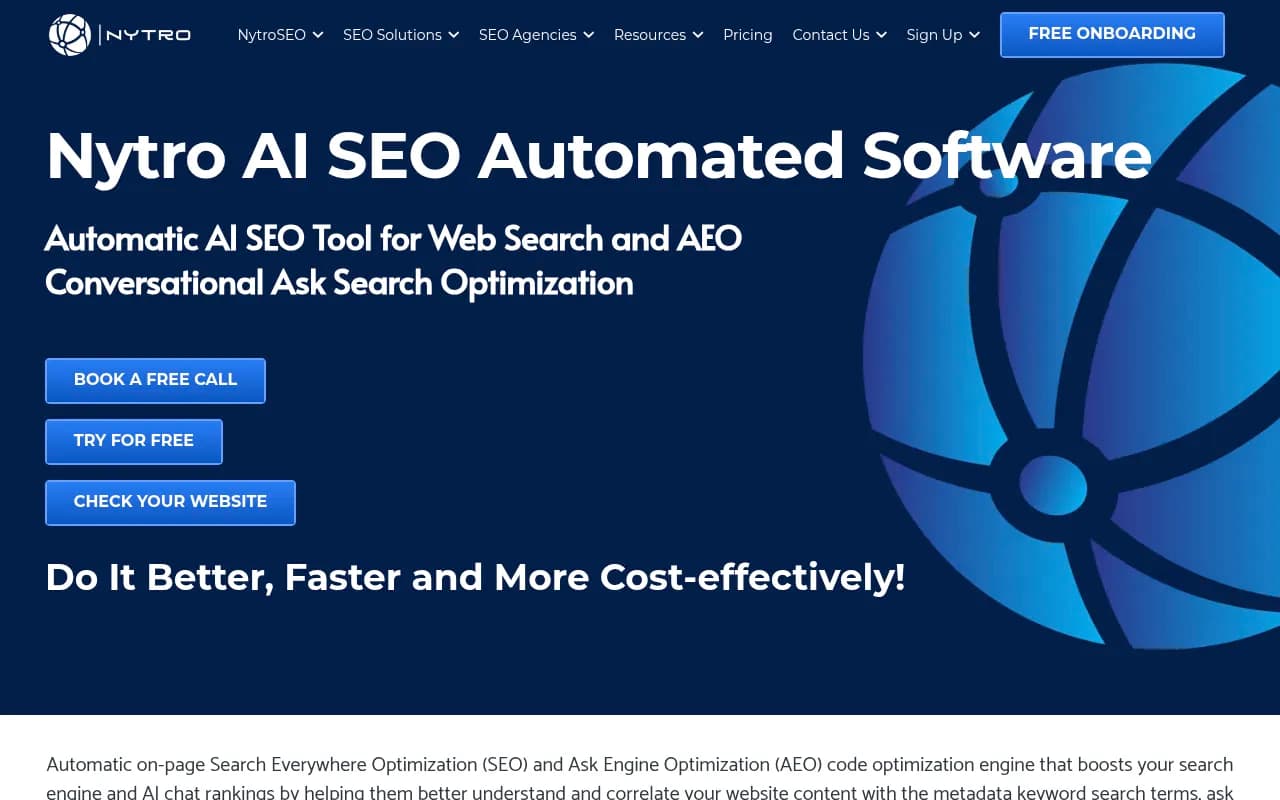
NytroSEO is an automated on-page SEO tool focused on meta tag optimization. The core idea: missing, duplicate, or poorly written meta titles and descriptions hurt your rankings, and fixing them manually across hundreds of pages is tedious. NytroSEO automates that process, scanning your site, identifying issues, and applying optimizations 24/7 without requiring constant manual input.
It's positioned for SEO agencies and SMBs that want to improve Google/Bing rankings without dedicating a full-time person to on-page SEO hygiene. It has added some "AEO" (Ask Engine Optimization) language to its marketing, though the core product remains meta tag and title automation rather than AI search monitoring.
Side-by-side comparison
| Feature | Promptwatch | NytroSEO |
|---|---|---|
| Primary use case | AI search visibility & GEO | On-page SEO automation (meta tags) |
| AI model tracking | 10+ (ChatGPT, Perplexity, Gemini, Claude, Grok, etc.) | None |
| Traditional SEO tools | Limited | Core focus |
| Content generation | Yes (Content Agents) | No |
| Answer gap analysis | Yes | No |
| AI crawler logs | Yes | No |
| Meta tag optimization | No | Yes (core feature) |
| Competitor heatmaps | Yes (AI visibility) | No |
| Prompt volume & difficulty | Yes | No |
| Reddit & YouTube tracking | Yes | No |
| ChatGPT Shopping tracking | Yes | No |
| Free tier | Free trial (50 prompts) | Free tier available |
| Starting price | $99/mo | ~$49/mo |
| G2 / review rating | 4.7/5 (G2) | Positive (AppSumo reviews) |
| Agency support | Yes (custom plans, multi-site) | Yes (agency-focused) |
| API access | Yes | Limited |
| Multi-language/region | Yes | Limited |
Head-to-head feature deep-dive
Core purpose and positioning
This is the most important thing to understand before comparing anything else: these tools are solving different problems.
Promptwatch exists because AI search engines (ChatGPT, Perplexity, Gemini) are now a meaningful traffic and brand discovery channel, and most brands have no idea whether they're visible there or not. The platform tracks citations, scores visibility, and then helps you create content that gets cited.
NytroSEO exists because on-page SEO is still largely a manual, repetitive task. Writing and optimizing meta titles and descriptions for 500 pages is boring, error-prone work. NytroSEO automates it.
Verdict: Neither tool is "better" in the abstract -- they serve different channels. The question is which channel matters more to you right now.
AI search visibility
Promptwatch tracks your brand across 10 AI platforms in real time. You get visibility scores, citation counts, page-level data showing which of your pages are being cited and by which models, and competitor comparisons. The AI Crawler Logs feature shows when bots like ChatGPT's crawler or Perplexity's agent hit your site, which pages they read, and whether those pages eventually get cited.
NytroSEO has added "AEO" (Ask Engine Optimization) to its marketing, and there's some logic to that -- well-structured meta tags and schema can help AI models understand your content. But NytroSEO doesn't track whether you're actually appearing in AI-generated answers. There's no citation monitoring, no visibility score, no prompt tracking.
Verdict: Promptwatch wins this category completely. NytroSEO doesn't compete here.
On-page SEO automation
NytroSEO's strength is automating the meta tag optimization workflow. It scans for missing titles, duplicate descriptions, unoptimized image alt text, and anchor text issues, then applies fixes automatically. For agencies managing dozens of client sites, this kind of automation saves real time.
Promptwatch doesn't do traditional on-page SEO. It's not scanning for missing H1 tags or duplicate meta descriptions. Its content tools are focused on creating new content that ranks in AI search, not fixing existing page metadata.
Verdict: NytroSEO wins this category. If on-page SEO automation is your primary need, it's the right tool.
Content creation and optimization
Promptwatch's Content Agents generate full articles, listicles, comparisons, and content briefs. The key differentiator is that the content is grounded in real data: which prompts have high volume, which competitors are getting cited for those prompts, what the AI models are actually saying in their responses. You're not generating generic SEO filler -- you're targeting specific gaps in AI search coverage.
NytroSEO doesn't generate content. It optimizes the metadata around existing content. These are genuinely different things.
Verdict: Promptwatch wins for content creation. NytroSEO doesn't offer this.
Competitor analysis
Promptwatch's competitor heatmaps show you which brands are winning visibility for each prompt across each AI model. Answer Gap Analysis identifies specific prompts where competitors are cited but you're not -- with enough detail to know exactly what content you'd need to create to compete.
NytroSEO has some competitor analysis features, but they're focused on traditional SEO metrics (keyword rankings, meta tag comparisons) rather than AI search visibility.
Verdict: Promptwatch wins for AI-focused competitor analysis. NytroSEO is more useful for traditional SEO competitive research.
Ease of use and onboarding
NytroSEO has a reputation for strong onboarding support. Multiple user reviews mention extended onboarding calls with the founder, and the product is designed to work automatically once set up -- which lowers the ongoing effort required.
Promptwatch has more surface area to learn. The platform covers prompt tracking, content generation, crawler logs, competitor analysis, and traffic attribution. Some users have noted the interface can feel dense at first. That said, the free trial lets you start with 50 prompts and get a feel for the data before committing.
Verdict: NytroSEO has a simpler initial learning curve. Promptwatch takes more time to get value from, but the scope is also much larger.
Integrations and data export
Promptwatch connects with Cloudflare, Fastly, Vercel, Google Search Console, and server logs for crawler data. It has a Looker Studio integration and an API for custom workflows. Attribution data connects AI visibility to actual traffic and revenue.
NytroSEO integrates with standard CMS platforms and has some API capabilities, though the integration ecosystem is more limited compared to Promptwatch's infrastructure-level connections.
Verdict: Promptwatch has a more developed integration story, particularly for teams that want to connect AI visibility data to their existing analytics stack.
Pricing comparison
| Plan | Promptwatch | NytroSEO |
|---|---|---|
| Free | Free trial (50 prompts) | Free tier available |
| Entry | $99/mo (Essential: 1 site, 50 prompts, 5 articles) | ~$49/mo |
| Mid-tier | $249/mo (Professional: 2 sites, 150 prompts, 15 articles, crawler logs) | ~$149-$249/mo |
| Upper tier | $579/mo (Business: 5 sites, 350 prompts, 30 articles) | ~$499/mo |
| Agency/Enterprise | Custom pricing | Custom pricing |
| Annual discount | Yes | Yes (30-day free trial) |
NytroSEO is cheaper at every tier, which matters for smaller agencies or solo operators. Promptwatch's higher price reflects a broader platform -- more data sources, more features, more infrastructure.
Pros and cons
Promptwatch
Pros:
- Tracks actual AI search citations across 10+ models, not just traditional search
- Content Agents generate AI-optimized content grounded in real prompt data
- AI Crawler Logs show exactly how AI bots interact with your site
- Answer Gap Analysis identifies specific content opportunities
- Reddit and YouTube tracking, ChatGPT Shopping monitoring
- Strong integration options (Cloudflare, GSC, Looker Studio, API)
- 4.7/5 on G2, used by recognizable brands
Cons:
- More expensive than NytroSEO at every tier
- Steeper learning curve -- more features means more to understand
- Doesn't handle traditional on-page SEO (meta tags, technical SEO)
- Overkill if you only need traditional Google/Bing ranking improvements
NytroSEO
Pros:
- Genuinely automates tedious on-page SEO work (meta tags, titles, alt text)
- Lower price point, accessible for smaller budgets
- Strong onboarding support with personal calls
- Works 24/7 without constant manual input
- Good fit for agencies managing many client sites
Cons:
- No actual AI search citation tracking despite AEO marketing language
- No content generation
- No prompt intelligence or AI visibility scoring
- Limited integrations compared to enterprise-grade tools
- Narrower scope -- if your needs grow beyond meta tags, you'll need additional tools
Who should pick which tool
Choose Promptwatch if:
- You want to appear in ChatGPT, Perplexity, Gemini, or other AI-generated answers
- You're running a brand that needs to track AI search visibility at scale
- You want to generate content specifically engineered to get cited by AI models
- You need to understand how AI crawlers interact with your site
- You're an agency whose clients are asking about AI search performance
- You want competitor analysis that covers the AI search channel
Choose NytroSEO if:
- Your primary goal is improving Google/Bing rankings through on-page SEO
- You manage multiple client sites and need to automate meta tag optimization
- You want a lower-cost tool that handles SEO hygiene automatically
- Your clients aren't yet asking about AI search visibility
- You need something that runs in the background with minimal ongoing effort
Consider using both if:
- You want to cover both traditional search and AI search channels
- You're an agency that needs on-page SEO automation AND AI visibility tracking for clients
- Your team has bandwidth to manage two platforms with different focuses
Final verdict
These tools don't actually compete -- they cover different channels. NytroSEO is a solid, affordable automation tool for traditional on-page SEO. If your job is keeping meta tags clean across dozens of sites, it does that well and saves real time.
Promptwatch is for a different problem entirely: understanding and improving how your brand shows up in AI-generated answers. That's a newer, faster-growing channel, and Promptwatch is currently the most complete platform for it -- tracking citations, generating optimized content, logging AI crawler behavior, and connecting it all to traffic and revenue.
If you're only thinking about Google rankings, NytroSEO is the more practical choice. If AI search is on your radar (and in 2026, it should be), Promptwatch is the tool built for it.