Key takeaways
- Hall AI is winding down, and agencies need a replacement that handles multiple clients, not just single-brand monitoring
- Most alternatives fall into two camps: monitoring-only dashboards (useful but limited) and full optimization platforms that help you act on what you find
- The right pick depends heavily on whether your agency needs white-label reporting, content generation, crawler diagnostics, or enterprise analytics
- Promptwatch is the only platform in this space rated as a leader across all categories in 2026, covering monitoring, content generation, and crawler logs in one place
- Budget options like Otterly.AI and LLMrefs work for getting started, but agencies managing 5+ clients will quickly hit their limits
Hall AI built a decent reputation as an entry point for AI brand visibility monitoring. Clean interface, reasonable pricing, and enough coverage to get teams thinking about how they appear in ChatGPT and Perplexity responses. But with Hall shutting down, agencies are left with a real problem: where do you move 10, 20, or 50 client accounts?
This isn't just about finding a like-for-like replacement. Most agencies have realized that monitoring alone isn't enough. Knowing your client is invisible in AI search is one thing. Knowing what to do about it is another. The tools below were evaluated with that in mind -- not just "does it track AI citations?" but "can an agency actually run this across multiple clients and show results?"
What agencies actually need from a Hall AI replacement
Before getting into specific tools, it's worth being clear about what makes an agency's requirements different from a single brand's.
You're managing multiple clients simultaneously, often in different industries and regions. You need white-label or multi-workspace setups. You need reporting that clients can understand without a 30-minute explainer. And you need to show progress, which means the tool has to do more than show a dashboard -- it has to help you move the numbers.
The evaluation criteria used here:
- Multi-client or multi-workspace support
- Coverage across AI models (ChatGPT, Perplexity, Gemini, Claude, etc.)
- Whether the tool goes beyond monitoring into optimization
- Reporting and export quality
- Pricing that makes sense at agency scale
The 7 best Hall AI alternatives for agencies in 2026
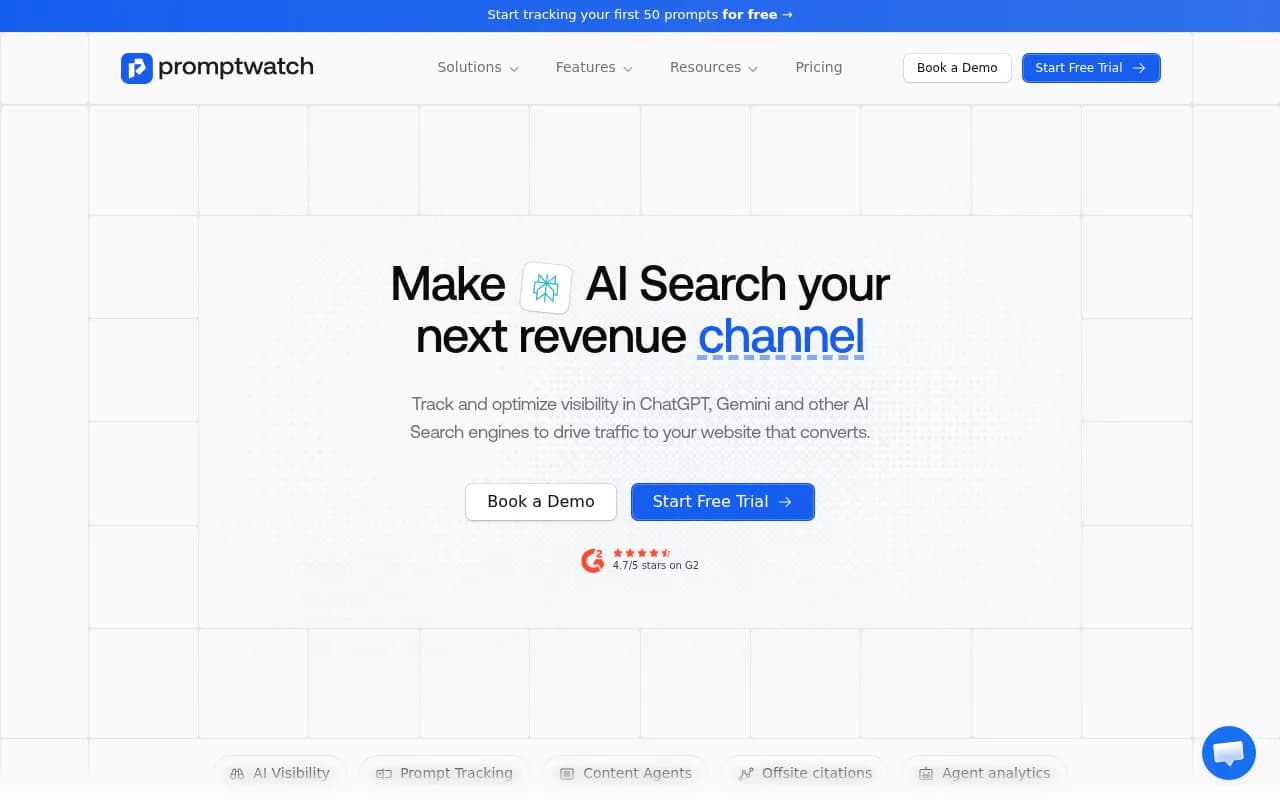
1. Promptwatch -- best overall for agencies that want to act, not just watch
Promptwatch is the most complete platform in this space right now. It's used by 1,480+ brands and agencies including Booking.com and Center Parcs, and it's the only tool in a 2026 comparison of 12 GEO platforms rated as a "Leader" across every category.
What makes it different for agencies is the full action loop. You find the gaps (which prompts are your clients missing?), generate content to fill them (AI-assisted articles and briefs grounded in real prompt data), and track whether that content actually gets cited. Most tools stop at step one.
The crawler log feature is particularly useful for agencies. You can see exactly when AI crawlers like ChatGPT and Perplexity hit your client's pages, which pages they read, what errors they encounter, and when a page moves from "crawled" to "cited." That's the kind of diagnostic data that lets you tell a client "here's why you're not appearing, and here's what we fixed."
Coverage spans 10 AI models: ChatGPT, Perplexity, Google AI Overviews, Google AI Mode, Claude, Gemini, Meta/Llama, DeepSeek, Grok, and Copilot. Pricing starts at $99/month for a single site, with the Professional plan at $249/month covering 2 sites and 150 prompts. Agency and enterprise pricing is available for larger setups.
2. Scrunch AI -- best for brand narrative monitoring
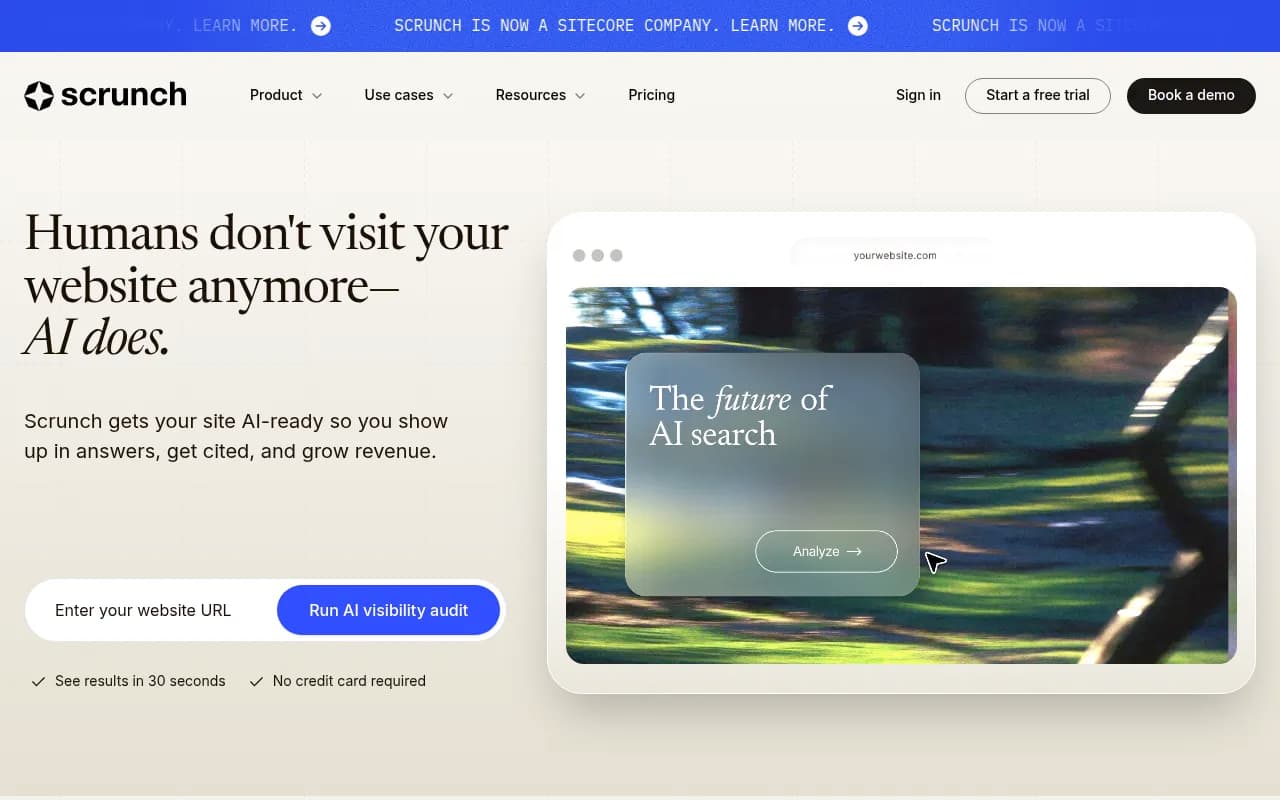
Scrunch AI takes a different angle. Where most tools focus on citation counts and visibility scores, Scrunch is more interested in how AI models are talking about your brand. Are they describing you accurately? Are they associating you with the right topics and competitors?
For agencies managing brand-sensitive clients -- financial services, healthcare, consumer brands -- that narrative layer matters. Scrunch also includes crawl diagnostics and what it calls an "Agent Experience Platform," which gives you some optimization guidance alongside the monitoring.
It's a strong pick if your clients care more about brand perception in AI responses than raw citation volume. The enterprise pricing can be steep, but for the right client type it's justified.
3. Peec AI -- best for cross-engine reporting
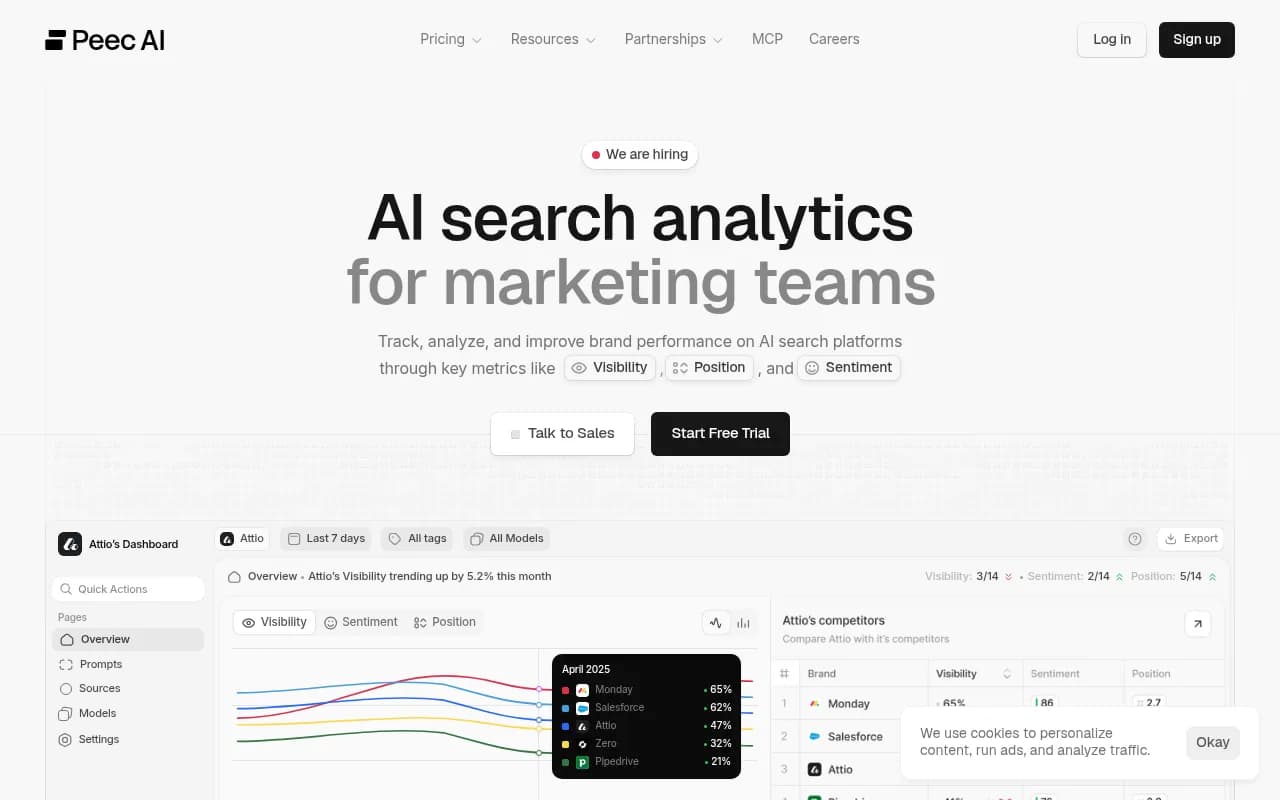
Peec AI is built around clean, exportable reporting across multiple AI engines. If your agency workflow involves sending clients a monthly PDF or Looker Studio dashboard, Peec's reporting layer is one of the better ones in this space.
It covers the major AI models and gives you share-of-voice metrics that translate well into client-facing language. The tool is monitoring-focused -- there's no content generation or crawler log equivalent -- but what it does, it does cleanly.
Good fit for agencies that have a separate content production workflow and just need reliable data to feed into it.
4. Profound -- best for enterprise clients
Profound is the heaviest tool on this list. It's built for brands with dedicated analytics teams and complex reporting needs -- think Fortune 500 clients with multiple product lines and regions to track.
The analytics depth is real. Profound gives you agent workflow integrations, detailed share-of-voice breakdowns, and the kind of enterprise dashboard that a CMO can present to a board. The tradeoff is price and complexity. It's not a tool you spin up in an afternoon for a mid-market client.
If your agency has a handful of large enterprise accounts and you need to go deep on AI search analytics, Profound is worth evaluating seriously.
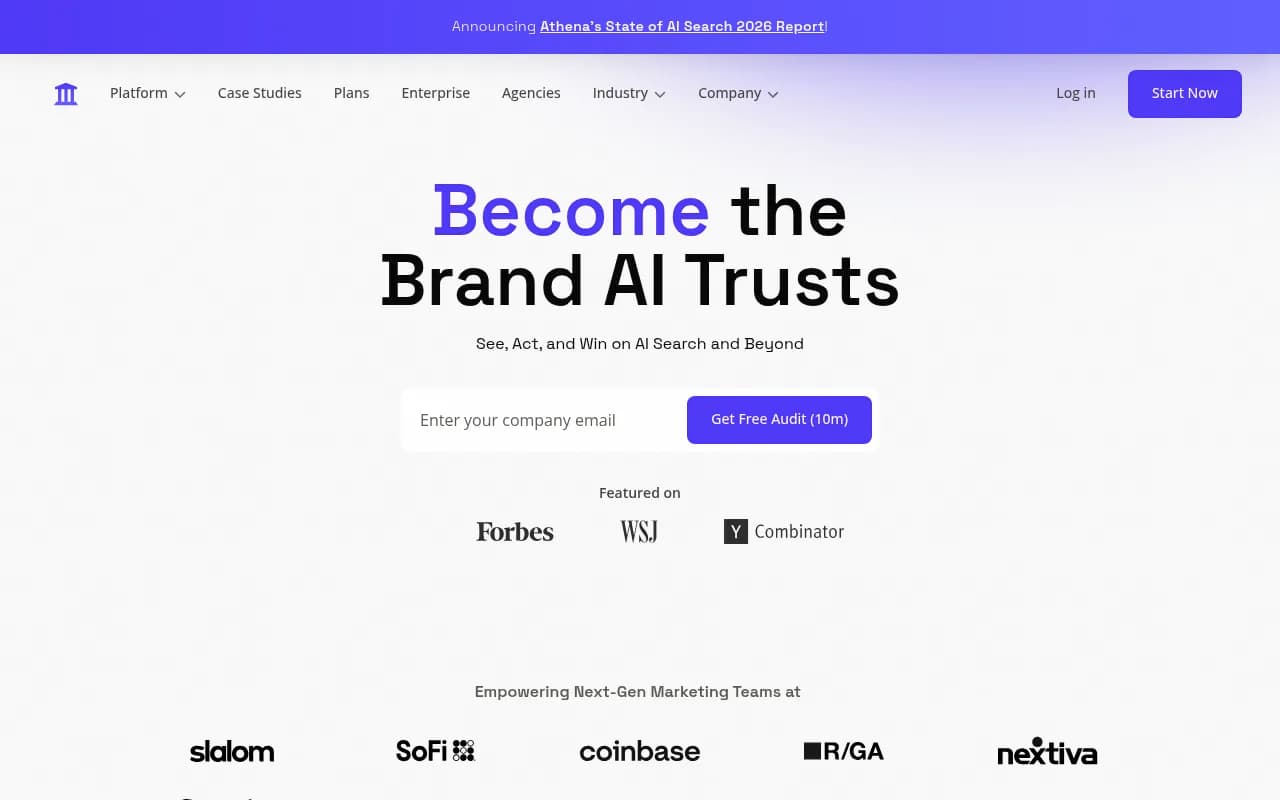
5. AthenaHQ -- best for GEO strategy and LLM coverage breadth
AthenaHQ covers a wide range of LLMs and has a solid citation intelligence layer. It's positioned more as a GEO strategy tool than a pure monitoring dashboard, which means you get some guidance on what to optimize, not just what's underperforming.
The content optimization features are useful for agencies that want to brief writers with AI-specific recommendations. It's not as deep as Promptwatch's content generation capabilities, but it's more actionable than a pure monitoring tool.
One limitation: no Reddit or YouTube tracking, and no ChatGPT Shopping monitoring. For agencies in e-commerce or consumer categories, that's a gap worth noting.
6. Otterly.AI -- best budget option for smaller agencies
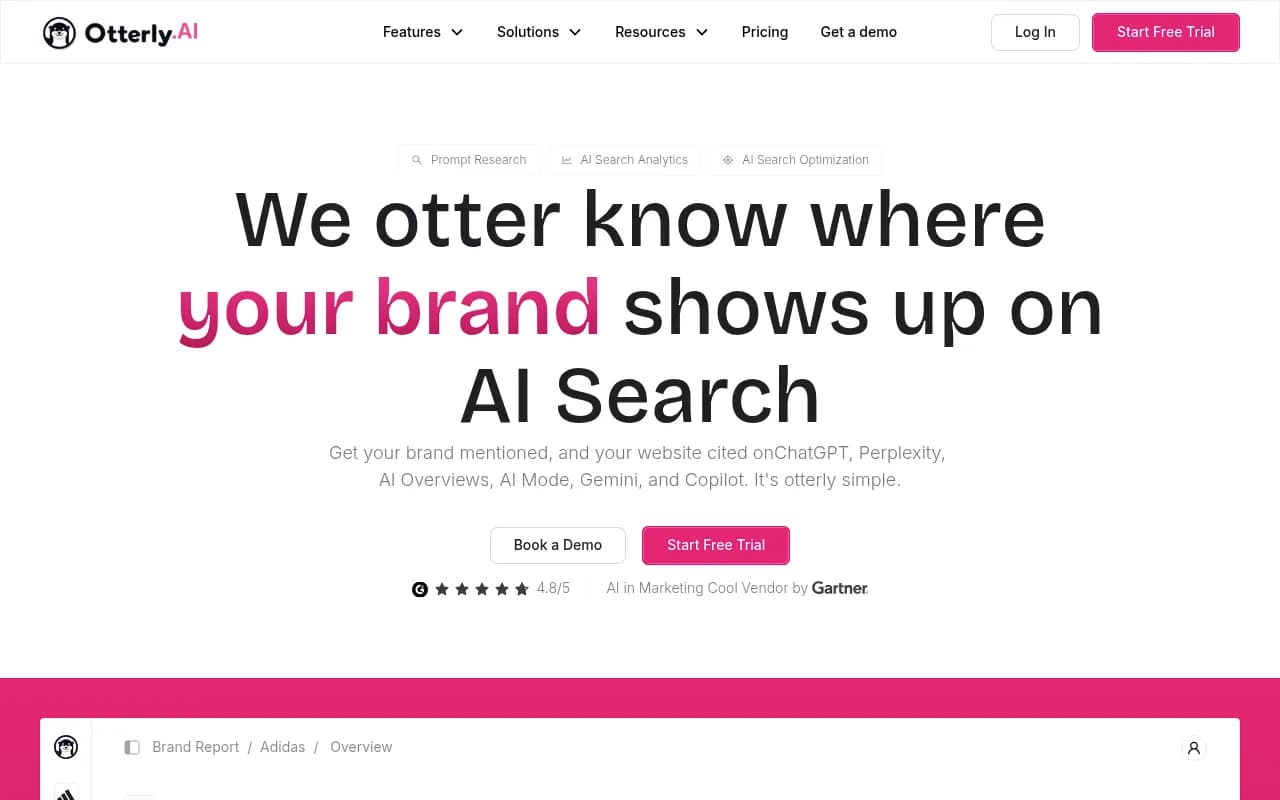
Otterly.AI is the most accessible entry point on this list. It's affordable, reasonably easy to set up, and covers the core AI models well enough for clients who are just starting to think about AI visibility.
The honest limitation is that it's monitoring-only. There's no content generation, no crawler logs, no visitor analytics. For an agency trying to show ROI and move client metrics, you'll hit the ceiling quickly. But as a starting point -- or for clients with tight budgets who just want to know where they stand -- it's a solid choice.
7. LLMrefs -- best for keyword-first workflows
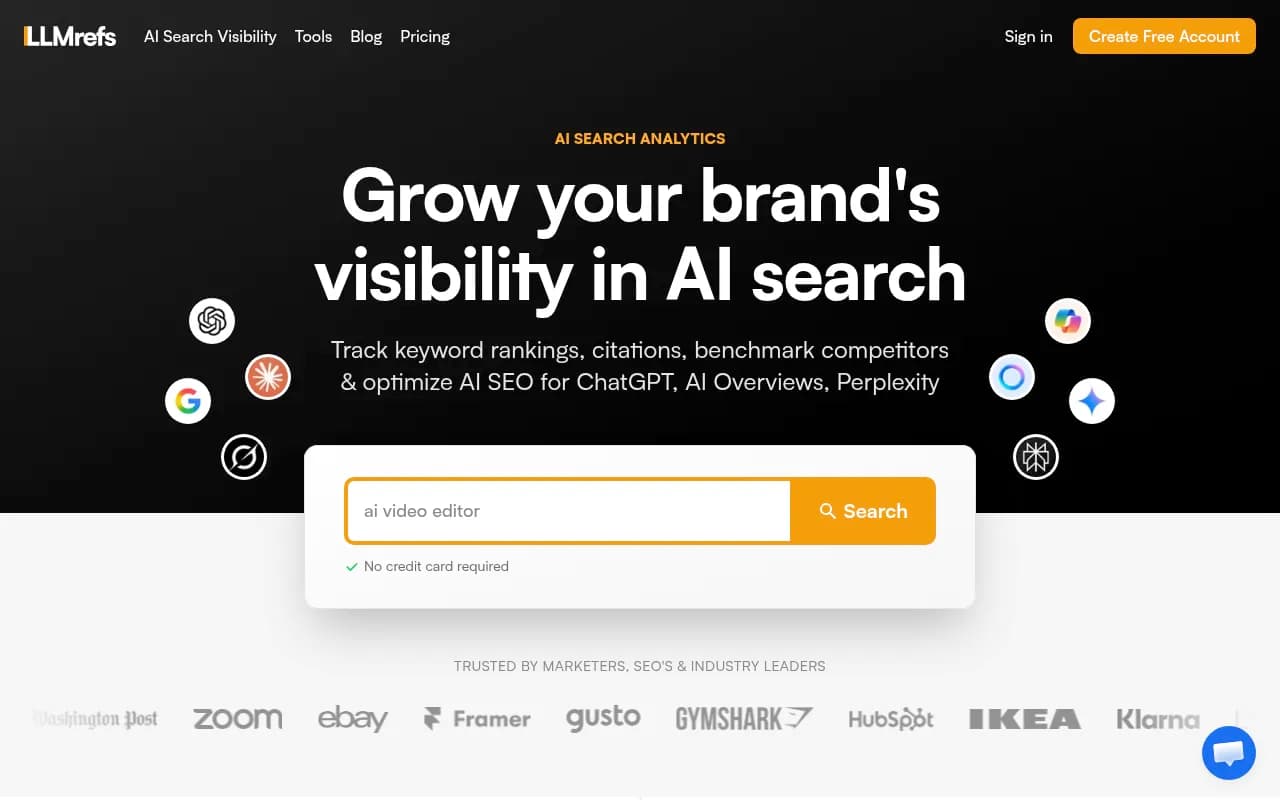
LLMrefs approaches AI visibility from an SEO-style angle. It's built around query and keyword data, which makes it familiar territory for teams coming from traditional SEO workflows. You get prompt volume estimates, citation data, and enough structure to prioritize which topics to target.
It's a budget-friendly option and works well for agencies that already have content production in place and just need the data layer to direct it. Not the most feature-rich tool on this list, but it fits neatly into existing SEO workflows without requiring a full process overhaul.
How these tools compare
| Tool | Multi-client support | Content generation | Crawler logs | AI models covered | Best for |
|---|---|---|---|---|---|
| Promptwatch | Yes (agency plans) | Yes | Yes | 10 | Full-service agencies |
| Scrunch AI | Yes | No | Yes | 6+ | Brand narrative monitoring |
| Peec AI | Yes | No | No | 6+ | Reporting-focused agencies |
| Profound | Yes | No | No | 8+ | Enterprise analytics |
| AthenaHQ | Yes | Partial | No | 8+ | GEO strategy |
| Otterly.AI | Limited | No | No | 5+ | Budget / starter |
| LLMrefs | Limited | No | No | 4+ | SEO-style workflows |
What to think about when migrating from Hall AI
Moving client accounts from Hall to a new platform isn't just a technical switch. A few things worth planning for:
Historical data. Hall's data won't transfer. You'll be starting fresh on visibility baselines, which means the first 4-6 weeks on a new platform are mostly about establishing benchmarks. Set client expectations early.
Prompt libraries. If you built out a prompt set in Hall for each client, you'll need to rebuild those. Some tools (Promptwatch, Profound) have prompt suggestion features that can speed this up. Others require manual entry.
Reporting formats. Clients who got used to Hall's reporting style will need a transition period. Pick a tool whose reports you can customize or export, and plan a brief onboarding call with each client to walk through the new dashboard.
Coverage gaps. Hall's model coverage was decent but not exhaustive. Use the migration as an opportunity to expand -- make sure your new tool covers Google AI Overviews and Google AI Mode, which are increasingly important for clients in competitive verticals.
The monitoring-vs-optimization gap
One thing that stands out when evaluating these tools: most of them are still primarily monitoring dashboards. They'll tell you your client's visibility score, which prompts they appear in, and how they compare to competitors. That's useful. But it leaves the "so what do we do?" question entirely to the agency.
For agencies that have strong content teams and clear processes, that's fine -- you just need the data. But for agencies trying to scale AI visibility as a service, the gap between "here's the data" and "here's the content that will fix it" is where a lot of time gets lost.
Tools like Promptwatch that close that loop -- from gap identification to content generation to citation tracking -- are worth the higher price point if you're running AI visibility as a core service offering. The alternative is stitching together a monitoring tool, a content brief tool, and a tracking tool, which works but adds friction.
Which tool should your agency pick?
If you're running a full-service agency and AI visibility is a core offering, Promptwatch is the most complete option. The combination of monitoring, content generation, crawler logs, and 10-model coverage is hard to match at any price point.
If your clients are enterprise-level and need deep analytics with board-ready reporting, Profound is worth the investment.
If you're a smaller agency or just getting started with AI visibility as a service, Otterly.AI or LLMrefs let you move quickly without a large upfront commitment. Just know you'll likely outgrow them.
And if brand narrative -- how AI models describe your clients, not just whether they appear -- is the primary concern, Scrunch AI is the most focused tool for that job.
The Hall shutdown is genuinely disruptive for agencies that built workflows around it. But it's also a reasonable moment to upgrade. Most of the tools above do more than Hall did, and the space has matured enough that you don't have to compromise between monitoring quality and optimization capability.