Key takeaways
- Hall AI is a capable entry-level GEO monitoring tool, but it lacks deep crawler log visibility, content generation, and actionable optimization features that growing teams need.
- Crawler log monitoring matters because it shows you why AI models aren't citing your pages -- not just that they aren't.
- Most Hall alternatives fall into two camps: monitoring-only tools (useful but limited) and full-loop platforms that help you find gaps, create content, and track results.
- Promptwatch is the only platform in 2026 rated as a leader across all GEO categories, including crawler logs, content generation, and AI traffic attribution.
- The right alternative depends on your team size, budget, and whether you need to just watch or actually fix things.
Hall AI earned a decent reputation as an early GEO monitoring tool. It tracks brand mentions across ChatGPT, Gemini, Perplexity, and Claude, shows share of voice trends, and even has some agent analytics for watching how AI crawlers interact with your site. For a small team getting started with AI visibility, it's a reasonable starting point.
But "reasonable starting point" is where a lot of teams get stuck.
The problem isn't that Hall is bad. It's that monitoring without acting is a slow way to lose ground. You can watch your share of voice decline across six AI models in a beautiful dashboard and still have no idea what to do about it. That gap -- between knowing you're invisible and knowing how to fix it -- is where Hall falls short, and where the alternatives in this guide start to pull ahead.
One specific area worth calling out: crawler log monitoring. This is the capability that shows you which pages AI crawlers are actually visiting, how often they return, what errors they hit, and whether a page that got crawled ever made it into a citation. Hall has some agent analytics, but it doesn't give you the full picture of what's happening between crawl and citation. That matters a lot when you're trying to diagnose why a page isn't being referenced.
Let's look at what Hall actually offers, where it falls short, and which alternatives are worth your time in 2026.
What Hall AI does well (and where it stops)
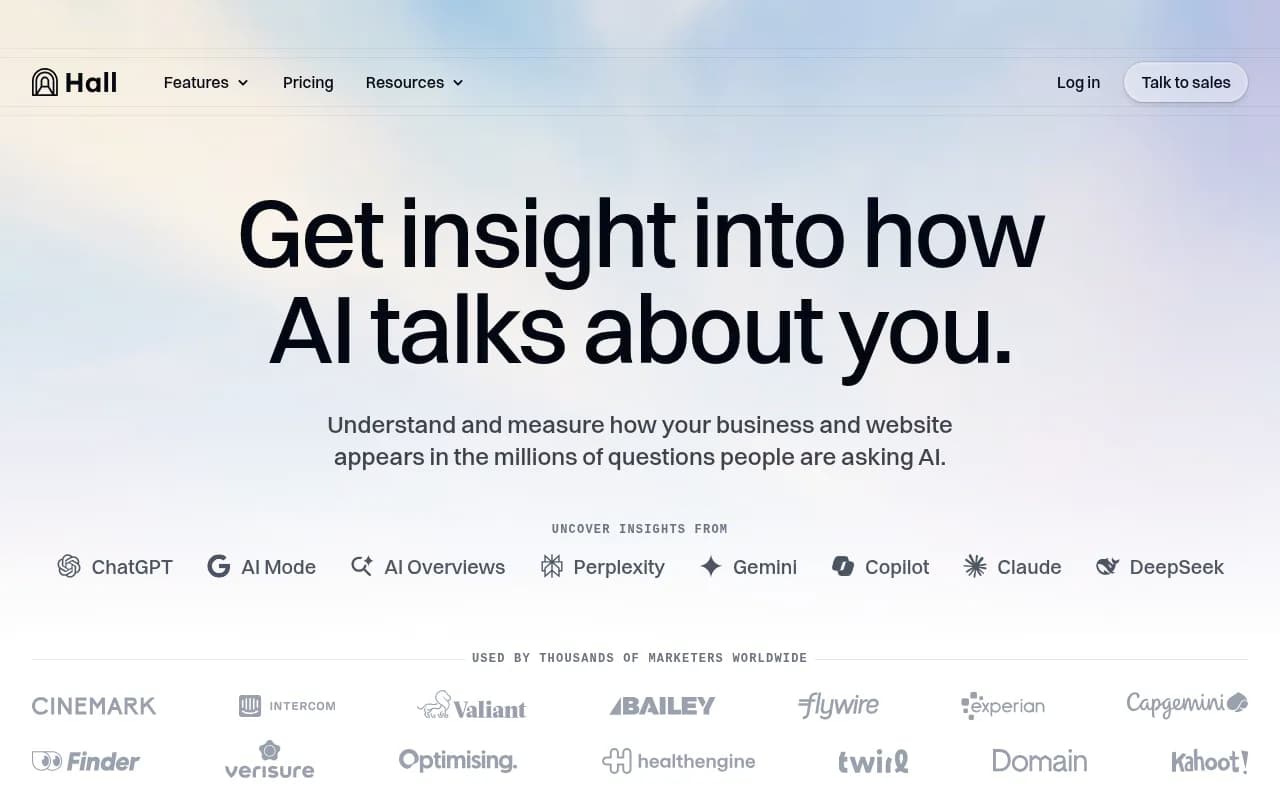
Hall AI (usehall.com) is built around a few core ideas: track your brand across AI search engines, understand how often you're mentioned, and get some visibility into how AI crawlers engage with your site.
According to Radarkit's 2026 review, Hall scores well on AI visibility tracking (4.8/5) and ease of use (4.8/5), but drops to 3.8/5 on pricing for small teams and 4.2/5 on reporting and integrations. Those lower scores reflect real friction: the platform gets expensive before it gets truly useful, and the export/integration story isn't strong enough for teams that need to connect AI visibility data to their broader marketing stack.
The agent analytics feature is genuinely interesting -- it visualizes real-time trends for AI crawlers and bots, showing entry points and crawl depth. But it stops short of giving you the full crawler log picture. You can see that a crawler visited your site. You can't easily see which specific pages got errors, which ones were crawled but never cited, or how long it took from first crawl to first citation. That diagnostic layer is missing.
For teams that just want to monitor, Hall is fine. For teams that want to improve, it's not enough.
Why crawler log monitoring matters in 2026
This is worth spending a moment on, because it's not obvious until you've hit the problem.
AI models like ChatGPT, Perplexity, and Claude don't cite pages at random. They cite pages they've crawled, understood, and found relevant to specific queries. If your page isn't being cited, there are a few possible reasons: the crawler never visited it, the crawler visited but hit an error, the content wasn't structured well enough for the model to extract an answer, or the page was crawled but lost out to a competitor's better answer.
Without crawler logs, you're guessing which of those is true. With crawler logs, you can see exactly what happened. Did GPTBot visit your /pricing page last week? Did it return? Did it get a 404 on your /blog/ai-seo-guide? Has Perplexity's crawler ever touched your new product pages?
This is the kind of data that turns "our AI visibility is down" from a vague problem into a fixable one. It's also why platforms that offer real crawler log access -- not just high-level bot traffic summaries -- are worth paying attention to.
The best Hall AI alternatives in 2026
Promptwatch -- best for the full optimization loop
Promptwatch is the most complete platform here, and the only one in a 2026 comparison of 12 GEO tools rated as a "Leader" across all categories. The reason it stands out isn't just the breadth of features -- it's the structure. Most tools show you data. Promptwatch is built around doing something with it.
The crawler log capability is real and detailed. You get real-time logs of AI crawlers (ChatGPT's GPTBot, Perplexity's crawler, Claude's agent, and others) hitting your site -- which pages they read, what errors they encounter, how often they return, and critically, when a page moves from "crawled" to "cited." That last piece is rare. Most platforms can tell you a crawler visited. Promptwatch tells you whether that visit ever turned into a citation, and how long it took.
Beyond crawler logs, the platform runs an Answer Gap Analysis that shows which prompts competitors are visible for but you aren't -- with the specific content gaps your site needs to fill. Content Agents then generate articles, listicles, and briefs grounded in that real prompt data. You're not writing generic SEO content; you're writing answers to questions AI models are already being asked and can't find on your site.
It monitors 10 AI models (ChatGPT, Perplexity, Google AI Overviews, Google AI Mode, Claude, Gemini, Meta/Llama, DeepSeek, Grok, Mistral, Copilot), tracks Reddit and YouTube as citation sources, and includes ChatGPT Shopping tracking for e-commerce brands. Pricing starts at $99/month for the Essential plan.
Peec AI -- best for cross-engine reporting
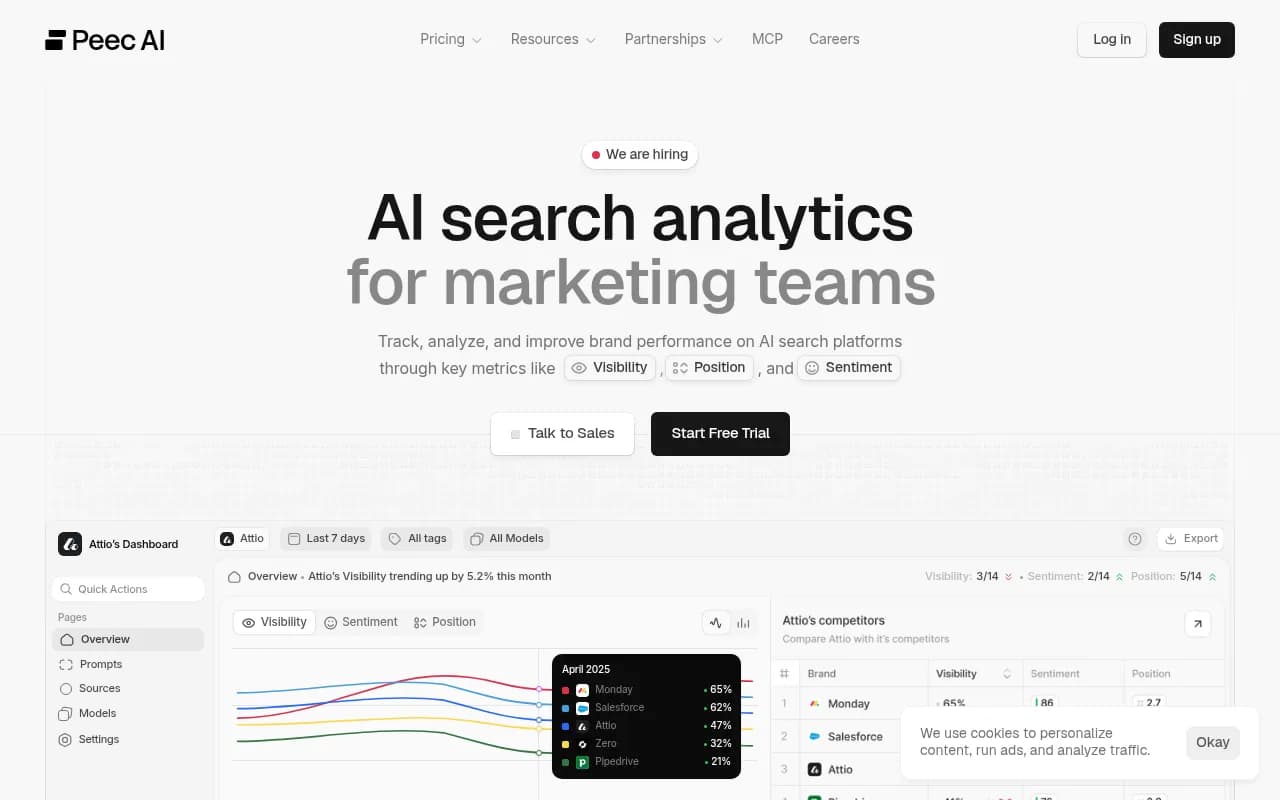
Peec AI is a solid monitoring tool with clean cross-engine reporting and good export options. If your main need is pulling structured data out of multiple AI models and feeding it into your own reporting stack, Peec handles that well. It's not a content optimization platform, but for teams that already have a content workflow and just need reliable visibility data, it's worth a look.
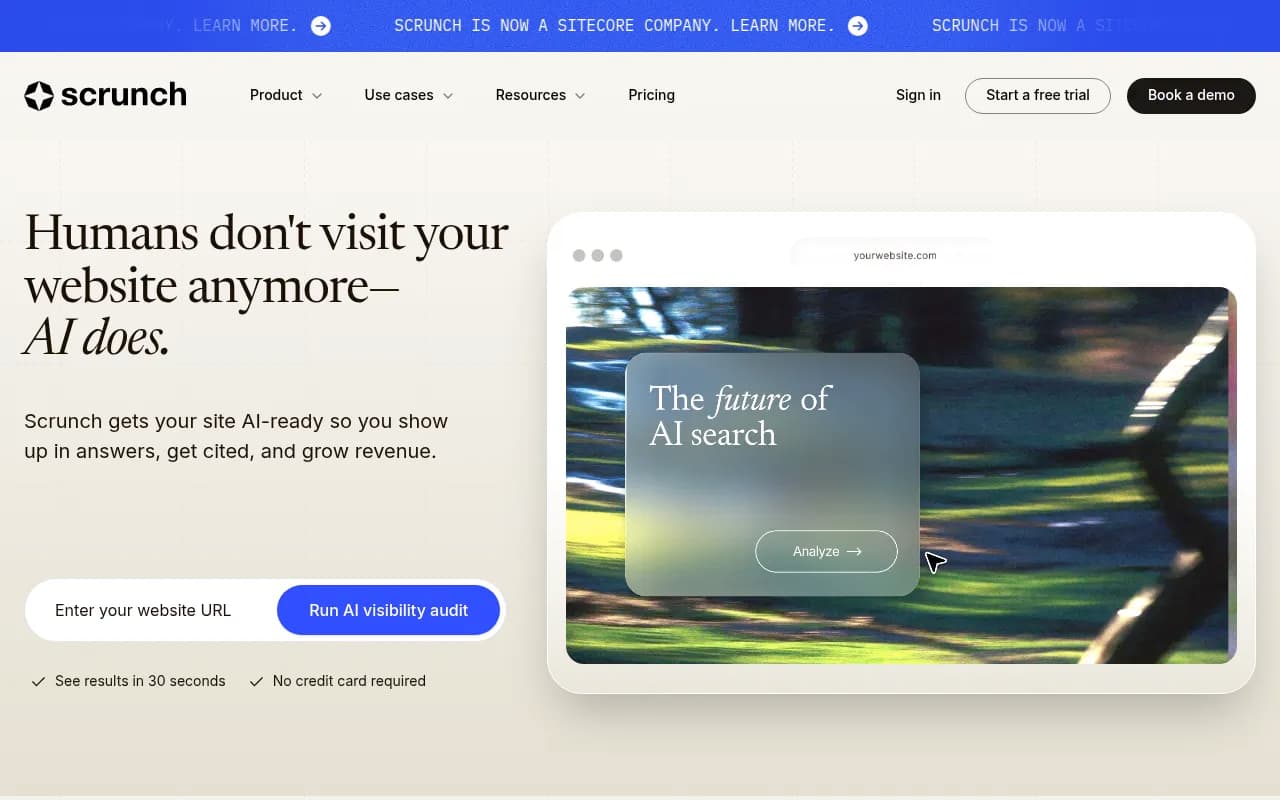
Scrunch AI -- best for brand narrative monitoring
Scrunch AI focuses on how your brand is being described and framed in AI responses, not just whether you're mentioned. That's a meaningful distinction. You might be cited frequently but described in ways that don't match your positioning. Scrunch surfaces that kind of narrative drift. It's particularly useful for brands in competitive categories where AI models tend to simplify or mischaracterize products.
Profound -- best for enterprise analytics
Profound has a strong enterprise feature set with deep analytics and what they call "bot readiness" -- helping you ensure your site meets the technical standards AI crawlers expect. The GetMint comparison notes that while Hall focuses on bot activity, Profound focuses on bot readiness. That's a useful framing: it's more proactive about technical compliance than Hall, though it comes at a higher price point and lacks some of the content generation capabilities that make Promptwatch useful for marketing teams.
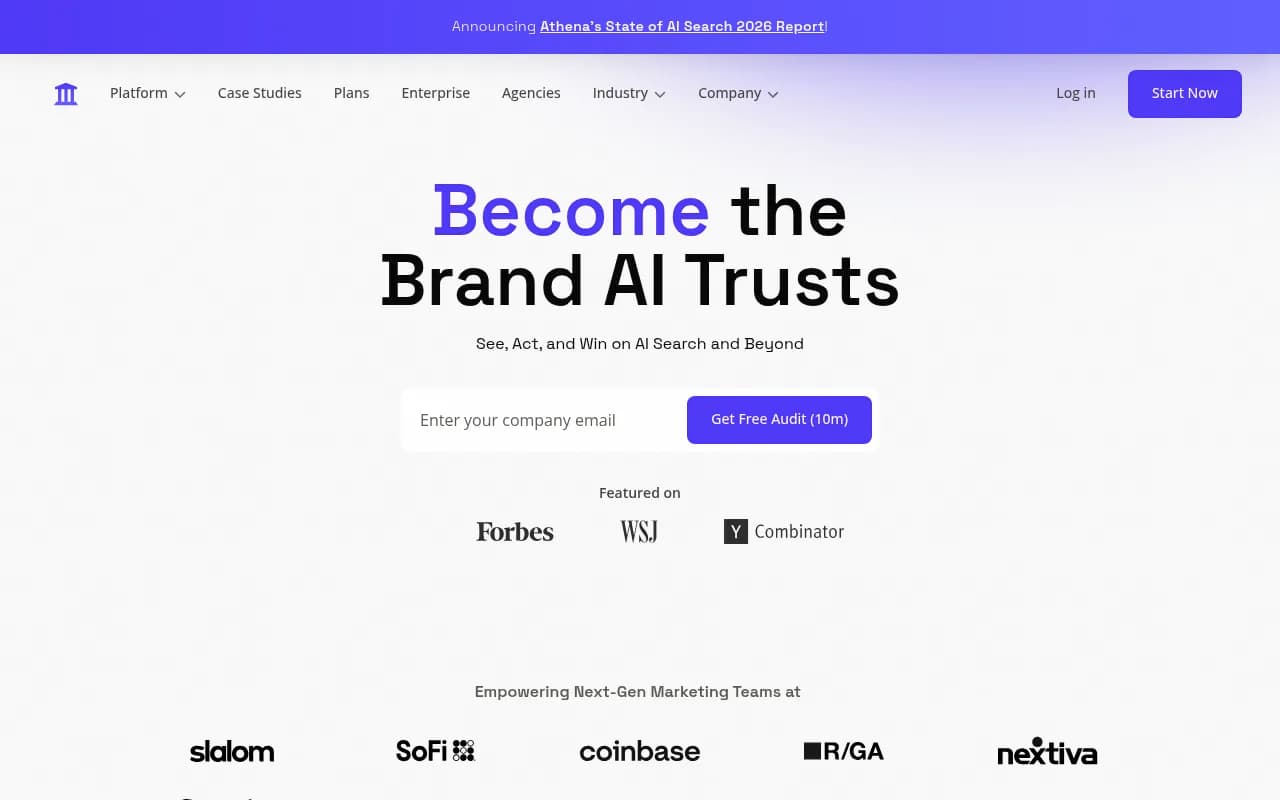
AthenaHQ -- best for GEO strategy
AthenaHQ is monitoring-focused but goes deeper on GEO strategy than most. It's good at helping you understand the competitive landscape across AI models and identify which content areas to prioritize. The gap is on the execution side -- it doesn't generate content or provide crawler logs, so you'll need to pair it with other tools if you want to act on what you find.
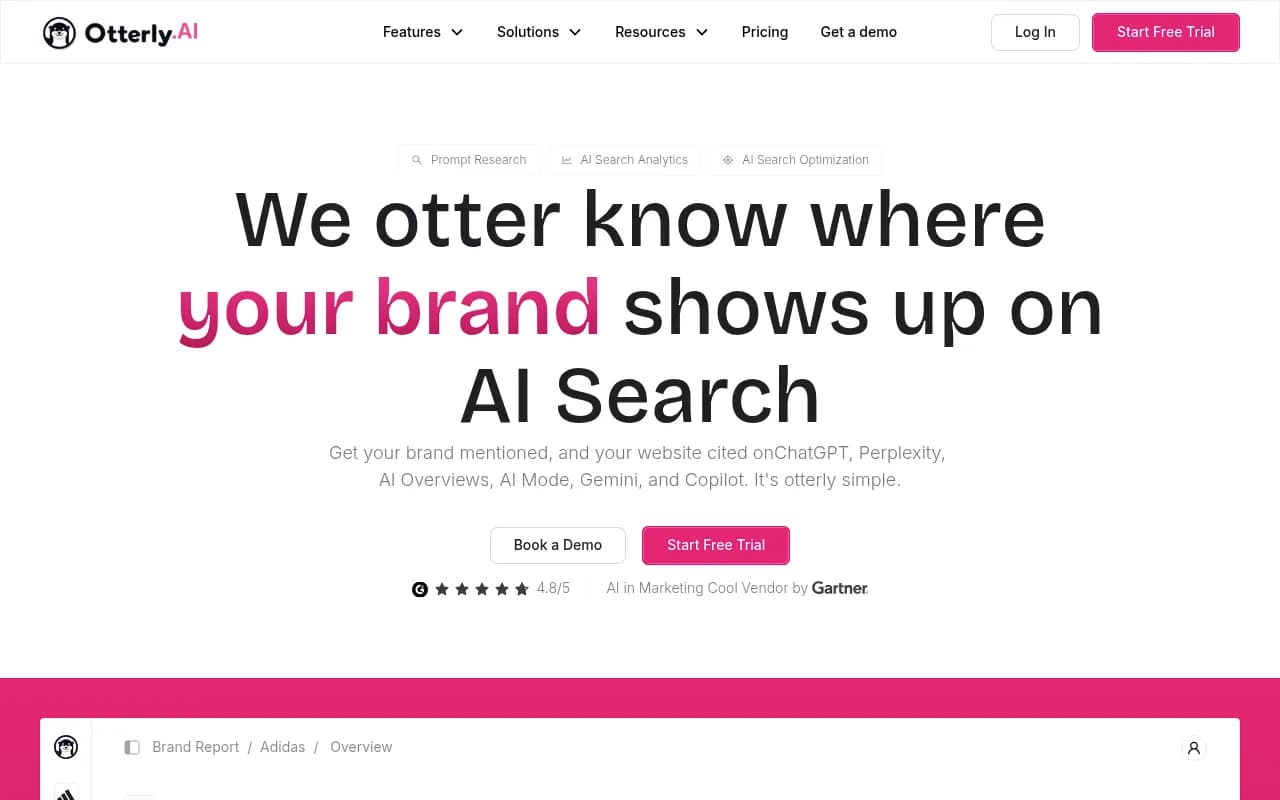
Otterly.AI -- best budget option
Otterly.AI is the easiest entry point for teams that are just starting to track AI visibility and don't want to commit to a larger platform yet. It's affordable, straightforward, and covers the basics of brand mention tracking across major AI models. Don't expect crawler logs, content generation, or deep analytics -- but as a starter tool, it does what it says.
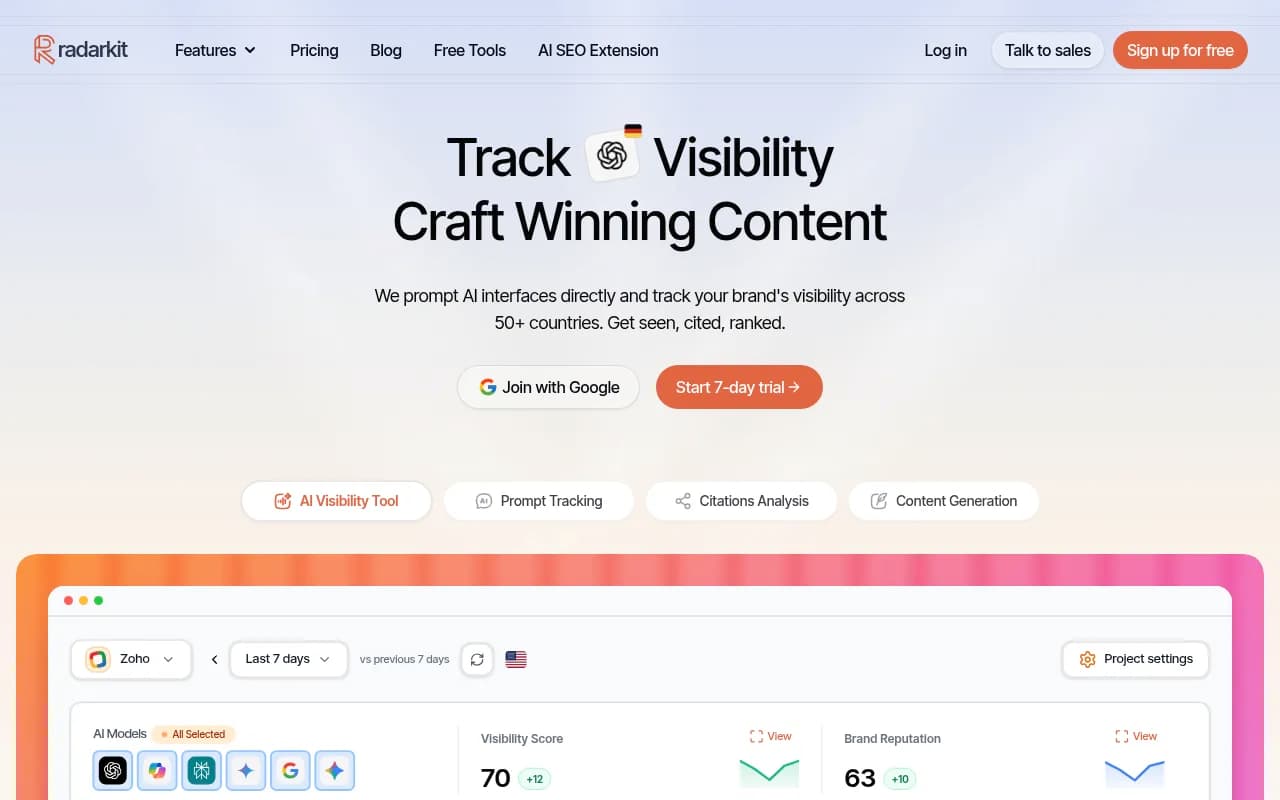
Radarkit -- best for agencies and content teams
Radarkit positions itself well for agencies managing multiple clients, with a workflow that connects visibility data to content recommendations. It's more content-team-friendly than some of the pure monitoring tools, and the interface is clean. Worth considering if you're an agency that needs to show clients clear before/after visibility data alongside content work.
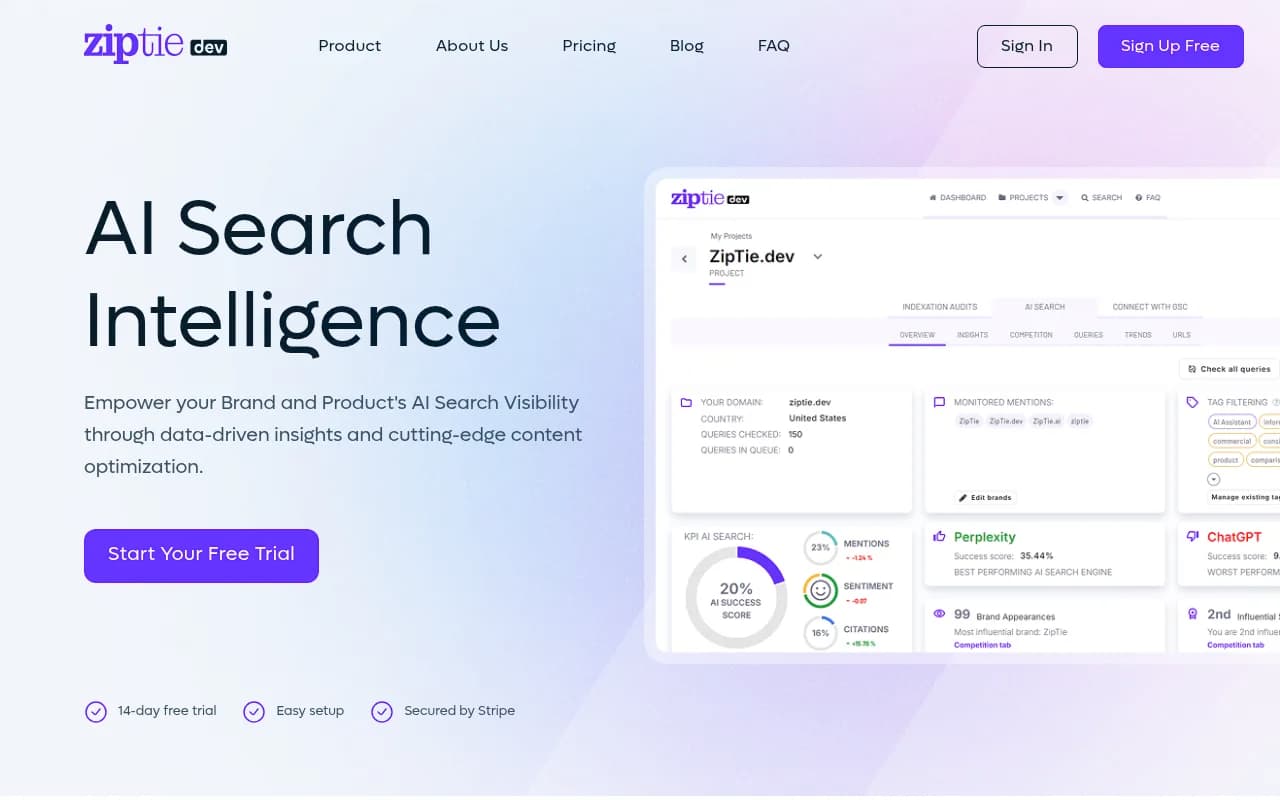
ZipTie -- best for AI Overviews and traffic impact
ZipTie has a specific focus on Google AI Overviews and connecting AI visibility to actual traffic impact. If Google AI Mode and AI Overviews are your primary concern (as opposed to ChatGPT or Perplexity), ZipTie's narrow focus is actually an advantage. It doesn't try to be everything, and the traffic attribution for AI Overviews is more developed than most general-purpose platforms.
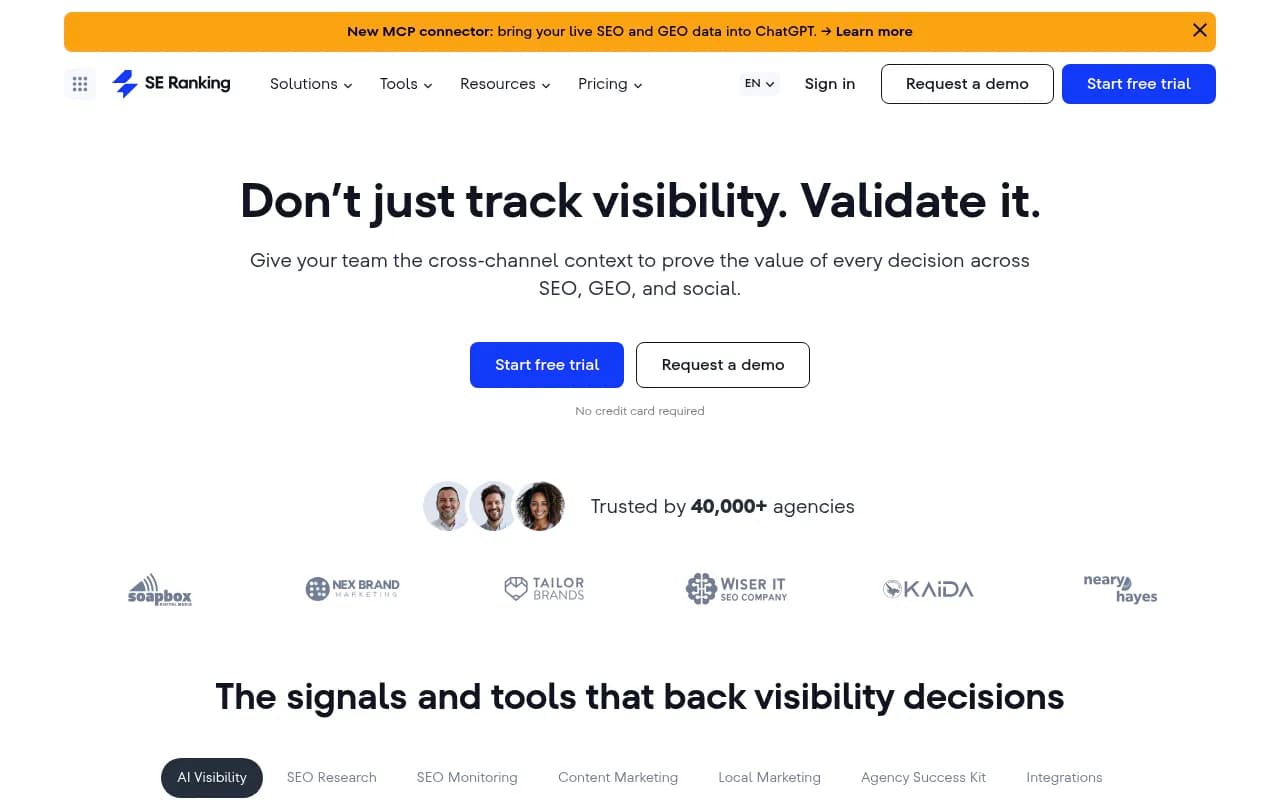
SE Ranking -- best for teams already in the SE Ranking ecosystem
SE Ranking's AI Visibility Tracker makes sense if you're already using SE Ranking for traditional SEO. It adds AI monitoring without requiring you to switch platforms or manage another subscription. The depth isn't quite there for teams that need AI visibility as a primary workflow, but for SE Ranking users who want to add GEO tracking without friction, it's the obvious choice.
How these tools compare
| Tool | Crawler logs | Content generation | Models tracked | Best for | Starting price |
|---|---|---|---|---|---|
| Promptwatch | Yes (real-time, page-level) | Yes (AI Content Agents) | 10 | Full optimization loop | $99/mo |
| Hall AI | Partial (agent analytics) | No | 6+ | Entry-level monitoring | Custom |
| Profound | Partial (bot readiness) | No | Multiple | Enterprise analytics | High |
| Scrunch AI | No | No | Multiple | Brand narrative tracking | Mid-range |
| AthenaHQ | No | No | Multiple | GEO strategy | Mid-range |
| Peec AI | No | No | Multiple | Cross-engine exports | Affordable |
| Otterly.AI | No | No | Multiple | Budget monitoring | Low |
| Radarkit | No | Partial (briefs) | Multiple | Agencies | Mid-range |
| ZipTie | No | No | Google-focused | AI Overviews + traffic | Affordable |
| SE Ranking | No | No | Multiple | SE Ranking users | Bundled |
What to look for when choosing a Hall alternative
A few questions worth asking before you commit:
Do you need crawler logs or just mention tracking? If you're trying to diagnose why specific pages aren't being cited, you need crawler logs. If you just want to know how often your brand appears, basic monitoring is enough.
Do you need to create content or just track it? Most tools in this space are monitoring-only. If you want to close visibility gaps with new content, you need a platform that either generates content or gives you detailed enough briefs to do it efficiently.
How many AI models matter to your audience? Some tools focus heavily on Google AI Overviews. Others prioritize ChatGPT and Perplexity. Make sure the models your customers actually use are covered.
What's your team's workflow? A tool that requires a dedicated GEO analyst to interpret is different from one that surfaces clear recommendations for a content writer. Match the tool to the people who'll use it.
Do you need to connect AI visibility to revenue? Traffic attribution -- linking AI citations to actual site visits and conversions -- is rare. If that connection matters to your reporting, it narrows the field considerably.
The monitoring-only trap
One thing worth naming directly: most of the tools in this space, including Hall, are monitoring dashboards. They show you data. They don't help you act on it.
That's not useless. Knowing your share of voice is declining is better than not knowing. But if your team spends three months watching a dashboard without changing anything, you haven't improved your AI visibility -- you've just documented its decline in more detail.
The platforms that break out of this pattern are the ones that connect the data to action: what content is missing, what to write, how to structure it for AI models, and whether it worked after you published. That loop -- find gaps, create content, track results -- is what separates optimization tools from monitoring tools.
Hall doesn't complete that loop. Most of its alternatives don't either. That's worth knowing before you pick one.
Final take
Hall AI is a reasonable tool for teams that are just starting to think about AI visibility. The agent analytics are genuinely useful, and the interface is approachable. But if you're past the "we should probably track this" stage and into "we need to improve this," Hall's gaps become real friction.
Crawler log monitoring is the clearest example. Without knowing what AI crawlers are actually doing on your site -- which pages they're reading, which ones they're skipping, which ones they crawled but never cited -- you're optimizing blind. That's a solvable problem, but you need a tool that solves it.
For teams that want to move from monitoring to improving, Promptwatch is the most complete option in 2026. For teams on a tighter budget or with narrower needs, Peec AI, Otterly.AI, and Radarkit each cover specific parts of the problem well.
The right choice depends on where you are. But if you're choosing between watching your AI visibility and improving it, choose the tool that helps you do both.