Key takeaways
- Hall AI is a lightweight AI visibility tool suited for brands that want basic citation tracking and competitor benchmarking without a steep learning curve.
- Neither Rankshift nor LLM Pulse are established platforms with verified feature sets comparable to Hall -- treat any claims about them with caution.
- If you've outgrown Hall's monitoring-only approach, the real question isn't "which lightweight tool?" but "do I need a platform that actually helps me fix visibility gaps?"
- Tools like Promptwatch go beyond tracking to offer content gap analysis, AI content generation, and crawler logs -- capabilities Hall doesn't have.
- For teams that genuinely want lightweight monitoring, alternatives like Peec AI, Otterly.AI, and Rankscale are worth evaluating before committing to lesser-known options.
Why Hall AI users are looking for alternatives in 2026
Hall AI carved out a reasonable niche when it launched. It offered straightforward AI visibility monitoring: track whether your brand gets cited in ChatGPT, Perplexity, and similar tools, benchmark against competitors, and generate a free visibility report to see where you stand. For a brand just waking up to the reality that AI search is eating into their organic traffic, that was enough.
But 2026 is a different environment. A 2026 study cited by The Digital Merchant found that 47% of consumers now use AI tools to make purchase decisions. That number changes the stakes considerably. Monitoring whether you're visible is table stakes. The question teams are now asking is: what do I do about it when I'm not?
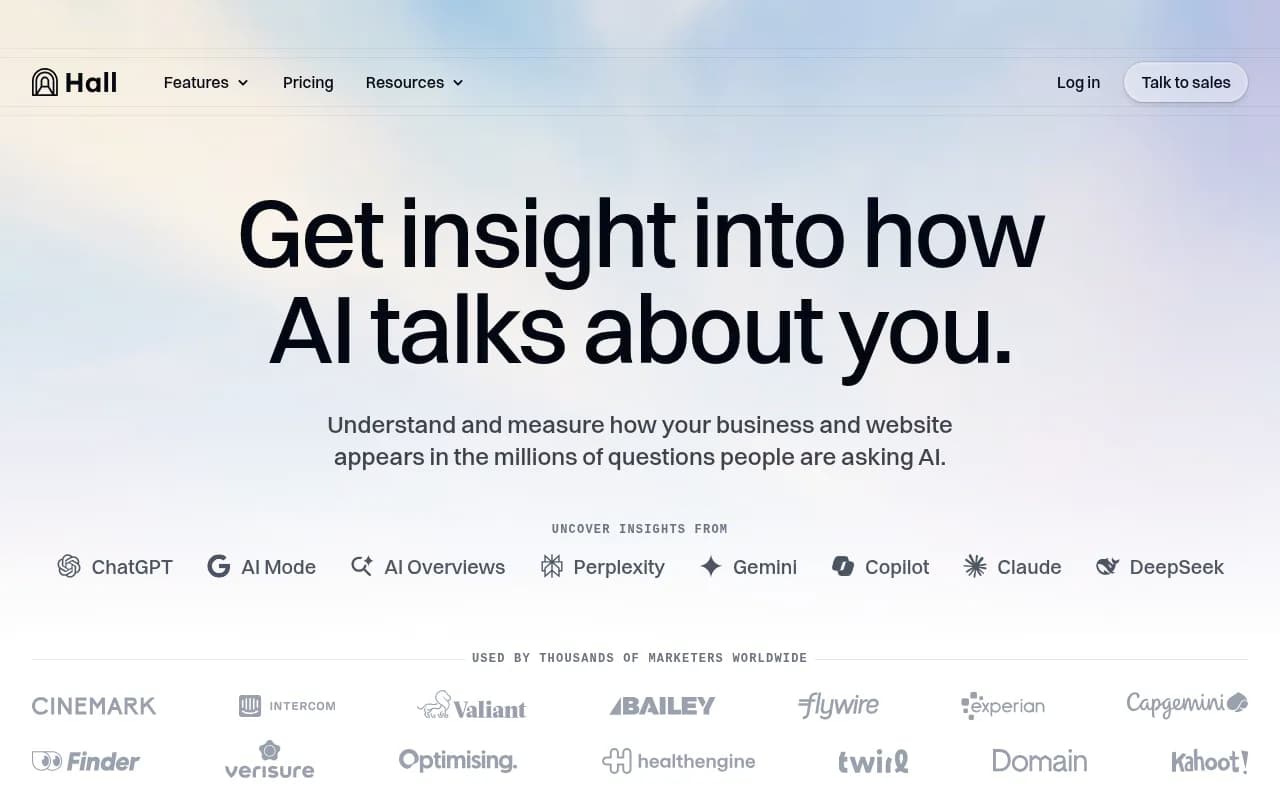
Hall's core limitation is that it's a monitoring tool. It shows you the problem. It doesn't help you solve it. That's fine if you have a content team ready to act on the data, but for most marketing teams running lean in 2026, the gap between "we're not being cited" and "here's what to publish to fix that" is exactly where momentum dies.
So Hall users are shopping around. Two names that come up in this context are Rankshift and LLM Pulse. Let's look at what's actually known about each before making any recommendations.
What is Rankshift?
Rankshift is positioned as an AI search rank tracking and monitoring tool. It sits in the same general category as Hall -- lightweight, focused on tracking brand mentions and citation performance across LLMs rather than offering a full optimization workflow.
Based on available information, Rankshift's strengths are:
- Prompt-level rank tracking across multiple AI models
- Competitive benchmarking to see where rivals are outperforming you
- A relatively clean interface aimed at smaller teams or solo marketers
What it lacks, at least at the lightweight tier, is any meaningful content optimization layer. You can see that a competitor is getting cited for "best project management software for remote teams" and you're not -- but Rankshift won't tell you what to write or help you write it.
What is LLM Pulse?
LLM Pulse takes a slightly different angle. Its focus is on ChatGPT tracking specifically, with broader LLM coverage layered on top. The platform tracks brand mentions, sentiment, and citation sources across AI models, and it publishes its own research on ChatGPT tracking tools -- which gives it some credibility as a source of market intelligence even if the platform itself is newer.
LLM Pulse's appeal is its specificity. If your primary concern is "how does ChatGPT talk about my brand?" rather than a broad multi-model view, it's a reasonable starting point. The tradeoff is coverage: teams that care about Google AI Overviews, Perplexity, Gemini, and Grok alongside ChatGPT will find the focus limiting.
Hall vs Rankshift vs LLM Pulse: feature comparison
Here's how the three tools stack up across the dimensions that matter most for AI visibility work in 2026:
| Feature | Hall AI | Rankshift | LLM Pulse |
|---|---|---|---|
| Multi-model tracking | Yes (ChatGPT, Perplexity, others) | Yes | Primarily ChatGPT, some others |
| Citation tracking | Yes | Yes | Yes |
| Competitor benchmarking | Yes | Yes | Limited |
| Sentiment analysis | Basic | Basic | Yes |
| Prompt volume / difficulty scores | No | No | No |
| Content gap analysis | No | No | No |
| AI content generation | No | No | No |
| Crawler / indexing logs | No | No | No |
| Reddit / YouTube tracking | No | No | No |
| ChatGPT Shopping tracking | No | No | No |
| Free visibility report | Yes | Unknown | No |
| Pricing transparency | Moderate | Limited | Limited |
| Best for | Brands new to AI visibility | Lightweight rank tracking | ChatGPT-focused monitoring |
The pattern is obvious: all three tools are monitoring-only. They tell you where you stand. None of them help you move.
When Hall is still the right choice
Hall isn't a bad tool. It's a focused one. If you're:
- A small brand or startup just starting to understand AI visibility
- Running a quick audit to show leadership that AI search matters
- Looking for a free or low-cost entry point before committing to a larger platform
...then Hall does the job. The free visibility report is genuinely useful for initial benchmarking, and the interface is clean enough that non-technical marketers can get value from it quickly.
The problem comes when you've done that initial audit and you're sitting on data that says "we're invisible for 40 prompts our competitors own" -- and you have no clear path to fixing it.
When to switch away from Hall (and what to switch to)
The honest answer is that the choice between Hall, Rankshift, and LLM Pulse is a choice between three tools with similar ceilings. If you're hitting Hall's ceiling, you're probably not going to find the answer in Rankshift or LLM Pulse.
What most teams actually need at that point is a platform that closes the loop: find the gaps, generate content to fill them, track whether the content gets cited. That's a fundamentally different product category.
For teams that want lightweight monitoring but better coverage
If you want to stay in the lightweight tier but get more reliable multi-model coverage, a few options are worth considering:
Peec AI is well-regarded for beginner-friendly monitoring across major LLMs, with solid competitor comparison features and a clean setup process.
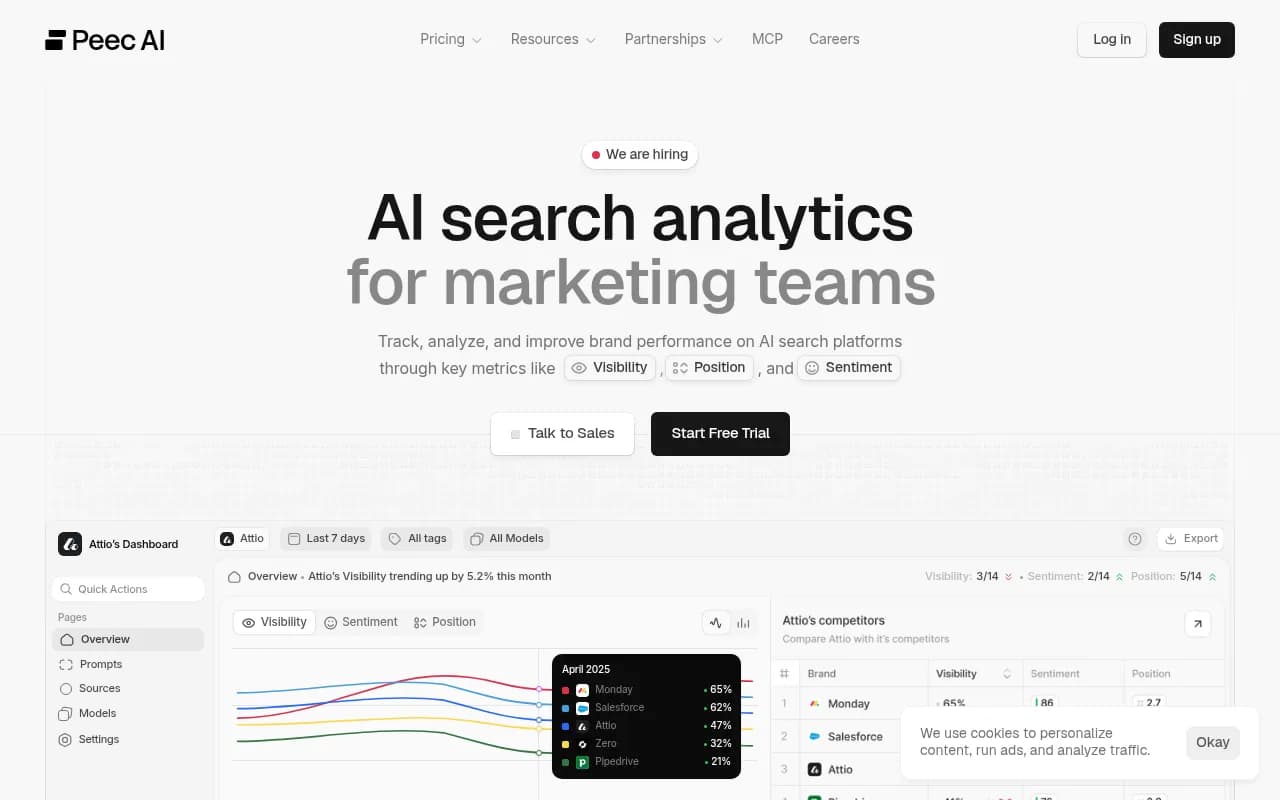
Otterly.AI is one of the more affordable options in this space and covers the basics well -- brand mentions, citation tracking, and competitive benchmarking without a steep price tag.
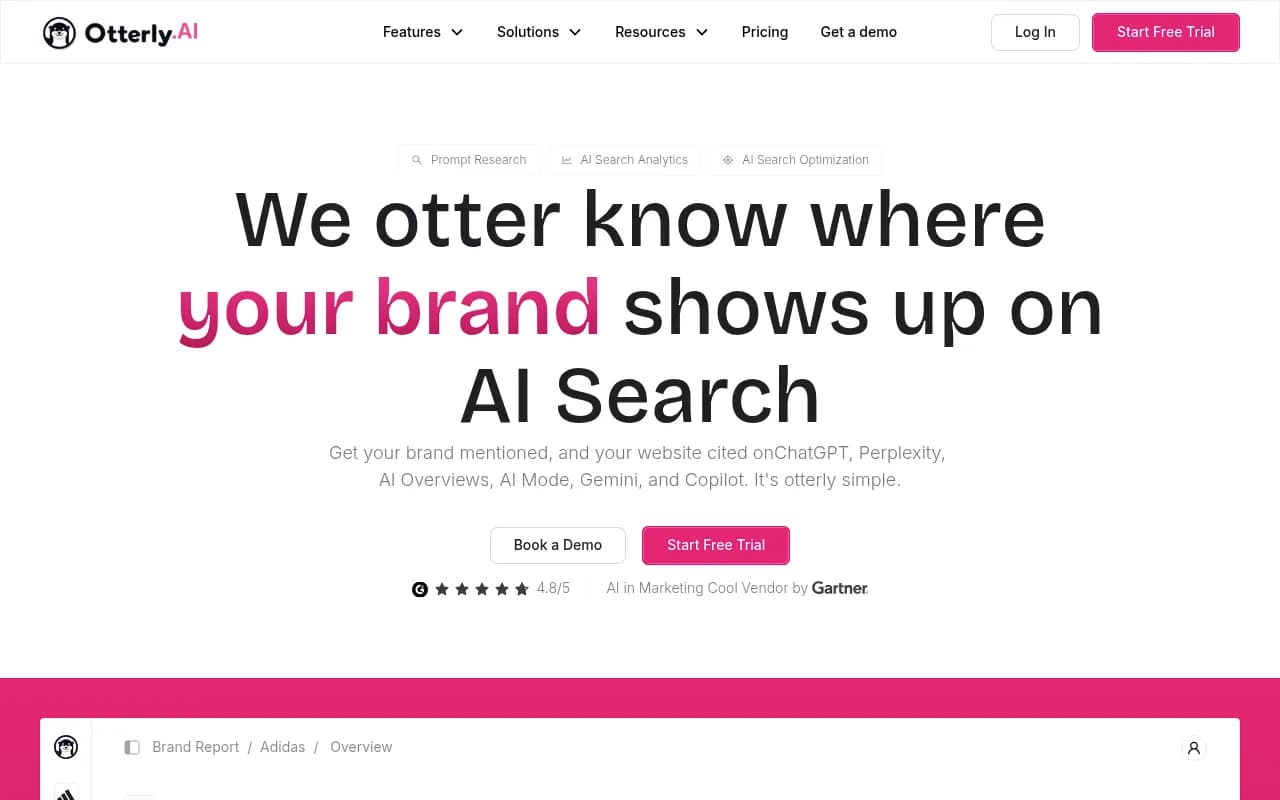
Rankscale offers prompt-level rank tracking with a focus on helping teams prioritize which prompts to target, which is a step up from pure monitoring.
For teams that want to actually fix their AI visibility
This is where the conversation shifts. Monitoring tools show you the gap. Optimization platforms help you close it.
Promptwatch is the clearest example of what this looks like in practice. Its Answer Gap Analysis identifies the specific prompts where competitors are visible and you're not. Content Agents then generate articles, comparisons, and briefs grounded in that real prompt data. And page-level tracking shows you when new content starts getting cited -- and by which models.
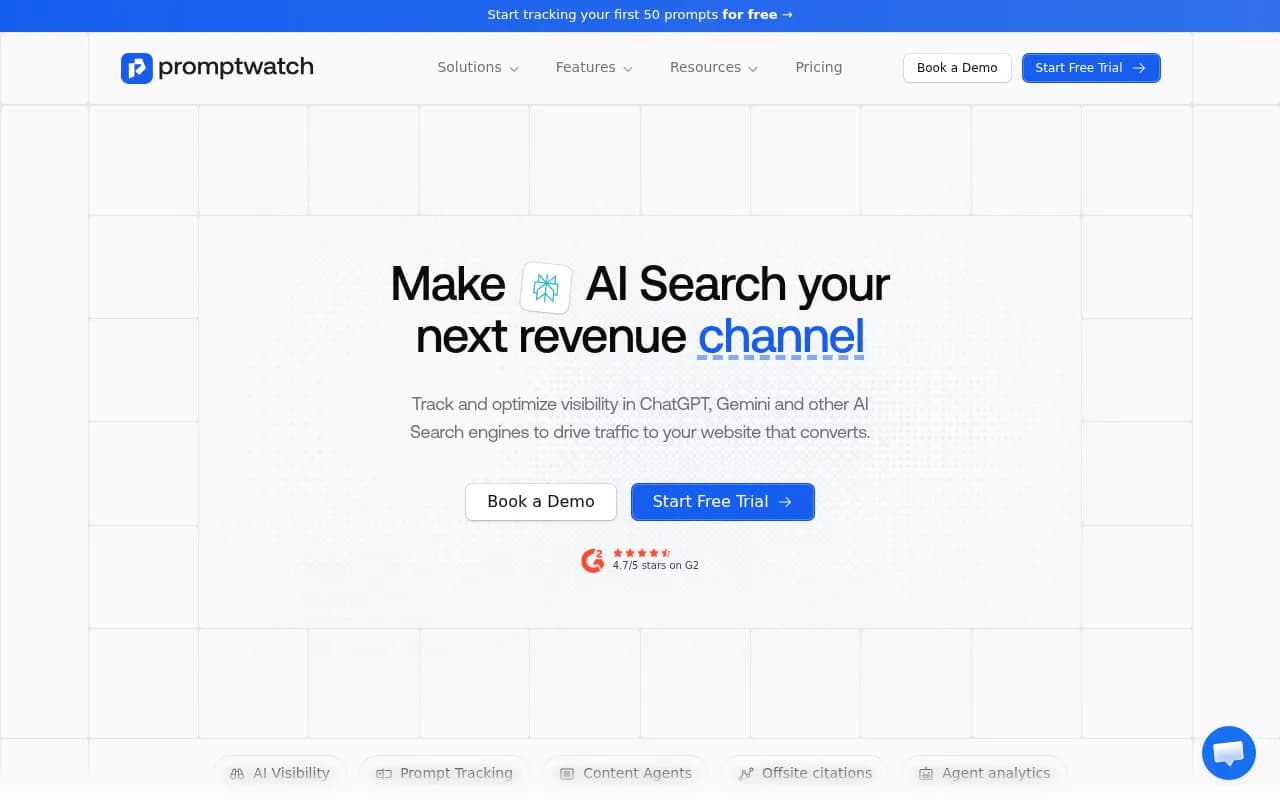
That's a different value proposition than Hall or any of its lightweight competitors. It's also a different price point (starting at $99/month), but for teams that have already confirmed they have an AI visibility problem, the cost of not fixing it is higher.
Profound is another option for teams with enterprise requirements -- strong analytics, compliance features, and multi-engine coverage, though it's priced accordingly.
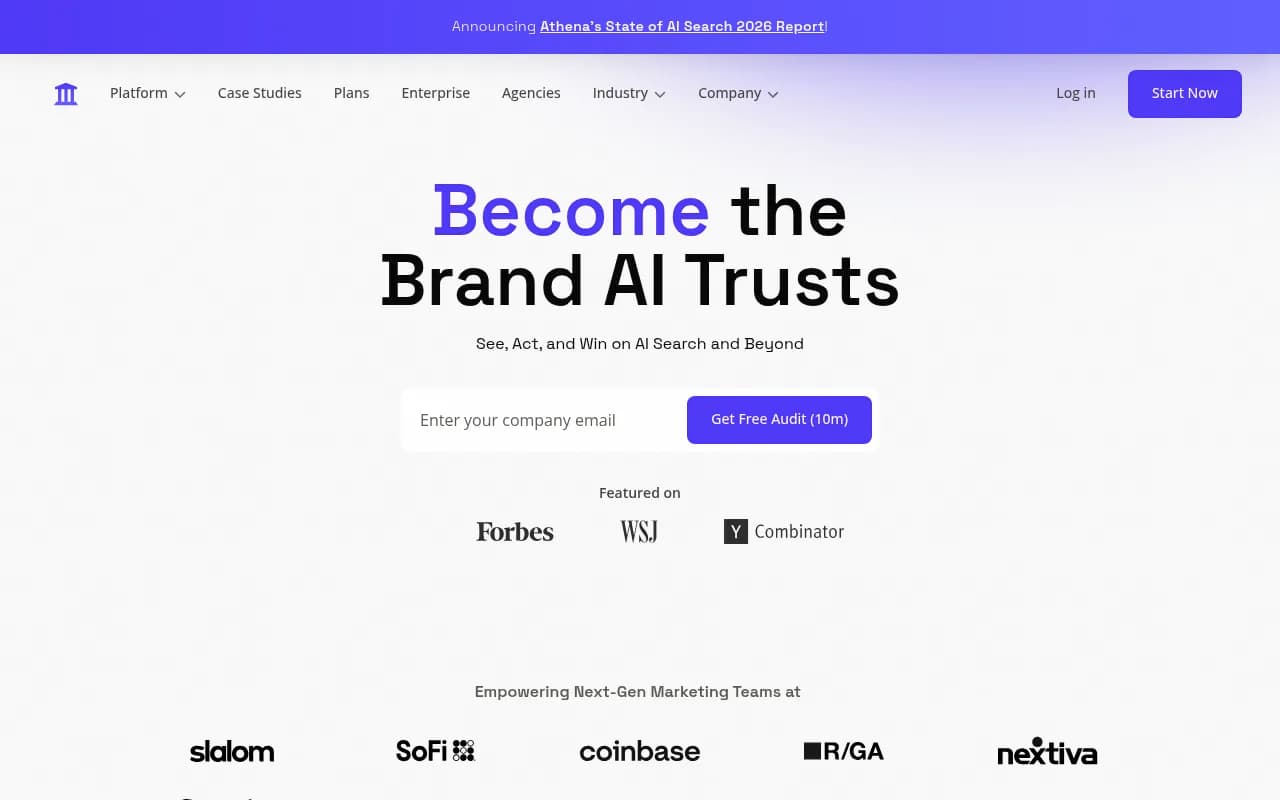
AthenaHQ sits in the middle ground: more depth than Hall, more focused than Promptwatch, with solid monitoring capabilities for mid-sized teams.
A realistic decision framework
Rather than picking a tool based on feature lists, it helps to answer a few honest questions first:
Are you still in "discovery" mode? If you're trying to understand whether AI visibility is a real problem for your brand, Hall's free report or Peec AI's entry tier is the right starting point. Don't over-invest before you know the problem is real.
Do you know you have a problem but don't know what to do about it? This is where monitoring-only tools hit their limit. You need something with content gap analysis at minimum -- either Promptwatch's Answer Gap Analysis or a platform that generates content briefs based on prompt data.
Are you managing multiple brands or clients? Lightweight tools generally don't scale well for agencies. Search Party and Promptwatch both have agency tiers with multi-site management and client reporting.
Is ChatGPT your primary concern? LLM Pulse's focus makes more sense here than a broad multi-model platform. But if Google AI Overviews, Perplexity, and Gemini are also on your radar, you'll outgrow it quickly.
What the broader market tells us
The AI visibility tool market in 2026 has split into two camps fairly clearly. There are monitoring dashboards -- Hall, Rankshift, LLM Pulse, Otterly.AI, and similar tools -- and there are optimization platforms that combine monitoring with content strategy and generation.
The monitoring camp is getting crowded and increasingly commoditized. The differentiation between Hall, Rankshift, and LLM Pulse is marginal. They track similar signals, show similar dashboards, and leave you with the same problem: you know you're invisible, but you don't know what to publish.
The optimization camp is smaller but growing fast. Brands that have moved from "tracking" to "acting" are seeing measurable improvements in AI citation rates -- and the platforms that support that workflow are pulling ahead in terms of customer retention and expansion.
This doesn't mean every team needs a full optimization platform. But it does mean that if you're evaluating Hall alternatives in 2026, the most important question isn't "which monitoring tool is slightly better?" It's "am I ready to move from monitoring to optimization?"
Bottom line
Hall AI is a reasonable tool for what it is: a lightweight, accessible way to check whether your brand is showing up in AI-generated answers. If that's all you need right now, it's fine. Rankshift and LLM Pulse are in the same tier, with different emphasis -- Rankshift on rank tracking, LLM Pulse on ChatGPT-specific monitoring.
But if you're asking "which of these should I switch to?" because Hall isn't solving your problem, the answer is probably none of them. The ceiling is similar across all three. What you likely need is a platform that helps you act on the data, not just collect it.
Start with a clear question: do you need to understand your AI visibility, or do you need to improve it? The answer determines which category of tool you actually need -- and that's a more useful frame than comparing three monitoring dashboards against each other.