Key takeaways
- Peec AI is genuinely good at one thing: showing you where your brand appears (or doesn't) across AI search engines like ChatGPT, Perplexity, and Google AI Overviews.
- The mixed reviews come from a real gap -- the platform diagnoses visibility problems but doesn't help you fix them. No content generation, no crawler logs, no optimization workflow.
- Enterprise teams run into additional friction: no public API, no SSO, no SOC-2 compliance on base plans, and plan limits that force upgrades quickly.
- For teams that just want a monitoring layer and already have content execution covered elsewhere, Peec AI is a reasonable choice.
- For teams that want to close the gaps it finds, they'll need to pair it with other tools or switch to a platform that handles the full loop.
The core tension in every Peec AI review
Search for "Peec AI review" and you'll find something interesting: the ratings are all over the place. Some reviewers give it an 8 or 9 out of 10 for UX and visibility tracking. Others rate the overall experience a 6 or 7 and flag it as incomplete. Both groups are right, and that's exactly the problem.
Peec AI does monitoring well. It's clean, relatively easy to set up, and gives you a real picture of how often your brand gets cited when AI systems answer buyer questions. For a category that barely existed two years ago, that's not nothing.
But the moment you ask "okay, so how do I fix this?" -- the tool goes quiet. There's no content generation, no gap-to-brief workflow, no crawler log telling you whether AI bots are even reading your pages. You get the diagnosis without the treatment plan, and that gap is what's driving the mixed reviews.
What Peec AI actually does
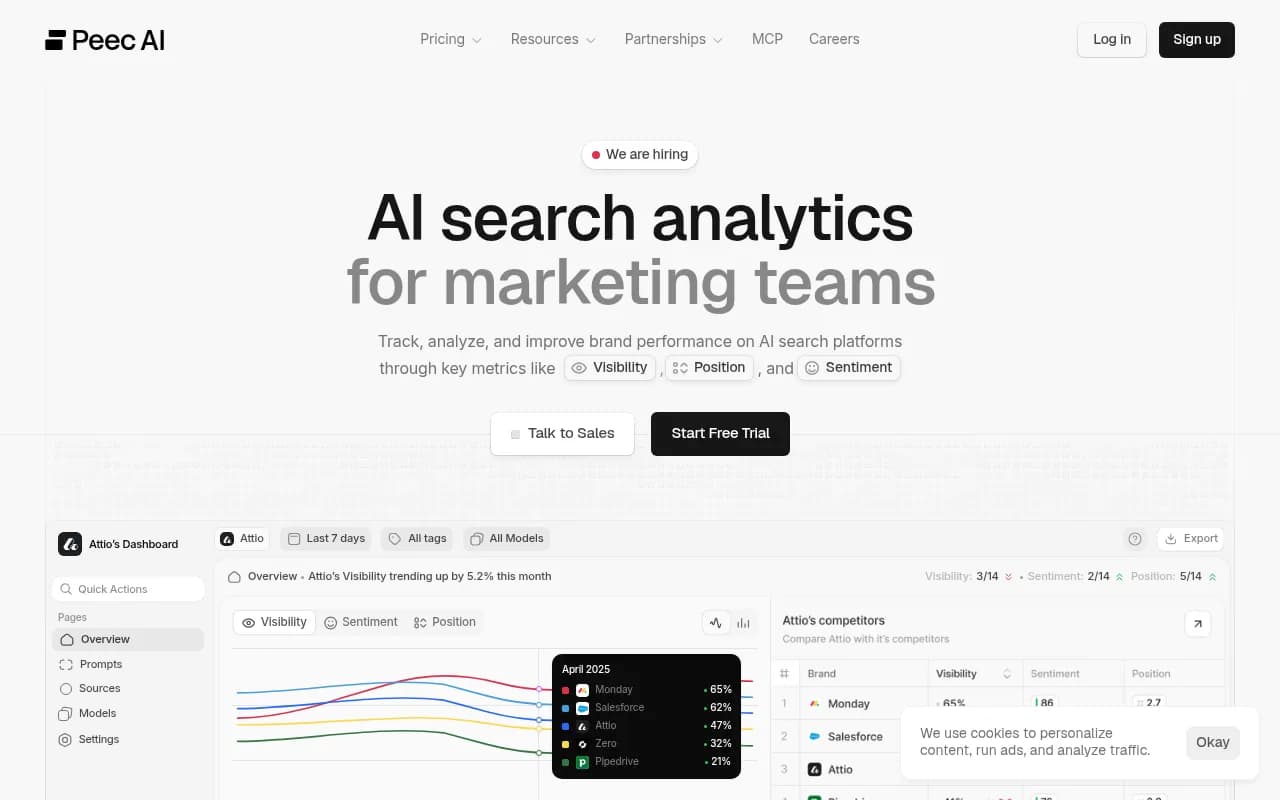
Peec AI tracks brand visibility across AI search engines using UI scraping -- it simulates real user interactions rather than hitting APIs directly. That matters because user-facing AI responses can differ from what you'd get through an API call. The platform measures:
- Citation frequency (how often your brand appears in AI-generated answers)
- Share of voice across competitors
- Source URLs that AI models are pulling from
- Sentiment framing (positive, neutral, or negative mentions)
- Position within responses
The coverage spans ChatGPT, Perplexity, and Google AI Overviews, with prompt-based tracking that lets you monitor specific questions relevant to your category.
For a B2B marketing team that's been flying blind on AI search, this is genuinely useful data. Knowing that a competitor is getting cited three times more often than you for "best [category] software" is actionable in the sense that it tells you there's a problem. The question is what you do next.
Where the positive reviews come from
The praise in Peec AI reviews is consistent and specific. A Reddit thread in the r/GenerativeSEOstrategy community from April 2026 described it as "really intuitive and easy to use -- probably one of the easiest to get into" with "very clean UX." That tracks with what most users report.
Setup is straightforward. The dashboard doesn't require a week of onboarding to understand. Prompt-level insights are clear, and the competitive benchmarking gives you a quick read on share of voice without digging through raw data.
Radarkit's review gave it a 9/10 for AI visibility and analytics capabilities and a 9/10 for prompt-level insights. For teams that need a dedicated monitoring layer and already have content and optimization workflows in place, Peec AI fits neatly into that stack.
The pricing is also transparent. Starting at $100/month, it's accessible for smaller teams without the enterprise sticker shock you get from some competitors.
Where the mixed reviews come from
The criticism is just as consistent. Radarkit's overall rating landed at 7.3/10, with the lowest scores going to "built-in actionable recommendations" (6/10) and "enterprise readiness" (6/10). The Discoveredlabs review put it plainly: Peec AI "stops at diagnosis. It tracks mentions but doesn't write content, build authority signals, or implement technical optimizations needed to improve your numbers."
Ranketta's e-commerce platform comparison was blunter: "Peec does monitoring well, but the moment you want to act on the data, you're back to stitching tools together."
That stitching problem is real. After you see the gap, you need to:
- Figure out which content topics are missing from your site
- Write or brief content that addresses those gaps
- Understand whether AI crawlers are even visiting your pages
- Track whether new content actually moves the citation needle
Peec AI helps with none of those steps. You're exporting data and then jumping to a separate content tool, a separate brief tool, and hoping your changes eventually show up in the next monitoring cycle.
The enterprise readiness gap
For larger teams, there's a second layer of friction. Peec AI lacks a public API, SSO authentication, and SOC-2 compliance on its base plans. That's not a dealbreaker for a 3-person marketing team, but it's a real obstacle for enterprise procurement. Security reviews, IT integration requirements, and automation workflows all hit walls that require upgrades or workarounds.
Radarkit flagged this directly: "Peec AI lacks a public API, SSO authentication, SOC-2 compliance, or robust integrations in its base plans, which hinders automation, security compliance, and enterprise scalability."
Beginner friction
The platform also scores lower on beginner-friendliness (6/10 in Radarkit's assessment). The prompt setup process requires some understanding of how AI search works -- you need to know which questions to track, how to frame them, and how to interpret share of voice data in context. For teams new to GEO, that learning curve can slow down time-to-value.
The monitoring-only problem isn't unique to Peec AI
It's worth being honest here: this isn't a flaw specific to Peec AI. Most AI visibility tools have the same limitation. The YouTube review from Developer Marketing Hub made this point directly: "Most AI visibility tools do the same thing -- they show you where you are not ranking and leave you to figure out the rest."
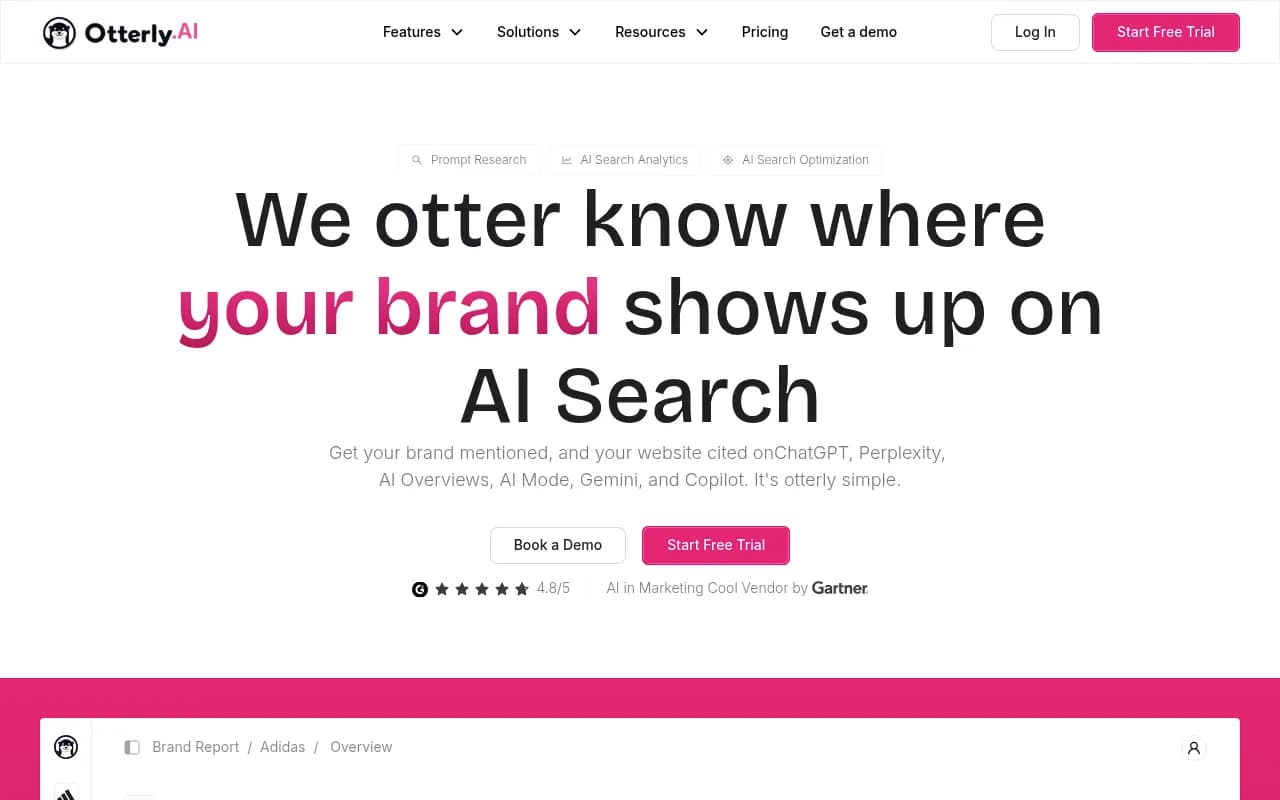
Peec AI, Otterly.AI, AthenaHQ -- they're all built around the same core loop of "track prompts, show citations, report share of voice." The gap between monitoring and optimization is a category-wide problem.

The tools that are trying to close that gap are the ones building content generation, crawler log analysis, and gap-to-brief workflows into the same platform. That's a harder product to build, which is why most monitoring tools haven't gone there yet.
How Peec AI compares to alternatives
Here's a straightforward comparison of Peec AI against tools that cover similar or adjacent ground:
| Tool | Monitoring | Content generation | Crawler logs | API access | Starting price |
|---|---|---|---|---|---|
| Peec AI | Yes | No | No | No (base plans) | ~$100/mo |
| Otterly.AI | Yes | No | No | Limited | ~$99/mo |
| AthenaHQ | Yes | No | No | Yes | Custom |
| Profound | Yes | No | No | Yes | Custom |
| Scrunch AI | Yes | No | No | Limited | Custom |
| Promptwatch | Yes | Yes | Yes | Yes | $99/mo |
The monitoring column is where most tools are competitive. The gaps show up everywhere else.
Promptwatch is worth calling out specifically because it's one of the few platforms that tries to close the full loop -- tracking visibility, identifying content gaps, generating content briefs, and logging AI crawler activity on your site. For teams that want to move from "we know we have a problem" to "we're fixing it," that matters.
Who Peec AI is actually right for
Despite the limitations, there are real use cases where Peec AI makes sense.
Teams with existing content execution capacity. If you have writers, a content strategist, and a clear process for turning data into briefs and articles, Peec AI's monitoring data is useful input. You don't need the platform to generate content if you already have that covered.
Agencies reporting to clients. The clean dashboards and share-of-voice metrics make for good client reporting. If your job is to show clients what's happening in AI search (and you're handling the optimization work separately), Peec AI gives you a presentable layer.
Early-stage AI search programs. For teams just starting to understand AI visibility, Peec AI's ease of use and clear metrics are a reasonable entry point. You learn what to track before you invest in a more complex platform.
Smaller brands with limited budgets. At $100/month, it's accessible. If you're not ready to invest in a full optimization platform, monitoring-only is better than nothing.
Who should look elsewhere
Teams that need to act on the data. If your primary goal is improving citation rates -- not just measuring them -- a monitoring-only tool will leave you frustrated. You'll spend more time stitching together workflows than actually improving visibility.
Enterprise teams with security requirements. The lack of SSO and SOC-2 compliance on base plans is a real procurement obstacle. If your IT or security team needs to sign off, budget for the higher tiers or evaluate platforms that have these built in.
Teams tracking more than a handful of prompts. Plan limits can become a constraint quickly as your prompt tracking needs grow. Upgrades add up.
Teams that want crawler log data. Understanding whether AI bots are visiting your pages, which pages they're reading, and whether they're encountering errors is a completely different capability from monitoring citations. Peec AI doesn't offer this. If you want to understand the crawl-to-citation pipeline, you need a different tool.
Alternatives worth evaluating
If Peec AI's monitoring-only approach isn't enough, here are a few tools worth looking at depending on what you need:
For teams that want a full optimization loop (monitoring + content generation + crawler logs), Promptwatch covers the most ground in one platform. The answer gap analysis shows which prompts competitors rank for that you don't, the content agents generate articles grounded in that data, and the crawler logs show what AI bots are actually doing on your site.
For teams that want monitoring with a strong agency workflow layer, Search Party is worth evaluating.
For teams that want enterprise-grade monitoring with strong analytics depth, Profound and AthenaHQ both have more robust data infrastructure, though neither solves the content generation gap.
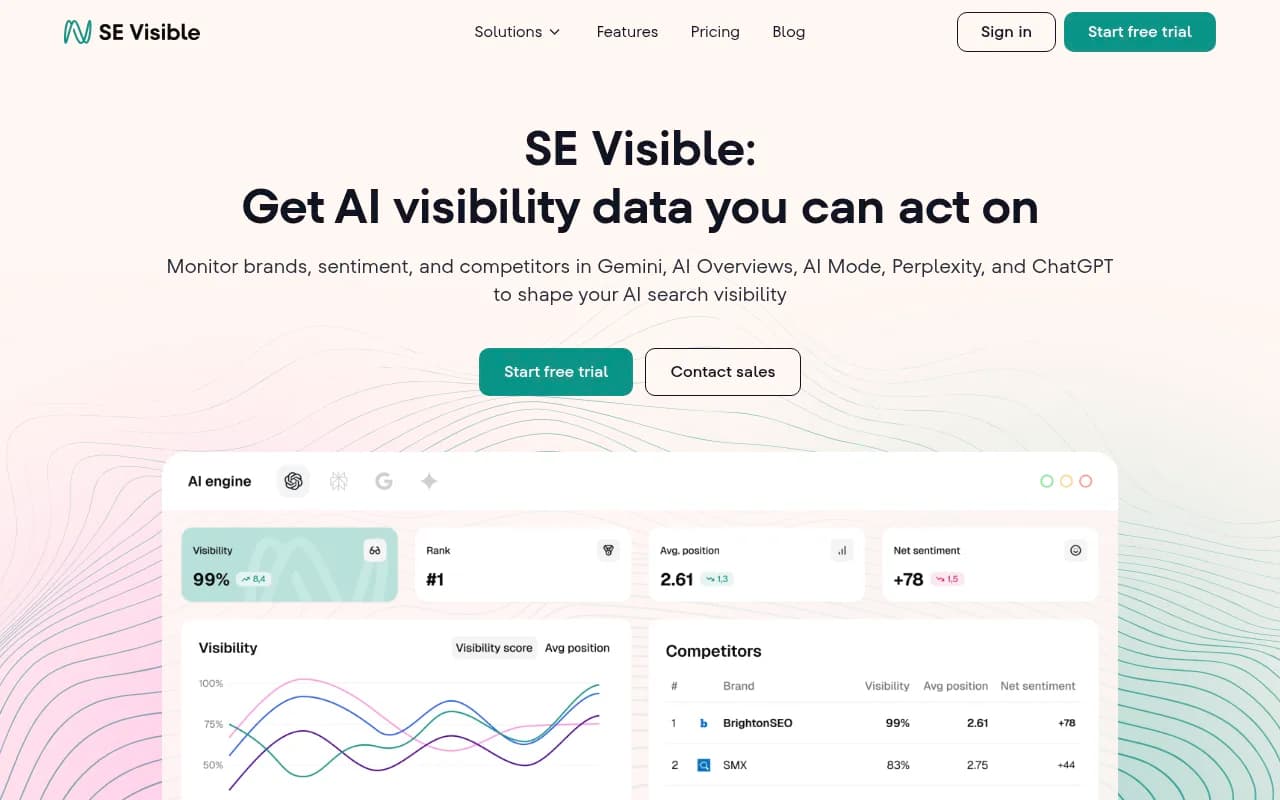
For teams that want a lower-cost monitoring entry point similar to Peec AI, Otterly.AI and SE Ranking's AI visibility module are comparable options.
The honest verdict
Peec AI is a competent monitoring tool with a clean interface and transparent pricing. The positive reviews are earned -- it does what it says it does, and it does it without a steep learning curve.
The mixed reviews are also earned. A 7.3/10 overall rating with a 6/10 for actionable recommendations is an accurate reflection of a tool that shows you the problem without helping you solve it. For teams that already have content execution in place and just need a visibility layer, that's fine. For teams that want to actually move the needle on AI citations, the gap between what Peec AI tracks and what it helps you do will become obvious pretty quickly.
The category is still maturing. Monitoring-only tools made sense when AI search was new and teams just needed to understand what was happening. In 2026, the teams that are winning in AI search aren't just tracking their visibility -- they're running a continuous loop of finding gaps, creating content, and watching the results. The tools that support that loop are the ones worth building around.