Key takeaways
- Free tracking (Google Alerts, manual prompt checks) caps out around 10-30 prompts before it becomes unmanageable, and it can't see inside ChatGPT, Perplexity, or Gemini answers at all
- The $80-$100/month tier (Otterly Lite, Peec Starter, AthenaHQ credits) buys you real recurring tracking but usually locks you to one or two AI models
- The $250-$300/month tier is where most mid-market teams land: multi-model coverage, dozens of prompts, and basic API/export access
- $600+ a month starts buying agency features, SOC 2 compliance, crawler-level data, or content generation, not just more tracking volume
- Citation slots are shrinking as models change: ChatGPT's average citations per response fell roughly 27% after the GPT-5.3 rollout in March 2026, per Promptwatch data, which is a big part of why continuous paid monitoring beats occasional free checks
Why this pricing question keeps coming up
Every vendor in this category structures pricing differently. Some charge per prompt, some per "credit," some per AI model tracked, some just hide everything behind a demo call. I spent time cross-referencing actual pricing pages (not marketing blog posts quoting old numbers) for a dozen tools, and the picture that emerges is messier than any single "best tool" article suggests.
A few sources still cite Profound at "$99 Starter," for instance. Its current pricing page shows no such thing anymore, just a one-time 10-prompt free trial and a custom enterprise quote. That's a real shift worth knowing about before you go shopping expecting a self-serve mid-tier option that no longer exists.
So instead of ranking tools, this guide walks through four price bands, what you get at each, and where the money actually goes.
The $0 tier: free and near-free tracking
Free tools that genuinely monitor AI-generated answers are rare. What's actually free:
- Manual prompt checks: typing the same 10-30 prompts into ChatGPT, Perplexity, and Gemini weekly and logging results in a spreadsheet. It costs nothing but your time, and every source I checked agrees it stops scaling past a few dozen prompts.
- Google Alerts, F5Bot, Social Mention: genuinely free forever, but they watch the open web and Reddit/Hacker News keyword mentions, not what an AI assistant says about you in a generated answer. Different job entirely.
- "Free trial" tools that aren't actually free: DeepSmith (7 days), Brand24 (14 days), Mention.com (14 days), HubSpot AEO (28 days, 25 prompts). These are lead-gen funnels for a paid plan, not ongoing free tiers.
- Profound's free Trial plan: 10 prompts, run once (not recurring), ChatGPT only, no history, no export. It exists to qualify you for an enterprise sales call, not to monitor your brand month over month.
The real cost of the $0 tier isn't the subscription, it's the labor and the blind spots. You'll miss model-level shifts entirely. When ChatGPT's citation behavior changed overnight after the GPT-5.3 rollout on March 4, 2026, average citations per response dropped from roughly 6.4 to 4.7-4.9 within weeks, according to Promptwatch's data on the ChatGPT citation drop. A weekly manual check would catch that eventually. A monthly one might not catch it for a full cycle, by which point you've made decisions on stale data.
The ~$80-$100 tier: your first real subscription
This is where recurring, automated tracking starts. What you're paying for:
| Tool | Price | Prompts | Models | Notable limit |
|---|---|---|---|---|
| Otterly Lite | $29/mo | 15 | ChatGPT | Jump to next tier is 6.5x the price |
| Peec AI Starter | $95/mo | 50 | Choose 3 | 1 project only |
| AthenaHQ Starter | $295/mo (or $245 annual) | via 3,600 credits | 9+ platforms | Single country/language |
| DeepSmith Pro | $80/mo (annual) | limited | ChatGPT only | Entry-level scope |
Otterly's Lite plan at $29 is genuinely cheap, but reviewers flag it as a trap: the next tier up, Standard, jumps to $189/month, a 6.5x increase, not an incremental step. If you're evaluating Otterly, budget for $189 from day one rather than assuming you'll stay on Lite.
Peec AI's Starter plan at $95/month gets you 50 prompts across three models of your choosing, daily tracking, and unlimited users on one project. That's a reasonable entry point if you only care about one or two AI assistants right now.
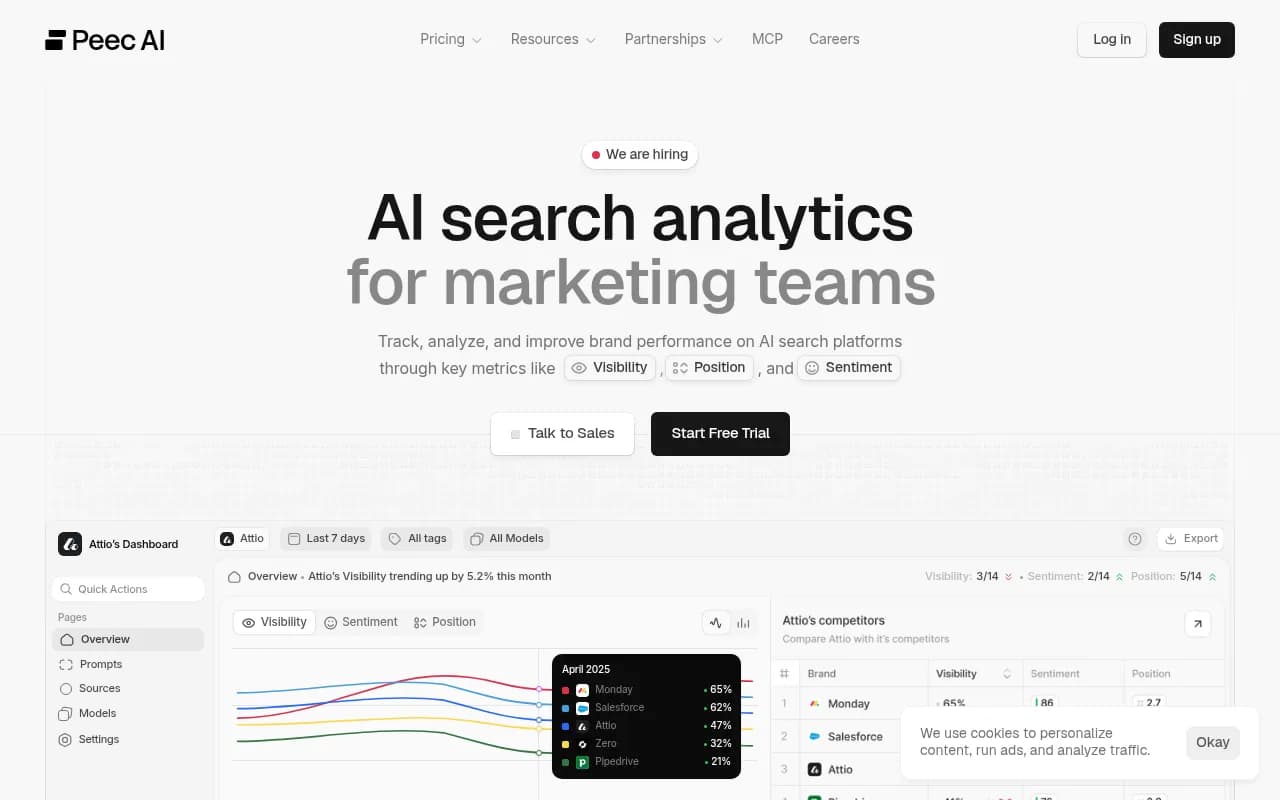
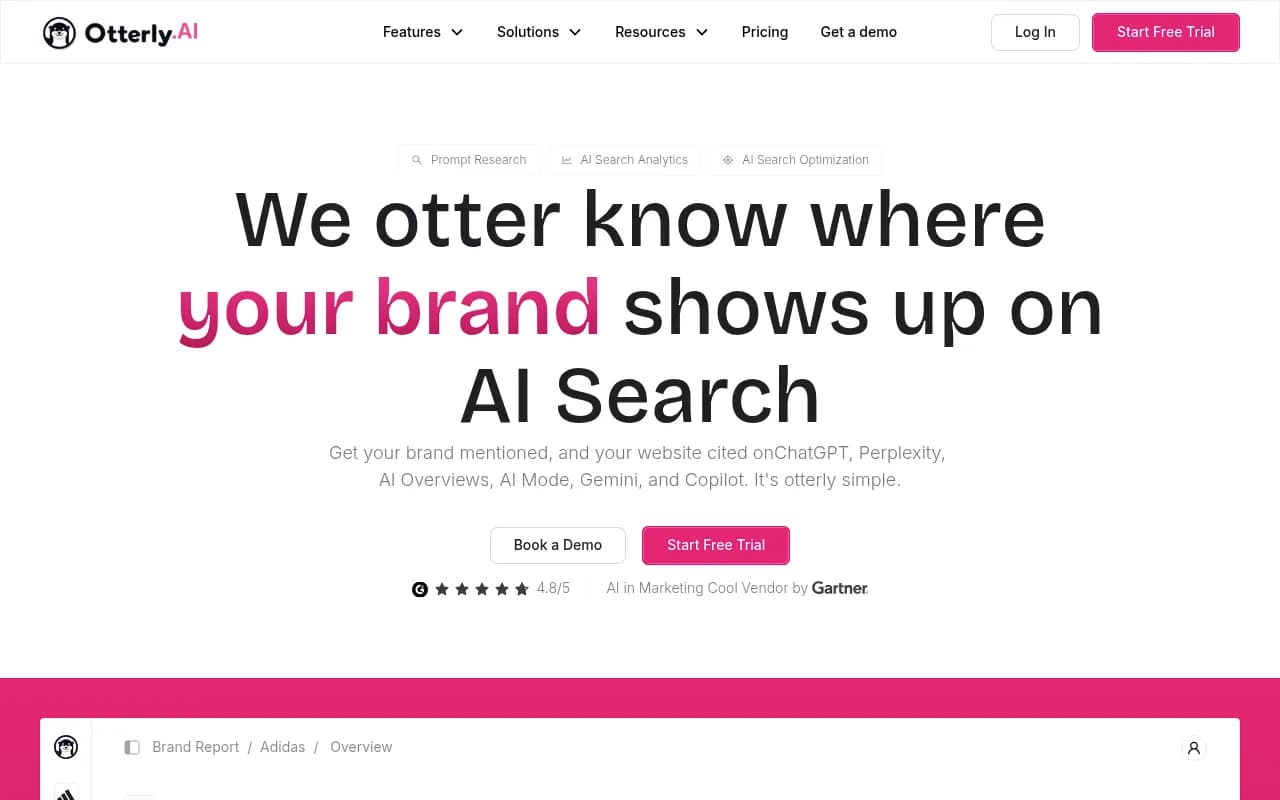
The pattern across this tier: you get real, recurring data, but almost always with a ceiling on either prompt volume or model coverage. If your category involves competitive prompts across ChatGPT, Perplexity, Gemini, and Google AI Overviews simultaneously, one of these tools alone won't cover it without add-ons that push you into the next band anyway.
The $250-$300 tier: where mid-market teams actually land
This is the most crowded and most confusing price band, partly because vendors define "prompt" and "credit" differently.
| Tool | Price | What's included |
|---|---|---|
| Scrunch AI Starter | $300/mo ($250 annualized, $3,000/yr commitment) | 350 prompts, 7 engines, SOC 2 Type II |
| Peec AI Pro | $245/mo | 150 prompts, 2 projects |
| Otterly Standard | $189-$307/mo (with add-ons) | 100 prompts, Looker Studio connector, up to 6 platforms |
| Astiva Growth | $249/mo | Full multi-platform, 5 swappable models from a catalog of 10 |
| AthenaHQ Starter | $295/mo | 3,600 credits, 9+ platforms, GA4/GSC integration |
A couple of things worth flagging here. Scrunch's pricing gets reported inconsistently across the web, some older posts cite a $250/month "Core" plan with 125 prompts, while the current pricing page shows $300/month month-to-month (or $250/month if you commit annually at $3,000/year) for a 350-prompt Starter plan. If you see a $250 figure quoted for Scrunch, check whether it's the annual-equivalent price or an outdated tier before you budget around it.
Otterly Standard is interesting for agencies specifically because of its native Looker Studio connector, useful if you're already reporting client dashboards that way. Add extra AI models beyond the core four (ChatGPT, Claude, Google AI Mode, Gemini) and the price climbs fast, from $189 to $357 in one documented example.
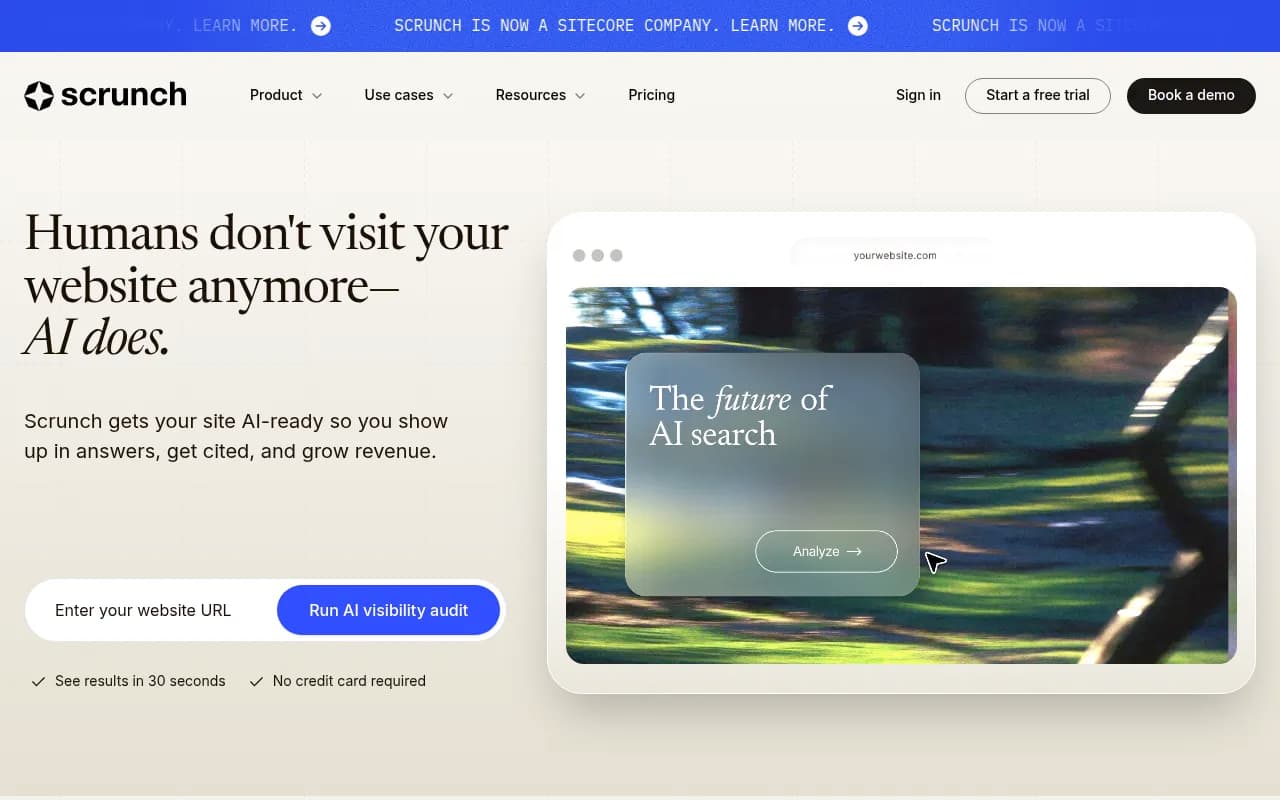

At this price point you're generally buying: multi-model coverage as standard (not an add-on), somewhere between 100 and 350 prompts, and basic integrations like GA4, GSC, or Looker Studio. SOC 2 compliance, if your procurement team needs it, tends to show up here too, Scrunch leads on that specifically.
The $600+ tier: agency features, compliance, and content execution
Above $500-600 a month, the value shifts from "more tracking volume" to features that only matter once you've outgrown pure monitoring.
| Tool | Price | What changes |
|---|---|---|
| Ahrefs Brand Radar (full bundle) | $828-$1,148/mo total | Base Ahrefs plan + all 6 AI indexes bundled at $699/mo |
| Evertune Pro | $800/mo | 100,000 prompts across 11 AI models |
| Otterly Premium | $489/mo | 400 prompts, 1M Agent Analytics events/month |
| Scrunch Growth | $500/mo | 700 prompts, agency workflows |
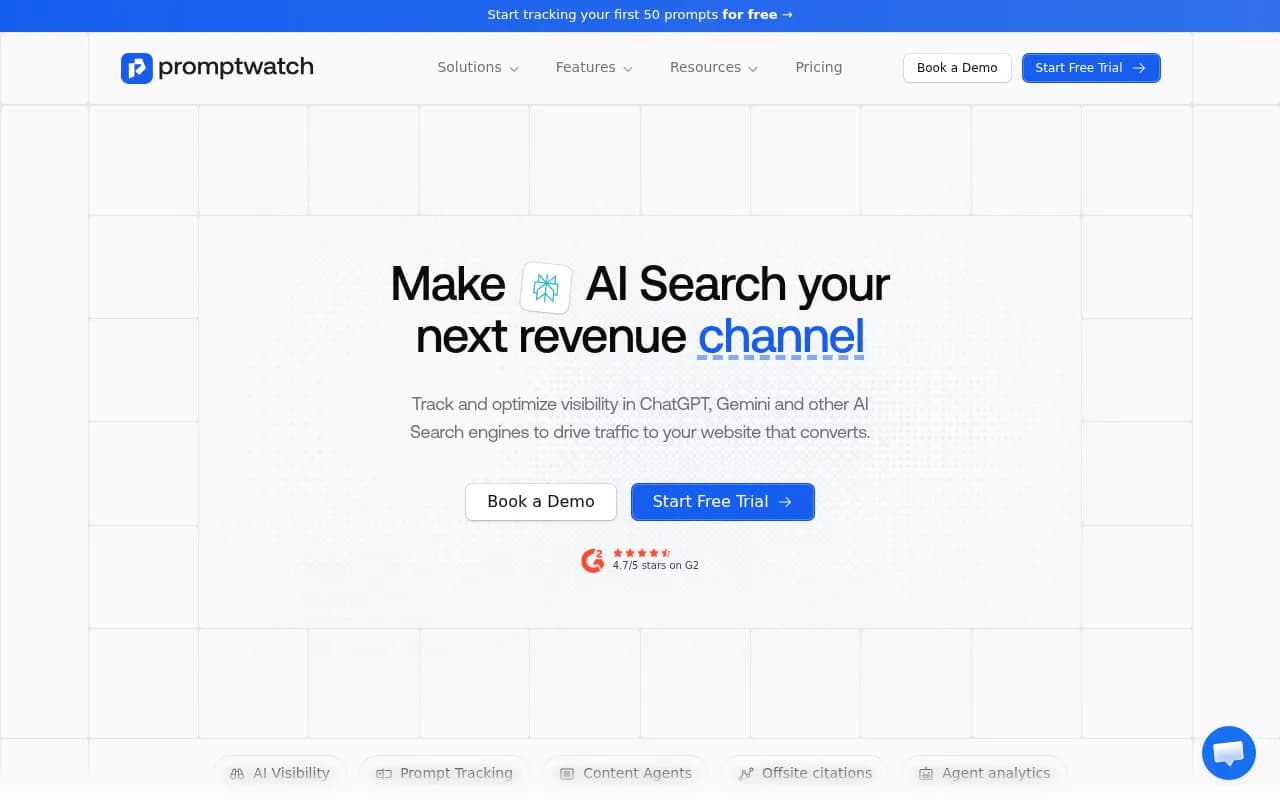
| Promptwatch Business | $579/mo | 5 sites, 350 prompts, 100M crawler logs, 30 AEO articles, automated content generation |
One reviewer called the full Ahrefs Brand Radar stack "brutal for anyone outside a Fortune 500 marketing department," and looking at the math, it's hard to disagree. You're paying for a base Ahrefs plan ($129-$449/month depending on tier) plus a Brand Radar add-on that costs $199/month for a single AI index or $699/month for all six bundled. Add custom prompt packages on top ($50-$250/month) and the realistic all-in cost lands between $828 and $1,148 a month for full coverage.
Evertune's $800/month Pro plan buys sheer volume, 100,000 prompts across 11 models, which makes sense if you're running category-wide sentiment analysis rather than tracking a fixed prompt list.
This is also the tier where a meaningful split appears between tools that only monitor and tools that act on what they find. Most platforms in this price range will tell you your visibility score dropped. Fewer will tell you which page to fix, generate a draft, and publish it. Promptwatch sits in this band with a different structure: its Professional plan at $245/month already includes 25M crawler log lines, 15 AEO articles per month, and automated content generation, while Business at $579/month scales that to 100M crawler logs and 30 articles a month, with dedicated support. That crawler-log piece matters more than it sounds, it shows you exactly when ChatGPTBot, ClaudeBot, PerplexityBot, and 400+ other crawlers visited your pages and whether they hit errors, which is the "why" behind a visibility score that pure prompt trackers can't show you.
What actually drives the price differences
Across every tool I looked at, six variables explain almost all of the price spread:
- Prompt volume caps. Entry tiers cap at 10-50 prompts; mid-market sits at 100-350; enterprise plans go uncapped or into the tens of thousands.
- Number of AI models tracked. ChatGPT-only is cheap. Adding Claude, Gemini, Perplexity, Copilot, Grok, and Google AI Overviews/AI Mode roughly doubles or triples the price at most vendors.
- Historical data depth. Entry tiers show 30 days; enterprise unlocks 12-24 months of history.
- Data sources beyond the core AI chat interfaces. Reddit, YouTube, and shopping/ads tracking are still rare additions and usually gate the top tier.
- Compliance and seats. SOC 2 Type II, SSO, and unlimited seats show up almost exclusively above $250/month.
- Whether the tool acts, not just watches. Content generation, CMS publishing, and prioritized action lists are the newest differentiator, and they're the reason some $250-600/month plans feel like a completely different product category than a $30/month prompt tracker.
That last point matters more than it used to. Query fanout data from Promptwatch shows ChatGPT's search pattern has gotten leaner over the past year, average fanouts per response dropped from 2.15 in early December 2025 to close to 1.0 by April 2026, and query length shrank from roughly 117 characters to about 53. Fewer, shorter, more targeted searches mean fewer citation slots are up for grabs per response, which is exactly why vendors keep raising prices on prompt volume and model coverage: each tracked prompt is chasing a shrinking pool of citation opportunities.
A quick sanity check before you buy
A few pitfalls show up repeatedly in independent reviews, regardless of which tool you pick:
- Tracking only exact brand-name prompts misses the category and topic prompts where AI discovery actually happens. A tool with 350 branded prompts and zero category prompts is nearly useless.
- Monthly-only tracking cadence misses fast shifts. The GPT-5.3 citation drop happened within days, not weeks.
- High mention volume doesn't mean revenue. One cybersecurity company appeared in 85% of tracked prompts but converted almost nobody because AI consistently described them as "expensive." Sentiment tracking, not just mention counting, is what catches that.
- GA4 undercounts AI referral traffic because free-tier ChatGPT users often don't pass referrer data, so it shows up as "Direct" traffic instead. Citations without clicks are also normal, AI can recommend a brand hundreds of times a month while sending only a handful of visits.
Picking a tier that actually fits
If you're a solo operator or small team just trying to understand whether AI assistants know your brand exists, start free or at the $80-100 tier and expect to outgrow it within a quarter. If you're a marketing team with actual budget accountability, the $250-300 tier is where most people should be evaluating seriously, it's the first band where multi-model coverage is standard rather than a paid add-on. And if you're already convinced monitoring alone isn't moving the needle, the $500-600+ tier is where crawler logs, content generation, and CMS publishing start showing up, worth the jump if you have the content production capacity to act on what the data tells you.
For a wider view of the category, the GEO software directory at bestgeosoftware.com and the rank tracking comparisons at ai-rank-tools.com are useful places to keep tabs on new entrants and pricing shifts as this market keeps moving, and it's moving fast enough that any pricing snapshot, including this one, is worth re-checking every few months.