Key takeaways
- Raw mention counts are close to useless on their own. BrightEdge's analysis of Google AI Overviews and ChatGPT found negative sentiment is genuinely rare (2.3% and 1.6% of mentions respectively), so the real signal is in the tone of the 98% that isn't negative, not whether you showed up.
- The same brand can score positively on ChatGPT and negatively on Google AI Overviews for the identical query, because the two engines have different "personalities": Google behaves like an investigative reporter, ChatGPT like a product advisor.
- HubSpot's free AEO Grader weights sentiment and brand perception at 40 of 100 points, more than presence, recognition, and share of voice combined, which tells you where the AEO industry thinks the real risk lives.
- Dedicated AI-visibility tools (Profound, MaxAEO, ZipTie, Peec AI) increasingly ship sentiment-by-theme dashboards; legacy social listening tools (Brand24, Brandwatch, Sprout Social) do sentiment well for social/news but were not built to read AI-engine citations.
- Because AI engines pull citations mostly from a handful of third-party sources (5-10 per answer), a sentiment tool that only scans your own domain misses most of the conversation shaping how AI describes you.
Why mention counting isn't good enough anymore
For a while, "AI brand monitoring" meant one thing: did ChatGPT say our name? That bar is basically cleared now, so it's not a useful metric on its own. The interesting question is what the AI said about you when it did.
BrightEdge ran this analysis at scale using its AI Catalyst tool across Apparel, Electronics, and Education verticals in Google AI Overviews and ChatGPT. The split: AI Overviews came back 49.9% positive, 47.7% neutral, 2.3% negative. ChatGPT came back 43.9% positive, 54.4% neutral, 1.6% negative. Negative sentiment barely registers on either engine. But that's exactly the point, because when it does show up, it's disproportionately damaging, and it shows up for very different reasons depending on the engine.
Google AI Overviews goes negative mostly because of news and controversy. It's 4.5x more likely than ChatGPT to turn negative for legal issues, lawsuits, or recalls, because it's pulling from news-style sources. ChatGPT goes negative for a different reason entirely: product limitations, compatibility gripes, "is this actually worth it" style answers. It's 3x more likely than Google to go negative on product-evaluation queries, because it's answering more like a shopping advisor than a reporter.
Across both engines, the actual triggers for negative sentiment break down like this: brand controversies and legal issues (32%), product limitations and compatibility (21%), safety and recalls (17%), service failures and outages (11%), product discontinuation (9%), price or value criticism (8%), and competitive comparisons (3%). None of that shows up if you're only counting how many times your name appeared.
The practical consequence: a brand can look completely fine in ChatGPT and get quietly trashed in AI Overviews for the same query, at the same time. ZipTie calls this the "AI sentiment divergence problem," and it's the single strongest argument for tracking sentiment per engine rather than as one blended score.
What a sentiment-aware AI monitoring tool should actually do
A handful of things separate tools that genuinely track sentiment from tools that just bolt a green/red label onto a mention list:
- Sentiment broken out per AI engine, not averaged across all of them. Given how differently Google and ChatGPT go negative, a single blended score hides the exact information you need.
- Sentiment by theme, not just net score. Profound's approach here is worth copying even if you don't buy Profound: it can show that AI answers praise a brand's "ease of use" while criticizing its "learning curve" in the same set of responses, which is a completely different action item than a flat "62% positive."
- Trend over time, so you catch decay before it becomes a crisis. AI visibility is not sticky. Independent research cited by ZipTie found only 20% of brands stay visible across five or more consecutive AI queries, and 40-60% of brands see some kind of monthly visibility decay.
- Coverage of the sources AI actually cites, not just your own site. Because engines cite a small pool of sources per answer, five for ChatGPT and around ten for Perplexity and AI Overviews according to Promptwatch's data on average sources per response, sentiment on those third-party pages effectively becomes your sentiment. If a tool can't see what Reddit threads or comparison articles are getting cited, it can't tell you why the sentiment score moved.
Sentiment tools worth actually testing
Purpose-built AI visibility platforms
These were built after ChatGPT existed, so sentiment against AI-engine answers was part of the design brief from day one, rather than a feature bolted onto a social listening tool.
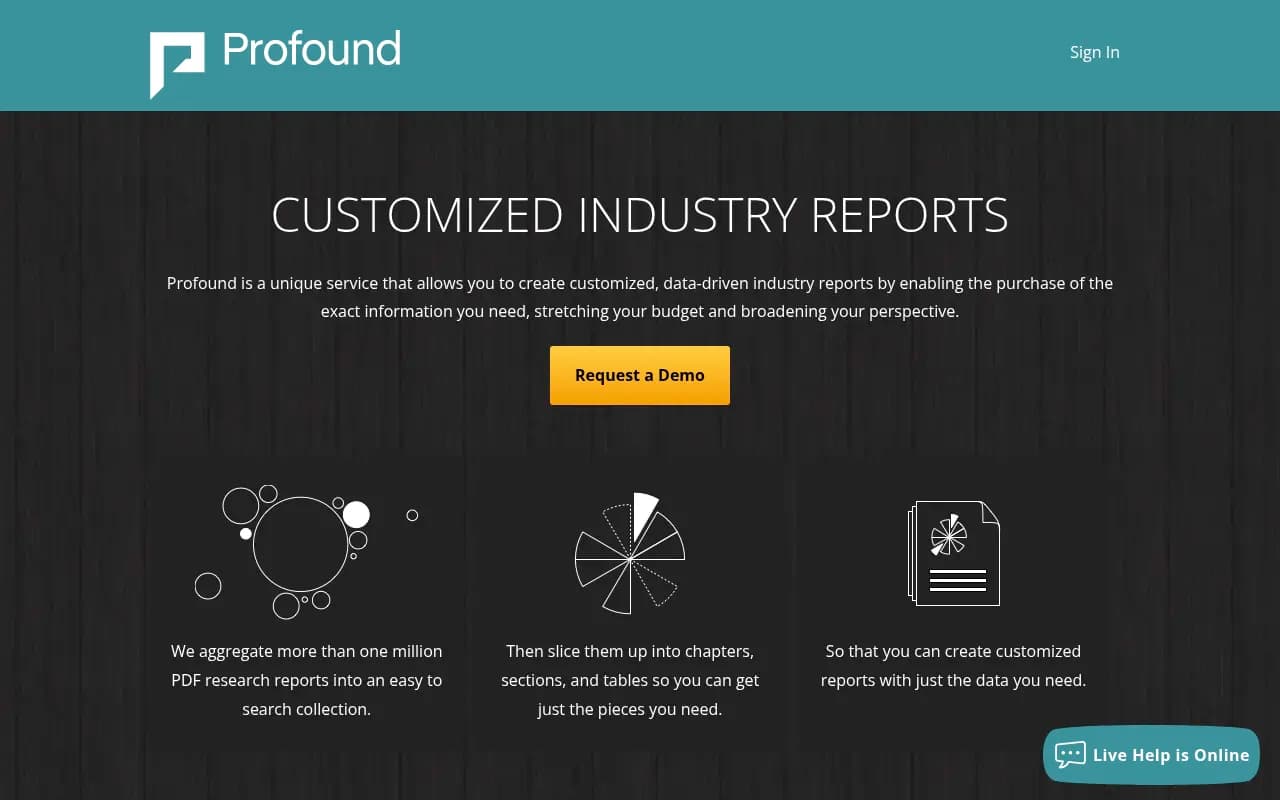
Profound calculates a daily positive/negative percentage breakdown directly from tracked prompts and layers a theme view on top, so you can see which specific attributes of your product are driving the tone. It's an enterprise-priced tool though; expect Growth-tier pricing in the $400/month range for three engines and roughly 100 prompts, with enterprise deals running well into four figures a month.
MaxAEO tracks sentiment plus what it calls "corrective actions" across eight engines including Copilot, Grok, and Claude, and its public pricing (roughly $15-$399/month) is far more accessible for smaller teams that want sentiment tracking without an enterprise contract.
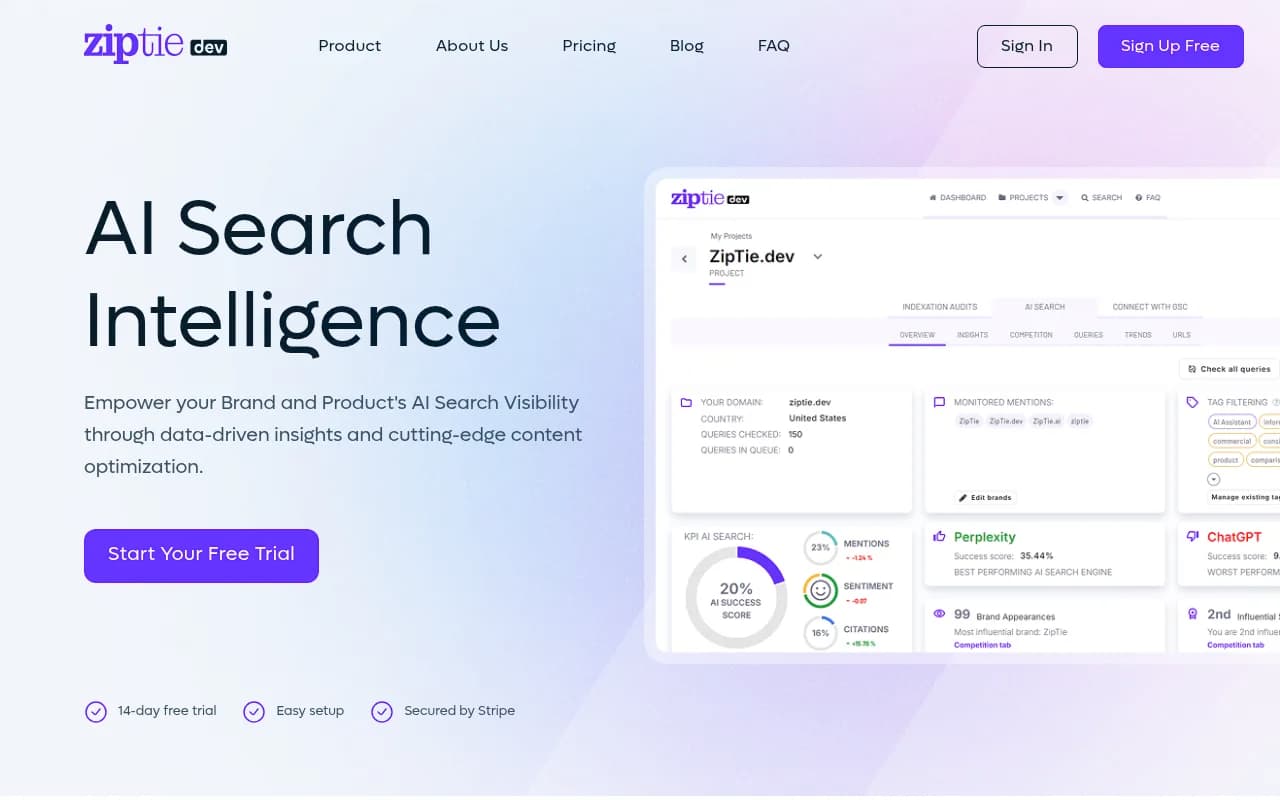
ZipTie is worth a look specifically because it names the divergence problem outright and designs its sentiment classification around catching a brand that's positive on one engine and negative on another. It uses fairly literal language patterns to tag sentiment (things like "users frequently report issues with..." get flagged negative), which is transparent in a way some black-box scoring tools aren't.
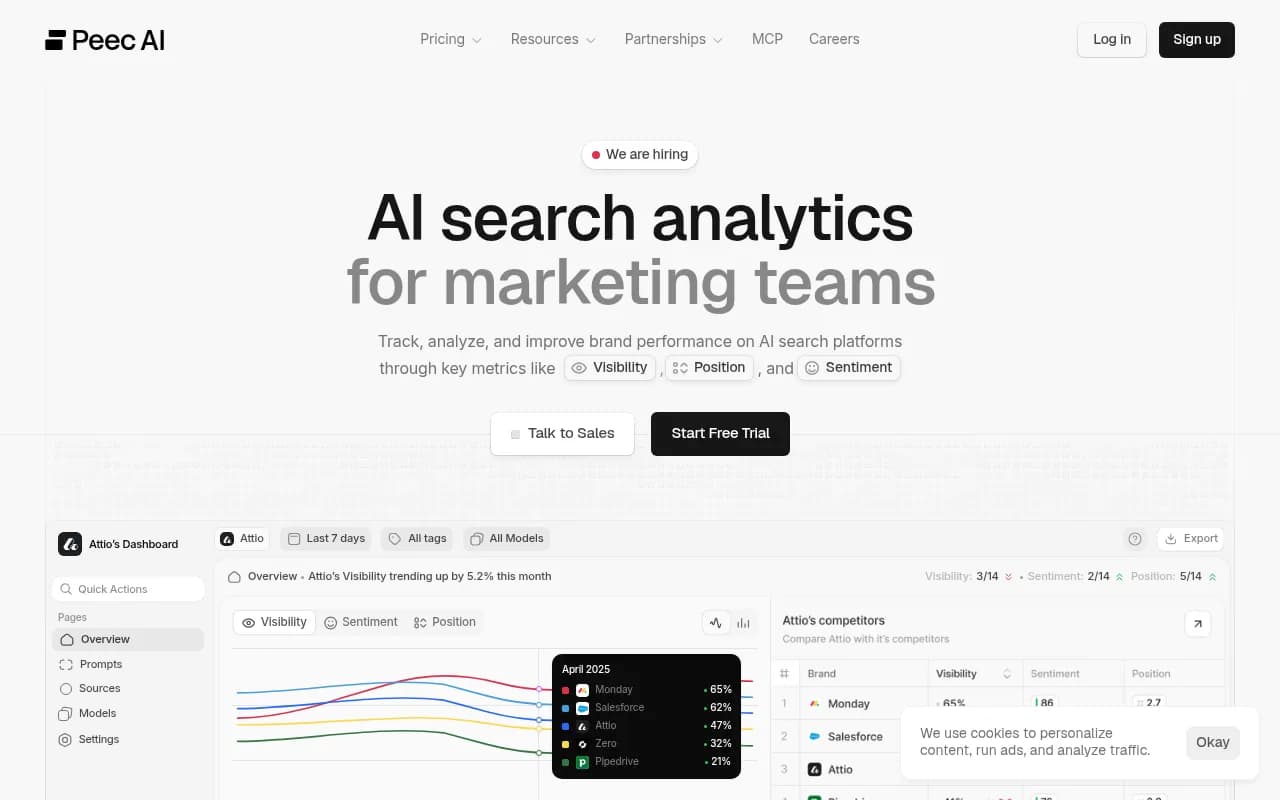
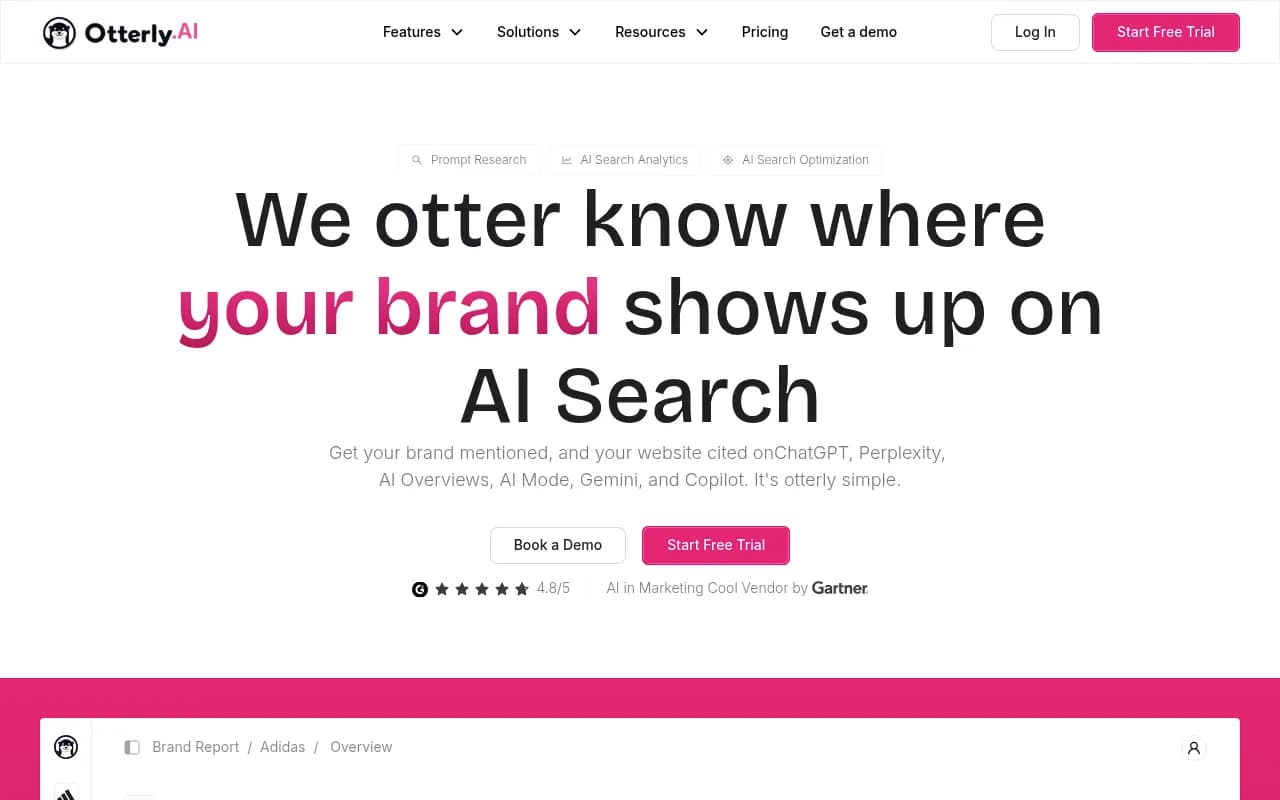
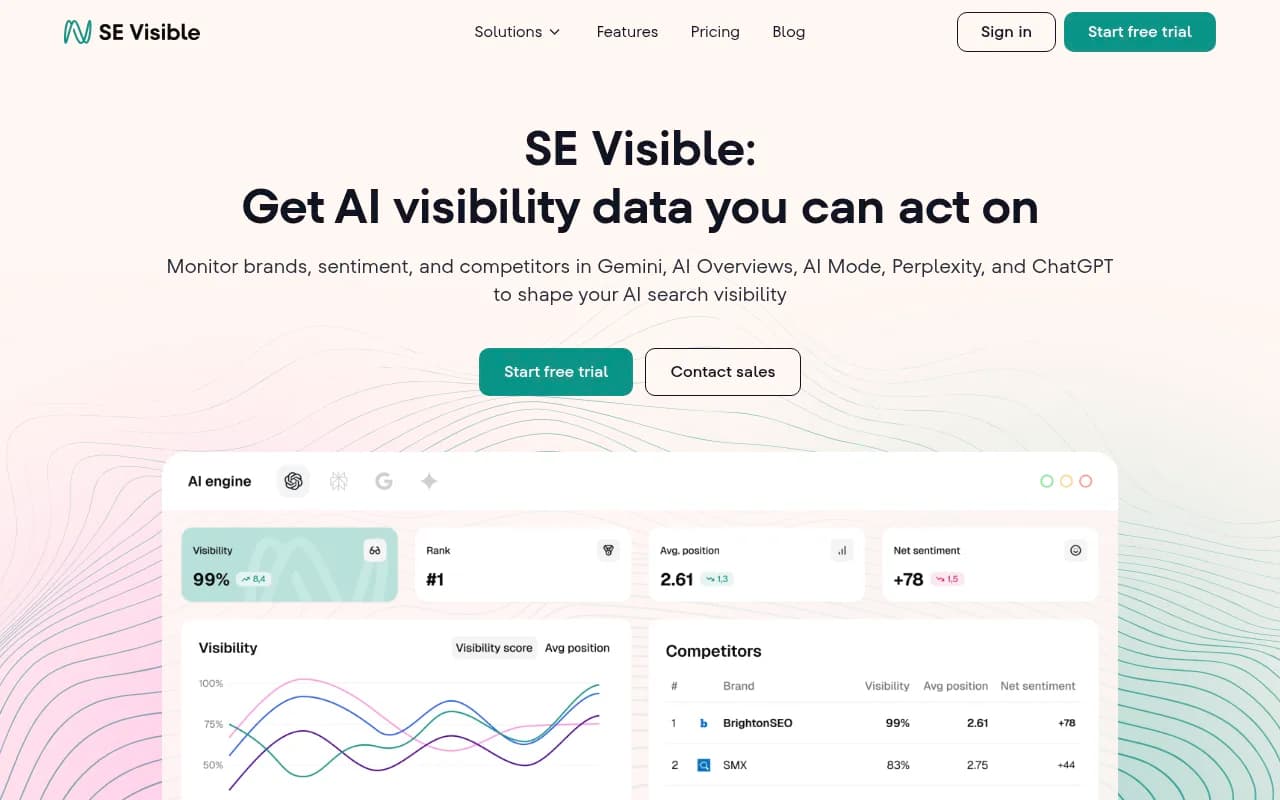
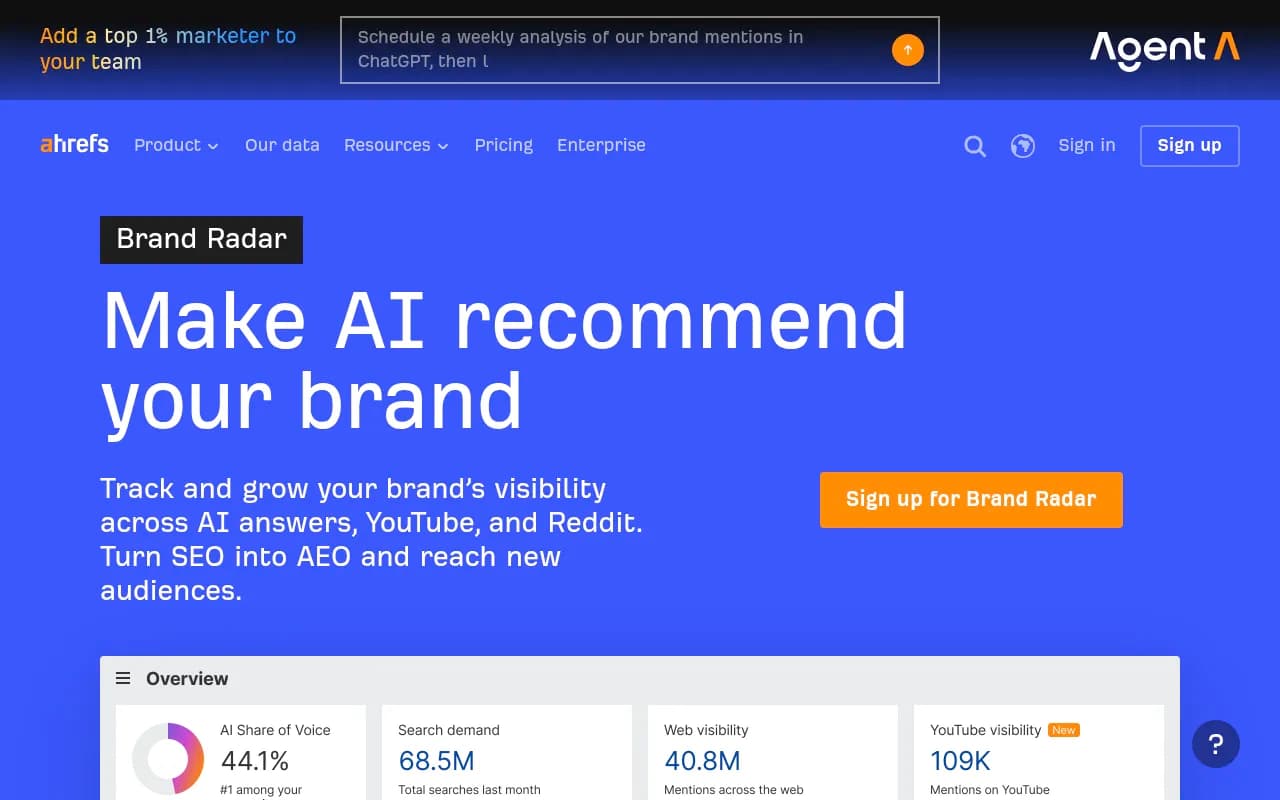
Peec AI, Otterly.AI, and SE Ranking's Visible product all support sentiment tracking according to MaxAEO's own comparison of twelve AI brand monitoring tools, though Ahrefs Brand Radar and ZipTie were rated as offering only partial sentiment signal rather than a dedicated dashboard, worth confirming directly before you commit budget.
GEO platforms with an agentic layer
If sentiment is the diagnosis, you still need a way to actually change the story AI tells about you, and that's where tools like Promptwatch differ from pure trackers. Promptwatch is an end-to-end AI Search Visibility and GEO platform that goes beyond monitoring, its Content Agents plan, write, and publish GEO-optimized content directly to your CMS, and its Unified Actions feature turns visibility and citation data into a prioritized to-do list rather than just a dashboard you have to interpret yourself. That matters for sentiment specifically because Profound's own recommendation for improving AI-answer sentiment is to earn mentions in the sources AI already cites, and Promptwatch's citation trend data and crawler logs show you exactly which of your pages (and which third-party pages) AI systems are reading and citing, so you know where to focus the fix.
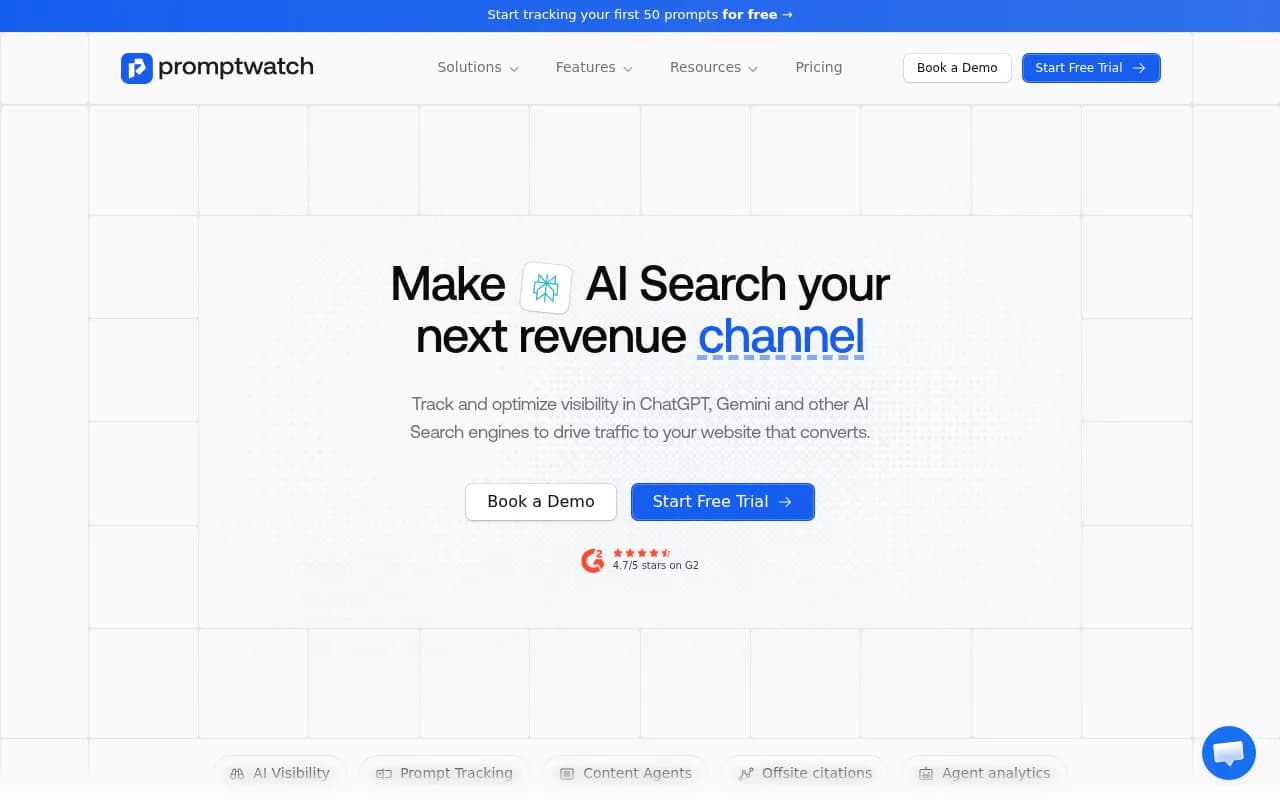
Promptwatch also tracks offsite mentions, meaning it catches your brand named inside a third-party page AI cites even when there's no link back to your site, which is exactly the kind of coverage a domain-only sentiment scanner would miss entirely. It's used by 1,840+ brands and agencies including Duolingo, Yelp, and Typeform, and holds a 4.7/5 rating on G2.
Legacy social listening tools with AI sentiment bolted on
Brand24, Brandwatch, Sprout Social, and Mention were all sentiment-analysis tools long before generative AI search existed, and they're genuinely strong at reading tone across social, news, blogs, and forums. Brand24 includes sentiment on every plan and says its model accuracy has climbed from 61% to 95% according to its own help docs (worth a grain of salt, since human annotators typically only agree with each other about 80% of the time on sentiment labeling). Brandwatch, powered by its Iris AI engine, goes further into emotion recognition (joy, anger, fear) across 83 languages, but it's priced for enterprise, realistically $800/month and up.
The catch: none of these were built to parse an AI-generated answer as its own unit of analysis. Some, like Brand24, have started selling AI Visibility as a separate paid add-on rather than folding it into the core sentiment engine, which tells you it's still early days for that integration.
Comparison table
| Tool | Sentiment granularity | AI engines covered | Takes action on findings | Pricing (from) |
|---|---|---|---|---|
| Promptwatch | Per-engine, per-page citation and offsite mentions | ChatGPT, Gemini, Claude, Perplexity, Grok, AI Overviews, AI Mode, Copilot, and more | Yes: Content Agents, Unified Actions, CMS publishing | $95/mo |
| Profound | Daily % breakdown plus sentiment by theme | ChatGPT, Perplexity, Google AI Overviews (+more on higher tiers) | Recommendations only | ~$400/mo |
| ZipTie | Rule-based positive/negative/neutral, flags cross-engine divergence | Multiple engines | Recommendations only | Custom |
| MaxAEO | Sentiment plus "corrective actions" | 8 engines incl. Copilot, Grok | Partial | $15-$399/mo |
| Brand24 | Positive/negative/neutral on all plans; AI Visibility sold separately | Social, news, blogs + AI add-on | No | $199/mo |
| Brandwatch | Advanced emotion detection (Iris AI), 83 languages | Social, news; no native AI-engine tracking | No | ~$800+/mo |
Where sentiment tools still get it wrong
Before you trust any sentiment score at face value, it's worth knowing where the underlying tech actually breaks.
Sarcasm is still the hardest problem in the field. Research on sarcasm detection (the SarcasmBench benchmark) found that even GPT-4 underperforms smaller, purpose-built models at spotting sarcastic text, and chain-of-thought prompting, normally a reliability boost, actually makes sarcasm detection worse. If your brand gets roasted sarcastically on Reddit and that thread gets cited by an AI engine, don't assume the tool caught the tone correctly.
Negation trips up rule-based sentiment engines in embarrassing ways. VADER, a widely used sentiment library, has been shown scoring phrases like "no complaints" and "no problems ever" as roughly 60% negative, because it can't reliably handle the flip that "no" and "never" introduce.
And there's a ceiling most vendors don't advertise: human annotators typically only agree with each other about 80% of the time when labeling sentiment by hand. So a tool claiming 90%+ accuracy is making a bold claim, since it's implying better-than-human consistency on a task where even trained humans disagree with each other one time in five.
None of this means sentiment tracking is a waste of time. It means you should treat any single score as a directional signal, not a verdict, and dig into the theme-level or source-level detail before reacting to a scary-looking dip.
How to actually pick one
Start by being honest about what you're trying to catch. If you mainly worry about a PR-style blowup (a lawsuit, a recall, a viral complaint), you want an engine-aware tool that's fast on alerts and covers Google AI Overviews specifically, since that's the engine most likely to go negative on controversy. If you're more worried about slow erosion, customers quietly concluding your product isn't worth it compared to a competitor, you want something tuned to ChatGPT-style product-evaluation sentiment and the third-party review and comparison content that feeds it.
Either way, don't buy a tool that only reads your own domain. Given that AI engines cite a small, mostly third-party pool of sources per answer, according to Promptwatch's citation data, the sentiment shaping your brand's AI reputation is happening on pages you don't own, and a monitoring tool that can't see those pages is only giving you half the picture.
If you're evaluating a longer list of options, the GEO software directory at bestgeosoftware.com is a reasonable place to compare feature sets side by side before you commit to a demo call.
Frequently asked questions
Is sentiment tracking worth paying for if I'm already tracking mentions? Given that negative sentiment is rare but disproportionately damaging when it happens (2.3% of AI Overviews mentions, 1.6% of ChatGPT mentions, per BrightEdge's analysis), a pure mention counter will tell you that you exist, not whether existing is helping or hurting you. If your category has any controversy risk or your product has known limitations competitors like to point out, sentiment tracking earns its keep quickly.
Should I trust a single blended sentiment score across all AI engines? No. Google AI Overviews and ChatGPT go negative for genuinely different reasons; a blended score averages away the exact information that would tell you which engine needs attention and why.
How often should I check sentiment trends? Given that AI visibility itself decays for 40-60% of brands on a monthly basis according to research cited by ZipTie, weekly checks are more useful than monthly ones, especially right after a product launch, a news cycle, or a competitor campaign.