Key takeaways
- "AI search automation" covers five different jobs: prompt monitoring, content production, publishing, crawler and traffic analysis, and workflow glue between apps. Few tools do more than two.
- Most tools in this space automate reporting. Far fewer automate the fix (writing and publishing pages) or check whether the fix worked.
- ChatGPT changes its retrieval behavior without warning. On Aug 8, 2026, site: queries jumped from 0.37% to 16.8% of fanout queries in a day, so a one-off audit goes stale fast.
- General automation platforms like Zapier, Make, and n8n are useful plumbing, but they don't know anything about AI citations.
- Pick by the bottleneck you have today, not by the longest feature list.
Why "automation" means different things here
Read five vendor pages and you will find five definitions of automation. One tool means daily prompt runs on a schedule. Another means an AI agent that writes and publishes articles while you sleep. A third means a Zap that posts a Slack message when a brand mention changes.
Those are not the same job, and buying the wrong one is how teams end up with a nice dashboard and no new citations. I find it useful to split the work into five layers:
- Monitoring: running prompts across ChatGPT, Perplexity, Gemini, and AI Overviews and recording what comes back.
- Diagnosis: working out why you are or aren't cited, including crawler access and site health.
- Content production: briefs, drafts, and refreshes aimed at the gaps.
- Publishing and distribution: getting pages into a CMS, internal links, schema, outreach.
- Workflow glue: moving data between your tools, reports, alerts, tickets.
Most tools are strong in one layer, passable in a second, and absent in the rest. The sections below go layer by layer.
Why continuous automation beats one-off audits
The case for automating this at all comes from how unstable AI retrieval is. Promptwatch Data tracked a ChatGPT site: operator shift: on August 8, 2026, site:-scoped fanout queries went from 0.37% to 16.8% of all fanout queries in a single day, roughly 46x. Average fanouts per response rose from about 1.08 to about 1.83 the same day and stayed there. Any keyword-to-heading mapping you built before that date is partly stale.
The ChatGPT query fanout data shows the same drift over time. Average fanouts per response were 2.15 in early December and about 1.84 by early March, and average query length fell from about 117 characters to the high 80s. It then dropped again to around 53 characters when fanouts returned in April.
Nobody is going to re-check that by hand every week. That is the real argument for automation here: the target keeps moving.
Crawler behavior moves too. In Promptwatch's AI crawler traffic report (IP-verified requests, June 8 to September 6, 2026), OpenAI accounted for 79.8% of verified AI crawler requests in the week of Aug 31 to Sept 6, down from 94.8% in the week of June 8. Other providers are taking a bigger share, and if one of them is large in the report but near zero in your logs, you are probably blocking it.
The quick comparison
| Tool | Main layer it automates | Does it fix things? | Best for |
|---|---|---|---|
| Promptwatch | Monitoring, diagnosis, content, publishing | Yes, writes and publishes, then tracks results | Teams that want the full loop |
| Profound | Monitoring and analytics | Limited | Enterprise reporting |
| Otterly.AI | Monitoring | No | Cheap prompt tracking |
| Peec AI | Monitoring | No | Simple visibility benchmarks |
| AirOps | Content workflows | Content only | Content engineering teams |
| Zapier / Make / n8n | Workflow glue | Only what you build | Connecting apps and alerts |
| Browse AI / Bardeen | Scraping and browser tasks | No | Collecting competitor data |
| Botify | Technical SEO and crawl | Technical fixes | Large sites |
Layer 1 and 2: monitoring and diagnosis
Promptwatch
Promptwatch is the one I would put first if you want automation that goes past reporting. It runs monitors daily against the real interfaces of ChatGPT, Google AI Overviews, AI Mode, Gemini, Perplexity, Copilot, and others, then adds the parts that explain the numbers: IP-verified AI crawler logs, visitor analytics for AI-referred traffic, weekly site audits, and an Action Board that turns the findings into a prioritized to-do list.

The automation that matters most sits after the monitoring. The Content Agent plans, writes, and publishes pages against your visibility gaps and can push to WordPress, Webflow, or Framer, either through a review inbox or hands-off. Published pages are then tracked through crawls, citations, and AI traffic, and underperformers come back as new actions. Agent Chat gives you a conversational analyst over the same data, with scheduled briefings in Slack.
Plans start free (ChatGPT only, 10 prompts) and paid tiers begin at $95/month; the automated Content Agent is on Business ($579/month). Check promptwatch.com/pricing before committing, since tiers change.
Profound
Profound is a strong monitoring and analytics product aimed at enterprises. It automates the collection and reporting side well. It sits at a higher price point, and it is more about showing you the picture than writing and shipping the fix.

Otterly.AI and Peec AI
Both are trackers. They run your prompts on a schedule and show mentions and share of voice. That is useful and often cheap. What you won't get is crawler logs, AI traffic attribution, or content generation, so the next step stays manual.


Other monitoring-first options
The catalog is crowded here: AthenaHQ, Scrunch, Qwairy, LLM Pulse, Rankscale, and ZipTie all focus on tracking. If you are comparing them, the GEO software directory at bestgeosoftware.com is a decent place to see the field in one go.


Layer 3: content production
Content automation is where marketing copy gets loudest and results get thinnest. A tool that writes 50 articles is not automating search visibility unless it knows which prompts you are missing from.
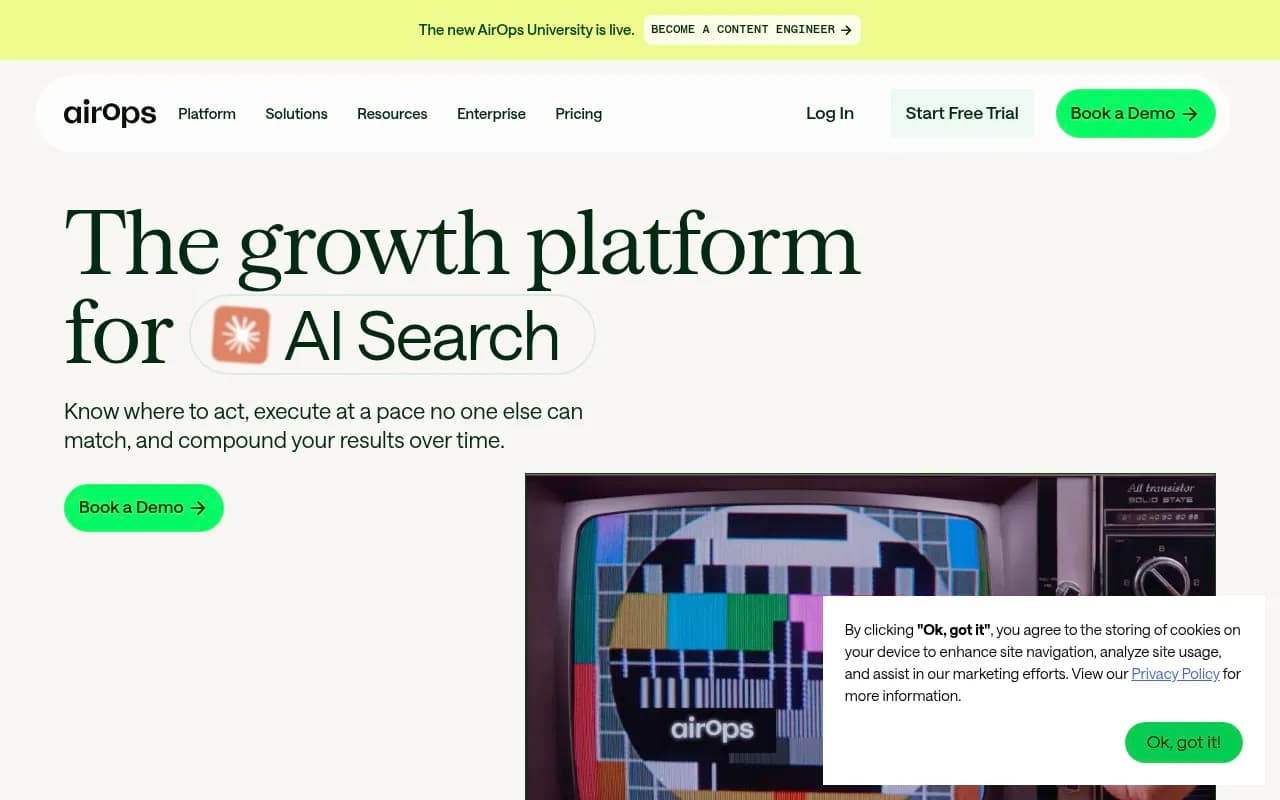
AirOps
AirOps is built for content workflows: you design a pipeline for research, drafting, and refresh, and it runs it at volume. It is good if you have someone who will build and maintain those workflows. It does not tell you which AI prompts cite your competitors, so you have to bring that data in.
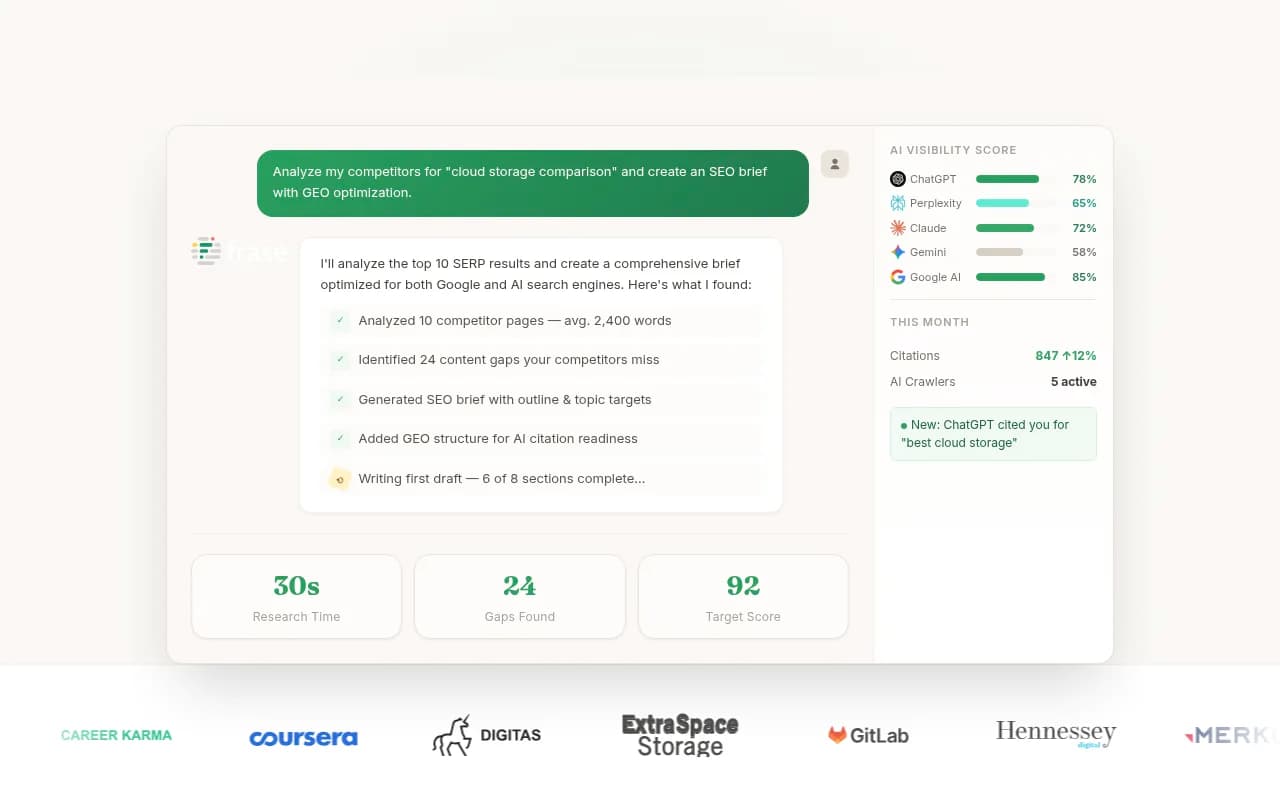
Surfer SEO, Frase, Clearscope
These score and guide content against search results. They automate the brief and optimization step. They were built around classic SERPs, so treat their scores as one input rather than proof you will get cited.

Autopilot publishers
Tools like SEO.AI, Junia AI, and AutoPublish go the other direction: keywords in, published articles out. The speed is real. So is the risk of thin, generic pages. Remember that Promptwatch Data found news content lost half its cited pages within 36 days, while landing pages and docs stayed cited longest. Volume of disposable content isn't the goal.


What kind of content gets cited
If you automate drafting, aim at formats AI actually uses. In Promptwatch's content type data, product pages were the most cited type in ChatGPT at 22.4% of citations (Sep 28 to Oct 4, 2026), followed by landing pages and listicles. The fanout report's practical advice also holds up: write headings that read like keyword queries, front-load the entity and category in titles and H2s, and build clusters for comparisons, pricing, alternatives, and how-tos.
Layer 4: publishing, structure, and distribution
This layer is the most neglected. Writing the page is half the job.
- InLinks automates entity-based internal linking and schema.
- WordLift does AI schema and content tagging for publishers.
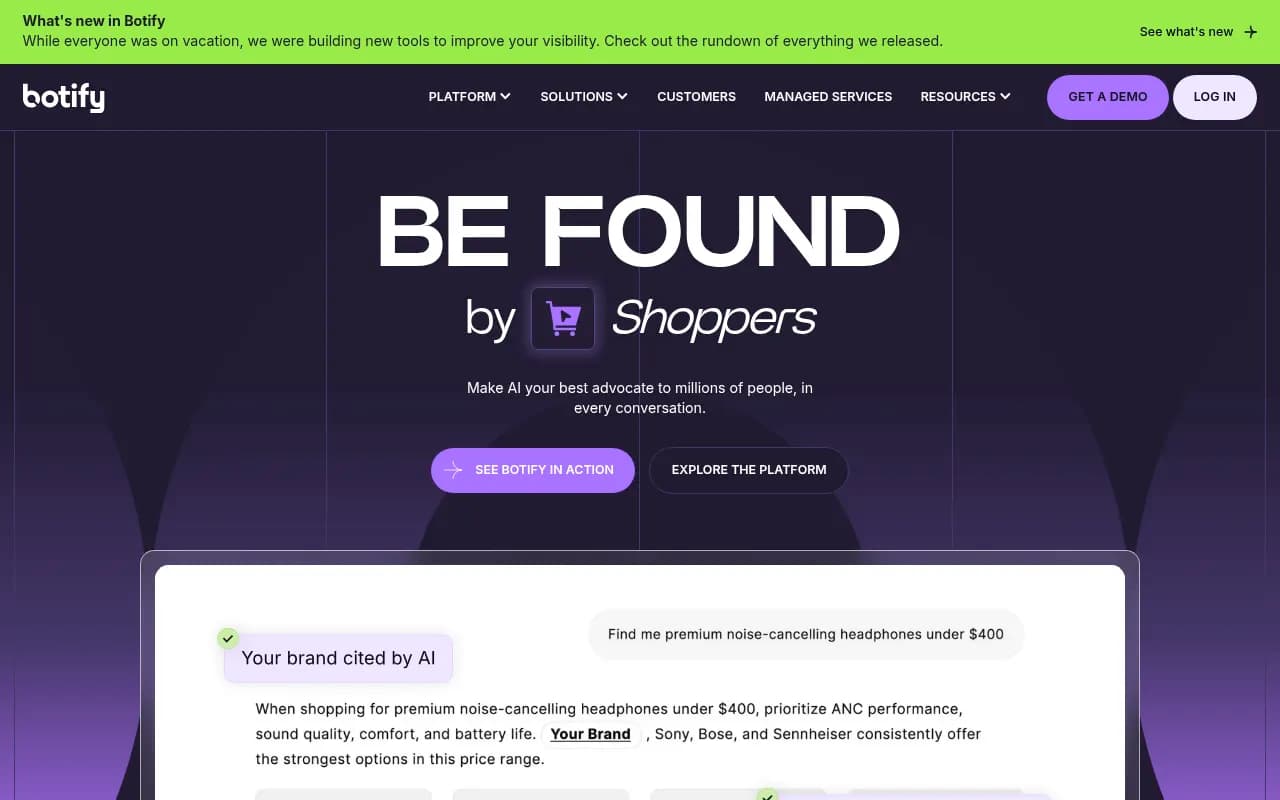
- Botify handles technical SEO and crawl optimization for big sites.
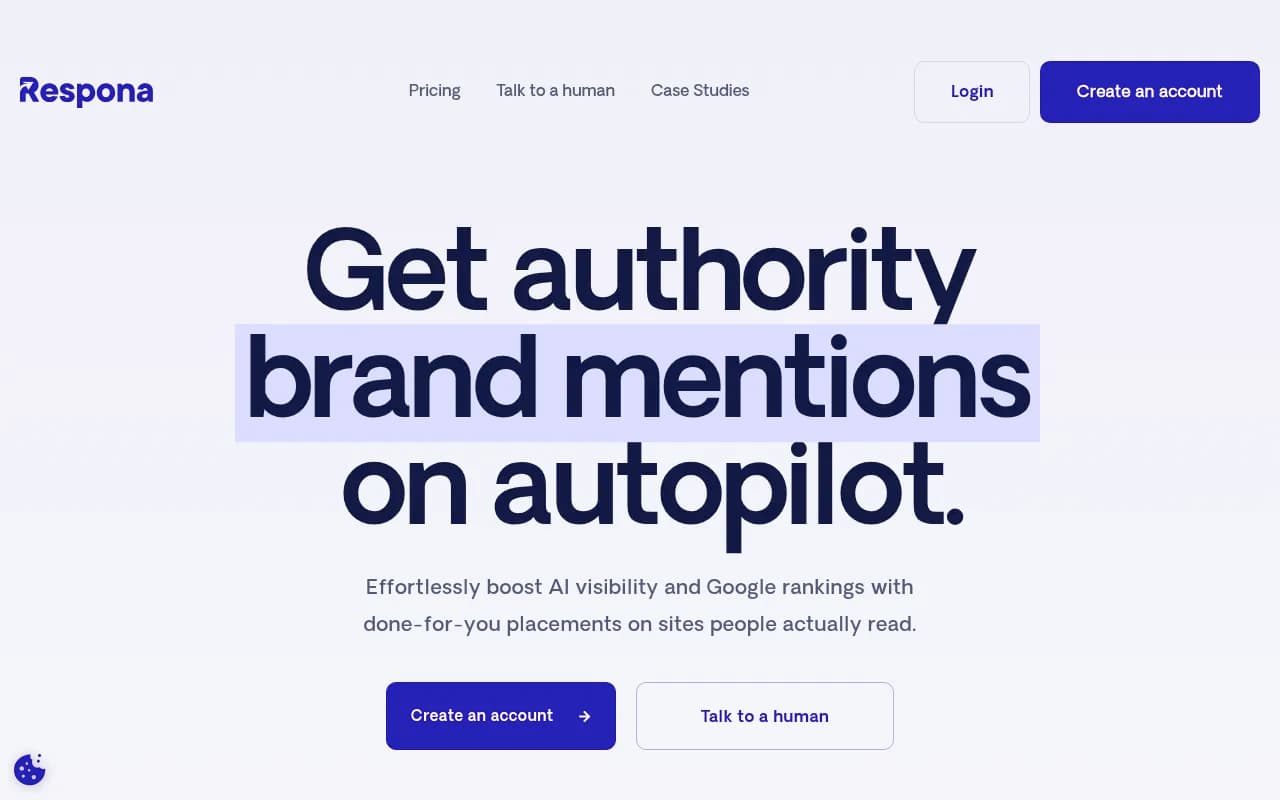
- CrowdReply and Respona automate parts of outreach and third-party mentions. Use them carefully; low-quality placement shows.
One detail worth knowing: markdown files are only 0.05% of AI search citations in Promptwatch's markdown data. Tools that pitch markdown-for-AI as a visibility lever are mostly solving a problem for agents, not for AI search.
Layer 5: workflow glue
None of the general automation platforms understand AI search. What they do well is move data around once you have it.
Zapier
Zapier connects 8,000+ apps, and its Copilot lets you describe a workflow in plain language. A realistic use: pipe a weekly visibility export into Slack or a Google Sheet, or open a ticket when a competitor appears in a prompt you own.
Make and n8n
Make suits visual workflows with complex branching. n8n is the pick if your engineering team wants self-hosting and full control. Pricing in the sources I used (Zapier from $19.99/month, Make from $9/month, n8n cloud from EUR24/month) comes from a vendor blog, so verify it on each pricing page.
Scrapers and browser automation
Browse AI, Bardeen, Apify, and Firecrawl collect data: competitor pricing pages, review sites, cited sources. Bardeen has a real limitation, though. It runs in your browser, so if your laptop sleeps the automation stops, and layout changes break flows. Fine for personal workflows, shaky for production.



If you are comparing agentic options in general, the agentic SEO tools directory lists more of them.
What each type of tool does not do
| Tool type | Typical gap |
|---|---|
| Prompt trackers | No crawler logs, no traffic attribution, no content generation |
| Content generators | No citation data to decide what to write |
| Workflow platforms | No AI-specific data at all |
| Traditional SEO suites with AI add-ons | Fixed prompt sets, shallower AI data |
| Scrapers | Collect data, don't interpret it |
The consistent pattern: a tool that does diagnosis, content, and measurement in one place saves you the integration work that Zapier would otherwise be doing.
How to choose
Start from the bottleneck.
- You don't know if AI mentions you at all: start with a free scan or a cheap tracker (Otterly.AI, Peec AI, or Promptwatch's free tier).
- You know you're invisible and have no capacity to fix it: pick something with an execution layer, such as Promptwatch's Content Agent.
- You have a strong content team and need data: pair a tracker with AirOps or your existing editorial tools.
- You have everything but nothing connects: add Zapier, Make, or n8n.
- Large site with technical debt: Botify or a weekly site audit comes before more content.
Also check three things before you pay anyone:
- Does it track real interfaces or only API outputs? User-facing answers can differ from API responses.
- Can it show crawler access? If AI bots can't read your pages, nothing else matters. Compare your logs against the provider mix in the crawler report.
- Does it close the loop? A published page should be tracked for crawls, citations, and clicks, and underperformers should come back as tasks.
A practical weekly automation setup
Here is a stack that works without heroics:
- A monitor of 50 to 150 prompts covering your category, comparisons, and brand queries, running daily.
- Crawler logs wired in through your CDN (Cloudflare, Vercel, Fastly, or raw logs) so you see which bots reach you and what errors they hit.
- A weekly site audit and an action list, reviewed on Mondays.
- A content pipeline that drafts to your gaps, with a human review step before publishing.
- One automation (Zapier or similar) that sends the weekly summary to Slack and opens tasks for the owners.
- A monthly re-check of your fanout assumptions, since ChatGPT can shift in a day.
If you would rather hand the whole thing to people, an agency can run it. 1001 SEO Media does exactly this for brands that want technical SEO and GEO covered without building the team, and it uses Promptwatch for the AI visibility side.
For wider comparisons of rank and visibility trackers, the AI rank tracking directory is worth a look.
Bottom line
Automating a dashboard is easy. Automating the work that changes your citations is harder, and fewer tools do it. If your goal is more AI-driven traffic, choose the tool that writes, publishes, and measures, then use Zapier or n8n for the leftover plumbing. If your goal is only to know where you stand, a tracker is enough, and you can spend less.