Key takeaways
- Gaming brands get discovered in AI answers through store pages, wikis, listicles, YouTube and docs, so the right GEO tool has to show you which of those sources AI actually cites for your titles.
- Promptwatch Data from Sep 28 to Oct 4, 2026 shows ChatGPT drawing only 0.46% of its citations from social platforms, while Google AI Overviews draws 12.2%. The old "get on Reddit and Discord" advice no longer works for ChatGPT.
- Product and landing pages are about 39% of ChatGPT citations in the same period, so your Steam, store and official game pages matter more than most studios assume.
- Pick a tool by team size: an end-to-end platform for publishers with many titles, a cheap tracker for a small indie studio, an enterprise suite if you already live in Adobe or BrightEdge.
- No GEO vendor publishes gaming-specific benchmarks yet. Run your own prompts for a few weeks before you commit to a contract.
Why gaming studios need a GEO strategy
Players used to type "best co-op games 2026" into Google, scan ten blue links and open a few tabs. Now a growing share of them ask ChatGPT, Gemini or Perplexity and read one synthesized answer. That answer names maybe five games. If yours is not one of them, you do not exist for that player.
That is the whole pitch for generative engine optimization (GEO). It is the practice of making sure AI engines mention, recommend and cite your game, your studio and your publishing label. Unity's 2026 Game Development Report lists competition as the biggest hurdle for mobile developers, and discovery is where that competition gets decided. A studio that ships a good game and never shows up in AI recommendations is leaving real players on the table.
Gaming has a few quirks that make it different from, say, B2B SaaS:
- Catalogs are big. A publisher might have 30 titles, each with its own competitors, genres and audiences.
- Launch spikes are brutal. News and patch coverage decays quickly, and attention moves to the next release.
- Community content is the product's second layer: wikis, guides, YouTube walkthroughs, subreddit threads.
- Genre comparisons ("games like Hades") drive most discovery, so you are competing inside listicles, not just against rival brands.
What AI engines actually cite for games
I could not find a Promptwatch report on game-category citations specifically, and I would be wary of anyone claiming one exists. What we do have is cross-industry data that maps neatly onto how games are sold and discussed.
Content types
Promptwatch Data on ChatGPT citation share by content type (Sep 28 to Oct 4, 2026) found product pages are the most cited type at 22.4%, with landing pages at 16.8%. Listicles were 13.6%, documentation 7.5%, how-tos 8.7%, and reviews just 1.7%. For commercial prompts like "best X", product pages, landing pages, listicles and comparisons together made up almost 70% of citations.
Translate that to games: your Steam page, your official site, "best games like X" roundups and patch-note or wiki-style how-tos are the surfaces that win. Reviews barely register in ChatGPT, which may be uncomfortable if your PR plan is built around review scores.
Social is no longer the shortcut
This is the one that will annoy community managers. Promptwatch's October 2026 social citation data shows ChatGPT getting only 0.46% of its citations from social platforms, with Reddit's share falling after the August collapse in ChatGPT's Reddit citations. Google AI Overviews is a different story at 12.2%, with YouTube at 4.28%, Facebook at 2.38% and Reddit at 2.15%. Perplexity sits at 2.7%.
So a Discord-and-Reddit-first plan may still feed Google's surfaces, but it will do close to nothing for ChatGPT. YouTube matters most for Google audiences, and for a visual medium like games that is convenient.
Freshness and decay
Promptwatch's content half-life study tracked every page ChatGPT cited on July 6, 2026 for 90 days. Landing pages and docs stayed cited longest, while news lost half its pages within about 36 days. Launch announcements are the news-shaped content of the gaming world. Plan on them fading, and make sure an evergreen game page is the thing that replaces them.
Small channels can get cited
In February 2026, Promptwatch's YouTube data showed about 80% of cited videos had under 100K views and roughly 80% of citations came from channels under 100K subscribers. A small creator's "how to beat the boss" guide can be cited. That report predates the October shifts, and Perplexity's YouTube share has since dropped, so treat it as a signal about channel size, not a current share figure.
One third-party note worth knowing: 5W's AI Visibility Index for video games ranks top publishers by citation share across five engines and reports that Perplexity surfaces Reddit gaming subs and favors freshness. 5W sells AI visibility services and I only saw snippets, so use it as a lead, not as proof.
What to look for in a GEO tool for games
A generic checklist will not cut it. These are the questions that separate useful tools from dashboards.
- Can it track many titles and genres without per-prompt pricing blowing up? Publishers need dozens of monitors.
- Does it show citations, not just mentions? You need to know whether the source is Steam, a wiki, IGN or a YouTube channel.
- Does it collect from real AI interfaces rather than only APIs? User-facing answers and API outputs can differ.
- Can it track by country and language? Games are global and launch regions differ.
- Does it have AI crawler logs? Studios often run heavy JavaScript sites and gated store pages that AI bots cannot read.
- Does it help you act, or only report? A score does not publish a landing page.
- Does it separate models? Claude, Gemini and ChatGPT do not recommend the same games.
The best GEO tools for gaming studios and publishers in 2026
There is no gaming-specific GEO tool I would vouch for, and I found no verified pricing pages for most vendors, so check each pricing page before buying. Here is how I would shortlist.
| Tool | Best for | Standout strength | Watch out for |
|---|---|---|---|
| Promptwatch | Publishers and studios that want to fix visibility, not just watch it | Tracking plus crawler logs, content agents and traffic attribution | More than a solo indie needs |
| Profound | Large publishers with enterprise budgets | Deep enterprise analytics | Custom pricing, higher cost |
| Scrunch AI | Brand teams and agencies | Monitoring plus agent-ready pages | Monitoring-first |
| Otterly.AI | Small indie studios | Low entry price | Basic tracking only |
| Peec AI | Mid-sized marketing teams | Clean prompt tracking with suggestions | Pricing on request |
| Ahrefs Brand Radar / Semrush | Teams already in those SEO suites | Familiar workflow | Fixed prompt sets, shallower AI data |
| Adobe LLM Optimizer | Publishers in Adobe Experience Cloud | Fits existing enterprise stack | Enterprise-only fit |
| Botify / BrightEdge | Technical SEO teams on large sites | Crawl and enterprise SEO depth | Heavy for small teams |
Promptwatch
Promptwatch is the one I would put first for a publisher with a real catalog, because it covers the whole loop: it monitors prompts in the real interfaces of ChatGPT, Gemini, Perplexity, Google AI Overviews, AI Mode, Copilot and others, traces which pages get cited, then helps you act on the gaps and checks whether the fix worked.

Three pieces matter for games in particular. AI crawler logs are IP-verified, so you can see whether GPTBot or ClaudeBot can actually read your game pages or whether a script-heavy store front is blocking them. Citation tracking breaks out Reddit, YouTube, LinkedIn and Instagram sources, which tells you which communities and channels AI is actually leaning on for your genre. And the Content Agent can write and publish pages to WordPress, Webflow or Framer for the gaps it finds, such as a missing "games like X" page or an undocumented patch.
If you handle several studios or labels, the agency plans give you unlimited projects. Business ($579/month at the time of writing, confirm at promptwatch.com/pricing) is the first tier with the Content Agent, faster-than-daily tracking and local targeting. A 7-day free trial is available on monthly billing, and the free AI visibility report is a no-login way to see how ChatGPT, Gemini and Perplexity currently describe your studio.
For head-to-head details, see Promptwatch vs Profound and Promptwatch vs Scrunch.
Profound
Profound is built for enterprises and the pricing reflects that (custom quotes). If you are a top-25 publisher with a dedicated insights team, it is a serious option for monitoring. Compared with Promptwatch, it leans toward analysis rather than execution.

Scrunch AI
Scrunch pairs AI search monitoring with agent-ready pages for your site, which is an interesting angle if your concern is how bots read your content. Good for brand teams and agencies.

Otterly.AI and Peec AI
Otterly.AI is the cheapest dedicated visibility tracker I found, listed at around $29/month in a third-party roundup (that roundup lists its own product first, so verify). For a two-person indie studio that only wants to know whether its game turns up when people ask for recommendations, that is plenty. Peec AI sits a step above with smart prompt suggestions. Neither does crawler logs, visitor analytics or content generation.


SEO suites: Ahrefs Brand Radar and Semrush
If your marketing team already pays for Ahrefs or Semrush, the AI add-ons are a low-friction place to start. Expect fixed prompt sets and shallower AI-specific data than the dedicated platforms.

Enterprise suites: Adobe LLM Optimizer, BrightEdge and Botify
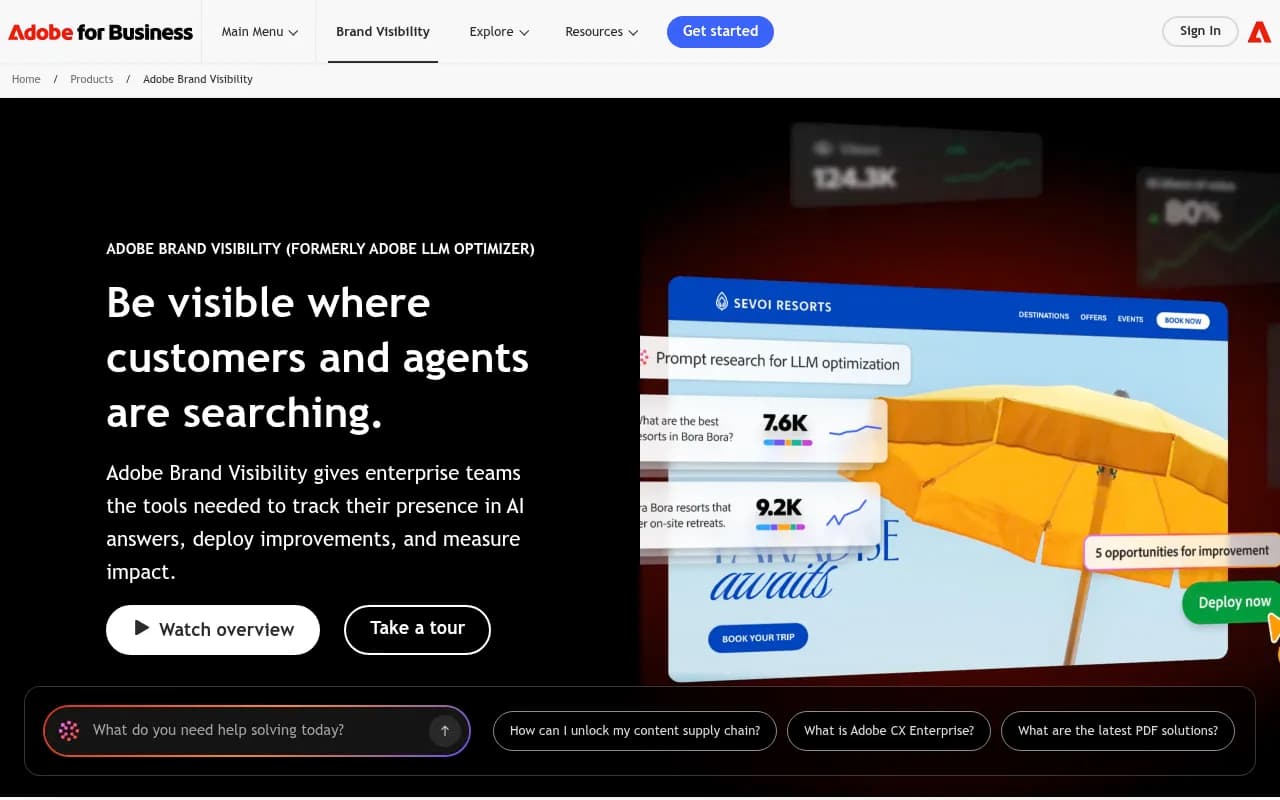
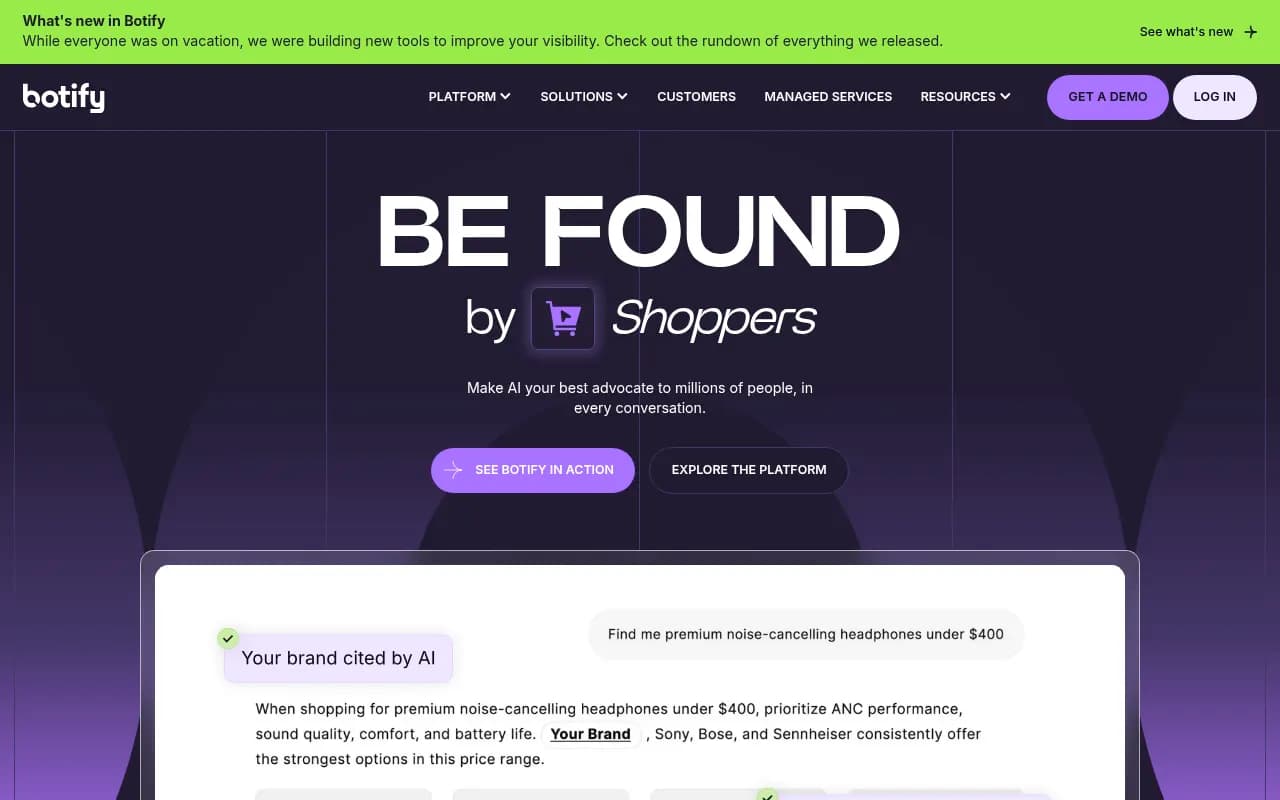
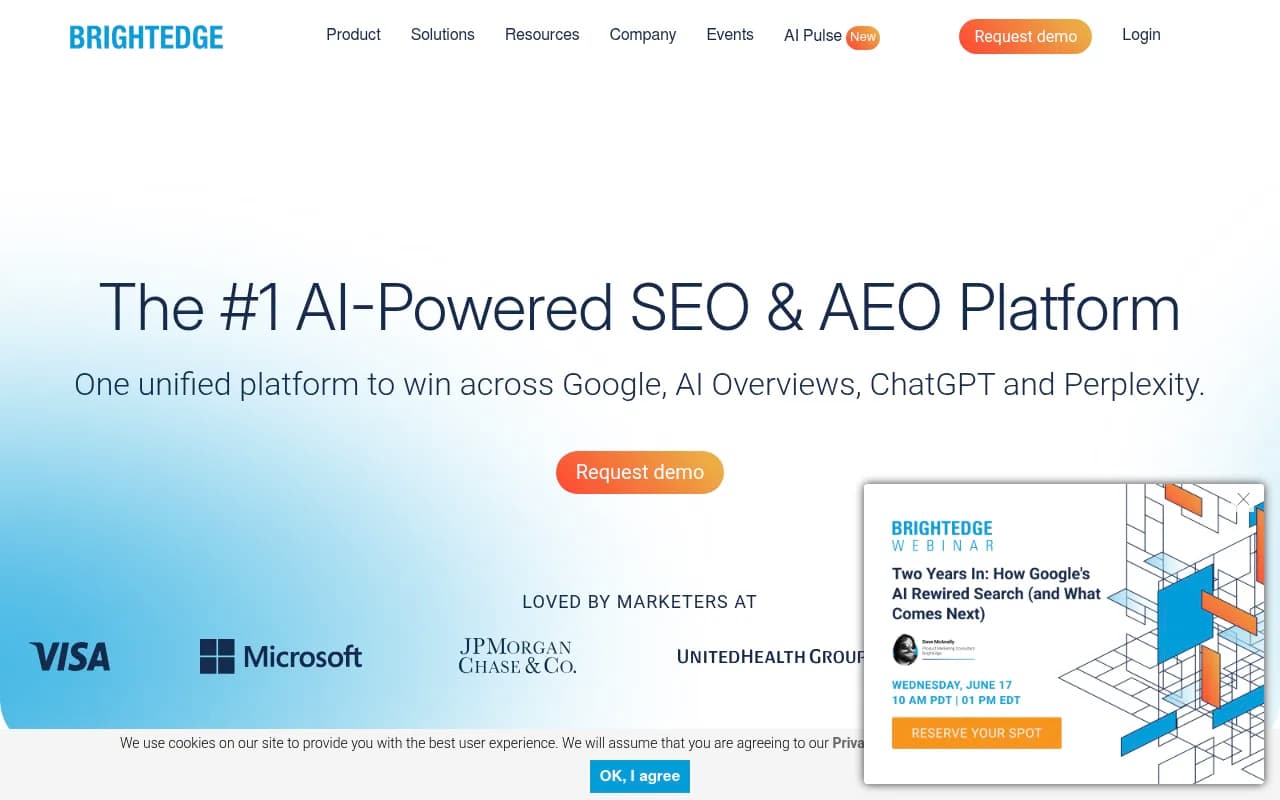
Publishers inside the Adobe stack should look at Adobe LLM Optimizer. Botify and BrightEdge suit technical SEO teams managing very large sites with a lot of store and community pages.
For wider browsing, the GEO software directory at bestgeosoftware.com lists dozens more.
Match the tool to your studio
| Studio type | Likely need | Start with |
|---|---|---|
| Solo or small indie | Know if the game gets named | Otterly.AI or Peec AI, plus the free Promptwatch report |
| Mid-sized studio, one or two live titles | Visibility, citations, content gaps | Promptwatch Professional or Business |
| Multi-title publisher | Many monitors, regions, content at scale | Promptwatch Business or Enterprise |
| Agency serving studios | Client projects and reporting | Promptwatch agency plans |
| Adobe-based enterprise publisher | Integration with existing stack | Adobe LLM Optimizer |
| Middleware, SDK or engine plugin vendor | Developer docs visibility | Promptwatch, with docs and GitHub focus |
That last row is easy to overlook. If you sell tools to developers, Promptwatch's software citation data shows GitHub (1.2%), Microsoft's learn site (0.98%) and G2 (0.73%) leading ChatGPT's software citations, and docs and help centers earn the largest share. Keep docs crawlable, keep G2 and Capterra profiles current, and maintain a public GitHub presence.
A practical rollout for your first 60 days
Weeks 1 and 2: baseline
Build a prompt list by hand. Include genre queries ("best roguelike on Switch"), comparison queries ("games like Stardew Valley"), branded queries ("is [your game] worth it") and problem queries ("how to fix [your game] crash on launch"). Run them in a tracker and record where you appear, in what position and with which sources.
Weeks 3 and 4: fix access
Check whether AI crawlers can read your pages. The AI crawler URL inspector and robots.txt generator for AI are free. Many studios discover their store embeds, age gates or JavaScript rendering are hiding the game from bots entirely. This is the cheapest win in the whole process.
Weeks 5 to 8: fill content gaps
Based on the citation data, prioritize:
- A crisp landing page per game with plain-text facts: genre, platforms, price, release date, player count.
- A "games like X" comparison page that honestly positions your title.
- Evergreen how-to and docs pages for patches, controls, builds and troubleshooting.
- YouTube guides with the exact question in the title, an answer summary in the description and chapters, as the YouTube data suggests.
Do not burn the budget on launch news alone. Given the 36-day half-life of news, treat each announcement as a link to the evergreen page.
Ongoing: measure the loop
Track whether citations move, whether AI crawlers hit the new pages and whether AI-referred visitors convert. Note that ChatGPT stopped sending a referrer on October 8, 2026, so you will need UTM tagging to see its traffic cleanly.
Mistakes I see gaming brands make
The first is treating GEO as a social media job. With ChatGPT citing social at 0.46%, a Discord push does not move that engine. It can still help Google surfaces and Perplexity, but you should not expect it to show up in ChatGPT reports.
The second is chasing review scores. Reviews are 1.7% of ChatGPT citations overall, rising to 5.6% on branded prompts. They matter once someone already knows your name, not for discovery.
The third is ignoring regional variation. A game that is huge in Brazil might be invisible in German-language prompts. Use country and language tracking per monitor.
The fourth is buying on a vendor's claims. One roundup reports AI-cited brands earn 35% more organic clicks, but it is vendor-sourced and I could not verify it. Run a small pilot and measure your own numbers.
Do you need an agency?
Some studios would rather hand this to specialists. Agency retainers for AEO and GEO vary wildly; one published set of bands ranges from roughly $1,800 to over $22,000 a month depending on scope, and another agency's figures conflict with it, so get written quotes. If you want a team that pairs technical SEO with GEO work, 1001 SEO Media is an agency that does exactly that, and it uses Promptwatch as its AI visibility platform.
Bottom line
Pick a tool for the problem you actually have. If you only need to know whether your indie game gets named, a cheap tracker is fine. If you run a catalog and need to find out why you are missing from "best of" answers, then fix it and verify it, an end-to-end platform like Promptwatch is the better fit. Whatever you choose, start with the free baseline, fix crawler access first, and put your best evergreen game page where AI can read it.