Key takeaways
- GEO tools track whether ChatGPT, Gemini, Perplexity and Google AI Overviews mention or cite your agency. Insurance buyers ask these tools questions like "best commercial insurance broker for contractors in Ohio" now, and the answer is a short list.
- Local agencies need local, location-level tracking. National brokers, MGAs and carriers need multi-country monitoring and citation analysis. Those are different buying decisions.
- Monitoring alone does not fix anything. Prioritize tools that tell you which pages to write or fix, and that show whether AI crawlers can read your site.
- Promptwatch is the pick if you want tracking, content creation and AI crawler data in one place. Budget options like Otterly.AI and Peec AI work for a first pass.
- Compliance review still applies. AI visibility work on insurance content needs the same sign-off as any other advertising copy.
Why insurance agencies need GEO now
Insurance is a trust purchase with a lot of comparison shopping. People ask which carrier covers a roofer, whether a broker or captive agent is better for a small business, or what a BOP policy costs. More of those questions now go to an AI assistant first, and the assistant answers with a handful of named brands.
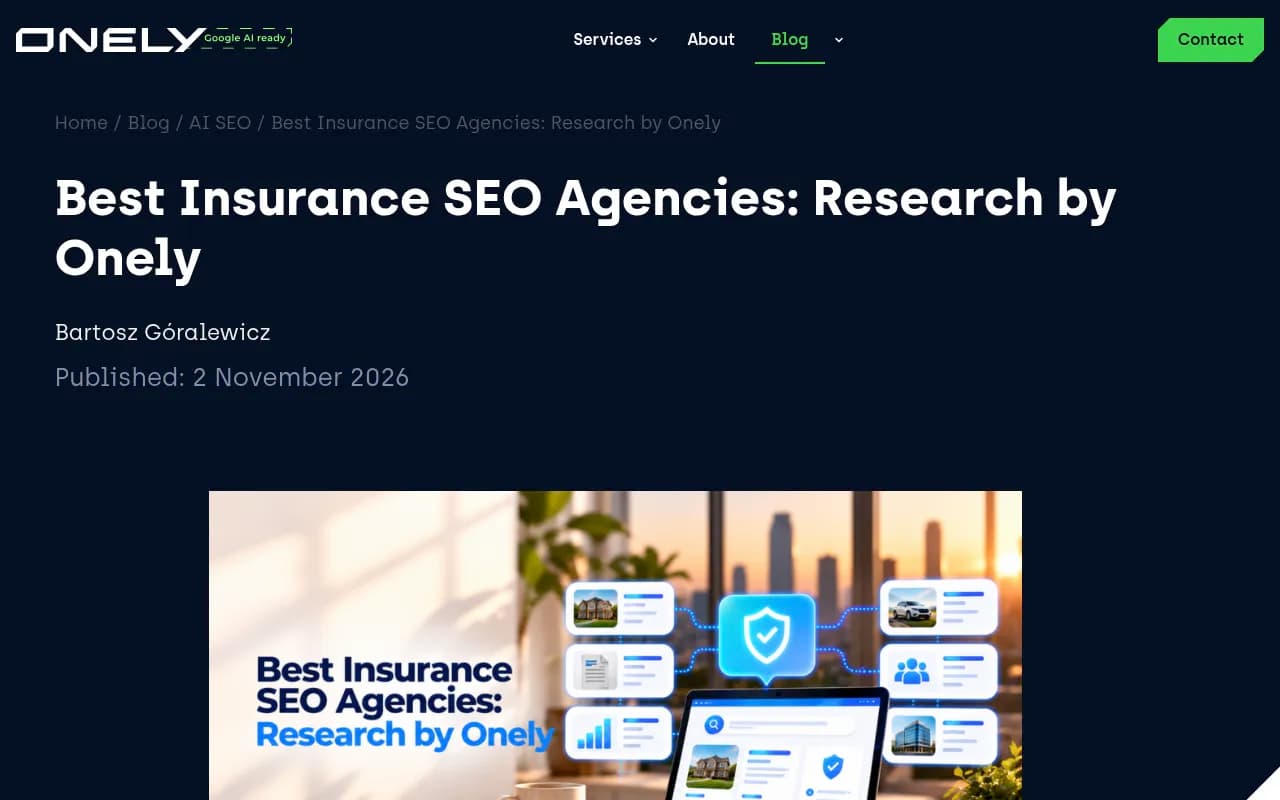
The AI engines themselves seem to think local presence matters. Onely's research on insurance SEO queries found that ChatGPT, Google AI Mode and Gemini all led with local SEO and the business profile as the starting point for independent agencies. Nationwide's agent blog makes a similar case: expand SEO across Google, Bing and AI chats, and use GEO and AEO to reach prospects who are ready to convert.
So a GEO tool for an insurance agency has two jobs. Show you where you appear (or don't) across AI answers, and show you why, so you know what to fix.
What the data says about how AI answers get built
I could not find insurance-specific citation data, so treat what follows as general behaviour that very likely applies to insurance too. It comes from Promptwatch Data, covering Sep 28 to Oct 4, 2026.
- Product pages and landing pages are the most cited content types in ChatGPT, at 22.4% and 16.8% of citations. For commercial prompts like "best X for small businesses" those two plus listicles and comparisons make up almost 70%. The ChatGPT citation share by content type report has the full breakdown. For an agency, that means your coverage pages ("contractors insurance in Texas") matter more than your blog.
- Almost half of ChatGPT responses cite 10 or more unique domains, according to Promptwatch's unique domains report. You share every answer with lots of other sites, and third-party roundups and review sites are often the way in.
- Social is a weak lever for ChatGPT. Social platforms were 0.46% of ChatGPT citations, but 12.2% of Google AI Overviews citations, per the social media citations report. YouTube leads there at 4.28%, so a few short explainer videos might help more on Google than another Reddit thread.
- News content fades fast. Pages cited by ChatGPT on July 6, 2026 were tracked in the content half-life report, and news lost half its pages within 36 days, while landing pages and docs lasted far longer. Evergreen coverage pages beat rate-change news posts.
The practical takeaway: measure across many prompts, not one, and invest in pages that describe what you sell.
What to look for in a GEO tool as an insurance agency
A few criteria matter more for insurance than for most industries.
Geography
A captive agent in Tulsa cares about Tulsa. A broker licensed in 30 states cares about 30. Check whether the tool tracks at country, state and city level, and whether it can simulate a location. Local pinning matters for "near me" style prompts.
Data from the real interfaces
API answers and what a consumer sees in ChatGPT or AI Overviews can differ. Tools that capture the real interface give you numbers closer to what prospects actually see.
Competitor and carrier context
Your competitors are other agencies, but also carriers, aggregators and comparison sites. You want to see all of them in the same answer.
Citation and crawler data
Knowing you were not mentioned is useful. Knowing which pages AI cites instead, and whether AI bots can even crawl your quote pages, is what tells you what to do.
Action, not only reporting
Most small agencies have no spare marketing headcount. A tool that gives you a prioritized to-do list or drafts the missing pages saves real time.
Comparison table
| Tool | Best for | Standout | Watch out for |
|---|---|---|---|
| Promptwatch | Agencies and brokers that want to fix gaps, not just see them | Tracking, content gap analysis, Content Agent, crawler logs, AI traffic in one platform | Content Agent and local targeting start on the Business plan |
| Otterly.AI | Small agencies wanting cheap monitoring | Low cost, simple setup | Monitoring only |
| Peec AI | Marketing teams wanting clean dashboards | Smart prompt suggestions | No crawler logs or content generation |
| Profound | Large carriers and national brokers | Enterprise analytics | Higher price points |
| Birdeye Search AI | Multi-location agencies | Location-level AI visibility | Strongest on local, lighter on content |
| BrightLocal | Single-office local agencies | Listings, reviews, local rankings plus AI visibility | AI features are an add-on to a local SEO tool |
| Semrush AI Visibility Toolkit | Teams already on Semrush | Sits inside an SEO suite | Fixed prompt sets, shallower AI data |
Check each vendor's pricing page before you commit. Plans change often.
The best GEO tools for insurance agencies and brokers
Promptwatch
Promptwatch is the one I would start with if the goal is more policies, not a nicer dashboard. It monitors the real interfaces of ChatGPT, Google AI Overviews, Google AI Mode, Gemini, Perplexity, Copilot and others, by country and language. It then traces which pages AI cites, finds content gaps, and on the Business plan its Content Agent can write and publish pages to WordPress, Webflow or Framer.

For insurance specifically, a few features matter:
- Local GEO/SEO targeting pins a monitor to exact coordinates so ChatGPT, AI Overviews and AI Mode answer as if asked from that spot. That fits a local agency or a franchise with several offices. It is on Business, Agency Scale and Enterprise.
- Brand Narrative pulls out the individual claims AI makes about you, such as "slow claims support" or "good for small contractors". Insurance is a reputation game, so this is handy. Fact Check, on Business and above, shows which of your pages teaches AI the wrong thing.
- AI crawler logs show whether GPTBot, ClaudeBot or PerplexityBot can actually read your quote and coverage pages. Many insurance sites hide content behind quote tools, and this is where you find out.
- Personas let you prompt like a small business owner, a young family, or a retiree buying Medicare supplements, and see how visibility differs.
Pricing at the time of writing: Essential $95/mo, Professional $245/mo, Business $579/mo, billed monthly or annually, with a 7-day free trial on monthly billing. Confirm at promptwatch.com/pricing. You can also run the free AI visibility report first to see how ChatGPT, Gemini and Perplexity talk about you today.
The honest limit: the smallest plan has no crawler logs or AEO articles, so a single-office agency that only wants a monthly check might find it more than needed. Agencies serving insurance clients can look at the agency plans instead.
Otterly.AI
Otterly.AI is an affordable monitor. If you are one agency owner who wants to know once a week whether ChatGPT mentions you, it is a reasonable way to start.

It tracks, it reports, and that is about it. You will need to work out the fixes yourself.
Peec AI
Peec AI has a clean interface and helpful prompt suggestions, which saves time if you do not know what prospects ask.

Like Otterly, it stops at monitoring. No crawler logs, no visitor analytics, no content generation.
Profound
Profound is aimed at enterprise teams. A national carrier or large brokerage with a dedicated search team and budget could use its analytics depth.

For a regional agency it is probably overkill. See the Promptwatch vs Profound comparison if you are weighing the two.
Birdeye Search AI
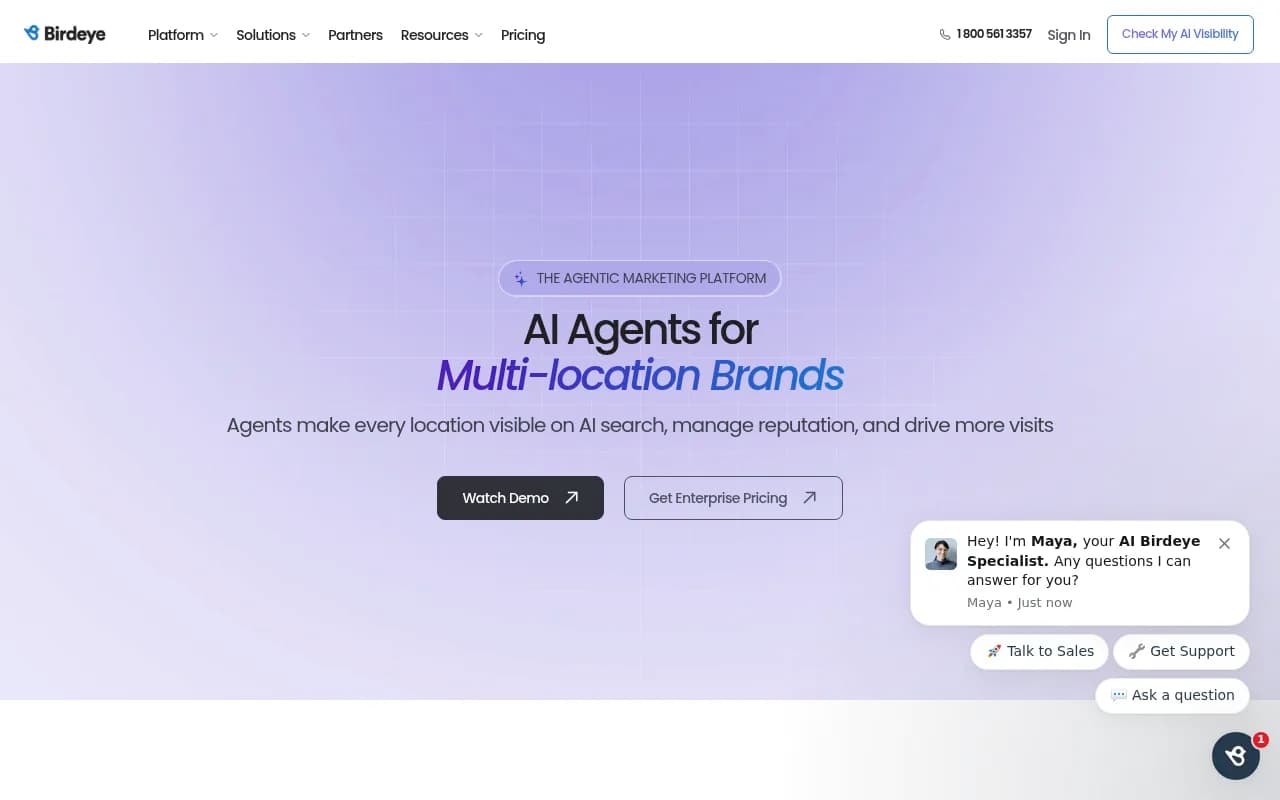
Birdeye is built around locations. If you run a dozen offices, each with its own reviews and listings, location-level AI visibility is the point.
BrightLocal
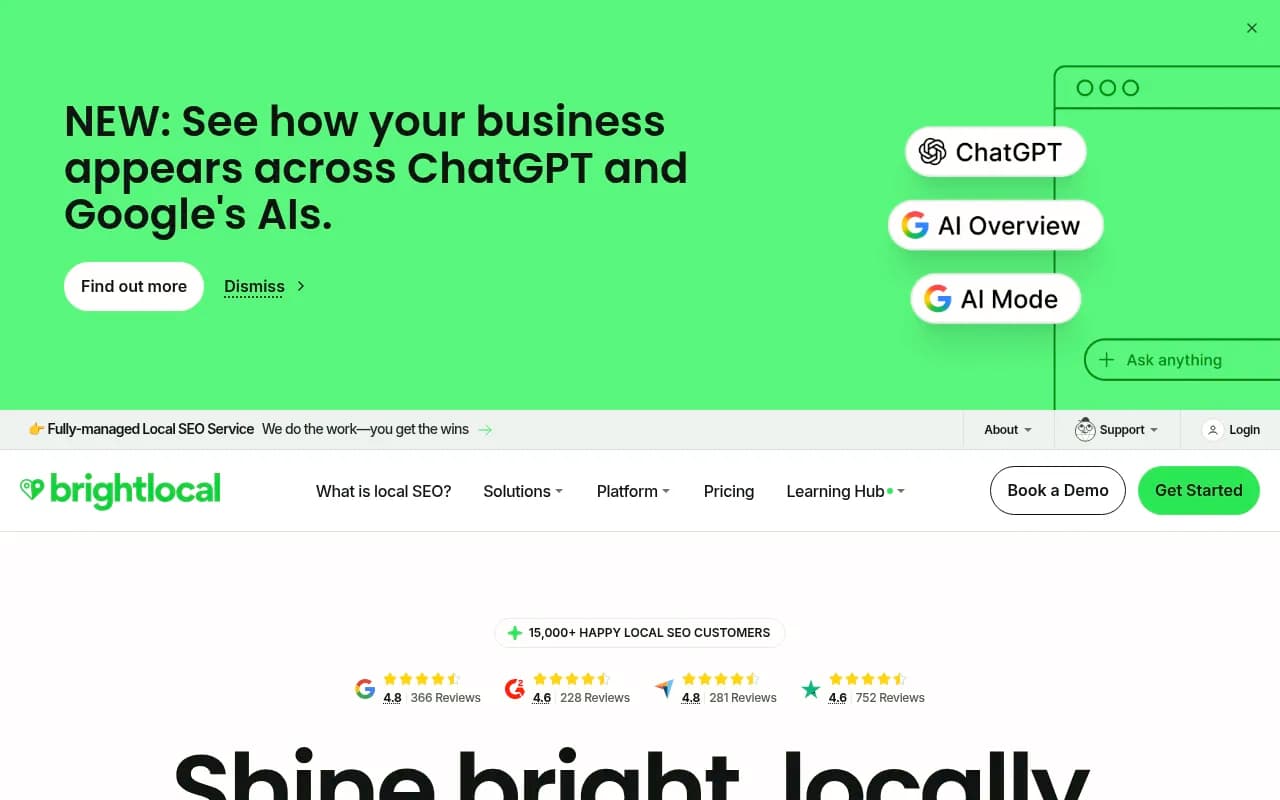
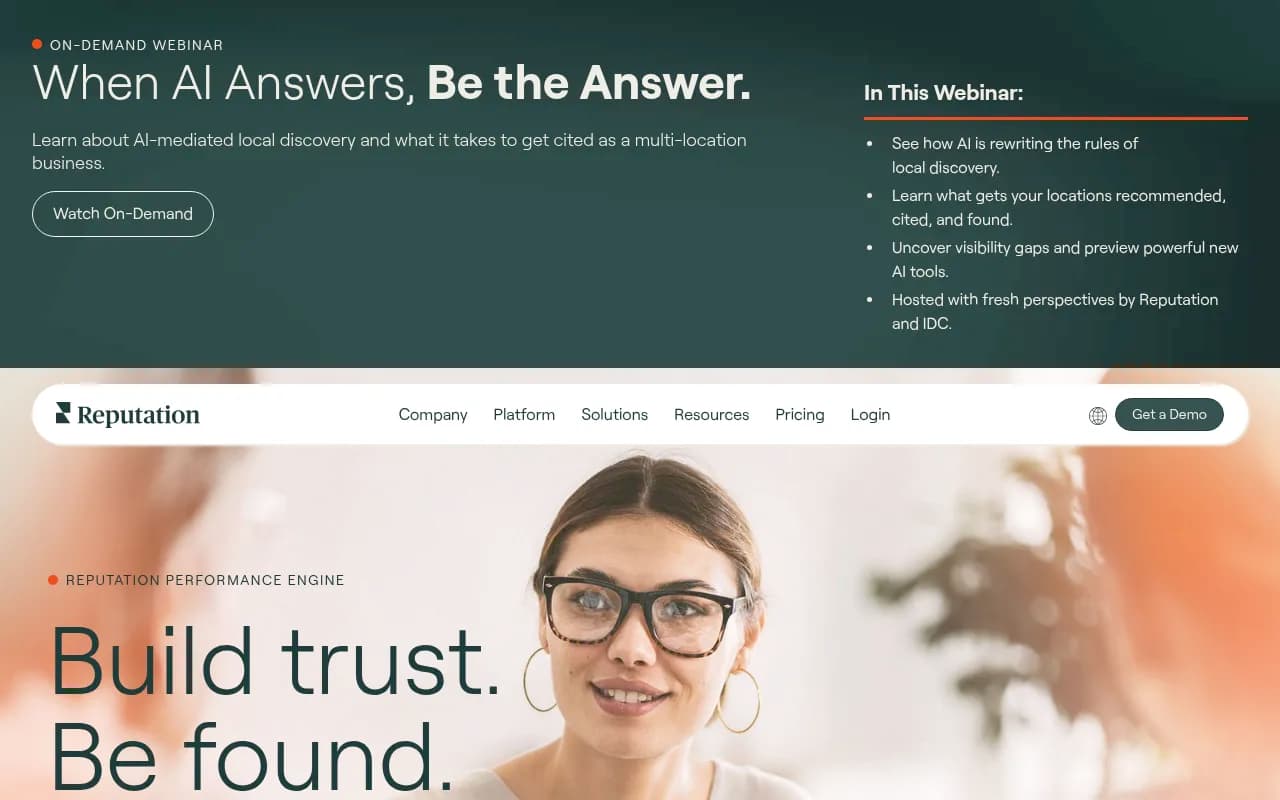
BrightLocal covers local rankings, listings and reviews, and now AI visibility. For a single-office agency where Google Business Profile is the main lever, it fits well. Related local tools include Reputation.com and Chatmeter for multi-location review management.
Semrush AI Visibility Toolkit and Ahrefs Brand Radar
If your SEO already lives in one of these suites, adding AI tracking is convenient.

The trade-off is shallower AI-specific data and fixed prompt sets compared with dedicated platforms.
Scrunch
Scrunch offers AI search monitoring plus agent-ready pages, and it has an agency angle.
Which tool for which agency
| Agency type | Start with | Why |
|---|---|---|
| Single-office independent agency | BrightLocal or Otterly.AI, plus the free Promptwatch report | Cheap, local focus |
| Growing agency with a content person | Promptwatch Professional or Business | Content gaps, crawler logs, publishing |
| Multi-location brokerage | Promptwatch Business or Birdeye Search AI | Location tracking |
| National broker, MGA or carrier | Promptwatch Enterprise or Profound | Multi-country, multi-brand scale |
| Marketing agency serving insurers | Promptwatch agency plans | Unlimited projects, client reporting |
More options are listed in the GEO software directory at bestgeosoftware.com.
A simple workflow for the first 90 days
Weeks 1 to 2: baseline
Build 30 to 50 prompts your buyers would ask. Mix organic prompts ("best insurance broker for restaurants"), brand prompts ("is [your agency] good") and competitor comparisons. Include your states and cities. Run them across ChatGPT, AI Overviews, AI Mode and Perplexity.
Weeks 3 to 4: fix access
Check robots.txt and whether AI crawlers can reach your pages. The free Agentic Readiness Check is a quick test. Make sure coverage pages render as plain HTML, not only behind a quote widget.
Month 2: fill the page gaps
Build coverage pages by line and audience: contractors, restaurants, trucking, cyber, life and health. Keep specifics accurate: states licensed, carriers represented, what is and is not covered. The Promptwatch Data content type report recommends complete, factual product and landing pages, so write them that way. Add an FAQ page too.
Month 3: earn third-party mentions
Because so many AI answers cite 10 or more domains, get listed in credible roundups and review sites, and collect reviews. Publish a few YouTube explainers if Google AI Overviews matters to you.
Ongoing
Re-measure monthly. AI answers shift, and a drop in one engine is not always your fault. Promptwatch's data showed Reddit's share of ChatGPT citations falling from about 4% to 0.5% on August 14, 2026 (report), which shows how quickly the ground moves.
Compliance and accuracy
Insurance content is regulated. Anything you publish about coverage, rates or claims should go through the same review as a brochure. AI will repeat errors, so Fact Check style workflows, where you flag inaccurate claims and find the page that caused them, are worth using. Also note that tool listicles about AI for insurance brokers, like those from Perspective AI or Tabulera, mostly cover workflow automation (intake, submissions, AMS). That is a different category from GEO. You may want both, but do not confuse them.
Do you need an agency?
Some agencies would rather hand this off. Hiring an SEO and GEO partner makes sense if you have no marketing staff. 1001 SEO Media is a full-service SEO and GEO agency, and it also publishes this site. Whoever you pick, ask for proof from an insurance business like yours and how they measure quotes and policies, not just rankings. Onely's checklist for choosing an insurance SEO agency says the same.
Bottom line
Pick the tool for your size. A one-office agency can start with a local tool and a free visibility report. A growing agency or brokerage that wants to see gaps, close them and measure the result should look at Promptwatch first. National players with enterprise needs can compare it against Profound. Whatever you choose, track many prompts, fix crawler access, and keep your coverage pages accurate.