Key takeaways
- Most tools tell you whether ChatGPT mentioned your brand. Far fewer tell you which third-party pages ChatGPT pulled from when it did. For this job, you want the second kind.
- ChatGPT cites a lot of domains per answer. In Promptwatch Data (Sep 28 to Oct 4, 2026), 47.6% of cited responses named 10 or more unique domains, so your brand is usually one name among many sources.
- Listicles, comparisons and how-tos make up about 28% of ChatGPT citations, and reviews jump to 5.6% on branded prompts. Those are the third-party formats to watch.
- Most roundups of these tools are written by vendors who rank themselves first. Check features and pricing on each vendor's own site.
- A good workflow has three parts: track prompts at volume, export the cited source URLs, then act on them with outreach, corrections or new content.
Why third-party pages matter more than your own site
When someone asks ChatGPT for the best tool in your category, the answer is rarely built from your homepage. It is built from roundups, review sites, comparison posts, forums and documentation pages that describe you. If those pages name you favorably, you show up. If they skip you or describe you badly, you do not, and no amount of tweaking your own site fixes that quickly.
Promptwatch Data backs this up from a few angles. In the report on unique domains per ChatGPT response (Sep 28 to Oct 4, 2026), 47.6% of responses with citations cited 10 or more domains, and 66.1% cited at least 8. Only 6% cited three or fewer. For organic prompts, 52.5% cited 10 or more. Brand-specific prompts are tighter, with 5 domains the most common count, but even there the answer pulls from several outside sources.
The content type report for the same week shows where those sources come from. Product pages led at 22.4% and landing pages followed at 16.8%, but listicles (13.6%), how-tos (8.7%) and comparisons (5.9%) together account for roughly 28% of citations. On branded prompts, reviews rise to 5.6%, more than three times their overall share, and social posts reach 3.0%.
So the question is not just "did ChatGPT mention me?" It is "which pages made it say that, and can I change what they say?"
What you are actually trying to track
There are four separate things, and tools vary a lot on which they cover.
- Mentions in the answer. Was your brand named, where in the answer, and how was it described.
- Cited sources. The URLs ChatGPT listed as references for that answer.
- Third-party pages that name you. Pages that mention your brand, whether or not they link, and whether or not ChatGPT cited them.
- Source overlap with competitors. Which pages cite your competitors but not you. This is your outreach list.
Most basic trackers cover item 1 and part of item 2. Item 3 and 4 are where the real value for this use case sits.
A note on the sources behind most roundups
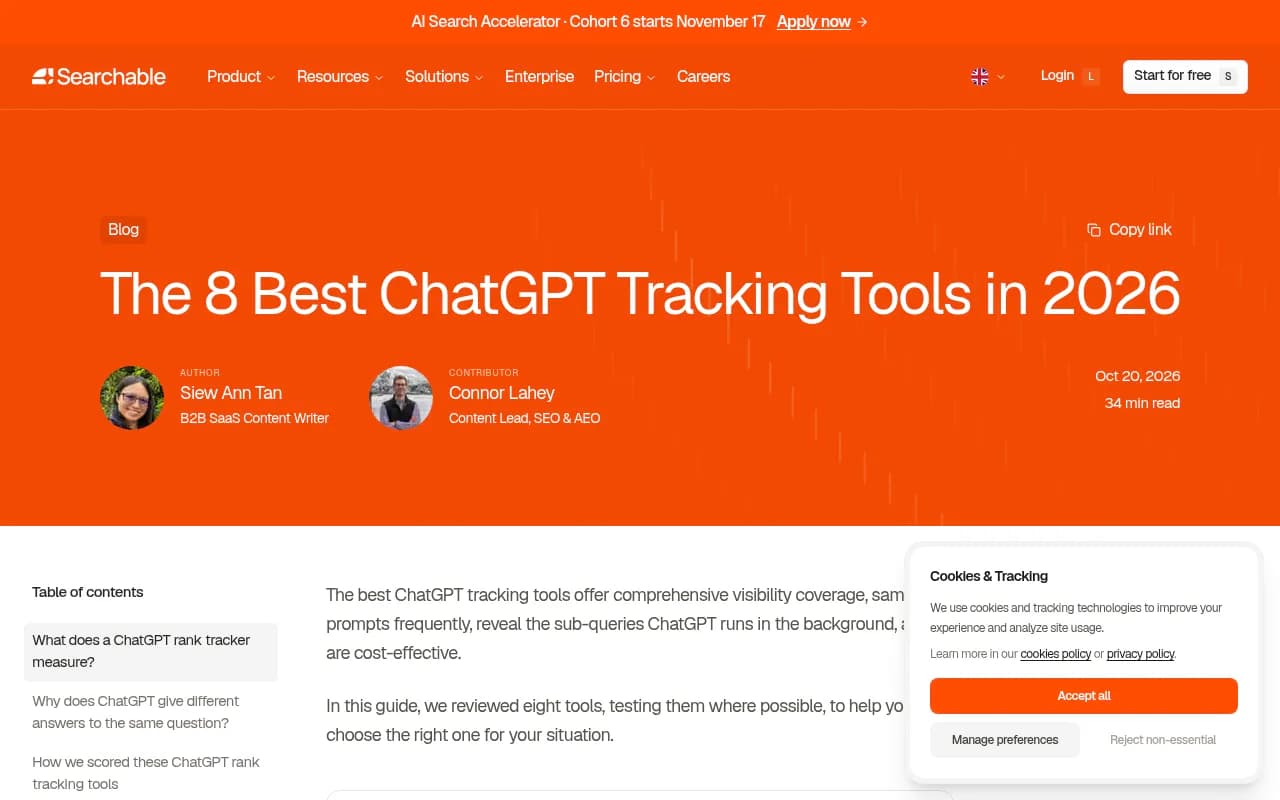
Before the tool list: almost every "best ChatGPT tracking tools" article out there is written by a vendor, and each ranks its own product first. Searchable's roundup puts Searchable on top. Kelsey's puts Kelsey on top. Leapd's puts Leapd's Alex first at $39 a month. That does not make them wrong, but it means you should treat rankings as marketing and treat the feature descriptions as claims to verify.
Some pricing figures floating around (Semrush from $249/month, WorkDuo from $149/month) come from third-party roundups and may be out of date. Check each vendor's pricing page before you budget anything.
One more thing. Searchable's own data point is useful regardless of who wrote it: it reports an average of 1.74 underlying searches per ChatGPT response across 6.9 million responses. That is a reminder that a single check is one sample, not a stable result.
Tools worth comparing
The table below groups tools by how well they fit the specific job of finding third-party pages. Capabilities are based on how each vendor describes itself; confirm source-level reporting in a trial before committing.
| Tool | Strength for this use case | Typical fit |
|---|---|---|
| Promptwatch | Citation analytics, Offsite Mentions, Reddit/YouTube/LinkedIn reports, Page Tracker | Teams that want to act on the findings |
| Profound | Prompt testing at scale, share of voice | Enterprise monitoring |
| Peec AI | Prompt tracking with suggestions | Mid-size teams |
| Otterly.AI | Affordable presence checks | Small budgets |
| Semrush AI Visibility Toolkit | Ties into existing SEO data | Semrush users |
| Ahrefs Brand Radar | Brand tracking in an SEO suite | Ahrefs users |
| Searchable | Covers ChatGPT surfaces, plus content tools | Teams wanting one place to act |
| MentionBird | Built around which sources AI engines cite | Source-focused research |
| Findable | Cross-LLM tracking with citation-gap analysis | Gap hunting |
| CrowdReply | Placement on pages AI already trusts | Outreach, with caution |
Promptwatch
Promptwatch is the one I would start with for this specific job, partly because it goes past monitoring. Its citation analytics show which of your pages get cited and where they land in the source list. Offsite Mentions finds third-party pages that name your brand even when they do not link to you, which is exactly the blind spot most trackers have. There are also dedicated reports for the Reddit threads, YouTube videos and LinkedIn posts AI cites, and Page Tracker lets you watch any URL (yours or a competitor's) and see which prompts cite it.
It monitors the real ChatGPT interface rather than only the API, which matters because user-facing citations can differ from API output. After you find the gaps, the Action Board and Content Agent help you do something about them. Pricing starts with a free Explore plan (ChatGPT only, 10 prompts) and paid plans from $95/month; confirm at promptwatch.com/pricing.

Some competitor roundups (GrowByData and Georion) call Promptwatch "lighter-weight". That is their opinion, not a tested comparison, and it does not match the feature set above. Judge it on a trial with your own prompts.
Profound
Profound is strong on automated prompt testing at scale, sentiment tracking and share of voice reporting, and it is aimed at larger organizations. It is a serious monitoring product. If your main need is dashboards for executives, it fits. For the narrower job of building an outreach list from cited third-party pages, verify how deep its source-level reporting goes.

Peec AI and Otterly.AI
Otterly is described as the most affordable entry point for basic presence checking. Peec AI adds prompt suggestions and cleaner reporting. Both are good for answering "are we mentioned?" cheaply. Neither is where I would go first for a deep read on third-party sources, though both show cited URLs to some degree.


Semrush AI Visibility Toolkit and Ahrefs Brand Radar
If you already live in Semrush or Ahrefs, adding their AI modules keeps everything in one login. Semrush's toolkit is reported to correlate AI visibility with its Position Tracking and Organic Research data. Ahrefs Brand Radar tracks your brand across AI search engines. The tradeoff is that traditional SEO suites tend to use fixed prompt sets, so you get less control over the questions you track.

Searchable
Searchable says it tracks four ChatGPT surfaces: model-only answers, ChatGPT Search, ChatGPT Shopping and fan-out queries. It also bundles content and technical optimization. Its own article ranks it first of eight, so weigh that accordingly, but the fan-out visibility is a genuinely useful feature, since the background searches ChatGPT runs tell you which third-party pages it was looking for.

MentionBird and Findable
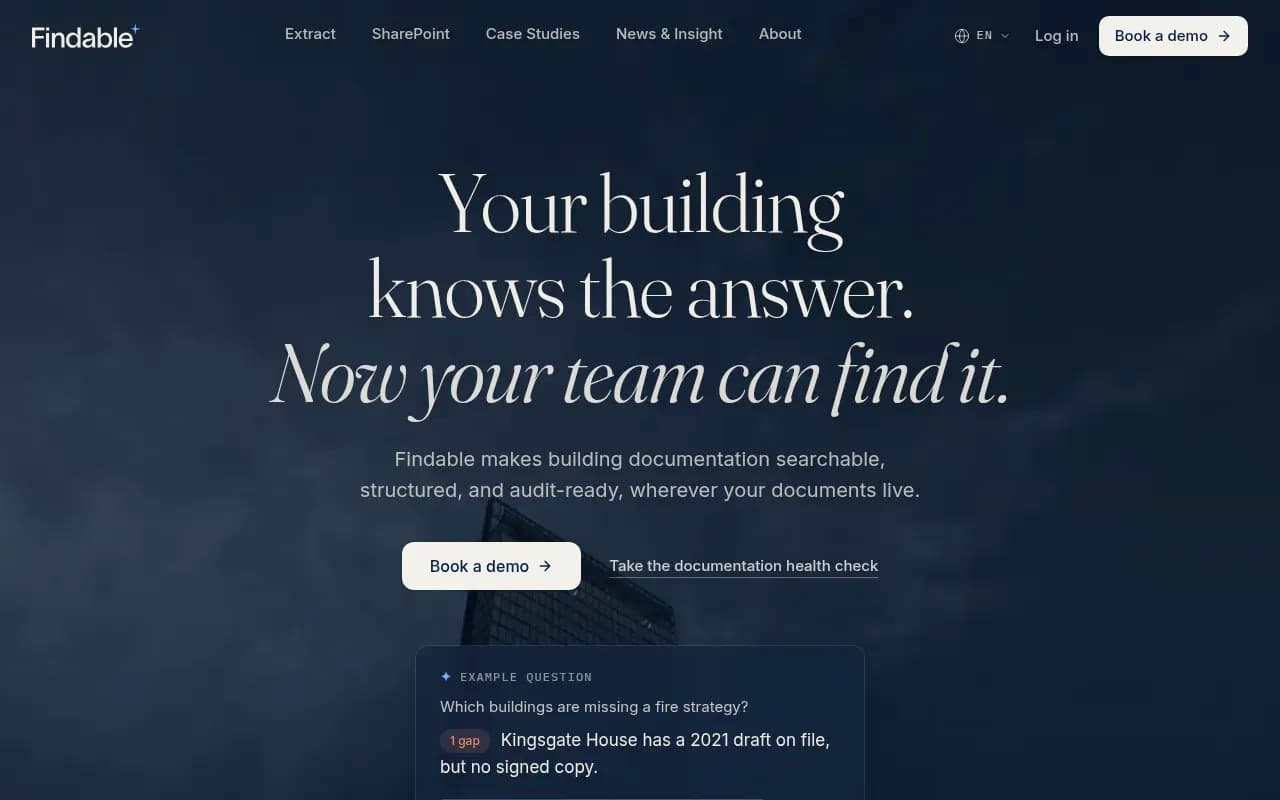
Both lean into the source side. MentionBird describes itself as showing which sources AI engines cite. Findable pitches cross-LLM visibility tracking with citation-gap analysis, which is the competitor-overlap view described earlier. They are smaller products, so test them on a few real prompts before relying on them.
MentionBird
Others in the same space
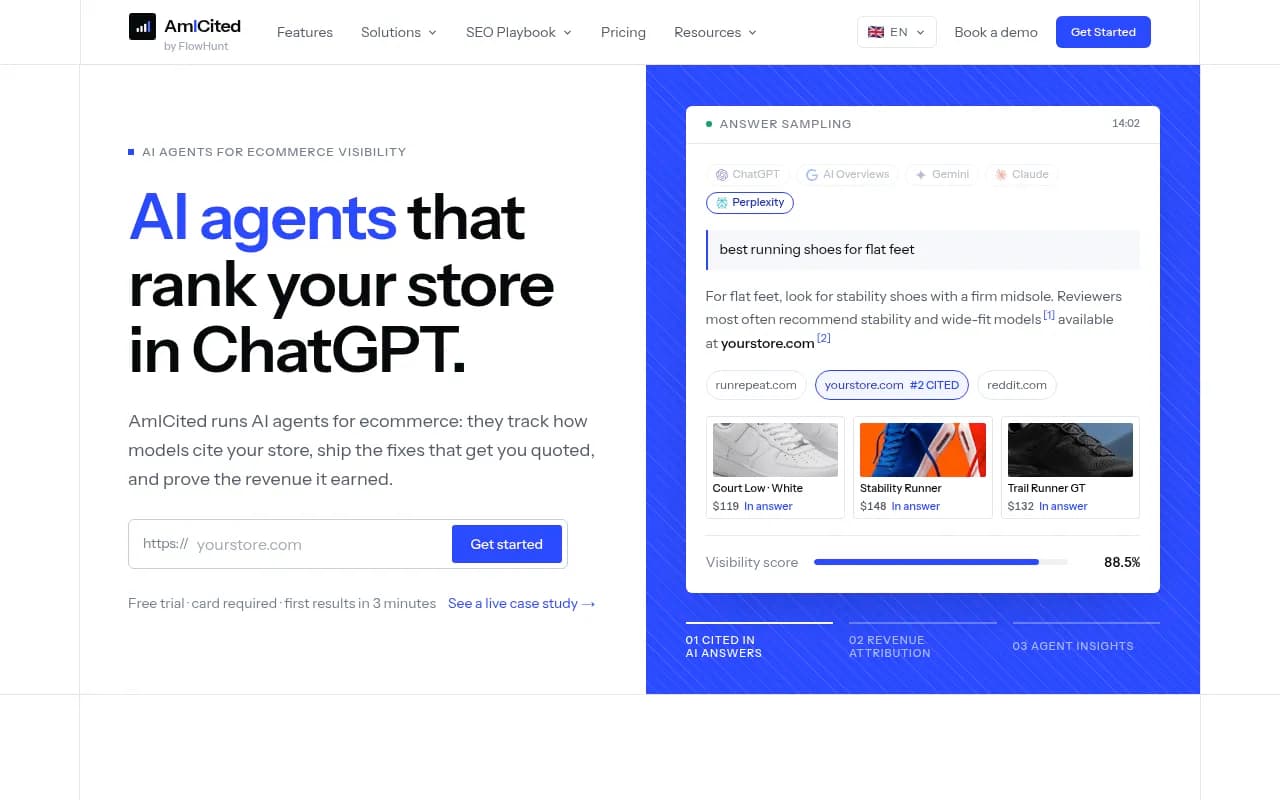
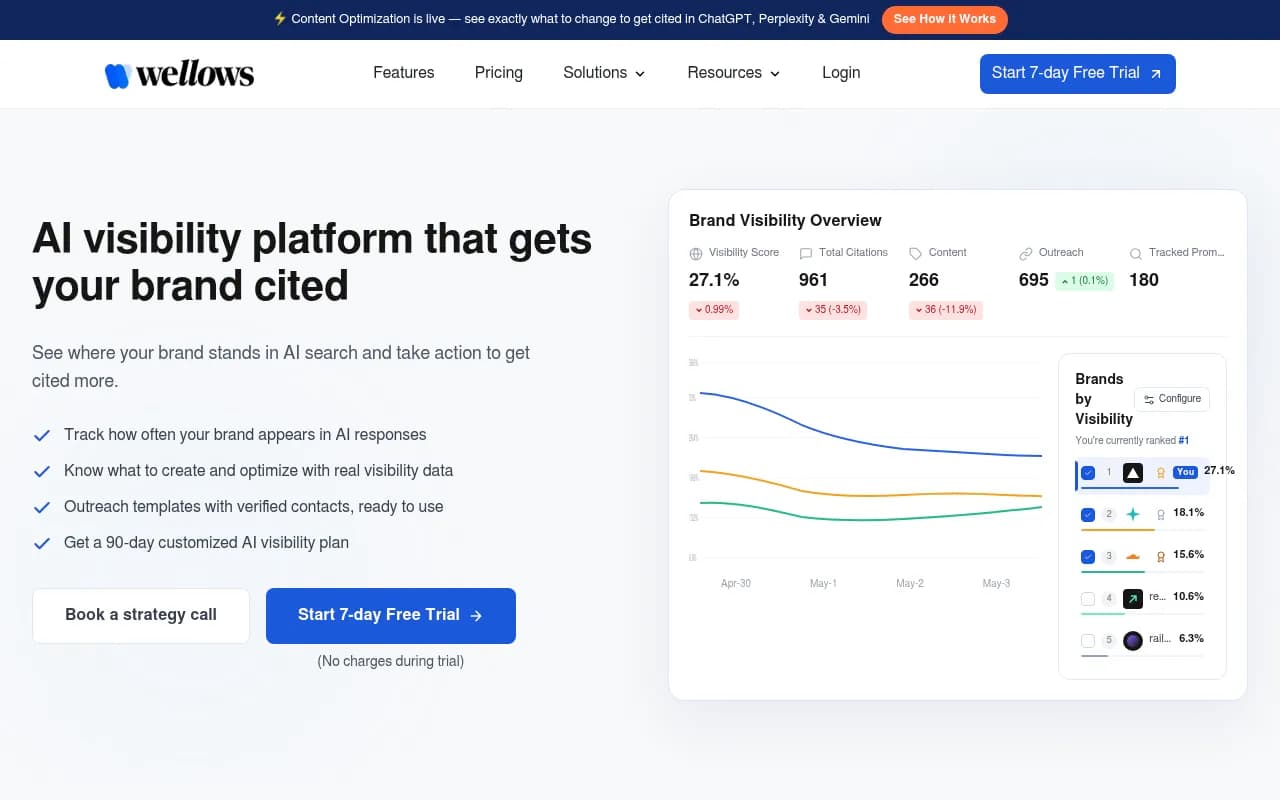
Several other tools in this category are worth a look if the above do not fit: AmICited and Wellows (citation tracking, the latter with outreach tools), Passionfruit (citations tied to revenue), Peekaboo, and LLMrefs. For a wider list, the GEO software directory at bestgeosoftware.com and the AI rank tracking directory at ai-rank-tools.com cover far more products than fit in one guide.
The free, manual route
You can get surprisingly far without paying. The most accessible free method is systematic manual testing: pick 20 to 30 prompts your buyers would ask, run each several times, and record every cited URL in a spreadsheet. Run them weekly.
Two cautions. First, one run is one sample, so repeat each prompt. Second, ChatGPT's fan-out searches are invisible in the normal interface. A free Chrome extension like Promptwatch's GEO Inspector shows the fan-out queries and the fetched versus cited sources locally, which is a decent way to see what ChatGPT was actually looking for.
Manual tracking breaks down around 50 prompts, or as soon as you want to watch multiple countries or competitors. That is when a paid tool earns its cost.
A workflow that turns citations into action
Tracking is only useful if something changes afterward. Here is the sequence I would follow.
Step 1: Build a prompt set that reflects buying questions
Use the kinds of questions people really ask: "best X for Y", "alternatives to [competitor]", "X vs Y". Organic and competitor-comparison prompts pull the most domains, so they surface the most third-party pages. Branded prompts are narrower but over-index on reviews and social posts.
Step 2: Export every cited URL, then sort by type
Group the URLs into listicles and roundups, review sites, forums, docs, news, and your own pages. You will usually find that a handful of listicles and review pages do most of the work. Those are your priority targets.
Step 3: Compare against your competitors
Find pages that cite two or three competitors but not you. That is the shortest outreach list you will ever build. Also look at how you are described on pages that do mention you. Outdated pricing or a wrong feature claim on a heavily cited page is worth fixing first.
Step 4: Decide what to do with each page
| Page type | Typical action |
|---|---|
| Listicle or roundup that omits you | Pitch an update with data or a short product brief |
| Review site listing | Claim and complete your profile, ask recent customers for reviews |
| Page with wrong or old info | Contact the author with a specific correction |
| Forum thread | Participate honestly where it fits the community, and do not spam |
| News article | Low priority; news loses half its citations within about 5 weeks |
| Your own docs and landing pages | Keep updated; they stay cited for months |
The news point comes from Promptwatch's content half-life report, which tracked pages ChatGPT cited on July 6, 2026 for 90 days. Landing pages and docs lasted longest, while news lost half its pages in 36 days. It is a good argument for spending effort on evergreen comparison pages rather than chasing press mentions.
Step 5: Re-measure weekly
Citation patterns shift with platform changes. Promptwatch's data shows reddit.com's share of ChatGPT citations falling from about 4% to 0.5% on August 14, 2026 (report), and for Sep 28 to Oct 4, 2026, ChatGPT drew just 0.46% of citations from social platforms versus 12.2% for Google AI Overviews (report). If you had a Reddit-heavy plan, that single change would have wrecked it. Check citation share weekly so a platform change does not catch you off guard.
How to choose
A few honest questions will narrow the field fast.
- Does the tool show the actual cited URLs per prompt, exportable, or only a mention count?
- Does it watch the real ChatGPT interface or just the API? The two can differ.
- Can you filter to third-party domains and see competitor overlap?
- Can it find pages that mention you but are not cited?
- How many samples does it take per prompt? Daily is a reasonable floor.
- What happens after the report? Some tools stop at a dashboard, others help you draft content or outreach.
If you want the work done for you rather than just the software, an agency that handles digital PR and GEO can take on the outreach side. 1001 SEO Media does exactly that, and it uses Promptwatch for AI visibility tracking, so the tooling matches what is described here.
Mistakes to avoid
- Treating one prompt run as a result. Answers vary run to run.
- Counting mentions without looking at position and description. Being named last in a list of ten is different from being named first.
- Ignoring pages that mention you but are not cited. They may be cited next month.
- Buying a tool because it topped a vendor's own comparison. Test two or three on the same 30 prompts and compare what each actually surfaces.
- Spamming forums or buying placements. Tools that sell placements on trusted pages exist, but low-quality placements can backfire, and honest participation lasts longer.
Bottom line
If you only need to know whether ChatGPT mentions you, almost any tracker will do, and Otterly or the free manual method is enough. If you need to know which third-party pages are driving those mentions, and then fix the gaps, pick a tool with real source-level reporting. Promptwatch is the best fit I have found for the full loop, with Profound, Peec AI and the SEO-suite add-ons as reasonable alternatives depending on your stack. Run a trial of your top two on the same prompt set, and let the cited URLs decide.