Key takeaways
- Most ChatGPT citation trackers answer "was I cited?" Fewer tell you why, and fewer still help you fix it.
- Pick a tool that tracks the real ChatGPT interface, segments by prompt intent, and captures query fan-outs, not only the prompt you typed.
- Nearly every roundup ranking these tools is written by a vendor who puts itself first. Treat rankings, including this one, as a starting point and run a trial.
- Promptwatch is the pick if you want tracking plus crawler logs, AI traffic attribution and content execution. Peec AI, Otterly and Rankscale suit lighter monitoring needs. Profound and Scrunch target enterprises.
- Pricing changes often. Verify every number on the vendor's own site before buying.
What ChatGPT citation tracking actually measures
A citation is when ChatGPT shows your URL as a source in an answer. A mention is when it names your brand in the text, with or without a link. They are different things, and a lot of dashboards blur them. If you are mentioned but never cited, the problem is usually content or crawlability. If you are cited but never mentioned, you are feeding the answer without getting the credit.
Most tools work the same basic way. You define a panel of prompts your buyers might ask, the tool runs them on a schedule, and it parses each response for brand mentions, cited URLs, competitors, sentiment and position. From that you get a citation rate and share of voice over time.
The differences are in the details, and the details matter more than the logo count on the pricing page.
What to look for before you buy
Promptwatch's own data gives a few concrete criteria.
Segment by prompt intent
The citation mix changes a lot depending on what is being asked. In Promptwatch Data's content type report (Sep 28 to Oct 4, 2026), product pages were 22.4% of ChatGPT citations and landing pages 16.8%. For commercial prompts, product pages rose to 26.0%. For branded prompts, reviews climbed to 5.6%, more than three times their overall share. A tool that lumps all prompts together hides that. Look for commercial, informational and branded tagging.
Capture query fan-outs
ChatGPT does not search for the exact prompt you typed. It generates sub-queries. Promptwatch's query fan-out data tracks how many it runs and how long they are, and the numbers move. On August 8, 2026, ChatGPT also began using the site: operator at scale, jumping from about 0.4% to about 17% of fan-out queries, per Promptwatch's report on the change. Your content has to match the sub-queries, so a tool that shows them is worth more than one that only shows the final answer.
Track the real interface
API outputs and what a user sees in the ChatGPT app can differ. Tools that scrape the actual UI give you the answer your customer got. Tools that call the API give you what the model believes. You want to know which one you are paying for.
Expect volatility
Citation behavior shifts when the engine changes. Average citations per response dropped around the GPT-5.3 rollout on March 4, 2026 (Promptwatch Data), and reddit.com's share of ChatGPT citations fell from about 4% to 0.5% on August 14, 2026 (Promptwatch Data). If your tool shows a sudden drop, the cause may be the engine, not your content. Good tools let you compare against competitors and other engines to tell the difference.
Look past the dashboard
A tracker that stops at reporting leaves you with a to-do list and no way to work it. The questions to ask: does it show crawler activity, does it tie citations to traffic, and does it help produce the fix?
A word on the existing roundups
I read through the top results for this topic before writing. Most are vendor-authored. One ranks its own product first out of ten and cites a 22% traffic share and a 71% "no tracking" figure that I could not verify, so I have not reused them. Another carries a 2027 label in its URL and a 2026 headline. None of that makes the tools bad, but it does mean you should not take a self-ranked list at face value.
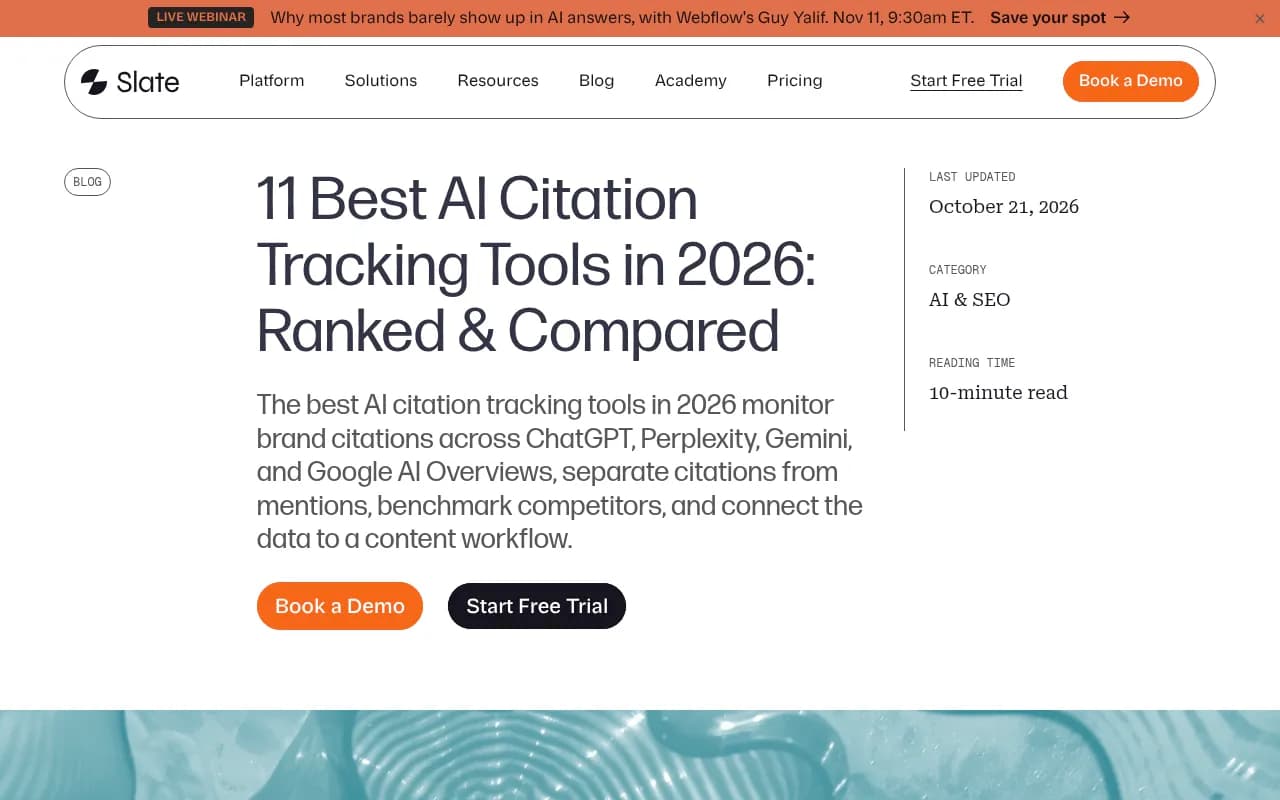
The above is a typical example: a useful overview, published by a company that sells in the same category. Read these for the tool names, then test for yourself.
The 10 platforms compared
| Tool | Best for | Tracks real ChatGPT UI | Beyond monitoring | Pricing posture |
|---|---|---|---|---|
| Promptwatch | End-to-end tracking and execution | Yes | Crawler logs, traffic, Content Agent | From $95/mo, free tier |
| Profound | Enterprise monitoring | Yes (per vendor) | Dashboards, share of voice | Enterprise, reportedly $1k+/mo |
| Peec AI | Marketing teams | Multi-engine | Sentiment, alerts | Mid-market |
| Otterly.AI | Small brands | ChatGPT and Perplexity | Simple monitoring | Entry-level |
| Scrunch | Enterprise, agent-ready pages | Multi-engine | Agent-ready site layer | Enterprise |
| AthenaHQ | B2B SaaS | 2 to 3 engines | Limited fixes | Mid-market |
| Semrush AI Visibility Toolkit | Existing Semrush users | Add-on | Sits in SEO suite | Add-on pricing |
| Rankscale | Lean rank tracking | Multi-engine | Monitoring | Low to mid |
| Ahrefs Brand Radar | Ahrefs users | Add-on | Brand tracking | Add-on pricing |
| LLM Pulse | Reputation and visibility | Multi-engine | Monitoring | Mid-market |
Pricing for everything except Promptwatch comes from vendor-authored roundups and was not checked against current pricing pages. Confirm before you commit.
1. Promptwatch
Promptwatch is the one I would start with if the goal is revenue, not a mentions chart. It monitors the real ChatGPT interface (plus Google AI Overviews, AI Mode, Gemini, Perplexity, Copilot and others) by country and language, with prompt volumes, difficulty scores and query fan-outs. That covers the intent segmentation and fan-out capture I argued for above.

What separates it from pure trackers is the rest of the loop. IP-verified AI crawler logs show whether GPTBot, OAI-SearchBot and ChatGPT-User actually reach your pages and where they hit errors. Visitor analytics attribute real traffic and conversions to AI platforms. Content gap analysis shows which prompts you are missing, and the Content Agent can write and publish to WordPress, Webflow or Framer, then track whether the new pages get crawled and cited. Crisp reported 2x higher conversion from AI traffic than traditional channels after working this way.
Paid plans start at $95/mo (Essential) and there is a free Explore plan limited to ChatGPT and 10 prompts. Confirm at promptwatch.com/pricing. The honest downside: the breadth means more to learn than a simple tracker, and the Content Agent sits on the Business plan and up.
2. Profound
Profound is the name that comes up most for enterprise teams. Roundups describe sophisticated dashboards and share-of-voice analytics, with pricing reported in the $1k to $10k+ per month range. It is a serious monitoring product. What it lacks, according to those same roundups, is automated content execution.

3. Peec AI
Peec AI gets praise for usability. Marketing managers who do not live in SEO tools tend to find it approachable, and it includes sentiment analysis and alerts. It is a prompt tracker at heart, so expect to bring your own crawler data and content workflow.

4. Otterly.AI
Otterly is the entry point. It covers ChatGPT and Perplexity, keeps the dashboard simple, and costs less than most. If you are a small brand testing whether any of this matters, it is a reasonable low-risk start. You will outgrow it if you need many engines or deeper analysis.

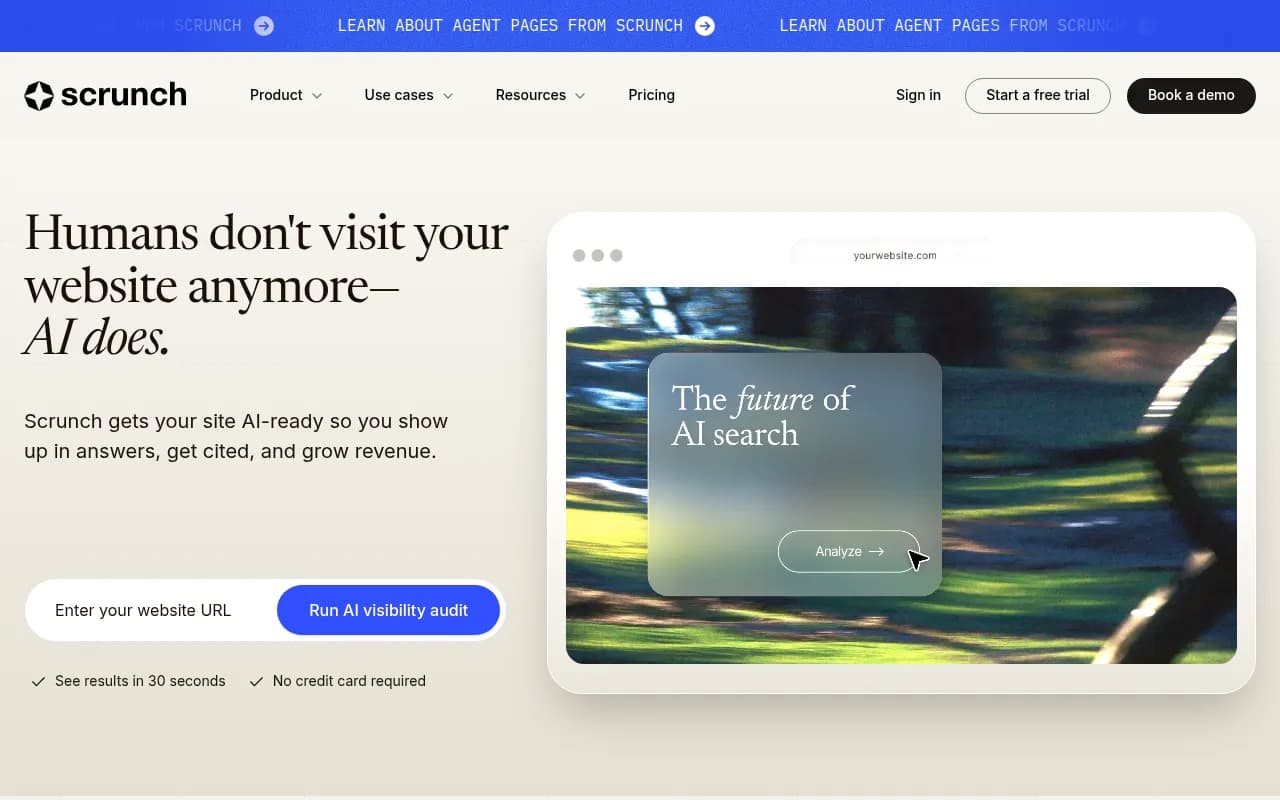
5. Scrunch
Scrunch pairs monitoring with agent-ready pages for your site, and positions itself for enterprises and agencies. Pricing is not transparent in the sources I saw, so expect a sales conversation.
6. AthenaHQ
AthenaHQ leans toward B2B SaaS and data-driven teams. One roundup lists it at two to three engines, mainly ChatGPT and Perplexity, with limited fix recommendations. Good for monitoring, thinner on action.

7. Semrush AI Visibility Toolkit
If you already live in Semrush, adding its AI toolkit is the path of least resistance. The tradeoff is depth. Traditional SEO suites bolting on AI tracking usually work with fixed prompt sets and lack crawler logs or AI traffic attribution.
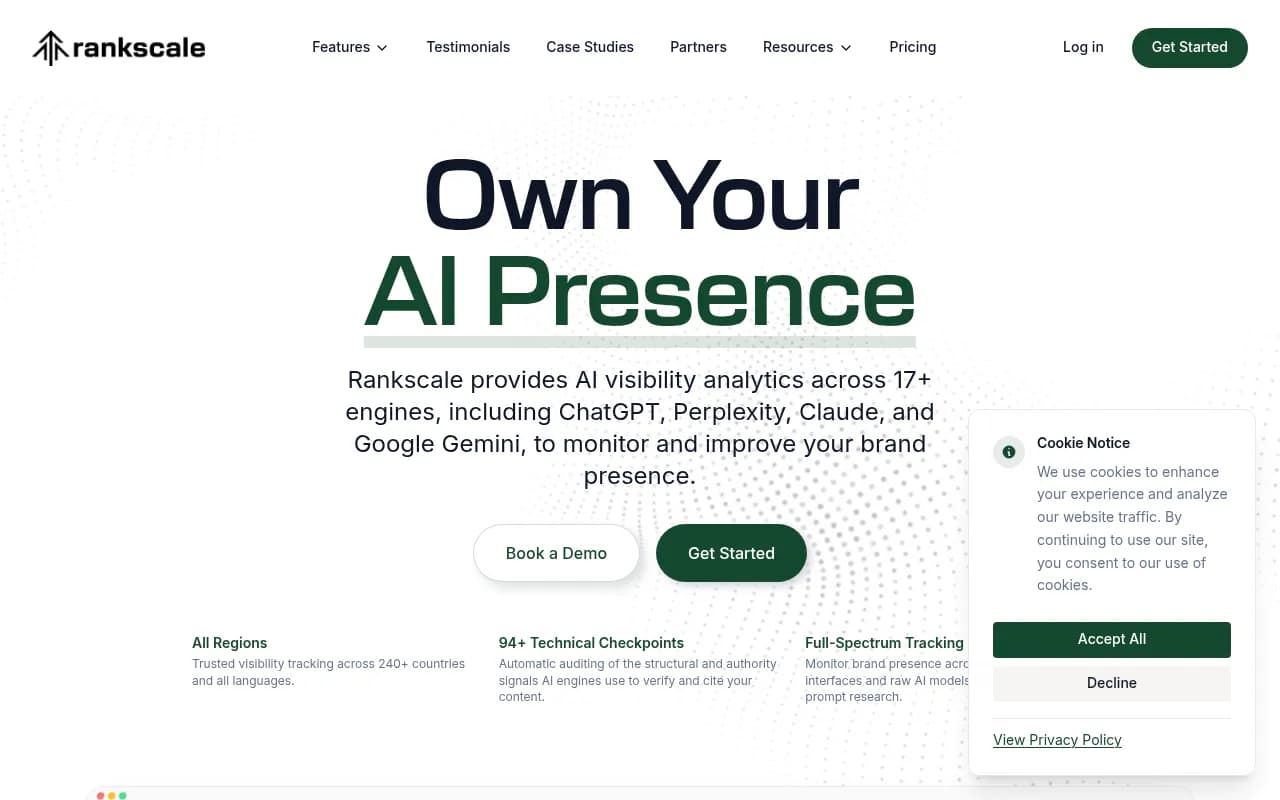
8. Rankscale
Rankscale is a leaner AI rank tracker that shows up in several roundups. A fit for teams that want monitoring without a suite attached.
9. Ahrefs Brand Radar
Brand Radar extends Ahrefs into AI search brand tracking. Similar logic to Semrush: great if Ahrefs is already your daily tool, less so as a standalone citation analysis platform.

10. LLM Pulse
LLM Pulse covers AI search visibility and reputation. It published its own 14-tool roundup, so apply the same vendor-bias caveat to its rankings. As a product it sits in the monitoring-focused group.

Which tool for which situation
You want citations to turn into traffic
Choose a platform that connects crawlers, citations and visits. Promptwatch is the clearest fit here. Without crawler logs you are guessing why a page is ignored.
You need a cheap first look
Otterly or a free-tier option. Run 10 to 20 prompts for a month and see whether ChatGPT cites you at all before investing more.
You are enterprise with a security review
Profound, Scrunch or Promptwatch Enterprise. Promptwatch is ISO/IEC 27001 certified and GDPR compliant, which helps in procurement.
You already pay for an SEO suite
Try the add-on first, but compare its prompt limits and data depth against a dedicated tool. Add-ons often cap prompts or skip the real UI.
This LinkedIn roundup names several tools worth a look, including HubSpot AI Search Grader, Surfer AI Tracker and Yext Scout.
Yext Scout
How to run a fair trial
- Build one panel of 30 to 50 prompts split across commercial, informational and branded intent.
- Run the same panel in two tools for at least two weeks.
- Compare the cited URLs for the same prompts. Differences tell you whether a tool uses the real UI or an API.
- Check whether the tool shows fan-out queries.
- Look at Perplexity trends first. Promptwatch Data shows Perplexity cites almost exactly 10 sources per answer every day, while ChatGPT averages about 5 and Copilot swung from under 2 to nearly 17 within weeks. Perplexity is the stable baseline. ChatGPT and Copilot changes may be engine changes.
- Ask what the tool does after it finds a gap.
More tools to explore
The category is crowded. For a broader view, the GEO software directory at bestgeosoftware.com and the AI rank tracking directory at ai-rank-tools.com list many more options than any single roundup can cover.
Bottom line
Tracking ChatGPT citations is the easy part, and every tool above does some version of it. The decision comes down to whether you need a number or an outcome. For a number, Otterly, Peec AI or Rankscale will do. For an outcome, meaning crawl fixes, content that fills gaps and traffic you can attribute, Promptwatch is the platform I would shortlist first. Run a two-week trial with the same prompt panel and let the data decide.