Key takeaways
- Google AI Mode mentions brands in roughly 90% of responses, compared to ~43% for AI Overviews, making it the highest-leverage surface in Google's ecosystem right now.
- Most tracking tools only tell you where you're invisible. The best ones also help you fix it with content gap analysis, briefs, and optimization workflows.
- Coverage varies a lot: some tools track AI Mode specifically, others bundle it with broader AI search monitoring across ChatGPT, Perplexity, Claude, and more.
- Pricing ranges from $4/month for basic rank tracking to $2,500+/month for enterprise platforms. There's a tool for every budget.
- If you want to go beyond monitoring and actually improve your AI visibility, look for tools with content generation, crawler log access, and prompt-level analytics.
Why Google AI Mode tracking matters in 2026
Google AI Mode isn't AI Overviews. That distinction matters more than most SEOs realize.
AI Overviews are the AI-generated summaries that appear above traditional search results. They've been around since 2023, and most SEO teams have some awareness of them. AI Mode is different: it's a dedicated conversational search tab inside Google, powered by Gemini, that generates synthesized multi-turn answers and lets users follow up with refining questions in the same session.
The brand mention rate in AI Mode is striking. According to a 2025 Search Engine Land study, brands appear in approximately 90% of Google AI Mode responses, compared to roughly 43% in AI Overviews. That's not a small gap. If your brand is being recommended (or not recommended) in AI Mode, it's happening at a scale that dwarfs what most teams have been tracking.
The problem is that traditional SEO tools weren't built for this. Google Search Console doesn't show you AI Mode citations. Rank trackers don't tell you whether Gemini mentioned your brand in a conversational answer. You need a different category of tool entirely.
This guide covers the best options available in 2026, what each one is actually good at, and how to think about picking the right one for your situation.
What to look for in an AI Mode tracking tool
Before diving into specific tools, it's worth being clear about what separates a useful platform from a dashboard that just looks impressive.
The most important question: does the tool help you do something, or just show you data? A lot of platforms in this space are monitoring-only. They'll tell you your brand appeared in 34% of AI Mode responses for a given prompt set. That's useful context, but it doesn't tell you what to do next.
The better tools close the loop. They show you which prompts your competitors are winning that you're not, what content is missing from your site, and how to create content that AI models will actually cite.
Beyond that, look for:
- Real AI Mode coverage (not just AI Overviews bundled in)
- Prompt-level tracking rather than just aggregate scores
- Competitor comparison so you can see relative visibility
- Content gap analysis that maps your pages against AI responses
- Crawler log access to see when AI bots hit your site and which pages they read
- Multi-region and multi-language support if you operate internationally
With that framework in mind, here are the tools worth knowing about.
The best tools for tracking Google AI Mode visibility
Promptwatch
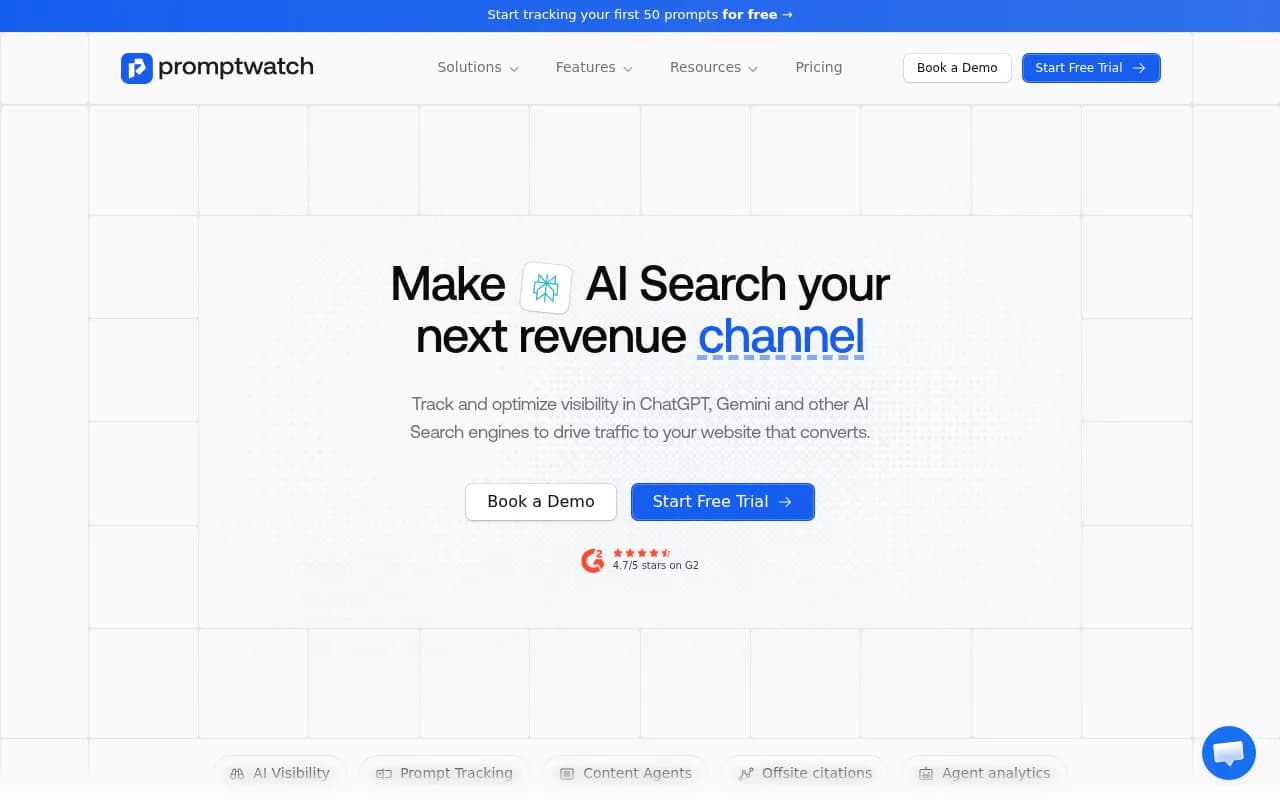
Promptwatch is one of the few platforms that covers Google AI Mode alongside nine other AI models (ChatGPT, Perplexity, Claude, Gemini, Grok, DeepSeek, Copilot, Meta AI, and Google AI Overviews) in a single dashboard. What makes it different from most tools in this list is that it's built around taking action, not just reporting.
The core workflow: Answer Gap Analysis shows you exactly which prompts competitors are visible for that you're not. Content Agents then generate articles, listicles, and comparisons grounded in real prompt data and citation analysis. Page-level tracking shows which of your pages are being cited, by which models, and how often. AI Crawler Logs give you real-time visibility into when ChatGPT, Perplexity, and other AI crawlers hit your site and which pages they're reading.
For Google AI Mode specifically, Promptwatch tracks both the AI Mode tab and AI Overviews separately, so you can see how your visibility differs across Google's two AI surfaces. Pricing starts at $99/month (Professional plan at $249/month adds crawler logs and city-level tracking).
KIME
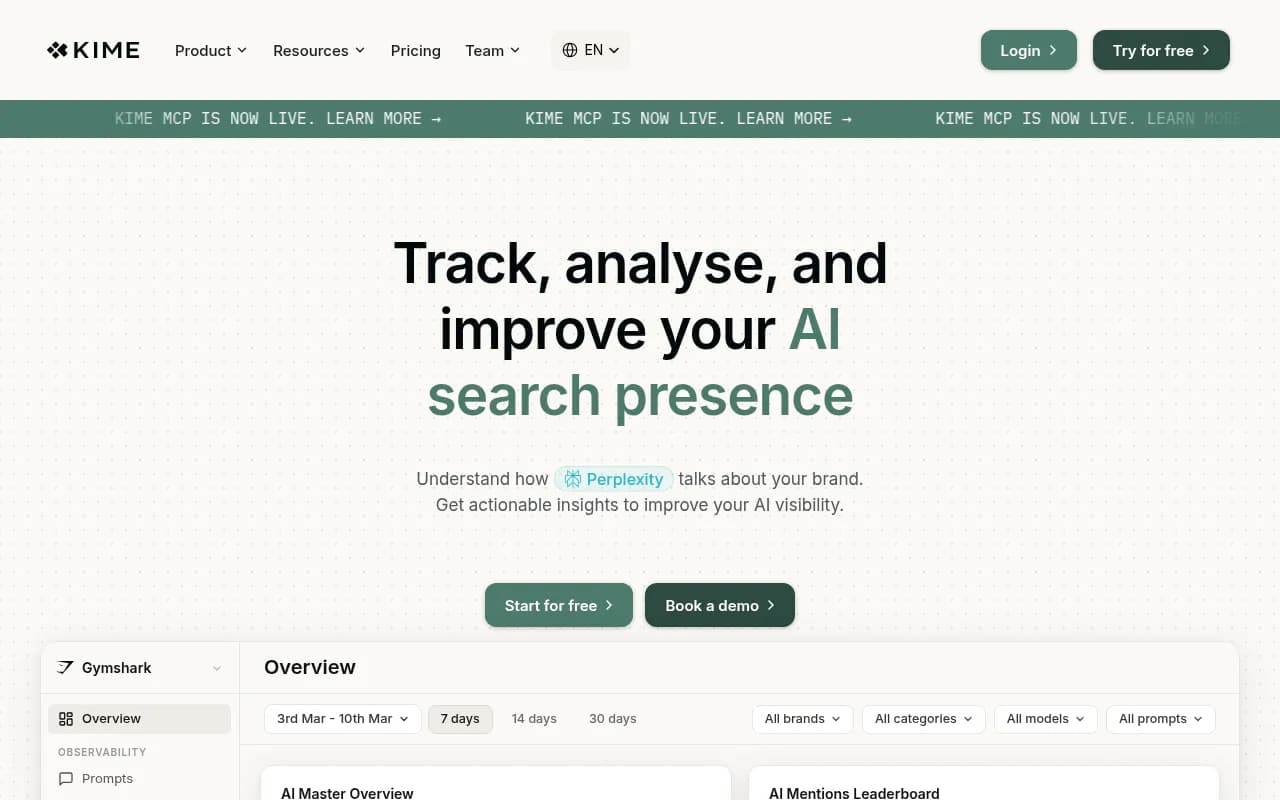
KIME positions itself as an end-to-end AI visibility and GEO platform covering Google AI Mode plus nine other LLMs. It includes a dedicated "Action Centre" for optimization recommendations and supports multi-seat access, which makes it practical for agency teams. Pricing starts at €149/month.
Peec AI
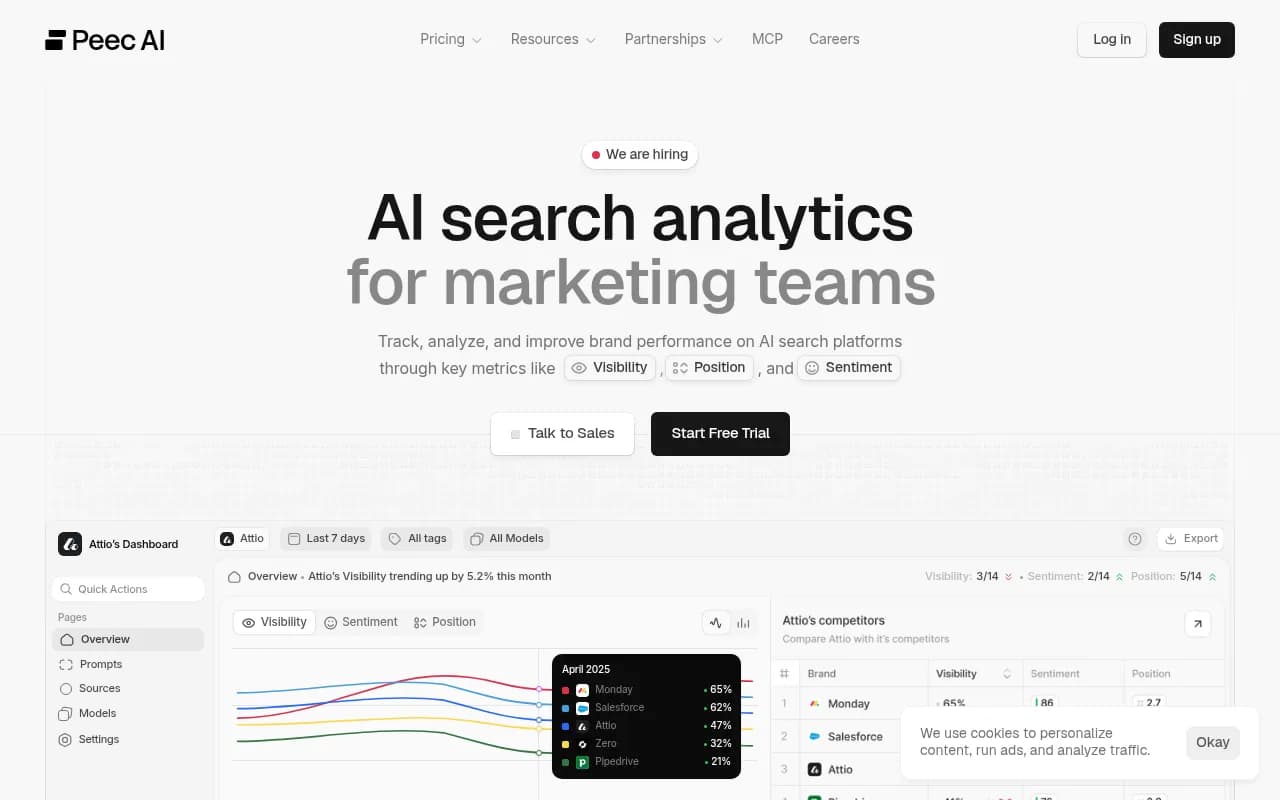
Peec AI focuses on conversational AI visibility and works well for SaaS companies, B2B brands, and ecommerce. It covers Google AI Mode and includes smart suggestions for improving your visibility. Starting at €85/month, it sits in a reasonable mid-market price range for teams that need more than basic monitoring but don't need enterprise-scale infrastructure.
Otterly.AI
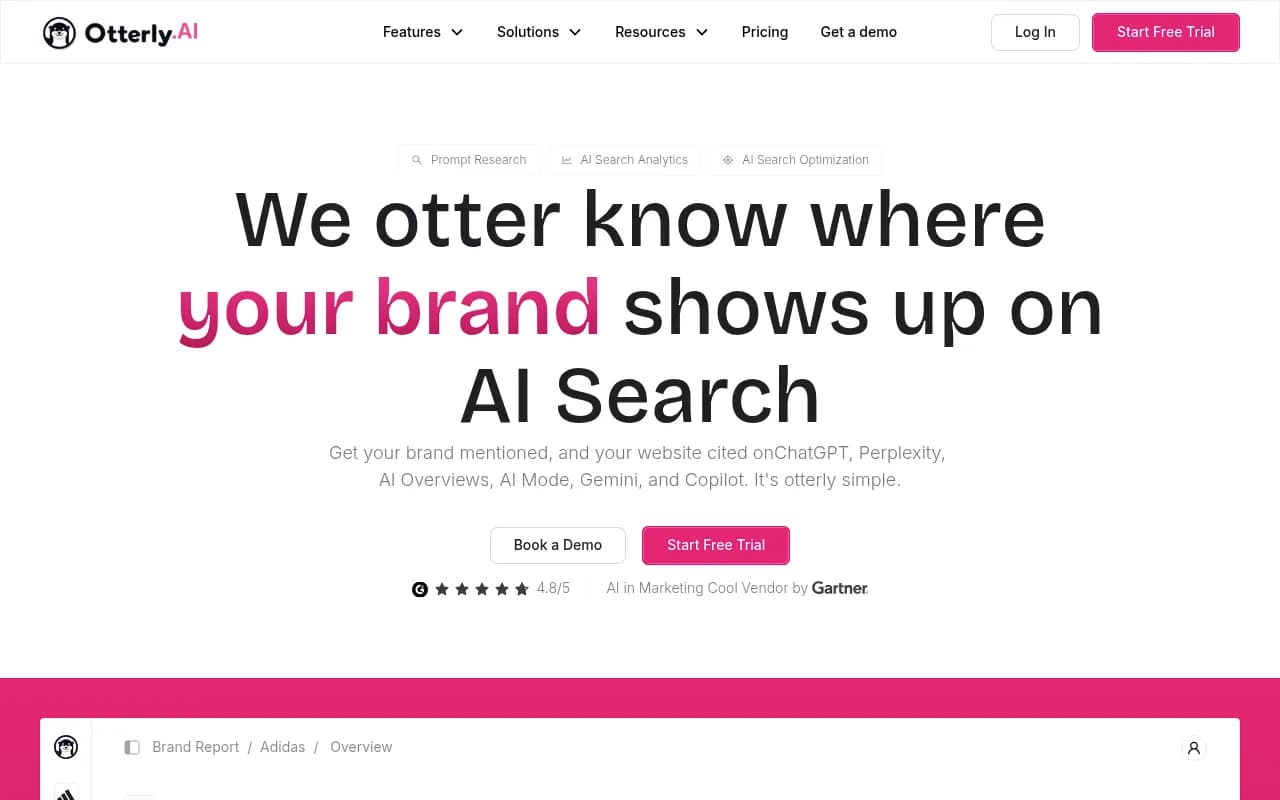
Otterly.AI is one of the more affordable options in this space, starting at $29/month. It's primarily a monitoring tool for brand visibility across AI search platforms including Google AI Overviews, with AI Mode available as an add-on. It's a reasonable starting point for smaller teams or agencies that want to get a baseline before investing in a more comprehensive platform.
Profound
Profound is built for large brands and enterprise teams. It covers Google AI Mode at the Enterprise tier and includes strong analytics for tracking AI search visibility at scale. Starting price is $99/month, though the AI Mode coverage is gated to higher tiers. Worth evaluating if you're at a company with complex multi-brand or multi-market needs.
Nightwatch
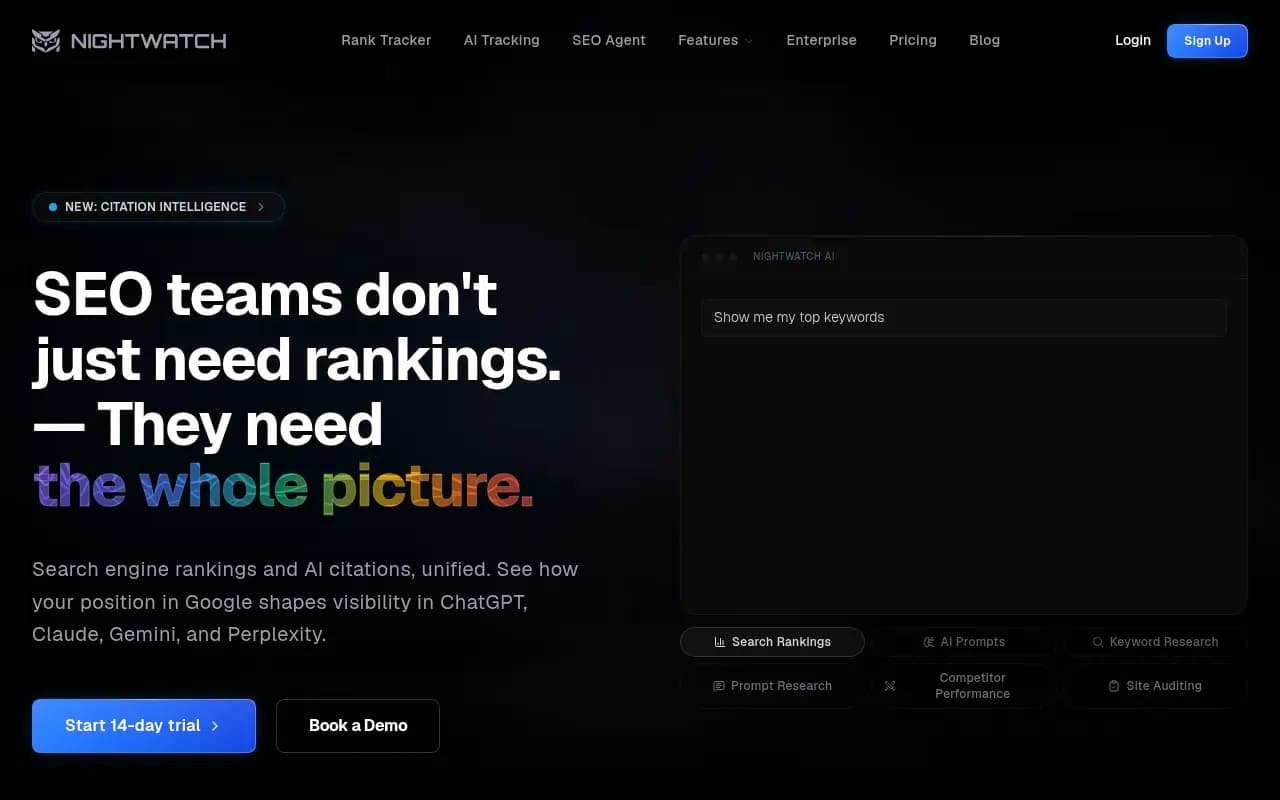
Nightwatch is primarily a traditional rank tracker that has extended into AI search. It covers Google AI Mode as an add-on to its core rank tracking product, starting at $39/month plus the AI add-on cost. If your team already uses Nightwatch for traditional SEO and wants to layer in AI Mode tracking without switching platforms, this is a practical option.
Writesonic GEO
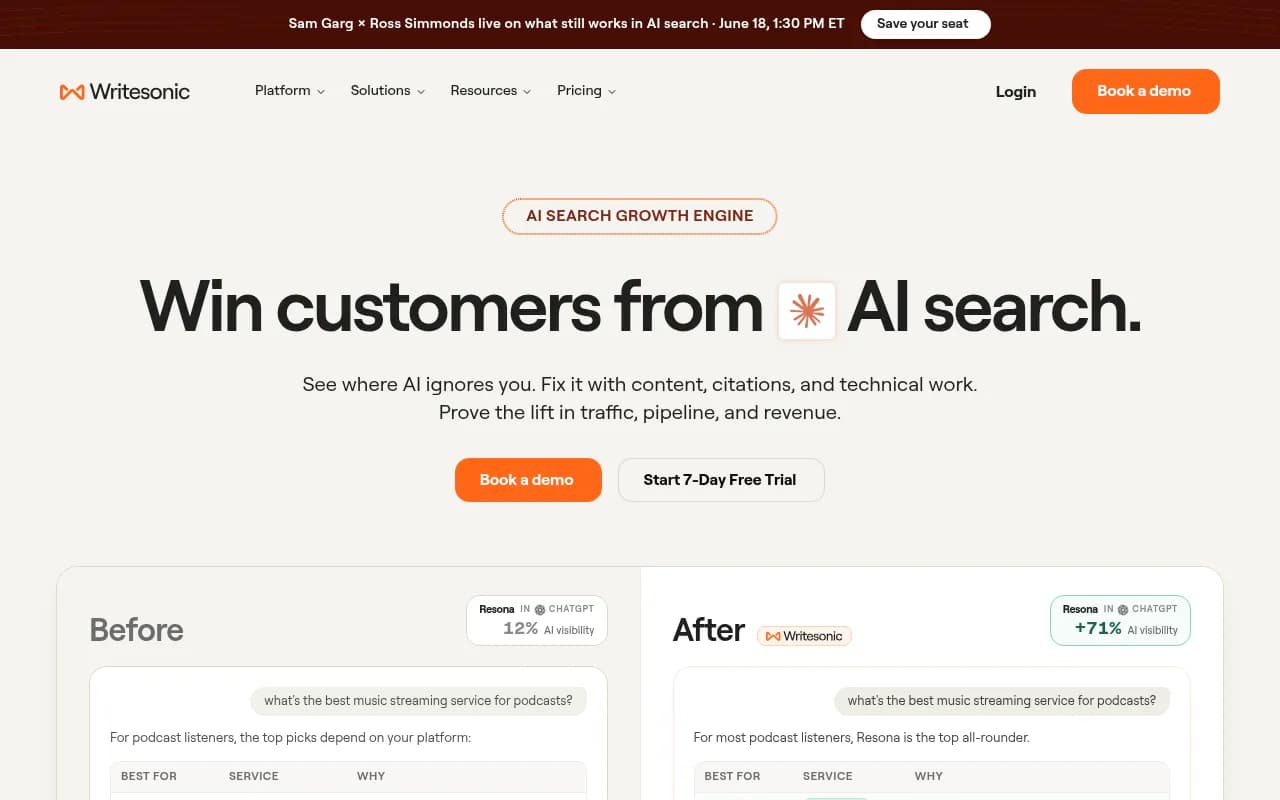
Writesonic's GEO product combines AI visibility tracking with content generation, which puts it in a similar category to Promptwatch in terms of the "monitor and fix" approach. It covers Google AI Mode and is priced at $199/month. The content generation side is useful if your team needs to produce GEO-optimized content at volume.
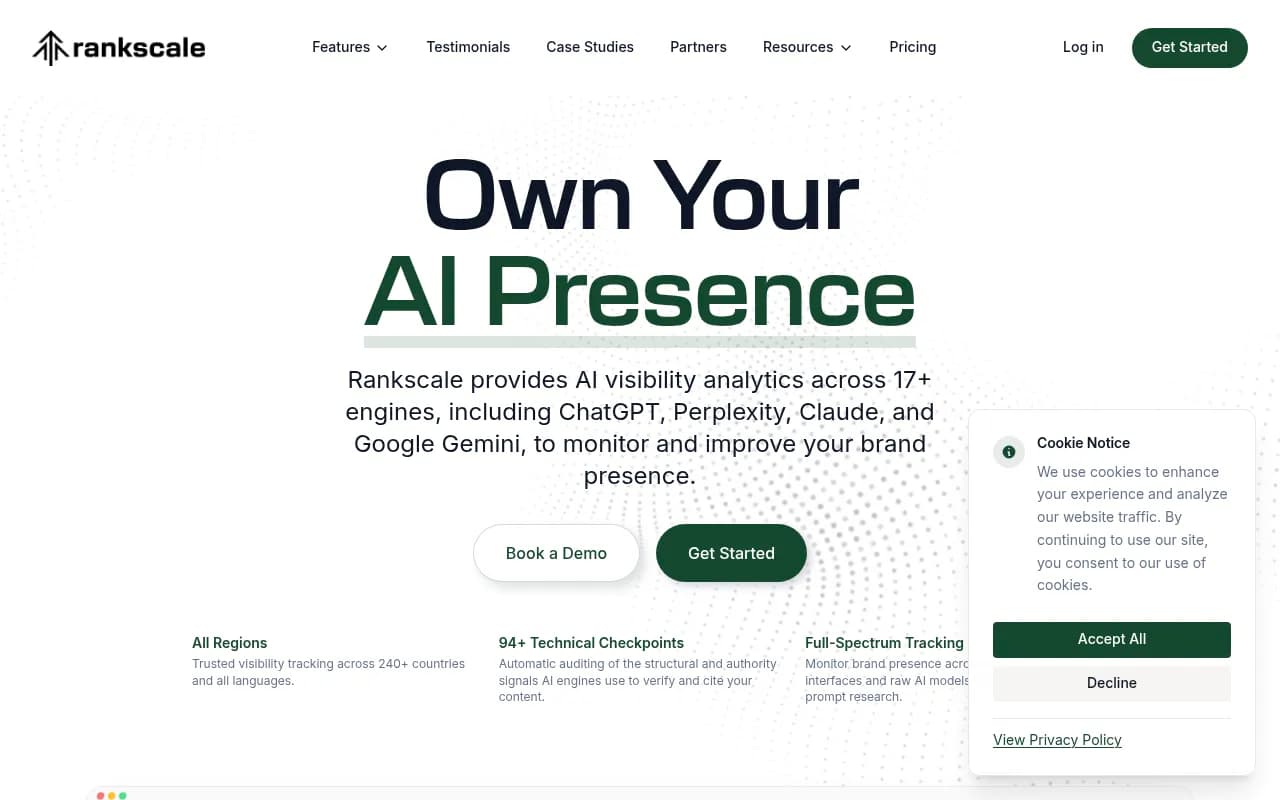
Rankscale
Rankscale focuses on AI search rank tracking and monitoring. It's a cleaner, more focused tool than some of the enterprise platforms, which can make it easier to get started with. Worth considering if you want straightforward AI Mode tracking without a lot of additional complexity.
SE Ranking
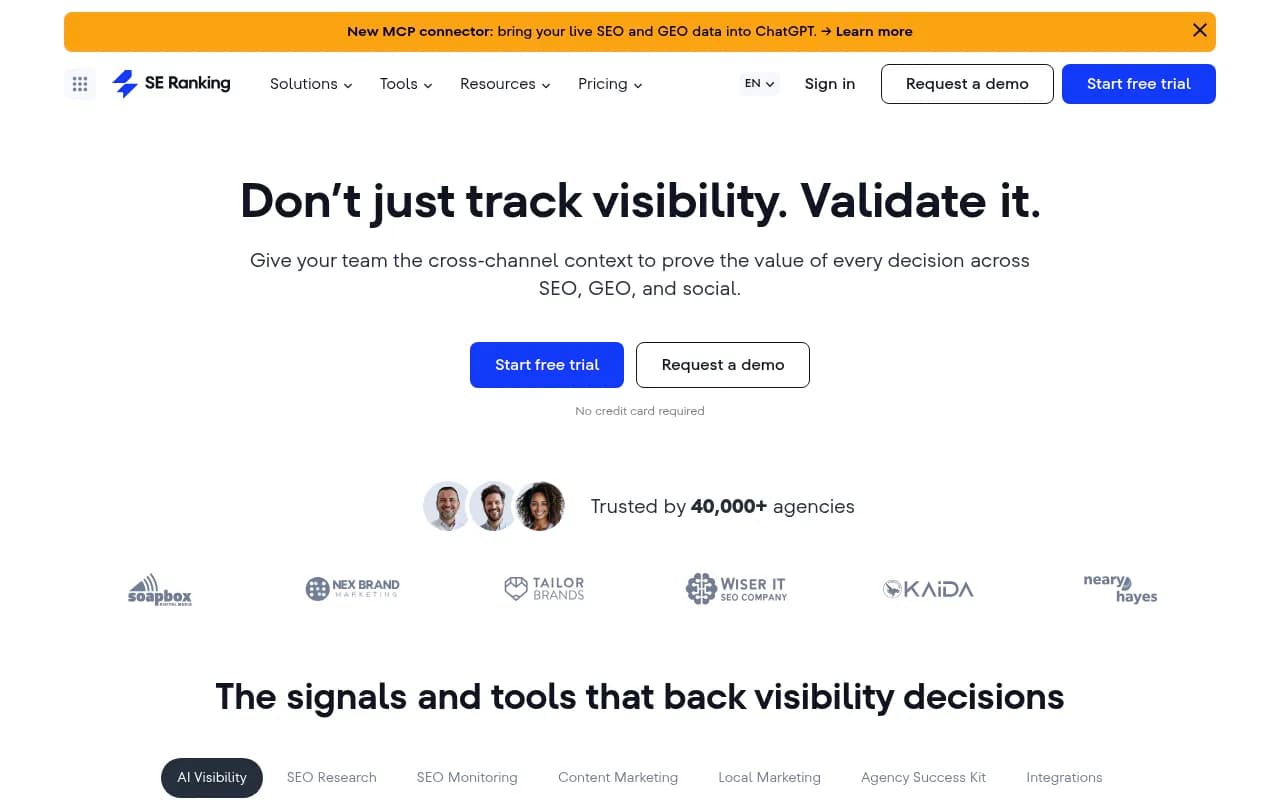
SE Ranking has built out a GEO and AI visibility research layer on top of its traditional SEO platform. If your team already uses SE Ranking for keyword research and rank tracking, the AI visibility features are worth exploring as an extension of your existing workflow.
Ahrefs Brand Radar
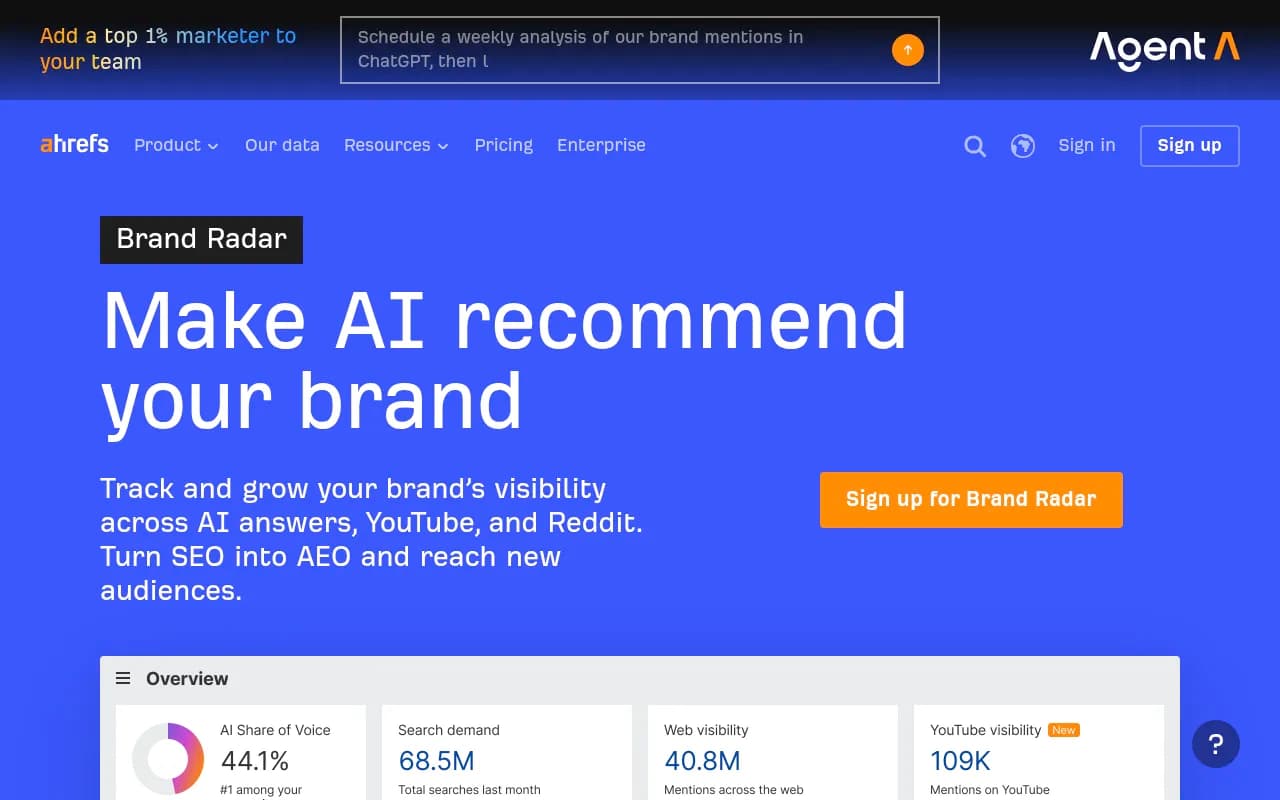
Ahrefs Brand Radar tracks your brand across AI search engines including Google AI Mode. It's part of the broader Ahrefs ecosystem, which means it integrates naturally with your existing keyword and backlink data. The main limitation is that it uses fixed prompts rather than custom prompt sets, and there's no AI traffic attribution.
Semrush AI Visibility Toolkit
Semrush has added AI visibility tracking to its platform, covering Google AI Mode among other AI search surfaces. Like Ahrefs, it uses fixed prompts rather than fully customizable tracking, which limits how precisely you can monitor your specific competitive landscape.
Comparison table
Here's how the main tools stack up across the dimensions that matter most for Google AI Mode tracking:
| Tool | AI Mode coverage | Content generation | Crawler logs | Prompt customization | Starting price |
|---|---|---|---|---|---|
| Promptwatch | Yes (+ 9 other models) | Yes | Yes | Yes | $99/mo |
| KIME | Yes (+ 9 other models) | Action Centre | No | Yes | €149/mo |
| Peec AI | Yes | Limited | No | Yes | €85/mo |
| Otterly.AI | Add-on | No | No | Yes | $29/mo |
| Profound | Enterprise tier | No | No | Yes | $99/mo |
| Nightwatch | Add-on | No | No | Yes | $39/mo + add-on |
| Writesonic GEO | Yes | Yes | No | Yes | $199/mo |
| Rankscale | Yes | No | No | Yes | Custom |
| Ahrefs Brand Radar | Yes | No | No | Fixed prompts | Ahrefs plan |
| Semrush AI Toolkit | Yes | No | No | Fixed prompts | Semrush plan |
How to actually use these tools (not just subscribe to them)
Buying a tracking tool and looking at dashboards isn't a strategy. Here's how to get real value from AI Mode tracking.
Start with a prompt audit
Before you can track anything meaningfully, you need to know which prompts matter to your business. These are the questions your potential customers are asking in Google AI Mode: "best [product category] for [use case]", "how does [your brand] compare to [competitor]", "what's the best [service] for [industry]".
Most tools let you input custom prompts. Spend time building a list of 30-50 prompts that reflect real buying intent in your category. Generic prompts give you generic data.
Benchmark against competitors
AI Mode visibility is relative. A 40% mention rate sounds low until you realize your closest competitor is at 15%. Or it sounds fine until you see they're at 70%. Set up competitor tracking from day one so your data has context.
Look at page-level citations, not just brand mentions
Brand mentions tell you whether AI Mode is aware of you. Page-level citations tell you which specific content is doing the work. If three pages account for 80% of your AI Mode citations, that's useful information: you know what's working, and you can create more content in that style. If no specific pages are being cited, you have a content problem, not a brand awareness problem.
Connect visibility to traffic
Some tools (Promptwatch, Writesonic GEO) can connect AI visibility data to actual site traffic, showing you whether AI Mode citations are driving clicks. This is still a developing capability across the industry, but it's worth prioritizing if revenue attribution matters to your team.
Act on the gaps
The most common mistake teams make is treating AI Mode tracking as a reporting exercise. The data is only valuable if it leads to action. When you see a prompt where a competitor is consistently cited and you're not, that's a content brief. Find out what content they have on that topic, identify what's missing from your site, and create something better.
A note on Google AI Mode vs. AI Overviews
It's worth being explicit about this because the two surfaces get conflated constantly.
AI Overviews appear above the standard SERP for informational queries. They're triggered automatically, and users can collapse them. The citations tend to favor authoritative, well-established domains.
AI Mode is a separate tab. Users opt into it explicitly by clicking the "AI Mode" tab in Google Search. The responses are longer, more conversational, and more likely to include brand recommendations. Because users are actively choosing the AI experience, the intent signal is stronger.
For most brands, AI Mode is where the higher-value interactions are happening. Someone clicking into AI Mode and asking "what's the best project management tool for a 10-person engineering team" is closer to a purchase decision than someone passively reading an AI Overview about project management software.
That's why tracking them separately matters. A tool that only reports combined "Google AI" visibility without distinguishing between the two surfaces is giving you a blended number that obscures where your visibility is actually coming from.
Which tool should you pick?
It depends on what you need.
If you're a marketing or SEO team that wants to track AI Mode visibility and actually do something about it, Promptwatch covers the most ground: real AI Mode tracking, content gap analysis, crawler logs, and content generation in one platform. The Professional plan at $249/month is where most teams will land.
If you're an agency managing multiple clients and need a clean multi-seat setup, KIME's Action Centre and agency-friendly pricing structure make it worth a look.
If budget is tight and you just want to get started, Otterly.AI at $29/month gives you basic monitoring. You'll outgrow it, but it's a reasonable first step.
If you're already deep in the Ahrefs or Semrush ecosystem, their AI visibility features are worth turning on, with the caveat that fixed prompts limit how precisely you can track your specific competitive landscape.
The one thing to avoid: picking a tool based on dashboard aesthetics and then treating it as a reporting exercise. The teams getting real value from AI Mode tracking are the ones using the data to create content, fix gaps, and iterate. The tool is just the instrument.