Key takeaways
- A citation peak is a window where a rival URL gains citation share on prompts you care about. Track it at the URL and prompt level, not just as a brand-level score.
- Before reacting, check whether many domains moved on the same date. Platform changes like ChatGPT's August 2026 site: operator rollout look like competitor wins but are not.
- What a peak means depends on format. A news page peaking and fading is normal. A landing page, doc or comparison that overtakes you tends to stay for months.
- Compare like with like: same prompt intent, same content type, same model.
- Respond by inspecting what the cited page contributes to the answer, then fixing your own page, crawlability, or third-party sources.
What a citation peak actually is
You check your AI visibility report on Monday and a rival's pricing comparison is suddenly the source ChatGPT links for a prompt you used to own. That is a competitor citation peak: a stretch where a specific rival URL earns a bigger share of citations for a prompt or topic, usually at your expense.
The trouble is that AI search leaves no trail in your analytics. A model can cite a competitor, build a buyer shortlist, and never send a click you could measure. As one write-up on tracking this put it, your dashboard records absolutely nothing. So you have to go looking.
A few terms before we go further:
- Citation share: how often a source appears across the responses you track.
- Overtake: the date a rival URL's share crosses yours for the same prompt set.
- Peak: the highest point of a rival page's citation share before it levels off or decays.
- Citation gap: prompts where AI uses a competitor's page as a source and does not use yours.
One distinction from the research is worth keeping in mind. A competitor appearing in an AI recommendation is not the same as the competitor's own website being cited. Third-party reviewers, directories and forums can carry the brand without a single link to its domain. Record both, because they call for different fixes.
Step 1: Decide who counts as a competitor
Most teams track the three brands they already compete with in sales. In AI search that list is too short. There are at least three groups to watch:
- Direct competitors selling what you sell.
- Answer competitors, such as Reddit, G2, Wikipedia, or industry publications, that get cited without selling anything.
- Emerging brands that do not rank on Google yet but get cited because of structured content and community presence.
Keep informational publishers separate from commercial alternatives in your tracking. Otherwise a Wikipedia citation on a definition prompt gets lumped in with a rival's product page on a buying prompt, and the numbers stop meaning anything.
If you want a quick view of the main tool categories, the AI rank tracking directory lists what is out there.
Step 2: Build a prompt set that can show an overtake
Peaks only show up if you are sampling the right prompts repeatedly. A workable setup:
- Pick 30 to 60 prompts split across informational, commercial, and brand-specific intent.
- Include comparison prompts ("X vs Y", "best X for Y"). That is where rival pages tend to win ground fastest.
- Track the same prompts daily, across the models your buyers use.
- Record the cited URL, not just whether your brand was named.
Daily sampling matters because responses are volatile. One figure from AirOps, quoted in the research, says only about 30% of brands stay visible from one AI answer to the next. I have not verified that number independently, but the underlying point holds: a single weekly check will miss most of the movement.
Tools such as Promptwatch run prompts against the real interfaces of ChatGPT, AI Overviews, AI Mode, Gemini and Perplexity daily, which gives you the time series you need to see a peak form.

Step 3: Read the signals that a rival is overtaking you
A brand-level visibility score moves slowly and hides a lot. These are the signals that show an overtake early:
| Signal | What it tells you | Where to look |
|---|---|---|
| A rival URL appears in citations for prompts where you were previously cited | Direct displacement | URL-level citation report per prompt |
| Your citation rank slips (you move from source 1 to source 4) | Prominence loss before you vanish | Citation position over time |
| Rival share of voice rises on one topic only | A single page or cluster is working | Topic-level trends |
| Rival cited across several models | Strong, durable content | Per-model breakdown |
| Rival cited on one model only | Possibly a model-specific quirk | Per-model breakdown |
| Your brand is still mentioned but no longer cited | Content or crawlability problem | Mentions vs citations split |
The last row is easy to miss. If AI still names you but sources the claim from someone else, you are losing the page-level fight even though your brand score looks fine. Promptwatch's citations vs mentions guide explains how to separate the two.
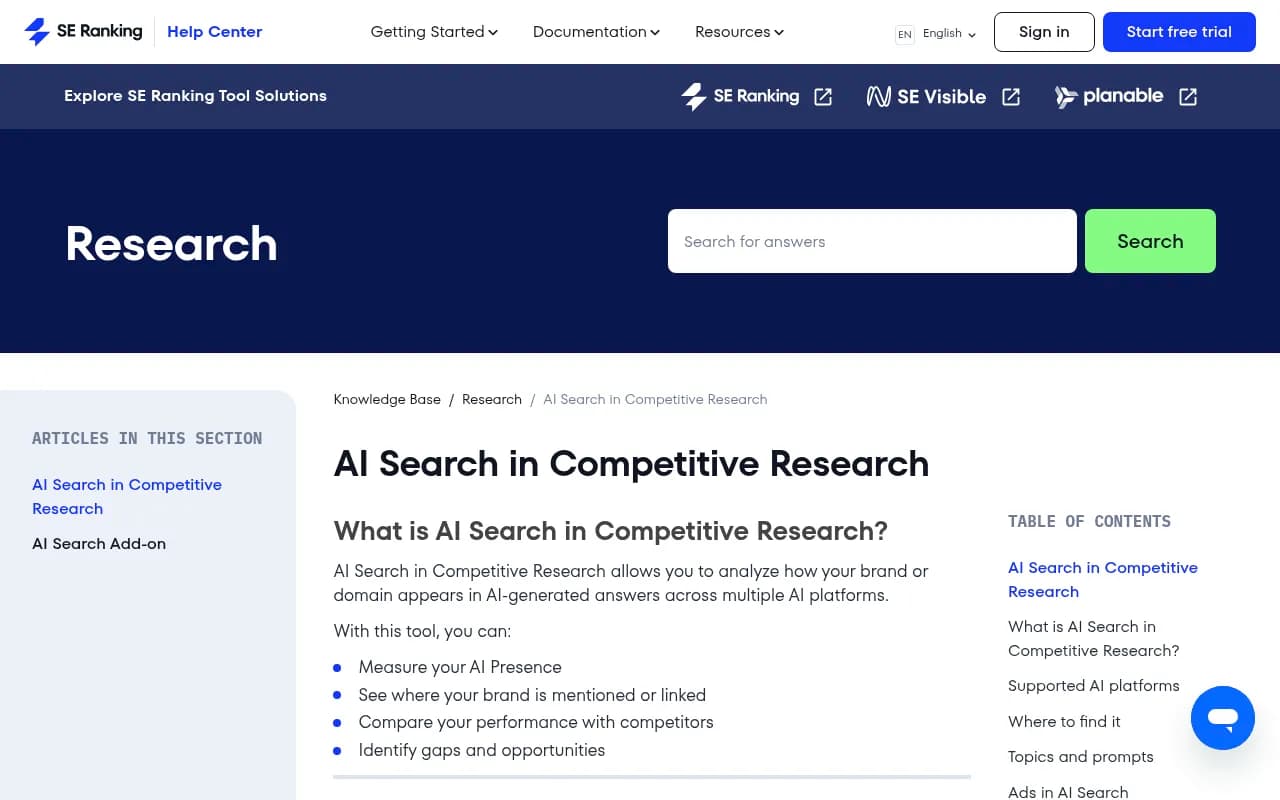
SE Ranking's competitive AI search research lets you add up to five competitors and switch between Google AI Overview, AI Mode, ChatGPT and Gemini, which is a reasonable starting layout for any comparison.
Step 4: Rule out a platform shift first
This is the step most people skip, and it is the one that saves you from wasted work.
Sometimes a rival did nothing. The platform changed, and every domain's citation pattern shifted at once. Three recent examples from Promptwatch Data:
- On August 8, 2026, ChatGPT Search started using the site: operator at scale. Promptwatch Data shows site:-scoped fanout queries jumping from 0.37% to 16.8% of all fanouts in one day, and average fanout queries per response rising from about 1.08 to about 1.83. Citations shuffled across many domains that day.
- On August 14, 2026, reddit.com's share of ChatGPT citations fell from roughly 4% to 0.5%, per Promptwatch's Reddit citation data. Any brand whose competitor depended on Reddit threads saw a sudden swing that had nothing to do with content quality.
- Around the GPT-5.3 rollout on March 4, 2026, average citations per response dropped across GPT-5.3, GPT-5.4 and GPT-5-Mini (ChatGPT citation drop).
A quick test: when you spot a rival peak, check whether unrelated domains moved on the same date. If five brands in your category all shifted on one day, suspect the platform. If only one rival URL moved and it is a page they recently published or updated, it is probably a real win.
Also check the monthly benchmarks. Promptwatch publishes citation share reports for ChatGPT, AI Mode and AI Overviews with month-over-month comparison, for example the June 2026 ChatGPT citation share and June 2026 AI Overviews citation share. They give you a baseline for what normal movement looks like.
One practical note from the site: operator change. Those searches can only surface indexed content, so confirm your key pages are crawlable and indexed. If your pages fell out of citations on that date, it may be an indexing problem and not a rival.
Step 5: Interpret the peak by content type
Not all peaks mean the same thing. Promptwatch tracked every page ChatGPT cited on July 6, 2026 for 90 days and split the results by format (content half-life data):
| Content type | Still cited after 30 days | Still cited after 60 days | Notes |
|---|---|---|---|
| Landing pages | 78% | 69% | Likely half-life near or beyond 90 days |
| Docs | 76% | 67% | 93% cited again after day 0 |
| Comparisons | 72% | 63% | Hold position well |
| Listicles | n/a | 60% | Cross 50% only at the end of the window |
| Product pages, reviews, how-tos | n/a | 55% | Half-life of 74 to 77 days |
| News | n/a | 41% | Half gone after 36 days |
What this means in practice:
- A rival news or press page that peaks and fades is normal. Do not rebuild your strategy around it.
- A rival landing page, doc or comparison that overtakes you is likely to stay for months. Treat it as a structural loss and respond.
- A rival product page or review that overtakes you is somewhere in the middle. You have roughly two and a half months before it decays on its own, which is not a plan.
Almost a quarter of news pages are never cited again after day 0. That is a lot of noise to ignore.
Step 6: Compare like with like
Once you know the peak is real, compare the two pages fairly. Promptwatch's citation share by content type (Sep 28 to Oct 4, 2026) gives a useful baseline:
| Content type | Share of all classified citations |
|---|---|
| Product pages | 22.4% |
| Landing pages | 16.8% |
| Listicles | 13.6% |
| How-to guides | 8.7% |
| Documentation | 7.5% |
| Comparisons | 5.9% |
| News | 5.7% |
For commercial prompts, product pages, landing pages, listicles and comparisons make up almost 70% of citations. So if a rival overtakes you on a buying prompt, it is almost always with one of those four formats. Comparing your blog post to their product page is a mismatch. Compare your product page to theirs, your listicle to theirs.
Also keep prompt intent consistent. Branded prompts skew toward reviews, FAQ and press releases. Informational prompts lean on how-tos and docs. A rival winning a branded prompt with a review page tells you something different than winning a commercial prompt with a comparison.
A fictional example from the research makes the ownership point well: Beacon has 9 of 40 citations on its own pages (22.5%), Atlas has 3 of 40 (7.5%). But if Atlas is the one showing up in third-party reviews, it can be recommended just as often without owning the citations. Separate "mentioned" from "cited on their own site".
Step 7: Inspect what the rival page contributes
Do not guess why a page was cited. Open it next to the AI answer and map it to the passage it supports.
- Read the AI response and find the sentence that cites the rival.
- Open the rival page and find the matching passage.
- Note what it contributes: a statistic, a definition, a price, a comparison table, a recent date.
- Check what yours says about the same point, and whether it exists at all.
- Look at freshness, structure and specificity.
The research frames the common gap types well: a visibility gap (their pages are cited more often), a topic gap (they cover subjects you do not) and a freshness gap (their content is newer). Treat structural similarities between cited pages as hypotheses to test, not proof of cause. You cannot tell exactly why a page was cited from outside the model.
Keep source support separate from factual accuracy, too. A rival page can be cited for a claim that is wrong. That is a different problem, handled through your own content and brand fact-checking.
Step 8: Check the sources behind the rival
If the cited page is not on the rival's own domain, you are looking at a source gap. A third-party publisher is carrying them. Map which domains and URLs AI pulls from when it names competitors:
- Review and directory sites
- Industry publications
- Reddit, YouTube and LinkedIn threads
- Research reports or data studies
These are your highest-value outreach and PR targets. Being present on the pages that feed a rival's citations improves your odds on the same prompts. One caveat: the claim that closing comparison-prompt gaps lifts AI mention rates by 40% within 90 days comes from a vendor blog and I could not verify it, so treat it as directional.
Step 9: Respond
Match the response to what you found:
| Finding | Response |
|---|---|
| Platform-wide shift | Wait a week, re-check, adjust baselines |
| Rival landing page, doc or comparison | Build or rewrite your equivalent, with better data and a clearer structure |
| Rival listicle or review | Pursue inclusion or build your own |
| Rival cited via third party | Outreach, digital PR, community presence |
| You lost citations but kept mentions | Check crawler access, indexing and page freshness |
| Rival news or press spike | Monitor, do not react |
Two things that help regardless:
- Verify that AI crawlers can actually reach your pages. Server logs that show which bots hit which URLs separate access problems from content problems. Promptwatch's AI crawler logs do this with IP-verified bot traffic.
- Refresh the page that lost ground, then track whether it comes back. A fix you do not measure is a guess.
Tools for spotting citation peaks
Several platforms can do part of this. What matters is whether they show URL-level citations over time and per-model splits, not just a visibility score.
| Tool | Strength for this job |
|---|---|
| Promptwatch | URL-level citation trends, crawler logs, page tracking, and content tools to respond |
| Profound | Enterprise AI visibility analytics |
| SE Ranking Visible | Competitor AI presence comparisons across platforms |
| Peec AI | Prompt-level tracking with suggestions |
| Otterly.AI | Lower-cost brand monitoring |
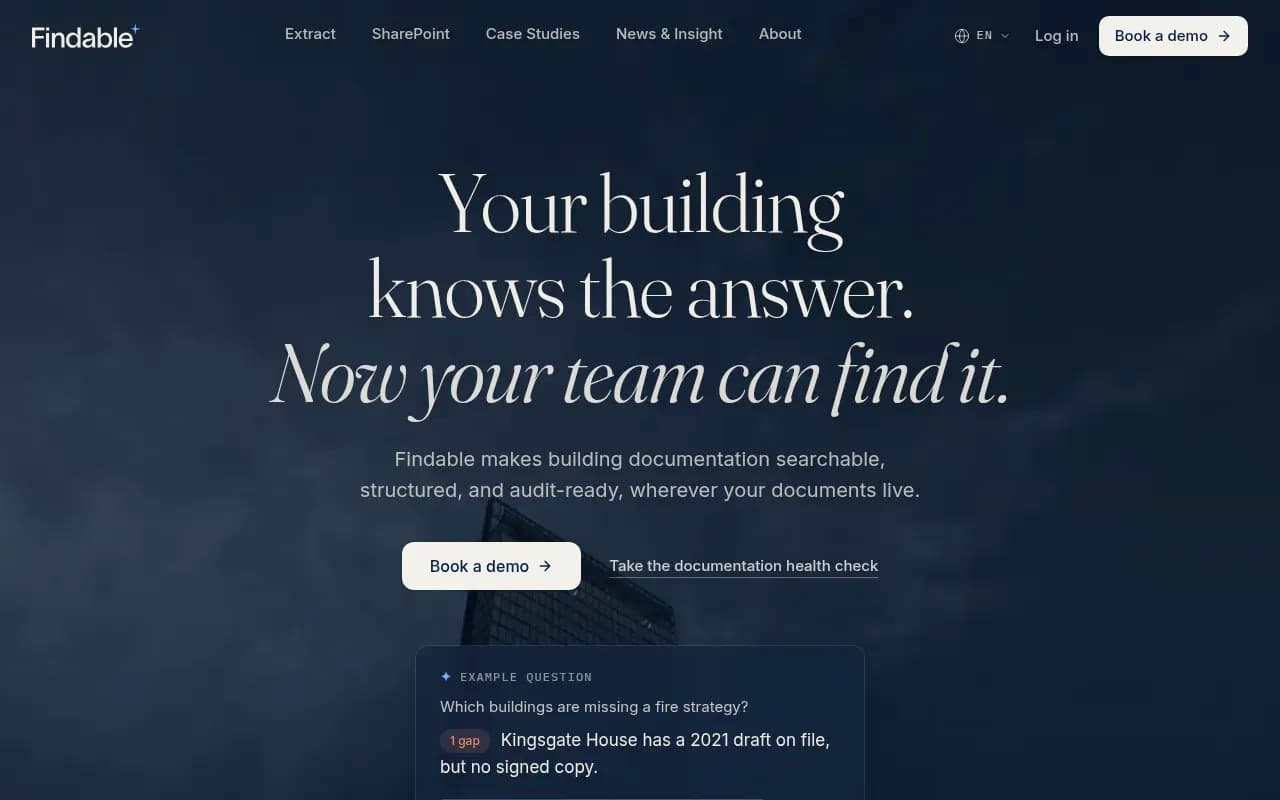
| Findable | Citation-gap analysis across LLMs |
| Semrush AI Visibility Toolkit | AI tracking inside an existing SEO suite |

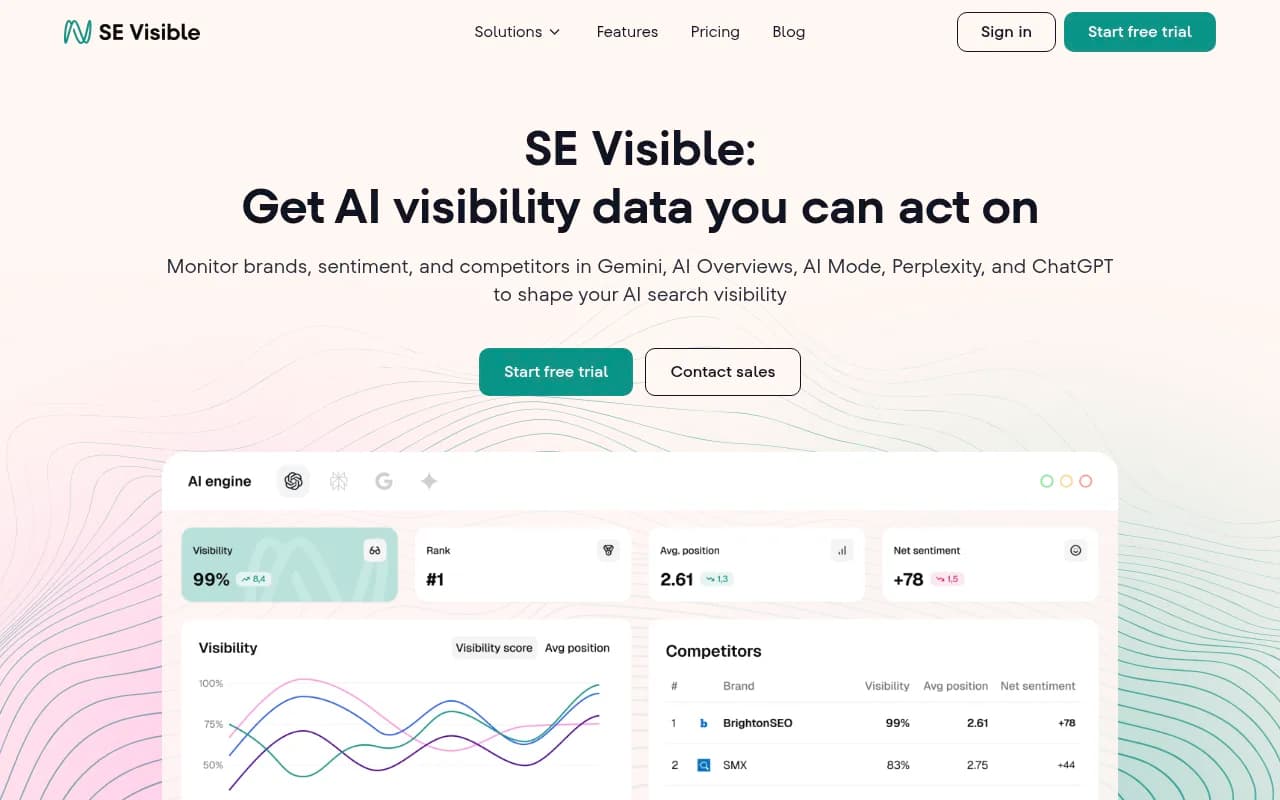


For most teams, the deciding feature is whether the tool does more than report. Promptwatch's Page Tracker lets you watch any URL, yours or a rival's, and see the prompts that cite it, and its content gap analysis and Content Agent help you write the response. There is a head-to-head with Profound if you are weighing the two. For a wider shortlist, the GEO software directory covers more options.
A simple weekly routine
- Monday: review URL-level citation changes on your top 20 prompts.
- Flag any rival URL that gained ground on three or more prompts.
- Check whether other domains moved on the same date. If so, log it as a platform event.
- For real peaks, classify the page type and prompt intent.
- Pull the cited passage and compare it with yours.
- Add an action: rewrite, create, outreach, or monitor.
- Re-check in two weeks.
You will not catch every peak. You will catch the ones that matter, and you will stop reacting to the ones that do not.
Frequently asked questions
Should we track only direct competitors?
No. Answer competitors like G2, Reddit and industry publications often take more citations than any rival brand. Track them in a separate group.
How fast can a rival overtake us?
Fast enough to notice within days when a rival publishes a strong landing page or comparison, and also when a platform changes. That is why you check for same-day movement across unrelated domains first.
Can we tell exactly why a page was cited?
No. You can see structural similarities, freshness and specificity, and you can test hypotheses by changing your page and tracking results. Anything beyond that is speculation.
Does a short peak mean we should respond?
Only if the page type is one that holds. News pages lose half their citations in 36 days. Landing pages and docs mostly do not.