Key takeaways
- Split your prompt set by intent (commercial, informational, branded) because ChatGPT cites a different content mix for each.
- Track 50 to 150 prompts per product line, weighted toward category and comparison queries, not your brand name.
- Your own product pages, landing pages and docs earn more software citations than review sites. G2 and Capterra still matter, though.
- Pick a tool by what you need after the dashboard: monitoring only, crawler and traffic attribution, or content execution.
- Re-audit the prompt set quarterly. Models change how they search, and last year's prompts go stale.
Why B2B SaaS needs its own approach
B2B software buying is research heavy. A buyer asks ChatGPT for "best CRM for a 20-person agency", gets a shortlist of four vendors, and only then visits websites. If you are not on that shortlist, you never see the lost deal in your analytics.
Generic rank tracking does not help much here. Keyword positions tell you where a page sits in Google. They do not tell you whether an AI assistant names your product, ranks it first or fifth, or says something wrong about your pricing.
SaaS also has a quirk: the category is crowded, the vendors have near-identical feature pages, and review sites carry real weight. So the prompt set and the tool choice both need to reflect that.
What actually gets cited for software prompts
Before choosing prompts, it helps to know what AI engines pull from. Promptwatch Data looked at organic software prompts in ChatGPT from Sep 28 to Oct 4, 2026. The most cited domains were github.com (1.2% of software citations), learn.microsoft.com (0.98%) and g2.com (0.73%), followed by AWS docs, Google Cloud docs, gartner.com and capterra.com.
Grouped by source type, docs and help centers earned 2.64%, vendor sites 2.01%, and review sites and analysts 1.57%. Vendor sites plus docs added up to 4.65%, roughly three times the share of review sites. Those are small numbers per domain because citations spread across a huge long tail, but the ordering is useful: your own site and documentation are the main citation source you control.
Content type matters too. In the content type report for the same week, product pages took 22.4% of ChatGPT citations, landing pages 16.8%, listicles 13.6%, how-tos 8.7% and docs 7.5%. Comparisons were 5.9% overall.
And the mix shifts by intent:
| Prompt intent | Example | Top cited types (Promptwatch Data, Sep 28 to Oct 4, 2026) |
|---|---|---|
| Commercial | "best CRM for small businesses" | Product pages 26.0%, landing pages 20.6%, listicles 15.0%, comparisons 7.9% |
| Informational | "how to set up lead scoring" | Product pages 19.1%, landing pages 13.9%, listicles 13.6%, how-tos 10.7%, docs 8.5% |
| Branded | "is HubSpot good for startups" | Product pages 23.3%, landing pages 22.8%, reviews 5.6%, FAQ 4.8% |
The takeaway for tracking: don't throw all prompts in one bucket. A drop in commercial visibility is a different problem from a drop in branded sentiment, and you fix them with different pages.
Which prompts to track
Here is the structure I'd use for a mid-size SaaS product. Adjust the counts to your plan limits.
Category and "best of" prompts
These are the money prompts. They look like "best project management software for construction" or "top CRM for startups 2026". Include modifiers buyers actually use: company size, industry, region, budget and integration ("CRM that works with Slack").
Aim for 40 to 50 percent of your set here. This is where you win or lose the shortlist.
Comparison and alternative prompts
"X vs Y", "alternatives to [competitor]" and "[competitor] pricing" prompts. Buyers late in the process ask these, and AI answers often name a winner. Track your brand against each of your five to eight real competitors, plus the one you wish was a competitor.
This is also where competitor pages get cited about you. Read those citations.
Problem and use-case prompts
"How do I reduce churn in a B2B subscription product" is not a vendor query, but AI often ends by suggesting tools. These informational prompts catch buyers early. Keep them to about 20 percent of the set. They are noisy, so don't over-index on one week's movement.
Branded and reputation prompts
"Is [your brand] good for enterprise", "[your brand] pricing", "[your brand] reviews", "does [your brand] integrate with Salesforce". Small count, maybe 10 to 15, but high value. They show what AI claims about you, including wrong claims about pricing tiers or missing features.
Persona and role-based variants
A CFO, a head of IT and a marketing manager ask about the same product differently. Persona-based tracking surfaces gaps you will miss with a single generic voice. Several tools now support this, including Promptwatch and Gumshoe AI.
Sub-queries behind the prompt
Here is something people underweight. One user prompt triggers background searches, called query fan-outs. Promptwatch's fan-out data shows averages are lower than the "3 to 8 searches" folklore: about 2.15 per response in early December, around 1.84 by early March, with shorter queries over time. The practical point is that your content has to match one of those short sub-queries, so write headings like "Best CRM for small agencies 2026" and cover pricing, alternatives and "X vs Y" as separate focused pages.
How to build the prompt list in practice
- Pull real queries from Search Console, sales call transcripts and support tickets. Buyers repeat themselves.
- Ask your sales team which competitors come up in the last 20 lost deals.
- Write each prompt as a full sentence, the way someone types into ChatGPT, not a keyword.
- Tag every prompt by intent, product line and persona.
- Run it for two weeks before drawing conclusions. Single-day variance is large.
- Drop prompts that never mention any vendor and never will. They eat your response budget.
Metrics worth watching
Don't stare at a single visibility score. Read a few together:
- Share of voice against your named competitors, per intent
- Position within the answer (being third in a list of five is not the same as first)
- Citation of your own domain versus mentions with no link
- Sentiment and the specific claims AI makes about you
- AI referral traffic and conversions, which is where tracking turns into revenue
Low share of voice means a coverage problem. Mentions without self-citations usually point to content or crawlability. Weak sentiment is a reputation problem, often traced back to review sites or old comparison posts. Promptwatch's Academy walks through how to read these together.
Which tools fit which team
The tools fall into three rough groups. Most B2B SaaS teams only need one of them, and the mistake is buying monitoring when you really need execution.
Monitoring-first trackers
These answer "are we mentioned?" and give you share of voice. They are cheap and quick to set up.
Otterly.AI is a common budget pick.

Peec AI is popular with in-house teams for clean competitor benchmarking.

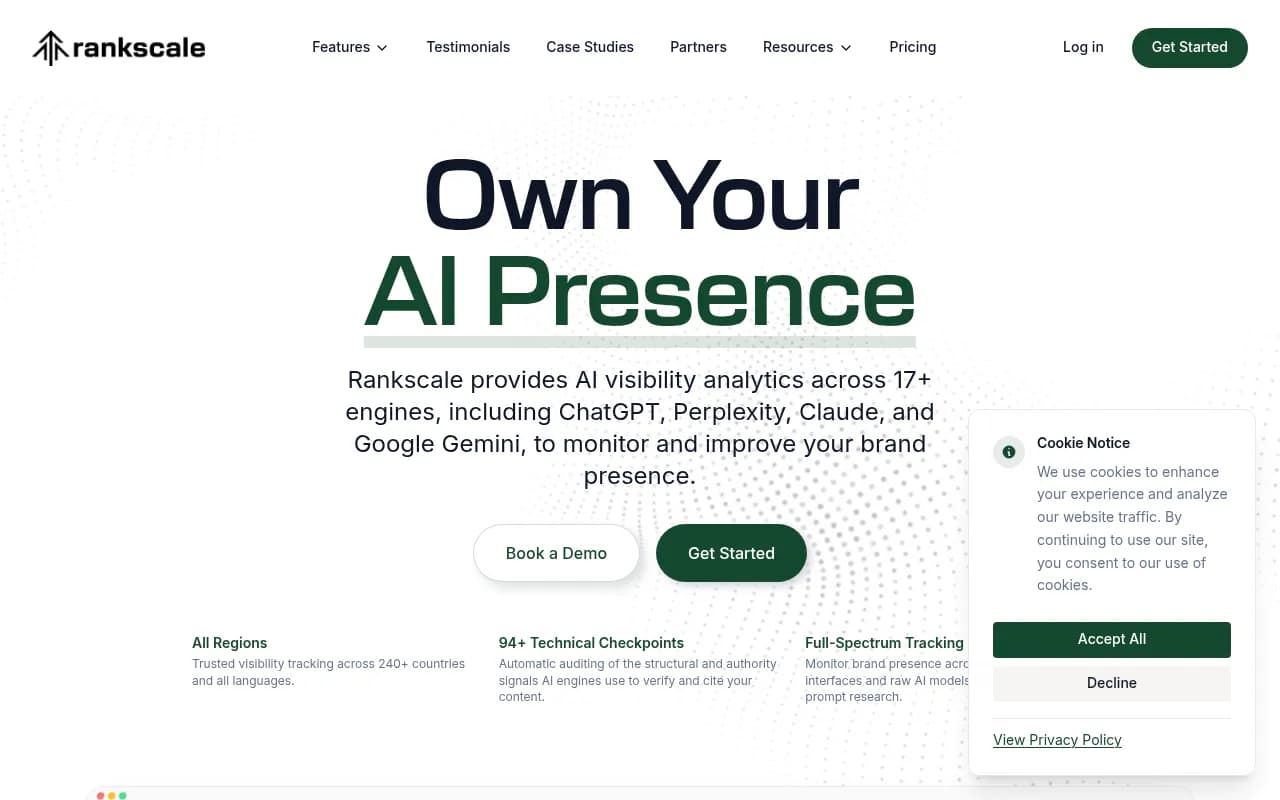
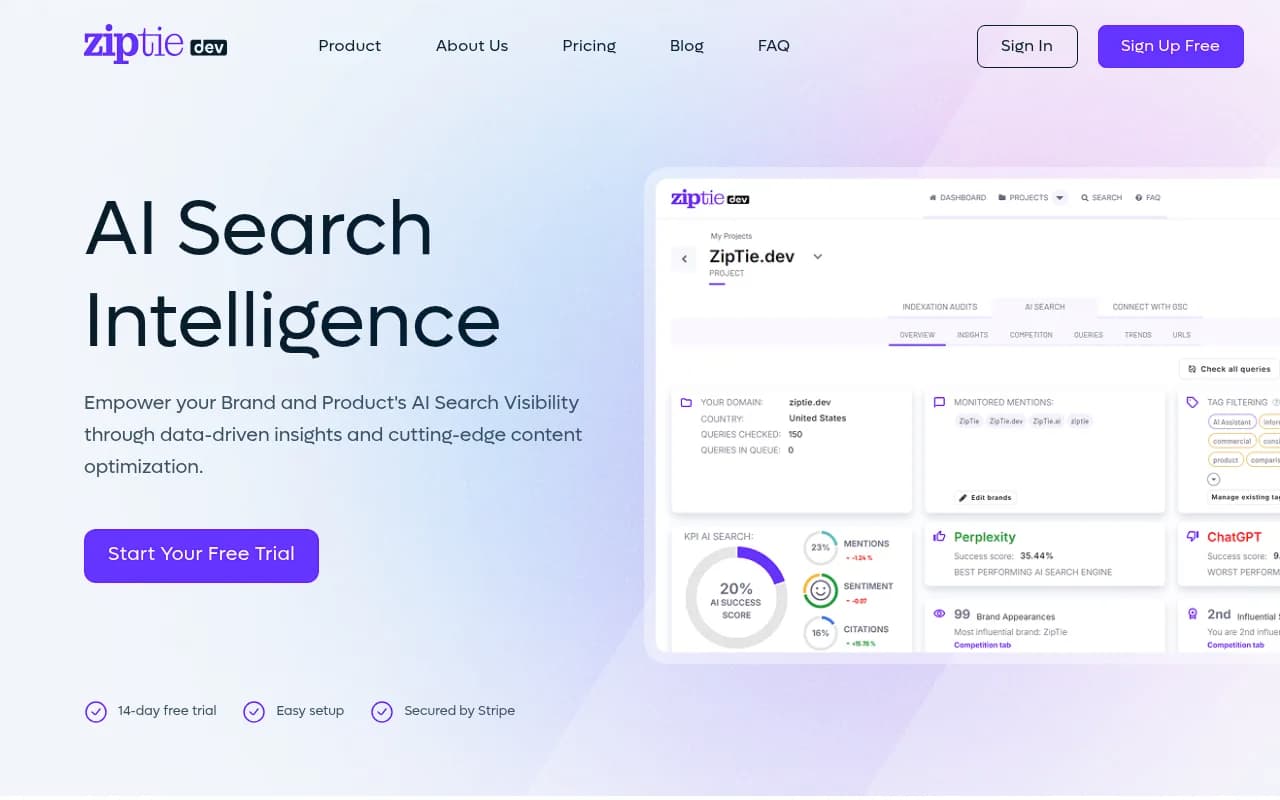
Rankscale and ZipTie are other lean options if all you need is prompt-level tracking.
Enterprise monitoring suites
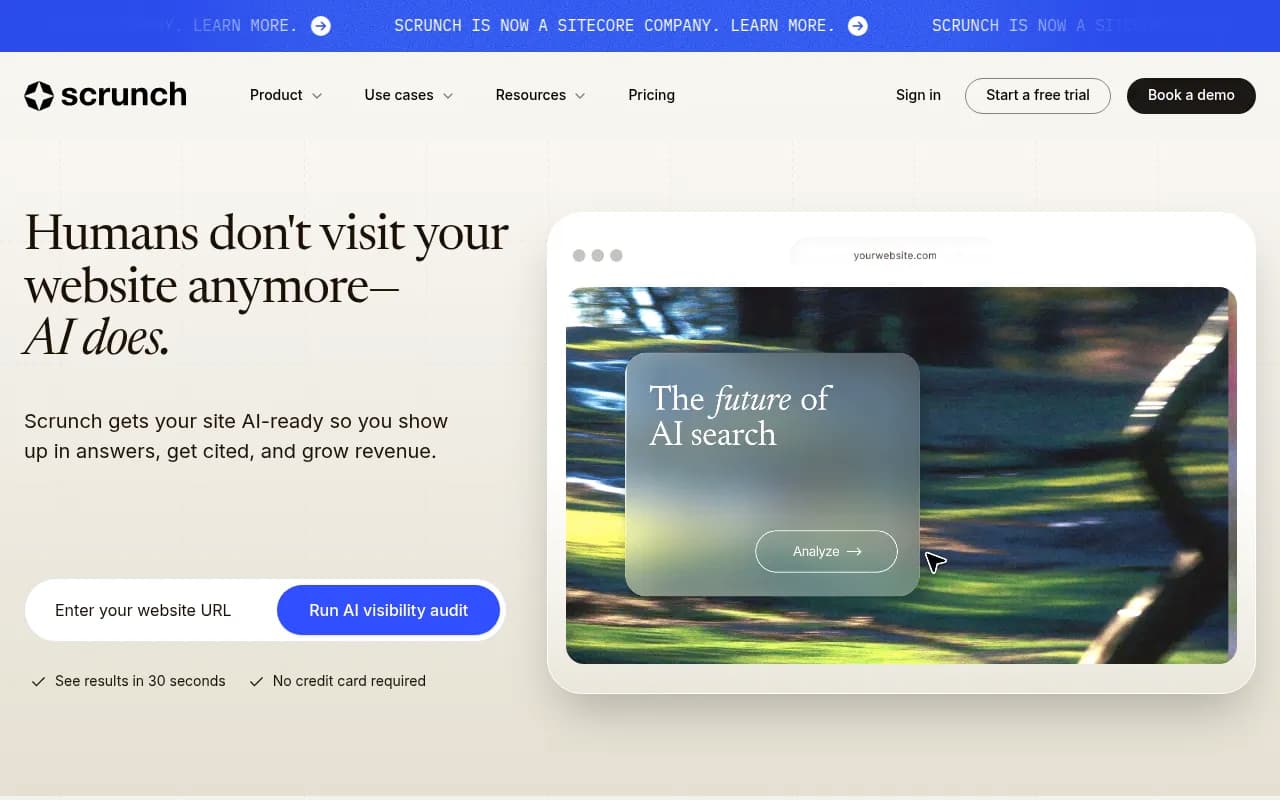
Profound and Scrunch AI are strong on monitoring depth and enterprise reporting, though they sit at higher price points. Profound is the pick if you have a large team and a lot of reporting needs.

Brandlight and Bluefish target enterprise brand teams with broader marketing suites.

SEO suites that added AI tracking
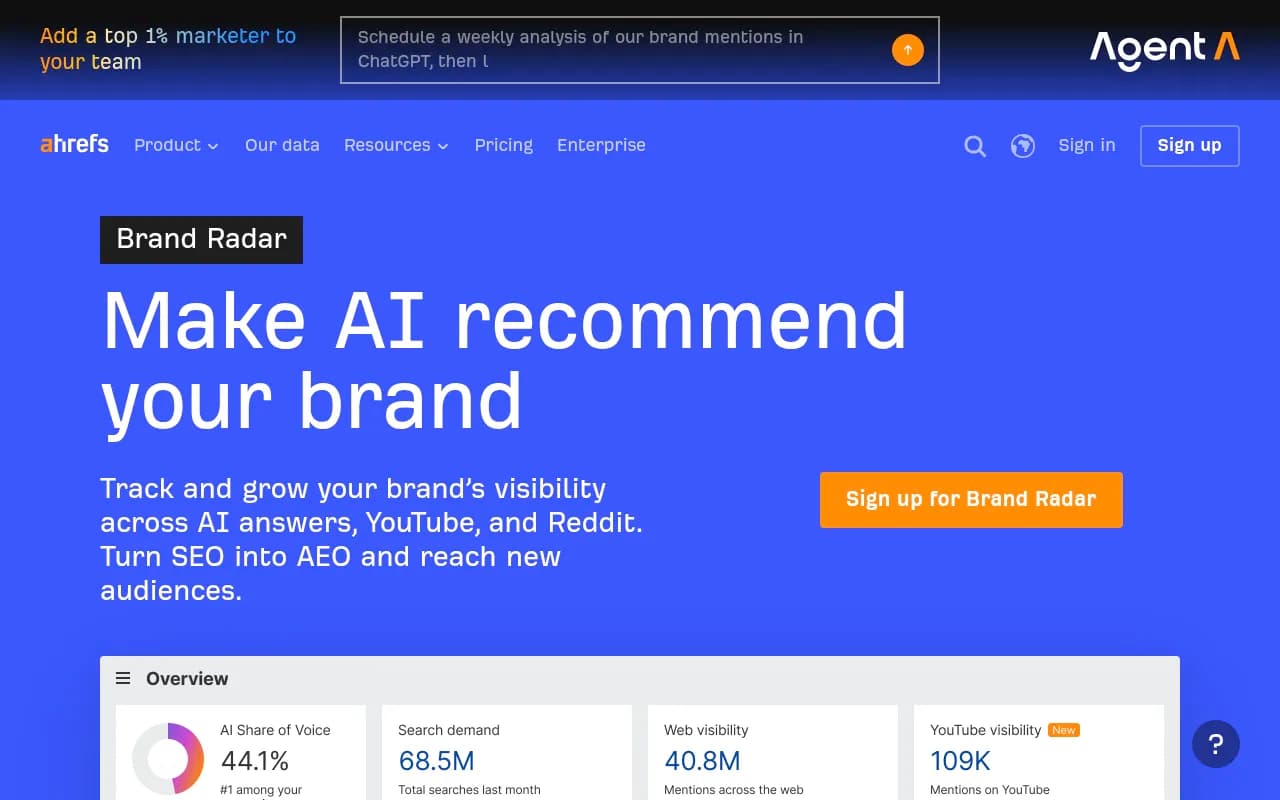
If you already pay for Semrush or Ahrefs, their AI add-ons are the lowest-friction place to start. The tradeoff is fixed prompt sets and shallower AI-specific data. Expect to graduate if AI search becomes a real channel.
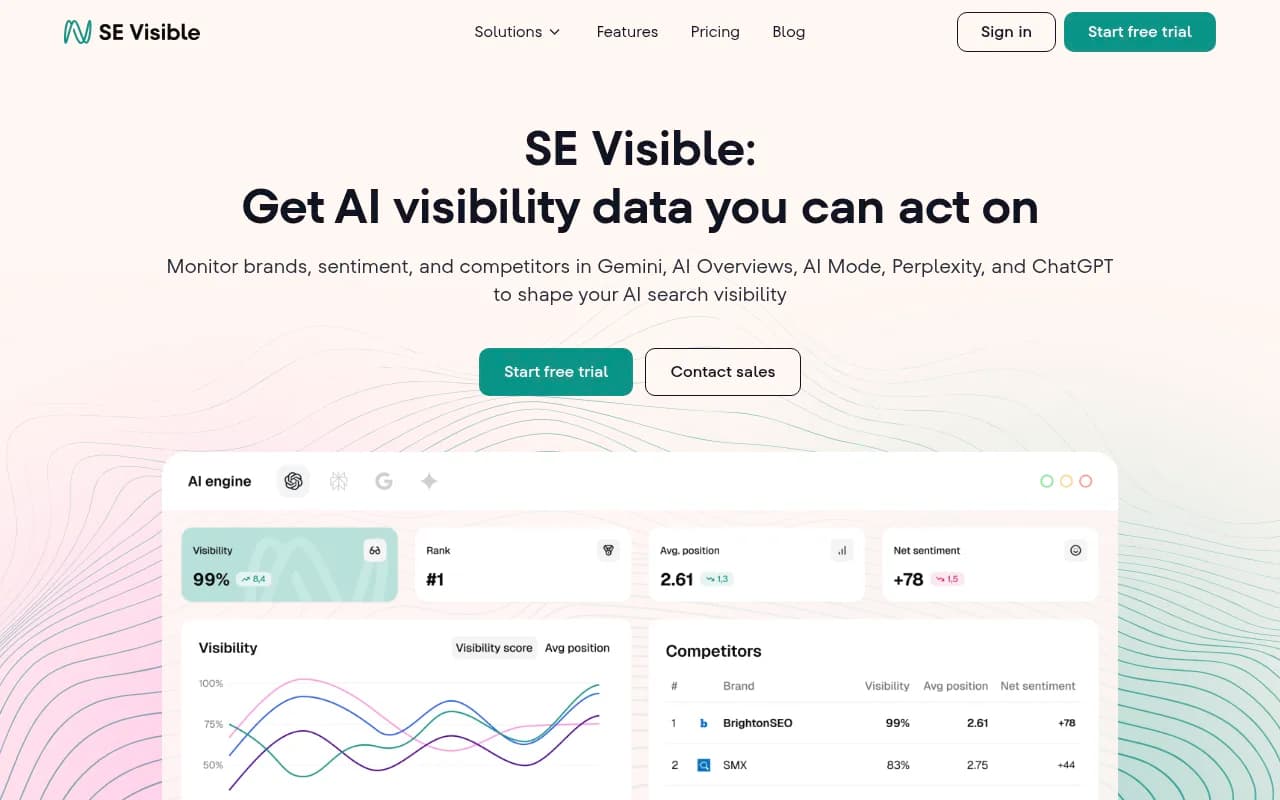
SE Ranking Visible is a cheaper alternative for smaller teams already in that ecosystem.
Platforms that connect visibility to action
Promptwatch is the one I'd point most B2B SaaS teams to once the question becomes "what do we do about it". It tracks real interfaces of ChatGPT, Gemini, Claude, Perplexity, Google AI Overviews and others, then goes further: IP-verified AI crawler logs show whether bots can read your docs and pricing pages, visitor analytics tie AI traffic to conversions, and the Content Agent writes and publishes pages against the gaps. For SaaS specifically, Fact Check is handy for finding which page teaches AI the wrong pricing claim.

Pricing starts at $95/month (Essential) and $245/month (Professional). The Content Agent and Agentic AI Search Optimization start on Business at $579/month. Confirm current prices on the pricing page, and note there is a 7-day free trial plus a free AI visibility report if you want a baseline first. If you are comparing, there are head-to-head pages for Promptwatch vs Profound and Promptwatch vs Peec.
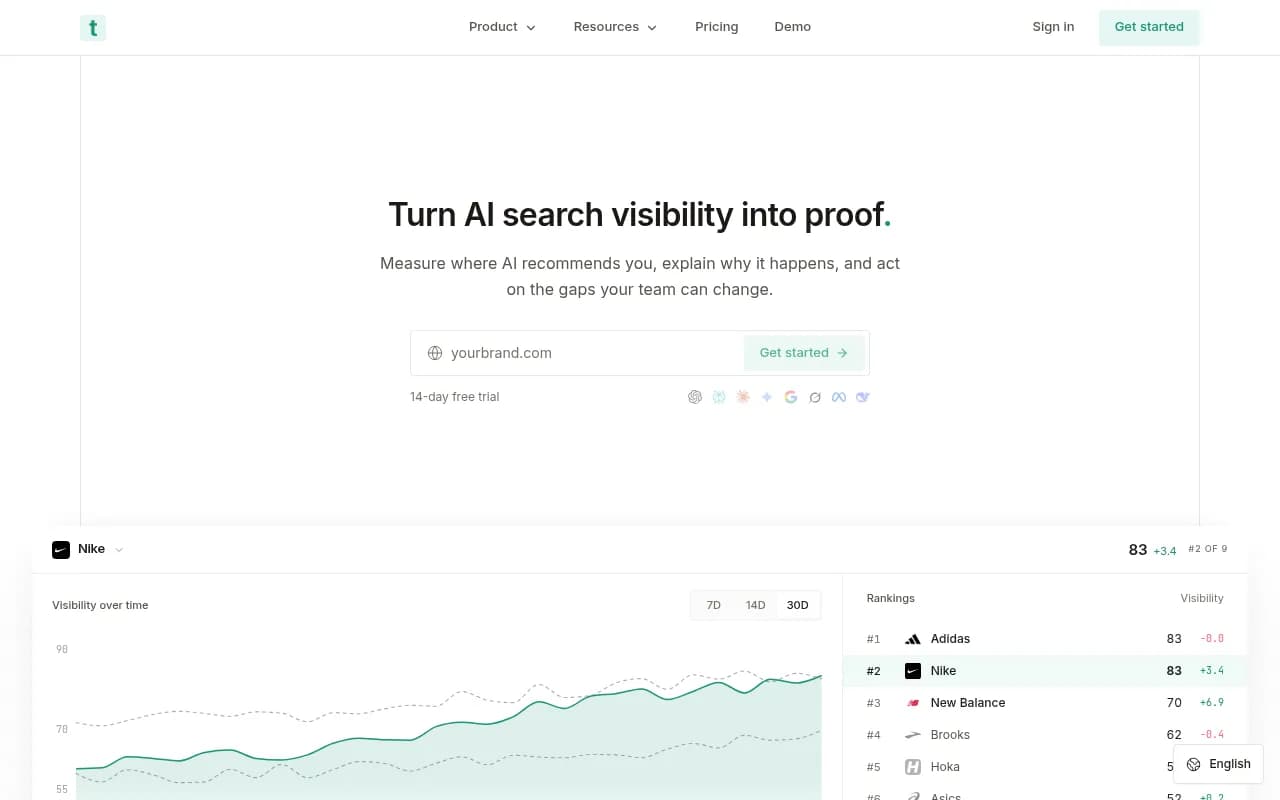
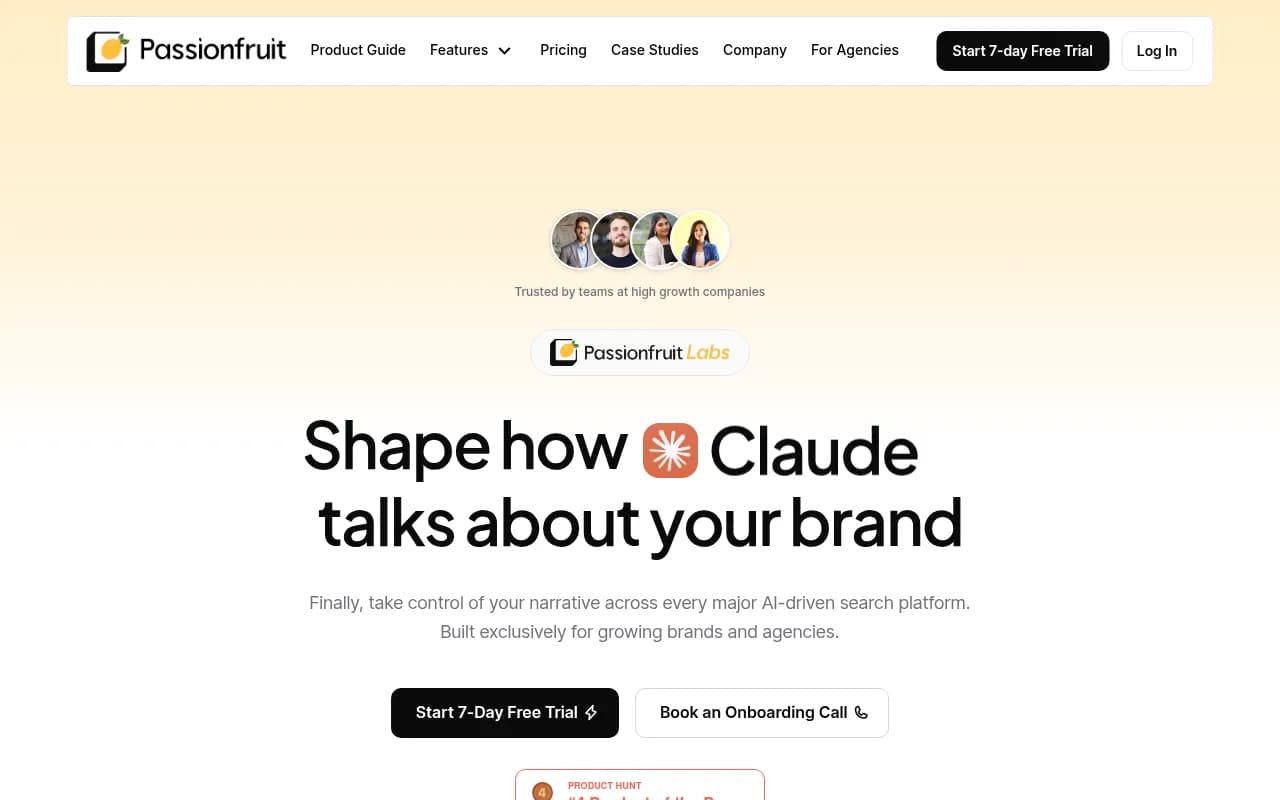
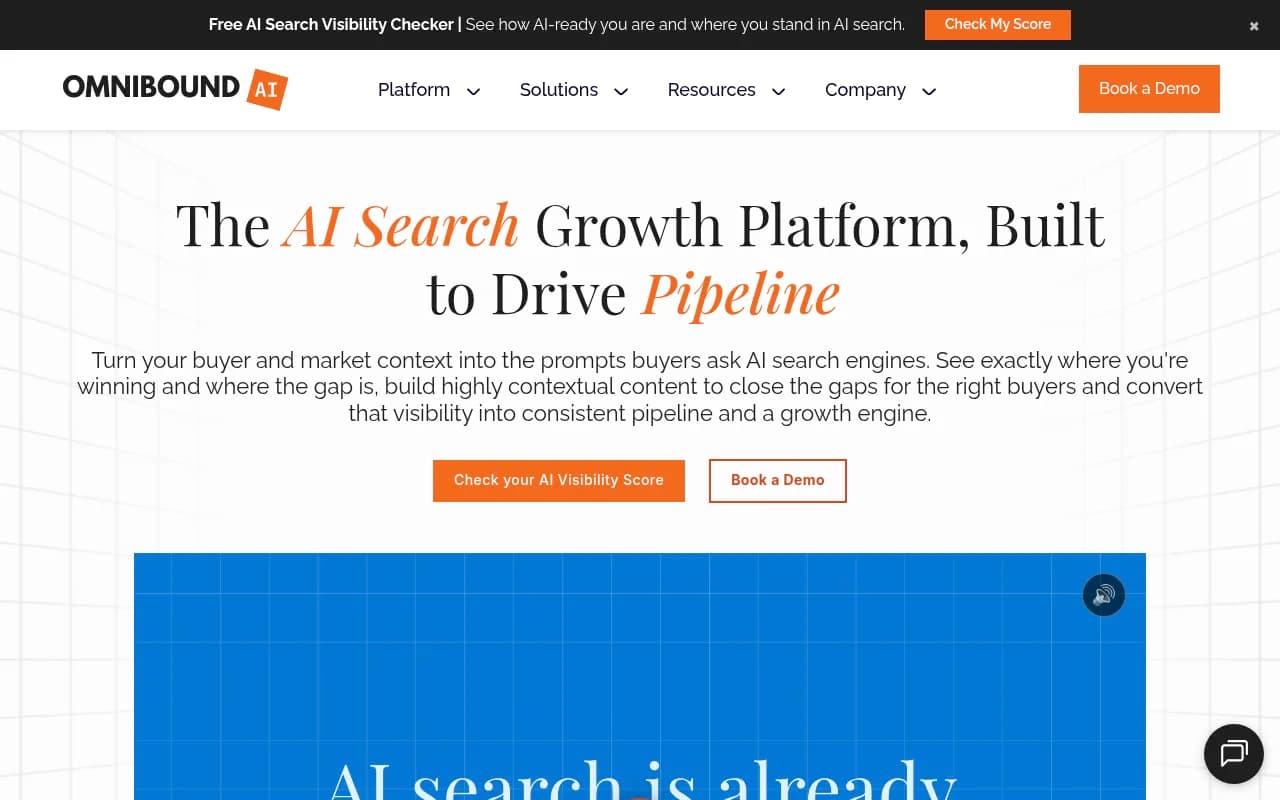
Other tools worth a look for revenue attribution: Trakkr and Passionfruit both lean on tying LLM citations to pipeline, and Omnibound is built specifically for B2B search visibility tied to pipeline.
If you want to browse the wider field, the GEO software directory at bestgeosoftware.com lists far more options than fit here.
Comparison table
| Tool | Type | Strength for B2B SaaS | Watch out for |
|---|---|---|---|
| Promptwatch | Visibility plus execution | Crawler logs, AI traffic attribution, Content Agent, Fact Check | Content Agent needs Business plan |
| Profound | Enterprise monitoring | Deep tracking and reporting | Higher price, monitoring-centric |
| Peec AI | Monitoring | Clean competitor benchmarking | No crawler logs or content generation |
| Otterly.AI | Monitoring | Affordable entry point | Basic feature depth |
| Scrunch AI | Monitoring | Brand and agency workflows | Price, limited execution |
| Semrush / Ahrefs add-ons | SEO suite add-on | Fits existing stack | Fixed prompt sets, shallow AI data |
| Trakkr / Passionfruit | Attribution-focused | Revenue tie-in | Narrower monitoring depth |
One caution on third-party "best tools" lists. Several vendor blogs, including the one published by Profound, rank their own product first. Treat them as inputs, not verdicts, and test two tools on the same 30 prompts before committing.
Match the tool to the stage
- Early stage, one product, small team: a monitoring tracker or the SEO suite you already own. Spend the savings on content.
- Growth stage, multiple competitors and a content team: a platform that links tracking to crawler data and traffic, so you can prove pipeline.
- Enterprise, several products or regions: look at multi-region tracking, audit logs, SSO and reporting. Profound, Brandlight and Promptwatch Enterprise all compete here.
- Agency managing SaaS clients: check agency plans with unlimited projects and white-label reporting.
One budget point from Discovered Labs' roundup: entry-level monitoring runs roughly in the tens to a few hundred dollars per month, and that does not include content execution, where citation rates actually move. I couldn't verify their exact range, so check each vendor yourself.
Acting on what you find
Tracking without action is overhead. A short loop that works:
- Find prompts where competitors appear and you don't.
- Check which URLs get cited for them. Product pages? Listicles on third-party sites? G2 profiles?
- If a third party owns the citation, fix your listing or pitch the author. If it is a gap on your site, build a focused page matching the sub-query.
- Keep docs crawlable. Check crawler logs to confirm AI bots can actually reach them.
- Keep G2 and Capterra profiles complete. They still show up in software citations.
- Refresh landing pages and docs, which hold citations for months, before bothering with news-style posts, which lose half their citations in about five weeks according to the content half-life report.
If you would rather hand the tracking-to-content loop to specialists, agencies such as 1001 SEO Media run GEO programs for SaaS brands, and use Promptwatch for the visibility side.
Common mistakes
Tracking only your brand name. You will see yourself in every answer and learn nothing.
Copying a template prompt list. Your buyers' phrasing is specific to your category.
Ignoring regions and languages. If you sell in Germany and the US, those are separate monitors.
Reading one week of data. Prompt results are noisy, and models change how they search without warning.
Buying a dashboard and no capacity to write. Even the best tracker doesn't publish a single page for you unless it includes execution.
A starter plan for the next 30 days
Week one: build 60 prompts across the four buckets, tagged by intent. Week two: run them across at least ChatGPT, Gemini, Perplexity and Google AI Overviews. Week three: pull the cited URLs and list the ten biggest gaps. Week four: fix the top three and set up AI traffic attribution so you can see whether anything moves.
Then repeat monthly. Prompt tracking for SaaS is less a project than a habit, and the teams that keep at it see the shortlist shifts before their competitors do.