Key takeaways
- No first-party dataset measures Claude Code's citations for software prompts. The closest data is Promptwatch's ChatGPT software report, and it is a proxy, not proof of Claude Code behavior.
- In that ChatGPT data (Sep 28 to Oct 4, 2026), github.com earned 1.2% of software citations, learn.microsoft.com 0.98%, and g2.com 0.73%.
- Docs and help centers (2.64%) plus vendor sites (2.01%) together out-earn review sites and analysts (1.57%) by roughly three to one.
- Claude Code works differently from a chat search product. It reads your repo, your CLAUDE.md, your MCP config, and whatever it fetches during a session, so your own project files shape its picks as much as the open web does.
- The practical play for a software vendor: a clean public GitHub presence, crawlable docs, and complete G2 and Capterra profiles.
The question, and the honest limit on the answer
Someone asks Claude Code to "add error monitoring" or "pick a queue library" and it names a product. Where did that name come from? Three candidates keep coming up: GitHub, documentation sites, and review platforms like G2.
I'll be upfront. I found no published measurement of Claude Code's citation behavior for software prompts. What exists is Promptwatch Data on ChatGPT, and the Piebald-AI repository that tracks Claude Code's system prompts and tool descriptions. Those two sources let us reason carefully, but they don't let us claim that G2 moves Claude Code recommendations by 0.73%. Anyone who says so is guessing.

How Claude Code actually decides what to recommend
Claude Code is not a search engine with a source list. It is an agentic coding tool in your terminal. A recommendation can come from several places:
- Training data. What the model absorbed about libraries, SDKs, and vendors before its cutoff. GitHub READMEs, public docs, and Stack Overflow-style text are all in there.
- Your repository. Existing dependencies, lockfiles, config files, and the CLAUDE.md that Anthropic's own guidance says is pulled into context at the start of a conversation.
- Live fetches. When web search or fetch tools are used during a session, the model reads whatever pages come back.
- Connected tools. MCP servers and plugins you've configured. The system prompts repo documents guidance on MCP connector discovery, including how Claude Code searches for connectors and writes .mcp.json entries.
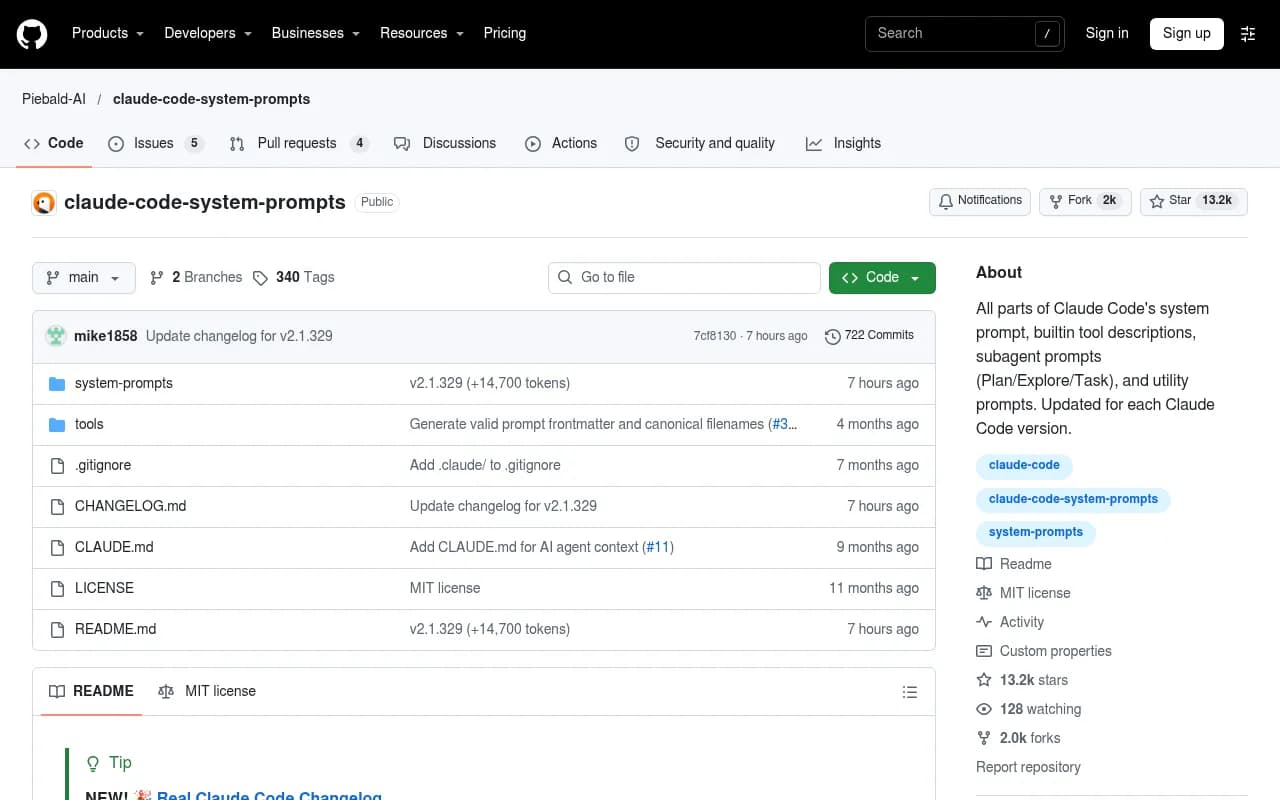
The Piebald-AI repo is worth bookmarking if you care about this. It publishes the system prompt, built-in tool descriptions, and subagent prompts (Plan, Explore, Task) for each Claude Code version, and as of today it is at v2.1.329 with 722 commits and 340 tags. It changes often. A recommendation behavior you observe this month may not hold next month.
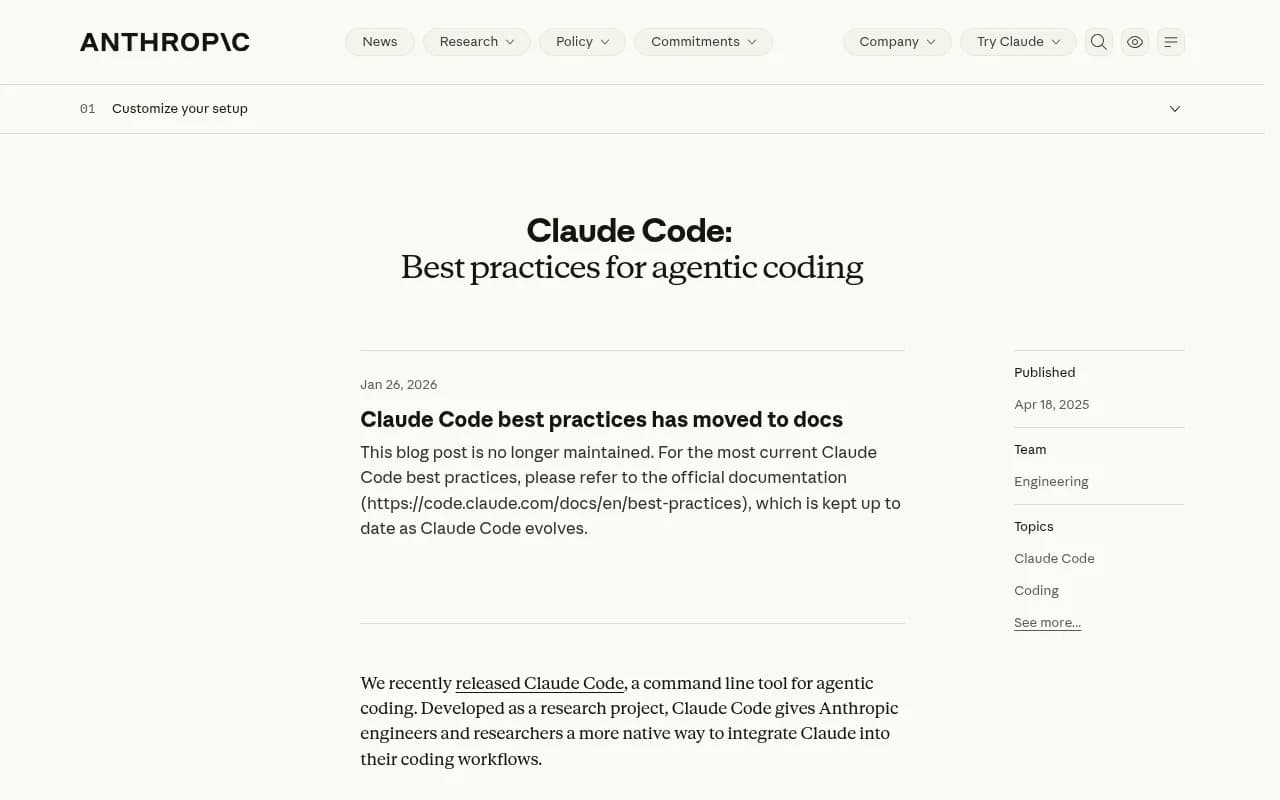
Anthropic's own best-practices material makes the repo-first point plainly: Claude Code "automatically pulls context into prompts," and CLAUDE.md is the place to document commands, code style, and environment quirks. The original blog post has since moved to the official docs, which are kept current as the tool changes.
The consequence: for a developer using Claude Code inside an existing project, the strongest signal is usually what is already in the repo. A project with Sentry in its dependencies will get Sentry suggestions. The open web matters most when the project is new or the prompt is open-ended.
What the closest data says: ChatGPT and software prompts
Promptwatch Data's report on most cited sites in ChatGPT for software prompts covers organic software prompts (comparing tools, finding alternatives, asking how a product works) from Sep 28 to Oct 4, 2026. It is ChatGPT, not Claude Code. Treat it as a map of what a web-searching assistant reads in this category.
| Domain | Share of software citations |
|---|---|
| github.com | 1.2% |
| learn.microsoft.com | 0.98% |
| g2.com | 0.73% |
| docs.aws.amazon.com | 0.41% |
| docs.cloud.google.com | 0.35% |
| gartner.com | 0.34% |
| capterra.com | 0.32% |
| intercom.com | 0.28% |
| zapier.com | 0.24% |
The percentages are shares of all software citations, not of the 23 charted domains. Those 23 together earn 7.89%, which tells you something important: the long tail is huge. Even the top domain holds barely over 1%.
Grouped by source type, the same report shows:
| Source type | Share |
|---|---|
| Docs and help centers | 2.64% |
| Vendor sites | 2.01% |
| Review sites and analysts (G2, Gartner, Capterra, Software Advice) | 1.57% |
| GitHub | 1.2% |
| App stores | 0.47% |
Vendor pages plus docs come to 4.65%, about three times the review-site share. G2 is the most cited review site, but it is one voice among many.
GitHub: the most plausible bridge between ChatGPT data and Claude Code
GitHub tops the ChatGPT list as a single domain, and it is also the one source that plausibly matters for Claude Code on two separate paths.
First, training data. Public repos, READMEs, issues, and example code are exactly the kind of text coding models learn from. A library with a clear README and lots of real usage is easier for a model to recommend confidently. I can't verify how much weight any one repo gets, so I won't put a number on it.
Second, live behavior. Community advice, like a popular Claude Community post, tells users to have Claude search GitHub for existing open-source projects instead of building from scratch. That is anecdotal, but it matches how people use the tool: if a developer prompts "find an existing library for this," GitHub is where a search lands.
There is also an ecosystem effect. GitHub topics like claude-ai list over 5,000 public repositories, many of them skills, prompt collections, and wrappers. Claude skills packaged with a SKILL.md file are now a common way to distribute workflows. If you build developer tooling, shipping a skill or MCP server in a public repo is a distribution channel in its own right.
What to do on GitHub
- Write a README that states what the product does, who it is for, and how to install it, in plain language.
- Keep a clear license, a changelog, and recent commits. Stale repos look abandoned to humans and, plausibly, to models.
- Publish example projects and, if it fits, an MCP server or skill with its own documentation.
- Use accurate topics so the repo shows up in searches.
Docs and help centers: the biggest bucket
In the ChatGPT data, docs and help centers are the largest software source type at 2.64%. Microsoft Learn, AWS docs, and Google Cloud docs all sit in the top five. Intercom's help content appears too.
For Claude Code this matters because documentation is what an agent reaches for when it needs to implement something. If the model has decided to use your SDK, it will often fetch or recall your docs to write the integration. Docs that are wrong, hidden behind a login, or rendered entirely in client-side JavaScript make that harder.
Checks worth doing:
- Make sure AI crawlers aren't blocked in robots.txt by accident. The free robots.txt generator for AI and AI crawler URL inspector help here.
- Serve docs as static, crawlable HTML with stable URLs.
- Put quickstarts and code samples near the top. Agents want runnable snippets.
- Consider an llms.txt file. It is a low-cost addition, though I'd treat its impact as unproven. Promptwatch's LLMs.txt generator makes one in a few minutes.
One caution from Promptwatch's own data: markdown files make up just 0.05% of AI search citations. Markdown serves agents, not AI search. That distinction matters here, because Claude Code is an agent. A docs site that works for both audiences covers the bases.
G2 and review sites: real but smaller
G2 earns 0.73% of ChatGPT's software citations, and Capterra 0.32%. Review platforms and analysts together reach 1.57%. That is meaningful for commercial prompts like "best CRM for startups," where listicles and comparison content dominate.
For Claude Code, I'd rank review sites lower than GitHub and docs. People ask a coding agent to implement things, not to shortlist vendors. The prompts that trigger a vendor comparison inside a terminal are rarer. But they do happen, particularly when a developer is choosing a service (auth, payments, analytics) to wire into a project. In those moments, a model's prior knowledge of G2-style sentiment and category positioning could tilt the pick. Again: plausible, not measured.
Cheap hygiene regardless of AI:
- Complete your G2 and Capterra profiles with accurate categories, pricing notes, and integrations.
- Keep reviews recent. Old profiles with outdated descriptions teach models the wrong thing.
- Make sure your own site says the same things your profiles say.
Your own repo and config beat all three
Here's the part most GEO articles skip. If you're a developer, you control the strongest signal. If you're a vendor, your users do.
A CLAUDE.md that lists approved libraries, a lockfile full of existing choices, and an .mcp.json pointing at specific servers all steer Claude Code more directly than any public source. Anthropic's guidance recommends keeping CLAUDE.md concise and human-readable, covering bash commands, code style, and repo etiquette. Teams that want consistent tool choices can write them down there: "use Postmark for transactional email, not SendGrid."
For vendors, this suggests publishing a ready-made snippet. A short "Using X with Claude Code" doc page, with a copy-pasteable CLAUDE.md block and MCP configuration, puts your product into the project context directly. That is a speculative tactic. It is also cheap, and it helps human developers too.
How to measure instead of guess
Because Claude Code behavior is not covered by public datasets, the honest approach is to measure your own presence.
- Run a set of realistic software prompts ("add rate limiting to this Express app," "what should I use for feature flags") in Claude Code against a blank project, a few times each, and log which products appear.
- Track your visibility in the web-search assistants that do publish citations, since those feed the same ecosystem of sources.
- Check your server logs for AI crawler and agent traffic to docs pages. If bots can't read your docs, nothing else matters.
For steps 2 and 3, an AI visibility platform helps. Promptwatch tracks prompts across ChatGPT, Gemini, Perplexity, Google AI Overviews, and also the coding agents Codex, Claude Code, and OpenCode, and its AI crawler logs show which AI bots read which pages. Its Page Tracker shows which prompts cite a given URL, which is handy for seeing whether your docs or GitHub pages are the ones doing the work. Plans start at $95/month, and you can confirm current pricing at promptwatch.com/pricing.
Other tools in the category include Profound, Peec AI, and Otterly.AI, which are mostly monitoring-focused. For a wider scan, the GEO software directory at bestgeosoftware.com lists dozens more.



Priority list for software vendors
| Priority | Action | Why |
|---|---|---|
| 1 | Crawlable, accurate docs with runnable quickstarts | Largest source type in the ChatGPT data (2.64%); what agents fetch to implement |
| 2 | Active public GitHub repo, README, examples, MCP server or skill | Top single domain (1.2%); likely in training data |
| 3 | Vendor pages that state positioning and pricing clearly | 2.01% of citations |
| 4 | Complete G2 and Capterra profiles | 1.57% for review sites and analysts combined |
| 5 | A "use with Claude Code" doc page | Puts your product into project context directly (untested) |
What we still don't know
- How often Claude Code uses web search versus relying on training data for a given prompt.
- Whether GitHub stars, recency, or README quality change recommendations.
- Whether G2 ratings influence agent picks at all.
System prompts change with each release, and Piebald's repo adds thousands of tokens in a single version (v2.1.329 added about 14,700). Re-test every few weeks if recommendation share matters to your business. Start with docs and GitHub, since those help in every scenario, and treat G2 as hygiene rather than a strategy.