Key takeaways
- Google AI Mode has 75 million users and returns vendor recommendations directly in the answer -- being cited beats ranking #10 every time
- B2B buyers now ask full, multi-part questions ("best vendor for X with Y integration") and AI Mode synthesizes a short list of named companies in response
- Getting cited requires bottom-funnel revenue pages, answer-first content structure, entity authority, and proper tracking -- not just generic SEO
- AI Mode queries are roughly 3x longer than traditional searches, which means buyers are asking the exact comparison and evaluation questions B2B sellers want to be present for
- Tools like Promptwatch can show you which prompts competitors are being cited for but you're not, so you know exactly where to focus
Something shifted in B2B search over the past 12 months, and a lot of marketing teams are still catching up. Google AI Mode -- the conversational, synthesized-answer experience that now has 75 million users -- doesn't return ten blue links and let buyers sort it out. It names vendors. It says "here are three platforms worth considering" and moves on.
That's a fundamentally different dynamic than traditional search. You don't win by being on page one. You win by being in the answer.
For B2B brands, this matters more than almost any other channel shift in recent memory. Buyers researching enterprise software, professional services, or SaaS tools are increasingly getting AI-generated summaries that skip the research phase entirely and go straight to recommendations. If your brand isn't in those recommendations, you're invisible to a growing slice of your pipeline.
This guide covers what's actually happening in Google AI Mode, why B2B buyers behave differently inside it, and the specific things you can do to start getting cited.
What Google AI Mode actually does (and why it's different for B2B)
Google AI Mode is a conversational search layer built on top of Google's index. When someone asks a complex, multi-part question, it synthesizes a response from multiple sources and cites them inline. Think of it as a research assistant that reads the web and writes you a summary.
For B2B buyers, this is where things get interesting. According to Google's own data, AI Mode queries are roughly three times longer than traditional searches. That length matters because it means buyers aren't typing "CRM software" -- they're typing "what's the best CRM for a 50-person B2B sales team that integrates with HubSpot and has strong reporting." That's a buying question, not a browsing question.
Google has outlined five behavioral modes in AI Mode: Explore, Decide, Learn, Do, and Create. B2B buyers tend to cluster around Decide and Explore -- they're either mapping the landscape of solutions or narrowing down to a shortlist. Both of those modes involve AI Mode surfacing specific vendors and sources, which is exactly the moment you want to be present.
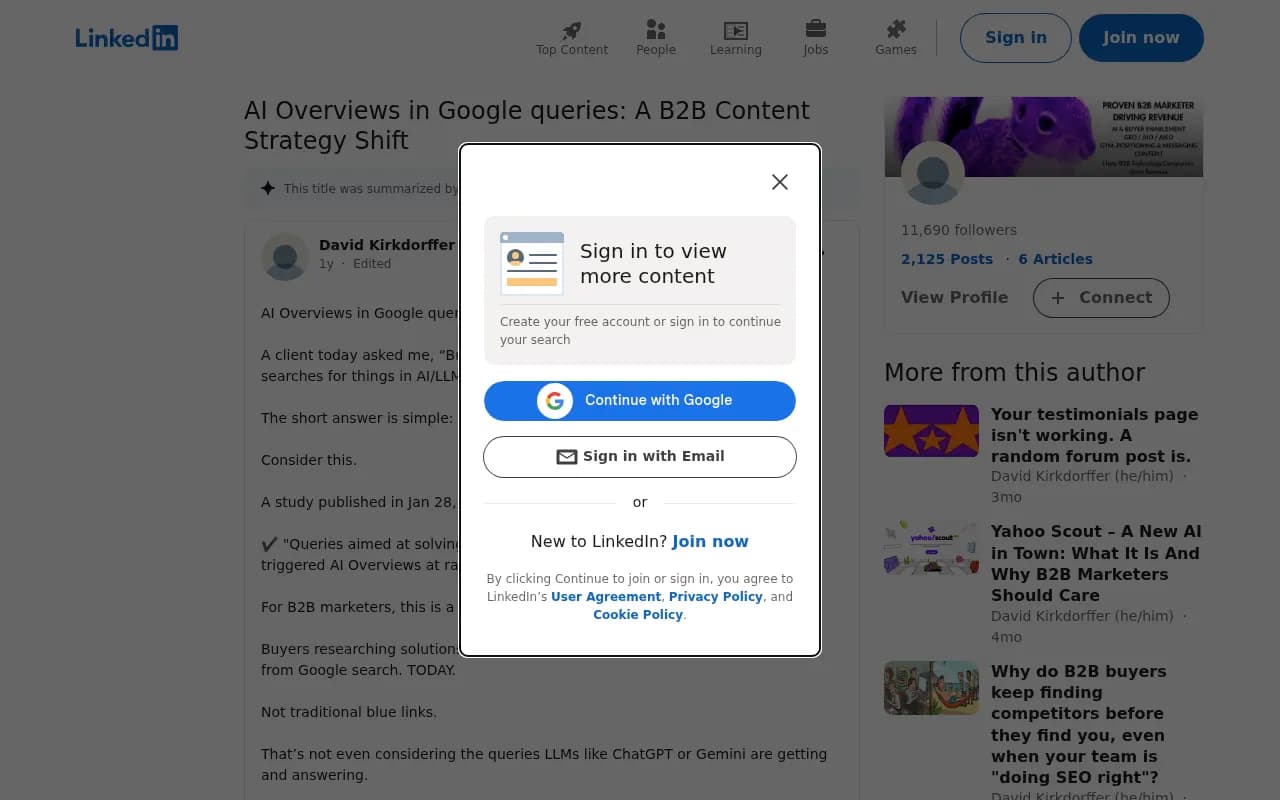
The other thing worth understanding: AI Mode is a recommendation engine, not a directory. It doesn't list 50 options. It names a handful. That compression is what makes the stakes so high. If you're not in the handful, you don't exist for that buyer at that moment.
Why most B2B brands are invisible in AI Mode right now
Most B2B websites were built for a different era of search. They have:
- Homepage copy optimized for brand awareness, not buyer questions
- Blog content written for traffic, not for answering specific evaluation queries
- Product pages that describe features without addressing the "why us vs. them" question
- No structured content that AI models can cleanly extract and cite
The result is that AI Mode reads these sites, finds nothing useful to quote, and cites competitors who actually answered the question.
There's also an entity problem. AI Mode doesn't just look at individual pages -- it builds a picture of what your brand is, what it does, who uses it, and whether it's trustworthy. If your brand entity is weak (inconsistent mentions, thin third-party coverage, no clear category positioning), AI Mode won't surface you even if your content is decent.
Four things that actually move the needle
1. Build bottom-funnel revenue pages first
Most content strategies start at the top of the funnel and work down. For AI Mode, that's backwards. The queries that drive pipeline are bottom-funnel: comparisons, alternatives, "best X for Y use case," vendor evaluations. These are the queries where AI Mode names companies.
Start by mapping the questions buyers ask when they're 60-80% through a decision. Things like:
- "[Your category] vs [competitor]"
- "Best [your category] for [specific industry or use case]"
- "Is [your product] worth it for [company size]"
- "[Your product] alternatives"
Build dedicated pages for each of these. Not blog posts -- pages with clear structure, direct answers, and enough specificity that AI Mode can extract a clean citation. These pages should answer the question in the first 100-150 words, then support it with evidence.
2. Structure content answer-first
AI models are extracting answers, not reading narratives. If your content buries the answer in paragraph five after three paragraphs of context-setting, the model will either skip it or cite someone else who answered faster.
The pattern that works:
- State the direct answer in the first sentence or two
- Support it with specific evidence (data, use cases, customer examples)
- Add nuance and context after the core answer is established
This isn't just good for AI Mode -- it's good writing. But it's especially important for AI citation because the model needs to find a clean, extractable answer quickly.
One thing Google's own guidance has made clear: what gets cited is content with something the model doesn't already have. A number you actually measured. A test you ran. A specific customer scenario. Generic "here are five benefits of X" content doesn't get cited because the model already knows that. Original data, real experience, and specific claims are what earn citations.
3. Build entity authority, not just backlinks
Traditional SEO rewards backlinks. AI Mode rewards entity authority -- the degree to which Google's knowledge graph understands who you are, what category you're in, and whether you're a credible source.
Entity authority comes from:
- Consistent brand mentions across authoritative third-party sources (industry publications, analyst reports, review sites like G2 and Capterra)
- Clear category positioning that matches how buyers describe the problem you solve
- Wikipedia or Wikidata presence if you're large enough to qualify
- Structured data markup on your site (Organization, Product, FAQ schema)
- Active presence on platforms AI models draw from: LinkedIn, Reddit, YouTube, industry forums
For B2B brands, the review site angle is particularly important. G2, Capterra, and Trustpilot reviews are heavily cited by AI models. If buyers are describing your product in their reviews using the exact language buyers search with, that's a citation signal you're not generating yourself -- but you can encourage it.
4. Track AI Mode traffic separately
If you're not tracking AI Mode referrals as a distinct channel, you're undercounting it. Google AI Mode citations send referral traffic, but it often gets lumped into organic or direct. Set up separate UTM tracking, segment your analytics by referrer, and look specifically for traffic from google.com/search with AI Mode indicators.
More importantly, track which pages are getting cited. This tells you what's working and where to double down. If your comparison page is getting cited but your product page isn't, that's a signal about content structure, not just topic coverage.
The content types AI Mode cites most for B2B queries
Not all content is equally citable. Based on patterns across B2B categories, these formats tend to get cited most often in AI Mode responses:
| Content type | Why AI Mode cites it | B2B example |
|---|---|---|
| Direct comparison pages | Answers "X vs Y" queries cleanly | "Salesforce vs HubSpot for mid-market" |
| Use case / industry pages | Matches specific buyer scenarios | "Project management for construction firms" |
| Original research / data | Provides something the model can't synthesize | "2026 B2B SaaS buyer survey results" |
| FAQ pages with schema | Structured, extractable answers | "How does [product] handle GDPR compliance?" |
| Third-party review aggregations | Trusted, independent signal | G2 category pages, Capterra listings |
| Expert opinion / POV content | Lived experience the model doesn't have | "What we learned running 500 B2B demos" |
Generic "what is X" content and feature listicles are the least likely to get cited. AI Mode already knows what most things are. It's looking for specific, credible, differentiated answers.
How to find the gaps in your AI Mode visibility
You can't fix what you can't see. The first step is understanding which buyer questions AI Mode is answering in your category, and whether your brand appears in those answers.
The manual version: open Google AI Mode, type the high-intent queries your buyers use, and note which brands get cited. Do this for 20-30 queries across your category. You'll quickly see patterns -- certain competitors showing up repeatedly, certain content types dominating, certain angles you're missing entirely.
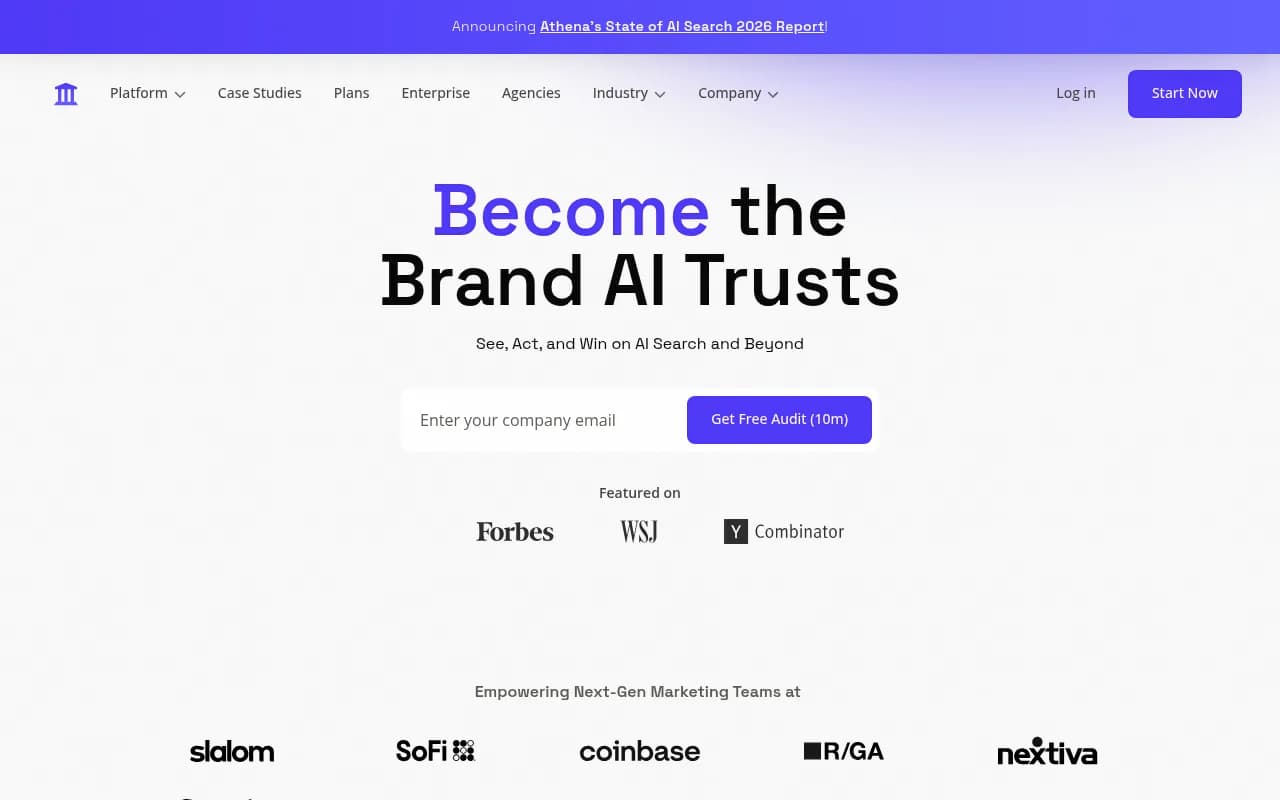
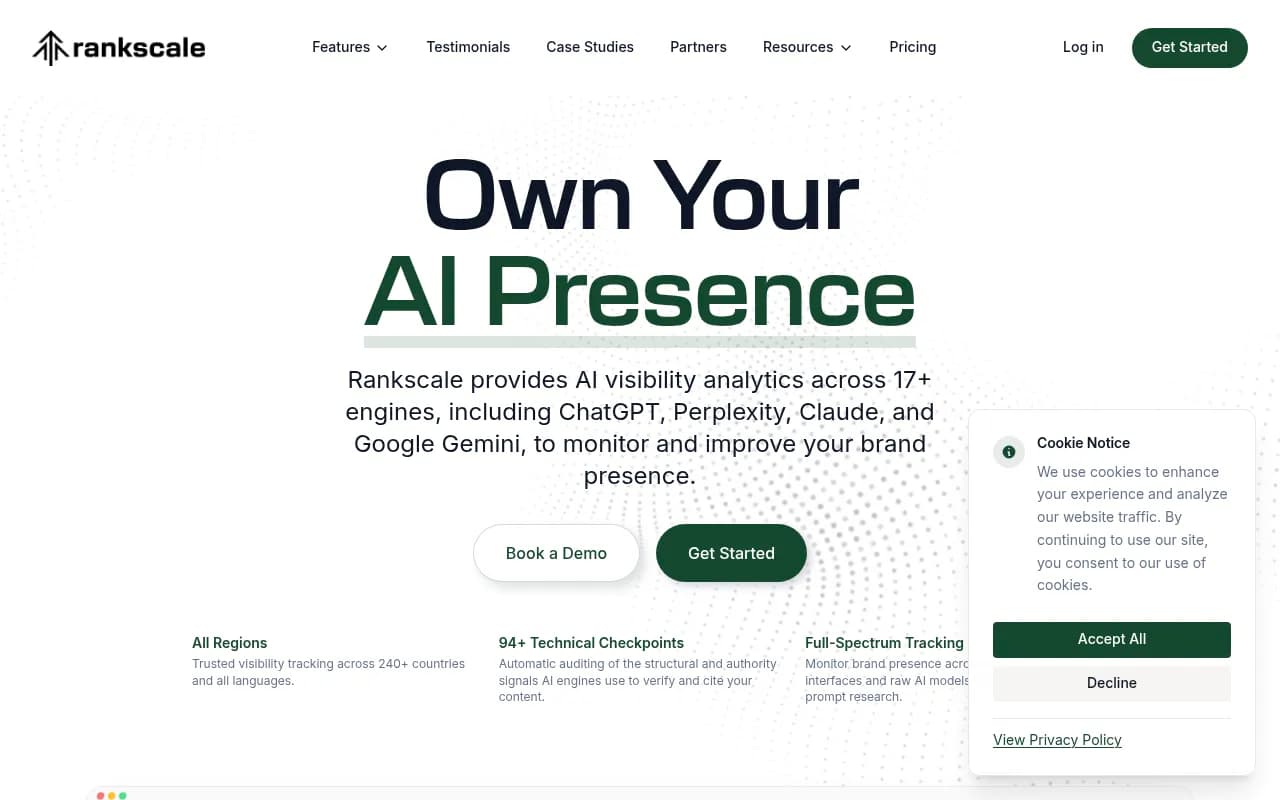
The faster version: use a platform built for this. Promptwatch tracks AI search visibility across Google AI Mode, ChatGPT, Perplexity, and other models, and its Answer Gap Analysis shows you exactly which prompts competitors are being cited for that you're not. That gap list becomes your content roadmap.
For teams that want to monitor AI Mode specifically alongside broader SEO metrics, a few other tools are worth knowing:
The key thing to look for in any monitoring tool: does it show you page-level citation data, or just aggregate brand mentions? Page-level data tells you which specific content is earning citations, which is what you need to replicate and scale.
The entity authority checklist for B2B brands
Here's a practical checklist for strengthening your brand entity in Google's knowledge graph:
- Your Google Business Profile is claimed, complete, and categorized correctly
- Your LinkedIn company page uses the same brand name, description, and category as your website
- You have consistent NAP (name, address, phone) data across all directories
- Your site has Organization schema with
sameAslinks pointing to your social profiles, Crunchbase, LinkedIn, and any relevant industry directories - You're listed on G2, Capterra, or the primary review platform for your category
- You have at least some third-party editorial coverage (not press releases -- actual articles that mention you in context)
- Your product or service category is clearly stated in your homepage title tag and H1
- You have FAQ schema on pages that answer common buyer questions
None of these individually will get you cited. Together, they build the entity signal that makes AI Mode confident enough to name you.
What to do about competitors who are already getting cited
If a competitor is showing up in AI Mode answers and you're not, the question isn't "how do I outrank them" -- it's "what are they doing that I'm not?"
Usually it's one of three things:
- They have a dedicated page that directly answers the query you're missing
- They have stronger third-party coverage (more reviews, more editorial mentions, more Reddit/forum presence)
- Their content structure is cleaner and more extractable
The fix is usually content, not technical SEO. Write the page they have. Get the reviews they have. Publish the original data they don't have.
One angle that's consistently underused in B2B: Reddit and YouTube. AI models draw heavily from Reddit discussions and YouTube transcripts when forming recommendations. If buyers in your category are asking questions on r/[yourcategory] and no one from your brand is contributing useful answers, you're missing a citation source. Same with YouTube -- a well-structured video with a clear transcript that answers a specific buyer question can earn AI Mode citations.
Putting it together: a 90-day plan
If you're starting from scratch, here's a reasonable sequence:
Weeks 1-2: Audit your current AI Mode visibility. Run 20-30 high-intent buyer queries in Google AI Mode and note which brands appear. Map the gaps between where competitors appear and where you don't.
Weeks 3-6: Build or improve bottom-funnel pages. Prioritize comparison pages, alternative pages, and use-case pages for your top 5-10 buyer scenarios. Structure each with an answer-first format and include specific data or customer evidence.
Weeks 7-10: Strengthen entity signals. Update your G2/Capterra listings, add Organization schema, ensure consistent brand information across LinkedIn and other platforms. Encourage recent customer reviews that use natural, descriptive language.
Weeks 11-12: Set up tracking. Segment AI Mode referral traffic in your analytics. Start tracking which pages are earning citations and which queries are driving that traffic.
After 90 days, you'll have a baseline and enough data to know where to invest next. AI Mode visibility compounds -- each cited page builds entity authority, which makes the next page more likely to be cited.
A note on the broader AI search picture
Google AI Mode is one piece of a larger shift. Buyers don't just use Google -- they use ChatGPT, Perplexity, Gemini, and others. The tactics here (answer-first content, entity authority, original data, bottom-funnel pages) work across all of them. The underlying logic is the same: AI models cite sources that give them something specific and credible to work with.
The brands that will win B2B pipeline from AI search over the next two years are the ones building this infrastructure now, while most competitors are still optimizing for a search experience that's rapidly becoming secondary.
That's the actual opportunity here. Not a novelty channel -- a buying channel that's growing fast and still relatively uncrowded for most B2B categories.