Key takeaways
- Platforms and agencies solve different problems. A platform measures and (in some cases) executes. An agency brings people, content capacity and digital PR. Buy the one that covers the work you cannot already do.
- Published agency pricing is wide and mostly self-reported: roughly $2,000 to $10,000 a month for most B2B companies, $15,000 to $50,000+ for enterprise programs with content production. Platforms run from under $100 to several hundred dollars a month at the low end, with enterprise tiers quoted on request.
- Security is where the two models diverge most. An agency needs access to your CMS, analytics and possibly server logs. A platform needs a vendor security review, SSO, roles and audit logs. Neither is automatically safer.
- The most common hybrid works well: own the measurement platform, rent the agency for a specific gap such as digital PR or content production.
- Almost every cost number in public guides comes from a vendor or agency selling something. Treat them as asking prices.
The real question behind the choice
Most articles on this topic frame it as cost: platform cheap, agency expensive. That is true and also not very useful. The better question is what you are actually short of. Data? People? Authority on third-party sites? Engineering time to fix crawler access?
A software subscription that tracks answers is not the same purchase as a team that researches, writes, fixes and reports. One source puts it plainly: the premium on an agency retainer buys analyst time and execution, not necessarily deeper measurement than a platform already provides. I agree with that, with one caveat. Digital PR and third-party placement are hard to replicate with a dashboard, and that is where agencies earn their fee.
If you want the short version of the rest of this guide: baseline in-house first, then buy help for the specific gap.
What each model actually is
An enterprise GEO platform
Software, sometimes paired with managed services, that tracks how brands appear in AI answers across many markets, languages and models, with the access controls large organizations need. The better ones go beyond reporting: they show which pages get cited, whether AI crawlers can read your site, and what traffic AI sends.
A GEO agency
A team that does the work: audits, technical fixes, content, entity work, digital PR and reporting. Agencies often resell or use a platform underneath, so you may end up paying for software twice if you are not careful.
The hybrid
A pattern that keeps showing up in agency guides is using an agency to build the engine and prove the model, then moving a coordinator in-house to run it. It makes sense. It is also what an agency would say, so test it against your own headcount.
Cost: what the published numbers say
A warning before the numbers. The sources below are agencies and vendors. Several disclose that they appear in their own comparisons. Some publish conflicting figures on different pages. Read everything as asking prices, not clearing prices.
| Option | Typical published range | What it usually covers |
|---|---|---|
| Self-serve monitoring platform | About $29 to $500/month | Prompt tracking, reporting, limited engines |
| Entry agency retainer | $1,000 to $2,500/month | Monitoring and recommendations |
| Mid-market agency retainer | $2,000 to $8,000/month, with some sources saying $5K to $15K | Strategy, some content, reporting |
| Enterprise agency program | $15,000 to $50,000+/month | Content production, digital PR, multiple markets |
| Enterprise platform | Quoted on request | Multi-brand, SSO, API, support |
| Onboarding or audit fee | $1,500 to $5,000 one-off, common | Baseline you may be able to produce yourself |
One data point: Omniscient Digital lists full-service engagements from $10,000 a month, which is a broader organic growth engagement rather than standalone GEO. Another source claims enterprise programs clear $50,000 a month once multiple markets and languages enter scope.
The build-versus-buy math
One cost model assumes a $60 loaded hourly rate and 12 hours a month of an existing writer. That is $720, plus a $95 tool, so roughly $815 a month against a $4,000 mid-market retainer. The author admits it is apples to oranges, because the retainer includes digital PR and the in-house column does not. Fair. But it shows how much of an agency fee is capacity you may already own.
On the other side, hiring a dedicated in-house role at $70,000 to $110,000 a year, loaded, lands around $6,000 to $10,000 a month plus tooling, according to one agency-run pricing guide. Below that level of commitment, a retainer can buy more delivered work for the same money.
Hidden costs to ask about
- Dev time. Schema and crawler fixes often need engineers, and agency quotes frequently exclude it.
- Content approvals. Who edits, legal-reviews and publishes?
- Out-of-scope work and how it gets approved.
- A platform subscription the agency passes through or marks up.
- Extra seats, markets, or prompts on the platform side. Enterprise quotes can balloon with volume.
Security and data access
This is the section most guides skip, and the research behind this one found no independent source covering it. So treat what follows as a checklist to verify, not a set of findings.
What an agency typically needs access to
- CMS login or publishing rights
- Google Search Console and analytics
- CDN or server logs if crawler analysis is in scope
- Your brand documents, positioning and sometimes unpublished product information
The risk is not usually malice. It is sprawl: shared logins, departed staff who still have access, and contractors using personal accounts. Insist on named, role-scoped accounts, SSO where you have it, and a clean offboarding clause.
What a platform typically needs
- Prompt sets and brand configuration (low sensitivity)
- Optional log or CDN integration for crawler data (higher sensitivity)
- Search Console or analytics connections
- CMS publishing credentials if it publishes on your behalf
Crawler analytics is the interesting one. Promptwatch Data's AI crawler traffic report (June 8 to September 6, 2026) counts only IP-verified requests, and shows OpenAI's share of verified AI crawler requests falling from 94.8% in the week of June 8 to 79.8% in the week of August 31. To reproduce that kind of analysis for your own site you need log access through Cloudflare, Vercel, Fastly or raw server logs. Whether that access goes to an agency or to a platform vendor is a real scoping decision. Give it to as few parties as possible.
Security questions for either choice
- Does the vendor hold ISO/IEC 27001 or SOC 2, and will they share the report under NDA?
- Where is data stored and processed, and is the company GDPR compliant?
- Are there roles, SSO and an audit log showing every change, including changes made by API or an agent?
- Can API keys be scoped read-only?
- What happens to your data, prompts and content when the contract ends?
- Who owns the content produced, and does it sit in your CMS or the vendor's?
I could not verify SOC 2 or SSO status for most vendors from public sources while researching this. Check each vendor's trust page rather than relying on comparison articles.
Control: who decides what ships
Cost and security are measurable. Control is softer and matters more in practice.
With an agency
You get a roadmap and deliverables, but the work happens off your schedule and in their tools. Questions to settle upfront: who approves content before it publishes, how fast can you pause the work, and do you get raw data or only a monthly deck? One agency guide says the buyers who get the most from an agency are those who can execute briefs internally. That tells you where the control sits: with the team that has capacity.
With a platform
You control the workflow, but only if someone on your team does the work. A dashboard that nobody acts on is the most expensive shelf decoration in marketing. Platforms that include an action queue, content generation and CMS publishing reduce this gap, which is why the category is shifting from trackers to optimization tools.
The measurement trap
AI answers are unstable. One vendor's own test ran 20 buyer prompts three times each across four engines, 240 answers, and found the same prompt produced the same top brand on only 20% of ChatGPT and Perplexity pairs. Whatever you buy, demand repeated runs and trends, not a one-off audit or a single composite score. Promptwatch Data's average sources per response report is a good reminder that engines behave differently: ChatGPT cites about 5 sources per web-search answer while Google AI Overviews and Perplexity cite about 10, so each slot in ChatGPT is more contested.
Side-by-side comparison
| Factor | Agency | Enterprise platform | Hybrid |
|---|---|---|---|
| Monthly cost | $2K to $50K+ | Quoted; low hundreds to thousands | Platform plus scoped retainer |
| Execution capacity | High, if scope includes it | Depends on features and your team | Targeted |
| Digital PR and placements | Strong | Rarely | Agency-led |
| Data access risk | Shared logins, CMS, logs | Vendor security review, integrations | Both |
| Control and speed | Slower, deliverable-based | Fast, self-directed | Mixed |
| Transparency | Varies; many quote per engagement | Dashboards, exports, API | Better |
| Lock-in | Contract terms and tribal knowledge | Data export and seat pricing | Lower |
| Best for | Teams without content capacity | Teams with content ops and need for data | Most mid-to-large brands |
Platforms worth shortlisting
This is not a full ranking, and the vendor-written comparisons I read (one from a platform, one from an agency that ranks itself) are marketing. Here is how I would sort the field.
End-to-end platforms
Promptwatch covers monitoring, citation tracing, IP-verified AI crawler logs, visitor analytics, and then the fix: a Content Agent that writes and publishes to WordPress, Webflow or Framer, plus an Action Board that prioritizes what to do next. It is ISO/IEC 27001 certified and GDPR compliant, has roles, an audit log on Business and above, scoped API keys and SSO on Enterprise. That security profile is the kind of detail to look for in any vendor. Business is $579/mo and is the first plan with the Content Agent, faster-than-daily tracking and the audit log; confirm current pricing at promptwatch.com/pricing. Agencies managing clients should look at the agency plans.

Enterprise monitoring and visibility suites
Profound is the name that shows up most in enterprise shortlists, with strong prompt-volume data and content workflows, and pricing on request.

Bluefish pitches a broader enterprise marketing suite with AI commerce features.

AthenaHQ combines monitoring, content agents and enterprise controls.

Scrunch is strong on citation intelligence and serving AI-ready content, and Sitecore acquired it in June 2026 according to one source, so check what that means for roadmap and data handling.

Budget monitoring
Peec AI and Otterly.AI keep scope focused and prices low, which suits a baseline before you decide on anything bigger.


Established SEO suites with AI add-ons
If your security team has already approved a vendor, an add-on can be the path of least resistance, though you often get fixed prompt sets and shallower AI data.
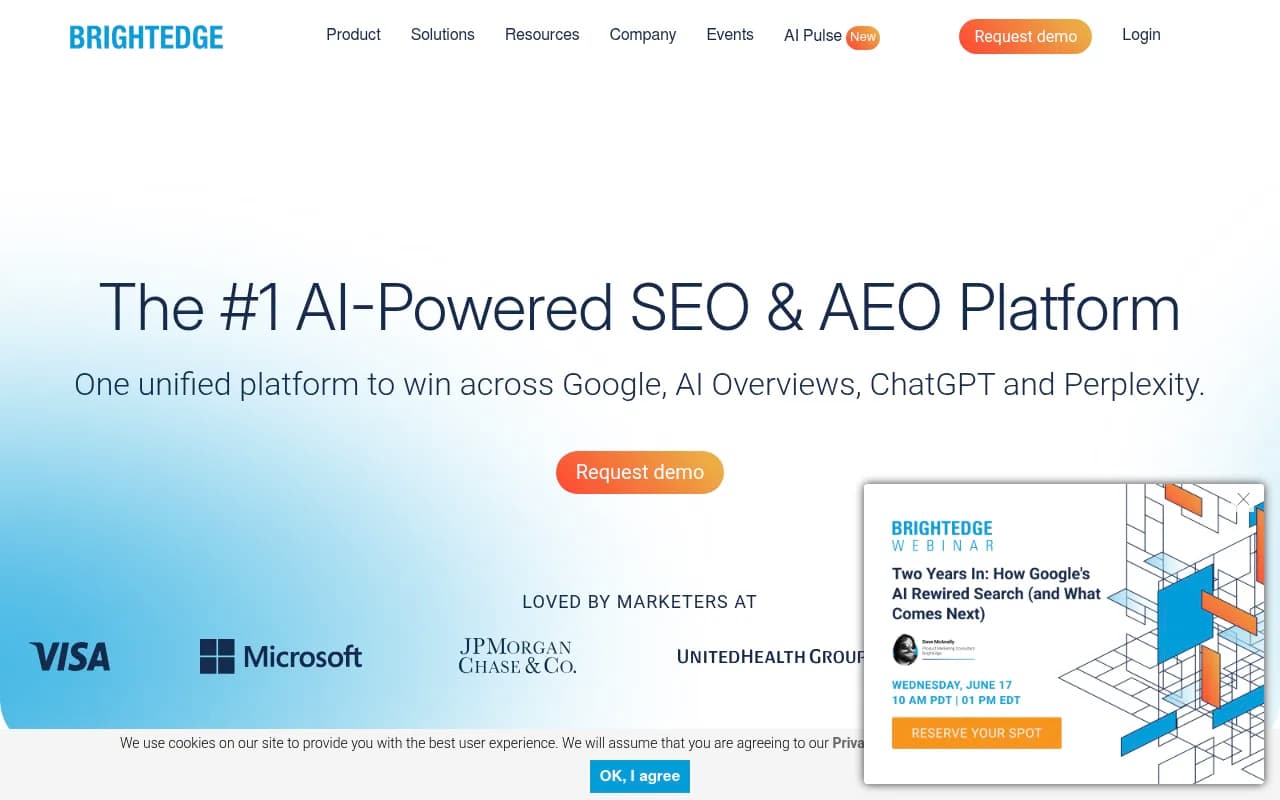
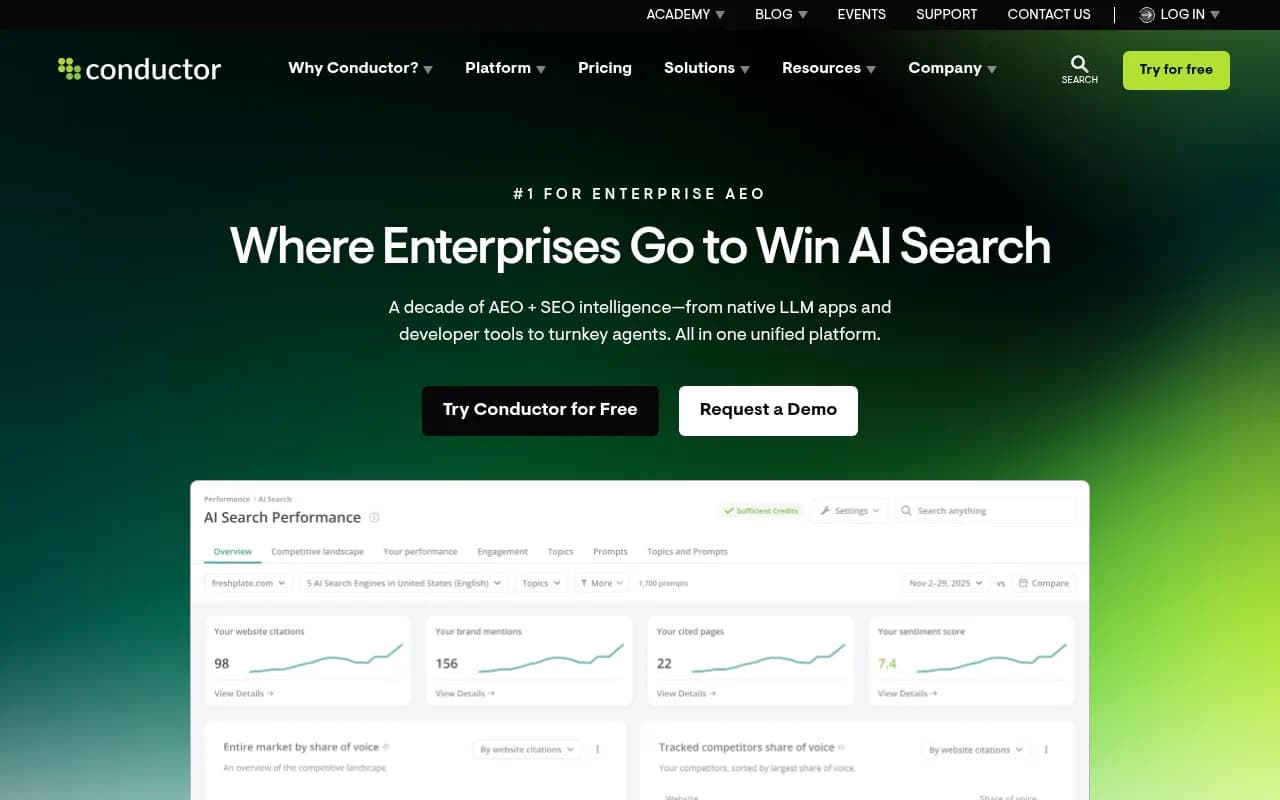
For more options, the GEO software directory at bestgeosoftware.com lists many more tools by category.
How to decide: a practical framework
- Baseline in-house for four to eight weeks. Pick a platform with a trial, run your buyer prompts, and find the prompts you lose and the pages that should be cited. This also skips the $1,500 to $5,000 onboarding fee some agencies charge to produce the same baseline.
- Sort the gaps by type. Access problems (robots.txt, CDN, WAF) are engineering. Content gaps are writing. Third-party mentions are PR. Reputation issues are brand work.
- Decide what you can staff. If you have a writer and a developer with spare hours, you are mostly buying a platform. If not, price an agency for the gap only.
- Run the security review before signing, on both sides. Ask for the checklist answers above in writing.
- Set a review point. After 90 days, require a re-measured trend at prompt level, not a deck. If the agency cannot show what changed and why, move on.
Red flags with agencies
- A generic SEO retainer relabeled as GEO
- Vague scope and undefined deliverables
- No answer to "what is wrong with our visibility and how will you measure the fix?"
- Reporting only a composite visibility score
- No offboarding or data return terms
Red flags with platforms
- "Contact us" pricing on tiers that should be public
- No export or API access to your own data
- Engine coverage buried in plan footnotes
- Data from APIs only, when user-facing answers and citations can differ
- No clear answer on security certification
When each option wins
- Pick a platform if you have content operations, a technical contact, and mostly need to know which prompts you lose. Security review is easier, cost is lower, and you keep control.
- Pick an agency if you lack content capacity, need digital PR placements, or are entering many markets at once and cannot hire fast enough.
- Pick the hybrid if you are an enterprise with real security requirements and real execution gaps. Own the platform and data, scope the agency to deliverables.
If you are weighing outside help and want a team that works with an AI visibility platform rather than a spreadsheet, 1001 SEO Media runs GEO programs on top of Promptwatch, with no long-term contracts and monthly reporting. That is also who publishes this site, so weigh the recommendation accordingly.
Where the sources disagree, and what is missing
The Meikai comparison above is written by a platform vendor that names itself the strongest fit. The Sequence Commerce agency list is written by an agency that ranks itself. Both disclose this, which is better than not. Still, neither provides independent data on SOC 2 status, agency access practices or contract terms. That gap is real. Fill it with your own security questionnaire.
Cost sources also conflict. One says most B2B companies pay $2,000 to $10,000 a month; another says $5,000 to $15,000 for mid-market; another says enterprise programs start at $10,000 and others at $25,000. The spread is not noise so much as scope. Compare what is included, who does it, and what sits outside the fee.
The bottom line
Buy the platform first. It is cheaper, easier to security-review, and gives you the baseline that makes every agency conversation sharper. Then hire an agency for something specific you cannot do: placements, production volume, a market launch. If a vendor of either kind will not tell you where your data goes, who can touch your CMS, and how they will prove the work moved the numbers, that tells you what you need to know.
To start with a baseline, try the free AI visibility report or the 7-day trial on the Promptwatch pricing page, and compare it against any agency proposal that lands on your desk.