Key takeaways
- AI search engines prioritize content that is clear, well-structured, and comes from sources with established topical authority -- not just high domain authority.
- Each platform has its own citation preferences: ChatGPT leans on Wikipedia and established publishers, Perplexity indexes in real-time and rewards fresh content, Google AI Overviews pull from a wider mix including blogs and Reddit.
- Technical accessibility matters as much as content quality -- if AI crawlers can't read your pages, they won't cite them.
- The biggest mistake content teams make is treating GEO (Generative Engine Optimization) as a one-time fix rather than an ongoing cycle of gap analysis, content creation, and tracking.
- Monitoring which prompts trigger citations -- and which don't -- is the only reliable way to know if your optimization efforts are working.
If you've noticed that your content ranks well in traditional search but barely shows up when someone asks ChatGPT or Perplexity the same question, you're not alone. The citation logic behind AI search is genuinely different from Google's ranking algorithm, and most content teams are still operating on assumptions that don't quite apply.
This guide breaks down how AI search engines actually decide what to cite, platform by platform, and what your team can do about it.
How AI search citation actually works
Traditional search engines rank pages. AI search engines synthesize answers -- and then, sometimes, cite the sources they used. That distinction matters more than it sounds.
When someone asks ChatGPT "what's the best project management software for remote teams," the model isn't crawling the web in real time and ranking pages. It's drawing on a combination of its training data, real-time retrieval (where available), and signals about which sources are trustworthy enough to surface in a response. The citation you see at the bottom of a Perplexity answer isn't a ranking -- it's an attribution for a claim the model already decided to make.
This means the question isn't just "how do I rank for this?" It's "how do I become the kind of source AI models trust enough to quote?"
The answer involves three overlapping factors: earned authority, content structure, and technical accessibility.
Platform-by-platform citation behavior
Not all AI search engines work the same way, and optimizing for one doesn't automatically help you on another.
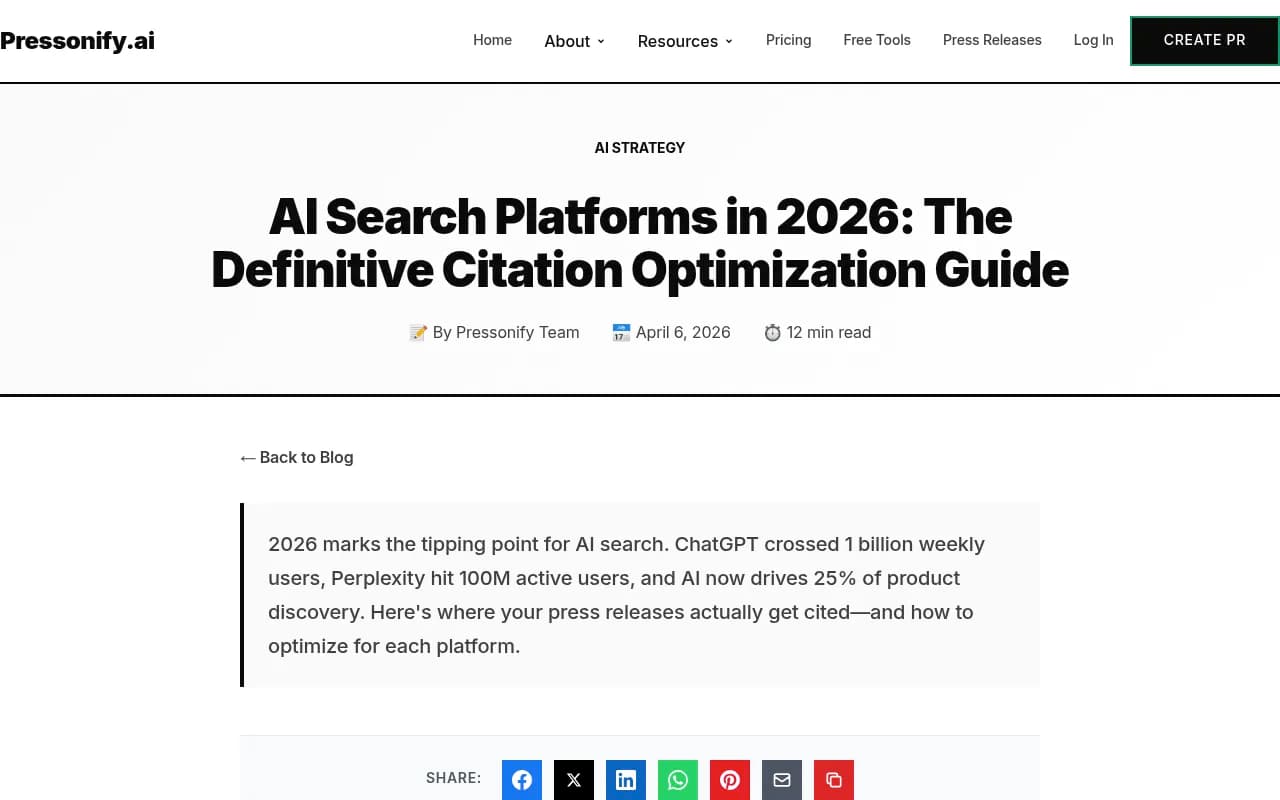
Here's a rough breakdown of how the major platforms behave:
| Platform | Citation style | Real-time indexing | Best content types |
|---|---|---|---|
| ChatGPT Search | Wikipedia-heavy, established publishers | Partial (Bing-powered) | Authoritative long-form, Wikipedia presence |
| Perplexity | Citation-first, real-time web | Yes | Fresh content, press releases, structured articles |
| Google AI Overviews | Broad mix including blogs and Reddit | Yes (Google index) | How-to content, listicles, Q&A format |
| Google AI Mode | Similar to AI Overviews, more conversational | Yes | Conversational answers, comparison content |
| Microsoft Copilot | Bing integration, enterprise-focused | Partial | Business content, structured data |
| Claude | Quality-focused, expanding web search | Limited | High-quality long-form, factual accuracy |
| Grok | Real-time X/Twitter integration | Yes (X data) | Trending topics, current events |
ChatGPT controls roughly 78% of AI referral traffic according to Pressonify's April 2026 analysis, which makes it the highest-priority platform for most brands. Its citation behavior skews heavily toward Wikipedia and established news sources -- which creates a real challenge for smaller brands and niche publishers. Getting cited by ChatGPT often requires building authority through third-party coverage, not just optimizing your own site.
Perplexity is the most accessible for content teams who publish regularly. It indexes in real-time and has a genuine citation-first design -- it's built to show sources, not hide them. Fresh, well-structured content can appear in Perplexity answers within hours of publication.
Google AI Overviews pull from a broader mix, including blogs and Reddit threads, which gives smaller publishers more of a foothold. The tradeoff is that Google AI Overviews have a higher error rate than other platforms, meaning the citation logic is less predictable.
The three factors that drive citation decisions
1. Earned authority
AI models have a strong prior toward sources they've seen cited repeatedly in their training data. A domain that's been referenced in academic papers, major publications, and Wikipedia is more likely to get cited than one that's technically well-optimized but lacks that external validation.
This is why brand search volume matters more than most content teams expect. WP Engine's research found that brand search volume is one of the strongest signals AI search engines use to assess trustworthiness. If people are actively searching for your brand by name, that's a signal the model picks up on.
Practical implication: invest in PR, digital coverage, and getting your brand mentioned in the kinds of sources AI models already trust. A single mention in a well-cited industry publication can do more for your AI visibility than dozens of optimized blog posts.
2. Content structure and clarity
AI models need to extract claims from your content and attribute them accurately. Content that's hard to parse -- dense paragraphs, ambiguous headings, buried answers -- is less likely to get cited even if it's technically accurate.
What works:
- Direct answers early in the page, not buried after three paragraphs of context
- Clear headings that match the questions people actually ask
- Short, citable sentences that make a specific claim
- FAQ sections and Q&A formatting, which AI models can lift almost verbatim
- Schema markup (FAQ, HowTo, Article) that signals structure to crawlers
What doesn't work:
- Fluffy introductions that delay the actual answer
- Vague language like "it depends" without following up with specifics
- Content that hedges every claim to the point of saying nothing
- Walls of text with no structural hierarchy
The goal is to write content that's easy to quote. If you can read a paragraph and immediately identify one clear, citable claim, you're on the right track.
3. Technical accessibility
AI crawlers behave differently from Googlebot, and a lot of sites that are technically healthy for traditional SEO have invisible problems for AI discovery.
Key things to check:
- Your robots.txt isn't blocking AI crawlers (GPTBot, ClaudeBot, PerplexityBot, etc.)
- Pages load quickly and don't require JavaScript execution to render the main content
- Your sitemap is current and submitted to Bing (which feeds ChatGPT Search and Copilot)
- IndexNow is configured -- it's the fastest way to notify Bing of new content
- Core content isn't hidden behind login walls, paywalls, or cookie consent modals that block crawlers
One thing that catches teams off guard: AI crawlers don't always behave like Googlebot. Some platforms send their own crawlers on irregular schedules; others rely on cached versions of your pages from third-party indexes. You can't assume that because Google has indexed a page, ChatGPT has seen it.
Tools like Promptwatch give you actual crawler logs showing when AI agents like GPTBot and ClaudeBot visit your pages, what they read, and whether those visits result in citations. That kind of visibility is hard to get any other way.
Topical authority vs. domain authority
This is worth spending a moment on because it changes how you should think about content strategy.
Traditional SEO rewards domain authority -- a high-DA site can rank for almost anything if it builds enough links. AI citation doesn't work that way. A model that's been trained on millions of documents has a much more granular sense of which sources are authoritative on which topics.
A niche B2B software company with 200 deeply technical articles about their specific domain can get cited more reliably than a general marketing blog with 10,000 posts. The AI model has learned that the niche site is the go-to source for that specific topic, even if its overall domain authority is lower.
This means content teams should be building depth, not breadth. Covering 50 related questions thoroughly beats covering 500 loosely related topics superficially. The goal is to become the source AI models reach for when a specific question comes up -- and that requires consistent, comprehensive coverage of a defined topic area.
The content gap problem
Here's where most content teams get stuck. They know they need to optimize for AI search, they've structured their content well, they've fixed their robots.txt -- and they're still not getting cited for the prompts that matter to their business.
The reason is usually a content gap: the AI model is looking for an answer to a specific question, can't find it on your site, and cites a competitor instead.
Identifying these gaps manually is painful. You'd have to run hundreds of prompts across multiple AI platforms, track which sources get cited, compare those sources to your own content, and figure out what's missing. It's a full-time job.
This is the core problem that GEO platforms are built to solve. Tools like Promptwatch's Answer Gap Analysis show you exactly which prompts competitors are getting cited for that you're not -- and what content you'd need to create to close those gaps. Rather than guessing what to write, you're working from actual citation data.
Platform-specific optimization tactics
ChatGPT and Copilot
Both rely heavily on Bing's index. The fastest way to improve your visibility here is to submit your sitemap to Bing Webmaster Tools and enable IndexNow. Wikipedia presence helps significantly -- if your brand has a Wikipedia article, or is mentioned in relevant Wikipedia articles, that's a strong citation signal.
For content: long-form, authoritative pieces that cite primary sources tend to perform better than short-form content. ChatGPT favors sources that look like the kind of thing it would have seen cited in academic or journalistic contexts.
Perplexity
Perplexity is the most content-team-friendly platform right now. It indexes in real-time, it's designed to cite sources, and it pulls from a wide range of domains. Fresh content with clear structure gets picked up quickly.
Tactics that work well: press releases distributed through indexed PR channels, structured articles with clear headings and direct answers, and content that covers a topic from multiple angles (Perplexity often synthesizes across several sources for a single answer).
Google AI Overviews and AI Mode
Google AI Overviews pull from Google's existing index, so traditional on-page SEO still applies. FAQ schema, HowTo schema, and clear heading structure all help. Reddit threads and community content get cited surprisingly often, which suggests Google's AI is weighting conversational, experience-based content more than you might expect.
AI Mode is more conversational and tends to favor content that directly answers follow-up questions -- think about the second and third questions someone would ask after their initial query, and make sure your content addresses those too.
Claude and Gemini
Both are expanding their web search capabilities in 2026. Claude in particular is known for prioritizing factual accuracy and citing high-quality sources over high-traffic ones. If your content is technically accurate, well-cited, and covers a topic in depth, Claude is more likely to surface it than platforms that weight popularity more heavily.
Measuring what's actually working
This is the part most teams skip, and it's why so many GEO efforts stall after a few months.
You need to know:
- Which of your pages are being cited by which AI platforms
- Which prompts trigger those citations
- Whether new content you publish eventually gets crawled and cited
- How your citation rate compares to competitors for the prompts that matter to your business
Without this data, you're optimizing blind. You might be doing everything right and not know it, or doing the wrong things and not know that either.
A few tools worth knowing about for tracking AI visibility:
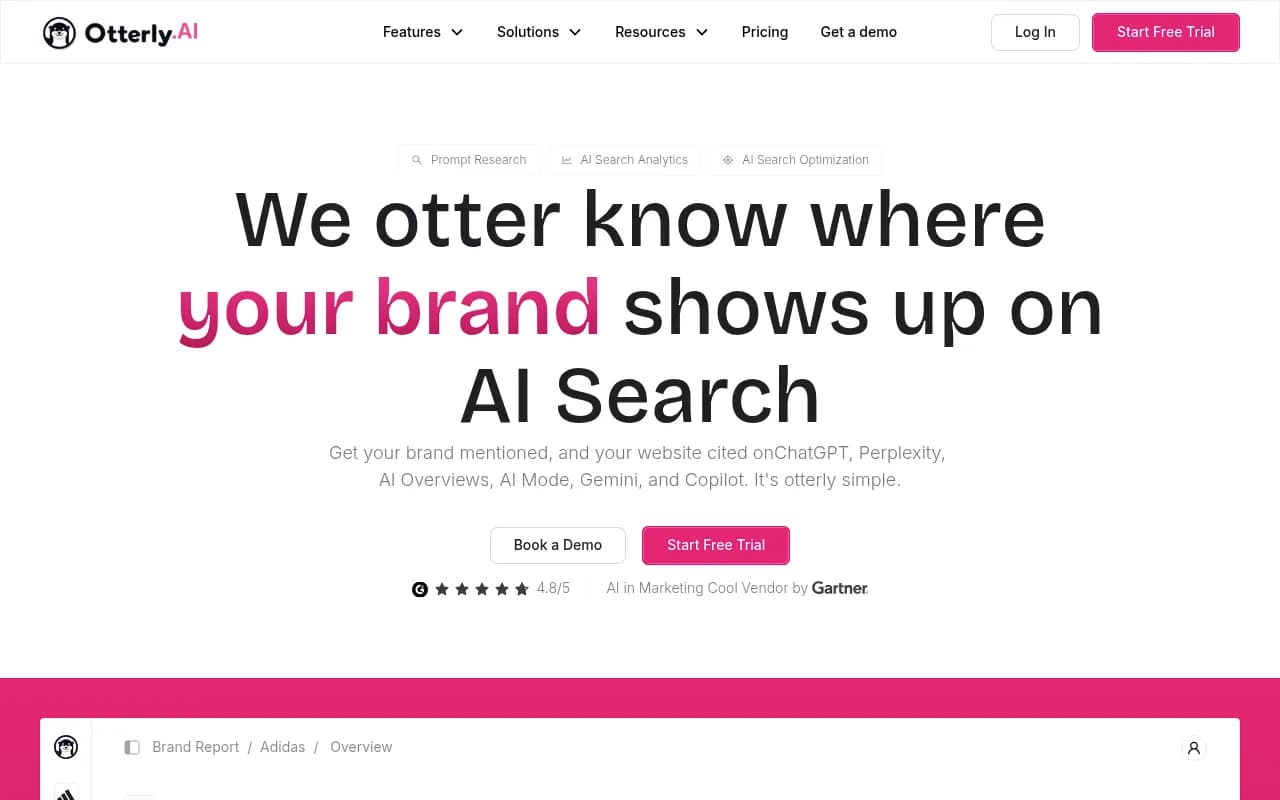
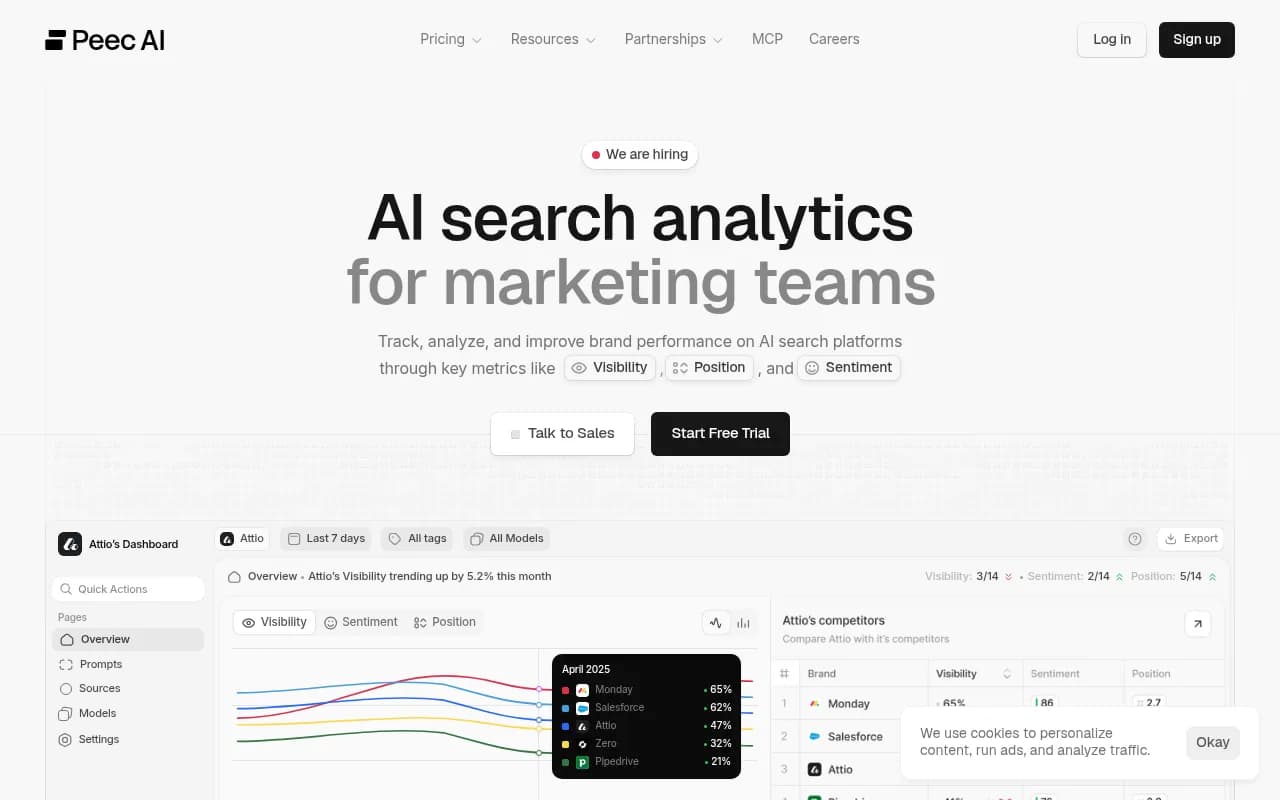
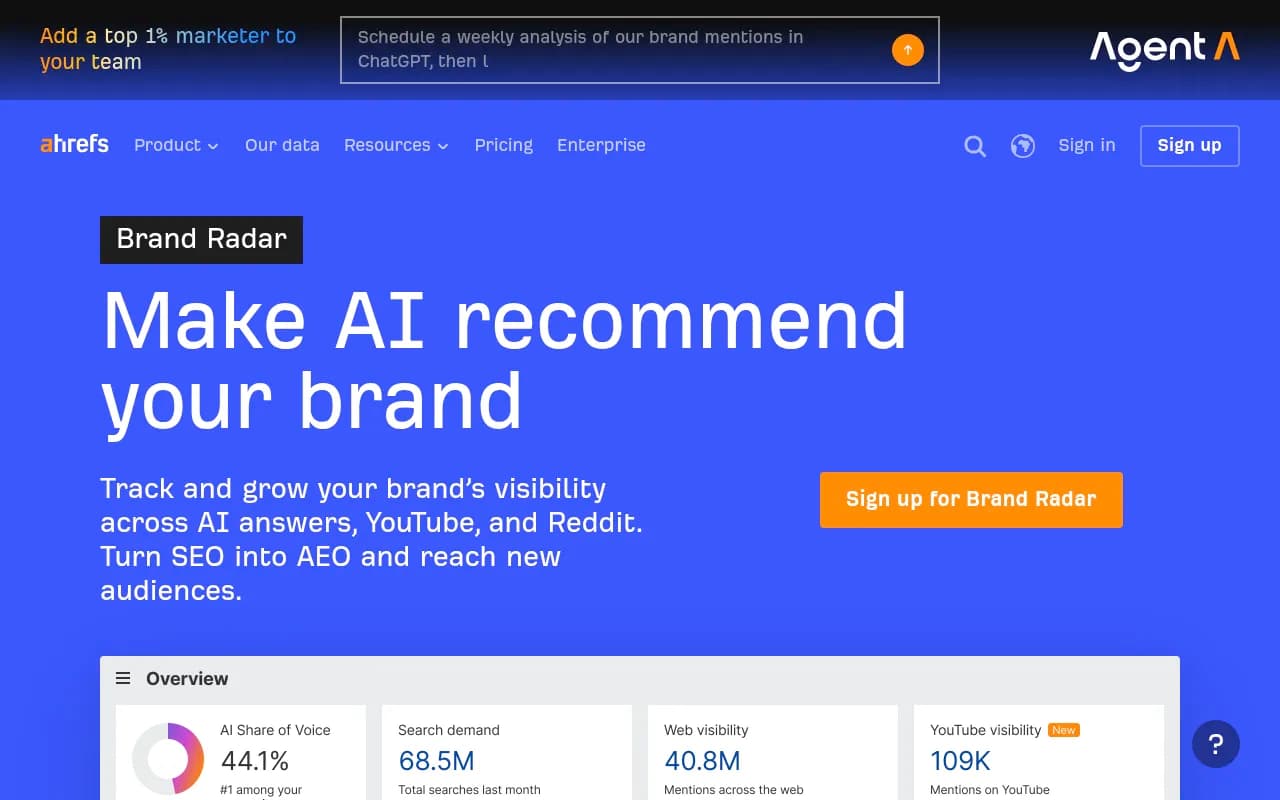
Here's a quick comparison of what these tools cover:
| Tool | Crawler logs | Content generation | Prompt gap analysis | Platforms tracked |
|---|---|---|---|---|
| Promptwatch | Yes | Yes (Content Agents) | Yes | 10+ (ChatGPT, Perplexity, Gemini, Claude, Grok, etc.) |
| Otterly.AI | No | No | Limited | 5-6 |
| Peec AI | No | No | Basic | 4-5 |
| Ahrefs Brand Radar | No | No | No | 4-5 |
| Semrush AI Visibility | No | Limited | Limited | 5-6 |
The main thing to notice: most monitoring tools tell you where you're visible but not why you're invisible or what to do about it. Promptwatch is the outlier here -- it closes the loop from gap identification to content creation to citation tracking.
A practical workflow for content teams
If you're starting from scratch, here's a sequence that makes sense:
-
Audit your technical accessibility. Check robots.txt for AI crawler blocks, submit to Bing, enable IndexNow, verify that your key pages render without JavaScript.
-
Run a prompt audit. Identify the 20-30 prompts most relevant to your business and check which AI platforms cite you vs. competitors. This tells you where the gaps are.
-
Fix structure on existing pages. Before creating new content, make sure your best existing pages have direct answers early, clear headings, and FAQ sections where relevant.
-
Create content to fill gaps. Prioritize topics where competitors are getting cited and you're not. Use actual prompt data to guide what you write, not keyword volume alone.
-
Track citations over time. Set up monitoring so you can see when new content gets crawled and cited. This closes the feedback loop and tells you what's working.
-
Repeat. AI search citation patterns shift as models update and competitors publish new content. This isn't a one-time project.
The teams that are winning in AI search right now aren't doing anything exotic. They're publishing clear, accurate, well-structured content on topics they actually know well, making sure AI crawlers can access it, and tracking the results closely enough to iterate.
The ones who are struggling are usually either ignoring AI search entirely or treating it as a technical SEO problem when it's really a content strategy problem.
What to prioritize first
If you can only do three things this month, do these:
Check your robots.txt and make sure you're not accidentally blocking GPTBot, ClaudeBot, PerplexityBot, or other AI crawlers. This is a silent killer -- you can have excellent content that no AI model ever sees because of a single line in your robots.txt.
Pick your five most important business prompts and run them across ChatGPT, Perplexity, and Google AI Mode. See who's getting cited. If it's not you, look at what those sources are doing differently.
Add FAQ sections to your three highest-traffic pages. This is the fastest structural change you can make, and it gives AI models clean, quotable content to pull from.
Everything else -- schema markup, content gap analysis, crawler log monitoring -- is valuable, but those three steps will tell you where you stand and give you quick wins to build on.
AI search citation isn't a mystery once you understand what these systems are actually optimizing for. They want accurate, accessible, authoritative answers. Give them that, consistently, and you'll show up.