Key takeaways
- A 30-minute AI visibility audit covers four areas: manual prompt testing, competitor citation analysis, content gap identification, and technical readiness checks.
- Traditional SEO tools like Google Search Console don't track LLM citations -- you need a different approach and, ideally, a dedicated tool.
- The most reliable starting point is still manual: test 15-20 prompts your actual customers would type into ChatGPT or Perplexity and record what comes back.
- Competitor citations are your fastest signal -- if rivals are being cited and you're not, the gap is usually content structure, authority signals, or missing topics.
- Running this audit monthly for the first three months, then quarterly, gives you a meaningful baseline to measure improvement against.
Most businesses have invested years into traditional SEO -- tracking rankings, building backlinks, fixing Core Web Vitals. Then AI search arrived and quietly made most of that measurement irrelevant for a growing slice of traffic. Google AI Overviews now appear in roughly 16% of searches globally. ChatGPT processes billions of queries every month. And the vast majority of brands have no idea whether they appear in any of it.
The problem isn't that auditing AI visibility is hard. It's that nobody has told you what to actually do. This guide walks you through a practical 30-minute framework you can run today, with no budget required to get started.
Why this audit is different from a traditional SEO audit
Traditional SEO audits ask: "Where do my pages rank?" AI visibility audits ask something different: "When someone asks an AI a question my business should answer, does the AI cite me?"
That's a meaningful shift. AI engines don't rank pages in a list -- they synthesize information from multiple sources and surface the most relevant, authoritative content in a conversational response. You're not competing for position one. You're competing to be referenced and quoted.
The measurement challenge is real. Google Search Console shows you organic clicks, not AI Overview appearances. Your analytics platform shows you traffic, not LLM citations. You genuinely are flying blind unless you build a separate process for this.
The good news: you can get a solid baseline picture in 30 minutes, even manually.
The 30-minute audit framework
Here's the breakdown before we get into each step:
| Step | Task | Time |
|---|---|---|
| 1 | Manual prompt testing | 10 min |
| 2 | Competitor citation analysis | 8 min |
| 3 | Content gap identification | 7 min |
| 4 | Technical readiness check | 5 min |
Step 1: Manual prompt testing (10 minutes)
Open ChatGPT, Perplexity, and Google (for AI Overviews) in separate tabs. You're going to run 15-20 prompts and record what comes back.
The prompts need to reflect how your actual customers search -- not how you'd describe your own products internally. Think about:
- Problem-first questions: "What's the best way to [solve X problem]?"
- Category comparisons: "What are the best [type of product/service] for [use case]?"
- Branded queries: "Tell me about [your brand name]" and "Is [your brand] good for [use case]?"
- Competitor-adjacent queries: "What do people think of [competitor]?" (you want to see if you appear as an alternative)
For each prompt, note: Does your brand appear? Is it cited as a source? Is the mention positive, neutral, or negative? Which competitors appear instead of you?
Don't try to test 50 prompts in 10 minutes. Fifteen focused, high-intent prompts will tell you more than 50 generic ones. Quality over coverage here.
One practical tip from practitioners on Reddit's r/b2bmarketing: run these tests in a private/incognito window to avoid personalization effects skewing the results.
Step 2: Competitor citation analysis (8 minutes)
Take the prompts where you didn't appear and look at who did. This is actually the most useful part of the audit because it shows you the gap in concrete terms.
For each competitor that appears, ask:
- What page or piece of content is being cited? (Check the source links in Perplexity and Google AI Overviews -- they're usually visible.)
- What type of content is it? A blog post, a comparison page, a FAQ, a product page?
- What's the structure? Is it a listicle? A how-to guide? A definition page?
You're looking for patterns. If three competitors are all being cited for their "ultimate guide to X" style content and you don't have that, that's your answer. If they're being cited from third-party review sites rather than their own domains, that tells you something different about where to focus.
Eight minutes isn't long, but it's enough to identify two or three clear patterns across your most important prompts.
Step 3: Content gap identification (7 minutes)
Now cross-reference what you found in steps 1 and 2 against your own content. You're looking for:
- Topics where AI is citing competitors but you have no content at all
- Topics where you have content but it's structured poorly for AI synthesis (walls of text, no clear answers, no FAQ sections)
- Branded queries where the AI's description of your brand is inaccurate or incomplete
Write these down as a simple list. Don't try to prioritize yet -- just capture everything you noticed. You'll end up with maybe 5-10 gaps from a 30-minute audit. That's a useful starting list.
One thing worth checking specifically: does your homepage or about page clearly state what your company does, who it serves, and what problems it solves? AI models often pull from these pages when constructing brand descriptions. If your homepage is heavy on marketing language and light on factual clarity, that shows up in how AI describes you.
Step 4: Technical readiness check (5 minutes)
This is a quick pass, not a deep technical audit. You're checking three things:
Schema markup: Does your site use structured data? Check by going to Google's Rich Results Test (search.google.com/test/rich-results) and entering your homepage URL. If you have no schema at all, that's worth flagging.
robots.txt: Are you accidentally blocking AI crawlers? Open yourdomain.com/robots.txt and look for any rules that might block GPTBot (OpenAI's crawler), ClaudeBot, or PerplexityBot. Some sites block these unintentionally through broad "disallow all" rules.
Page clarity: Pick your two or three most important pages. Can you read the first 200 words and immediately understand what the page is about, who it's for, and what problem it solves? If not, AI models will struggle with it too.
That's it for the technical check at this stage. A deeper technical audit is a separate exercise -- this pass just catches the most obvious blockers.
What to do with your findings
After 30 minutes you should have:
- A list of prompts where you appear vs. don't appear
- Notes on which competitors are being cited and for what type of content
- A rough list of content gaps
- Any obvious technical flags
The next step is prioritization. Not every gap matters equally. Focus first on prompts with the highest commercial intent -- the ones where someone asking that question is likely to become a customer. A gap on a high-intent prompt is worth more to fix than a gap on a general awareness query.
For content gaps, the fastest wins are usually:
- Adding FAQ sections to existing pages that already rank in traditional search
- Creating comparison or "best of" style content for categories where you're invisible
- Publishing clear, factual brand description content (an "about" page that reads like a Wikipedia entry, not a sales pitch)
For technical gaps, fixing robots.txt to allow AI crawlers is a one-hour task that can have immediate impact.
Tools that can make this faster and more systematic
The manual audit above works, but it has obvious limits. You can only test so many prompts, you can't track changes over time, and you'll miss a lot of what's happening across different AI models.
If you want to go beyond the manual baseline, here are the tools worth knowing about:
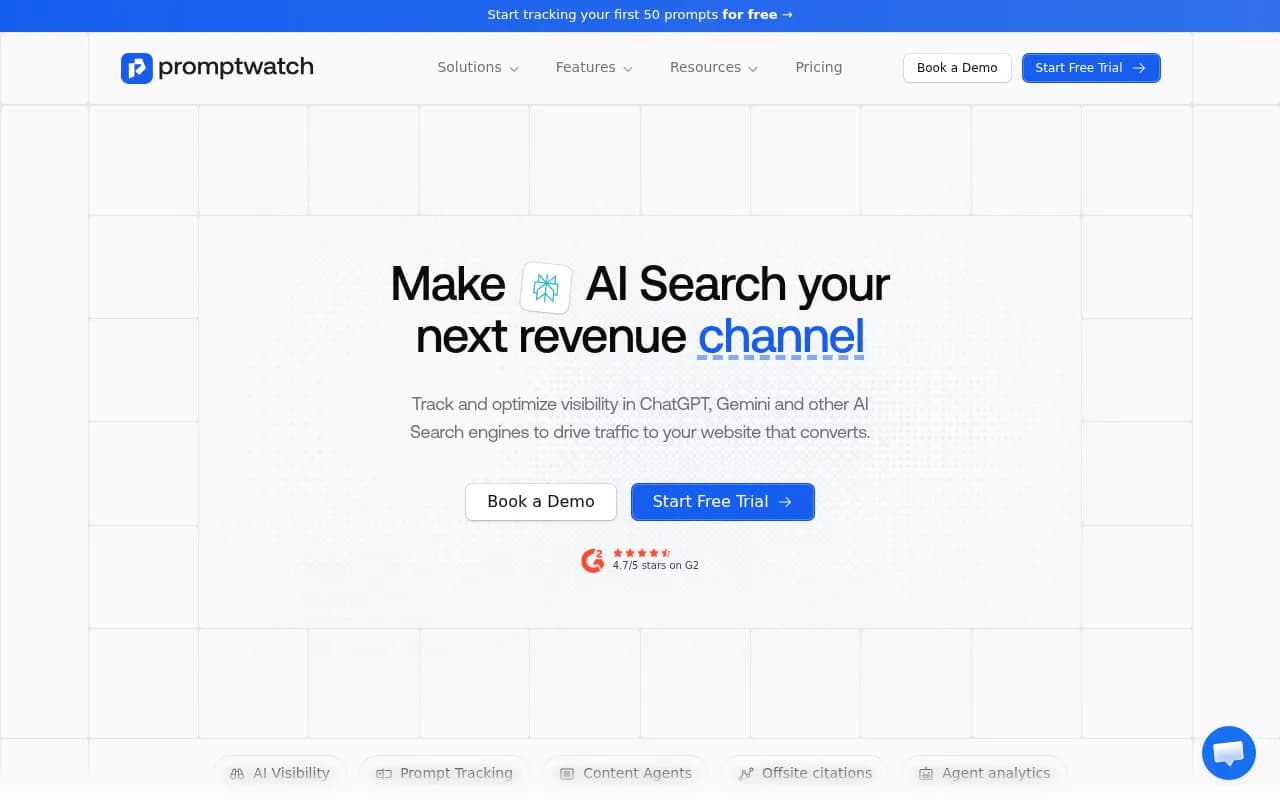
Promptwatch is built specifically for this. It tracks your AI visibility across 10 models (ChatGPT, Perplexity, Claude, Gemini, Google AI Overviews, Grok, DeepSeek, and more), shows you which prompts competitors are visible for that you're not, and has content generation tools to help you close those gaps. The crawler logs feature is particularly useful -- it shows you when AI bots are actually hitting your site and which pages they're reading.
For teams that want something lighter to start with, a few other options are worth considering:
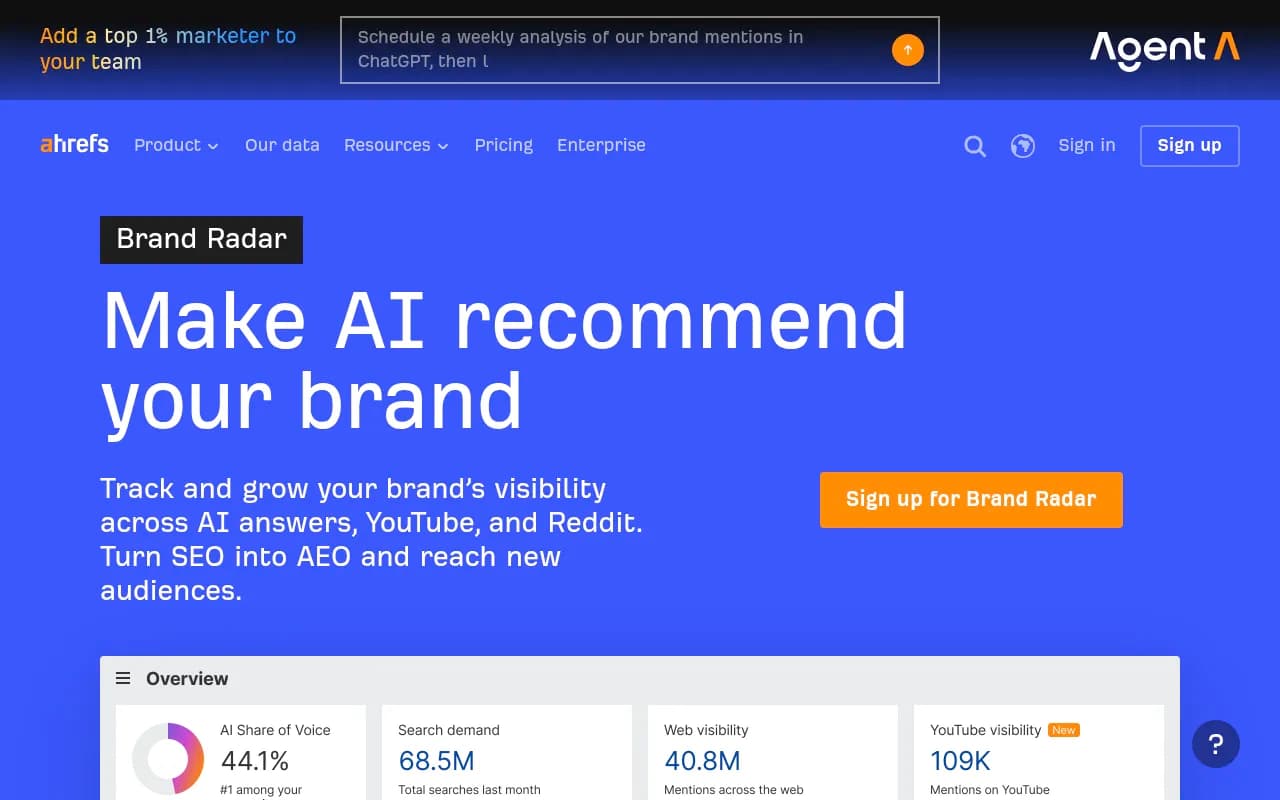
Here's a quick comparison of how these tools approach the audit problem:
| Tool | Manual prompts | Competitor tracking | Content gap analysis | Crawler logs | Price starts at |
|---|---|---|---|---|---|
| Promptwatch | Yes (automated) | Yes | Yes (+ content gen) | Yes | $99/mo |
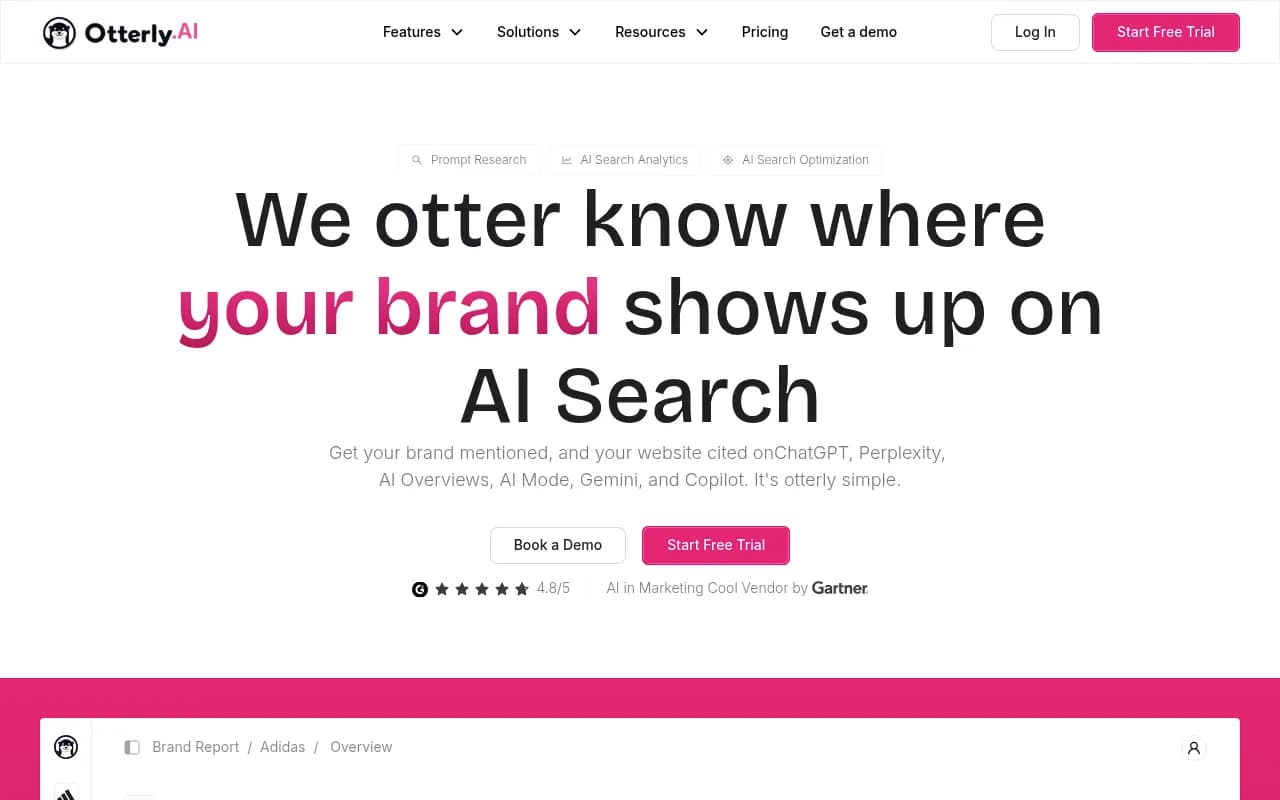
| Otterly.AI | Yes | Basic | No | No | Lower tier |
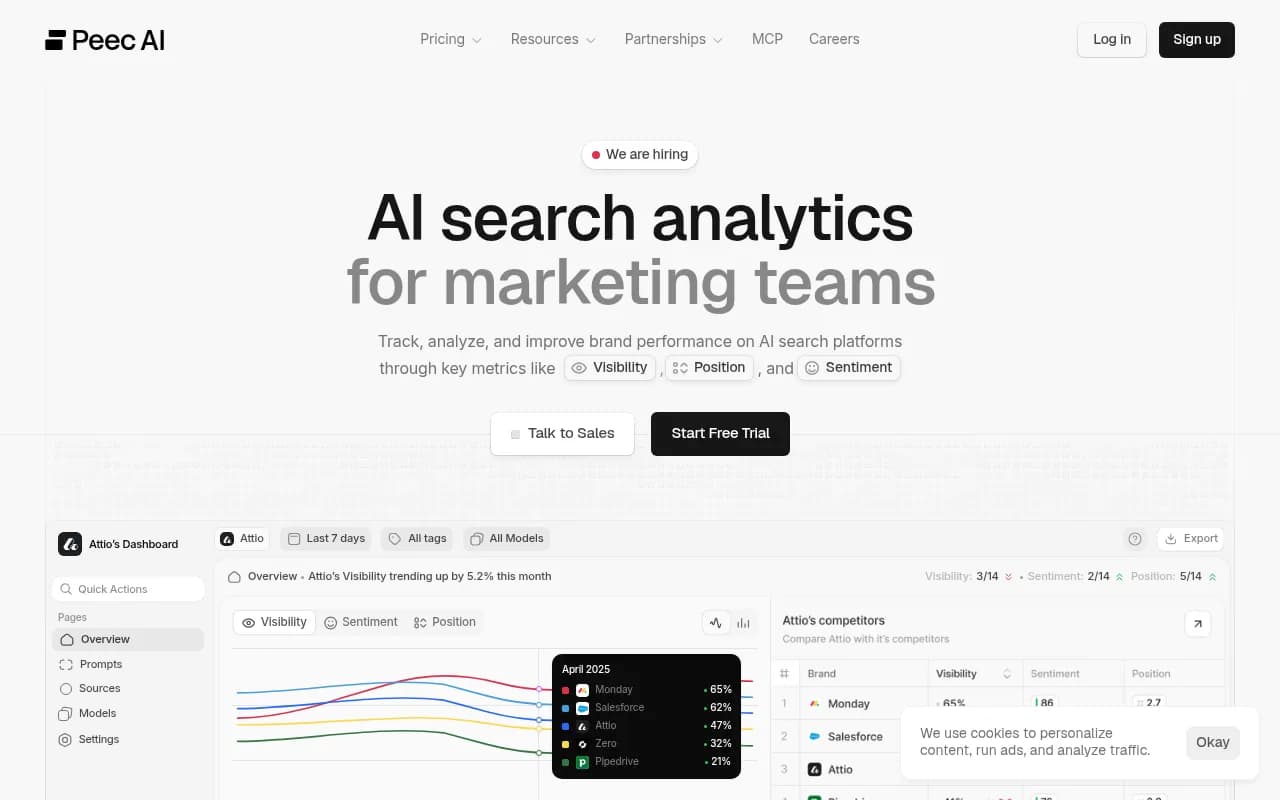
| Peec AI | Yes | Yes | Basic suggestions | No | Mid-tier |
| Ahrefs Brand Radar | Yes | Yes | No | No | Included in Ahrefs |
| Semrush AI Toolkit | Yes | Yes | No | No | Included in Semrush |
The core difference worth knowing: most monitoring tools show you where you're invisible and leave it there. Promptwatch is one of the few that connects the visibility data to content creation -- so you can see the gap, generate content to fill it, and then track whether that content starts getting cited.
How often should you run this audit?
For the first three months, run the full 30-minute manual audit monthly. You're building a baseline and learning which prompts matter most for your business. After that, quarterly is usually enough for the full audit -- though you should do quick brand mention checks (5 minutes, just your branded queries) weekly.
If you're using a tool like Promptwatch or Otterly.AI, the tracking becomes continuous and you don't need to schedule manual audits as frequently. The tool surfaces changes automatically.
One thing that catches people off guard: AI visibility can change quickly. A new competitor publishes a well-structured guide, and within weeks they're appearing in responses where you used to. Or you publish new content and start getting cited within days. The feedback loop is faster than traditional SEO, which makes regular monitoring more valuable, not less.
Common mistakes to avoid
Testing only branded queries. Your brand name is the easiest thing to check, but it's not where most of the opportunity is. The high-value prompts are the category and problem-solution queries where customers are deciding between you and competitors.
Treating all AI models the same. ChatGPT and Perplexity have different citation behaviors. Google AI Overviews pulls heavily from pages that already rank well in traditional search. Claude tends to be more conservative with citations. Test across at least three models before drawing conclusions.
Ignoring offsite citations. AI models frequently cite third-party sources -- review sites, Reddit threads, industry publications, YouTube videos. If a Reddit thread is shaping how AI describes your category and your brand isn't mentioned in it, that's a gap you can't fix by publishing more content on your own site.
Fixing everything at once. After an audit, the temptation is to create a 20-item to-do list. Pick two or three high-priority gaps and close those properly before moving on. Shallow content created to fill gaps quickly often doesn't get cited anyway.
A note on what "good" looks like
There's no universal benchmark for AI visibility -- it varies enormously by industry, brand size, and how competitive your category is. What you're looking for in your first audit is a baseline, not a score to optimize against.
After your first audit, you know: which prompts you appear in, which you don't, and who's appearing instead. That's enough to start making decisions. After three months of tracking, you'll have a real sense of whether you're improving, holding steady, or losing ground.
The brands that are doing well in AI search right now aren't necessarily the biggest or the ones with the most backlinks. They're the ones that publish clear, well-structured content that directly answers the questions their customers are asking. That's a more level playing field than traditional SEO, and it's worth taking seriously.
Start with the 30-minute manual audit. Then decide whether you need tooling to scale it.