Key takeaways
- A traditional media list ranks outlets by reach or domain authority. An AI visibility list ranks them by how often AI engines cite them for the prompts your buyers actually ask.
- Recurrence beats authority. A source that shows up across 3 or more of your prompts is a target. Promptwatch Data shows mid-authority sites (DR 46-75) earned almost half of ChatGPT citations in August 2026.
- Different engines cite different things. ChatGPT leans on product pages, landing pages, listicles, and comparisons. Social platforms barely register there but make up 13% of AI Overviews citations.
- Content type decides how long a placement pays off. News coverage fades fast, while comparisons and listicles stay cited much longer.
- The process: build a prompt set, export citations, de-duplicate and rank, classify by type, score, pitch, then measure.
Why a citation-based publication list beats a traditional media list
Most PR lists are built from a database. You filter by beat, region, and audience size, export a few hundred contacts, and start pitching. That works for classic coverage. For AI visibility it misses the point.
AI engines don't care how big an outlet is. They care whether a page answers the prompt in front of them. A small niche roundup that ranks tools in your category can show up in every ChatGPT answer about that category, while a national outlet you landed last quarter shows up nowhere.
The fix is to flip the order. Start from the answers AI already gives, see which pages feed them, and work backward to the publications, bylines, and editors behind those pages. Goodie's earned media audit walkthrough describes this well: once you know the pages feeding AI answers in your category, you have a media list built from citation data rather than from a database.
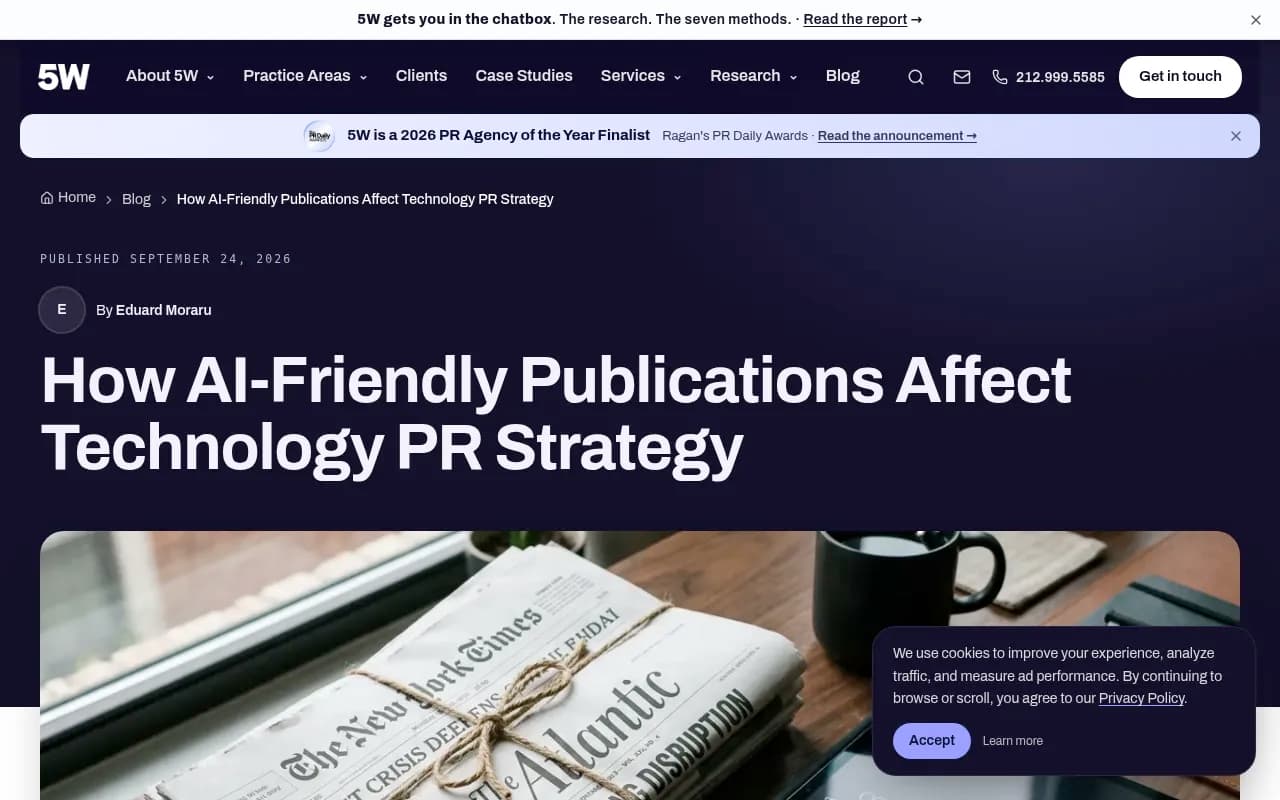
One caveat before we start. Blocking AI crawlers doesn't necessarily stop citations. 5WPR's write-up on AI-friendly publications points to a study showing this, so don't drop a publication from your list just because its robots.txt looks restrictive. Check whether it actually gets cited.
Step 1: Build a buyer prompt set
Everything downstream depends on this. If your prompts are wrong, your list is wrong.
Position Digital's citation outreach guide starts the same way: a buyer prompt set is the list of questions your target customers actually ask AI when researching your category. A few practical rules:
- Start with 25 to 50 prompts. CXL's tracker walkthrough suggests 20 to 30 searches as a starting CSV, mixing informational and commercial queries.
- Cover three prompt types: category discovery ("best X for Y"), comparisons ("X vs Y"), and branded ("is X any good").
- Write them the way buyers talk, not the way keyword tools phrase them. Prompt volume and fan-out data help here, since AI engines often run several hidden searches per response.
- Split by persona and market if you sell in more than one country or language. Mixing markets muddies the citation picture.
If you want to see what AI actually searches behind the scenes, Promptwatch's query fan-outs guide explains how to read them, and the free ChatGPT Query Fan-Out Generator gives you a starting set.
Step 2: Collect citation data across engines
Now run those prompts and record every source the engines cite. You need the cited URL, the domain, the prompt, the engine, and the date.
Two methods work:
- Manual. Run prompts in ChatGPT, Perplexity, Gemini, and Google AI Overviews, and copy the sources into a spreadsheet. Fine for 10 prompts, miserable for 50.
- A tracking platform that exports citations. This is how most teams do it past the first week.
Promptwatch is an end-to-end AI visibility platform that collects answers from the real interfaces of ChatGPT, Google AI Overviews, AI Mode, Gemini, Perplexity, Copilot, and others, then shows which of your pages and which third-party pages get cited, with Excel and CSV exports of citations. Its Citation Trends view classifies each citation into 22 content types and 20 source types, which saves you the classification work in Step 4.

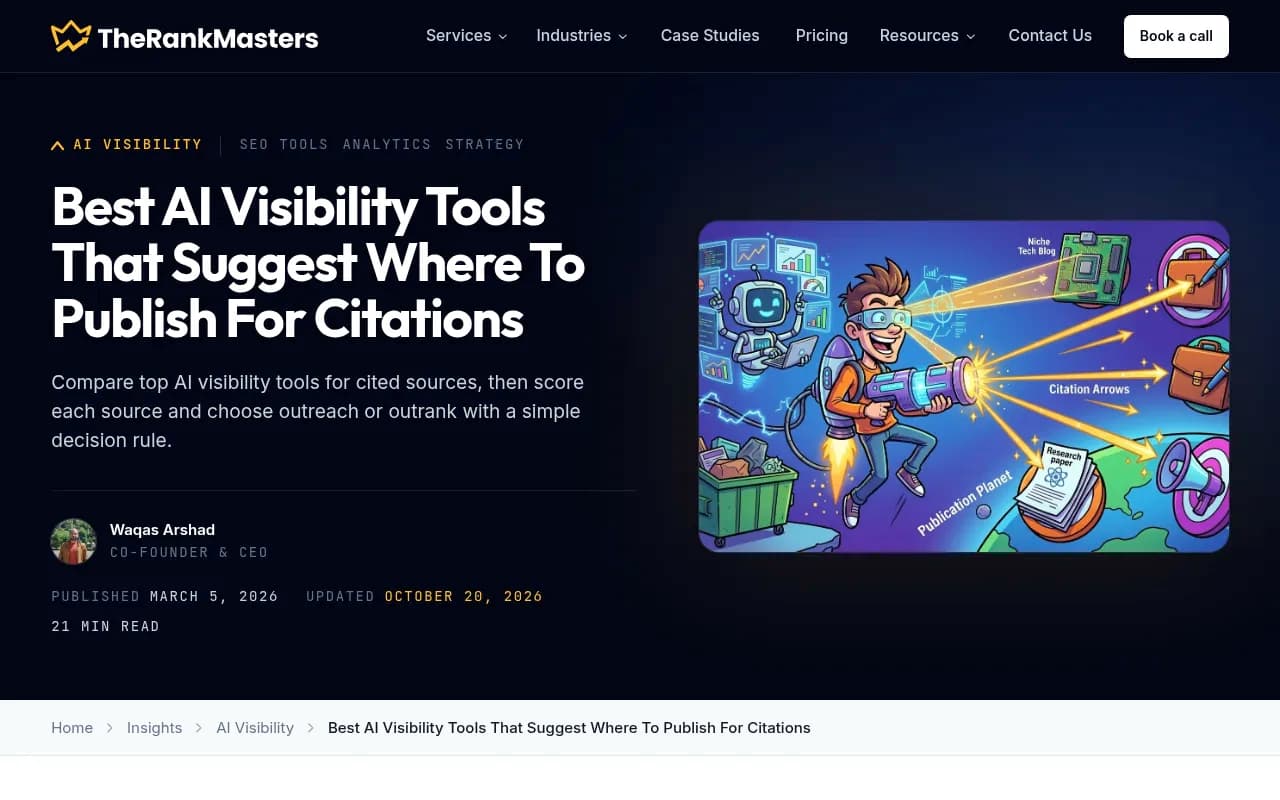
Other tools in the category also report cited sources. The Rank Masters' comparison looks at Peec AI, OtterlyAI, and Scrunch AI, noting that they show which sources AI engines cite but leave the choice of where to publish to you. That's the honest summary of most monitoring tools: they hand you the data, and the list-building is your job.



If you want a wider view of what's out there, the GEO software directory at bestgeosoftware.com lists many of these platforms side by side.
Pick the engines that matter for your audience
Engines don't cite the same way. Promptwatch Data for Oct 11 to Nov 9, 2026 found social platforms made up 13.16% of Google AI Overviews citations, 1.94% of Perplexity citations, and 0.64% of ChatGPT citations (social media citations by AI model, November 2026). Note the October comparison covered 7 days and the November one covers 30, so treat month-to-month movement carefully.
What that means for your list: if ChatGPT is your priority, owned social and Reddit seeding won't carry you. Third-party editorial, listicle, and comparison pages matter far more. If AI Overviews matters, YouTube (6.71% of AI Overviews citations in the November data) and Facebook deserve a place on your list. Reddit's share of ChatGPT citations also collapsed in August 2026, which Promptwatch's Reddit citation report covers in detail.
Step 3: De-duplicate and rank by recurrence
You'll end up with hundreds or thousands of rows. Collapse them.
- Group by domain, then by URL.
- Count how many distinct prompts cite each source. Don't count repeat citations from the same prompt.
- Sort descending.
The Rank Masters suggests treating a source as a target at 3 or more prompts, or 5 or more for a large set. They also make a point I agree with: recurrence beats domain authority. The top of this list is your leaderboard, and it doubles as your pitch or publish list.
Promptwatch Data backs the instinct. In August 2026, sites with domain rank 46-75 earned almost half of ChatGPT citations while DR 91-100 sites fell to about 3% (ChatGPT citation share by domain rank). Don't filter your list by a DR threshold. You'd cut the sites that are doing the most work.
Also worth knowing: almost half of ChatGPT responses cite 10 or more unique domains (unique domains per response, Sep 28 to Oct 4, 2026). There are a lot of slots, which is good news for challengers.
Step 4: Classify each source by type
A flat list of domains isn't actionable. You pitch a listicle author differently from a documentation maintainer. Tag every source with its content type and source type.
Promptwatch Data for Sep 28 to Oct 4, 2026 (content types ChatGPT cites) gives a useful baseline:
| Content type | Share of ChatGPT citations | What it means for PR |
|---|---|---|
| Product pages | 22.4% | Mostly owned or retailer pages. Make sure yours is accurate and crawlable |
| Landing pages | 16.8% | Same as above, plus partner and integration pages |
| Listicles | 13.6% | Prime pitch target: "best of" roundups |
| How-tos | 8.7% | Contribute expert input or guest content |
| Documentation | 7.5% | Get integrated or referenced in others' docs |
| General articles | 6.1% | Standard editorial pitching |
| Comparisons | 5.9% | Get included in vs and alternatives pages |
| News | 5.7% | Short-burst coverage |
| FAQ pages | 3.3% | Owned content opportunity |
| Reviews | 1.7% | Collect reviews on trusted sites |
The pattern changes with intent. For commercial prompts, product pages are 26.0%, landing pages 20.6%, listicles 15.0%, and comparisons 7.9%, which together make up almost 70% of commercial citations. For branded prompts, reviews jump to 5.6%, more than three times their overall share. So for "is X good" prompts, review sites belong high on your list.
Also tag the source type: editorial publication, directory (G2, Capterra, Trustpilot), marketplace, forum, video, government or institution, competitor-owned. Industry matters a lot here. In Promptwatch's software data, GitHub, Microsoft's docs, and G2 lead ChatGPT citations (software, October 2026). In travel, booking and search sites earn more than half (travel). In healthcare, government and public health sites take almost half (healthcare). In automotive, marketplaces like Autotrader and Cars.com outrank every car brand (automotive). Your list should look different depending on which of these worlds you're in.
Step 5: Account for content half-life
This is the part most PR plans skip. A citation isn't permanent, and different formats decay at different speeds.
Promptwatch tracked every page ChatGPT cited on July 6, 2026 for 90 days (content half-life report):
- News lost half its pages within 36 days. Only 41% were still cited at day 60, and almost a quarter were never cited again after day 0.
- Landing pages and docs lasted longest: 78% and 76% still cited after 30 days, 69% and 67% after 60.
- Comparisons held at 72% after 30 days and 63% after 60.
- Product pages, reviews, and how-tos sat around 55% at day 60, with half-lives of 74 to 77 days.
- Listicles were at 60% after 60 days.
The practical read: news and press coverage buy short bursts of visibility, so time them around launches. Comparisons and listicles are the durable placements, so they should carry more weight when you rank targets. When you score a source, a listicle that has been cited for months should beat a news item with the same prompt count.
Step 6: Score and prioritize
Now turn the tagged leaderboard into a ranked list. A simple scoring model works better than a complicated one. For each source, score 1 to 5 on:
- Recurrence: how many of your prompts cite it
- Engine spread: cited by one engine or several
- Durability: content type half-life
- Commercial intent: does it show up for buying prompts
- Attainability: can you realistically get included (open to pitches, accepts contributions, or already lists competitors)
Then decide the action per source. The Rank Masters frames it as a choice between outreach and outranking. I'd widen that into four moves:
| Situation | Move |
|---|---|
| Editorial listicle or comparison that names competitors but not you | Pitch for inclusion with data and a clear differentiator |
| Review or directory site (G2, Capterra, Trustpilot) | Run a review collection push |
| Publication with an author who covers your beat | Offer original research or expert commentary |
| Page that is unpitchable (competitor-owned, closed editorial) | Publish your own page that answers the same prompt better |
That last row matters. Plenty of your top citations will be competitor pages you can never get into. Don't waste pitches there. Write the better answer on your own domain. Profound's guide to optimizing content for AI search makes the case for answer-first structure: engines ask whether a page directly answers the question before they ask whether it's authoritative.
Step 7: Attach people to each target
A domain isn't a pitch target. A byline is. For your top 25 to 50 sources, open each cited URL and record:
- Author name and the other pieces they've written in your category
- The editor or section owner, if visible
- Whether the piece is updated regularly (look for a modified date)
- Whether the page accepts submissions, contributions, or tool suggestions
- Which competitors it names, and in what order
This is the media list. It's small, specific, and each row has a reason attached: "cited by 7 of our 40 prompts across ChatGPT and AI Overviews, listicle, names three competitors, updated in September." That sentence is also the first line of your pitch angle.
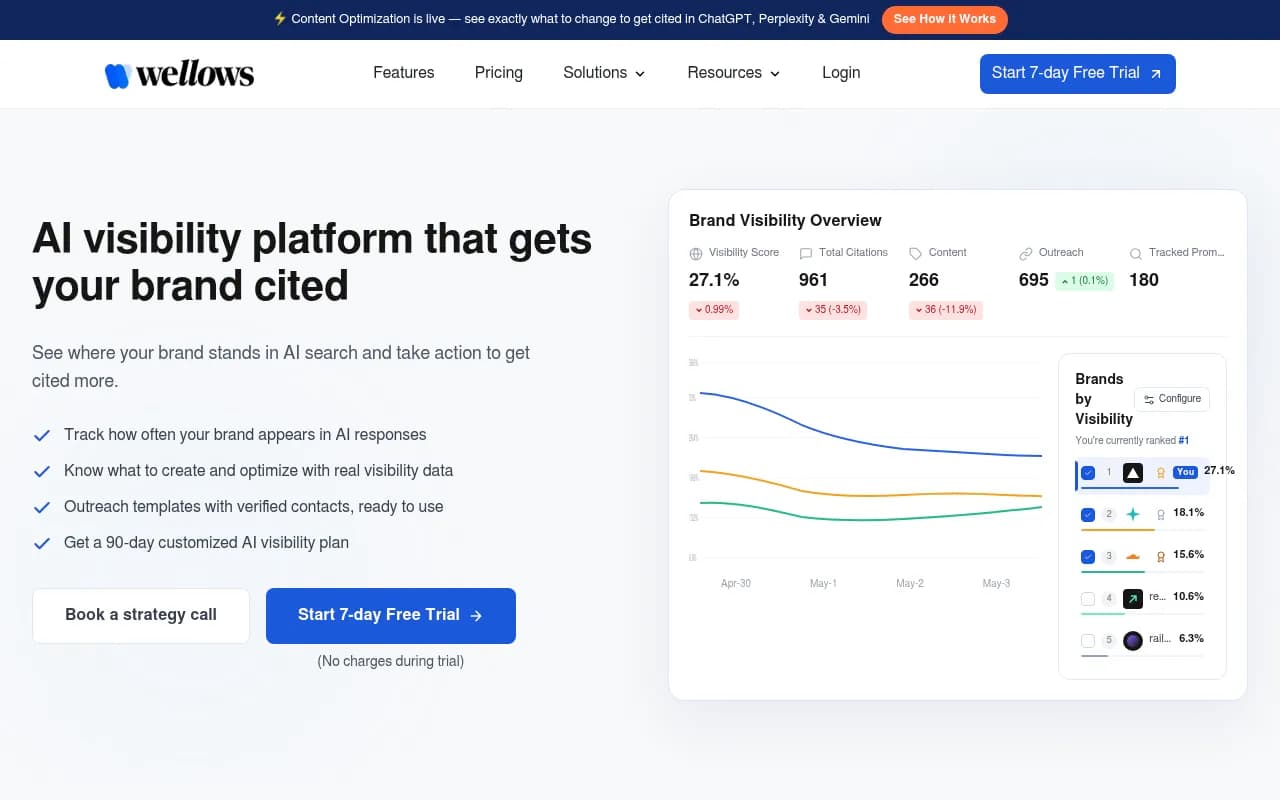
For contact discovery and sequencing, outreach tools like Respona and citation-focused tools like Wellows and CrowdReply are built for this stage.

Be careful with anything that automates community posting or reviews. Pitch on merit, and keep it white-hat. A list built from citation data only works if the placements are real.
Step 8: Pitch with something worth citing
Once you know where to go, you need a reason for an editor to include you. Semrush's digital PR for AI visibility guide suggests turning proprietary data into publisher citations by creating a research benchmark, survey, index, or trend report relevant to publishers' beats. That fits the citation-first approach: original data gives a listicle author a concrete stat to quote, and gives AI a concrete claim to repeat.
A few pitch angles that map to the target types:
- Roundups: send a short factual profile (what you do, who it's for, pricing, a verifiable differentiator) and offer data the author can use
- Comparisons: send a feature and pricing table with sources, and make corrections easy if their page has outdated claims about you
- How-tos and articles: offer a named expert and a quotable, specific insight
- Review sites: ask real customers for reviews, no incentives that break platform rules
If you'd rather hand the outreach to specialists, that's what an agency is for. 1001 SEO Media runs digital PR and GEO programs for brands that want citation-led outreach without building the process in-house, and uses Promptwatch for the visibility data.
Step 9: Measure and rebuild the list
A publication list goes stale. Rerun your prompt set on a schedule (monthly is a sensible default) and check:
- Did the pages you pitched add your brand?
- Did your Visibility Score or Share of Voice move for the prompts tied to those sources?
- Are new sources entering the leaderboard that weren't there last month?
- Did any placements decay?
This is where an optimization platform differs from a plain tracker. Promptwatch's Page Tracker lets you watch a specific third-party URL and see which prompts and responses cite it, and Offsite Mentions catches third-party pages that name your brand without linking. Its visitor analytics show whether AI-referred traffic actually arrives, which is what your leadership will ask about. The Promptwatch Academy has a guide on attributing AI traffic if you need a method.
One practical note on attribution: ChatGPT stopped sending a referrer on October 8, 2026, so tagging links with utm_source=chatgpt.com is worth setting up.
Tools for each stage
| Stage | What you need | Options |
|---|---|---|
| Prompt research | Volumes, fan-outs, personas | Promptwatch, Gauge, Aiso |
| Citation collection and export | Source-level data by engine | Promptwatch, Peec AI, Otterly.AI, Scrunch AI |
| Source classification | Content and source types | Promptwatch Citation Trends, manual tagging |
| Outreach | Contacts and sequencing | Respona, Wellows |
| Measurement | Citation and traffic tracking | Promptwatch, Trakkr, Passionfruit |
For a broader scan of the market, the AI rank tracking directory at ai-rank-tools.com is a good place to compare more options.
A tool that only monitors will give you the leaderboard. If you also want to act on gaps, Promptwatch's Action Board and Content Agent produce the prioritized to-do list and the pages that answer the prompts you can't pitch your way into. Pricing starts at $95 per month for Essential, and the Business plan at $579 per month adds the Content Agent and faster tracking; confirm current plans at promptwatch.com/pricing. You can also start with the free AI visibility report or the 7-day trial on monthly billing.
Common mistakes
- Building the list from domain authority. Recurrence is the signal. Mid-authority sites do a lot of the citing.
- Treating every engine the same. ChatGPT, Perplexity, and AI Overviews cite different sources. Segment the list.
- Ignoring half-life. A news hit and a listicle placement aren't the same asset.
- Pitching unpitchable pages. Competitor-owned content needs a content answer, not outreach.
- Running the audit once. Citation patterns shift. Reddit's ChatGPT share dropped from roughly 4% to 0.5% in a single day in August 2026, and a list built before that would have been wrong overnight.
- Skipping the byline step. Without a named person and a reason, it's a domain list, not a media list.
A quick worked example
Say you sell project management software for agencies. You run 40 prompts across ChatGPT, Perplexity, and AI Overviews. After de-duplication, you find:
- A listicle on a niche agency-tools blog cited by 11 prompts across all three engines
- G2 category pages cited by 9 prompts
- A competitor's comparison page cited by 8 prompts
- A news piece from a trade outlet cited by 4 prompts, all from one engine
- A YouTube review cited by 6 prompts, almost all in AI Overviews
Your ranked plan: pitch the listicle author first (high recurrence, durable, multi-engine), run a G2 review push, publish your own comparison page to compete with the competitor's, reach out to the YouTube creator for a demo, and treat the trade news piece as a launch-window target only. Five rows, five different actions. That's the output you want.
Final checklist
- Prompt set of 25 to 50 buyer questions, split by persona and market
- Citations exported across the engines your buyers use
- Sources ranked by distinct prompt count, with a threshold of 3 or more
- Each source tagged by content type and source type
- Half-life factored into scoring
- Author and editor attached to the top 25 to 50 targets
- A pitch angle tied to each target's format
- A monthly re-run and a dashboard for placements, citations, and AI traffic
Start with the free AI visibility report if you want to see what the engines say about you today, then work through the steps above. The list will be short, specific, and a lot more useful than another database export.