Key takeaways
- DeepSeek and Grok now hold meaningful shares of AI search traffic, yet most brand optimization efforts still focus exclusively on ChatGPT and Google AI Overviews
- Each AI engine cites different sources and responds to different content signals — what works on one won't automatically transfer to the other
- DeepSeek rewards depth, structured reasoning, and factual density; Grok rewards recency, social proof, and real-time relevance
- Technical accessibility, crawlability, and schema markup are baseline requirements for both platforms
- Tracking visibility across both engines requires dedicated tooling — traditional SEO rank tracking won't surface these gaps
Why DeepSeek and Grok deserve your attention right now
ChatGPT's share of AI search traffic dropped from 86.7% to 64.5% between January 2025 and January 2026. That's a significant slide, and the platforms absorbing that share include Grok and DeepSeek alongside Gemini and Perplexity. The market has fragmented, and fragmentation creates opportunity for brands willing to move early.
Most marketing teams are still treating AI search as a single channel. They optimize for ChatGPT, maybe track Google AI Overviews, and call it done. Meanwhile, Grok is pulling millions of daily queries from X's user base, and DeepSeek has built a loyal following among technically sophisticated users who trust its reasoning-heavy responses. These aren't niche audiences.
The practical problem: being cited in ChatGPT does not mean you're cited in Grok or DeepSeek. Each model has different training data, different retrieval logic, and different content preferences. A brand that ranks well in one can be completely invisible in another. If you're not tracking both, you don't know what you're missing.
Understanding how DeepSeek and Grok actually work
Before optimizing for either platform, it's worth understanding what makes them different from ChatGPT or Perplexity.
DeepSeek: the reasoning-first engine
DeepSeek's architecture prioritizes chain-of-thought reasoning. When a user asks a complex question, DeepSeek works through the logic step by step before delivering an answer. This means it tends to favor sources that are themselves logically structured, factually dense, and well-cited.
DeepSeek's user base skews toward researchers, developers, and technically literate professionals. They ask harder questions and expect more rigorous answers. If your content is thin, vague, or structured primarily for skimmability, DeepSeek is less likely to surface it.
DeepSeek also draws heavily on its training data rather than live web retrieval for many query types, which means your content needs to have been indexed and crawled well before a query happens. There's less "real-time" retrieval happening compared to Perplexity, for example.
Grok: the real-time, social-native engine
Grok is built by xAI and is deeply integrated with X (formerly Twitter). Its key differentiator is access to real-time data from X's firehose, which means it can surface trending discussions, recent posts, and live events in ways that other models can't.
For brands, this creates a specific opportunity: Grok is more likely to cite you if your brand has an active, credible presence on X and if discussions about your brand or category are happening in real time. It also means Grok's answers can shift quickly. A brand that appears in Grok's responses today might not tomorrow if the conversation moves.
Grok's user base is large, opinionated, and often skeptical of corporate messaging. It responds well to content that feels direct and honest rather than polished and promotional.
Optimization tactics for DeepSeek
Build content with genuine depth
DeepSeek doesn't reward word count. It rewards reasoning. A 1,500-word article that walks through a problem methodically, acknowledges tradeoffs, and arrives at a defensible conclusion will outperform a 4,000-word listicle stuffed with headers.
Practically, this means:
- Write articles that explain why, not just what
- Include the counterarguments to your own position and address them
- Use numbered reasoning where it makes sense ("First... because... Second... which means...")
- Cite specific data points with sources, not vague claims
If your content reads like it was written to rank rather than to inform, DeepSeek's reasoning layer tends to deprioritize it.
Prioritize technical crawlability
DeepSeek needs to be able to read your content cleanly. This sounds basic, but a surprising number of sites block AI crawlers either intentionally or through misconfigured robots.txt files.
Check that your robots.txt doesn't block DeepSeek's crawler (currently identified as DeepSeekBot). Make sure your most important pages load quickly, render server-side where possible, and don't hide content behind JavaScript-heavy interactions that crawlers struggle with.
Structured data matters here too. FAQ schema, HowTo schema, and Article schema all help DeepSeek parse the structure of your content and understand what kind of answer it contains.
Establish factual authority through citations and references
DeepSeek's training favors content that is itself well-sourced. If your articles link to primary research, government data, academic papers, or well-regarded industry reports, that signals factual credibility. Contrast this with content that makes claims without any supporting evidence.
This doesn't mean you need footnotes on every paragraph. It means your most important claims should be traceable. If you say "conversion rates from AI search are higher than traditional search," link to the data behind that claim.
Get cited on authoritative third-party sites
DeepSeek's training data includes a large corpus of web content, and it tends to trust sources that are themselves trusted. Getting your brand mentioned in Wikipedia entries, academic publications, well-regarded industry blogs, and news outlets increases the likelihood that DeepSeek has encountered your brand in a credible context.
This is a longer-term play, but it compounds. Each credible mention is another data point that reinforces your brand's authority in DeepSeek's model.
Optimization tactics for Grok
Maintain an active, credible X presence
This is the most direct lever you have with Grok. Because Grok has access to X's real-time data, your activity on the platform influences what Grok knows about you right now, not just what was in its training data six months ago.
This doesn't mean posting constantly. It means:
- Posting substantive content that demonstrates expertise in your category
- Engaging with relevant conversations in your industry
- Having your brand mentioned by credible accounts in your space
- Building a follower base that includes real, engaged users rather than bots
Grok can tell the difference between a brand with genuine community engagement and one with a dormant account and 50,000 purchased followers.
Optimize for recency and news relevance
Grok surfaces recent information more aggressively than most other AI engines. If you publish a piece of original research, a data report, or a timely analysis, Grok is more likely to cite it than a competitor's evergreen article from two years ago.
Build a content calendar that includes regular "freshness" content: quarterly data reports, responses to industry news, updated statistics pages. These give Grok something recent to work with when a user asks about your category.
Write for direct, honest communication
Grok's personality is famously blunt, and its users tend to appreciate directness. Content that hedges everything, buries the point in corporate language, or reads like a press release is less likely to get surfaced.
Write like you're explaining something to a smart, skeptical colleague. State your position clearly. Acknowledge what you don't know. Don't oversell.
Monitor brand conversations on X
Because Grok draws on X discussions, what people are saying about your brand on X directly affects how Grok describes you. If the dominant narrative about your brand on X is negative, Grok may reflect that.
This means brand reputation management on X isn't just a social media concern anymore. It's an AI search concern.
What DeepSeek and Grok have in common
Despite their differences, both platforms share some baseline requirements.
Structured content is non-negotiable
Both engines parse content more reliably when it's well-structured. Clear H2 and H3 headings, short paragraphs, FAQ sections, and summary boxes all help AI models extract the right information from your pages. This isn't about keyword stuffing headers. It's about making your content's logical structure visible.
Entity clarity matters
AI models build a mental model of your brand as an entity: what you do, who you serve, what category you're in, and what makes you different. The more consistently your content, your About page, your structured data, and your third-party mentions describe your brand in the same terms, the clearer that entity becomes.
Inconsistency confuses AI models. If your website says you're a "B2B SaaS platform," your LinkedIn says you're an "enterprise software company," and your press coverage calls you a "startup," you're sending mixed signals.
Answer the questions your customers actually ask
Both DeepSeek and Grok are fundamentally question-answering systems. The brands that get cited are the ones whose content directly answers the questions users are asking. This sounds obvious, but most brand content is still written to describe the brand rather than to answer questions.
Map out the 20-30 questions your target customers ask when they're in the consideration phase. Build content that answers each one clearly and completely. That's the foundation of AI search visibility regardless of which engine you're targeting.
How to track your visibility on DeepSeek and Grok
Knowing what to optimize is only half the problem. You also need to know whether it's working.
Traditional SEO tools don't track AI search citations. Google Search Console won't show you when Grok cites your brand. You need dedicated AI visibility tooling.
Promptwatch monitors your brand's visibility across 10 AI models including DeepSeek and Grok, tracking which prompts trigger citations, which pages get cited, and how your visibility changes over time. Its Answer Gap Analysis shows you the specific prompts where competitors are appearing but you're not, which is exactly the kind of signal you need to prioritize your optimization work.
For teams that want broader tracking across multiple platforms, a few other tools are worth knowing about:
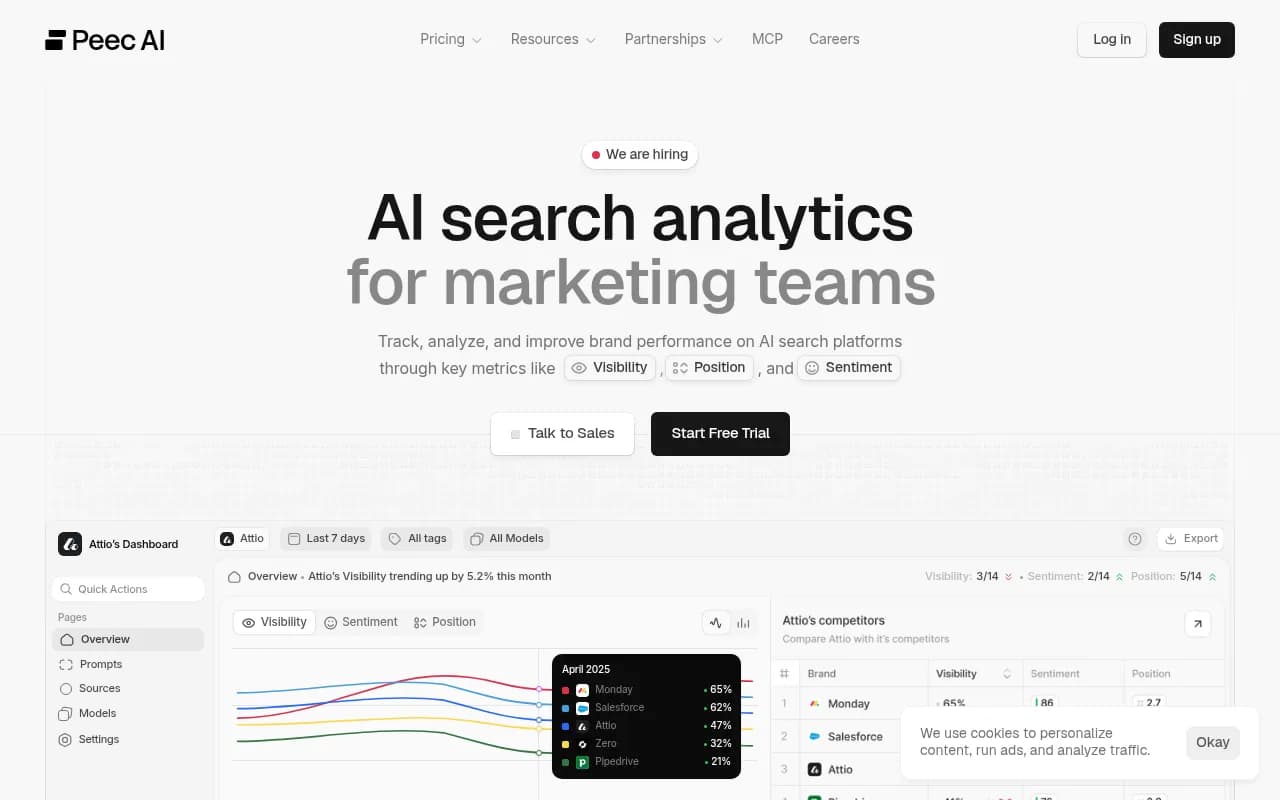
Here's a quick comparison of how these tools handle DeepSeek and Grok specifically:
| Tool | Tracks DeepSeek | Tracks Grok | Content gap analysis | Content generation | Crawler logs |
|---|---|---|---|---|---|
| Promptwatch | Yes | Yes | Yes | Yes | Yes |
| Peec AI | Yes | Yes | Limited | No | No |
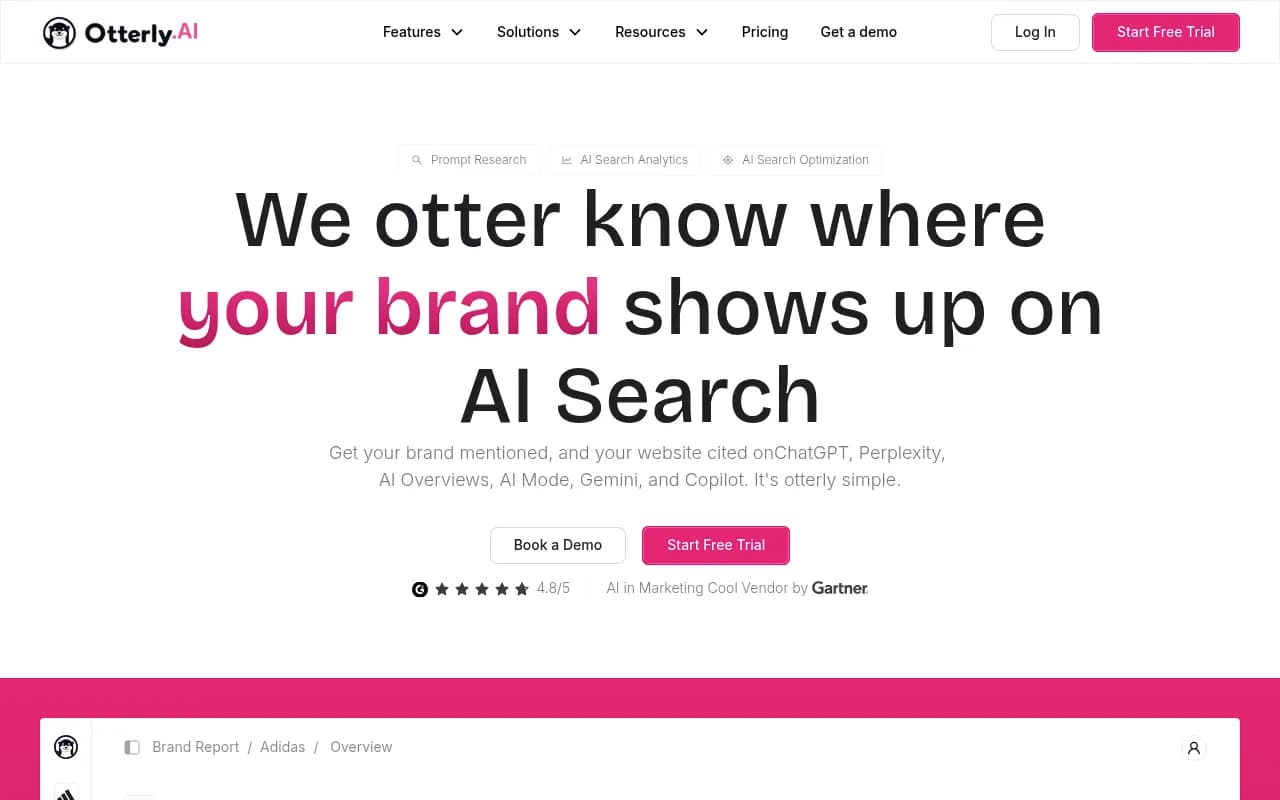
| Otterly.AI | Yes | Yes | No | No | No |
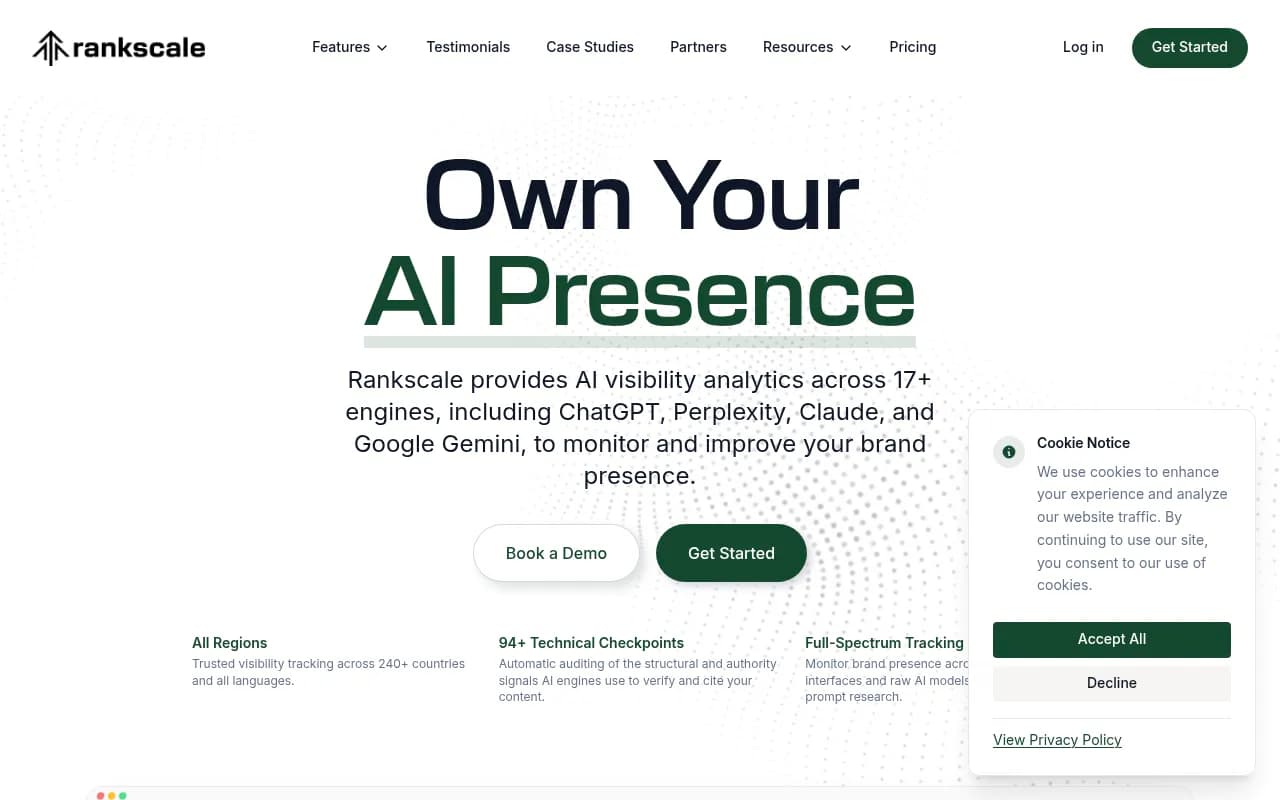
| Rankscale | Yes | Yes | No | No | No |
The gap between monitoring and optimization is real. Most tools will tell you that you're invisible on DeepSeek. Fewer will tell you exactly what content to create to fix it, and fewer still will help you create it.
A practical starting point: the 30-day sprint
If you're starting from zero on DeepSeek and Grok optimization, here's a focused starting sequence:
Week 1: audit and baseline
- Check robots.txt for any blocks on DeepSeekBot or Grok crawlers
- Run your top 10-15 target prompts through both DeepSeek and Grok manually and note where competitors appear but you don't
- Set up tracking in a dedicated AI visibility tool so you have a baseline
Week 2: technical fixes
- Add or update FAQ schema on your key landing pages
- Ensure your most important pages are server-side rendered and load under 3 seconds
- Audit your entity consistency: does your brand description say the same thing everywhere?
Week 3: content creation
- Write 2-3 pieces of depth-first content targeting the gaps you identified in week 1
- For Grok: publish something timely and data-driven that you can also share on X
- For DeepSeek: write a long-form reasoning piece that addresses a hard question in your category
Week 4: off-site signals
- Identify 5-10 industry publications or directories where your brand should be mentioned but isn't
- Reach out for inclusion in relevant listicles, comparison pages, and roundups
- Increase your X posting cadence with substantive content, not promotional posts
After 30 days, check your tracking data. You won't see dramatic changes in four weeks, but you should see crawl activity increase and some early citation movement.
The bigger picture
The AI search market is not going to consolidate back to one or two dominant players. If anything, fragmentation will continue as regional models, specialized engines, and new entrants compete for users. Brands that build optimization practices now, across multiple AI engines, will have a compounding advantage over those that wait.
DeepSeek and Grok are not edge cases. They're real platforms with real users making real purchasing decisions. The brands showing up in their answers are getting that traffic. The ones that aren't are invisible to a growing segment of their potential customers.
The good news is that most of your competitors aren't paying attention to these platforms yet. That's a window, and it won't stay open indefinitely.