Key takeaways
- A restaurant, a boutique and a plumber ask ChatGPT very different questions, so one shared prompt template will mislead you. Build a separate prompt set for each vertical.
- Unbranded prompts measure competitive visibility, branded prompts show which sources define you, and "A vs B" prompts show how you get compared. Track all three.
- Single prompts tell you almost nothing. Promptwatch Data found that 52.5% of ChatGPT responses to organic prompts cite 10 or more domains, so you share every answer with a crowd.
- Restaurants mostly win or lose on listing and review platforms, retail on product pages and catalog data, services on reputation, specificity and neighborhood relevance.
- Pin your tracking to real locations. A "best dentist" answer in one city says nothing about another.
Why local ChatGPT tracking is different
Tracking a SaaS brand in ChatGPT is mostly about category queries. Local tracking adds geography, which changes everything. The same prompt asked from two neighborhoods can produce different businesses, different sources and different tone.
A third-party guide from Big Eye Agency claims local intent drives 59% of ChatGPT web searches. I haven't verified that number independently, so treat it as directional. But the direction matches what local SEOs report. One agency operator on r/localseo described a Mediterranean restaurant with 1,200+ Google reviews at 4.8 stars and page-one rankings that ChatGPT still didn't recommend. Strong organic rankings don't transfer automatically.
That gap is the reason to track ChatGPT separately. You are not checking rankings. You are checking whether a model, assembling an answer from many sources, names you.
The three prompt types every local business needs
Before comparing verticals, get the structure right. Promptwatch Data on how many unique domains ChatGPT cites per response (Sep 28 to Oct 4, 2026) breaks the picture down by prompt type, and the numbers explain why you need all three.
| Prompt type | Example | What it reveals | Citation pattern (Promptwatch Data, Sep 28-Oct 4, 2026) |
|---|---|---|---|
| Unbranded / organic | "Best Italian restaurant in Leeds" | Competitive visibility | 52.5% of responses cite 10+ domains |
| Branded | "Tell me about Rosa's Trattoria in Leeds" | Which sources define your brand | Most common count is 5 domains (14.9%); only 21.3% cite 10+ |
| Competitor comparison | "Compare Rosa's and Bella Notte for a date night" | How you are framed against rivals | 49.1% cite 10+ domains |
You can read the full breakdown in Promptwatch's report on unique domains per ChatGPT response. Across all prompts, 47.6% of cited responses name 10 or more domains and only 6% name three or fewer.
The practical consequence: expect to share every answer. Measure across many unbranded prompts rather than one, and check which domains ChatGPT cites when someone asks about you by name. Those branded citations are usually the sources you most need to keep accurate.
A baseline prompt set that works for any local business
The team at Insites published a useful ten-prompt audit for local businesses. The ones worth keeping as a baseline:
- Awareness: "Tell me about [Business] in [City]." Does ChatGPT know you exist?
- Unbranded discovery: "What's the best [category] in [City]?"
- Head-to-head: "Compare [Business] and [Competitor] for [service] in [City]."
- Accuracy audit: "What are [Business]'s opening hours, address and phone number?"
- Real customer framing: "I need a [service] near [neighborhood] and I'm not sure who to use."
- Consistency: run the discovery or framing prompt two or three times in separate chats.
That last one matters more than it looks. LLM answers vary between runs, so a single appearance (or absence) is noise. Run each prompt repeatedly and report a rate, not a yes or no.
Now the vertical differences.
Restaurants: occasion, cuisine and neighborhood
Restaurant prompts are the most descriptive of the three verticals. People don't ask for "a restaurant." They ask for a vibe, a dietary need, a budget and a moment.
Prompt patterns to track
- Cuisine plus city: "best Thai restaurant in Austin"
- Occasion: "romantic dinner in Chicago for an anniversary"
- Constraint: "gluten-free friendly brunch near downtown Denver"
- Group and logistics: "restaurant with a private room for 12 in Manchester"
- Time-based: "open late near me on a Sunday"
- Dish-level: "best birria tacos in San Diego"
Track the dish-level and constraint prompts especially. They are where small independents beat chains, because a menu page that mentions "gluten-free pasta" can be the only page that answers the question.
Sources to watch
I'd expect review and listing platforms to dominate restaurant answers, but I can't prove it from Promptwatch's reports, which cover healthcare, travel, software and automotive rather than restaurants. The closest analogue is travel, where Promptwatch Data (Sep 28 to Oct 4, 2026) shows booking and search sites hold the largest share of charted citations, led by Skyscanner at 0.78%, Going at 0.52% and Tripadvisor at 0.49%. Read the travel citation report and apply the logic carefully: aggregators that sit between customer and business get cited a lot. Verify the restaurant equivalent by checking the citations in your own tracked responses.
Also note that social is a weak lever in ChatGPT right now. Promptwatch Data shows ChatGPT drew only 0.46% of citations from social platforms in the week of Sep 28 to Oct 4, 2026, while Google AI Overviews drew 12.2%. See the social media citations by AI model report. Reddit's share of ChatGPT citations also fell from about 4% to about 0.5% on August 14, 2026, per Promptwatch's Reddit data. If your restaurant strategy leaned on Reddit threads, check whether it still matters for ChatGPT specifically.
What to fix when you're missing
Menus as PDFs or images are invisible to most readers. Put the menu in HTML. Make sure hours and address match across your site and listings. Write page headings that read like a short query, such as "Vegan brunch in Austin."
Retail: product, availability and "near me" stock
Retail prompts split into two worlds. One is local discovery ("best bike shop in Portland"). The other is product research ("best waterproof hiking boots under $200"), where your store competes with brands, marketplaces and review sites that aren't local at all.
Prompt patterns to track
- Store discovery: "best independent bookstore in Seattle"
- Category plus locale: "where to buy a road bike in Portland"
- Product plus price: "best running shoes under $150"
- Availability: "where can I buy [product] near me today"
- Brand carried: "which stores in Denver sell Patagonia"
- Comparison: "[Your store] vs [Big retailer] for outdoor gear"
The product-intent prompts matter because of what ChatGPT cites. Promptwatch Data (Sep 28 to Oct 4, 2026) found product pages are the most cited content type at 22.4% of ChatGPT citations, ahead of landing pages and listicles. See the content type citation report. For a retailer, that is good news: well-built product pages are the asset ChatGPT reaches for.
If you sell online as well, Promptwatch's ChatGPT shopping usage data shows how often shopping cards appear in responses, which is worth checking before you decide how much to invest in catalog-level tracking.
What to fix when you're missing
Structured product data, clear stock and pickup information, and unique product descriptions rather than manufacturer copy. For multi-location retailers, each store needs its own page with its own inventory signals, not a single store locator.
Service businesses: trust, specificity and proximity
Plumbers, dentists, accountants, salons and lawyers have the smallest prompt vocabulary but the highest stakes per answer. One recommendation can be a job worth hundreds or thousands.
Prompt patterns to track
- Plain category: "best plumber in Tampa"
- Urgency: "emergency plumber near me open now"
- Niche depth: "dentist for anxious patients in Bristol"
- Trust: "is [Business] a good dentist, what do reviews say"
- Pricing: "how much does a boiler replacement cost in Leeds, who does it"
- Real customer framing: "I need an accountant near Brooklyn for a small LLC and I'm not sure who to use"
The niche-depth prompts are the ones to prioritize. Generic category prompts are crowded, but a prompt like "family law solicitor who handles international custody" can be won by a firm with one good, specific page.
Sources to watch
For regulated services, authority matters. Promptwatch Data for healthcare prompts (Sep 9 to Oct 8, 2026) shows ChatGPT citing NIH, the FDA and the NHS most, with government and public health sites earning almost half of citations. See the healthcare citation report. A local clinic is rarely going to displace the NHS for a symptom question, so track the local-intent prompts ("find a physio near me") instead of the informational ones.
What to fix when you're missing
Service pages for each specific service and each service area. Consistent name, address and phone across directories. Review responses that mention the actual service performed. Ask ChatGPT "why wasn't [Business] mentioned?" as a diagnostic, but treat the answer as a hint, not as fact.
Side-by-side comparison
| Factor | Restaurants | Retail | Services |
|---|---|---|---|
| Dominant prompt style | Occasion, cuisine, dietary need | Product plus price, availability | Urgency, specialty, trust |
| Best unbranded prompt to track first | "Best [cuisine] in [neighborhood]" | "Where to buy [product] in [city]" | "Best [service] near [neighborhood]" |
| Key asset ChatGPT needs | HTML menu, accurate hours | Product pages, stock data | Specific service and area pages |
| Likely influential sources | Review and listing platforms (verify for your market) | Product pages, review sites, marketplaces | Review platforms, directories, professional bodies |
| Biggest risk | Outdated hours and menus | Being outranked by national retailers | Generic category answers with no niche |
| Tracking cadence | Weekly, plus after menu changes | Weekly, plus around seasonal launches | Weekly, with monthly niche expansion |
| Location granularity needed | Neighborhood | City plus store | Service area or radius |
How query fan-outs change local page writing
When ChatGPT searches the web to answer you, it breaks your prompt into short queries. Promptwatch Data on ChatGPT query fanouts shows average query length falling from about 117 characters in early December to about 53 by April. The data is uneven (fanouts per response dipped, then reported exactly 1.0 in April after a data gap), so don't over-read the trend. The direction is clear enough: short queries.
My inference for local, not something the report states: those short queries probably look like "best Italian restaurant Leeds" or "emergency plumber Tampa." So put category and city at the front of titles and H2s.
On August 8, 2026, ChatGPT also started using the site: operator at scale, going from about 0.4% to about 17% of fanout queries, according to Promptwatch's report. In practice that means ChatGPT sometimes goes looking inside specific domains, such as a listing platform, for your details. Your presence on those platforms matters more.
Tools for tracking local ChatGPT visibility
You can start by hand. Run your baseline prompts in fresh chats, log the results in a spreadsheet and repeat weekly. It works for one location. It collapses at ten.
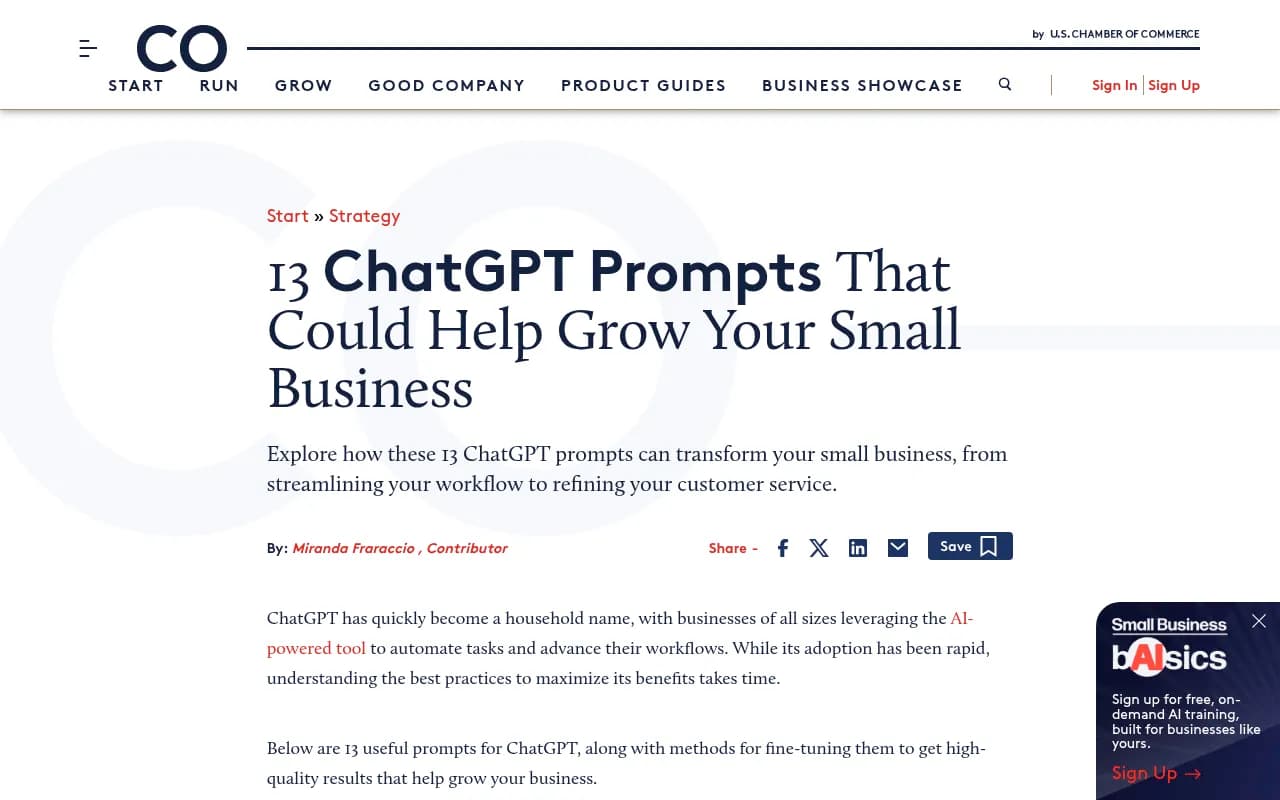
That US Chamber guide is useful for prompts that help you run the business. Don't confuse those with tracking prompts, which test how ChatGPT describes you.
For automated tracking, Promptwatch is the option I'd start with when the goal is both measuring and fixing. It monitors the real ChatGPT interface, supports country, state and city tracking on higher plans, and on Business and above lets you pin a monitor to exact coordinates so ChatGPT answers as if asked from that spot. That matters for "near me" prompts at a specific store or clinic. It also tracks competitors, surfaces which pages get cited, and has a content gap workflow for fixing what's missing.

Local-specific and multi-location options exist too:
Birdeye Search AI focuses on location-level AI visibility, which suits franchises and chains.
BrightLocal combines local rankings, listings and reviews and has added AI visibility tracking, so it fits teams that already live in local SEO.
Yext Scout
Yext Scout is aimed at enterprise brands that want AI search competitive intelligence tied to verified listing data.
Synup handles listing fixes and review replies, which is the repair side of the problem.
| Tool | Strongest fit | Local angle |
|---|---|---|
| Promptwatch | Single or multi-location businesses wanting tracking plus fixing | City, state and exact-coordinate targeting (plan dependent) |
| Birdeye Search AI | Multi-location brands | Location-level tracking |
| BrightLocal | Local SEO agencies and in-house teams | Listings, reviews and AI visibility together |
| Yext Scout | Enterprise brands | Verified brand data behind AI answers |
| Synup | Listing and review management | Fixes listings and replies to reviews |
| Otterly.AI | Budget monitoring | General brand tracking, less local depth |

For a wider view of the category, the GEO software directory at bestgeosoftware.com lists more options. Always confirm current pricing and features on each vendor's site, because they change quickly.
A simple 30-day setup plan
Week 1: build the prompt set
Write 15 to 25 prompts per vertical using the patterns above. Mix unbranded, branded and comparison prompts roughly 60/20/20. Include neighborhood variants.
Week 2: baseline
Run every prompt multiple times. Record mention rate, position in the answer, tone and which domains are cited. Note wrong facts separately. Those are quick wins.
Week 3: fix the sources
Correct your listings, update hours, move menus or service details into crawlable HTML, and publish one specific page per niche prompt you want to win.
Week 4: re-measure
Repeat the baseline. Content takes time to get cited, so don't expect miracles. Promptwatch Data on content half-life found landing pages and docs stayed cited longest while news lost half its pages within 36 days, so evergreen service and product pages are the better bet. See the content half-life report.
Common mistakes
- Judging results from one run of one prompt.
- Tracking only branded prompts. You'll feel great and learn nothing about new customers.
- Ignoring location. A national average hides the market you actually serve.
- Copying restaurant prompts into a retail set. Product intent needs product pages, not menu logic.
- Treating ChatGPT as the whole picture. Google AI Overviews cites far more social content, so your mix of channels can differ by model.
Final thought
Start with the vertical you're in, write prompts the way your customers actually phrase them, and measure rates over repeated runs. The assets that win differ by business type, but the loop is the same: track, find which sources are shaping the answer, fix them, and check again.