Key takeaways
- Shoppers are letting AI shape purchases. In Attentive's 2026 survey of 3,000+ consumers, 39% met products or brands they hadn't considered, and a LinkedIn summary of the report cites 62% of AI-assisted shoppers buying a different product or brand than usual (verify against the Attentive page before quoting).
- ChatGPT leans on product pages and landing pages. Together they earned 39% of citations from Sep 28 to Oct 4, 2026, according to Promptwatch Data.
- The biggest retail mistakes are treating local as a listings problem, running one national page for every store, ignoring ads in AI answers, and measuring mentions instead of store outcomes.
- I found no Promptwatch report on local AI search specifically, so treat the content-type numbers below as general retail signals, not local-only ones.
- Fix the data first (listings, product feeds, schema), then track visibility by location, then publish content that fills gaps.
Where local AI search for retail actually stands
Let me be upfront about what we know and don't. There is good data on how AI shapes shopping decisions in general. There is much thinner public data on local queries specifically: "running shoes near me", "which pharmacy is open now", "best furniture store in Leeds". Anyone claiming precise local-pack-versus-AI-Overview percentages is guessing or selling something.
What we can say with confidence is that the front end of shopping has moved. Attentive's 2026 State of AI in Retail report surveyed more than 3,000 consumers. It found that shoppers who use AI run into brands they hadn't considered (39%), and that a smaller group (11%) bought something the AI hadn't recommended at all. That second number matters: AI doesn't fully decide, it frames the shortlist.
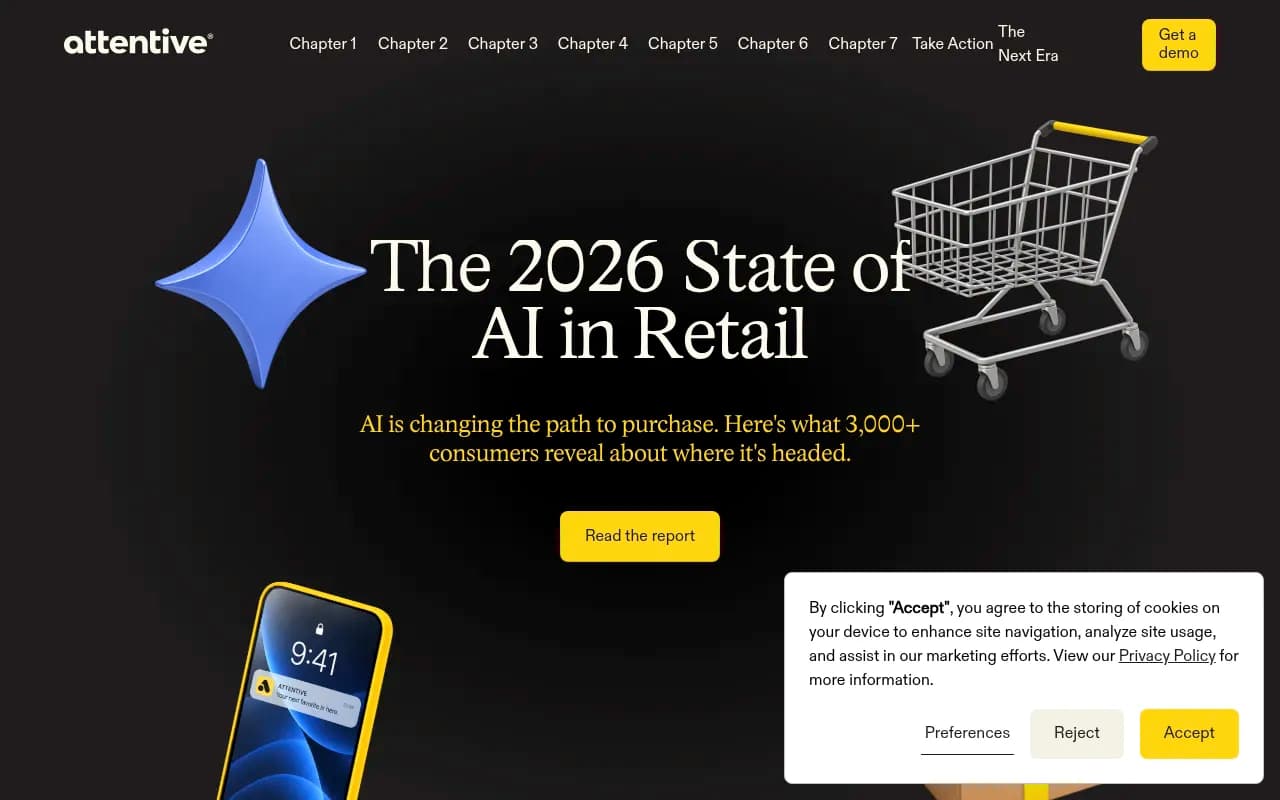
The report also lists why people don't use AI for shopping: awareness or habit (64%), accuracy or bias concerns (48%), and privacy (27%). So the audience is large but far from universal. If you only have budget for one thing, don't abandon your existing local SEO. Build on it.
One caution on the vendor stats floating around. Airia's agentic retail blog claims AI-sourced retail traffic grew 1,200% while traditional search fell 10%. That's a vendor blog with no primary source I could trace, so I wouldn't put it in a board deck.
Mistake 1: treating local AI search as a listings problem
Listings matter. Wrong hours or a dead phone number will get repeated by an AI answer just as confidently as the right ones. But listings are the floor, not the strategy.
When a shopper asks an assistant about a product category in their city, the model usually runs a web search and pulls from pages that describe what you sell. Promptwatch's data on which content types ChatGPT cites (Sep 28 to Oct 4, 2026) shows product pages at 22.4% of citations and landing pages at 16.8%. For commercial prompts, where people are comparing options before buying, product pages reach 26.0% and landing pages 20.6%.
Translated for a multi-location retailer: the page that describes the item, with specs, price and availability, is doing more work than your Google Business Profile description. Most brands I see have thin, templated store pages and rich product pages that say nothing about local stock.
What to do instead
- Keep product pages complete and factual. Specs, prices and positioning get quoted directly.
- Show local availability where you can, even as simple in-stock-at-store blocks.
- Keep listings clean across the directories your category uses, then move on to the content work.
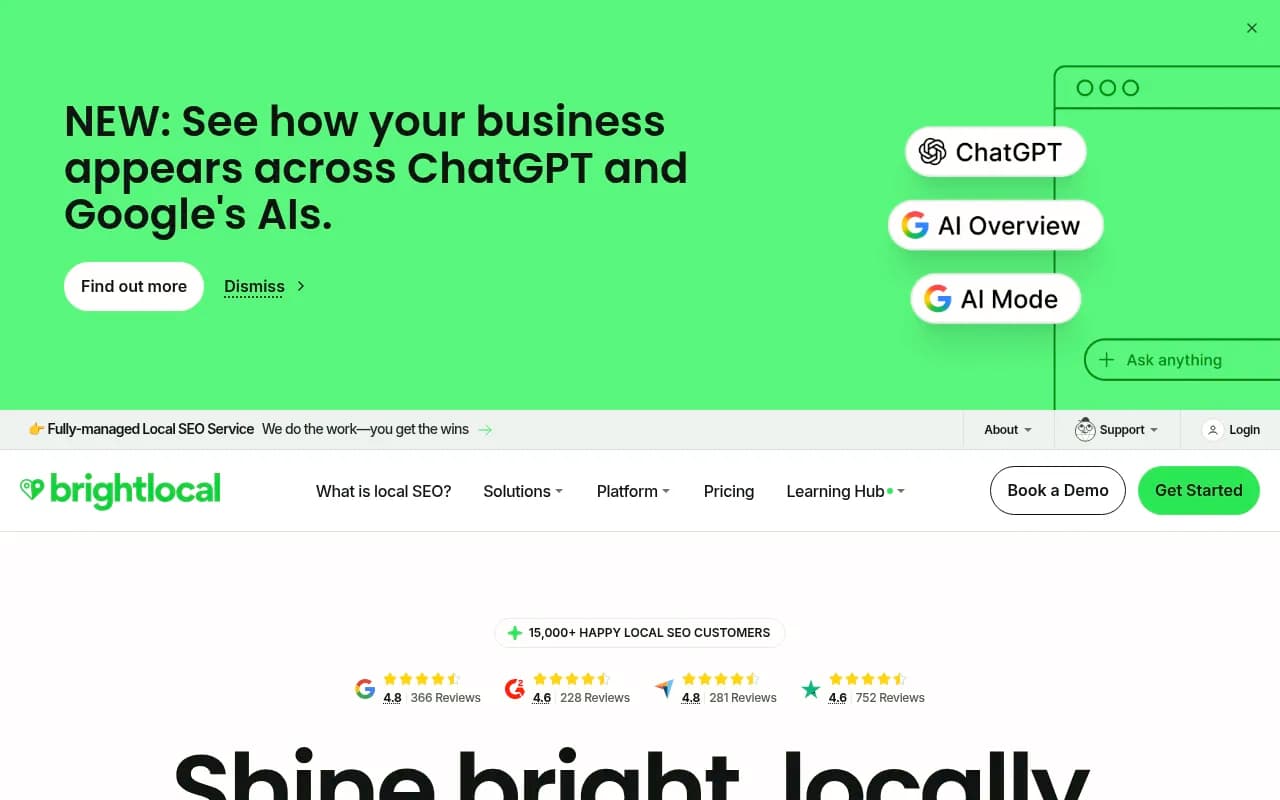
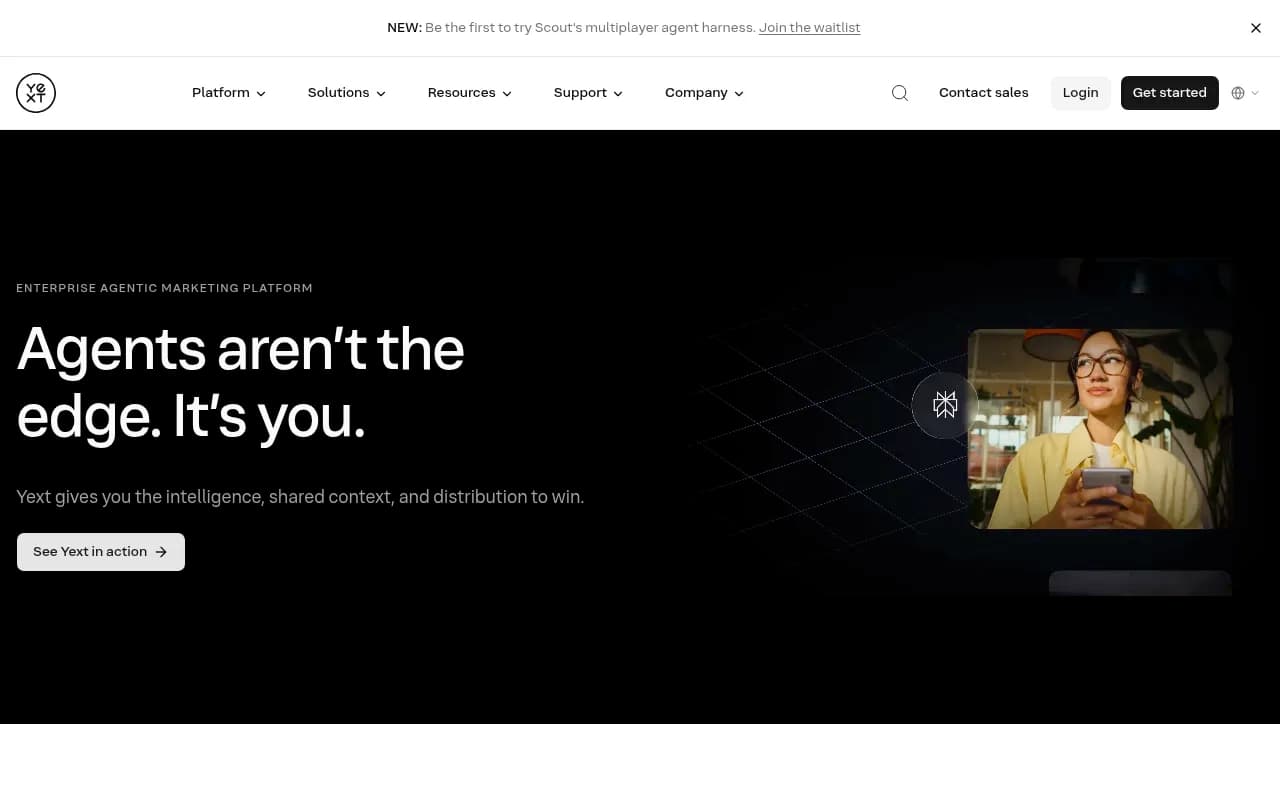
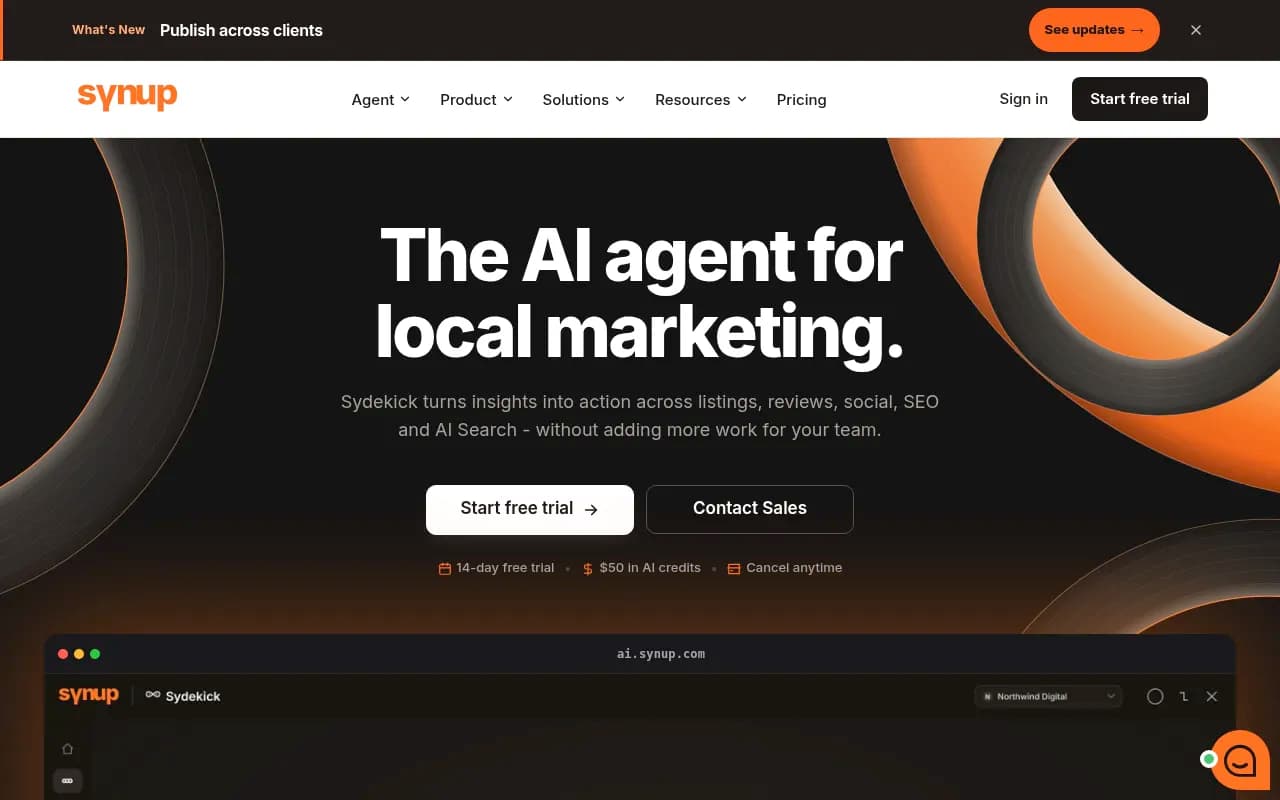
For the listings layer, tools like BrightLocal, Yext, Synup and Chatmeter handle multi-location consistency.
Mistake 2: one national page for every store
A single "Find a store" locator that renders client-side is nearly invisible to a crawler and useless to a model. AI answers need something citable: a page for the Manchester store that says what it stocks, who works there, its services and its hours.
Don't overdo it, though. Fifty near-identical pages with the city name swapped is thin content, and it gives an AI nothing to prefer over a competitor. Each store page needs something only that store has: local events, staff specialties, regional inventory, click-and-collect details, local reviews.
The FAQ format helps here. Promptwatch's data shows FAQ pages at 3.3% of ChatGPT citations overall and 4.8% for branded prompts. It's a modest share, but a plain-language FAQ ("Do you offer same-day pickup at the Austin store?") is cheap to write and matches how people actually phrase questions to assistants.
Mistake 3: ignoring reviews, roundups and third-party sources
Brands fixate on their own domain. But for branded prompts, reviews are 5.6% of citations, more than three times their share across all prompts, and social posts hit 3.0%. Listicles take 13.6% of all ChatGPT citations, and 15.0% on commercial prompts.
So when someone asks "is [your brand] any good?", the answer is stitched partly from review sites and roundups you don't control. Promptwatch's advice here is sound: collect reviews on the sites trusted in your category, and get included in the "best of" lists the AI already cites.
A note on Reddit. Promptwatch Data shows reddit.com's share of ChatGPT citations fell from about 4% to 0.5% on August 14, 2026, and ChatGPT drew only 0.46% of its citations from social platforms in the week of Sep 28 to Oct 4, while Google AI Overviews drew 12.2%. If your local strategy was "seed Reddit threads so ChatGPT picks them up", that bet looks weaker now. For Google surfaces, social still counts.
Review and reputation platforms such as Reputation.com, Podium and Birdeye help with volume and response workflows.
Mistake 4: forgetting that different AI surfaces behave differently
ChatGPT, Google AI Overviews, AI Mode, Gemini and Perplexity don't cite the same things. The social citation gap above is one example. Another: ChatGPT changes how it searches. Promptwatch measured that ChatGPT started using the site: operator at scale on August 8, 2026, jumping from about 0.4% to about 17% of fan-out queries, with searches per response nearly doubling. Models that run more searches per answer reward sites that are easy to crawl and clearly structured.
If you track only one surface, you're guessing about the rest. Also check that AI crawlers can reach your site at all. A surprising number of retail sites block them with a blanket bot rule meant for scrapers.
Mistake 5: not watching ads and shopping features
This one is new enough that many teams haven't noticed. Per Promptwatch's ChatGPT ads data (May 20 to Aug 17, 2026), ChatGPT showed no ads until May 27, then ads appeared in an average of 20.1% of web-search responses over the 90 days. After July 1 the rate stayed above 30%, with a daily peak of 43.9%. Of ad-bearing responses, 73.3% were on organic prompts, so ads are showing up on generic category questions, not just brand terms.
For a retailer, that means a competitor can sit in the answer to "best running shoes near me" whether or not the model ranks them organically. Check across several days, since a single run can land on an outlier day, and note which advertisers are winning slots.
Shopping features (product cards and price comparisons) are a separate thing. Promptwatch's shopping usage data, published in November 2025 and so possibly stale, found them on only a low single-digit percentage of web-search responses overall, concentrated in commercial and transactional prompts, and only when ChatGPT runs a search. The rate moved in steps, which suggests OpenAI is tuning it. The practical advice hasn't changed: complete Product schema, accurate prices and availability, and a clean merchant feed.
Mistake 6: measuring mentions, not outcomes
Counting how often your brand name appears is the easy metric and the least useful. What matters for a retailer is whether AI-referred visitors reach product and store pages, and whether that turns into purchases or store visits. The Attentive finding that shoppers buy different brands after AI conversations means share of shortlist matters, but you need to tie it to revenue.
A workable measurement stack:
- Prompt tracking by location, with prompts that mimic real local phrasing
- AI crawler logs, to see whether bots read your store and product pages
- Visitor analytics for AI-referred sessions
- Per-page citation data, to find which pages earn mentions
Tools worth knowing
The catalog splits into three groups. Local listings and reputation tools handle the data floor. AI visibility trackers show where you appear. A few platforms do both, or at least cover location.
Promptwatch is the one I'd start with if you want to go beyond monitoring. It tracks real AI interfaces (not just APIs), supports local targeting by pinning a monitor to exact coordinates so ChatGPT and Google's AI surfaces answer as if asked from that spot, and logs AI crawler visits so you can see what bots actually read. Its Content Agent and gap analysis then help fill the missing pages. Local targeting sits on the Business plan and above, so check promptwatch.com/pricing before you plan around it.

Other options for retail and location-aware tracking:
| Tool | Focus | Retail or local angle | Good for |
|---|---|---|---|
| Promptwatch | AI visibility plus content action | Coordinate-level local targeting, shopping and ads tracking, crawler logs | Brands that want to track and fix |
| Birdeye Search AI | Local AI visibility | Location-level tracking | Multi-location brands already using Birdeye |
| BrightLocal | Local SEO | Rankings, listings, reviews, now with AI visibility | Local SEO teams and agencies |
| Yext Scout | AI search competitive intelligence | Ties to Yext's verified brand data | Enterprise brands with Yext |
| Yotpo Discover | Ecommerce AI visibility | Catalog and review focus | Product-led retailers |
| Alhena AI | Ecommerce AI visibility | Built for catalogs | Large product catalogs |
| Ranketta | Product-level tracking | Ecommerce SKUs | Online-first retailers |
| Azoma | Agentic commerce | AI shopping agents | Brands preparing for agent purchases |
Yext Scout
Yotpo Discover
SOCi is worth a look if you run local social, reviews and listings from one agent-driven platform.
If you're comparing the broader field, the GEO software directory at bestgeosoftware.com lists many more.
A practical 30-day plan
Week 1: audit the basics
Check that every location's listing data matches your site. Run an AI crawler access check on your robots.txt and CDN rules. Fix the broken stuff before building anything new.
Week 2: fix the pages AI quotes
Audit product pages for missing specs, prices, availability and Product schema. Add a short plain-language FAQ to your highest-value category and store pages.
Week 3: set up tracking
Build a prompt set that mirrors local phrasing: category plus city, "near me", "open now", "best X for Y" and brand-versus-competitor comparisons. Track it across ChatGPT, AI Overviews and AI Mode in the locations that matter to you.
Week 4: close gaps
Look at which listicles and review sites are cited for your category and pursue inclusion. Write the missing store and category pages. Re-check visibility after two to three weeks, because a single day's snapshot can mislead.
What I'd do differently if I ran a retail brand
I'd stop debating whether AI search is real and start asking where my product and store pages are weak. The data we have, that ChatGPT cites pages describing what a company sells for 39% of its citations, says the basics still decide a lot. The glamorous part, new agent protocols and shopping carousels, is worth watching but is still a small slice.
And I'd be sceptical of any local AI number that arrives without a period, a method and a source. This area is young, the models change their behaviour overnight, and what held in July may not hold in November. Track your own prompts, in your own locations, and trust that over any report, including this one.
For more of the underlying research, browse Promptwatch Data.