Key takeaways
- The Google local pack and a ChatGPT answer are built differently. The pack ranks listings using proximity, relevance and prominence. ChatGPT assembles an answer from many third-party sources.
- Promptwatch Data shows 47.6% of ChatGPT responses with citations cite 10 or more unique domains (Sep 28 to Oct 4, 2026). It is a crowded set of sources, not a ranked 3-pack.
- Your Google Business Profile is a strong signal for Maps. It is only one of the places ChatGPT may look. Listicles, review sites, directories and local press matter more than most owners expect.
- Track both channels separately. A strong pack position tells you almost nothing about whether ChatGPT names you.
- Fixing it means working on the sources AI already trusts in your category, not just your own profile and site.
The frustrating pattern
If you do local SEO, you have probably seen the posts. One practitioner on r/localseo described managing a Mediterranean restaurant for about three years: 1,200+ Google reviews at 4.8 stars, page one for the main terms. ChatGPT still recommended other places. I haven't verified every detail of that thread, but the pattern matches what many agencies report. The same restaurant that wins the map pack gets skipped in a chat answer.
This isn't a bug in your SEO. It's a different system with different inputs.
Whitespark's Darren Shaw has been blunt about it, with a LinkedIn post claiming that getting recommended by ChatGPT is 30 times harder than ranking in Google's traditional local results. I haven't been able to verify how that figure was calculated, so treat it as a directional claim. The logic behind it is sound though: a pack shows 3 slots per query, and a chat answer often names only a handful of businesses, drawn from a much wider field of sources.
How the Google local pack decides who shows up
Google states it plainly in its own help documentation. Local results are based mainly on relevance, distance and prominence, and Google tries to show customers the kind of nearby business they would like to visit.
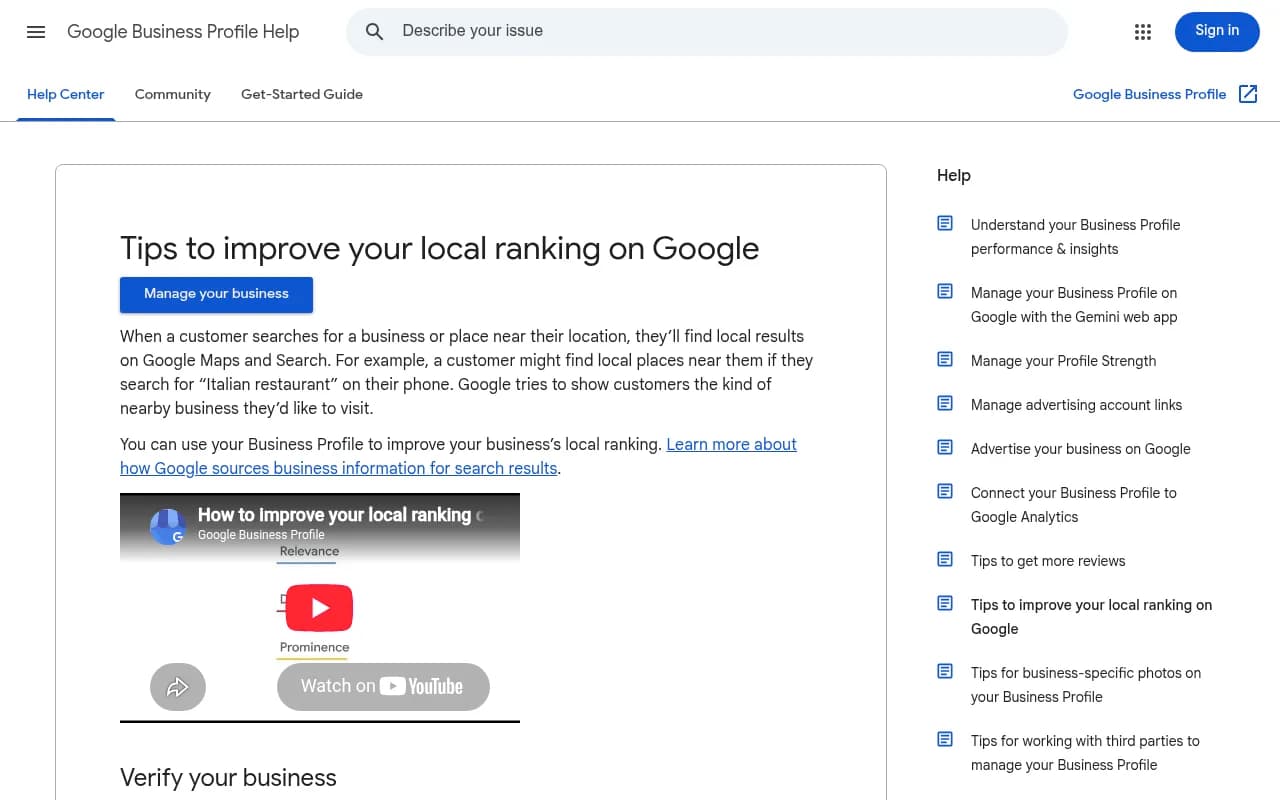
The official tips are short and practical:
- Verify your business so Google knows you're authorized to represent it.
- Keep information complete and accurate: address, hours, category, attributes.
- Respond to reviews.
- Add photos and keep special hours current.
The key point is that the pack is a ranked list of listings, built from a structured entity database. Your Google Business Profile is the entity. Reviews, category, proximity to the searcher and behavioural signals feed the ranking.
The 2026 Whitespark Local Search Ranking Factors report (survey of 47 local SEO experts scoring 187 factors, published November 2025) says review signals and behavioural signals gained importance for pack and Maps ranking, while on-page and link signals dipped. Experts there have no inside access to Google, so these are informed opinions. Still, the direction is consistent with what practitioners see: backlinks barely move the map pack, as several people on the Local Search Forum put it. Proximity and the Google filter that suppresses near-duplicate listings in the same building often matter more.
Notice what is absent from that list: nothing says "get named in a best-of article on a third-party site." For the pack, that's a minor input. For ChatGPT, it can be the main one.
How ChatGPT builds a local recommendation
ChatGPT Search doesn't consult a single local index and return the top three. It runs web searches (query fan-outs), reads or snippets many pages, then writes an answer that cites them. Promptwatch Data on unique domains per ChatGPT response (Sep 28 to Oct 4, 2026) shows how wide that net is:
- 47.6% of responses with citations cite 10 or more domains, and 66.1% cite at least 8.
- Only 6% cite three domains or fewer.
- For organic, unbranded prompts (which is what "best Mediterranean restaurant near me" is), 52.5% cite 10 or more domains.
- Brand-specific prompts are narrower: only 21.3% cite 10 or more.
So an unbranded local query is the most crowded prompt type. Your listing has to survive a lot of competition for attention, and it isn't competing on the same terms as in Maps.
What kinds of pages get cited
Promptwatch's content type data for Sep 28 to Oct 4, 2026 shows product pages at 22.4% of classified citations, landing pages at 16.8% and listicles at 13.6%. For commercial prompts, product pages hit 26.0%, landing pages 20.6% and listicles 15.0%. Reviews are 1.7% overall but rise to 5.6% for branded prompts. Promptwatch's own takeaway is to get listed in the "best of" roundups ChatGPT cites and to collect reviews on the sites trusted in your category.
That lines up with what Whitespark's report heard from practitioners. One contributor said, "Locally, we're doubling down on listicles."
The automotive analogy
I don't want to overstate this, because it's one industry. But Promptwatch's automotive citation report (August 2026) is a useful picture of what happens when a local-ish category meets ChatGPT:
- Autotrader (5%) and Cars.com (4.6%) outrank every car brand. Chevrolet.com is the top manufacturer at 2.62%.
- Marketplaces and listings total 14.65% of citations, reviews and research sites 12.62%, manufacturer sites 7.92%.
- Individual dealerships are rare. Only one dealer, birchwoodgroup.co.uk at 0.28%, appears in the top 31.
The lesson for a local business: the aggregator and review layer often gets cited instead of the business itself. Your job may be to be well represented on those layers.
Pack ranking vs ChatGPT: a side-by-side
| Factor | Google local pack | ChatGPT local answer |
|---|---|---|
| Output | Ranked list of 3 listings (plus more on Maps) | Written answer with a set of cited sources |
| Main input | Business Profile, proximity, reviews, category | Web pages found by fan-out searches |
| Proximity | Very strong | Weaker and inconsistent, depends on location context |
| Reviews | Volume, rating, recency on Google | Reviews as quoted on third-party sites and articles |
| Backlinks | Minor | Indirectly matter through what gets ranked and cited |
| Listicles and roundups | Minor | Major source type |
| Own website | Supporting | Cited when it answers the question well |
| Number of competitors per answer | 3 visible | Many sources, few named businesses |
Two systems, two games. The overlap is real, because strong reputations tend to produce both. But overlap isn't prediction.
Why you can win the pack and still lose in ChatGPT
Your strength is in the wrong place
A 4.8-star profile with 1,200 reviews lives inside Google's ecosystem. If ChatGPT never reads those reviews, because they sit in a Google surface rather than on a crawlable page, they count for little. One thread on the Local Search Forum even asks whether ChatGPT is able to see a client's Google reviews at all. Plan as if it often can't, and make your reputation visible on pages it can read.
You're not in the articles AI reads
If the top five local roundups for your category mention four of your competitors and not you, ChatGPT has no reason to name you. Pack rank can't fix that. Local press, "best of" lists, curated directories and community write-ups can.
Your website doesn't answer the question
Many local sites are thin: a menu PDF, a hours page, a contact form. ChatGPT cites pages that answer specific intents, with product or service detail, FAQs, neighborhoods served and pricing context. Thin pages leave you out of the source set even if the listing is flawless.
Crawl access
If your site or CDN blocks AI crawlers, or key content is behind scripts, you can be invisible to ChatGPT while ranking fine in Google. This is a quick check and a common finding.
Citation consistency is table stakes, not a differentiator
Whitespark's report quotes experts saying citations remain "still critical to building foundational citations and being eligible to rank in the Local Pack." Consistent NAP data helps the pack. It rarely makes ChatGPT pick you over someone with more editorial coverage.
A counterpoint worth keeping
The same Whitespark report says local search has "remained somewhat insulated" from AI and that Google local results are still the main way people discover local businesses. Don't abandon the pack. Treat AI visibility as a second channel with its own measurement, not a replacement.
A practical plan for local businesses
1. Measure both channels separately
Track your pack position with a geogrid or local rank tracker. Track ChatGPT with a fixed set of prompts that real customers would type: "best [category] in [neighborhood]", "[category] near me open late", "who is the best [service] for [need] in [city]". Run them regularly and log which businesses are named and which sources are cited.
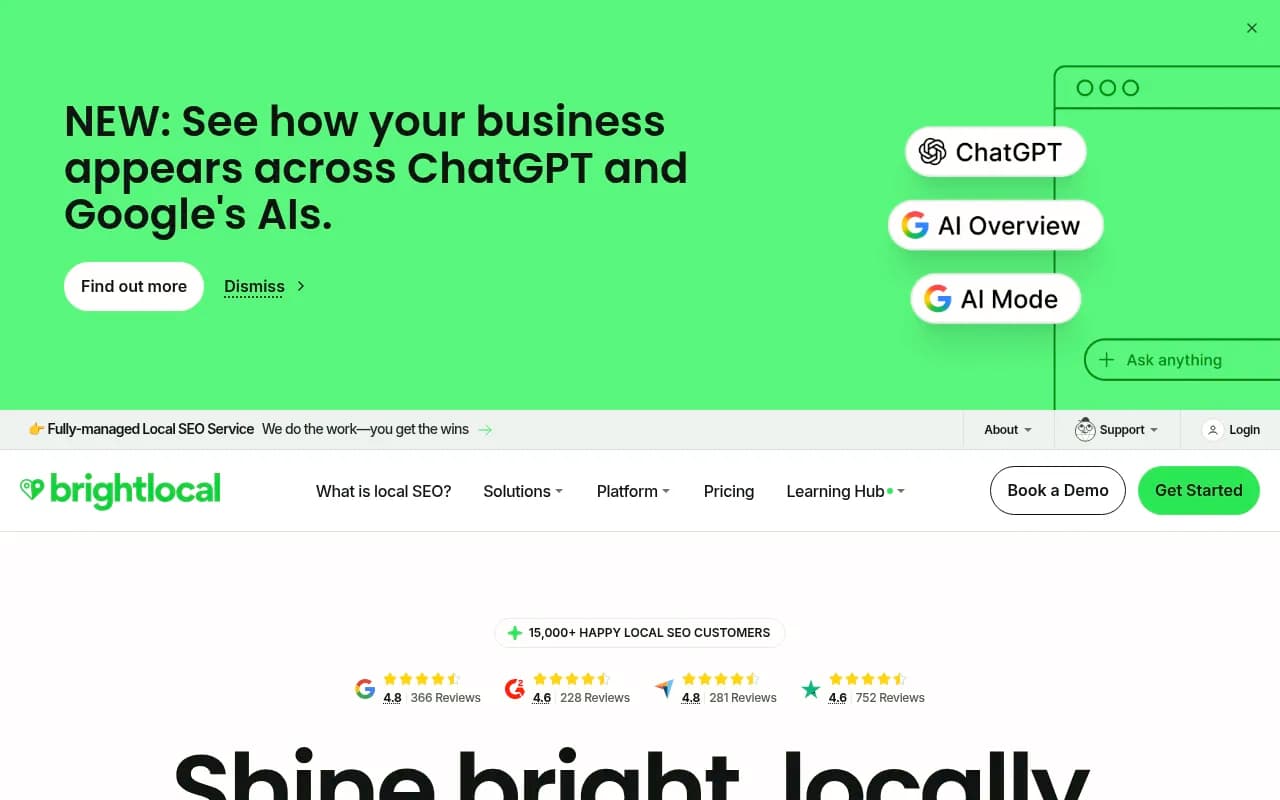
For local SEO and listings tools, BrightLocal is a common starting point, and it now includes AI visibility features.
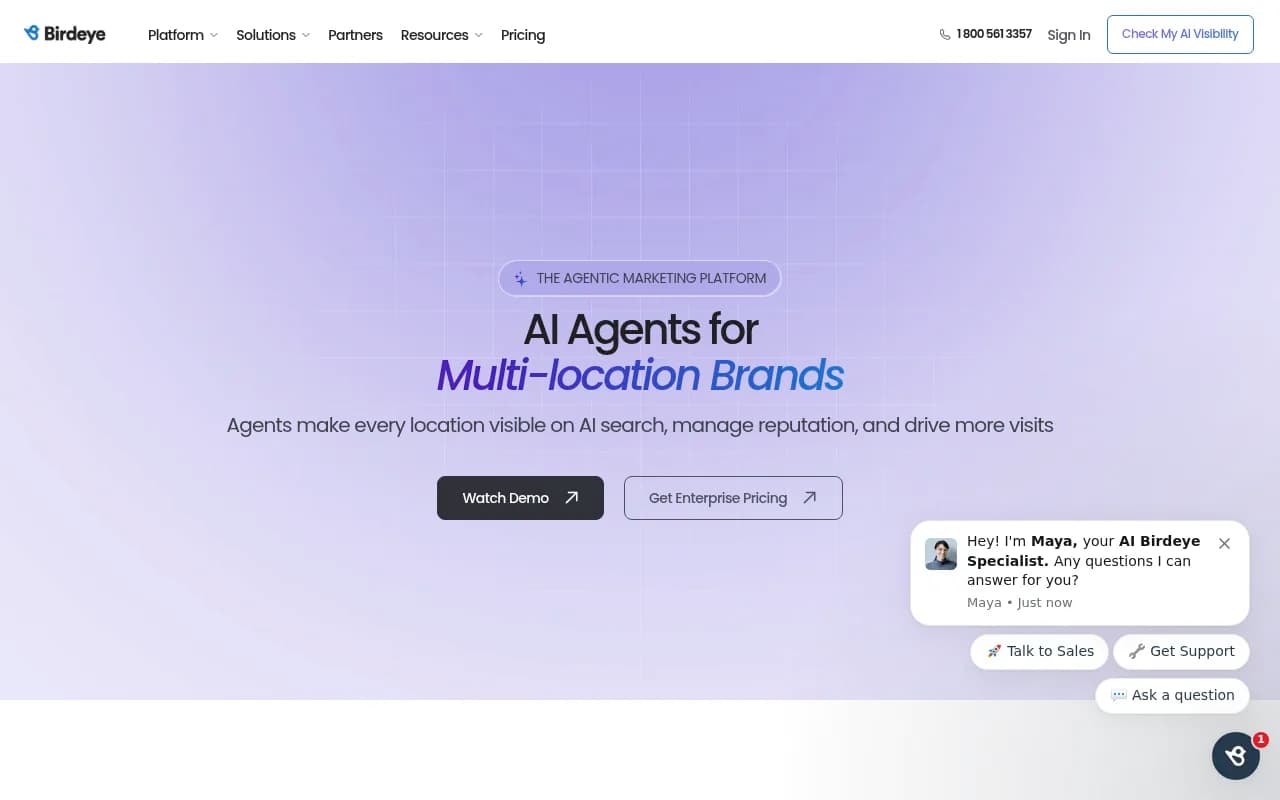
For multi-location brands, Birdeye Search AI is built around location-level AI visibility tracking.
For a broader view of AI answers across engines, tools like Promptwatch can track how ChatGPT, Google AI Overviews, AI Mode, Gemini and Perplexity respond, and its local GEO/SEO targeting lets you pin a monitor to exact coordinates so answers are generated as if asked from that spot, which is the right way to test "near me" prompts.

2. Read the citations, not just the mentions
When ChatGPT recommends a competitor, look at the sources it cites. Those are your real targets. If the same three roundup articles and two directories keep appearing, that's your outreach list. Tools built around citation sources, such as MentionBird, make this easier.
MentionBird
3. Get into the roundups
Pitch local publishers, bloggers and "best of" list authors. Offer something concrete: a tasting, a demo, data, a quote. This is classic digital PR, aimed at the pages AI reads. If you want help running it, 1001 SEO Media does digital PR alongside local SEO and GEO work.
4. Earn reviews on third-party sites
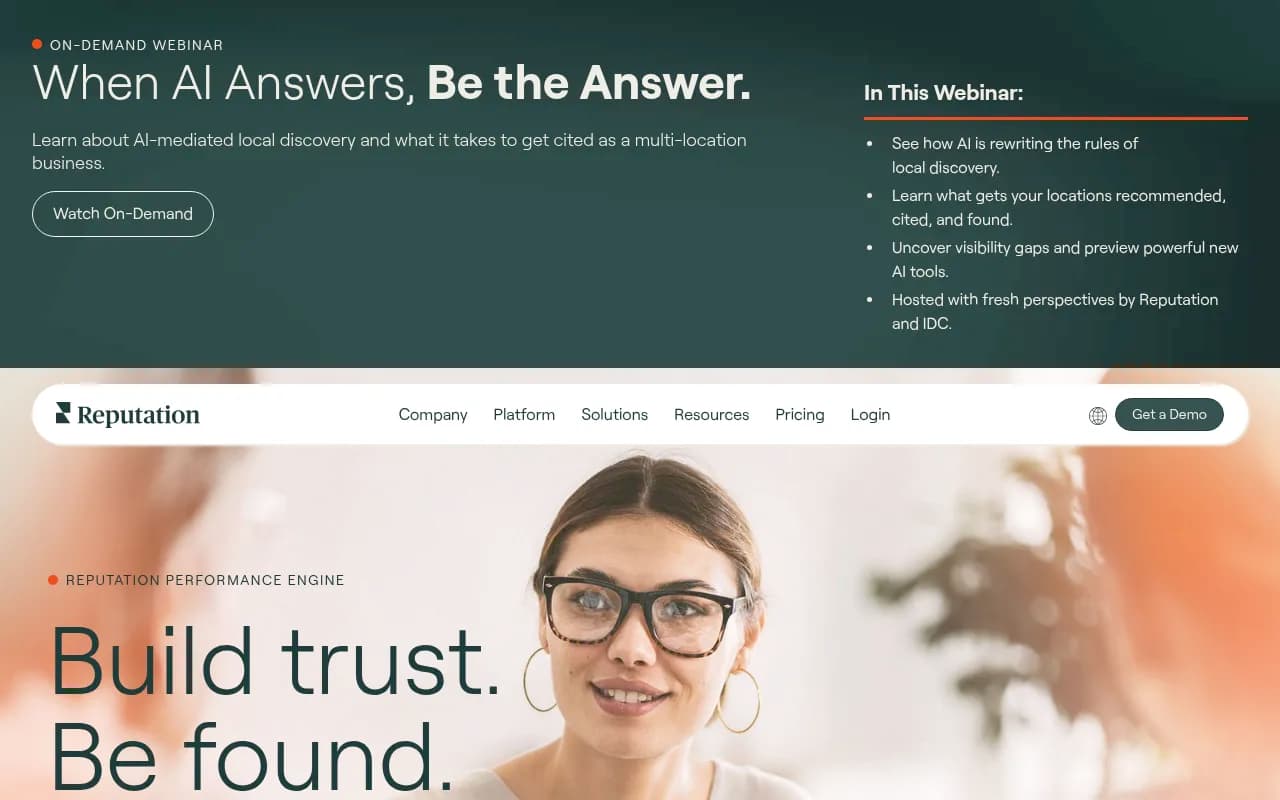
Google reviews feed the pack. For ChatGPT, spread your reputation across the sites that matter in your category, such as industry directories, Yelp-style platforms, Tripadvisor for hospitality or DealerRater for auto. Reputation platforms like Birdeye, Podium, Reputation.com and Chatmeter help multi-location teams collect and respond at scale.
5. Keep listings accurate everywhere
Bad data hurts both channels. Synup and SOCi both handle listings and reviews across locations.
6. Upgrade the website pages
Give each service and location its own page with real detail: what you offer, who it's for, price ranges, neighborhoods, FAQs, photos. Add LocalBusiness schema. These are the pages ChatGPT can cite, and they're the ones that fan-out searches tend to find.
7. Check AI crawler access
Confirm your robots.txt, CDN and security rules aren't blocking GPTBot, OAI-SearchBot or ChatGPT-User. If you can see crawler logs, check which pages they actually read and whether they hit errors.
Comparison of tools for local AI visibility
| Tool | Focus | Useful for |
|---|---|---|
| Promptwatch | AI visibility, citations, crawler logs, local targeting, content actions | Seeing and fixing why ChatGPT skips you |
| BrightLocal | Local rankings, listings, reviews, AI visibility | Single and small multi-location SEO |
| Birdeye Search AI | Location-level AI visibility | Multi-location brands |
| Yext Scout | AI search competitive intelligence | Enterprise brands with listing data |
| Synup | Listings, review replies | Keeping data consistent |
| SOCi | Local search, reviews, social | Franchises and large location counts |
| Chatmeter | Reviews, listings, local pages | Multi-location reputation |
Yext Scout
I couldn't verify current pricing for most of these local AI-visibility tools, so check each vendor's site before you budget. For more options, the GEO software directory at bestgeosoftware.com lists a wider set.
Don't forget Google's AI surfaces
ChatGPT isn't the only AI layer. Google AI Overviews and AI Mode also touch local queries, and their citation habits differ. Promptwatch's social media citations report found ChatGPT got only 0.46% of its citations from social platforms (Sep 28 to Oct 4, 2026), while Google AI Overviews got 12.2%. Promptwatch's data also shows reddit.com's share of ChatGPT citations fell from about 4% to 0.5% on August 14, 2026. So the community-and-social tactics that help in one engine may do little in another. Whitespark has separate write-ups on AI Overviews prevalence in local search and a guide to Google AI Mode for local businesses, which are worth reading next.
What I'd do first this week
Pick ten customer-style prompts for your category and city. Run them in ChatGPT. Write down who is named and which URLs are cited. Then check whether you appear in any of those URLs. That one exercise usually shows the gap faster than any report, and it tells you whether your next move is PR, reviews, site content or crawl access.
Limits of what we know
I found no first-party data on how often ChatGPT shows map or local cards, so I won't guess. The automotive report is one industry, not proof of how every local category behaves. And the practitioner threads are anecdotes. Treat all of it as a reason to measure your own market, not a rulebook.
The bottom line: your pack ranking measures how well Google's local index likes your listing. A ChatGPT recommendation measures how often the web talks about you in places AI reads. Track them separately, and work on both.