Key takeaways
- A retail AI visibility dashboard should answer five questions on one screen: are we mentioned, where do we sit in the answer, who else is named, which sources shape the answer, and what traffic or revenue followed.
- Almost half of ChatGPT responses with citations name 10 or more domains, so mention rate alone tells an executive very little. Position, description and competitor co-occurrence matter more.
- Local reporting needs a location dimension on every prompt, since the same query asked from two postcodes can return different stores. Segment by region, not just by brand.
- Different AI engines cite very different sources. Report per engine, never as one blended number.
- Pick one owner for the definitions, annotate model changes on every trend chart, and keep the executive view to one page.
Why executives need a separate AI visibility view
Most retail leadership packs already include Google Business Profile views, review scores, foot traffic and paid media. AI answers are the missing layer. A shopper asks ChatGPT or Google's AI Mode for "best running shoe store near me" and gets a short list of named businesses. Nobody sees an impression report for that. If your dashboard does not measure it, nobody in the building knows whether you are on the list.
The trap is copying the SEO report. Rankings made sense when there were ten blue links and a stable order. AI answers are generated, vary run to run, and cite a long tail of sources. A single prompt tells you almost nothing, so the report has to be built on aggregates across many prompts and many locations.
General marketing dashboard guides agree on the shape. One research roundup on reporting puts it simply: a good dashboard answers what we spent, what we got and what we should change on one screen. That is the standard here too. The AI-specific version swaps spend for effort and adds a sources panel.
What the AI answer actually looks like
Before you design anything, it helps to know what you are measuring. Promptwatch Data looked at ChatGPT citations from Sep 28 to Oct 4, 2026, and found that 47.6% of responses with citations name 10 or more unique domains, and 66.1% name at least eight. Only 6% name three or fewer. For organic prompts, where no brand is named, 52.5% cite 10 or more.
Brand-specific prompts are tighter. Five domains is the most common count, at 14.9% of responses, and 40.7% cite five or fewer.
The practical consequences for a retail dashboard:
- Assume every answer is shared with competitors, marketplaces and review sites.
- Track your position in the answer and how you are described, not just a yes or no.
- Track which competitors appear in the same responses as you.
- Measure across many prompts. One prompt is anecdote.
- Check which third-party domains get cited on prompts about your brand, because they shape the description ChatGPT gives of you.
The one-page executive template
Here is the layout I would hand to a retail CMO or COO. Five panels, one page, same definitions every month.
Panel 1: Visibility score by region
A single 0-100 composite per region or store cluster, with a month-over-month delta. Executives want a map or a ranked list of regions, not a table of 400 stores. Put the weakest five regions at the top, since those are the ones that trigger action.
Define the score once and write the definition under the chart. If it blends mention rate, position and depth, say so.
Panel 2: Share of voice against named competitors
Of all the answers across your prompt set, what share of mentions goes to you versus the three or four competitors who matter? This is the board-friendly number. Break it out for two prompt types:
- Commercial prompts, where people compare options before buying.
- Branded prompts, where people already know your name and are checking reviews, hours or stock.
Commercial share tells you about acquisition. Branded share tells you about reputation. Mixing them hides both.
Panel 3: Position and sentiment
Show average position in the answer and a sentiment score. Position matters because an answer that lists you ninth is functionally a miss. Sentiment matters because AI engines summarise opinion. If the summary says your stores have "inconsistent service", that sentence is now repeated to every shopper who asks.
A simple read of the two together:
| Signal | Likely problem | Typical owner |
|---|---|---|
| Low share of voice | Coverage: you are not in the answer set | SEO and content |
| Late position | Prominence: you are named but not recommended | Content and PR |
| Mentions without your own pages cited | Your site is not the source | Web and technical SEO |
| Weak sentiment | Reputation and reviews | Customer experience |
Panel 4: Sources that shape the answer
This is the panel most dashboards skip, and it is where the work is. List the domains AI engines cite on your prompts, split into your own pages, review sites, marketplaces, social platforms and news.
The mix differs by engine. Promptwatch's social platform citation data for Sep 28 to Oct 4, 2026 shows ChatGPT drawing just 0.46% of its citations from social platforms, while Google AI Overviews drew 12.2%. Within AI Overviews, YouTube was 4.28%, Facebook 2.38% and Instagram 1.61%. Perplexity sat in between at 2.7%.
For a retailer, that argues for splitting this panel by engine. If your shoppers lean on Google, public Facebook pages and Instagram profiles are worth keeping complete and current. For ChatGPT, they barely register, and Reddit is not a safe bet either after reddit.com's share of ChatGPT citations collapsed from about 4% to 0.5% on August 14, 2026.
Panel 5: Traffic and conversions from AI
The executive will ask what it is worth. Show sessions and conversions arriving from AI platforms, with the caveat that attribution is partial because many AI answers get consumed without a click. Pair it with store-level signals where you have them, such as direction requests and calls.
Which content gets cited, and what that means for retail
Content type belongs in the appendix of the dashboard, but it drives the roadmap. Promptwatch's content type share data for Sep 28 to Oct 4, 2026 found product pages were the most cited type at 22.4% of ChatGPT citations, followed by landing pages at 16.8% and listicles at 13.6%. For commercial prompts, product pages hit 26.0% and landing pages 20.6%.
For branded prompts, reviews rise to 5.6%, more than three times their share across all prompts.
Translated for a retailer:
- Product and category pages are your main citation surface. Keep prices, specs, availability and store information complete and factual.
- Store locator and local landing pages are landing pages. Treat them as first-class content, not an afterthought.
- Reviews on trusted third-party sites matter for people who already know you.
Shelf life matters too. In the content half-life study, which tracked pages ChatGPT cited on July 6, 2026 for 90 days, landing pages and docs stayed cited the longest while news lost half its pages within about 36 days. So a seasonal promotion post decays fast and a well-kept store page does not.
Making it local
This is where most templates fall apart. A national brand number hides the fact that your Phoenix stores might be invisible while Boston is fine.
Build the prompt set by location
Create a prompt template, then expand it across your markets. For example: "best [category] store in [city]", "[category] near [neighbourhood]", "where to buy [product] in [city]". Include branded prompts per region too. Aim for a consistent set per market so regions are comparable.
Use real location settings
Tools differ on whether they merely mention a city in the prompt or genuinely simulate a location. For local retail, you want tracking that runs prompts as if asked from the place. Promptwatch supports pinning a monitor to exact coordinates with a 20 m to 5 km accuracy radius, so ChatGPT, Google AI Overviews and AI Mode answer as if asked from that spot. It sits on the Business, Agency Scale and Enterprise plans.
Group stores into clusters
Tracking 800 stores individually is noisy and expensive. Group them by metro area or catchment and report the cluster. Drill into single stores only when a cluster underperforms.
Check the listing data underneath
Local AI answers lean on the same data as map results: names, addresses, hours, categories and reviews. If the listings are wrong, no amount of content work fixes the answer. Multi-location platforms such as Yext, BrightLocal, Chatmeter, SOCi, Synup and Reputation.com cover listings and reviews at scale. Treat their output as an input to your AI visibility panel, not a replacement for it.
Tools that can feed the dashboard
No single product covers everything an executive wants. Realistically you combine an AI visibility tracker, a local listings platform, web analytics and a BI layer.
AI visibility trackers
I would start with Promptwatch. It tracks the real interfaces of ChatGPT, Google AI Overviews, Google AI Mode, Gemini, Perplexity and others by country, and its local targeting by coordinates fits the multi-store use case directly. It also ties in crawler logs and visitor analytics, which covers the traffic panel, and offers PDF and scheduled reports with white-label branding. The Action Board turns the gaps into a prioritised to-do list, so the dashboard does not end at a chart.

Birdeye Search AI is positioned around location-level AI visibility, which makes it a natural check if you already use Birdeye for reviews.
Yext Scout is aimed at enterprise brands that want AI search competitive intelligence alongside Yext's listings data.
Yext Scout
For ecommerce-heavy retailers, Alhena AI and Yotpo Discover focus on product catalogs and reviews. Both are vendor-led, so verify claims in a trial.
Yotpo Discover
Local listings and reviews
BrightLocal is a long-standing choice for local rankings, listings and reviews and now includes AI visibility features.
Chatmeter and SOCi are built for multi-location brands, while Reputation.com and Synup cover reviews and listing fixes.
Enterprise suites
If your SEO team already lives in an enterprise platform, BrightEdge and Conductor both added AI search insights. Semrush and Ahrefs Brand Radar are options for teams that want AI tracking inside a familiar suite, though their prompt sets tend to be more fixed.
Quick comparison
| Tool | Strength for retail | Local capability | Best for |
|---|---|---|---|
| Promptwatch | AI tracking plus crawler logs, traffic and content actions | Exact-coordinate targeting, state and city tracking | Multi-location retailers wanting insight and action |
| Birdeye Search AI | Reviews plus AI visibility | Location-level tracking | Brands already on Birdeye |
| Yext Scout | Listings data plus AI competitive intelligence | Tied to Yext location data | Enterprise brands with Yext |
| BrightLocal | Local rankings, listings, reviews | Strong local SEO base | SMB and mid-size chains |
| Chatmeter | Reviews and local pages at scale | Multi-location focus | Franchise networks |
| BrightEdge | Enterprise SEO with AI insights | Enterprise reporting | Large SEO teams |
Confirm current pricing and features on each vendor's site before you commit. Product pages change quickly in this category.
Wiring it into a BI layer
Most executives do not want another login. They want the numbers in the tool they already open on Monday. Two common routes:
- Looker Studio. Promptwatch has a Looker Studio connector, and general-purpose connectors such as Windsor.ai publish free Looker Studio templates for ads, GA4 and ecommerce sources that you can place next to the AI panels.
- Power BI or an internal warehouse. Export CSVs or use an API to land prompt, citation and traffic data next to sales by store.
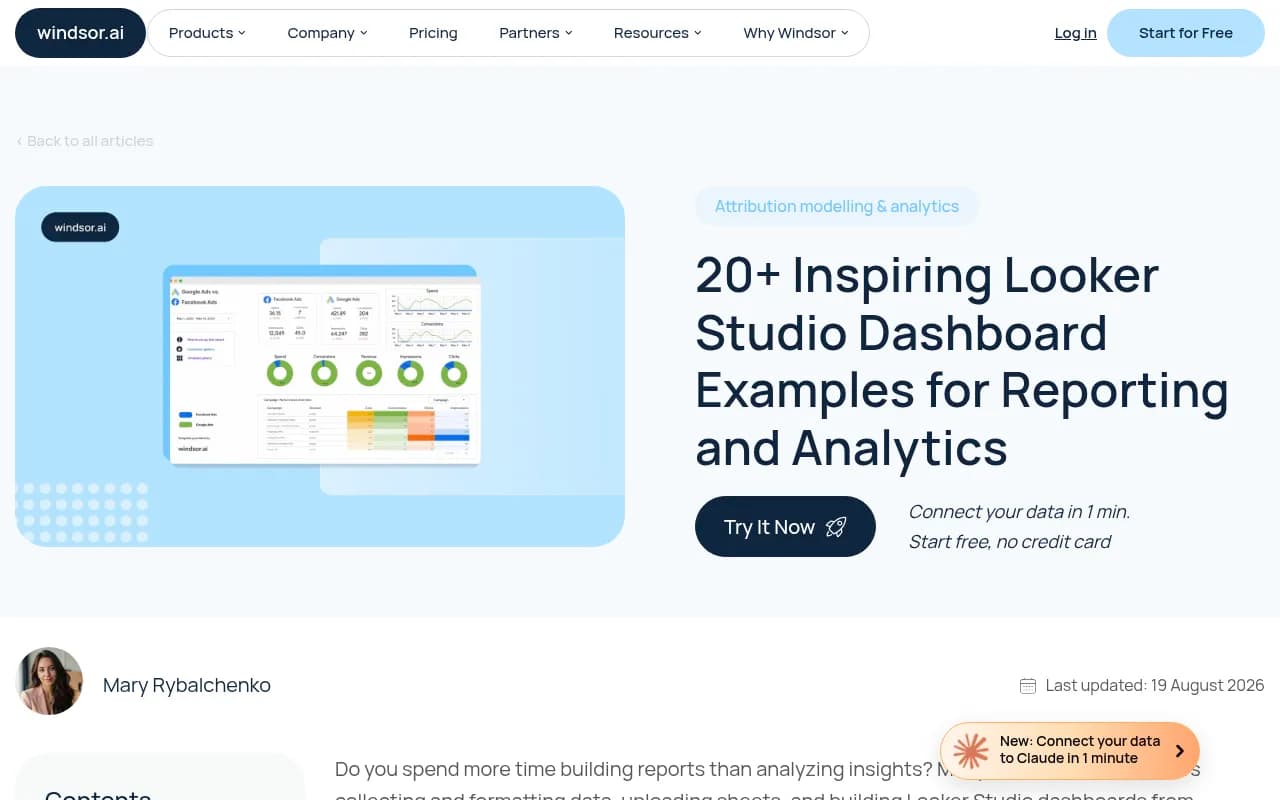
Templates like these are useful for the paid media and ecommerce half of the page. The AI visibility panels are the part you will build yourself.
On the store operations side, vendors such as SAI Group sell role-based retail dashboards with access control down to region, area and store. You do not need that for AI reporting, but the access model is worth borrowing.
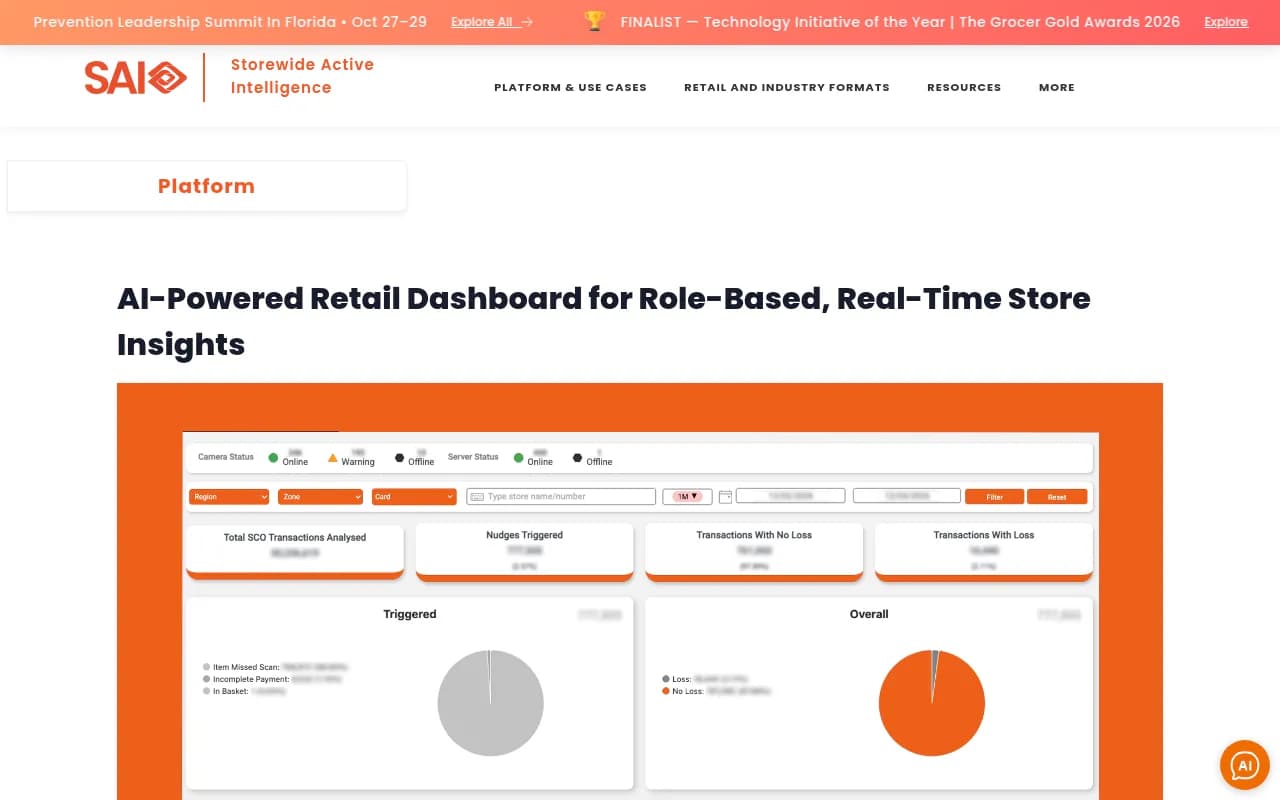
Headquarters sees the roll-up, regional managers see their stores, and store managers see only their own. Apply the same logic to AI visibility reports.
Reporting rules that keep it honest
Annotate model changes
AI engines change behaviour without notice. Promptwatch Data showed average citations per ChatGPT response dropping around the GPT-5.3 rollout on March 4, 2026, and ChatGPT started using the site: operator at scale on August 8, 2026, which jumped from about 0.4% to about 17% of fanout queries. A dip in your line may be the platform, not your team. Put a marker on the chart for every known change.
Report per engine
Blending ChatGPT, Perplexity and AI Overviews into one number is the fastest way to mislead a board. Their citation habits differ sharply, as the social data above shows.
Keep the prompt set stable
If you add and remove prompts each month, trends become meaningless. Version the prompt set, and when you must change it, restart the baseline and say so.
Separate what you control from what you do not
Fix listings, product pages and store pages yourself. Reviews and third-party coverage you can only influence. Label each recommendation with how much control the team has.
Watch sector patterns
Category matters. In Promptwatch's automotive data, marketplaces such as Autotrader and Cars.com outrank every car brand in ChatGPT citations. In travel, booking and search sites take more than half. Retail may well show a similar marketplace effect for your category, so check whether the sources panel is dominated by aggregators and plan accordingly.
A monthly rhythm that works
- Week one: refresh the dashboard and annotate any platform changes.
- Week two: review the five weakest regions and the sources cited in them.
- Week three: assign actions, such as fixing listings, rewriting a category page or requesting reviews.
- Week four: check whether last month's changes moved crawls, citations and position.
Keep a short written narrative on the first page. Agencies that specialise in reporting, like Evolve, push monthly written commentary for good reason: executives read two paragraphs, not 40 pages. If you would rather hand the build to a partner, a GEO-focused agency can set up the prompt set and reporting for you, but own the definitions yourself.
For more options in this category, the GEO software directory at bestgeosoftware.com lists tools by use case.
What to do this week
Pick 20 commercial and 10 branded prompts. Run them for your five largest metro areas. Record share of voice, position and the top ten cited domains per engine. That is the first version of the dashboard, and it will already show you more than your current report does.
If the five-panel layout still looks like too much, drop panels 3 and 5 for the first quarter. A trusted number in three panels beats a fragile number in five.