Key takeaways
- Gemini comes bundled into every Peec AI plan starting at $95/mo. Otterly AI treats Gemini as a paid add-on ($9-$149/mo) on top of its base plans, which start at $29/mo.
- Neither tool queries Gemini through a clean, deterministic API. Peec AI uses UI simulation (it scrapes the real Gemini interface), which research on Otterly's methodology is less transparent about.
- The bigger issue isn't tool bias, it's Gemini itself: SparkToro and Gumshoe.ai research on AI recommendation consistency found less than a 1-in-100 chance that a model returns the identical brand list twice across repeated identical prompts.
- "Accuracy" in this category is really a question of methodology rigor (sampling frequency, prompt-set size, UI fidelity) rather than either platform being definitively "right."
- If Gemini specifically matters to your reporting, budget for it explicitly. It's included at Peec, but it's an upsell at Otterly, and that changes your real monthly cost.
Why this question is harder than it looks
I'll say the obvious thing first: there is no ground truth Gemini mention count you can hold up against a tool's dashboard and grade it right or wrong. Gemini's answers change from session to session, from location to location, and sometimes from minute to minute, because it's a probabilistic model, not a lookup table. A client checking Gemini on their phone at 2pm and a scheduled tracking run from a tool at 6am can legitimately see different brand lists for the exact same prompt. That's not a bug in Peec AI or Otterly AI. That's just what a large language model does.
There's actual data behind this. SparkToro and Gumshoe.ai ran 2,961 identical-prompt tests across ChatGPT, Claude, and Google's AI surfaces with 600 volunteers and found the odds of the same brand list appearing twice in a row were worse than 1 in 100. Ordering matches were closer to 1 in 1,000. List length itself varied wildly, sometimes two or three brands, sometimes ten-plus, for the same question asked the same way.
So when someone asks "which tool is more accurate for Gemini mentions," the honest answer starts with: accurate compared to what? A single snapshot from either platform is noise. What you actually want to know is which tool samples enough, and samples it the right way, that the noise averages out into a trend you can trust.
How each tool actually talks to Gemini
Peec AI uses UI simulation across most of the engines it tracks, including Gemini. Rather than hitting an API and getting a sanitized response, it simulates a real browser session against the live Gemini interface. For each engine it tracks four consistent dimensions: position/ranking, grounding sources (the citations Gemini pulls from to build its answer), sentiment, and mention frequency. That consistency across models is actually useful, because it means you're comparing Gemini to ChatGPT or AI Mode using the same measurement logic rather than four different vendors' definitions of "visibility."
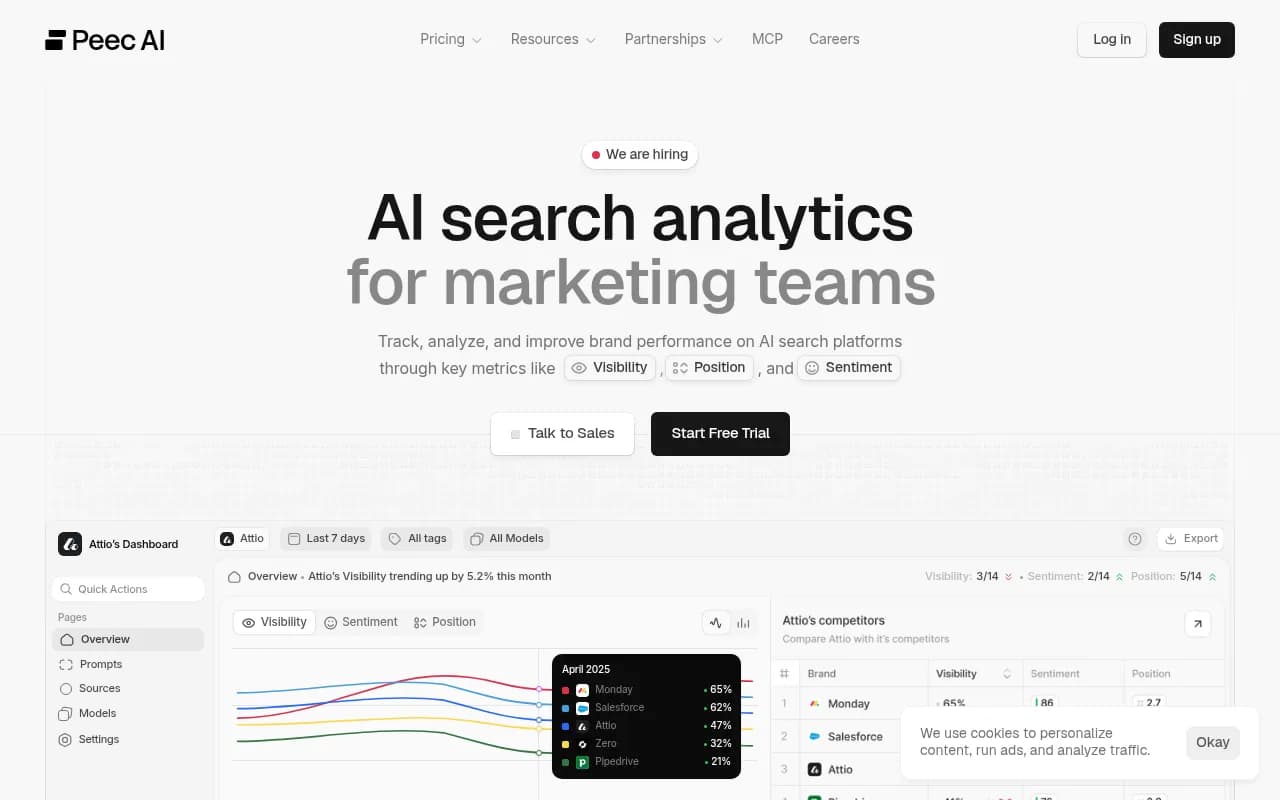
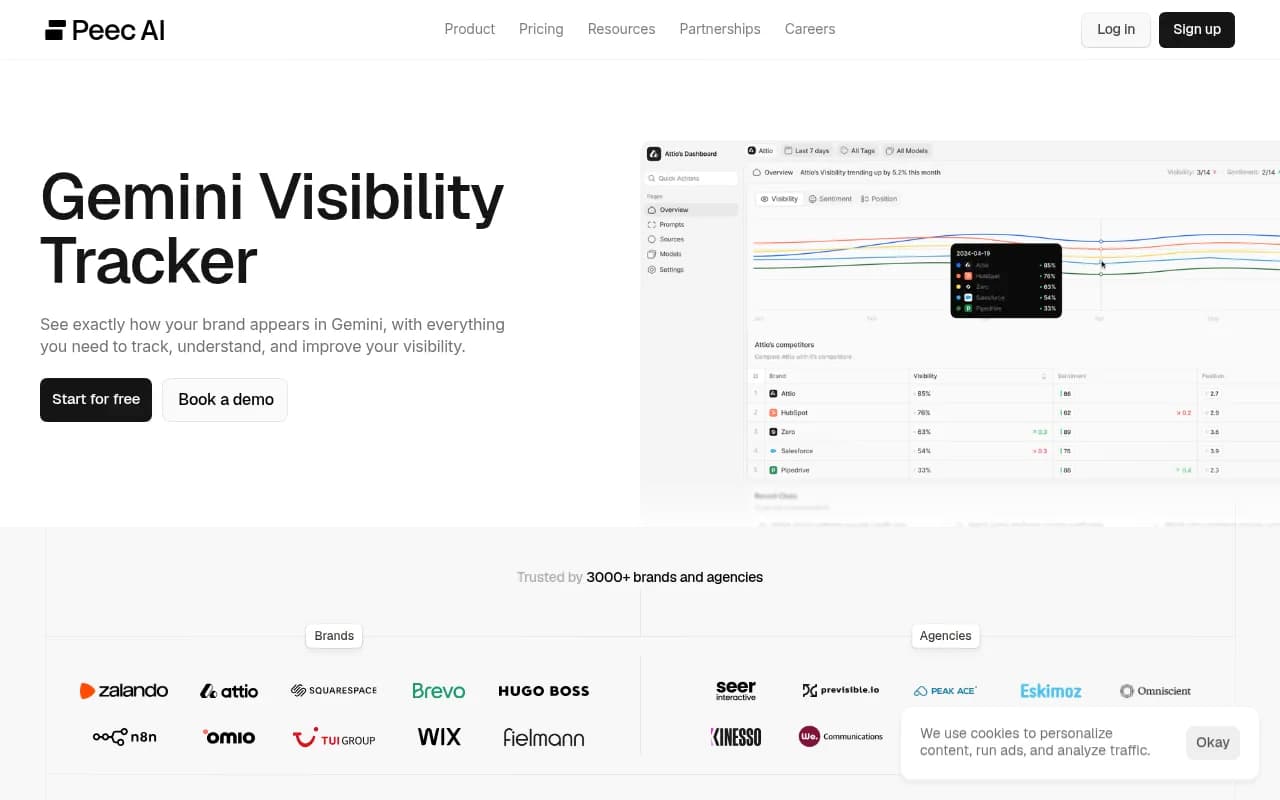
Gemini is included in every Peec AI plan at no extra charge, starting at the Starter tier ($95/mo, 50 prompts, pick 3 models). The catch is that Gemini is one of the models you choose from a set of 3 even on the higher tiers, so you're not automatically tracking Gemini plus everything else unless you pick it specifically. Paid add-ons at Peec are reserved for less common models, OpenAI's Search API, Claude Sonnet/Haiku, DeepSeek, Qwen, Grok, Mistral, not for Gemini.
Otterly.AI structures things differently. Its base plans, starting at $29/mo for Lite, cover four core engines: ChatGPT, Google AI Overviews, Perplexity, and Microsoft Copilot. Gemini isn't in that base set. It's an add-on, priced at $9/mo on Lite, $59/mo on Standard, and $149/mo on Premium. There's some inconsistency in Otterly's own marketing, one blog post lists Gemini as part of a standard "7 engines" package at the $29/mo entry price, which contradicts the pricing page's add-on structure. If Gemini coverage is non-negotiable for you, verify the current pricing page directly before you commit, because the marketing copy and the actual checkout don't fully agree.
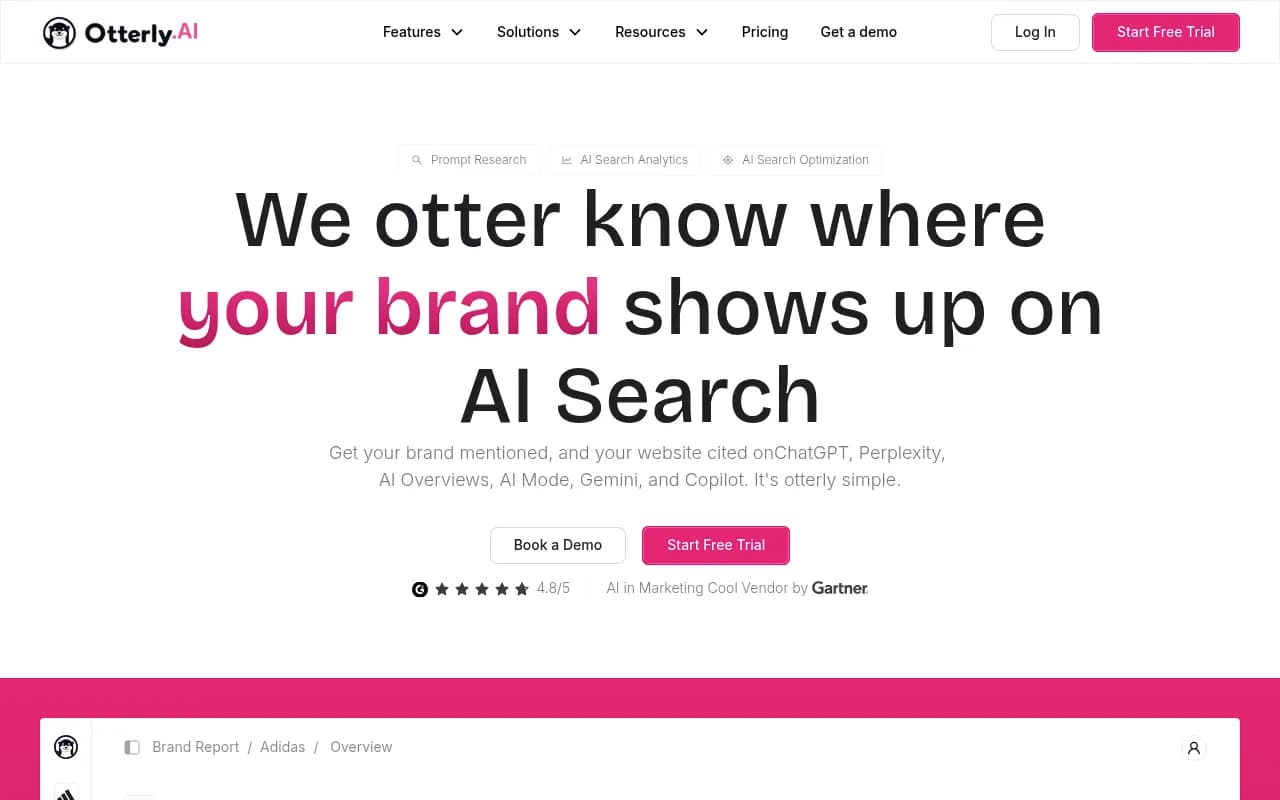
Otterly does bring things Peec doesn't: hallucination detection, which flags when a model states something factually wrong about your brand, and a 25+ factor technical GEO audit layer. Peec doesn't offer either. So the two products aren't identical minus the Gemini question, they're built around different priorities.
Side-by-side comparison
| Peec AI | Otterly AI | |
|---|---|---|
| Gemini in base plan? | Yes, every tier | No, paid add-on |
| Entry price | $95/mo (50 prompts, pick 3 models) | $29/mo (15 prompts, 4 core engines) |
| Gemini add-on cost | Not applicable, included | $9-$149/mo depending on tier |
| Gemini tracking method | UI simulation (grounding sources, position, sentiment, mentions) | Not fully documented in public materials |
| Hallucination detection | No | Yes |
| Technical GEO/AEO audit (25+ factors) | No | Yes |
| Team seats | Unlimited on every tier | Unlimited on every tier |
| Multi-country tracking | Yes, gated to Advanced ($495/mo)+ | Yes, 50+ countries even on Lite |
| Claimed customers | 3,000+ paying brands and agencies | 40,000+ marketing pros (likely includes free/trial users) |
So which one is more accurate for Gemini?
Honestly, I'd push back on the framing a little. Based on what's publicly documented, Peec AI's Gemini tracking is the more transparent of the two: it names its methodology (UI simulation, not API), defines its metrics precisely (Visibility as percent of responses where you appear, Share of Voice as your mentions divided by total category mentions, Position as average rank when mentioned), and treats Gemini as a first-class engine rather than a bolt-on. That's not the same as saying its numbers are objectively more correct, since there's no independent benchmark that grades either tool against Gemini's true behavior. But when a vendor is specific about how it collects data, that's usually a decent proxy for whether the resulting trend line is trustworthy.
A Facebook comparison post by an SEO practitioner who tested 17 AI rank tracking tools reportedly rated Peec's data accuracy highest in the group, though the full methodology behind that claim isn't public, so treat it as one anecdote rather than a settled verdict.
What matters more than picking a "winner" is understanding three things any tool needs to get right before its Gemini numbers mean anything:
- Sampling volume. A tool running your prompt set once a week will produce a wildly different picture than one running it daily across dozens of prompts. Given how noisy Gemini's outputs are per SparkToro's findings, more runs averaged over more days is the only real defense against random noise.
- Prompt set quality. If the prompts a tool generates for you don't reflect questions real users actually ask, the mention counts describe a fictional conversation, not your actual visibility. This is worth checking regardless of which tool you pick.
- UI fidelity vs API sanitization. A tool that scrapes the live consumer interface is showing you what a real Gemini user sees, including grounding citations and formatting quirks that an API call might strip out or handle differently.
A practical way to test this yourself
Don't take either vendor's word for it. Run the same 10-15 prompts manually in Gemini across a few days and a few sessions, logged in and logged out, different locations if you can manage it. Compare that manual sample against what either tool reports over the same window. You're not looking for an exact match, you're looking for whether the tool's trend direction (going up, flat, going down) agrees with what you're seeing by hand. If it does, the tool is doing its job even if the raw mention count differs by a few points from your manual spot check.
On the broader question of how AI models cite and construct answers, tools like Promptwatch take a similar UI-based approach, pulling from the real interfaces of ChatGPT, Gemini, Perplexity, Claude, and AI Overviews rather than relying solely on API responses, which tends to better reflect what an actual user encounters.
Worth flagging honestly: none of Promptwatch's public data reports currently break out Gemini-specific citation share the way they do for ChatGPT, AI Overviews, and AI Mode. If you need hard Gemini domain-level citation numbers today, that's a gap across the industry's public research, not just something Peec or Otterly are missing.
Other tools worth a look if Gemini coverage is your priority
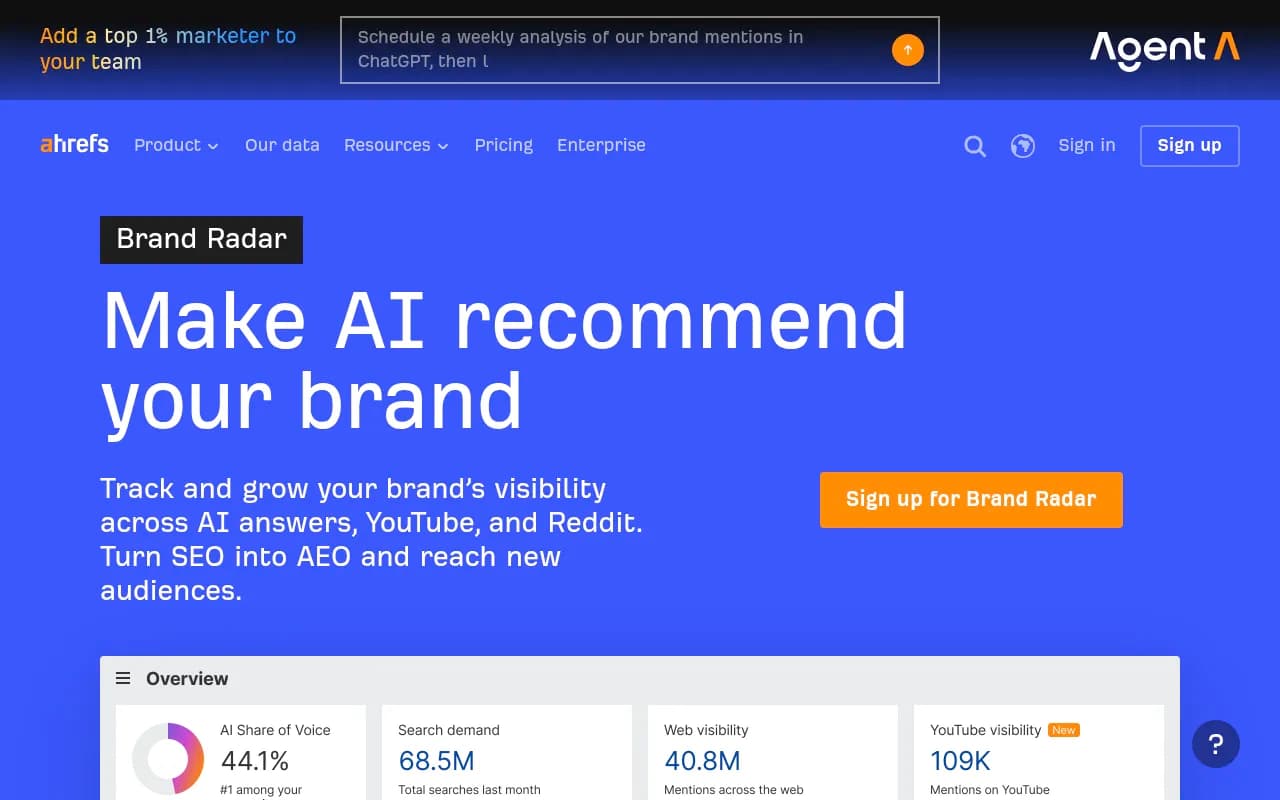
If neither Peec nor Otterly fits your budget or feature needs, a few other platforms in this space are worth a glance. Ahrefs Brand Radar builds its prompts from real "People Also Ask" search volume data rather than synthetic queries, which is a genuinely different architecture for grounding mention counts in actual user behavior, and it covers six AI engines including Gemini without needing an enterprise add-on.
Rank Prompt and Visby AI both market themselves specifically around cross-engine tracking that includes Gemini as standard.
Rank Prompt
If you want a broader shortlist, the AI visibility directory at ai-rank-tools.com covers dozens of these platforms side by side, and bestgeosoftware.com is a good place to compare GEO-focused suites if content optimization matters as much as monitoring to you.
Bottom line
Peec AI includes Gemini in every plan and documents its tracking methodology clearly enough that you can reason about what its numbers mean. Otterly AI charges extra for Gemini and is less specific publicly about how it queries the model, though it compensates with hallucination detection and a deeper technical audit that Peec doesn't offer. Neither one can hand you a single, indisputable Gemini mention count on any given day, because Gemini itself doesn't produce consistent answers to identical prompts. Pick based on whether you need Gemini bundled in from day one (Peec) or you value hallucination flagging and audit depth enough to pay the Gemini add-on tax (Otterly), and validate either tool's trend against your own manual spot checks before you report the numbers to a client.