Key takeaways
- Traditional rank tracking measures a deterministic, stable output (a URL at position X for a keyword). ChatGPT and other AI engines produce probabilistic answers that can change between two identical queries run seconds apart.
- ChatGPT cites roughly 5 sources per web-search response, about half the slots of a Google results page, which means each citation is more contested, according to Promptwatch's data on average sources per response.
- Backlinks correlate weakly with AI visibility (0.218) while branded web mentions correlate more than 3x stronger (0.664), per Ahrefs' 75,000-brand study, so the SEO playbook of link building doesn't transfer cleanly to AI visibility.
- Model updates can wipe out citation slots overnight. ChatGPT's average citations per response dropped about 27% around the GPT-5.3 rollout in March 2026 and never recovered, with no relationship to anyone's content quality.
- A single prompt check tells you almost nothing. Independent research found less than a 1-in-100 chance ChatGPT gives the same brand list twice across repeated runs, which is why weekly aggregated tracking beats daily snapshots.
Why this comparison keeps coming up
Every SaaS marketer who has spent a few years staring at Ahrefs or Semrush dashboards eventually asks the same question when someone brings up ChatGPT visibility: isn't this just rank tracking for a different search engine? I get why. The instinct is reasonable. You query something, you get results, you track your position over time. Same shape, different box.
It isn't the same shape. Once you actually run the comparison side by side, the differences aren't cosmetic, they're structural. The thing being measured is fundamentally different, which means the tools, the cadence, and the KPIs you report on all have to change too.
The core difference: deterministic vs probabilistic output
A Google SERP for a fixed keyword, location, and device is close to deterministic. Rank the same query twice within an hour and you'll typically get the same page in the same slot, modulo personalization quirks. That stability is what makes traditional rank tracking work as a daily or weekly line-item metric.
ChatGPT doesn't behave like that. Independent research from SparkToro and Gumshoe.ai, which ran 12 prompts across ChatGPT, Claude, and Google AI Overview/Mode a combined 2,961 times with 600 volunteers, found less than a 1-in-100 chance that ChatGPT or Google AI return the same list of brands twice in 100 runs of an identical prompt. Ordering consistency across runs is roughly 1-in-1,000. Even list length varies: sometimes you get two or three brand names, sometimes ten.
A separate 90-day, 8-engine, 1,000-prompt volatility study from MaxAEO tried to separate noise from actual drift. Same-hour repeat runs matched on the top-3 brand set only about 46% of the time, meaning over half of what looks like day-to-day movement is sampling noise, not real change. Once you adjust for that, the real, noise-adjusted rate at which the top recommendation changes is about once every 10-11 days, with roughly 22% of a top-5 list turning over week to week. That's the study's recommended signal threshold: weekly aggregated tracking, not daily spot checks.
This has a direct practical consequence. If you're checking ChatGPT once a week by hand and reporting whatever you saw as "your ChatGPT ranking," you're mostly reporting noise. A single-prompt, single-run check is not a measurement, it's a coin flip with your brand's name on it.
Fewer citation slots, and they move overnight
Here's something rank trackers never had to deal with: the number of available "slots" changes on its own, without warning, because of a platform update rather than anything happening in the SERP.
According to Promptwatch's average-sources-per-response data, ChatGPT typically cites around 5 sources per web-search-enabled response, compared to roughly 10 for Google AI Overviews and a very stable 10 for Perplexity. Half the inventory of a traditional results page means every citation is worth more and every loss stings more.
And that inventory isn't fixed. Around the GPT-5.3 rollout on March 4, 2026, average citations per ChatGPT response dropped from roughly 6.4 the week before to 4.7-4.9 by late March, a roughly 27% drop, and it hadn't recovered a month later. Promptwatch's data on the citation drop shows this hit GPT-5.3, GPT-5.4, and GPT-5-Mini simultaneously, confirming it was a platform-wide change in search behavior, not something isolated to one model. If your citation count fell off a cliff that week and you assumed you'd done something wrong with your content, you hadn't. The floor moved under everyone at once.
Traditional rank tracking has nothing structurally comparable. Google doesn't quietly halve the number of blue links on page one across the entire web overnight. When AI platforms do this, and they do, it looks identical in your dashboard to a real visibility loss unless you're checking release dates against your data.
Even the query changes underneath you
Rank trackers assume the keyword is the fixed unit. You track "project management software" and that string stays the string. ChatGPT doesn't search the way a rank tracker expects.
When ChatGPT decides to search the web, it breaks your single prompt into background "fanout" queries, sometimes 3-8 of them. Promptwatch's query fanout data shows the average query length shrank from around 117 characters in early December to about 53 characters by April, meaning ChatGPT increasingly searches like short keyword strings rather than full natural-language questions. That changes what your headings and titles actually need to match.
Then, on August 8, 2026, ChatGPT Search started using the site: operator at scale. The share of fanout queries using site:domain.com jumped from about 0.4% to 17% overnight, according to Promptwatch's site operator data, and queries per response nearly doubled the same day. This is additional retrieval, not a replacement for regular web search, and it means ChatGPT is now actively crawling your own domain directly during a single response. If your internal search or category pages are thin, or pages aren't indexed properly, you lose answers, not just rankings. There's no equivalent behavior in traditional SEO where Google literally re-searches your own site mid-query.
Backlinks matter less, brand mentions matter more
This is probably the single biggest mental shift SaaS teams need to make. Ahrefs studied 75,000 brands and found branded web mentions correlate at 0.664 with AI Overview visibility, while backlinks, the metric SEO has been built around for two decades, correlate at just 0.218. Branded anchors (0.527) and branded search volume (0.392) also beat backlink count. A later cut of related data reportedly found YouTube mentions correlate even higher, around 0.737.
Worth a caveat: correlation isn't causation. Strong brands probably generate both more mentions and more backlinks, so some of this is likely a shared cause rather than mentions directly driving citations. Still, the practical implication holds up: a link-building campaign that ignores unlinked brand mentions on Reddit, review sites, and industry publications is optimizing for the wrong signal in AI search.
What content actually gets cited is different too
Traditional SEO content strategy leans heavily on blog posts built to rank for keywords. ChatGPT's citation behavior doesn't reward that the same way. Promptwatch's citation type data for July 2026 shows product pages were the most-cited content type at 32.8% of citations, nearly doubling from about 18% in March. Listicles followed at 9.7%, then news at 5.2%, how-tos at 4.1%, social posts at 4.1%, and comparisons at 2.9%, with listicles, how-tos, and comparisons all growing through the month.
The read here: ChatGPT increasingly cites brands' own commercial pages directly, rather than routing through third-party blog write-ups the way classic content-marketing funnels assume. That's a different game than writing top-of-funnel content and hoping it ranks.
Where reviews fit for SaaS specifically
For B2B software, Promptwatch's domain citation data shows G2 and Trustpilot are the review platforms ChatGPT actually cites at meaningful scale, each around 0.1-0.3% of all citations, which is a real share when isolated to vendor-selection prompts. Trustpilot's share is trending upward, tied to review freshness. Capterra sits at roughly half that share, and GetApp, Software Advice, and Clutch barely register. If you're spending review-generation budget evenly across five directories, you're probably wasting most of it. Concentrate on G2 and Trustpilot with an always-on review cadence.
Reddit is the wildcard. It's the only social platform ChatGPT cites at real scale, typically 2-4%, but it peaked at 10-14% before a September 2025 policy change and then collapsed about 90% to roughly 1% within days. A separate, later drop hit August 14, 2026, when Reddit's share of ChatGPT Search citations fell from about 4% to 0.5%, per Promptwatch's Reddit citation data, while Google AI Overviews and AI Mode declined more gradually over the same window. Building a GEO strategy around Reddit citation volume specifically is a bet on a channel that has already been cut twice in under a year.
Ads showed up in AI answers with no traditional analog
One more variable rank tracking never had to account for: paid placements inside the answer itself. ChatGPT Search served zero ads until May 27, 2026. By the most recent 7-day window in Promptwatch's ad data, the average sat at 32.4% of citation-enabled responses, peaking as high as 43.9% on some days. Of ad-bearing responses, about 73% come from generic, non-branded prompts, meaning even a plain category search now carries paid placements alongside organic citations. That's a genuinely new competitive layer with no equivalent in classic SERP rank tracking, where ads and organic results have always been visually and structurally separate.
Side-by-side: what actually changes
| Dimension | Traditional rank tracking | ChatGPT / AI brand mention tracking |
|---|---|---|
| Output type | Deterministic, stable position for a fixed query | Probabilistic, can vary between identical runs |
| Repeat-run consistency | Same result within an hour, barring personalization | Less than 1-in-100 chance of an identical brand list across 100 runs |
| Citation inventory | ~10 organic blue links per SERP | ~5 sources per ChatGPT response (about half); AI Overviews and Perplexity closer to 10 |
| Strongest correlated signal | Backlinks, Domain Rating | Branded web mentions (0.664 vs 0.218 for backlinks) |
| Most-cited content type | Blog/informational content optimized for keywords | Product pages (32.8% of ChatGPT citations in July 2026) |
| Stability over time | Changes gradually with algorithm updates | Can shift ~27% overnight after a single model rollout |
| Attribution | Click-through to a tracked URL | Often no click at all; unlinked mentions still influence buyers |
| Ads | Clearly separated from organic results | Mixed into the answer itself, in ~32% of citation-enabled responses |
| Recommended check frequency | Daily is fine, results are stable | Weekly aggregated, daily checks mostly capture noise |
What this means for your measurement framework
A useful mental model borrowed from practitioners tracking this closely is to separate four distinct things instead of collapsing them into one "ranking" number:
- Mention: your brand name shows up in the response text, with or without a citation.
- Citation: a specific URL of yours is referenced as a source.
- Sentiment and framing: is the mention accurate, positive, neutral, or wrong.
- Position: are you named first, or buried after three competitors.
Treat these as four separate metrics you trend over time, not one composite "ChatGPT rank." And don't check once and call it a report. As the Rankability team put it plainly, the biggest mistake in this space is checking one prompt once and calling it a ranking report. Consistency of measurement conditions, same prompts, same phrasing, run on a schedule, matters more than precision on any single check.
Also build in a habit of checking model release dates before panicking over a citation drop. If your numbers fell off a cliff the same week OpenAI shipped a new model, that's almost certainly not your content's fault.
Tools built for this, versus tools you already own
Your existing rank tracker isn't going to give you any of this. Most traditional platforms are bolting on a small AI-tracking module, a handful of tracked prompts inside an otherwise SEO-first product, which is fine as a toe-in-the-water but thin for anything serious.
Dedicated AI visibility platforms are built around the differences above from day one: non-deterministic sampling across many runs, citation-type breakdowns, crawler-level visibility into what AI bots are actually reading on your site, and increasingly, the ability to act on what they find rather than just report it.
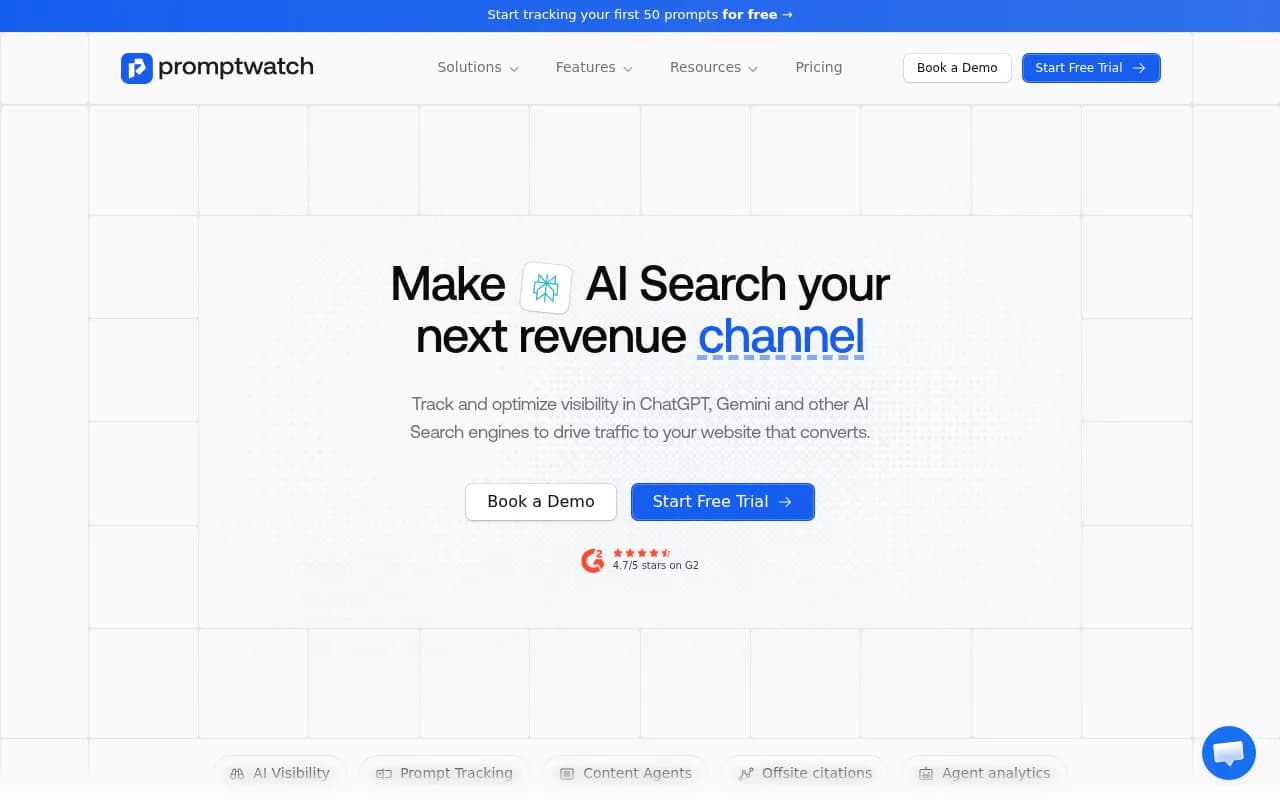
Promptwatch is one option worth looking at here, particularly because it goes past monitoring. It tracks prompt volumes and difficulty, citation trends by content type and source, AI crawler logs showing exactly which pages ChatGPT and other bots hit and where they error out, and visitor analytics tying AI traffic to real conversions. It also runs Content Agents that draft and publish AEO-optimized content to your CMS and a Unified Actions queue that turns all that data into a prioritized to-do list, which matters given how fast the underlying platforms shift.
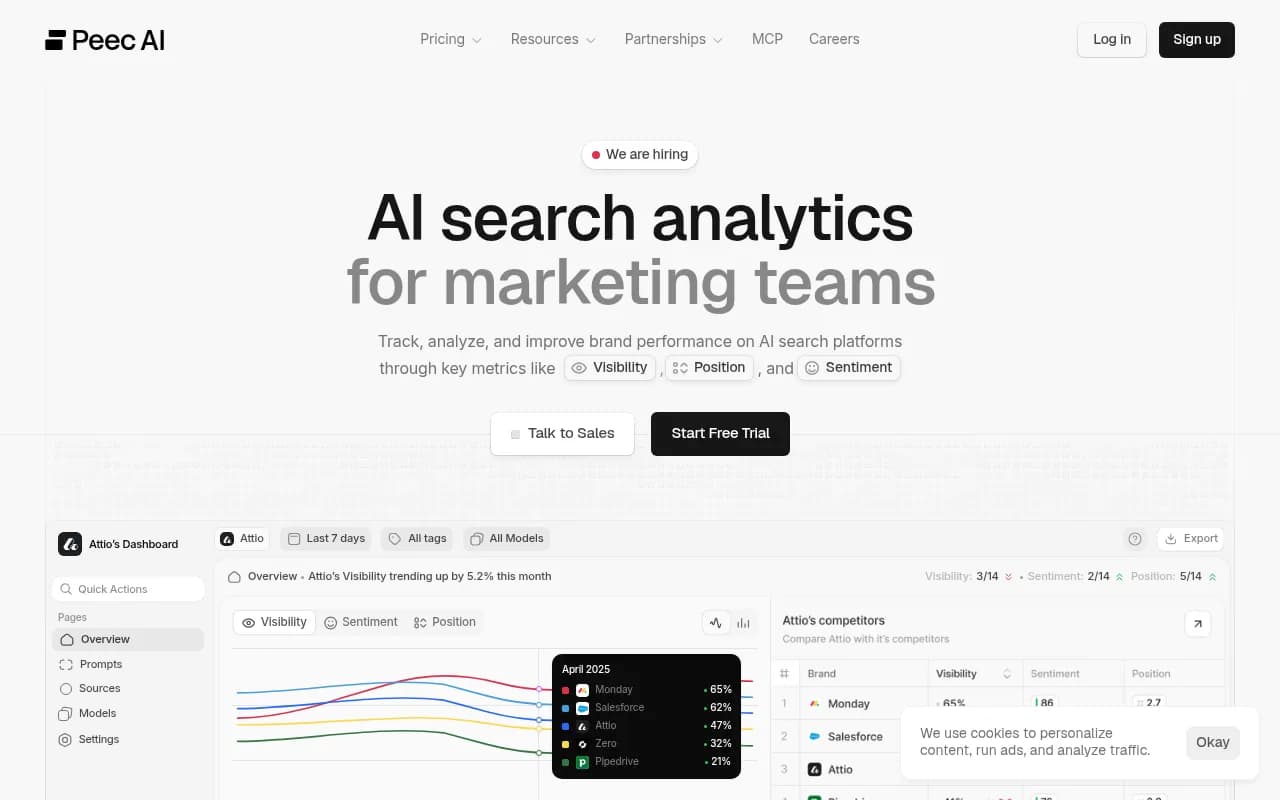
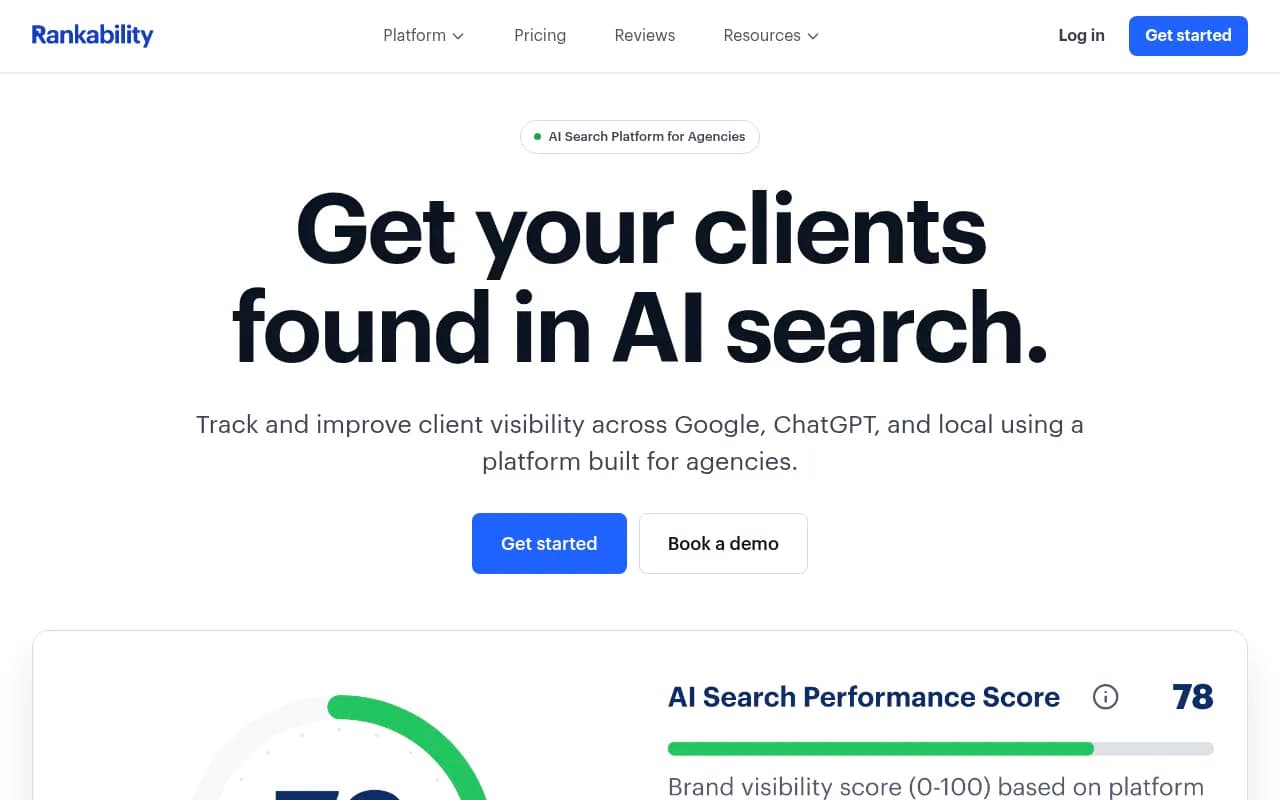
Other options worth knowing about in this space include Profound, which built an automated remediation layer for inaccurate mentions, Peec AI for straightforward multi-model prompt tracking, and Rankability, which bundles ChatGPT tracking alongside traditional rank data if you want both signals in one dashboard.

If you're evaluating a broader set of options, the GEO software directory at bestgeosoftware.com is a reasonable place to compare feature sets side by side before committing to a monthly plan.
The bottom line
This isn't rank tracking wearing a new hat. The measurement unit changed (probabilistic instead of deterministic), the inventory shrank (roughly half the citation slots of a SERP), the strongest correlated signal flipped (mentions over backlinks), the content that gets rewarded shifted (product pages over blog posts), and a brand-new variable, in-answer ads, showed up with no precedent. Treat ChatGPT visibility as its own discipline with its own cadence, and stop expecting your rank tracker's mental model to transfer cleanly. It won't, and the data above is pretty clear about why.