Key takeaways
- Semrush ($99/month per domain), Ahrefs Brand Radar (from $199/month per AI index, $699 for all models) and HubSpot AEO ($50/month standalone) are all monitoring-first products. They tell you where you appear, and you do the fixing.
- Ahrefs has the biggest prompt database and the widest engine coverage of the three. It is also the most expensive way to get full coverage once you add a base Ahrefs plan.
- HubSpot AEO is the cheapest and the easiest for marketers, but its engine coverage is narrower (ChatGPT, Gemini, Perplexity).
- Dedicated GEO platforms differ in four places: crawler logs, AI traffic attribution, content execution, and citation analysis beyond a mention count.
- If you already pay for Semrush or Ahrefs, the add-on is a sensible starting point. If AI search is a revenue channel you want to grow, you will probably outgrow it.
Why this comparison keeps coming up
Every SEO suite shipped an AI visibility product in the last year. Meanwhile a whole category of tools built only for AI search grew up beside them. Buyers now ask the same question: do I add a module to the tool I already pay for, or buy something built for this?
There is no universal answer. But the trade-offs are clearer than the marketing makes them sound, and they mostly come down to what you want to do after you see the data.
One point first. AEO, GEO and "AI SEO" describe the same goal: getting mentioned and cited in AI-generated answers. Vendors use the terms interchangeably (HubSpot says AEO, most others say GEO), so judge a tool by what it measures and what it helps you ship, not by the acronym on the box.
What the three suites actually are
Semrush AI Visibility Toolkit
Semrush launched its AI product in September 2025 as an add-on to its core suite. According to Semrush's pricing page, the standalone toolkit costs $99/month per domain billed annually, and each additional domain costs another $99/month. That corrects an older claim you will still see around the web, that AI features require a Guru or Business plan from roughly $249.95/month. Check the current tiers on Semrush's pricing page before you buy, because they have shifted.
The pitch is one login for keyword research, site audits and AI tracking. It also has a prompt volume estimate, which gives some strategic context beyond raw citation counts. A competitor review (Profound, so treat it as biased) says the $99 plan covers one domain, one user and ChatGPT tracking, with extra users at $99/month each. Rankability's review says many users feel the toolkit falls short at that price. I would treat both as signals to test it on a trial rather than as verdicts.
For teams already living in Semrush, staying put is a reasonable call.
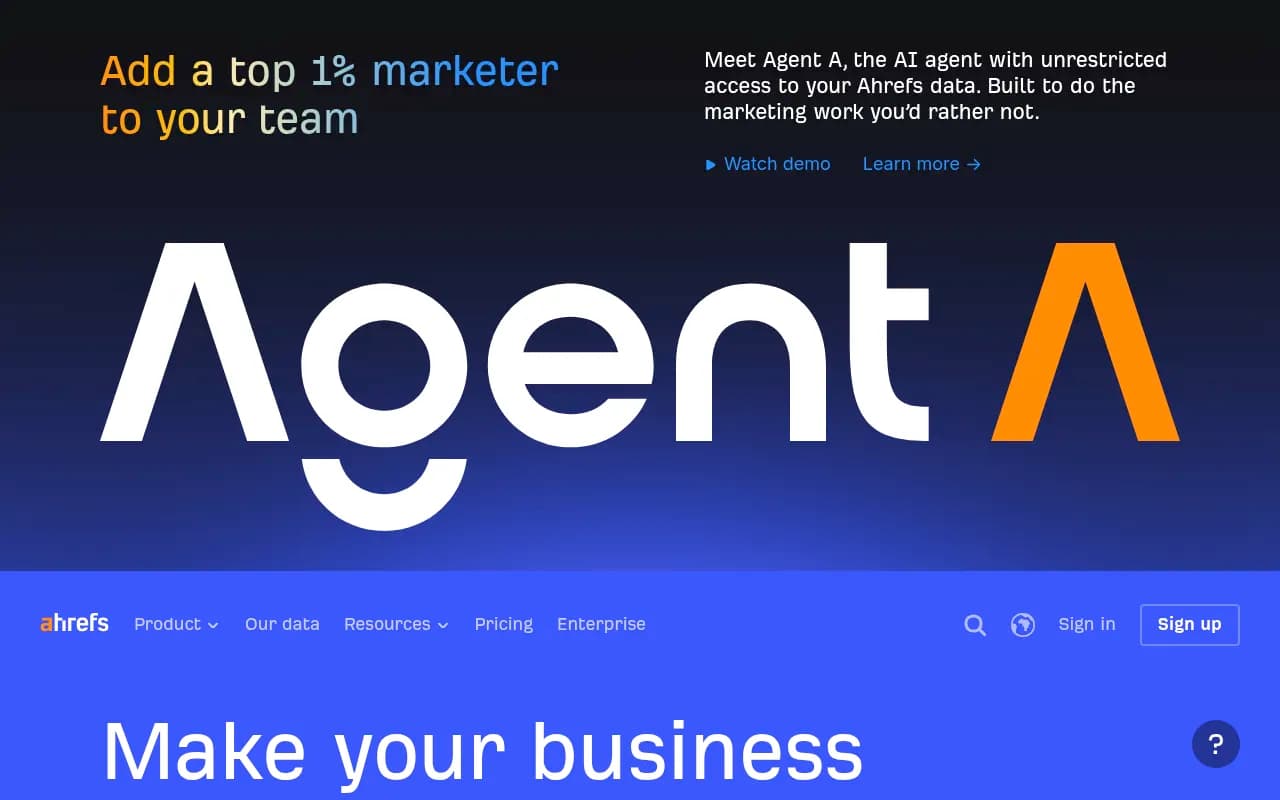
Ahrefs Brand Radar

Brand Radar used to be a free beta feature. It is now a paid add-on. Per Ahrefs' own pages, the AI Visibility Index starts at $199/month and maps hundreds of millions of real prompts (the figure shown is 531 million; third-party reviews cite older numbers like 239M or 470M, so the database has clearly been growing). Covering all models costs $699/month. Custom prompt tracking, refreshed daily, starts at $50/month for 2,500 checks, with overage billed per check.
Coverage is the strong point. Depending on the source and plan you get Google AI Overviews, AI Mode, ChatGPT, Perplexity, Gemini and Copilot, plus Reddit, TikTok and YouTube. Most competitors do not reach social and video channels. Brand Radar also surfaces AI mention data inside Site Explorer, so you can ask whether the pages earning AI mentions are the same ones earning backlinks.
The cost is the catch. A third-party review calculated a minimum of $129 (base plan) plus $699 for full AI visibility, so $828/month, and called it extremely expensive. Ahrefs pricing also scales with seats and projects, which hurts agencies. Ahrefs itself remains excellent at what it was built for.
HubSpot AEO

HubSpot AEO is sold standalone at $50/month ($45 billed annually) and needs no HubSpot subscription. It is also included in Marketing Hub Pro and Enterprise. A free AI Search Grader gives a one-time snapshot of how ChatGPT, Perplexity and Gemini represent your brand, scoring sentiment, recognition and competitive standing. The paid product adds ongoing prompt tracking, competitor comparison and prioritized recommendations.
It is the most marketer-friendly of the three. Guided onboarding lets you tailor prompts to different ideal customer profiles. HubSpot for Marketers subscribers can go further: take a recommendation, create content with Content Agent, and track that URL's impact in one place. That is the closest any of the three gets to closing the loop, and it only works inside the HubSpot ecosystem.
I could not confirm HubSpot's prompt limits or per-tier engine coverage, so verify those before you commit.
Side-by-side comparison
| Semrush AI Visibility | Ahrefs Brand Radar | HubSpot AEO | |
|---|---|---|---|
| Entry price | $99/mo per domain | $199/mo per AI index; $50/mo custom prompts | $50/mo ($45 annual) |
| Full coverage | Extra domains $99 each | $699/mo all models, plus base plan from $129 | Included tiers vary, check HubSpot |
| Engines | ChatGPT, AI Overviews, Gemini, Perplexity | AI Overviews, AI Mode, ChatGPT, Perplexity, Gemini, Copilot, plus Reddit, TikTok, YouTube | ChatGPT, Gemini, Perplexity |
| Prompt research | Prompt volume estimate | Largest prompt database | Guided, CRM-informed suggestions |
| Content execution | Audit flags, you write | Mostly research, you write | Content Agent (HubSpot for Marketers) |
| Best for | Existing Semrush users | SEO-led teams with Ahrefs | Small to mid-size marketing teams |
Where SEO suites stop
This is the part that matters. All three share the same shape: a measurement layer sitting on top of a product built for rankings and links. A Developios roundup put it bluntly: every platform in this category is a measurement layer, and none of them write content, restructure schema or ship optimized pages for you.
That is slightly unfair to HubSpot, but the point holds for the category. Specifically, suites tend to be thin in these areas.
Crawler visibility
A citation count tells you the outcome. It does not tell you whether GPTBot or ClaudeBot actually reached your pages, hit errors, or got blocked. Suites built on rank tracking and backlink indexes mostly lack IP-verified AI crawler logs. Without them, a brand that is mentioned but never self-cited has no way to tell whether the problem is content or crawlability.
Traffic and revenue attribution
Mentions are not revenue. Knowing that AI-referred visitors converted, and on which pages, requires visitor analytics tied to AI sources. Most suites do not offer that.
Citation analysis
Engines behave very differently. Promptwatch Data's average sources per response report shows ChatGPT citing about 5 sources per web-search answer, while Google AI Overviews and Perplexity each cite about 10. Microsoft Copilot's average swung from under 2 to nearly 17 within a few weeks before settling low. Any tool that blends engines into one number hides this. You want per-engine reporting.
Content type matters too. Promptwatch Data found product pages were the most cited content type in ChatGPT at 22.4% of citations (Sep 28 to Oct 4, 2026), followed by landing pages and listicles (content type report). And pages age differently: landing pages and docs stayed cited longest, while news lost half its pages within 36 days (content half-life report). A dashboard that only counts mentions cannot tell you that.
Real interface data
SEO-derived prompt databases are built from search queries, not from what people actually ask AI. Profound's comparison argues this is a critical gap, and while that is a competitor talking, the underlying logic is sound: AI answers and Google results do not overlap as much as you would expect. Look for tools that sample real AI interfaces rather than only APIs, since user-facing answers and citations can differ from API output.
What dedicated GEO platforms add
Dedicated platforms vary a lot, and this category includes simple trackers as well as full optimization stacks. A rough way to sort them:
| Type | What you get | Examples |
|---|---|---|
| Prompt trackers | Mentions, share of voice, competitor view | Otterly.AI, Peec AI, Rankscale |
| Enterprise monitoring | Deeper citation and sentiment analysis, higher price | Profound, Scrunch |
| Technical and crawler-focused | Structural fixes, bot verification | Botify, Scrunch |
| Content-first | Production workflows, weaker visibility data | AirOps, Writesonic GEO |
| End-to-end optimization | Tracking, crawlers, attribution, content, publishing | Promptwatch |




The end-to-end option
Promptwatch is the one I would point to if the goal is growing AI-driven revenue rather than watching a chart. It tracks the actual interfaces of ChatGPT, AI Overviews, AI Mode, Gemini, Perplexity, Copilot, Meta AI and others by country and language, and adds IP-verified crawler logs, visitor analytics for AI-referred traffic, and weekly site audits. Where the suites stop at showing a gap, its Action Board and Content Agent plan, write and publish content to WordPress, Webflow or Framer, then track whether each page is crawled, cited and clicked. It also covers Reddit, YouTube and LinkedIn citations, AI Shopping and Ads Radar, and query fan-outs.

Plans start at $95/month (Essential) with a free tier for ChatGPT only, and the Business plan at $579/month includes the Content Agent. Confirm current numbers at promptwatch.com/pricing. It is ISO/IEC 27001 certified, which helps with enterprise procurement. It is not a classic SERP rank tracker, though it does bring in Search Console and Bing data.
That is a different category from a $99 add-on. Whether you need it depends on your goals, which brings us to the decision.
How to choose
Stay with your suite if
- You already pay for Semrush or Ahrefs and just need to know whether AI search is a problem worth solving.
- Your content team already handles briefing, writing and publishing, and you only need monitoring.
- You track one or two domains and a modest prompt set.
- Budget is tight. HubSpot AEO at $50/month is the cheapest sensible starting point, and the free AI Search Grader costs nothing.
Add or switch to a dedicated platform if
- You need to know why you are or are not cited, not just whether you are.
- You want crawler logs, to confirm AI bots can read your site.
- You need to tie AI visits to conversions.
- You want help producing and publishing content, not only a to-do list.
- You manage many clients or brands. Suite pricing that scales per domain, seat or AI index gets expensive fast. Run the arithmetic: Ahrefs at $828/month minimum for full coverage buys a lot of dedicated-platform capacity.
Using both
HubSpot's own guidance is that using Semrush for SEO and HubSpot for AEO is a fine pairing, and the same logic applies to any suite plus a dedicated tool. Keep the suite for keyword and backlink work, where it is strong. Use the GEO platform for the AI-specific layer. Good AEO still relies on a solid SEO foundation, so you are not choosing between them as much as deciding where the AI layer lives.
A quick evaluation checklist
- Does it sample real AI interfaces or only APIs?
- Does it report each engine separately?
- Can it show AI crawler activity on your site?
- Can it attribute traffic and conversions to AI sources?
- What happens after it finds a gap: a recommendation, or a published page?
- What does the realistic bill look like with the seats, domains and engines you need?
- Does it cover Reddit, YouTube and LinkedIn, where relevant to your category?
Number six deserves a real calculation. Most of the pricing surprises in this category come from add-on structures, not headline prices.
What the independent evidence is missing
Two caveats. First, almost every comparison available is published by a vendor with something to sell, including HubSpot's own review of itself against Semrush, and AirOps and Profound reviews of their competitors. Take claims about rivals with salt. Second, I could not find independent accuracy benchmarks for any of these tools, so nobody has verified whose mention counts are closest to reality. Run a trial on your own prompts and compare the outputs against a manual check in the actual interfaces.
The network also lists more options in the GEO software directory if you want to browse past the names above, and the AI rank tracking directory covers the monitoring-only end.
The bottom line
SEO suites are fine if you want an inexpensive look at AI visibility alongside what you already do. Ahrefs wins on breadth and research depth, Semrush on workflow unity, and HubSpot on cost and simplicity. But all three are measurement products. If you want to understand crawler behavior, attribute revenue, and ship content that closes gaps, you need something built for that job, and the extra cost is justified once AI search starts producing meaningful conversions. Start with whatever you already own, measure for a month, and move up when the data shows you what you cannot fix with a dashboard.