Key takeaways
- None of the three plugins will make you visible in ChatGPT on their own. They control things on your server: schema, meta data, structure, and crawler access. Actual AI visibility depends on your content and on tracking tools built for the job.
- llms.txt is the most oversold feature of 2026. All three plugins now generate one, but markdown files make up just 0.05% of AI search citations. Treat it as a 30-minute nice-to-have, not a strategy.
- Schema matters more than ever, but for a new reason. Product pages were the single most cited content type by ChatGPT in July 2026, at roughly a third of all citations. Clean product and FAQ schema is now directly tied to AI citation eligibility.
- AI visibility tracking inside the plugins is thin or expensive. Yoast gates its AI Brand Insights behind a $358.80/year plan, Rank Math requires a separate Content AI subscription, and AIOSEO bundles its AI Suite into paid plans. A dedicated platform like Promptwatch does this job properly.
- Rank Math wins on free-tier AI readiness, Yoast wins on free AI-era plumbing (llms.txt and schema aggregation cost nothing), AIOSEO wins on bundling everything into one subscription.
What AI search actually reads (and what it ignores)
Before we compare plugins, we need to be honest about what "AI search readiness" even means, because the vendors are selling different things under the same label.
AI search engines cite HTML pages. Almost exclusively. Promptwatch's analysis of 1.6 million citations found that markdown files account for just 0.05% of AI search citations, while HTML makes up 99.94% (Promptwatch's markdown in AI search data). That single number deflates half the AI-readiness marketing you'll see this year.
What does get cited? In July 2026, product pages led ChatGPT Search citations at roughly a third of all citations, nearly double their share from March, with listicles the fastest-growing format behind them (Promptwatch's ChatGPT citation types data). Google AI Overviews followed the same direction: product pages overtook listicles as the most cited format in late July (Promptwatch's AI Overviews citation types data).
There's also less room at the table than people assume. ChatGPT averages around 5 sources per response, while Google AI Overviews and Perplexity sit closer to 10 (Promptwatch's average sources per response data). Fewer slots means fiercer competition per citation.
So when a plugin claims "AI search readiness," the honest translation is: it helps you produce clean, well-structured HTML with proper schema, and it manages how AI crawlers access your site. That's real and worth doing. It is not the same as being visible.
The three contenders at a glance
Yoast SEO is the incumbent. 5+ million active installs, the most familiar interface in the industry, and in 2026 it has leaned into AI-era features more aggressively than its reputation suggests. The free plugin now includes llms.txt generation and something called Schema Aggregation, both built with Microsoft's NLWeb technology. The catch is the upsell surface and per-site pricing.
Rank Math is the feature maximalist. Its free tier includes things Yoast charges for (redirects, 404 monitoring, a broad schema set), and its Pro license covers unlimited personal sites for less than Yoast charges for one. It has a dedicated LLMs Txt module and an AI Visibility tracker, though the latter requires a Content AI subscription.
AIOSEO is the marketing-team suite. Guided setup, TruSEO page analysis, and an AI Suite that tracks brand mentions across five AI engines inside WordPress. It's the most aggressive about bundling, and the only one of the three that puts AI visibility tracking in every paid plan rather than a premium tier.

An independent comparison from WPPoland put it well: Rank Math and AIOSEO win on built-in breadth, Yoast wins on stability and author guidance. That framing holds up when you look specifically at AI readiness.
Schema and structured data: the feature that quietly became an AI feature
Schema used to be about rich snippets in Google. Now it's also about giving AI systems an unambiguous machine-readable description of what your page is, which matters when product pages are the most cited content type in AI search.
Here's where the three plugins genuinely differ:
| Capability | Yoast | Rank Math | AIOSEO |
|---|---|---|---|
| FAQ schema | Free | Free | Free (Basic plan) |
| HowTo schema | Free | Free | Paid plans |
| Product / WooCommerce schema | Paid add-on | Free | Paid plans |
| Custom schema builder | No | Pro only | No |
| ItemList schema on archives | No | Pro only | No |
| Schema Aggregation (NLWeb) | Free, all tiers | No equivalent | No equivalent |
| Local SEO schema | Paid add-on | Free (193 business types) | Plus plan and up |
Rank Math's free schema set is the standout. FAQ, HowTo, Product, WooCommerce, and Easy Digital Downloads schema all ship in the free plugin, which is genuinely generous. The Custom Schema Builder in Pro is the only one of the three that lets you build arbitrary schema.org types without touching code.
Yoast's counterpunch is interesting. Schema Aggregation, available on every tier including the free plugin, is built on Microsoft's NLWeb and is explicitly designed to describe your site content "in a language AI understands." I'm skeptical of the phrasing, but the underlying idea, a coherent site-wide schema graph rather than per-page fragments, is sound. AI systems do better with consistent entity relationships.
AIOSEO ties schema to plan level, which is the most restrictive approach. Basic gets you smart schema and the AI title/description generator, but local, image, and author SEO (the E-E-A-T module) start at the Plus plan, and the redirection manager and news/video sitemaps wait until Pro.
Verdict on schema: Rank Math for breadth and the custom builder, Yoast if you want a coherent free schema graph, AIOSEO if you're already paying for a higher tier anyway.
The llms.txt question: all three have it, none of it matters much
This is where 2026 marketing gets ahead of reality, so let's be blunt.
All three plugins now generate an llms.txt file:
- Rank Math ships a dedicated LLMs Txt module that auto-generates the file and points AI platforms at your most valuable content.
- Yoast includes llms.txt generation in the free plugin, with automatic content selection or manual curation and a live preview.
- AIOSEO has an llms.txt generator available on all plans, including Lite.
And here's the problem. SE Ranking analyzed 300,000 domains and found no correlation between having an llms.txt file and AI citation frequency. Removing llms.txt as a variable from their prediction model actually improved its accuracy. Among the 50 most AI-cited domains, exactly one had an llms.txt file. Google's John Mueller has confirmed that no Google Search system reads or acts on llms.txt, and as of early 2026, no major AI provider has publicly confirmed using it in production for consumer search.
The data backs this up. Remember that 0.05% markdown citation share. AI search engines cite HTML. Markdown files get fetched by coding agents like Claude Code and Cursor, and documentation platforms like Mintlify and Supabase Docs serve llms.txt for developer-tooling reasons, which is a legitimate use case. But as a GEO tactic for getting cited in ChatGPT, llms.txt is close to worthless.
My advice: enable it, since it costs you nothing and might help AI agents navigating your site for other purposes. Spend zero further minutes on it. If a plugin vendor leads their AI-readiness pitch with llms.txt, that tells you their AI story is marketing-first.
AI crawler control: Yoast is the only one with a real interface
Here's a feature gap nobody talks about. In 2026, the defensible robots.txt strategy is to block training crawlers (GPTBot, ClaudeBot, Google-Extended) while allowing search and retrieval crawlers (OAI-SearchBot, PerplexityBot, Claude-SearchBot), because the retrieval bots are the ones that send you actual traffic.
Yoast has a named feature for this. Bot Blocker, available on Premium and higher tiers, gives you a UI to allow or block specific AI crawlers from using your content. It's the only one of the three plugins with a granular crawler-permission interface that I could verify. Rank Math and AIOSEO both let you edit robots.txt, but neither surfaces a purpose-built AI crawler toggle in the same way.
Is Bot Blocker worth the Premium price on its own? No. But if you're managing client sites and don't want to hand-edit robots.txt every time a new bot appears, it's a genuine convenience, and it's the kind of plumbing feature that will keep mattering as the crawler list grows past 400 identified bots.
AI visibility tracking inside the plugins
This is where it gets messy, because all three vendors now sell some version of "see how your brand appears in AI," and the pricing structures are wildly different.
| Plugin | AI tracking feature | Engines covered | What it costs |
|---|---|---|---|
| Yoast | AI Brand Insights | ChatGPT, Claude, Gemini, Perplexity | $358.80/yr (AI+ plan) |
| Rank Math | AI Visibility module | ChatGPT and others | Content AI subscription (separate from Pro) |
| AIOSEO | AI Suite | ChatGPT, Claude, Gemini, DeepSeek, Perplexity | Included in all paid plans |
A few honest notes on this table. AIOSEO's marketing claims Rank Math has "no AI search visibility tracking," which isn't accurate; Rank Math has an AI Visibility module with a visibility score, sentiment tracking, and competitor tabs. It's just gated behind a Content AI subscription rather than included in the base Pro license. Vendor comparison pages are useful for feature lists and terrible for verdicts, so trust the feature tables, not the trash talk.
Yoast's AI Brand Insights is fully web-based and works without plugin access, which is nice, but $358.80/year is a lot for what dedicated platforms do better. AIOSEO's AI Suite is the best value of the three, tracking five engines inside your WordPress dashboard with keyword-level reports and competitor comparison.
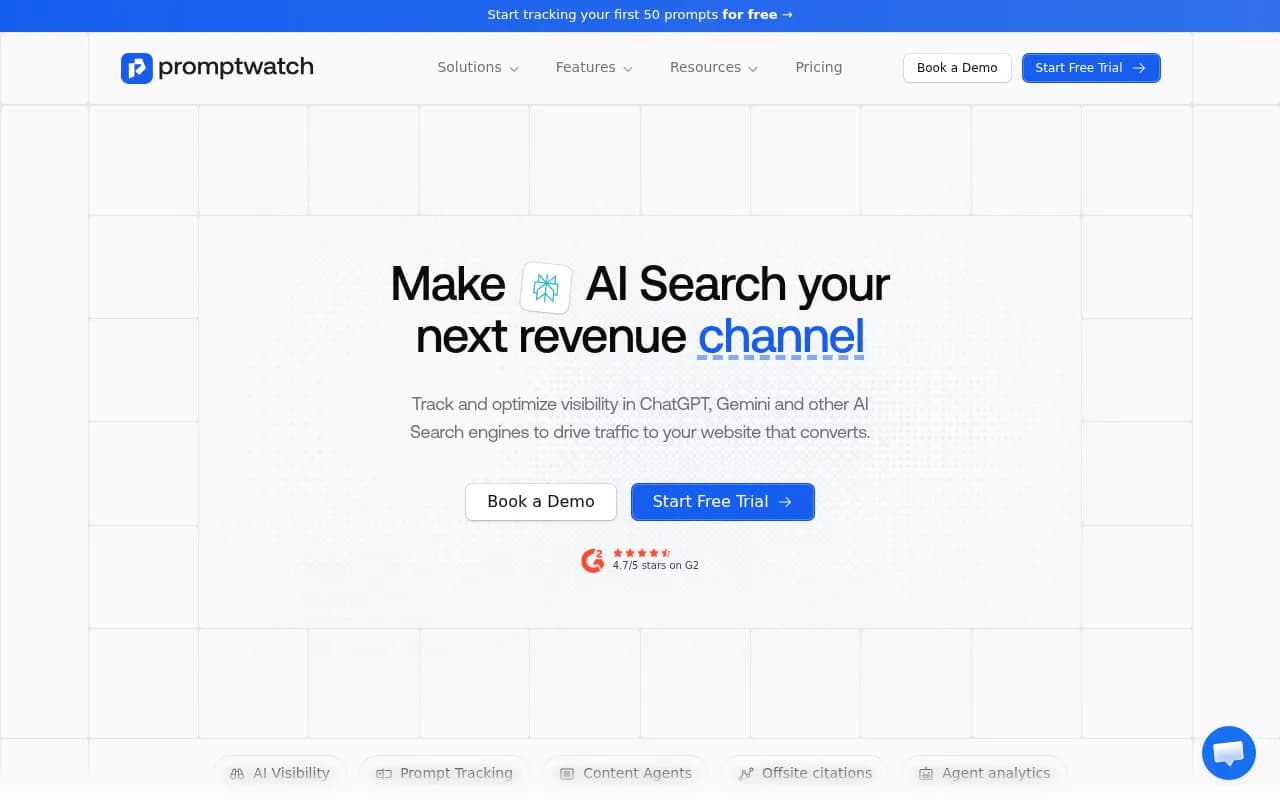
Here's my actual take, though: all of these are entry-level tracking bolted onto SEO plugins. If AI visibility is a serious channel for your business, you want a platform built around it, with prompt volumes, citation analytics, crawler logs showing when AI systems actually visit your site, and traffic attribution back to your WordPress pages. Promptwatch does all of that, and its agents go a step further by planning and publishing GEO-optimized content directly to WordPress, which closes the loop these plugins leave open.
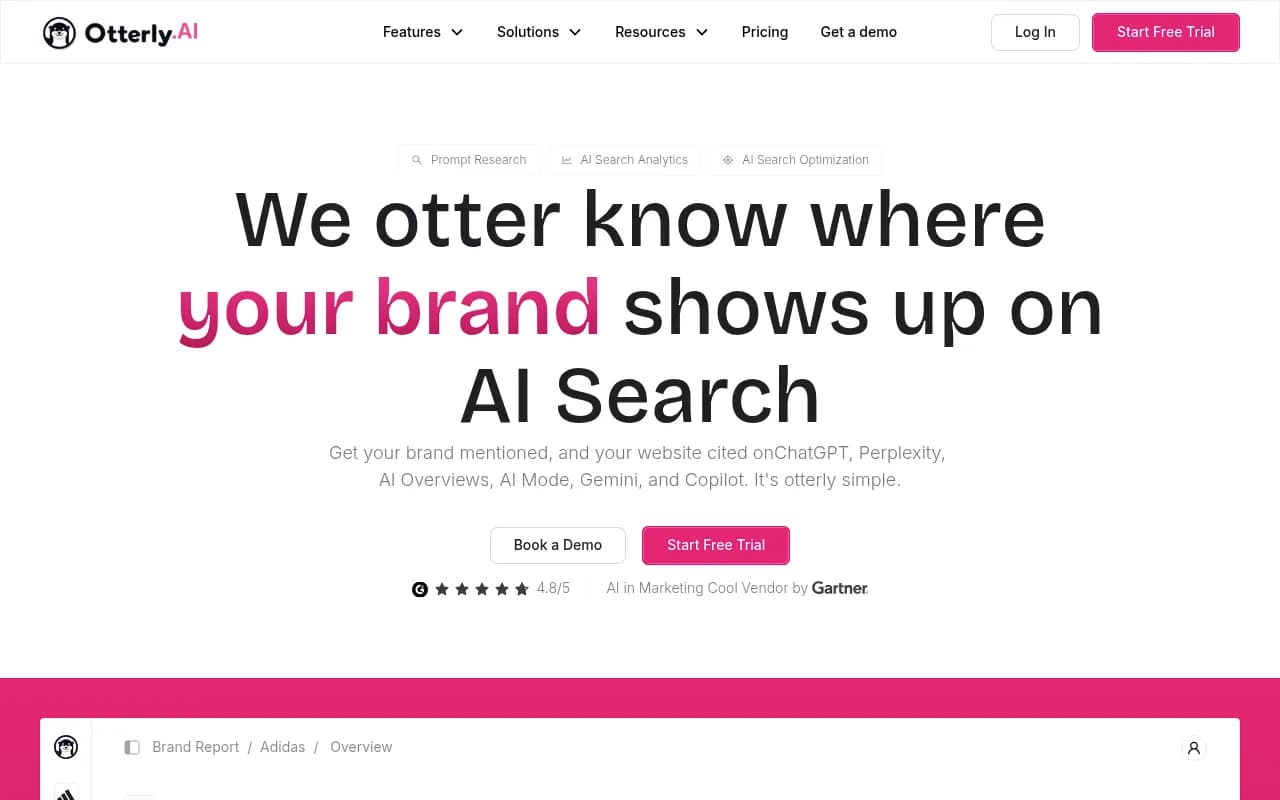
If budget is the constraint, Otterly.AI is a cheaper monitoring-only option worth a look.
And if you want to survey the whole category before committing, the GEO software directory at bestgeosoftware.com has a solid, regularly updated rundown.
AI content generation
All three plugins now generate content with AI. The quality question matters less than the workflow question: does the AI know what AI search actually wants?
Yoast puts AI Generate, AI Optimize, and the AI Bulk Editor behind Premium ($118.80/yr) and above. The free plugin gets llms.txt and Schema Aggregation but only a manual bulk editor. The AI Content Planner also requires Premium+.
Rank Math runs its content features through Content AI, a separate subscription with tiered trials bundled into the Pro, Business, and Agency plans. It powers one-click FAQ generation and a "Fix with AI" button for SEO check failures, which is a genuinely time-saving touch.
AIOSEO requires a separate SEOBoost subscription for its AI Writing Assistant, which is an awkward asterisk given how hard the company markets its bundling. AI credits scale by plan (10k to 50k).
None of these content generators are grounded in AI citation data, which is their shared weakness. Generating an article without knowing which prompts it should answer, what AI engines currently cite for those prompts, and where the gaps are is just faster guesswork. This is why the plugin-plus-platform combination beats any single-vendor suite.
Pricing without the marketing
| Plan | Yoast | Rank Math | AIOSEO |
|---|---|---|---|
| Free tier | Solid basics, llms.txt, schema aggregation | Very generous: redirects, 404 monitor, broad schema, local SEO | Basic schema and TruSEO only |
| Entry paid | Premium $118.80/yr, 1 site | Pro ~$95.88/yr, unlimited personal sites | Basic $49.50/yr intro, 1 site |
| Mid tier | AI+ $358.80/yr, 1 site | Business ~$299.88/yr, client sites | Pro $199.50/yr intro, 10 sites |
| Renewal gotcha | Per-site pricing, no multi-site break | Nonprofit discount available | Intro prices revert to full on renewal |
Two things to watch. AIOSEO's headline prices are first-year intro rates that revert to full price on renewal, so a Pro plan pitched at $199.50 renews at $399. Rank Math's unlimited-personal-sites Pro license remains the best value in the category if you run multiple sites of your own. Yoast's per-site pricing adds up fast for anyone managing a portfolio.

Performance and admin weight
Worth mentioning because it affects AI readiness indirectly. Rank Math registers more admin pages, more database tables, and more background tasks than the others, and on shared hosting that weight shows up in admin response times. It also leaves wp_rank_math_* tables behind if you ever uninstall. Yoast is stable but ad-heavy in the free tier. AIOSEO sits in the middle.
If your site is already slow, none of these three is the right answer, and The SEO Framework is worth a look. But that's a different article.
Who should pick what
| Your situation | Best pick | Why |
|---|---|---|
| Solo site owner, wants maximum AI-era features for free | Rank Math | Free schema set, LLMs Txt module, free redirects and local SEO |
| Non-technical editorial team | Yoast | Familiar interface, readability scoring, free schema aggregation |
| Marketing team wanting tracking inside WordPress | AIOSEO | AI Suite in every paid plan, five engines, competitor tables |
| Agency managing many client sites | Rank Math Pro + a dedicated visibility platform | Unlimited-site licensing plus real tracking depth |
| Anyone serious about AI citations | Any of the three + Promptwatch | Plugins handle the plumbing; the platform handles visibility |
What actually moves the needle beyond the plugin
Here's the uncomfortable part of writing this comparison. A well-configured plugin gets you to the starting line. What happens after that depends on things no plugin controls.
Your content has to answer the prompts people actually type into AI engines, in formats AI engines actually cite. Right now that means product pages, listicles, how-tos, and comparisons, and the mix shifts month to month. It also means not betting everything on one platform. Reddit's share of ChatGPT citations collapsed from roughly 4% to 0.5% overnight in August 2026 because of decisions Reddit made, not anything its users did (Promptwatch's Reddit citation data). Your own WordPress pages are the citation surface you actually control.
Practically, that means three things. First, pick the plugin that fits your team and enable its schema, llms.txt, and crawler settings in an afternoon. Second, monitor what AI engines actually say about you, with a tool built for it rather than a bolt-on module. Third, let the monitoring drive your content plan, because the gap between what you've published and what AI engines cite is where the work is.
The verdict
For AI search readiness specifically, Rank Math is the strongest free foundation in 2026. Its schema breadth and unlimited-site licensing are hard to argue with. Yoast deserves more credit than it usually gets: free llms.txt, free Schema Aggregation, and the only real AI crawler control UI of the three, though you'll pay per site for the privilege. AIOSEO is the most coherent single-vendor bundle if you want tracking inside WordPress without juggling subscriptions, but read the renewal prices before you commit.
All three will handle the plumbing competently. None of them will tell you whether ChatGPT mentioned you this week, why it didn't, or what to publish next to fix it. That's a different job, and it needs a different tool.