Key takeaways
- Bluefish AI is a strong enterprise visibility monitor, but monitoring alone can't tell you why you're invisible — it tells you that you are
- The real causes of AI invisibility are often technical: AI crawlers hitting errors, slow pages, JavaScript-heavy rendering, or content hidden behind tabs
- Citation behavior shifts constantly — Reddit's ChatGPT citation share collapsed from ~4% to 0.5% in August 2026, and product pages now dominate citations — so point-in-time snapshots mislead
- Bluefish's documented gaps include no AI crawler logs, no content generation, no prompt-volume data, restricted prompt customization, and quote-only pricing
- Tools like Promptwatch, Profound, Evertune, and Otterly.AI each fill different parts of the gap, depending on your budget and team size
Bluefish AI has raised $68M in two years, counts Adidas, American Express, and LVMH among its customers, and by its own account is working with a tenth of the Fortune 500. That's a serious enterprise platform, and its brand-safety and reputation monitoring features are genuinely good at what they do.
But there's a gap between what a visibility score tells you and what actually makes a brand invisible in AI search. A score says "you're at 34%." It doesn't say why, and without the why, you're stuck guessing at fixes.
This guide covers what Bluefish doesn't tell you about AI invisibility — and the tools that do.
What Bluefish AI actually does (and does well)
Before criticizing, credit where it's due. Bluefish's five pillars — AI Monitoring, GEO Optimization, GEO Measurement, AI Commerce, and AI Accuracy — cover a lot of ground for large orgs. Its Impact Score measures how closely cited content aligns with AI answer wording, and its AI Brand Vault gives enterprises a controlled repository of brand facts so ChatGPT stops misquoting pricing or founding dates.
Bluefish also gets some technical things right. Its AI-ready website guidance correctly notes that a page too slow for Google is too slow for every AI crawler, and that technical health is a precondition for citation, not a differentiator.

The problem isn't that Bluefish is bad at what it does. It's what falls outside the frame.
The five things Bluefish doesn't tell you
1. Whether AI crawlers can actually read your site
Here's the most common invisibility cause, and one no visibility score surfaces: AI crawlers visiting your site and hitting errors, timeouts, or blank JavaScript-rendered pages. ChatGPTBot, ClaudeBot, PerplexityBot, Google-Extended, and 400+ other AI crawlers hit sites constantly, and most sites have no idea which pages they read, whether they got blocked, or what they saw when they arrived.
Bluefish's Technical AEO Snapshots cross Core Web Vitals with citation status, which is a step in the right direction. But Core Web Vitals are Google's thresholds, measured for Google's crawler. They don't tell you that PerplexityBot got a 403 on your pricing page last Tuesday, or that your key comparison page renders empty without JavaScript and ClaudeBot never sees a word of it.
A page AI can't read is a page AI can't cite. If your visibility tool doesn't show you the crawl-to-citation path — which pages AI crawlers visit, which they cite, and the citation rate per page — you're optimizing blind.
2. What AI traffic and revenue your visibility drives
Bluefish has no GA4 or conversion attribution layer, per multiple third-party reviews. So you can see your visibility score move, but not whether that movement produced a single visit, signup, or dollar. For a Fortune 500 brand team that may be acceptable — reputation is the KPI. For everyone else, "were we mentioned" without "did it drive traffic" is half the picture.
3. How volatile citations really are
Point-in-time visibility snapshots are close to useless in this market, because citation behavior shifts week to week. Some concrete examples from Promptwatch's data:
- Reddit's share of ChatGPT Search citations collapsed from roughly 4% to 0.5% between August 8 and August 14, 2026 — an 86% relative drop in days, triggered by ChatGPT Search adopting the site: operator at scale and nearly doubling its searches per response (Promptwatch Data)
- ChatGPT's citation mix shifted toward commercial pages: product pages went from ~18% of citations in March 2026 to ~33% in July, while listicles were the fastest-growing format within July itself (Promptwatch Data)
- Google AI Overviews cited roughly 10 sources per answer in mid-2026 versus ChatGPT's ~5, making AI Overviews the more forgiving surface to break into (Promptwatch Data)
If your tool showed you a Reddit-heavy visibility snapshot in July and you built a Reddit strategy around it, August just invalidated it. A visibility platform needs daily tracking with citation-type breakdowns, or you're navigating with last month's map.
4. Which prompts actually have volume
Bluefish tracks prompts, but per third-party comparisons it lacks real prompt-volume data and restricts prompt customization. That matters because not all prompts are worth winning. "Best CRM for nonprofits" with 4,000 monthly AI searches is worth infinitely more than a clever prompt you invented that nobody types. Without volume and difficulty data per prompt, you're optimizing for queries that exist only in your tracking dashboard.
5. What to do about any of it
This is the biggest one. Bluefish has no content generation, no content gap analysis tied to execution, no CMS publishing. It's a monitoring and measurement platform. You get the diagnosis, then you go build the fix yourself — which is fine if you have a 50-person marketing org, and a non-starter if you're a team of three.
Quick comparison: what fills each gap
| Gap | Bluefish AI | Promptwatch | Profound | Evertune | Otterly.AI |
|---|---|---|---|---|---|
| AI crawler logs (which pages AI bots read, errors) | No | Yes (400+ crawlers, real-time) | No | No | No |
| AI traffic & conversion attribution | No | Yes | Partial | No | No |
| Prompt volumes & difficulty | No | Yes | Yes (1.5B+ conversations) | No | No |
| Reddit & YouTube citation tracking | No | Yes | No | No | Limited |
| Content gap analysis + CMS publishing | No | Yes (Webflow, Framer, WordPress) | Yes (Agents) | No | No |
| ChatGPT Shopping & ads monitoring | Yes (AI Commerce) | Yes | Yes | No | No |
| Transparent pricing | No (quote-only) | Yes ($95–$579/mo) | Yes ($99–$399/mo) | Quote-only | Yes (from $29/mo) |
| Best fit | Fortune 500 brand teams | Mid-market & agencies wanting execution | Enterprise agencies | Enterprise GEO strategy | Budget monitoring |
The tools that actually tell you why
Promptwatch — the full visibility stack
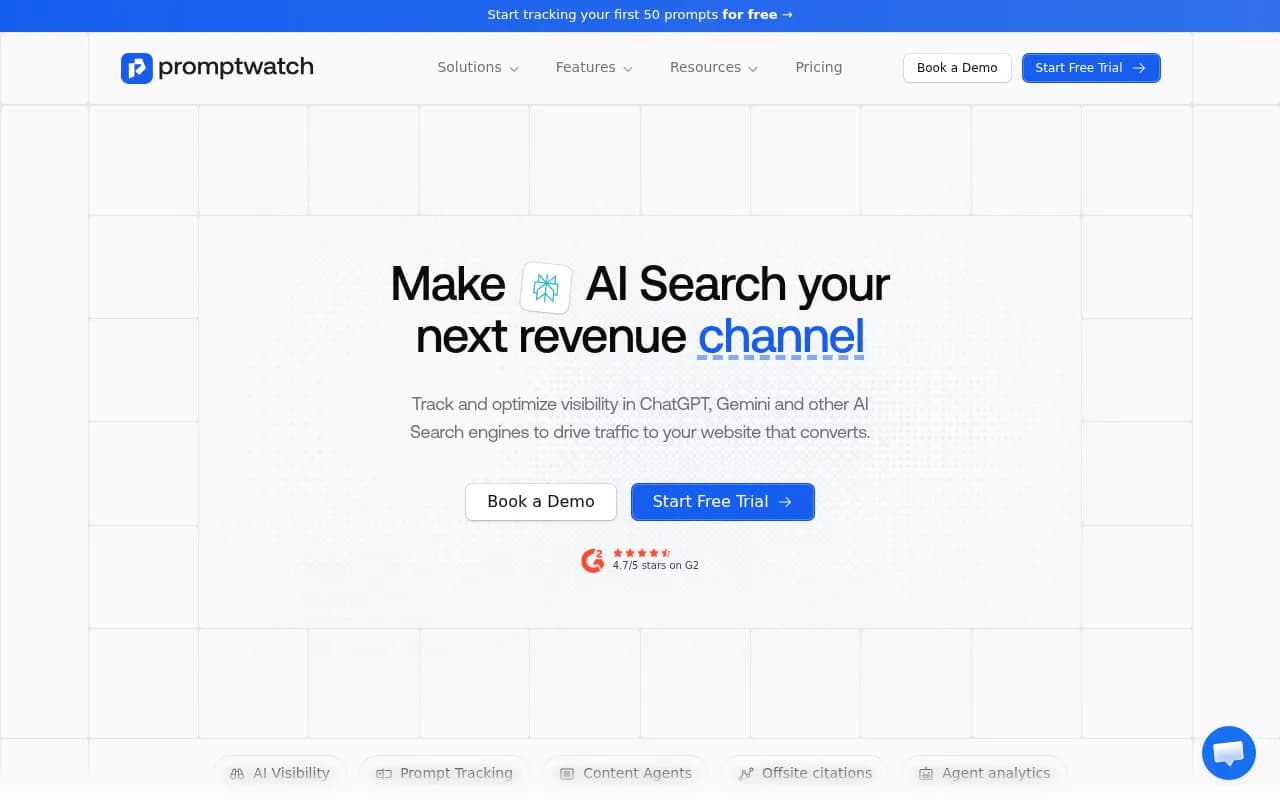
Promptwatch is the platform we recommend for closing the diagnosis-to-action gap, because it's the only one in the 2026 GEO platform comparison with a complete end-to-end stack. Its crawler logs show exactly when AI systems visit your pages, what they read, and whether they hit errors — the single most overlooked invisibility cause. Citation analytics reveal which of your pages get cited, which Reddit posts and YouTube videos mention you, and offsite mentions catch your brand being named inside third-party pages AI cites even without a link. Visitor analytics track actual traffic and conversions from AI platforms, not just mentions.
Then it closes the loop: Content Agents plan, write, and publish GEO-optimized content to your CMS on a schedule you control, and Unified Actions turns your visibility, citation, and crawler data into a prioritized to-do list. It's used by 1,840+ brands and agencies, rated 4.7/5 on G2, and built on 26B+ analyzed data points. Pricing is public, from a free tier to $579/mo for business plans.
Profound — enterprise-grade monitoring with content agents
Profound is Bluefish's most direct competitor and the stronger choice if you want multi-engine tracking depth at the enterprise level. Its Growth plan ($399/mo) covers ChatGPT, Perplexity, and AI Overviews with an Opportunities panel and Agents content engine, and its Prompt Volumes dataset draws on 1.5B+ real user conversations. The $99 Starter tier is ChatGPT-only and mostly serves as a funnel to Growth, so budget accordingly.
Evertune — strategic source analysis
Evertune attacks a specific Bluefish weakness: its Impact Score can't tell you which influential sources already associate your brand with key benefits, or which "opportunity URLs" don't mention you yet. Evertune's Topic Relevance and Brand Relevance metrics classify sources into Strength, Opportunity, and Owned URLs, and it runs 1M+ custom prompts per brand monthly through a panel of real internet users. Pricing is quote-only, so it's an enterprise play.

Otterly.AI — budget entry point
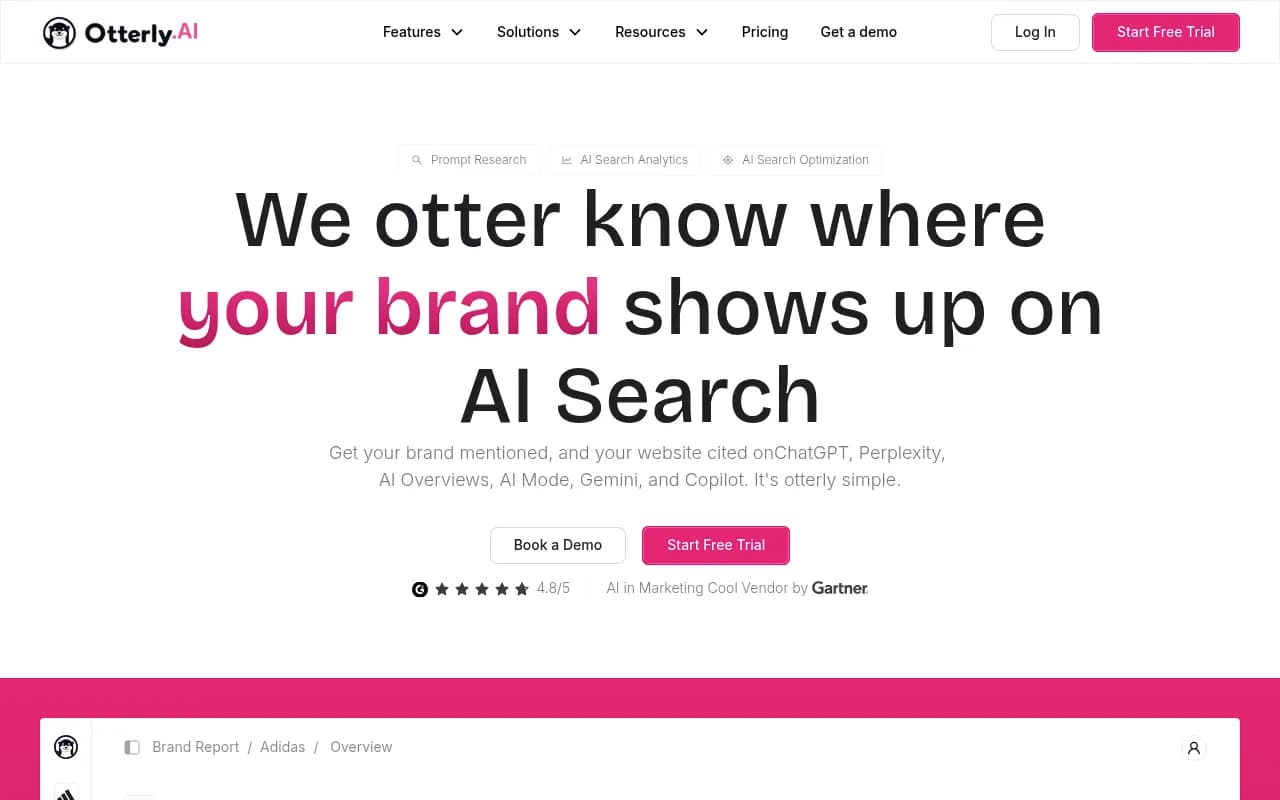
If Bluefish's quote-only pricing and 3–6 week sales cycles are the problem, Otterly.AI starts at $29/month with a free trial. It's a basic prompt tracker — no crawler logs, no visitor analytics, no content generation — but it answers "are we mentioned" affordably, which is sometimes all a small team needs to start.
Also worth a look
- Scrunch AI — customer journey mapping plus hallucination detection, good for agencies
- Peec AI — 115+ languages, the strongest option for international visibility tracking
- Gauge — prompt-level GEO intelligence and competitive gap analysis
You can browse the full landscape in the GEO software directory at bestgeosoftware.com or compare AI rank tracking tools at ai-rank-tools.com.
How to actually diagnose your invisibility
Regardless of which tool you pick, here's the order of operations we'd recommend:
- Check crawlability first. Pull your server logs (or use a tool with crawler analytics) and find out whether ChatGPTBot, ClaudeBot, and PerplexityBot are actually reaching your key pages. If they're getting blocked or hitting empty renders, fix that before anything else — no content strategy survives an unreadable site.
- Audit what AI already cites. Which of your pages get cited today? Per Promptwatch's July 2026 data, product pages now account for roughly a third of ChatGPT citations, so structured specs, transparent pricing, and current availability data on product pages are citation assets now, not just conversion pages.
- Match content format to citation demand. Compare your content mix against what each engine actually cites. AI Overviews leans on listicles, how-tos, and increasingly video; ChatGPT leans commercial. If you publish only long-form thought leadership, that's a structural mismatch.
- Prioritize by prompt value. Stop tracking vanity prompts. Use volume and difficulty data to focus on prompts with real demand where you're close to breaking in.
- Close the loop with execution. A visibility score without a fix-it workflow is a report card you can't act on. Use content gap analysis, briefs, and either automated publishing or a clear internal process to turn insights into pages.
The bottom line
Bluefish AI is a legitimate enterprise platform for brands that can afford it and whose primary concern is reputation monitoring across AI channels. But "invisible in AI search" is usually a technical problem before it's a brand problem — blocked crawlers, unreadable pages, mismatched content formats, and prompts nobody searches. Those are diagnosable, fixable causes, and they require crawler logs, traffic attribution, prompt intelligence, and execution tooling that Bluefish doesn't provide.
If you want one platform that covers the full stack from "why are we invisible" to "here's the fix, published," Promptwatch is the most complete option in 2026. If you're enterprise-focused and want monitoring depth, look at Profound or Evertune. And if you just need to know whether you're mentioned at all, Otterly gets you started for $29.
One more thing worth knowing: this site is published by 1001 SEO Media, an agency that specializes in exactly this kind of work — technical SEO, GEO, and AI search optimization — if you'd rather have a team diagnose and fix your AI invisibility than wrestle another dashboard.