Key takeaways
- Prompt difficulty estimates how hard it is for your brand to earn a citation when AI models answer a specific query -- it's the GEO equivalent of keyword difficulty in traditional SEO.
- High-volume prompts are often the worst place to start. Prompt difficulty is a better prioritization signal than volume alone.
- Winning in AI search usually starts with low-difficulty, high-relevance prompts where you have a realistic shot at being cited.
- Difficulty is shaped by how many authoritative competitors already own a topic, how well their content is structured for AI consumption, and how much training signal exists around the query.
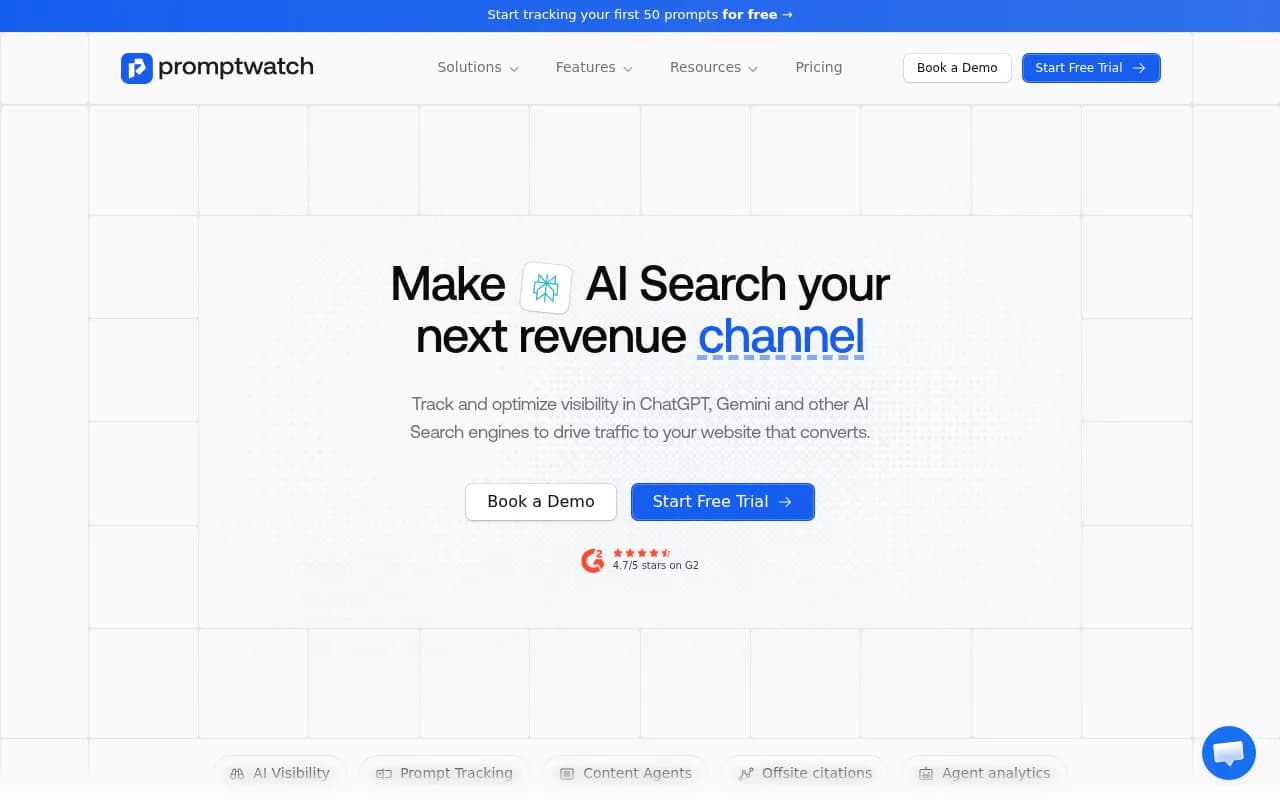
- Tools like Promptwatch combine difficulty scores with volume estimates and gap analysis so you can find prompts that are both winnable and worth winning.
Why prompt difficulty matters more than you think
Most GEO conversations start with the wrong question. Marketers ask "which prompts get the most volume?" when they should be asking "which prompts can we actually win?"
This is the same mistake that plagued early SEO. Teams would chase high-traffic keywords, publish thin content, and wonder why nothing moved. The smarter play -- which took the industry years to figure out -- was to look at difficulty alongside volume and find the intersection where effort meets realistic reward.
Prompt difficulty is that same concept applied to AI search. It tells you, for a given query, how competitive the citation landscape already is. If five well-established brands with deep content libraries are already being cited consistently by ChatGPT, Claude, and Perplexity for a prompt, walking in with a new article and expecting to displace them is optimistic at best.
Understanding difficulty doesn't mean avoiding hard prompts forever. It means knowing which battles to fight first, so you build momentum instead of burning budget on prompts you can't win yet.
What prompt difficulty actually measures
Prompt difficulty isn't a single clean metric -- it's a composite signal. Here's what goes into it:
Competitive citation density. How many domains are already being cited when AI models answer this prompt? A prompt where three or four domains dominate citations is harder to crack than one where citations are scattered or thin.
Authority of existing sources. If the current citations are Wikipedia, major news outlets, and category-defining brands, difficulty is high. If citations are a mix of mid-tier blogs and forum posts, there's room to move.
Content depth and structure of competitors. AI models tend to cite content that directly answers the query in a structured, quotable way. If competitors have already published comprehensive, well-structured pages on a topic, you need to be meaningfully better -- not just present.
Training signal saturation. Some topics have been written about so extensively that LLMs have strong, settled opinions about which sources to trust. Emerging topics or niche angles within a broader category tend to have lower difficulty because the training signal is thinner and newer content can influence model behavior faster.
Prompt type. The format of the query matters. "What is X?" prompts tend to be harder because definitional content is everywhere. "Which tool is best for [specific use case]?" prompts can be easier because the answer depends on specifics that fewer brands have addressed directly.
The relationship between difficulty and volume
Here's a counterintuitive truth that Neil Patel's team surfaced in their GEO research: prompt volume is a modeled estimate, not actual user data. It's directionally useful but unreliable as a primary decision-making input.
This means the classic "go after high-volume prompts" instinct is even shakier in GEO than it was in SEO. You're stacking an imprecise volume estimate on top of a competitive landscape you haven't assessed. That's how teams end up creating content for prompts they can't win, in categories where they have no credibility.
The better mental model is a two-by-two:
| Low difficulty | High difficulty | |
|---|---|---|
| High volume | Best starting point | Long-term goal |
| Low volume | Quick wins, build authority | Usually not worth it |
Start in the top-left. Move toward the top-right as your citation authority grows. The bottom-left is worth doing opportunistically. The bottom-right is almost never worth prioritizing.
How to assess difficulty for a prompt
You can do a rough difficulty assessment manually, though it's time-consuming. The process looks like this:
- Run the prompt in ChatGPT, Perplexity, Claude, and Google AI Overviews.
- Note which domains are cited in each response.
- Look at the cited pages -- how comprehensive are they? How structured?
- Check how consistently the same sources appear across models.
- Assess whether your brand appears at all, and if not, why.
If the same three or four domains appear across all four models with detailed, well-structured content, difficulty is high. If citations vary widely, or if the responses feel thin and generic, difficulty is lower and there's an opening.
The manual approach works for spot-checking, but it doesn't scale. If you're managing dozens or hundreds of prompts, you need tooling that tracks citation patterns over time and surfaces difficulty signals automatically.
Promptwatch does this with prompt difficulty scores alongside volume estimates, so you can sort your prompt list by winnability rather than just size. Its Answer Gap Analysis also shows you which prompts competitors are being cited for that you're not -- which is often the fastest way to find low-difficulty, high-relevance opportunities.
Prompt types and their typical difficulty profiles
Not all prompts are created equal. The structure of a query shapes its difficulty in predictable ways.
Definitional and educational prompts
"What is [concept]?" and "How does [thing] work?" prompts tend to be hard. Wikipedia, major publications, and established educational sites dominate these. Unless you're a recognized authority in a niche where general sources are thin, competing here is slow work.
That said, niche definitional prompts -- "What is [specific technical term in your industry]?" -- can be much more accessible. If you're the only brand publishing a clear, structured definition of a term your customers actually use, you have a real shot.
Comparison and recommendation prompts
"Best [tool] for [use case]" and "[Tool A] vs [Tool B]" prompts are where most brands have the most realistic opportunity. These prompts require specificity that general sources can't always provide. A well-structured comparison page that directly addresses the prompt can outperform a generic review site if it's more precise and more useful.
Difficulty here varies by category maturity. In crowded SaaS categories, comparison prompts are hard. In emerging niches or for specific use-case combinations, they're often winnable.
Process and how-to prompts
"How to [do specific thing]" prompts sit in the middle. They're common enough that many have been addressed, but specific enough that there's often room for a brand with genuine expertise to get cited. The key is that the content needs to be genuinely instructional -- step-by-step, structured, with real specificity. Generic how-to content doesn't get cited.
Troubleshooting and problem-specific prompts
"Why is [thing] happening?" and "How do I fix [specific problem]?" prompts are often underserved. Difficulty tends to be lower because these are long-tail by nature, and the content that exists is often thin or outdated. If your product or service addresses specific problems, building content around those problems is one of the highest-ROI GEO moves available.
Building a difficulty-informed content calendar
Once you understand difficulty, the practical question is how to use it to sequence your content work.
Here's a framework that works:
Step 1: Map your prompt universe. List every prompt your target customers might use to find a brand like yours. Include informational, comparison, and problem-specific prompts. Don't filter yet -- just generate.
Step 2: Score each prompt by difficulty and relevance. Difficulty is about competitive landscape. Relevance is about how directly the prompt connects to your product or service. A low-difficulty prompt that's only tangentially related to what you do isn't worth much.
Step 3: Identify your current citation gaps. For each prompt, check whether you're being cited. If you're not, that's a gap. If competitors are being cited and you're not, that's a priority gap.
Step 4: Sequence by winnable + relevant. Start with prompts that are low-to-medium difficulty and directly relevant to your core offering. These are the prompts where a well-crafted piece of content can move the needle in weeks, not months.
Step 5: Build toward harder prompts. As you accumulate citations and your domain authority in AI search grows, harder prompts become more accessible. The citations you earn on easier prompts build the credibility signal that helps you compete on harder ones.
Content quality signals that affect difficulty outcomes
Even on low-difficulty prompts, you won't get cited if your content doesn't meet the bar AI models expect. A few signals matter most:
Direct answer placement. AI models favor content that answers the prompt directly and early. Burying the answer in paragraph five after three paragraphs of preamble is a citation killer. Put the answer in the title, the first paragraph, or a clearly labeled section.
Structured formatting. Headers, lists, and tables make content easier for AI models to parse and quote. A wall of prose is harder to cite than a well-structured page with clear sections.
Specificity and depth. Generic content doesn't get cited. Content that provides specific data, concrete examples, or a unique angle does. This is especially true for comparison and recommendation prompts where the AI model needs to give a real answer, not a hedge.
Author and brand credibility signals. LLMs pay attention to who wrote something and whether the brand is recognized in the space. Expert authorship, clear brand identity, and consistent publishing history all help.
Freshness on time-sensitive topics. For prompts where recency matters, outdated content loses citations to newer sources. Regular updates to high-priority pages matter.
Tools that help you work with prompt difficulty
A few platforms have built prompt difficulty into their core workflow:
Promptwatch is the most complete option here. It tracks difficulty and volume for each prompt, shows you citation gaps vs. competitors, and connects the difficulty data to content generation tools so you can act on what you find. The crawler logs also show you when AI agents are visiting your pages, which gives you a feedback loop on whether your content is being discovered.
For teams that want to layer in traditional SEO signals alongside AI visibility, tools like Semrush and Ahrefs provide keyword difficulty data that can complement your prompt difficulty analysis -- though neither has built prompt difficulty as a native concept yet.
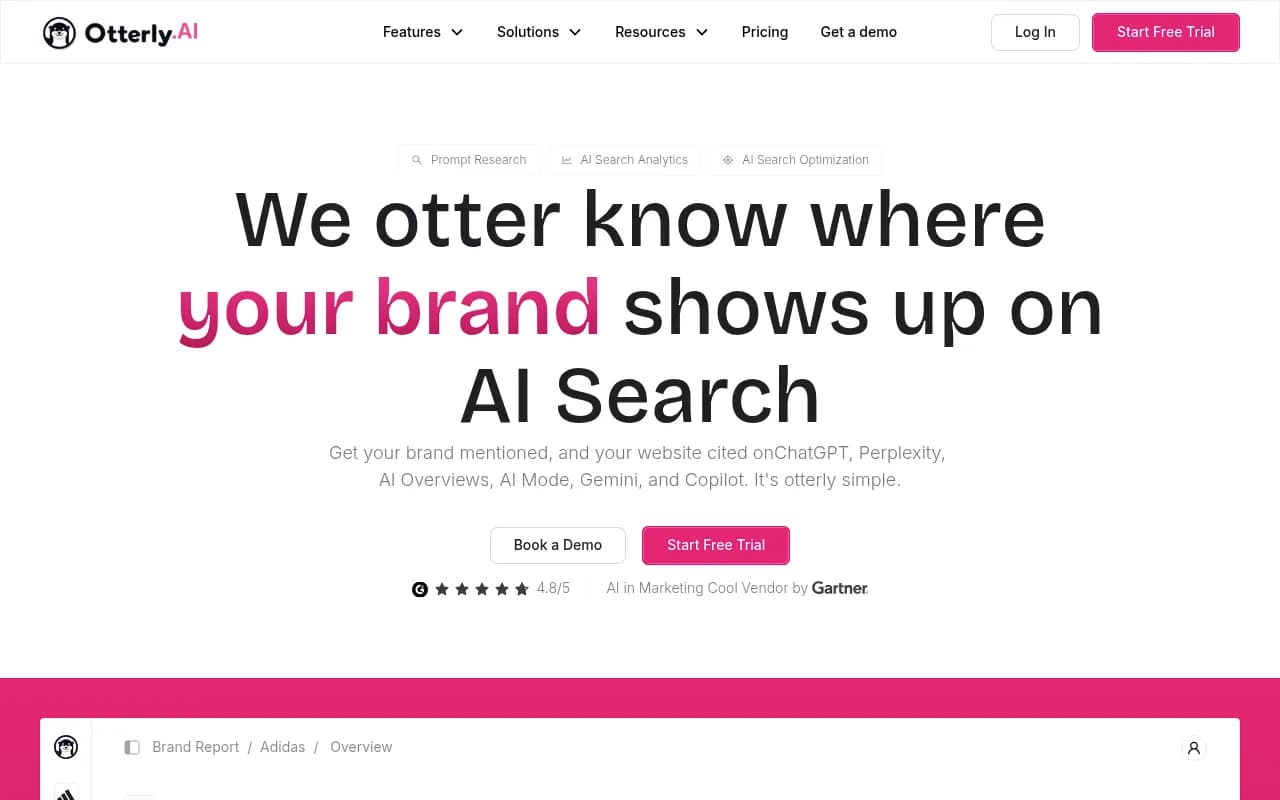
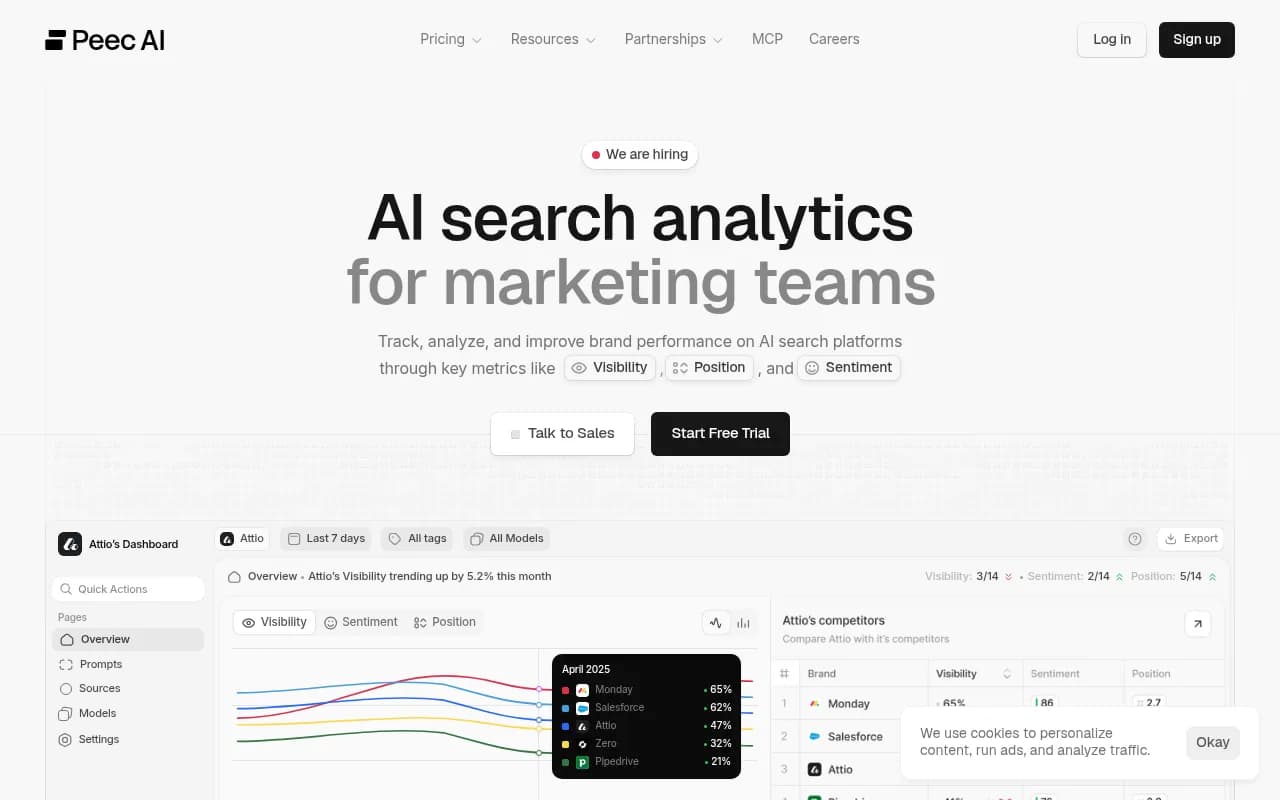
For monitoring which prompts you're currently winning or losing without the full optimization stack, Otterly.AI and Peec AI offer lighter-weight tracking that can help you spot difficulty patterns in your citation data.
Common mistakes when ignoring difficulty
A few patterns show up repeatedly when teams skip difficulty assessment:
Chasing brand-name prompts too early. Prompts like "[Competitor] vs [Your Brand]" are tempting but often very hard to win, especially if the competitor has more training signal. Starting here wastes content budget.
Publishing content that's too broad. A page titled "The Complete Guide to [Large Topic]" is competing with every other complete guide on that topic. A page titled "How [Specific Use Case] Teams Use [Your Category] to Solve [Specific Problem]" is competing with almost nobody.
Treating all AI models the same. Citation patterns differ across ChatGPT, Perplexity, Claude, and Google AI Overviews. A prompt that's hard to win on ChatGPT might be easier on Perplexity. Difficulty should be assessed per model, not as a single number.
Measuring too early. Prompt difficulty outcomes take time to shift. Publishing a piece of content and checking for citations two days later tells you nothing. The feedback loop in GEO is measured in weeks, and tracking tools that show you the timeline from publish to crawl to citation are essential for not giving up too soon.
The bottom line
Prompt difficulty is the variable that separates GEO strategies that build momentum from ones that spin their wheels. Volume tells you what people are asking. Difficulty tells you whether you can realistically answer it in a way that gets cited.
The teams winning in AI search right now aren't necessarily the ones with the biggest content budgets. They're the ones who found the prompts where they had a genuine shot, built precise and well-structured content for those prompts, earned their first citations, and used that credibility to move up the difficulty ladder.
Start where you can win. Track what's working. Build from there.