Key takeaways
- Being crawled by an AI search engine and being cited by one are two completely different things -- most sites experience the first without the second.
- AI crawlers don't render JavaScript, so content loaded dynamically is often invisible to them even if a human visitor sees it fine.
- Topical authority, content structure, and entity clarity matter more than most technical SEO checklists suggest.
- Crawl logs from AI agents can show you exactly which pages are being read and which are being ignored -- most site owners never look at this data.
- Fixing the crawl-to-citation gap requires knowing where the gap actually is, then creating content that directly answers the prompts AI models are fielding.
There's a frustrating pattern showing up across marketing teams right now. You check your server logs, you see GPTBot, ClaudeBot, PerplexityBot -- they're all visiting your site. Regularly. Sometimes daily. And yet when you ask ChatGPT or Perplexity about your industry, your brand, your product category... nothing. Competitors get cited. You don't.
This isn't a crawling problem. It's a citation problem. And they require completely different fixes.
Crawling and citing are not the same thing
When an AI search engine crawls your site, it's collecting raw material. Whether that material ends up in a response depends on a separate set of decisions the model makes when it's actually answering a user's question.
Think of it like a library. A librarian can walk every aisle and scan every spine. That doesn't mean they'll recommend your book when someone asks for a good read on a specific topic. The recommendation depends on whether your book actually answers the question better than the alternatives.
AI models are making similar judgment calls, and they're doing it at scale, across millions of prompts. Getting crawled just means you're in the library. Getting cited means you answered the question best.
Why your content gets crawled but not cited
Your content doesn't match how people actually prompt
Traditional SEO content is written to rank for keywords. AI citation works differently. Models are answering conversational questions, often with a specific intent: "What's the best tool for X?", "How do I fix Y?", "Which company is known for Z?"
If your content is structured around keyword-dense headers and thin paragraphs, it may not map cleanly onto those prompts. AI models are looking for content that directly, clearly, and confidently answers a question. Hedged language, vague claims, and content that buries the answer three scrolls down tend to get passed over.
The fix isn't just rewriting your existing pages. It's figuring out which prompts your potential customers are actually asking AI models, and then creating content that answers those prompts specifically. That's a different research process than keyword research -- you're looking at prompt patterns, not search volume.
JavaScript is hiding your content
This one catches a lot of teams off guard. Most AI crawlers don't render JavaScript. Unlike Googlebot, which has a two-wave rendering process and can eventually process JS-loaded content, AI crawlers typically fetch raw HTML and move on.
That means if your product descriptions, customer reviews, pricing tables, or key body copy are loaded via JavaScript, the crawler sees a skeleton of your page. It might see your navigation and footer. It might see a headline. But the actual substance -- the content that would make you worth citing -- is invisible.
Shannon Vize's guide at Women in Tech SEO puts it plainly: if your site relies heavily on JavaScript for key content, you need that same information accessible in the initial HTML. It's not optional if you want AI visibility.
The audit here is straightforward: use a tool that fetches your pages without JavaScript enabled and compare what it sees to what a browser renders. Any gap is a gap in your AI visibility.
Your site structure doesn't signal topical authority
AI models don't just evaluate individual pages. They're forming a picture of what your site is about, how deeply it covers a topic, and whether it's a reliable source. A site with one good article on a topic is less likely to get cited than a site with 15 interconnected articles that cover the topic from multiple angles.
This is sometimes called topical authority, and it matters more in AI search than it ever did in traditional SEO. If you have a single landing page about, say, "project management for remote teams," but a competitor has a full content hub with guides, comparisons, FAQs, and case studies, the model is going to lean toward the competitor.
The implication: content gaps aren't just missed opportunities. They're active reasons you're not getting cited.
Your entities aren't clear
AI models work with entities -- named concepts, brands, products, people, places. If your content doesn't clearly establish what your brand is, what category it belongs to, what problems it solves, and how it relates to other entities in your space, models have a harder time including you in relevant responses.
This is partly a structured data problem (schema markup helps models understand what your pages are about), but it's also a writing problem. Content that dances around what you actually do, or that uses internal jargon instead of the terms your customers use, creates ambiguity. Models don't like ambiguity. They'll cite the clearer source.
You're not being cited anywhere else either
AI models don't just crawl your site. They're also paying attention to the broader web: Reddit discussions, YouTube videos, third-party review sites, industry listicles, news articles. If your brand is mentioned and recommended in those places, it reinforces your credibility as a citation source.
If you're only visible on your own domain, you're missing a significant part of the picture. A brand that appears in a Reddit thread, gets mentioned in a Wirecutter-style comparison, and has a YouTube review is going to feel more "real" and trustworthy to a model than a brand that only exists on its own website.
This is why traditional PR and digital marketing still matter in the AI era -- not for backlinks, but for the kind of third-party mentions that AI models treat as social proof.
Your content lacks confidence and specificity
Hedged, vague content is a citation killer. Compare these two answers to "What's the best way to onboard a new employee?":
Version A: "There are many approaches to employee onboarding, and what works best can vary depending on your company size, industry, and culture..."
Version B: "The most effective onboarding programs do three things in the first 30 days: assign a dedicated buddy, set 30/60/90-day goals in writing, and schedule weekly check-ins with the manager..."
Version B is more citable. It's specific, confident, and directly useful. AI models are trying to give users good answers, and they'll cite the source that gave them the best raw material.
If your content is written to avoid making claims -- to stay safe, to hedge against edge cases -- it may be technically accurate but practically uncitable.
The crawl log gap
Here's something most site owners don't realize: you can actually see which pages AI crawlers are visiting, how often, and whether those visits are leading to citations. This data exists in your server logs, but it requires parsing and interpreting it in a way that most log analysis tools weren't built for.
What you want to know is:
- Which pages are AI crawlers hitting most frequently?
- Are there important pages they're not visiting at all?
- Are there crawl errors (404s, 500s, redirect chains) blocking them?
- Is there a pattern between pages that get crawled and pages that get cited?
The gap between "crawled" and "cited" is often visible in this data if you know what to look for. A page that gets crawled repeatedly but never cited is telling you something -- either the content isn't answering the right questions, or there's a rendering issue, or the page just isn't authoritative enough on its topic.
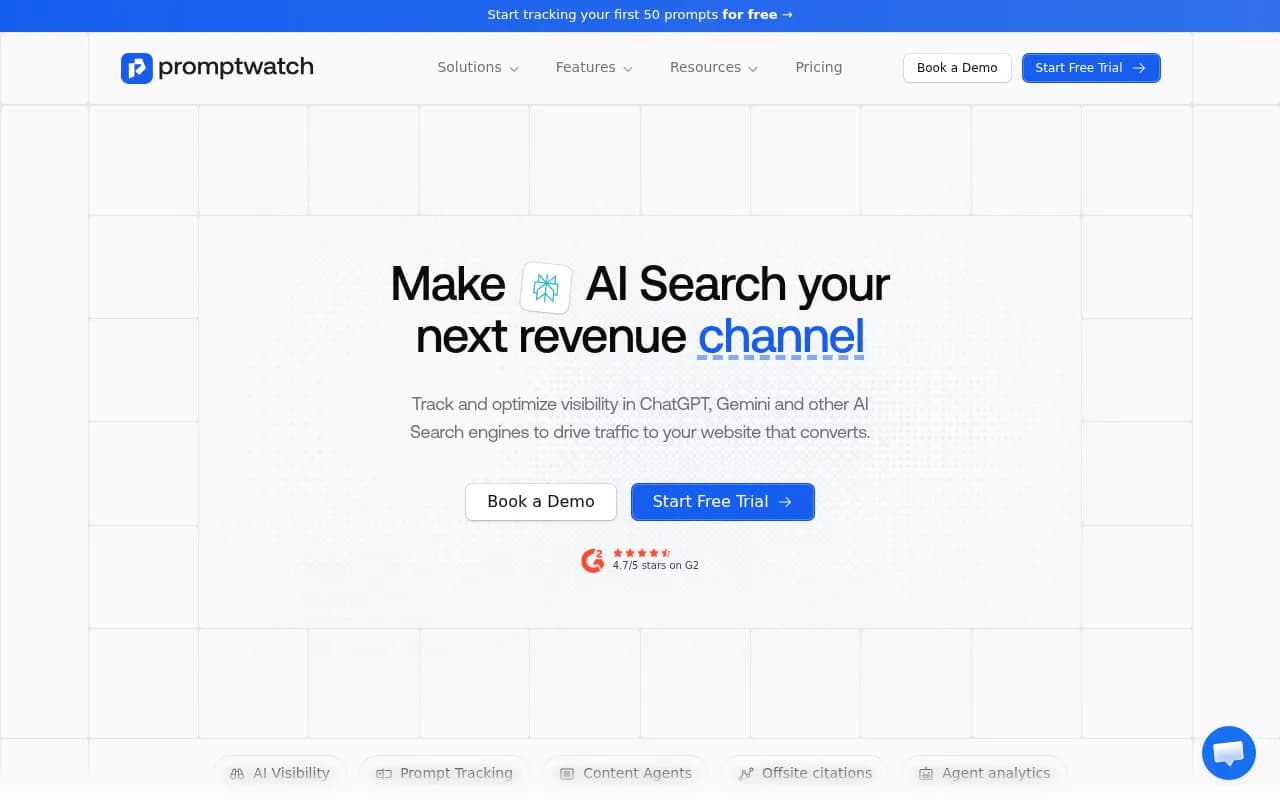
Promptwatch has crawler log analysis built into its platform, showing real-time logs of AI agents hitting your site, which pages they read, errors they encounter, and the timeline from crawl to citation. It's one of the few tools that makes this data actually actionable rather than just visible.
What actually moves the needle
Audit your JavaScript dependency
Run your key pages through a fetch-without-JS test. If the content that makes you worth citing isn't in the raw HTML, fix that first. This is the most common technical reason for the crawl-without-citation problem, and it's fixable.
Map your content to real prompts
Stop guessing which questions your audience is asking AI models. Tools that track prompt data can show you the actual queries people are entering into ChatGPT, Perplexity, and other models -- including which competitors are getting cited for those prompts and which ones you're missing entirely.
This is what's sometimes called an answer gap analysis: you're not looking at keyword rankings, you're looking at which questions AI models are answering without citing you, and why.
Build topical depth, not just breadth
One good article won't cut it. If you want to be the go-to citation for a topic, you need to cover that topic thoroughly -- FAQs, comparisons, how-tos, definitions, case studies. The more completely you cover a topic, the more likely a model is to treat you as an authoritative source on it.
Get cited off your own site
Pursue mentions in places AI models trust: industry publications, Reddit communities relevant to your space, YouTube, review aggregators. A coordinated digital PR effort that targets these channels is now a legitimate AI visibility strategy, not just a brand awareness play.
Use structured data properly
Schema markup for articles, FAQs, products, and organizations helps models understand what your content is about and who you are. It's not a magic bullet, but it reduces ambiguity -- and reducing ambiguity is one of the clearest ways to improve your citation rate.
Tools worth knowing about
If you're trying to diagnose the crawl-to-citation gap, a few platforms are worth looking at:
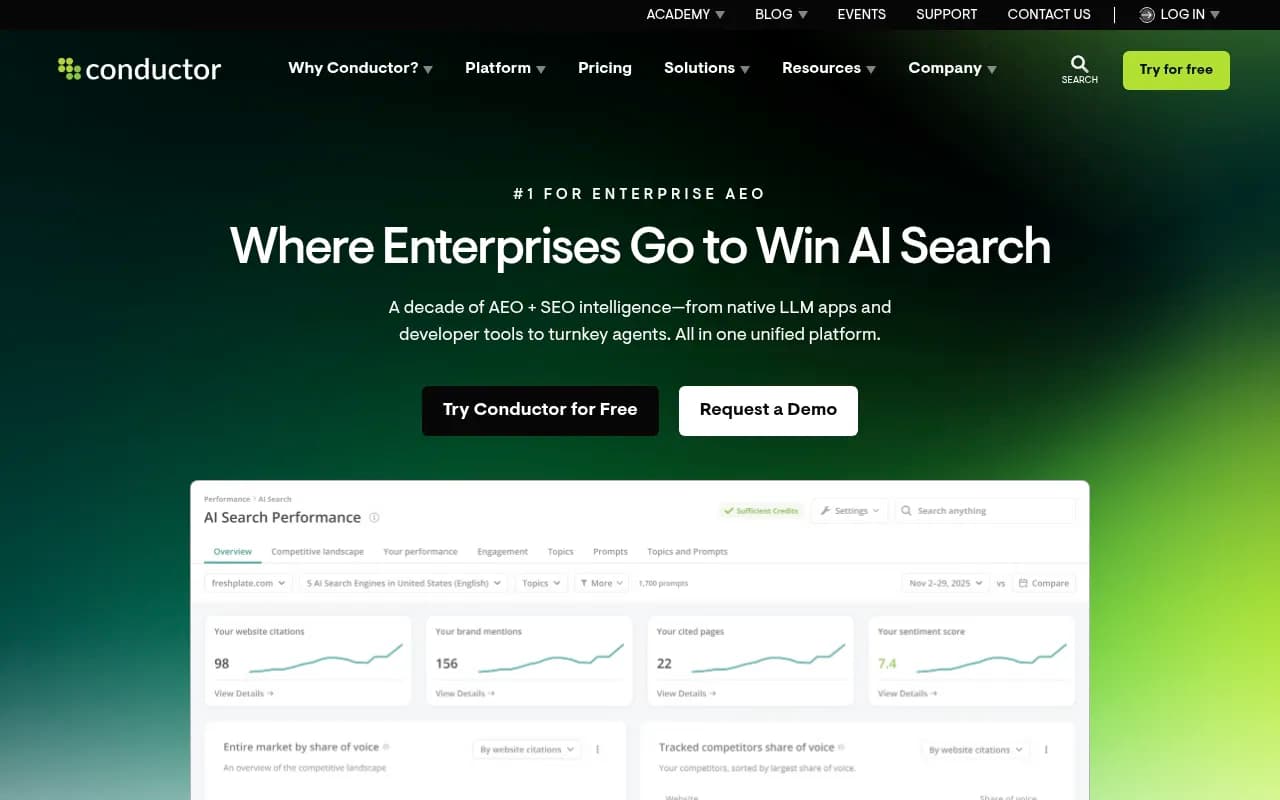
Conductor has been tracking AI crawl frequency patterns across its customer base and building AI search insights into its platform.
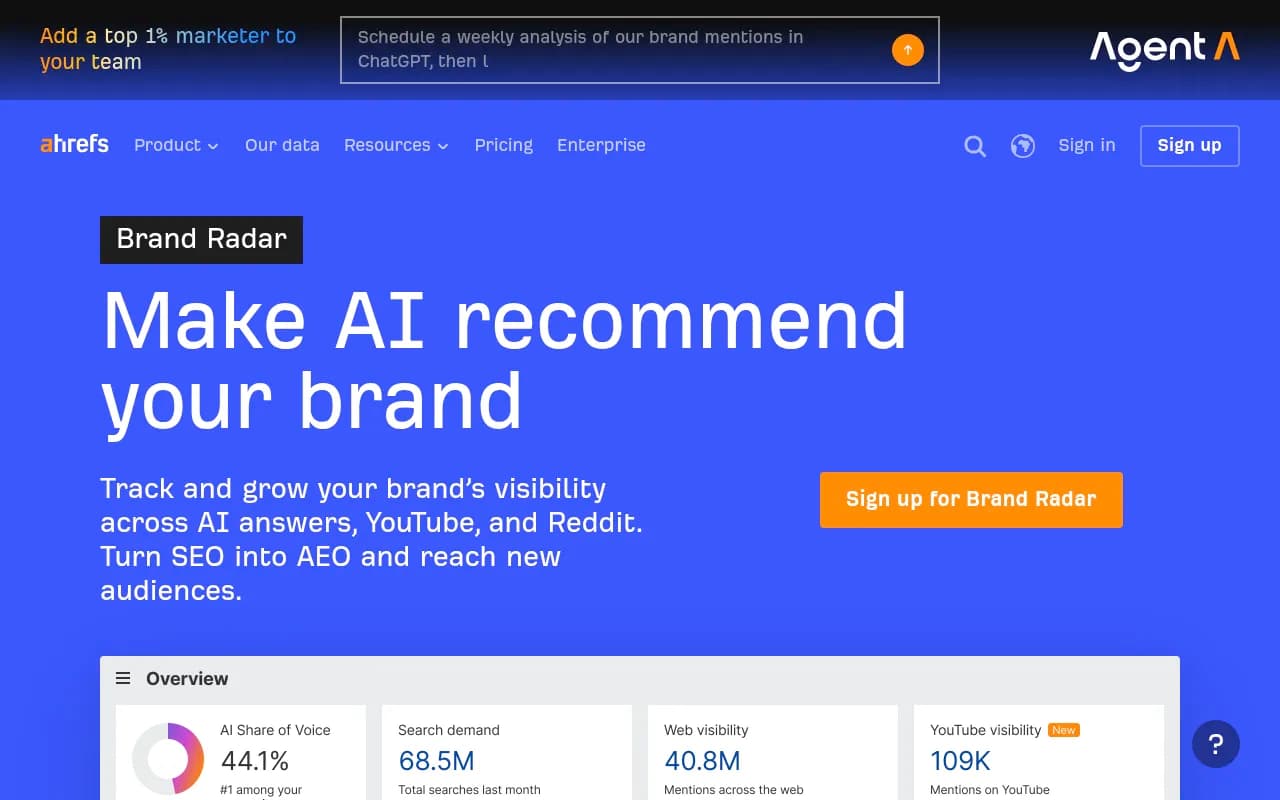
Ahrefs Brand Radar lets you track brand mentions across AI search engines, which helps you understand where you're showing up and where you're not.
Scrunch AI monitors AI search responses for brands and agencies, giving you a cleaner picture of citation patterns over time.
For teams that want to go beyond monitoring and actually fix the gaps, Promptwatch's content gap analysis and content generation tools are built specifically for this workflow -- find the prompts you're missing, generate content that answers them, track whether citations follow.
A comparison of approaches
| Approach | What it addresses | Effort level | Impact on citations |
|---|---|---|---|
| Fix JavaScript rendering | Technical crawl gap | Medium | High if JS is hiding key content |
| Answer gap analysis | Content-prompt mismatch | Low (with right tool) | High |
| Topical depth building | Authority signals | High | High over time |
| Structured data / schema | Entity clarity | Low-Medium | Medium |
| Off-site mentions (PR, Reddit) | Third-party credibility | High | Medium-High |
| Crawler log analysis | Diagnosing specific gaps | Low (with right tool) | Varies |
No single fix solves the problem. The crawl-to-citation gap is usually caused by a combination of factors, and the most effective approach is to diagnose which ones apply to your specific site before spending time on fixes that may not move the needle.
The mindset shift that matters most
Most sites were built for humans and for Google. The content is structured to rank in a list of blue links, where a user clicks through and reads the full page. AI search works differently. The model reads your page, extracts what's useful, and synthesizes it into an answer. The user may never visit your site at all.
That changes what "good content" means. It's not about keeping someone on the page. It's about being the clearest, most direct, most credible answer to a specific question -- the kind of answer a model can lift and use with confidence.
Sites that make that shift -- from writing for clicks to writing for citations -- are the ones closing the gap between getting crawled and getting cited.