Key takeaways
- AirOps is built around content production: Power Agents, Grids, and CMS integrations help teams publish AI-optimized content at scale, with direct connections to Webflow, WordPress, and Shopify.
- Promptwatch covers the full optimization loop: prompt tracking, citation analysis, AI crawler logs, content generation, and traffic attribution in one platform.
- AirOps is the better fit if you have a large content library and a clear strategy -- you need to execute fast, not figure out what to write.
- Promptwatch is the better fit if you need to understand why your AI visibility looks the way it does, find the gaps, fix them with content, and track whether it worked.
- Both tools generate content. The difference is what surrounds that content generation: AirOps wraps it in workflow automation; Promptwatch wraps it in visibility data.
What these tools are actually trying to do
AirOps and Promptwatch sit in the same general category -- tools that help brands show up in AI search engines like ChatGPT, Perplexity, and Google AI Overviews. But they've approached the problem from opposite ends.
AirOps started as an AI workflow builder and moved into AI search visibility. Its core strength is production: you have a content strategy, you know what to write, and you need to produce and publish it fast. Power Agents and Grids handle the heavy lifting. CMS integrations with Webflow, WordPress, and Shopify mean you can go from content brief to published page without leaving the platform. Chime reportedly went from being cited in 24 to 68 priority AI questions after using AirOps -- that's a real result, and it comes from publishing more, better-targeted content.
Promptwatch started from the monitoring side and built outward. It tracks how AI models respond to prompts, which sources they cite, and where your brand appears (or doesn't). Then it uses that data to drive content creation -- not generic content, but articles engineered to fill the specific gaps AI models are already exposing. The crawler logs show you which AI agents are hitting your site, which pages they're reading, and when a page moves from crawled to cited. That's a different kind of insight than AirOps offers.
Feature comparison
Here's a direct look at how the two platforms compare across the capabilities that matter most for AI search visibility in 2026:
| Feature | AirOps | Promptwatch |
|---|---|---|
| Prompt tracking | Yes (plan-gated) | Yes, up to 350 prompts |
| AI models monitored | ChatGPT, Google, Perplexity, AI Studio (Pro+) | 10+ (ChatGPT, Perplexity, Claude, Gemini, Grok, DeepSeek, Copilot, Meta AI, Google AI Overviews, Mistral) |
| Citation analysis | Yes | Yes, with page-level tracking |
| AI crawler logs | No | Yes -- real-time logs of AI crawlers hitting your site |
| Content generation | Power Agents + Grids | Content Agents (articles, listicles, comparisons, briefs) |
| CMS publishing | Webflow, WordPress, Shopify | No direct CMS integration |
| Answer gap analysis | Popular Prompt Gaps (plan-gated) | Yes -- shows exactly which prompts competitors rank for that you don't |
| Traffic attribution | No | Yes -- connects AI visibility to actual revenue |
| Reddit/YouTube insights | No | Yes |
| ChatGPT Shopping tracking | No | Yes |
| Competitor heatmaps | Yes | Yes |
| Multi-language/region | Limited | Yes |
| Google Analytics integration | No | Via attribution tracking |
| Pricing (entry) | Free tier available | $99/mo (Essential) |
| Free trial | Yes | Yes |
The gap that stands out most: crawler logs and traffic attribution. AirOps doesn't show you which AI agents are crawling your site or whether your AI visibility is actually driving revenue. Promptwatch does both. On the other side, AirOps's CMS integrations are genuinely useful -- if your team publishes to Webflow or Shopify, being able to push content directly from the platform saves real time.
How AirOps works in practice
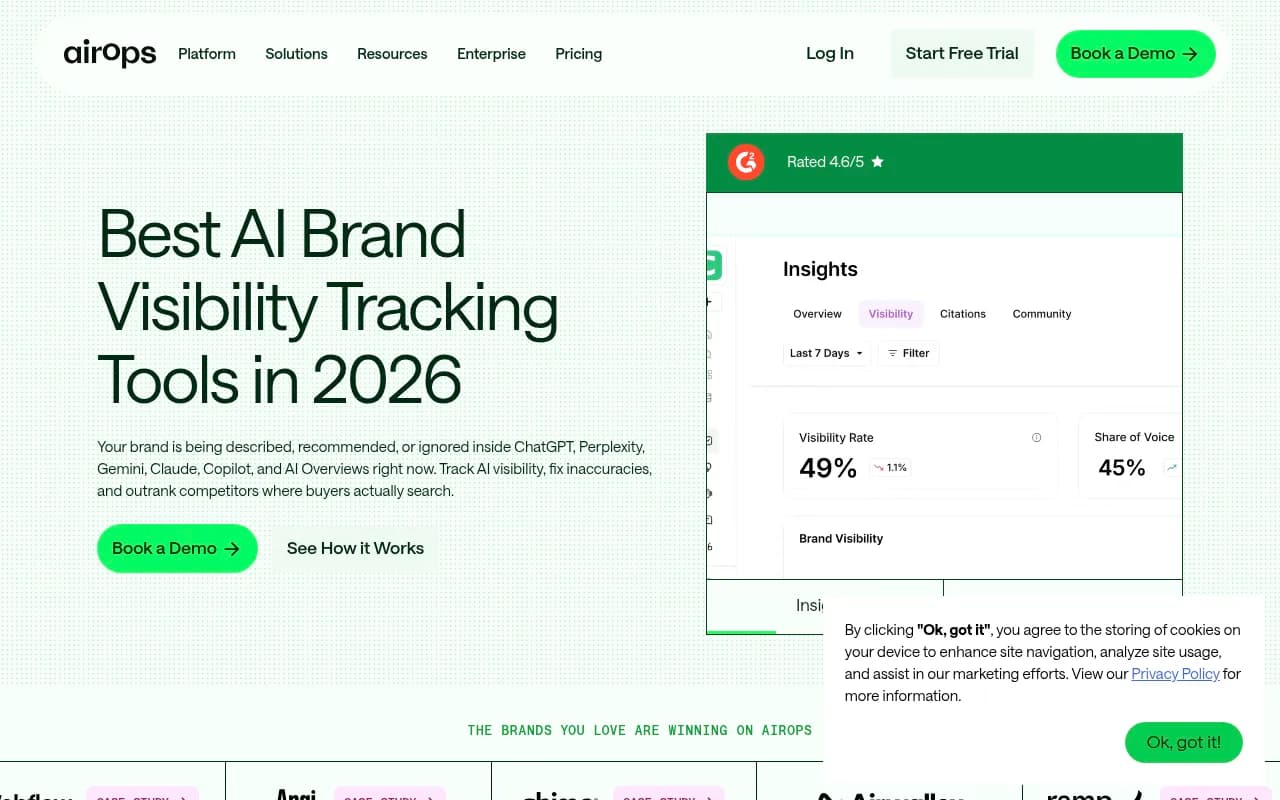
AirOps is organized around what it calls the "Insights to Action" loop, but in practice it's weighted heavily toward action. The platform's Power Agents can analyze competitor citations, identify content gaps, and generate optimized articles. Grids let you run these workflows at scale -- useful if you're managing a large content library or need to refresh hundreds of pages.
The Quill agent, launched in May 2026, handles more autonomous content creation: it can research a topic, draft an article, and prepare it for publishing with minimal manual input. For teams that have already done the strategic work and just need to ship, this is genuinely valuable.
What AirOps doesn't do well: it doesn't tell you why you're invisible in AI search. You can see that competitors are being cited more, but the diagnostic layer is thin. The prompt volume data that would help you prioritize topics is plan-gated, and there's no crawler log to show you whether AI agents are even finding your existing content.
How Promptwatch works in practice
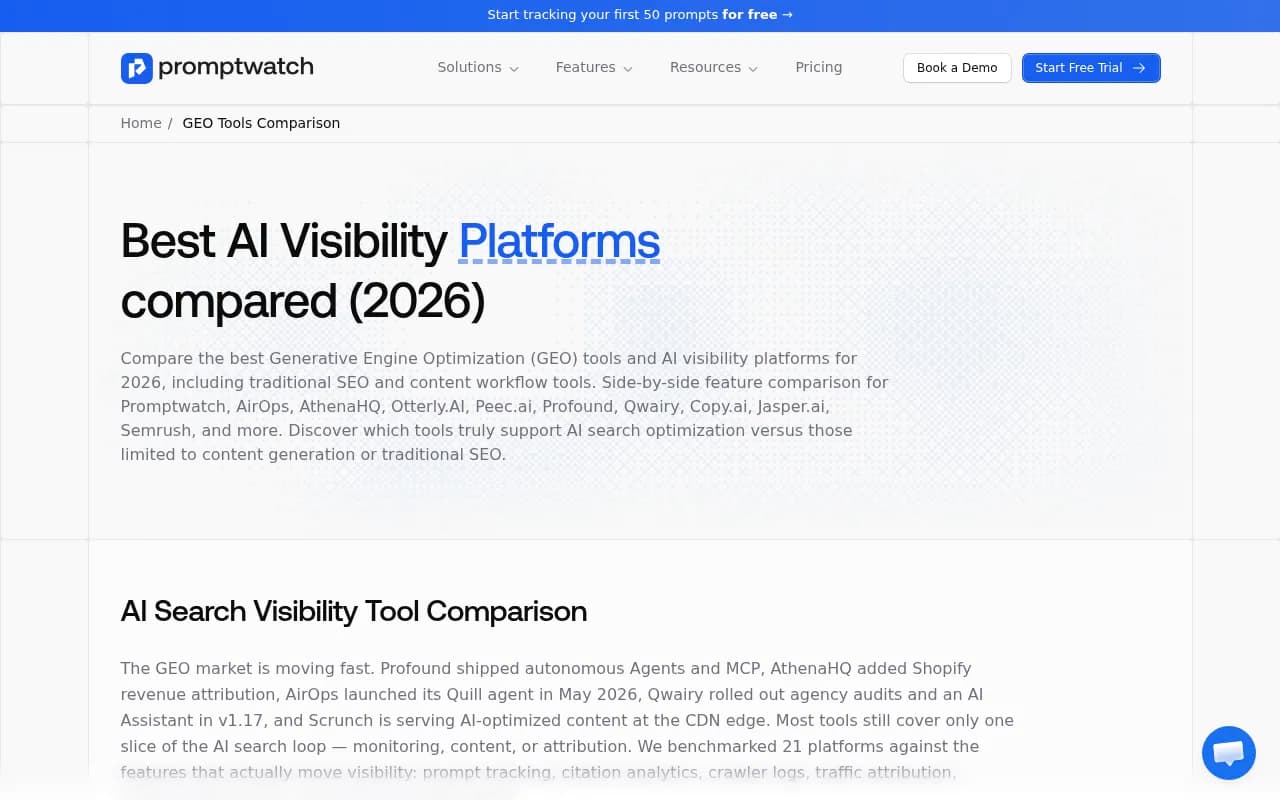
Promptwatch is built around a three-step loop: find the gaps, create content to fill them, track whether it worked.
The Answer Gap Analysis is the starting point. It shows you the specific prompts where competitors are appearing in AI responses but you're not -- not as a vague category, but as individual questions and topics. You can see the prompt, the AI's response, which competitor was cited, and what's missing from your site.
From there, Content Agents generate articles grounded in that gap data. The briefs pull in real prompt volumes, citation data, competitor analysis, and brand guidelines. The output isn't generic -- it's designed to answer the exact questions AI models are already asking but can't find answers to on your site.
The crawler logs close the loop. You can see when ChatGPT or Perplexity's crawlers visit a page you just published, and when that page starts appearing in citations. Agent analytics shows the timeline from publish to crawl to citation. Traffic attribution connects those citations to actual sessions and conversions.
Promptwatch also tracks Reddit threads and YouTube videos that AI models cite -- a channel most platforms ignore entirely. If a Reddit post is driving AI recommendations in your category, you want to know about it.
The content generation question
Both tools generate content, so it's worth being specific about what's different.
AirOps generates content within a workflow context. The Power Agents are good at taking a brief and producing a publishable draft, and the CMS integrations mean that draft can go live quickly. The content quality is solid -- Ramp and Angi have both published case studies with real results. The weakness is that the content strategy still has to come from somewhere else. AirOps can execute a strategy; it can't fully diagnose why your current content isn't being cited.
Promptwatch's Content Agents generate content that's grounded in visibility data from the start. The brief is built from real prompt data, citation patterns, and competitor analysis. You're not writing about a topic because it seems relevant -- you're writing about it because AI models are already answering questions on that topic and citing your competitors instead of you. That's a different kind of content brief, and it tends to produce content that's more directly targeted at AI citation gaps.
The tradeoff: Promptwatch doesn't publish directly to your CMS. You get the content, you publish it yourself. For teams with a fast-moving editorial workflow, AirOps's CMS integrations are a real advantage.
Who each tool is actually for
A Reddit thread from the B2B marketing community put it well: AirOps is for teams that already know what to do and just want to produce and ship. Promptwatch is for teams that are very prompt-centric -- they want to understand the data before they write anything.
That framing holds up. Here's a more specific breakdown:
AirOps makes sense if:
- You have a large existing content library that needs to be refreshed or optimized for AI search
- You publish to Webflow, WordPress, or Shopify and want to reduce the friction between content creation and publishing
- Your team has a clear content strategy and needs to execute it at scale
- You're primarily focused on ChatGPT, Google, and Perplexity (the models AirOps covers best)
Promptwatch makes sense if:
- You want to understand why your AI visibility looks the way it does before you start creating content
- You need to track AI crawler behavior on your site -- which pages are being read, which are being ignored, and why
- You want to connect AI visibility to revenue, not just citation counts
- You're monitoring across 10+ AI models and need consistent data across all of them
- You want Reddit and YouTube insights alongside your prompt tracking
- You need ChatGPT Shopping tracking or entity-level monitoring
There's also a pricing consideration. AirOps has a free tier, which makes it accessible for smaller teams testing the waters. Promptwatch starts at $99/month for the Essential plan (1 site, 50 prompts, 5 articles), with a free trial available. The Professional plan at $249/month adds crawler logs, which is where Promptwatch's diagnostic advantage really kicks in.
What neither tool does perfectly
AirOps's monitoring layer is thinner than its content layer. If you're trying to diagnose an AI visibility problem -- why is my brand not being cited, which pages are AI models ignoring, is my content even being crawled -- AirOps doesn't give you much to work with. The prompt gap data is useful but plan-gated, and there's no crawler log equivalent.
Promptwatch's publishing workflow is manual. You generate content in the platform, but you push it to your CMS yourself. For teams publishing at high volume, that's friction. There's also no equivalent to AirOps's Grids for running bulk content workflows.
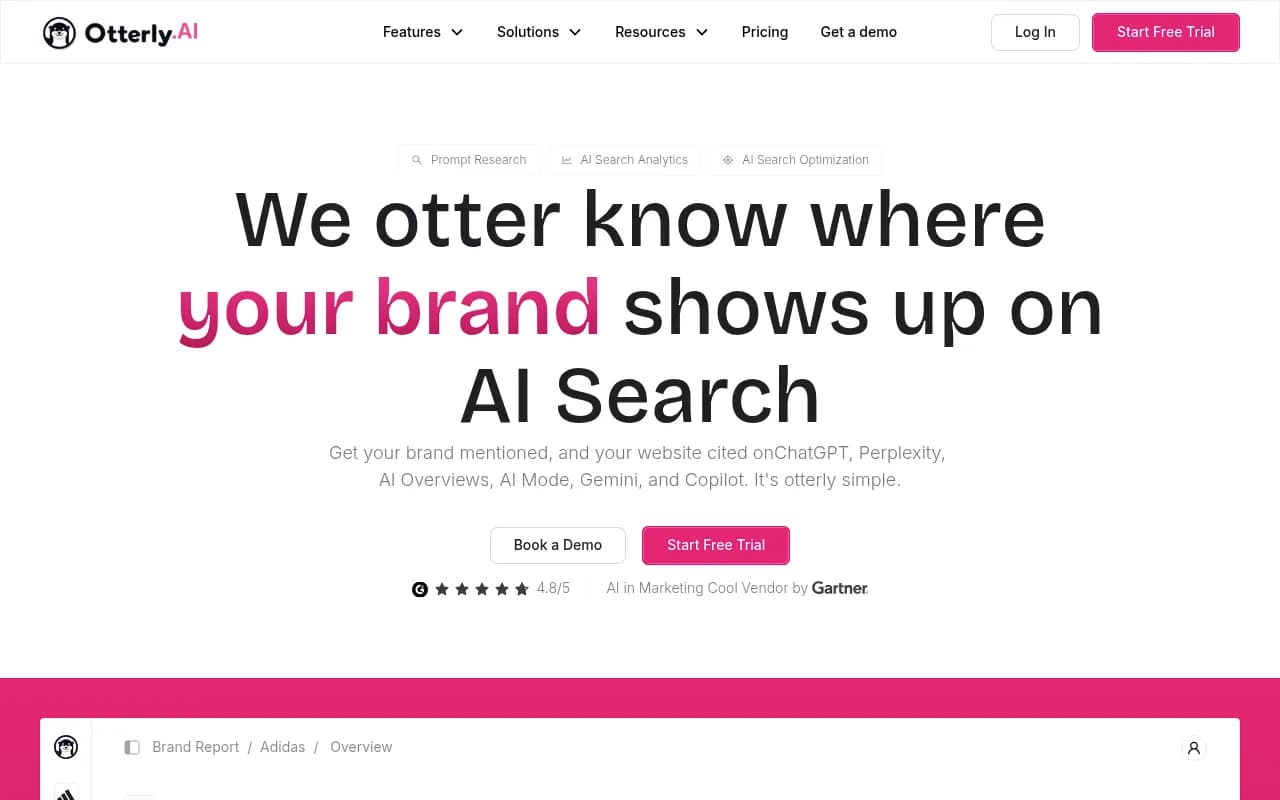
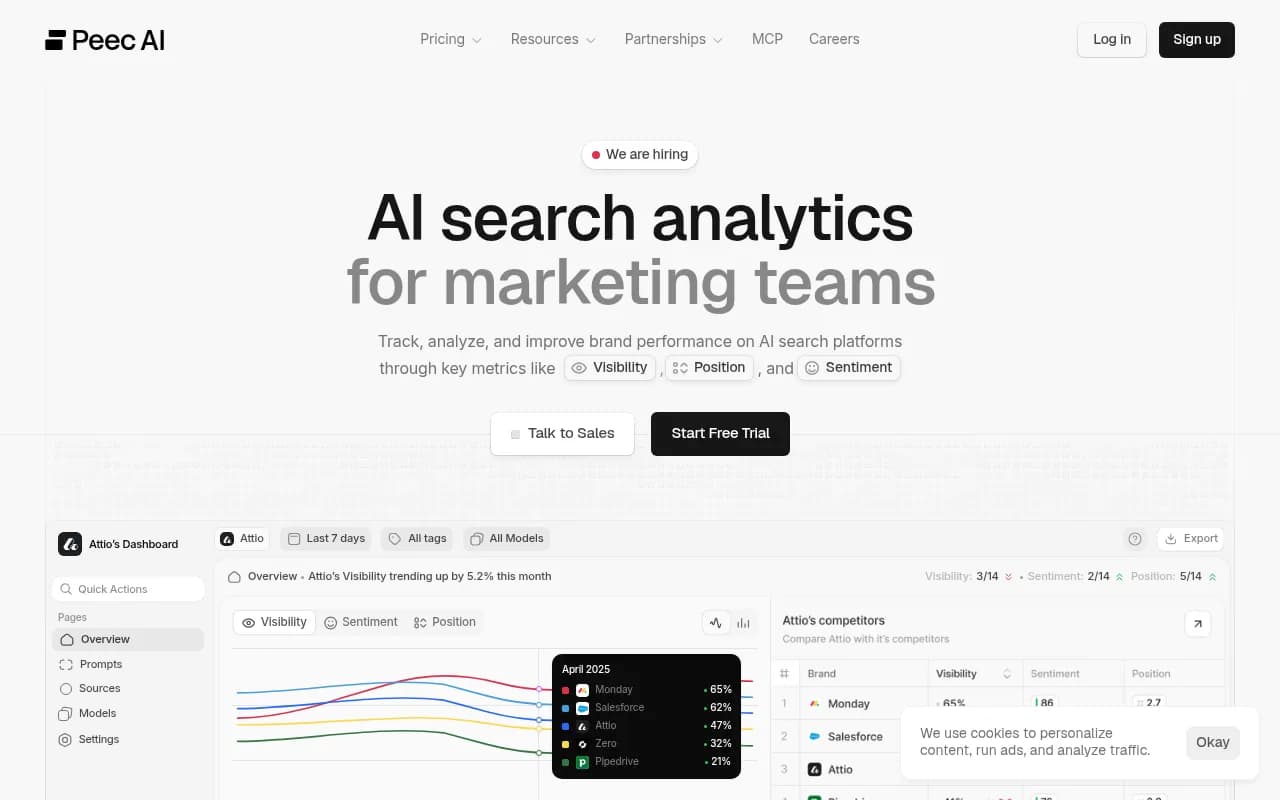
If you're evaluating other options in this space, tools like Profound are worth looking at for prompt volume data and strategic prioritization. Otterly.AI and Peec.ai are lighter monitoring tools if you just want basic tracking without the content layer.

The bottom line
AirOps and Promptwatch are solving adjacent problems, not the same problem.
AirOps is a content production engine with AI visibility features. If you have a strategy and need to execute it fast, with direct CMS publishing and scalable workflows, AirOps is genuinely good at that.
Promptwatch is an AI visibility platform with content generation built in. If you want to understand your AI search presence at a deep level -- crawler behavior, citation patterns, prompt gaps, traffic attribution -- and then fix what you find, Promptwatch covers more of that loop than any other tool in the category.
For most marketing and SEO teams, the question isn't really "AirOps or Promptwatch" -- it's "do I know what to write, or do I need to figure that out first?" If you're still figuring it out, start with the data. If you already know and just need to ship, start with the workflow.