Key takeaways
- Most AI visibility tools stop at monitoring -- they show you where you're invisible but leave you to figure out the fix. The platforms that actually help you rank are the ones with an action layer built in.
- Promptwatch is the only platform in this comparison rated as a "Leader" across all GEO categories, with crawler logs, content generation, and prompt intelligence that the others don't match.
- Profound is the strongest pure monitoring option for enterprise teams that need deep reporting and don't need content generation.
- Peec AI is a lightweight, affordable entry point -- good for getting started, limited for scaling.
- Omnia positions itself as a Promptwatch alternative but is a newer, less proven platform with a narrower feature set.
AI search is no longer a side channel. ChatGPT hit roughly 900 million weekly active users in early 2026. Google's AI Overviews reach an estimated 2 billion people monthly. When someone asks an AI engine "what's the best project management tool for remote teams" and your brand isn't in the answer, you've lost that customer before they ever saw a search result.
That's why AI visibility platforms exist. But the category has a problem: most of them just tell you you're losing. They show you a dashboard of citations, a score, maybe a competitor heatmap -- and then leave you to figure out what to do next. That gap between "you're not being cited" and "here's how to fix it" is where most platforms fall short.
This guide compares four platforms that come up most often in 2026: Omnia, Promptwatch, Profound, and Peec AI. We'll look at what each one actually does, where it falls short, and which type of team it fits.
What separates a monitoring tool from an optimization platform
Before getting into the platforms, it's worth being clear about what we're evaluating. There are two fundamentally different things a tool can do:
- Show you where you stand in AI search results
- Help you change where you stand
Most tools do the first. A smaller number do both. The ones that do both tend to include some combination of: content gap analysis (what topics are AI models citing competitors for that you're missing), content generation (drafting articles or briefs grounded in real prompt data), and crawler log analysis (understanding how AI engines actually crawl and index your site).
When you're comparing platforms, that distinction matters more than any individual feature.
Promptwatch: the full-stack option
Promptwatch is the platform with the widest feature set in this comparison. It monitors 10 AI models -- ChatGPT, Perplexity, Claude, Gemini, Google AI Overviews, Google AI Mode, Grok, DeepSeek, Mistral, and Copilot -- and it's the only platform here that combines monitoring with content generation and crawler log analysis in a single workflow.
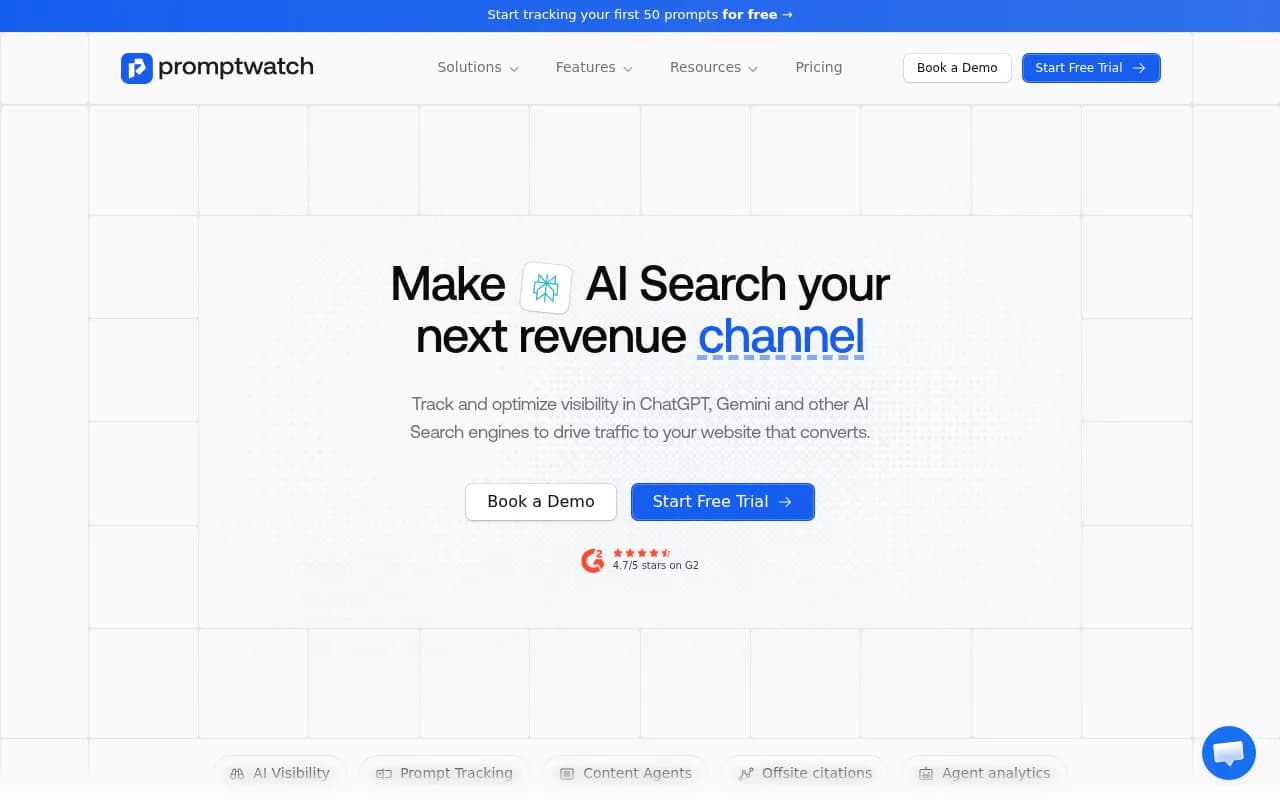
The core loop works like this: Answer Gap Analysis shows you which prompts your competitors appear for that you don't. Content Agents then generate articles, listicles, and briefs grounded in that prompt data -- not generic SEO filler, but content built around the specific questions AI models are already answering without you. Then page-level tracking shows whether the new content gets crawled, cited, and attributed to traffic.
A few capabilities stand out as genuinely uncommon. The AI Crawler Logs show real-time data on when ChatGPT, Claude, Perplexity, and others crawl your pages -- which URLs they hit, how often they return, and whether they're encountering errors. Most competitors don't have this at all. Reddit and YouTube citation tracking surfaces the third-party content that's actually influencing AI recommendations, which is a channel most monitoring tools ignore entirely. ChatGPT Shopping tracking monitors when your brand appears in product recommendation carousels.
Promptwatch has processed more than 4.5 billion citations, clicks, and prompts, and is used by 1,480+ brands including Booking.com and Center Parcs. In a 2026 comparison of 12 GEO platforms, it was the only one rated as a "Leader" across all categories.
Pricing runs from $99/month (Essential: 1 site, 50 prompts, 5 articles) to $249/month (Professional: 2 sites, 150 prompts, 15 articles, crawler logs) to $579/month (Business: 5 sites, 350 prompts, 30 articles). A free trial is available.
Where it's less perfect: the prompt caps scale steeply in price if you're running a large agency with many clients, and the 7-day trial is short for a thorough evaluation. Teams that only need basic monitoring and have no interest in content generation may find the feature set more than they need.
Profound: enterprise monitoring done well
Profound is built for large organizations that need serious reporting infrastructure. It's consistently cited as one of the stronger dedicated monitoring platforms for enterprise teams, and the feature depth on the tracking side is real.
Where Profound excels is in real-time AI monitoring across major models, competitive benchmarking, and the kind of structured reporting that enterprise stakeholders expect. If you're a VP of Marketing at a Fortune 500 company and you need to present AI visibility data to your CMO every quarter, Profound gives you the reporting framework to do that.
The limitation is that Profound is primarily a monitoring tool. It shows you the data. What it doesn't do is help you act on it -- there's no content generation, no content brief creation grounded in prompt data, and no crawler log analysis to understand how AI engines are actually processing your site. You see the gap; you figure out the fix yourself.
Profound also sits at a higher price point than most of the other platforms here, which makes sense for its enterprise positioning but rules it out for smaller teams and agencies.
If your team has a separate content production workflow and just needs the best possible monitoring layer on top of it, Profound is a legitimate choice. If you want monitoring and optimization in the same tool, it's not the right fit.
Peec AI: a lightweight entry point
Peec AI is on the more affordable end of the market and is often recommended as a starting point for teams that are new to AI visibility tracking.
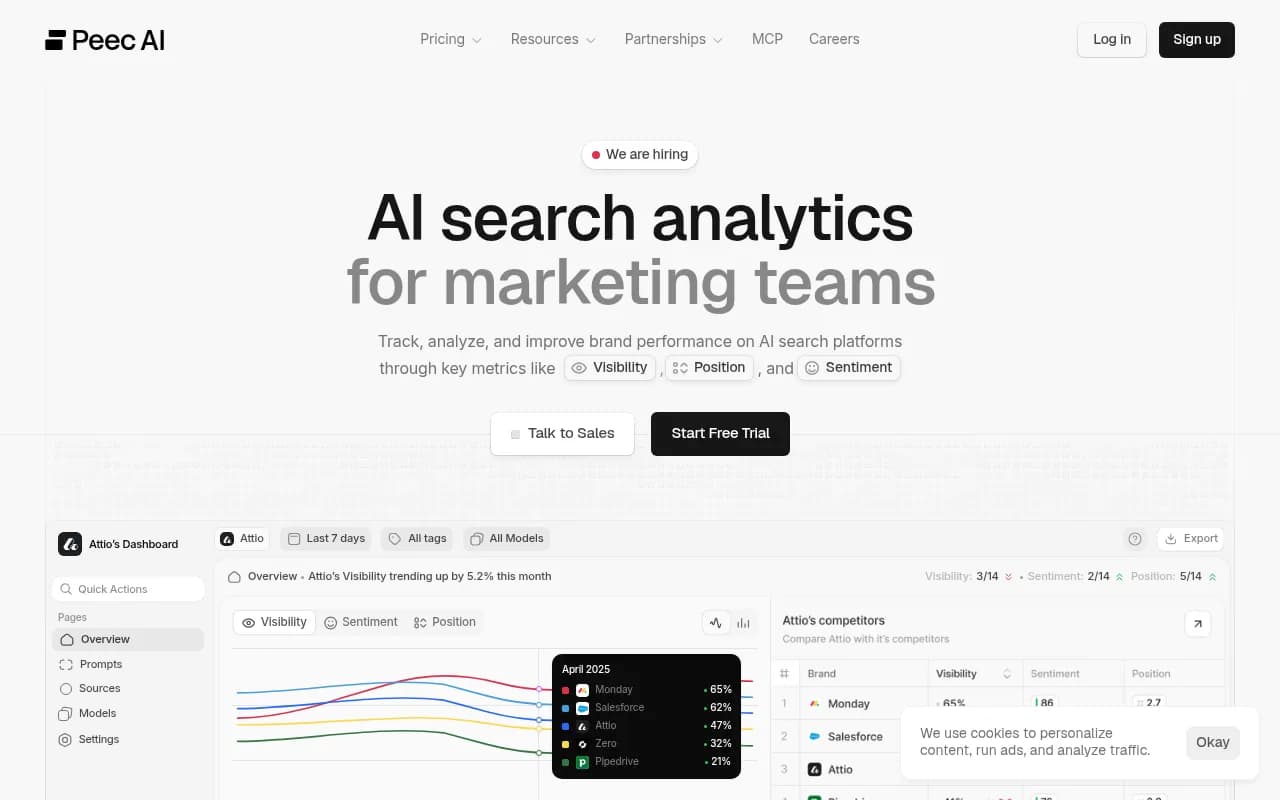
The platform tracks brand mentions and citations across AI models, gives you basic competitive benchmarking, and surfaces some suggestions for improvement. For a small marketing team that wants to understand whether they're appearing in AI search results without committing to a complex platform, it does the job.
The honest limitation is that Peec AI is monitoring-only. There's no crawler log analysis, no content generation, no prompt volume data, and no traffic attribution. It tells you where you stand. It doesn't help you move. For teams that are just getting started and want to understand the landscape before investing in a full optimization workflow, that's fine. For teams that want to actually improve their AI visibility, they'll hit the ceiling quickly.
Peec AI is also lighter on the enterprise side -- fewer integrations, less granular reporting, and no multi-region or multi-language support at the depth that larger organizations need.
Omnia: newer entrant, narrower feature set
Omnia markets itself as a Promptwatch alternative and positions around URL-level citation intelligence and geo-by-country tracking. It's a newer platform, and some of the capabilities it highlights -- like prompt-to-outcome mapping -- are genuinely interesting angles.
The honest assessment is that Omnia is less proven than the other three platforms here. It has a smaller customer base, less publicly available data on citation processing at scale, and a feature set that's still catching up to what Promptwatch offers. The geo tracking is a real differentiator if country-level citation data is your primary need, but for most teams, the broader feature gap is hard to overlook.
Omnia's blog positions it as a platform that "goes further than most Promptwatch competitors," which is a bold claim for a newer entrant. Teams evaluating it should ask specifically about crawler log analysis, content generation capabilities, and the size of the citation dataset they're working with -- those are the areas where the gap is most likely to show.
Head-to-head comparison
| Feature | Promptwatch | Profound | Peec AI | Omnia |
|---|---|---|---|---|
| AI models monitored | 10 | Multiple (enterprise) | Several | Several |
| Content generation | Yes (Content Agents) | No | No | Limited |
| Answer gap analysis | Yes | No | No | Partial |
| AI crawler logs | Yes | No | No | No |
| Reddit/YouTube tracking | Yes | No | No | No |
| ChatGPT Shopping tracking | Yes | No | No | No |
| Prompt volume & difficulty | Yes | No | No | No |
| Traffic attribution | Yes | No | No | No |
| Multi-language/region | Yes | Yes | Limited | Yes |
| Enterprise reporting | Good | Excellent | Basic | Basic |
| Starting price | $99/mo | Higher (enterprise) | Lower | Lower |
| Best for | Teams that want to monitor and fix | Enterprise monitoring | Getting started | Geo-focused tracking |
Which platform fits which team
The right answer depends on what you're actually trying to do.
If you want to monitor AI visibility and improve it in the same workflow, Promptwatch is the clearest choice. The content generation, crawler logs, and answer gap analysis create a loop that the other platforms don't replicate. It's the only platform here where you can go from "I'm not being cited for this prompt" to "here's the content that will fix it" without switching tools.
If you're at a large enterprise and your primary need is reporting infrastructure -- dashboards, competitive benchmarking, stakeholder-ready data -- and you have a separate content team to act on what you find, Profound is worth a serious look. The monitoring depth is real, even if the action layer isn't there.
If you're a small team or an individual marketer just getting started with AI visibility and you want to understand the basics without a big investment, Peec AI is a reasonable starting point. Just know you'll likely outgrow it.
If country-level citation tracking is your specific priority and you're willing to work with a newer, less proven platform, Omnia is worth evaluating. But go in with clear questions about what they can and can't do.
What to ask any platform before you buy
Regardless of which platform you're evaluating, these questions will surface the real differences fast:
- Does the platform track AI model behavior in real user interfaces, or just through APIs? (The answers can differ significantly.)
- Can you see which specific pages on your site are being cited, and by which models?
- Does the platform show you crawler activity -- when AI engines visit your site, which pages they read, and whether they're encountering errors?
- Is there a content generation layer, or does the platform stop at the alert?
- How does pricing scale as you add prompts, sites, or team members?
- What does the trial period look like, and is it long enough to actually test the workflow?
The platforms that can answer all of those questions with specifics are the ones worth your time. The ones that get vague on crawler logs or content generation are telling you something important about where their product actually ends.
The broader landscape
These four platforms aren't the only options. The AI visibility category has expanded significantly in 2026, and there are tools worth knowing about depending on your specific needs.
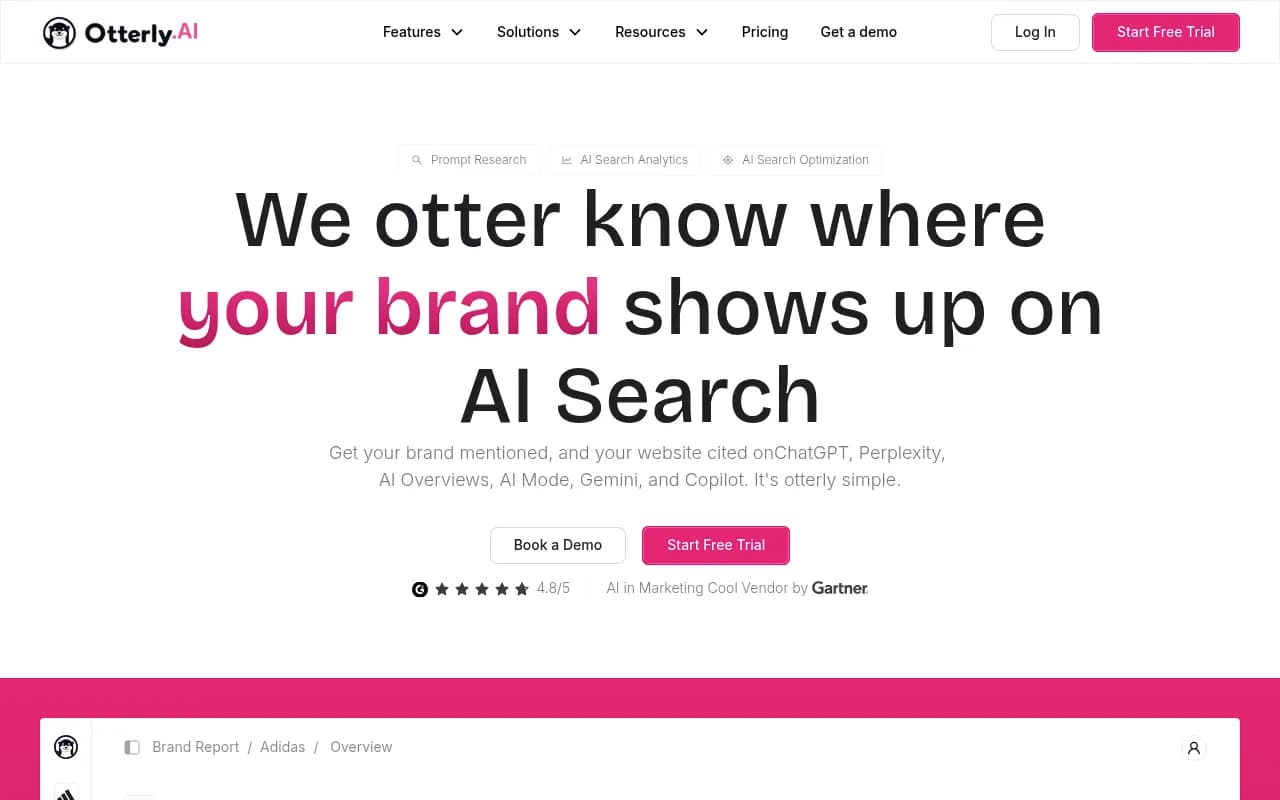
Otterly.AI is a solid affordable monitoring option for teams that want basic brand tracking without the complexity of a full platform.

AthenaHQ is monitoring-focused with good competitive benchmarking, though like Profound it stops short of content optimization.
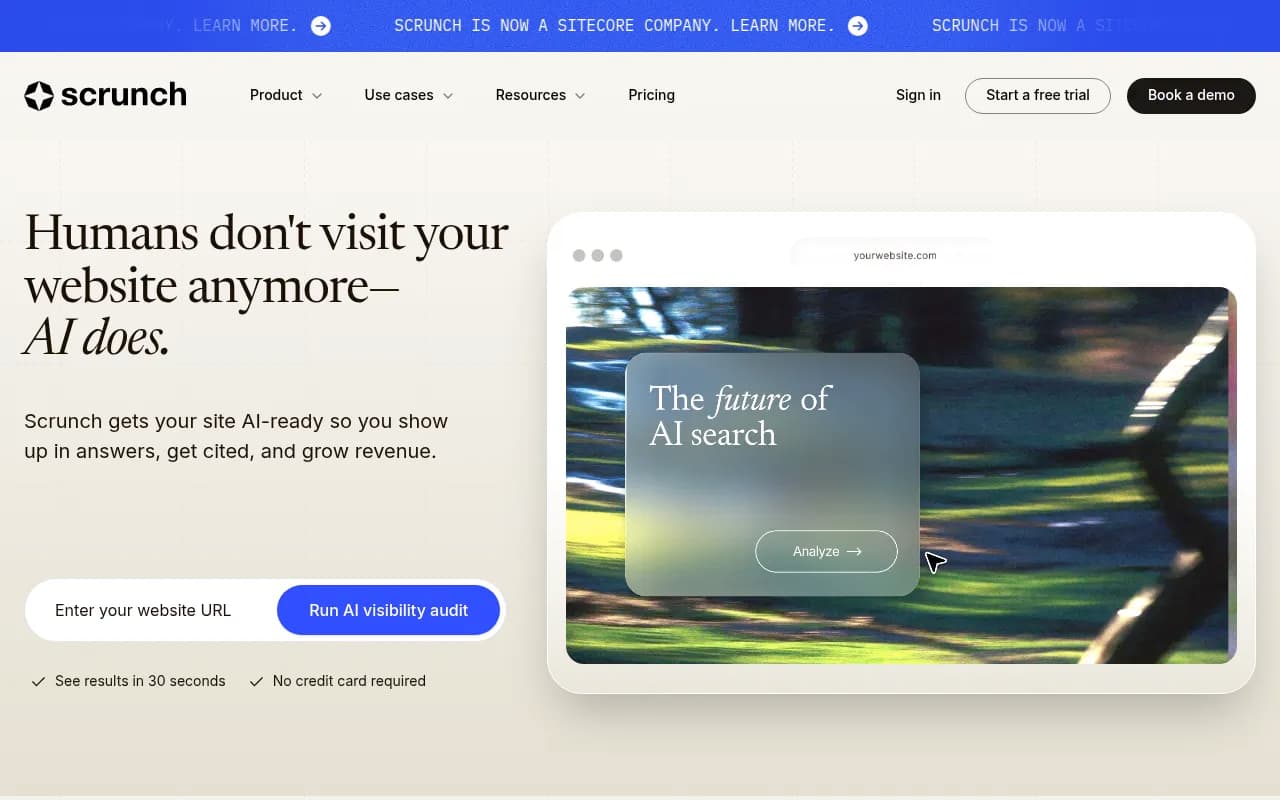
Scrunch AI covers brand and agency monitoring with reasonable feature depth, though it lacks crawler logs and content generation.
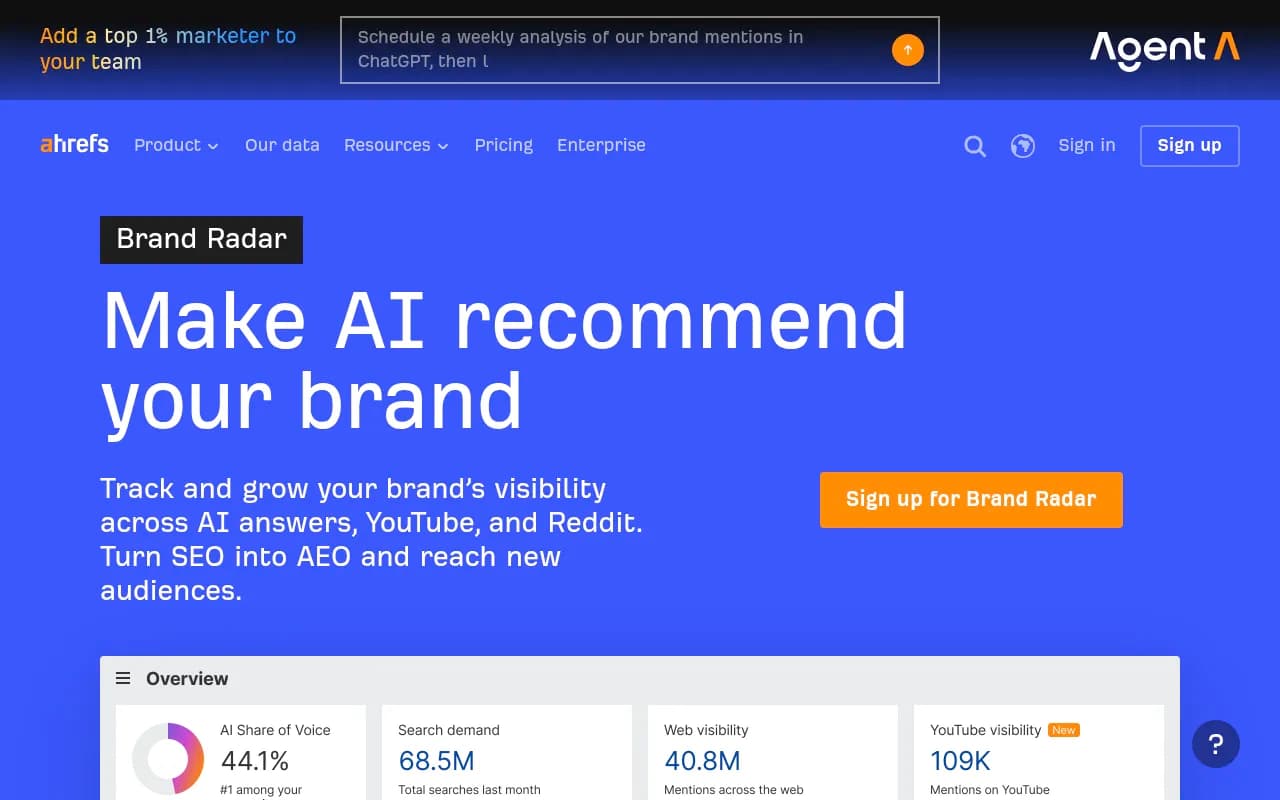
For teams that want to stay in the SEO suite ecosystem rather than adopting a dedicated AI visibility tool, both Semrush and Ahrefs have added AI visibility features -- though Semrush uses fixed prompts and Ahrefs Brand Radar has no AI traffic attribution, which limits their usefulness for teams that want to optimize rather than just observe.
The bottom line
The AI visibility category in 2026 has a clear split: tools that show you data, and tools that help you act on it. Most platforms fall into the first category. That's useful for understanding your situation, but it doesn't move the needle.
If your goal is to actually improve how often AI engines cite your brand -- not just measure it -- the platform you choose needs an action layer. Right now, Promptwatch is the most complete version of that in this comparison. Profound is the strongest pure monitoring option for enterprise teams. Peec AI is the most accessible starting point. Omnia is worth watching but hasn't yet proven itself at scale.
The category will keep evolving. But the question to ask any platform stays the same: after I see the gap, what does this tool actually help me do about it?