Key takeaways
- Omnia is a solid platform, but its pricing and feature depth are built for enterprise teams -- most small businesses are paying for capabilities they'll never use
- The best alternatives in 2026 go beyond monitoring and help you actually fix visibility gaps, generate content, or take action on the data
- Affordable doesn't have to mean limited: several tools on this list start under $100/month and include features Omnia doesn't offer at any tier
- If AI search visibility is part of your strategy (and it should be), look for tools that track citations across ChatGPT, Perplexity, and Google AI Overviews -- not just traditional rankings
- The right tool depends on your primary use case: SEO content, AI brand monitoring, rank tracking, or all three
Small business owners have a complicated relationship with software. You need tools that are powerful enough to actually move the needle, but not so complex that you need a dedicated analyst just to read the dashboard. Omnia sits firmly in the "powerful but complex" camp -- and for a lot of small teams, that's a problem.
Omnia's pricing reflects its enterprise ambitions. If you're running a lean marketing team or a growing e-commerce brand, you're probably looking at it and thinking: there has to be something better suited to what I actually need.
There is. Several, in fact.
This guide covers five alternatives worth considering in 2026, with honest takes on what each one does well, where it falls short, and who it's actually built for.
What to look for in an Omnia alternative
Before jumping into the list, it's worth being clear about what "better for small businesses" actually means. It's not just about price.
The tools that tend to work best for smaller teams share a few traits:
- They're fast to set up -- you shouldn't need a two-week onboarding process to see your first insight
- They show you what to do, not just what's happening -- monitoring dashboards are only useful if they tell you something actionable
- They cover the channels that matter now, including AI search engines like ChatGPT and Perplexity, which are increasingly where your customers are finding (or not finding) you
- They don't charge enterprise rates for features you'll use once a quarter
With that in mind, here's how the main contenders stack up.
Quick comparison
| Tool | Starting price | AI search tracking | Content generation | Best for |
|---|---|---|---|---|
| Promptwatch | $99/mo | Yes (10 AI models) | Yes (Content Agents) | AI visibility + content action |
| Otterly.AI | ~$49/mo | Yes | No | Budget brand monitoring |
| SE Ranking | $65/mo | Yes (via GEO module) | Limited | Traditional SEO + AI tracking |
| Semrush | $139/mo | Yes (AI Toolkit) | Limited | All-in-one SEO |
| Rankscale | Custom | Yes | No | AI rank tracking |
1. Promptwatch -- best for small teams that want to act, not just watch
Most monitoring tools have the same problem: they show you a score going up or down, and then leave you to figure out what to do about it. Promptwatch is built around the opposite idea.
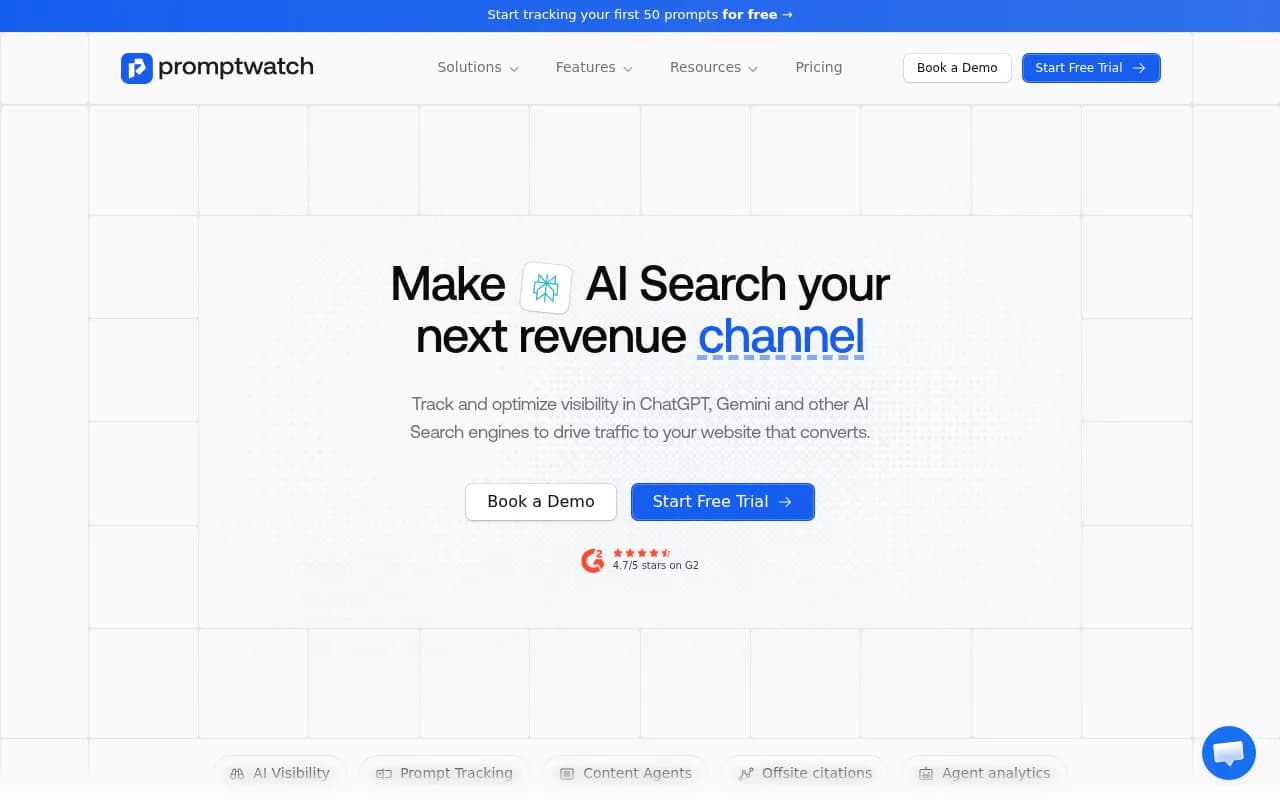
The core workflow is a loop: find the prompts where competitors are showing up in AI answers but you're not, generate content specifically designed to close those gaps, then track whether it worked. For a small business trying to grow AI search visibility without a dedicated SEO team, that's a much more useful starting point than a dashboard full of numbers.
A few things that stand out for smaller teams specifically:
The Essential plan at $99/month covers one site, 50 prompts, and 5 articles per month -- which is enough to get real traction without overcommitting. The platform tracks visibility across 10 AI models including ChatGPT, Perplexity, Claude, Gemini, and Google AI Overviews, so you're not flying blind on any of the major channels.
The Content Agents feature is genuinely useful here. It generates articles and briefs grounded in actual prompt data and citation analysis -- not generic AI filler. If you've ever tried to brief a writer on "what AI models want to see," you know how hard that is to do manually. Promptwatch automates most of that research.
Crawler logs are available on the Professional plan ($249/month) and show you exactly which pages AI bots are reading, how often, and whether those visits are turning into citations. That kind of visibility into the crawl-to-citation pipeline is rare even at the enterprise level.
The one honest caveat: if you're purely a traditional SEO shop with no interest in AI search, this might be more than you need right now. But given where search is heading, that's a shrinking group.
2. Otterly.AI -- best for budget-conscious monitoring
If your main goal is to keep an eye on brand mentions across AI platforms without spending much, Otterly.AI is worth a look. It's one of the more affordable options in the space and covers the basics well.
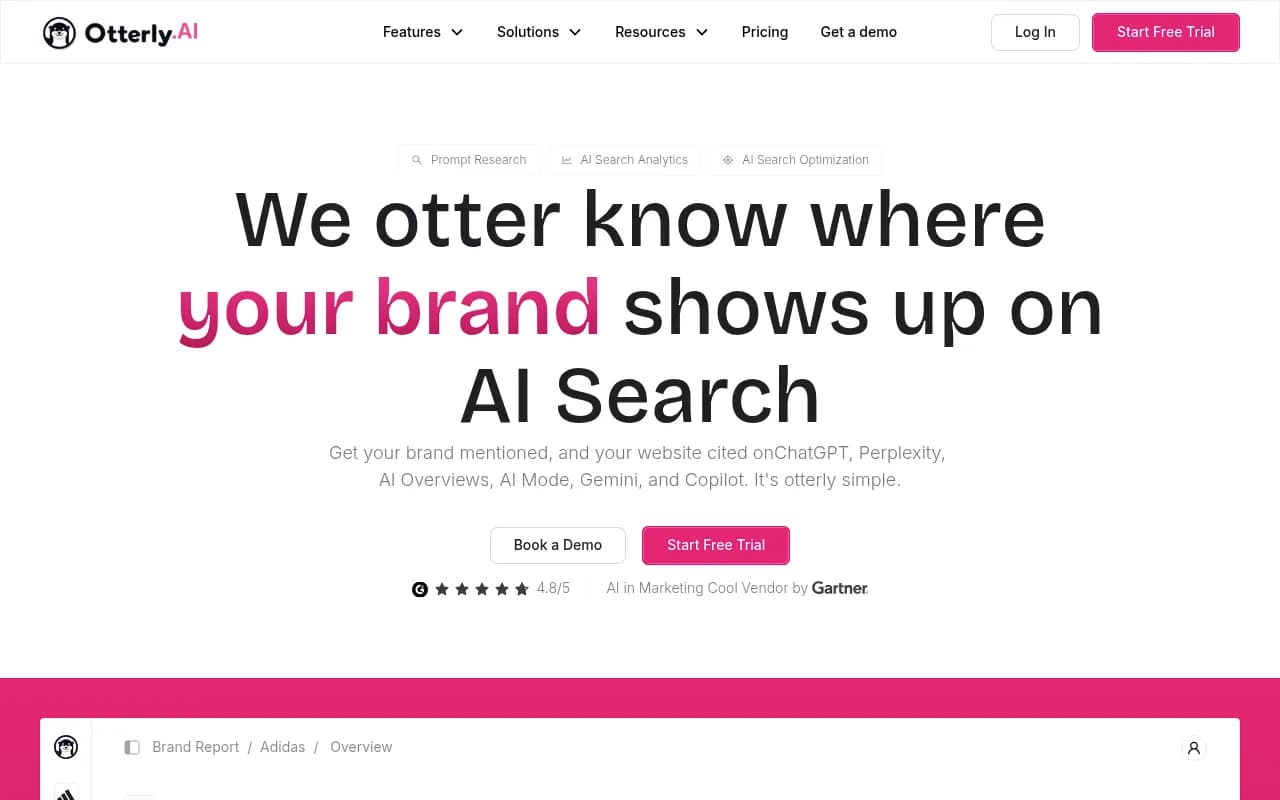
You can track how often your brand appears in AI-generated answers, compare visibility against a handful of competitors, and get alerts when something changes. The interface is clean and the setup is quick -- genuinely quick, not "quick" in the way enterprise tools use that word.
The limitation is that Otterly.AI stops at monitoring. There's no content generation, no gap analysis that tells you what to write, and no crawler log data. You'll see that your visibility dropped, but you'll need to figure out why and what to do about it on your own.
For a small business that just wants a pulse check on AI visibility and has other tools handling content strategy, that's a reasonable trade-off at the price point. For anyone who wants the full picture, it's a starting point rather than a destination.
3. SE Ranking -- best for traditional SEO with an AI layer added
SE Ranking has been a reliable mid-market SEO platform for years, and in 2026 it's added a GEO (Generative Engine Optimization) module that extends its tracking into AI search territory.
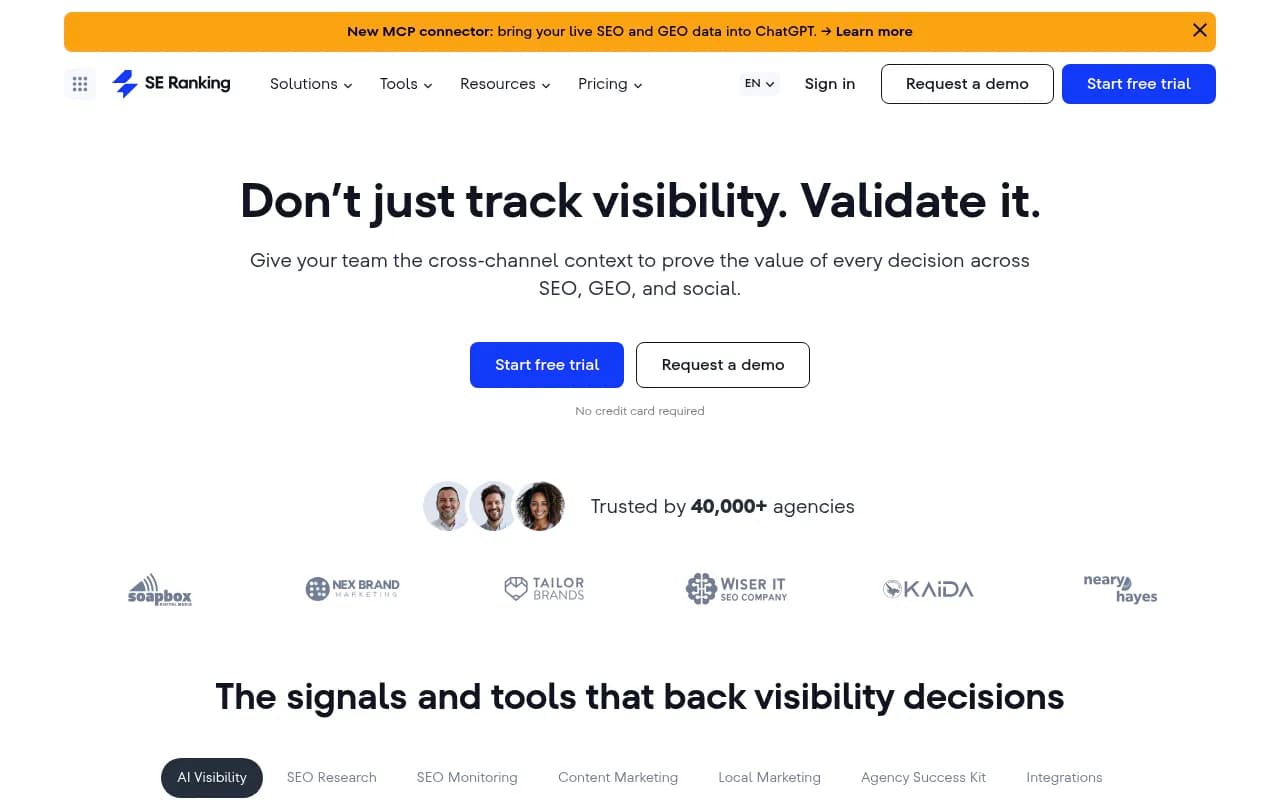
The base platform covers keyword rank tracking, site audits, backlink analysis, and competitor research -- all the traditional SEO fundamentals that small businesses still need. The AI visibility layer sits on top of that, letting you track brand mentions and citations in AI-generated answers.
For a small business that's already invested in traditional SEO and wants to add AI monitoring without switching platforms entirely, SE Ranking makes a lot of sense. The pricing starts at $65/month, which is competitive, and the learning curve is manageable if you have any SEO background.
Where it gets less compelling is if AI search is your primary focus. The GEO module is useful but not as deep as dedicated AI visibility tools -- you won't get crawler logs, detailed citation analysis, or content generation built around prompt data. It's a solid generalist tool rather than a specialist one.
4. Semrush -- best for teams that want everything in one place
Semrush needs no introduction. It's the dominant all-in-one SEO platform, and its AI Visibility Toolkit has made it a reasonable option for tracking AI search performance alongside traditional metrics.
The appeal for small businesses is consolidation. If you're currently paying for a keyword tool, a rank tracker, a site audit tool, and a backlink checker separately, Semrush can replace all of them. Adding AI visibility tracking on top of that makes the per-feature cost look more reasonable.
That said, Semrush starts at $139/month, which puts it at the higher end of this list. And the AI tracking has a known limitation: it uses fixed prompt sets rather than letting you define the specific questions your customers are actually asking. For a small business in a niche market, that matters -- you want to track the prompts relevant to your audience, not a generic set.
There's also no AI traffic attribution, so you can see your visibility scores but can't connect them directly to site traffic or revenue. For a small business where every dollar of marketing spend needs to be justified, that gap is frustrating.
Still, if you're starting from zero on SEO tooling and want one platform to cover most of your bases, Semrush is a defensible choice.
5. Rankscale -- best for focused AI rank tracking
Rankscale is a newer entrant that focuses specifically on tracking how brands rank in AI-generated answers. It's less of a Swiss Army knife and more of a scalpel -- narrow focus, but it does that one thing well.
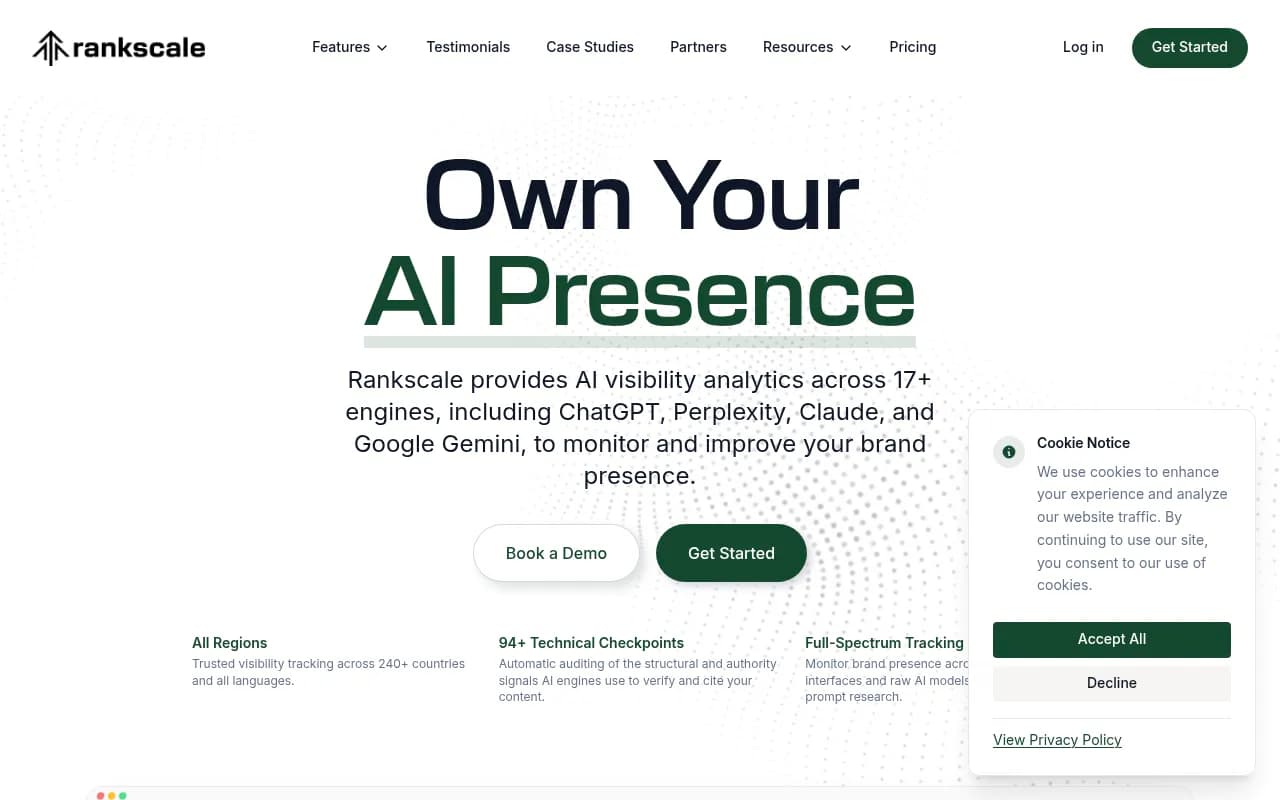
The platform tracks your visibility across multiple AI models, shows you how your position changes over time, and lets you compare against competitors. The interface is straightforward, and the data is presented in a way that's easy to share with stakeholders who don't live in marketing dashboards.
For small businesses where AI search visibility is a specific, defined goal -- say, a SaaS company tracking whether ChatGPT recommends them in relevant queries -- Rankscale gives you clean data without a lot of noise.
The gap is similar to Otterly.AI: it's monitoring without action. You'll know your rank; you won't get help improving it. Pricing is also less transparent than the other tools on this list, which can be a friction point when you're trying to evaluate options quickly.
Honorable mentions
A few other tools worth knowing about, depending on your specific situation:
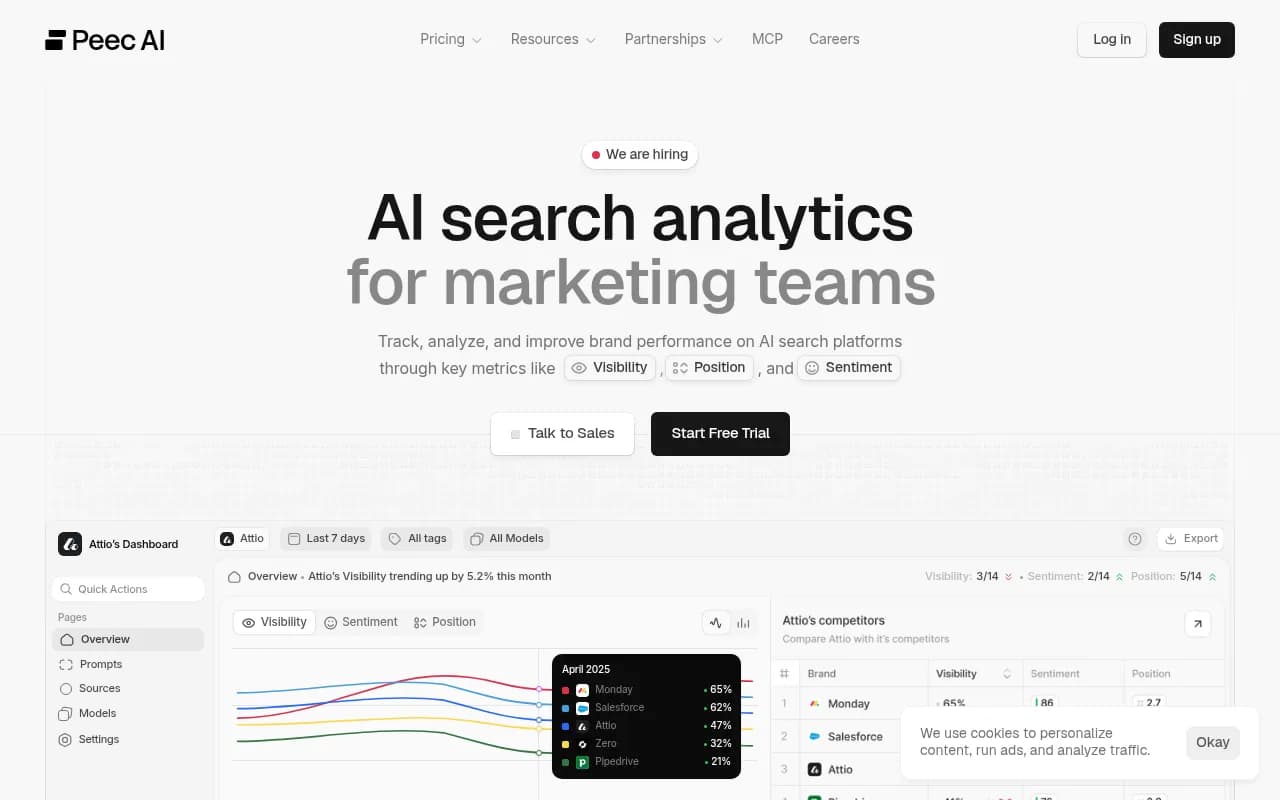
Peec AI is worth a look if you want AI visibility tracking with some built-in suggestions. It's lighter than Promptwatch but goes a step further than pure monitoring tools.
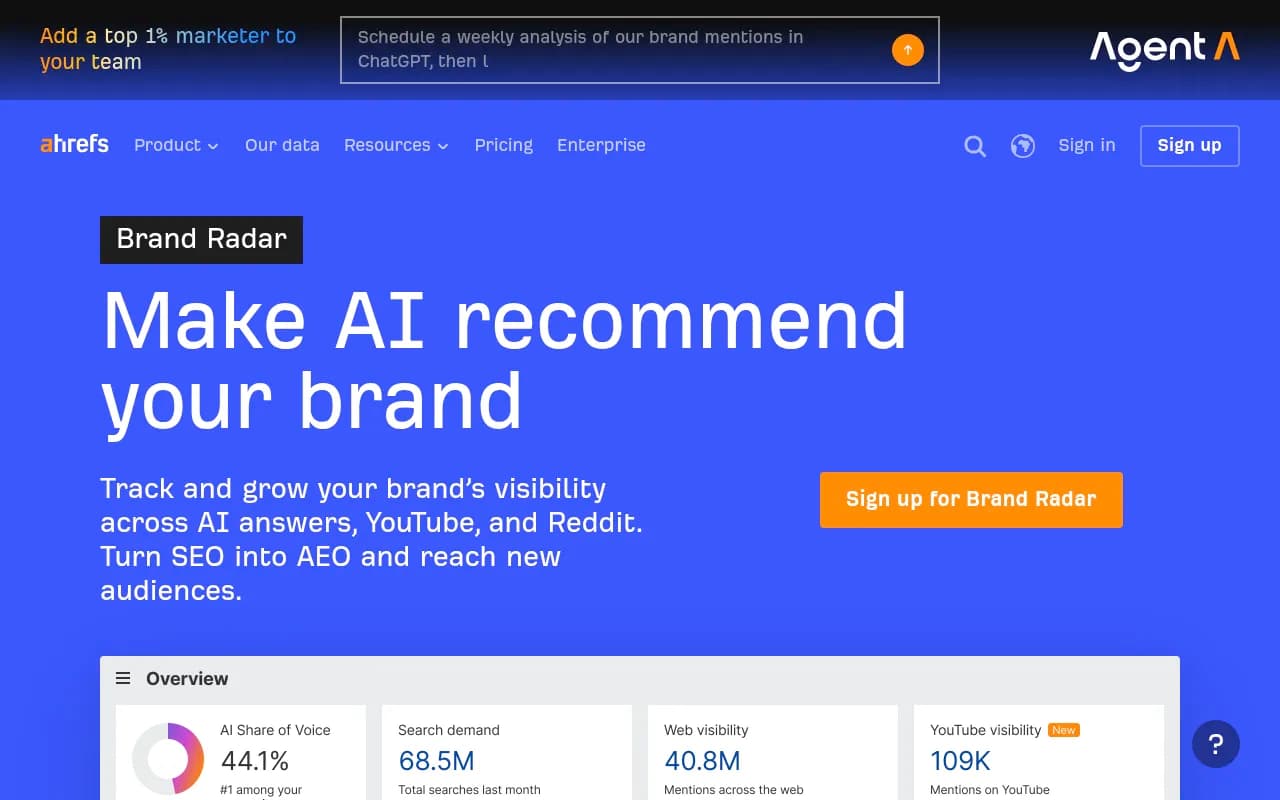
Ahrefs Brand Radar is a natural add-on if you're already an Ahrefs user. It tracks brand mentions across AI search engines and integrates with the rest of the Ahrefs toolset. The limitation is fixed prompts and no AI traffic attribution, but for existing users it's an easy way to add AI monitoring.
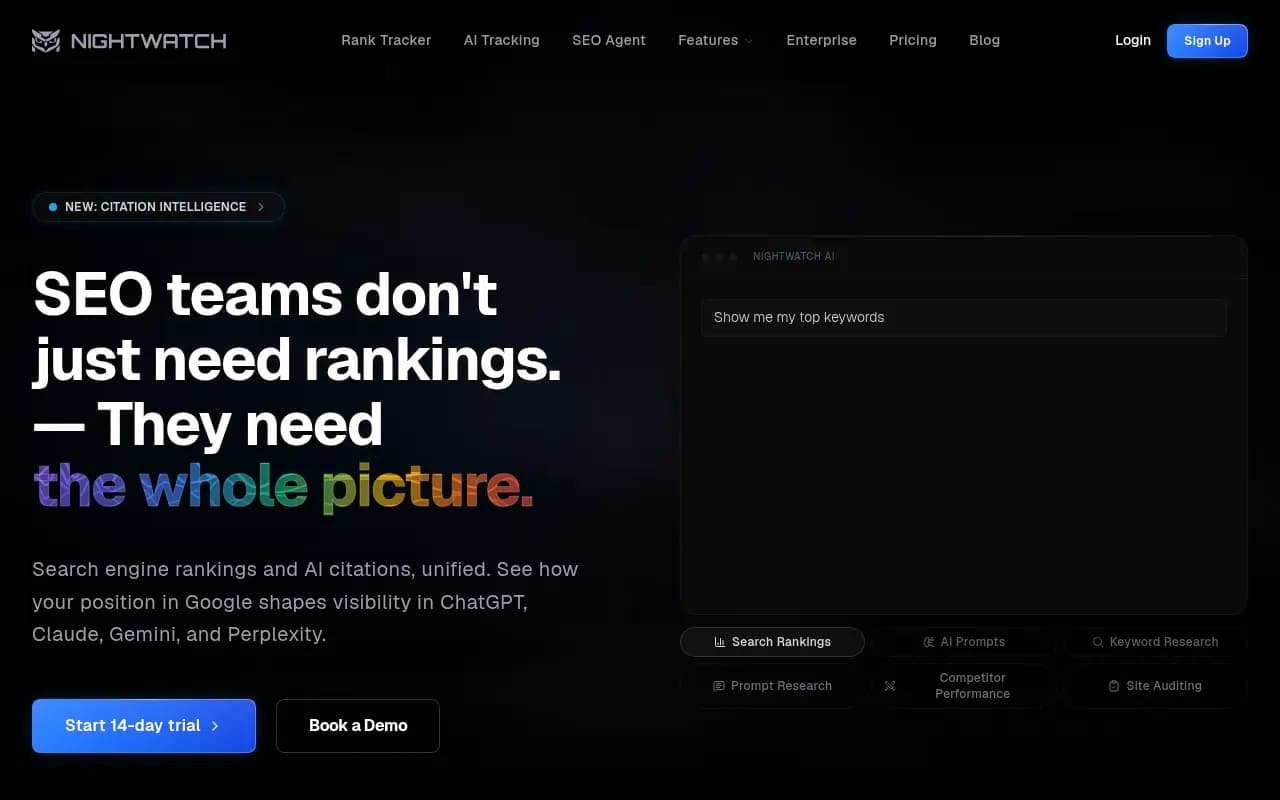
Nightwatch has extended its rank tracking into AI search territory and is worth considering if you're already using it for traditional SEO.
How to choose
The honest answer is that the right tool depends on where you are right now.
If you're just starting to think about AI search visibility and want to understand the landscape before committing, Otterly.AI or Peec AI give you a low-cost entry point. You'll learn what you're tracking and why, without a big upfront investment.
If you're already doing traditional SEO and want to add AI monitoring without switching platforms, SE Ranking or Semrush are the path of least resistance. You'll get decent coverage without rebuilding your workflow.
If AI search visibility is a strategic priority -- meaning you want to actually improve your position, not just measure it -- Promptwatch is the most complete option at a price point that works for small businesses. The $99/month Essential plan is a reasonable starting point, and the action loop (find gaps, generate content, track results) is genuinely more useful than a monitoring dashboard alone.
One thing worth keeping in mind as you evaluate: the tools that only monitor are betting that you'll figure out the "what to do" part yourself. That's fine if you have the team and the expertise. If you don't, a tool that helps you act on the data is worth paying a bit more for.
Final thought
Omnia built something solid for enterprise teams. But "enterprise-grade" isn't a compliment when you're a small business paying for complexity you don't need.
The tools above give you real alternatives -- some cheaper, some more focused, some more capable in specific areas. The common thread among the best ones is that they don't just hand you a dashboard and walk away. They help you understand what's happening in AI search and give you a path to do something about it.
That's what the market needed in 2026, and that's what the best tools on this list are actually delivering.