Key takeaways
- Profound is a solid AI visibility tracker, but it stops at monitoring -- it doesn't show you which specific content gaps are causing competitors to get cited instead of you.
- Answer gap analysis (finding the exact prompts and questions where competitors appear but you don't) is now the most actionable metric in AI search optimization.
- The tools in this list go beyond dashboards: they surface missing content, help you prioritize what to create, and some generate the content for you.
- Ahrefs data from December 2025 shows AI Overviews reduce clicks on the #1 organic result by 58% -- meaning your AI citation strategy is no longer optional.
- Promptwatch is the only platform in this comparison rated as a "Leader" across all GEO categories, and the only one with a full action loop: gap analysis, content generation, and citation tracking in one place.
Why "monitoring only" isn't enough anymore
Here's the situation most marketing teams are in right now: you've set up an AI visibility tool, you're watching your mention scores, and the numbers are... fine. Maybe even improving. But your competitor keeps showing up in ChatGPT responses for the exact queries you should own, and you have no idea why.
That's the core problem with monitoring-only platforms. They tell you the score. They don't tell you what's wrong with your game.
Profound is a good example of this pattern. It's a well-built enterprise tool with solid model coverage and clean dashboards. But the feedback from teams who've used it is consistent: high price, and when visibility drops, you're left guessing what to do next. The platform shows you that you're losing. It doesn't show you where your content is falling short or what you'd need to write to close the gap.
In 2026, that's a real problem. Gartner predicted a 25% drop in traditional search volume as users shift to AI assistants, and that shift is happening faster than most teams expected. If you're not actively closing content gaps that AI models care about -- specific questions, entity coverage, information depth -- you're going to keep losing citations to competitors who are.
The tools in this guide all have some form of answer gap analysis built in. That means they don't just show you where you're invisible; they show you the specific prompts, questions, or topics where competitors are getting cited and you're not. Some go further and help you create the content to fix it.
What answer gap analysis actually means
Before getting into the tools, it's worth being precise about what "answer gap analysis" means, because different platforms use the term differently.
At the most basic level, it means identifying prompts or questions where AI models cite your competitors but not you. That's the gap. The analysis part is understanding why -- is it missing content? Weak entity coverage? No structured data? A page that AI crawlers can't access?
The best tools in this space do three things:
- Run the prompts your target audience is actually using across multiple AI models
- Compare who gets cited (your competitors) vs. who doesn't (you)
- Map those gaps back to specific content you're missing or content you have that needs improvement
Some tools stop at step two. The ones worth paying for get to step three.
The 8 tools worth considering
1. Promptwatch -- best for the full action loop
Promptwatch is the most complete option here, and the gap between it and most competitors is significant enough to mention upfront.
Its Answer Gap Analysis feature does exactly what the name says: it shows you the specific prompts where competitors are visible in AI responses and you're not. You see the exact content your site is missing -- the topics, angles, and questions AI models want answers to but can't find on your pages. That's step one.
Step two is where Promptwatch separates itself. Content Agents generate articles, listicles, comparisons, and briefs grounded in real prompt data, citation data, prompt volumes, persona targeting, and competitor analysis. This isn't generic AI writing -- it's content built around the specific gaps the platform just identified.
Step three is tracking. Page-level citation tracking shows which pages are being cited, how often, and by which models. AI Crawler Logs show when ChatGPT, Claude, or Perplexity crawls your pages and when those crawls turn into citations. You can see the timeline from publish to crawl to citation.
It monitors 10 AI models (ChatGPT, Perplexity, Google AI Overviews, Claude, Gemini, Grok, DeepSeek, Copilot, Meta AI, Mistral), tracks Reddit and YouTube as citation sources, and includes ChatGPT Shopping tracking for e-commerce brands. Pricing starts at $99/month with a free trial.

2. Semrush AI Visibility Toolkit -- best for teams already in the Semrush ecosystem
Semrush has built out its AI visibility features considerably in 2026. The AI Visibility Toolkit tracks brand mentions across AI models and, importantly, includes topic gap analysis that connects to its existing keyword and content gap tools.
The advantage here is integration. If your team already uses Semrush for traditional SEO, the AI visibility data sits alongside your keyword rankings, backlink data, and content audit results. You can see a query where you're missing AI citations and immediately cross-reference whether you even have a page targeting that topic.
The limitation is that Semrush uses fixed prompt sets rather than tracking real user queries, and there's no AI traffic attribution -- you can see your AI mentions but can't connect them to actual site visits or conversions. For teams that need to show revenue impact, that's a gap.
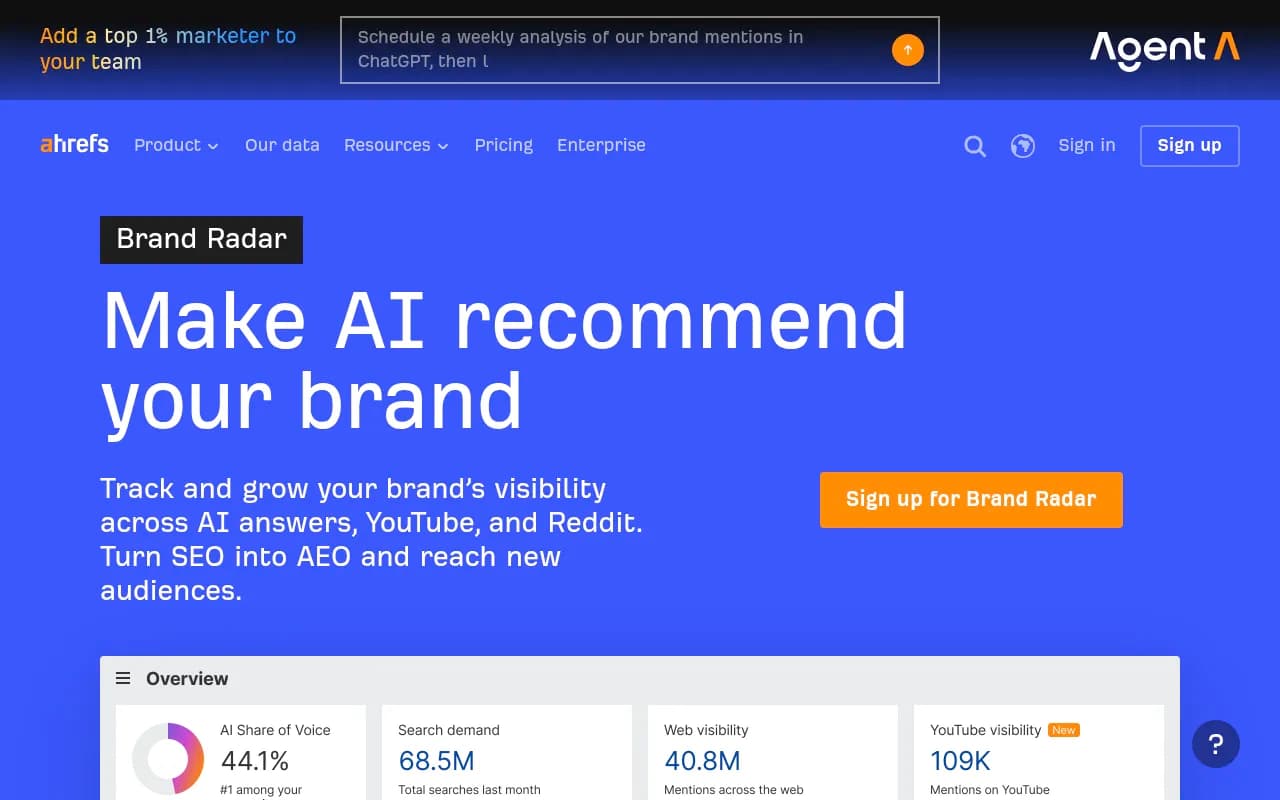
3. Ahrefs Brand Radar -- best for SEO-native teams
Ahrefs Brand Radar tracks your brand across AI search engines and surfaces the queries where competitors appear but you don't. If you're an Ahrefs user, it's the most natural entry point into AI visibility tracking.
The content gap angle works like this: Brand Radar shows you which prompts trigger competitor citations, and you can cross-reference those against your existing content in Ahrefs' Site Explorer to see whether you have pages that should be ranking for those topics. If you don't, that's your content brief.
The honest limitation: like Semrush, Brand Radar uses fixed prompts and doesn't offer AI traffic attribution. It's a monitoring and discovery tool, not an optimization platform. You'll still need to do the content creation work yourself.
4. AthenaHQ -- best for enterprise monitoring with gap reporting
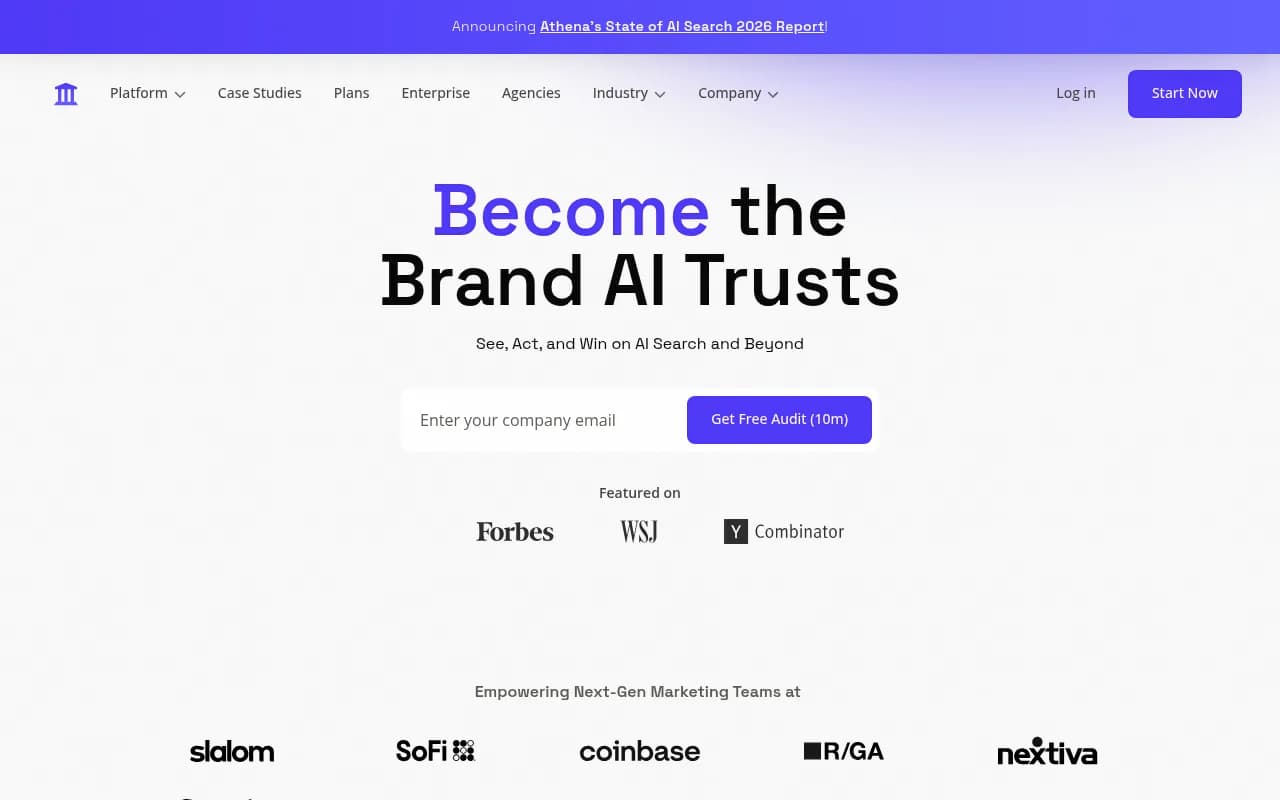
AthenaHQ has strong model coverage and clean reporting that enterprise teams tend to appreciate. Its gap analysis surfaces prompts where competitors are cited and you're not, organized by topic cluster so you can see patterns rather than individual query misses.
Where it falls short is the same place most enterprise tools do: it's monitoring-focused. The gap reports are useful for prioritizing content work, but AthenaHQ doesn't help you create the content. You're getting a well-organized list of problems, not a path to solving them.
That said, for larger teams with dedicated content resources who just need better prioritization data, AthenaHQ's reporting is genuinely useful.
5. Scrunch AI -- best for agencies managing multiple brands
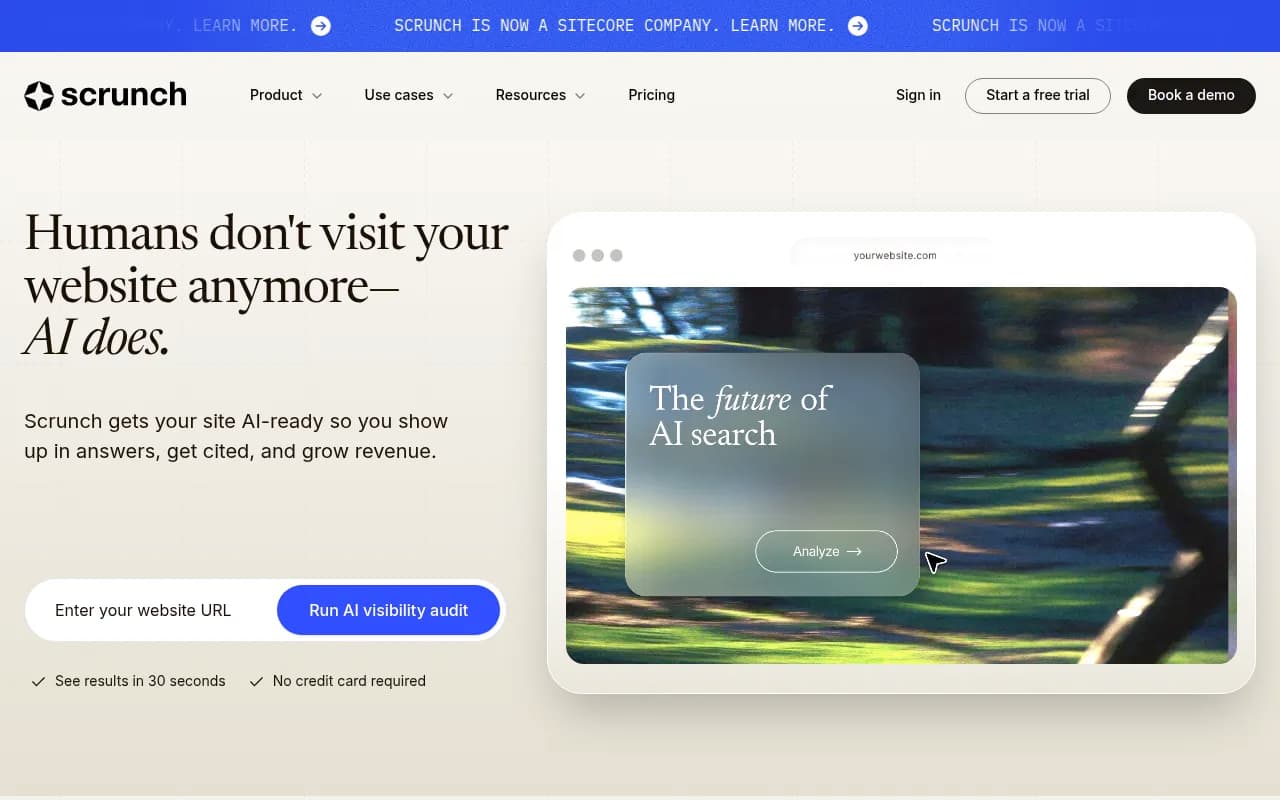
Scrunch AI is built with agencies in mind. It tracks AI visibility across models, surfaces citation gaps by client and topic, and has reporting features that make it easier to show clients where they're losing ground to competitors.
The gap analysis in Scrunch shows which competitor pages are getting cited for queries the client should own. That's useful for building content briefs and justifying content investment to clients who are skeptical about AI search.
The trade-off is depth. Scrunch's gap analysis is solid but not as granular as Promptwatch's -- you get the "what" (which prompts you're missing) but less of the "why" (what specific information your content is lacking that competitors have).
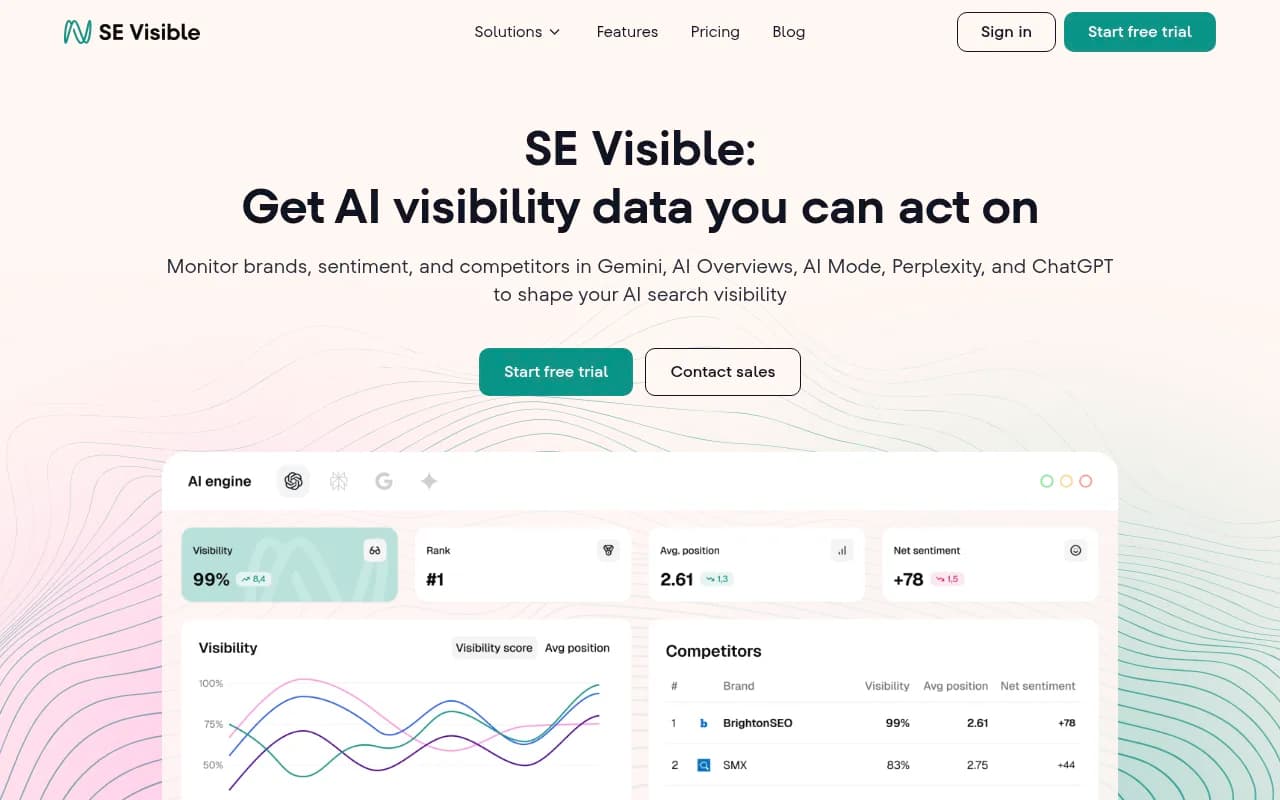
6. SE Ranking Visible -- best for budget-conscious teams
SE Ranking's AI visibility product (branded as Visible) is one of the more affordable options with real gap analysis built in. It tracks your brand across AI models, shows competitor citation patterns, and surfaces the prompt categories where you're underperforming.
For smaller teams or those just getting started with AI search optimization, Visible is a reasonable entry point. The gap analysis is less sophisticated than enterprise options -- it shows you missing prompt categories rather than specific content gaps -- but it's enough to build a content roadmap from.
7. MarketMuse -- best for content strategy teams focused on topical authority
MarketMuse approaches the gap problem from a different angle. Rather than starting with AI citations and working backward to content, it starts with your content inventory and maps it against the topics AI models care about.
Its Content Gap Analysis identifies topics where your site has weak or missing coverage relative to competitors. In 2026, it's incorporated AI citation data into this analysis, so you can see not just where your content is thin but where that thinness is costing you AI mentions.
MarketMuse is particularly strong for teams building out topical authority -- if you want to dominate a subject area in AI responses, its cluster-based approach to gap identification is useful. It's less useful if you need prompt-level granularity or real-time citation tracking.
8. Otterly.AI -- best for lightweight monitoring with basic gap visibility
Otterly.AI is the most accessible option on this list, both in terms of price and complexity. It tracks brand mentions across AI models and shows a basic view of which competitors are appearing for prompts you're not.
The gap analysis is simple: you see the prompts, you see who's cited, you see that you're not. There's no deeper content analysis, no content generation, no crawler logs. But for a small team that just needs to understand where the gaps are before deciding what to do about them, Otterly is a low-friction starting point.
How these tools compare
| Tool | Answer gap analysis | Content generation | Crawler logs | AI models covered | Starting price |
|---|---|---|---|---|---|
| Promptwatch | Deep (prompt-level) | Yes (Content Agents) | Yes | 10 | $99/mo |
| Semrush AI Toolkit | Topic-level | No | No | 5+ | Included in plans |
| Ahrefs Brand Radar | Prompt-level | No | No | 4+ | Included in plans |
| AthenaHQ | Cluster-level | No | No | 6+ | Custom |
| Scrunch AI | Prompt-level | No | No | 5+ | Custom |
| SE Ranking Visible | Category-level | No | No | 4+ | ~$50/mo |
| MarketMuse | Topic/cluster | No | No | Limited | $149/mo |
| Otterly.AI | Basic | No | No | 4+ | ~$29/mo |
The pattern is pretty clear. Most tools in this space show you the gap. Only Promptwatch closes it.
What to actually look for when evaluating these tools
Prompt data quality
There's a meaningful difference between tools that track real user prompts (what people actually type into ChatGPT or Perplexity) and tools that use fixed prompt sets their team wrote. Fixed prompts are easier to track but they miss the long-tail, conversational queries that drive most AI search traffic. Ask any tool you're evaluating where their prompt data comes from.
Model coverage
If a tool only tracks two or three AI models, you're getting a partial picture. ChatGPT, Perplexity, and Google AI Overviews are the three highest-traffic AI search surfaces right now, but Claude, Gemini, and Grok are growing fast. A tool that misses those is going to leave gaps in your gap analysis, which is a particularly unfortunate irony.
The action layer
This is the most important question: after the tool shows you a gap, what does it help you do about it? If the answer is "nothing, you figure it out," you're paying for a dashboard. That's fine if you have the internal resources to act on raw data. If you don't, you need a tool with content generation, briefs, or at minimum very specific recommendations about what your existing content is missing.
Citation attribution
Can the tool connect AI citations to actual website traffic and conversions? Most can't. This matters because it's the only way to prove ROI to leadership. If your AI visibility improves but you can't show that it drove any business outcome, the budget conversation gets hard.
The case for going beyond Profound
Profound isn't a bad tool. For enterprise teams that need clean dashboards and solid model coverage, it does what it says. The issue is what it doesn't do.
At its price point, you'd expect the platform to not just show you that competitors are winning AI citations, but to help you understand why and what to do about it. That's the gap that most teams discover after a few months: the data is there, the direction isn't.
The tools in this list all add at least one layer of actionability that Profound doesn't. Some add gap analysis at the prompt level. Some add content generation. Some add crawler logs that show you exactly how AI models are interacting with your pages.
If you're evaluating alternatives, the question to ask isn't "which tool has the best dashboard?" It's "which tool gets me from visibility data to published content the fastest?" That's where the actual ROI is in 2026.
For most teams, the answer to that question is Promptwatch -- it's the only platform that runs the full cycle from gap identification to content creation to citation tracking without requiring you to stitch together three separate tools. But the right choice depends on your team size, budget, and how much internal content capacity you already have.
Start with the gap analysis. Figure out where you're losing. Then pick the tool that gives you the clearest path to fixing it.