Key takeaways
- AirOps is primarily a content workflow and automation platform -- it's useful for scaling AI-assisted content production, but it's not a dedicated GEO or AI visibility tracker
- Most teams looking for AirOps alternatives fall into two camps: those who want deeper AI search monitoring, and those who want more focused content optimization
- The best alternatives depend on your priority: pure visibility tracking, content generation, SEO optimization, or a combination
- Tools like Promptwatch go beyond monitoring to help you find gaps, create content, and track results -- the full loop most tools skip
- Pricing ranges from ~$29/month for lightweight trackers to $500+/month for enterprise platforms
What AirOps actually does (and where it falls short)
AirOps is an AI content workflow platform. It helps teams build repeatable pipelines for generating, updating, and publishing content at scale -- think bulk article generation, content briefs, and workflow automation connected to SEO signals.
That's genuinely useful. But it's not a dedicated AI search visibility tool. If you want to know how often ChatGPT mentions your brand, which prompts Perplexity cites your competitors for, or why your pages aren't showing up in Google AI Overviews -- AirOps won't give you that.
The gap becomes obvious when teams start asking questions like:
- "Which AI models are citing us, and for what?"
- "What prompts are our competitors winning that we're not?"
- "Are our new articles actually getting picked up by AI crawlers?"
Those are AI visibility questions, and they need a different kind of tool. That's what most people are actually looking for when they search for AirOps alternatives.
The two types of alternatives
Before diving into specific tools, it helps to be clear about what you're trying to replace:
If you want AI search visibility and GEO tracking -- you need a platform that monitors how AI engines like ChatGPT, Perplexity, Claude, and Google AI Overviews respond to prompts related to your brand and category. The best tools here go further and help you act on what they find.
If you want content optimization and SEO writing tools -- you need something like Surfer SEO, Clearscope, or Frase, which help you write content that ranks in traditional and AI-influenced search.
Some tools try to do both. Most do one well.
Best AirOps alternatives for AI search visibility
1. Promptwatch -- best for the full GEO loop
Most AI visibility tools show you a dashboard and leave you to figure out what to do next. Promptwatch is different because it's built around action, not just reporting.
The core workflow: find gaps (which prompts are your competitors visible for that you're not?), create content to fill those gaps (using AI agents grounded in real citation and prompt data), then track whether that content actually gets cited.
Promptwatch monitors 10 AI models including ChatGPT, Perplexity, Claude, Gemini, Google AI Overviews, Grok, DeepSeek, and Copilot. It tracks over 4.5 billion citations and prompts, and it's the only platform in a 2026 comparison of 12 GEO tools rated as a "Leader" across all categories.
What makes it stand out specifically for teams moving away from AirOps:
- Answer Gap Analysis shows you the exact prompts where competitors appear and you don't -- with specific content recommendations, not vague suggestions
- Content Agents generate articles, listicles, and comparisons grounded in real prompt volumes, citation data, and competitor analysis
- AI Crawler Logs show which pages AI crawlers are visiting, how often, and whether those visits are converting to citations
- Page-level tracking connects individual URLs to citation counts across models
It's used by 1,480+ brands including Booking.com and Center Parcs. Pricing starts at $99/month.
2. Profound -- best for enterprise AI visibility analytics
Profound is one of the more established names in AI search monitoring. It's built for enterprise teams that need deep analytics on how their brand appears across LLMs, with strong reporting and competitive benchmarking.
Where it shines: structured visibility data, share-of-voice tracking, and the ability to monitor large prompt sets across multiple AI engines. It's a solid choice if your primary need is measurement and executive reporting.
Where it falls short: like most monitoring platforms, it doesn't help you do much with what you find. There's no content generation, no crawler logs, and no direct path from "we're invisible for this prompt" to "here's the content that will fix it."
3. Peec AI -- best for straightforward LLM brand tracking
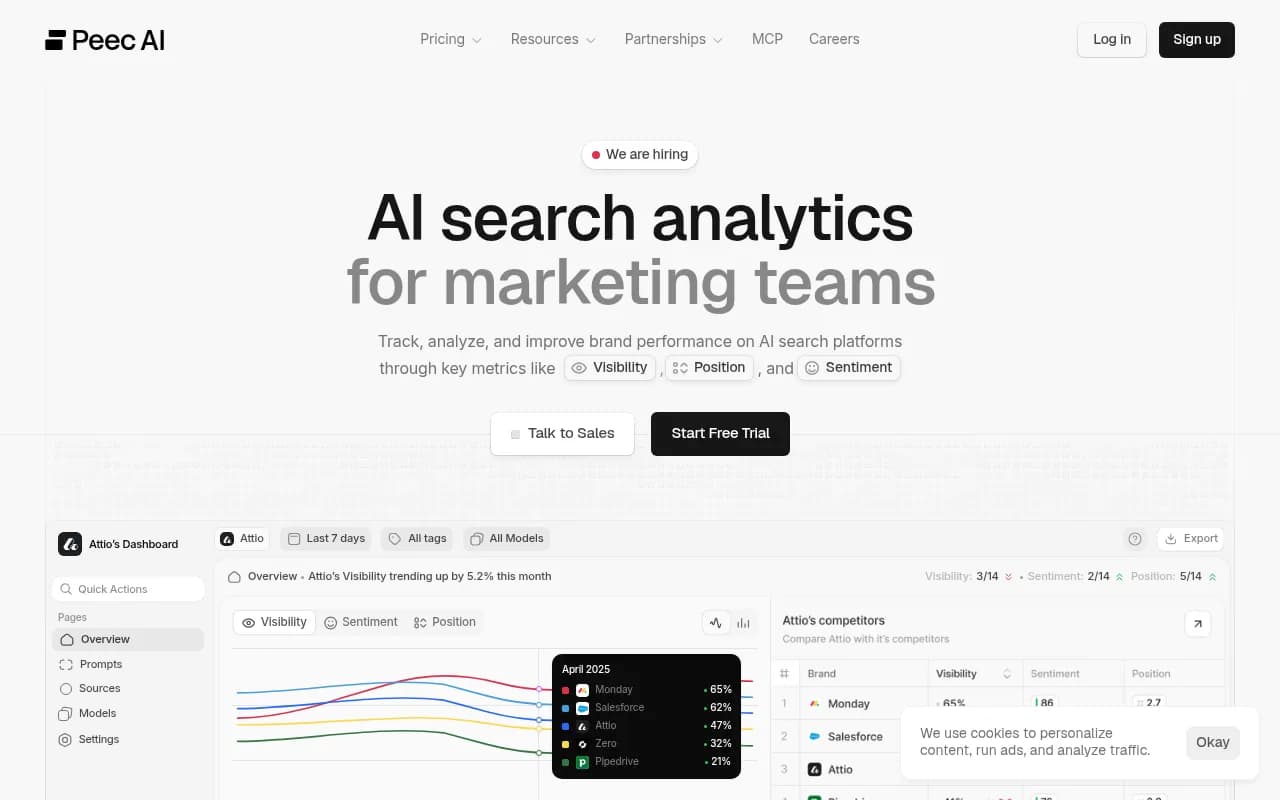
Peec AI is a clean, focused tool for tracking brand mentions and citations across AI engines. It's less complex than Profound and easier to get started with, which makes it a reasonable choice for smaller teams or those new to GEO.
It covers the main AI models, gives you share-of-voice data, and surfaces some suggestions for improving visibility. It won't replace a full content workflow, but as a monitoring layer it does the job.
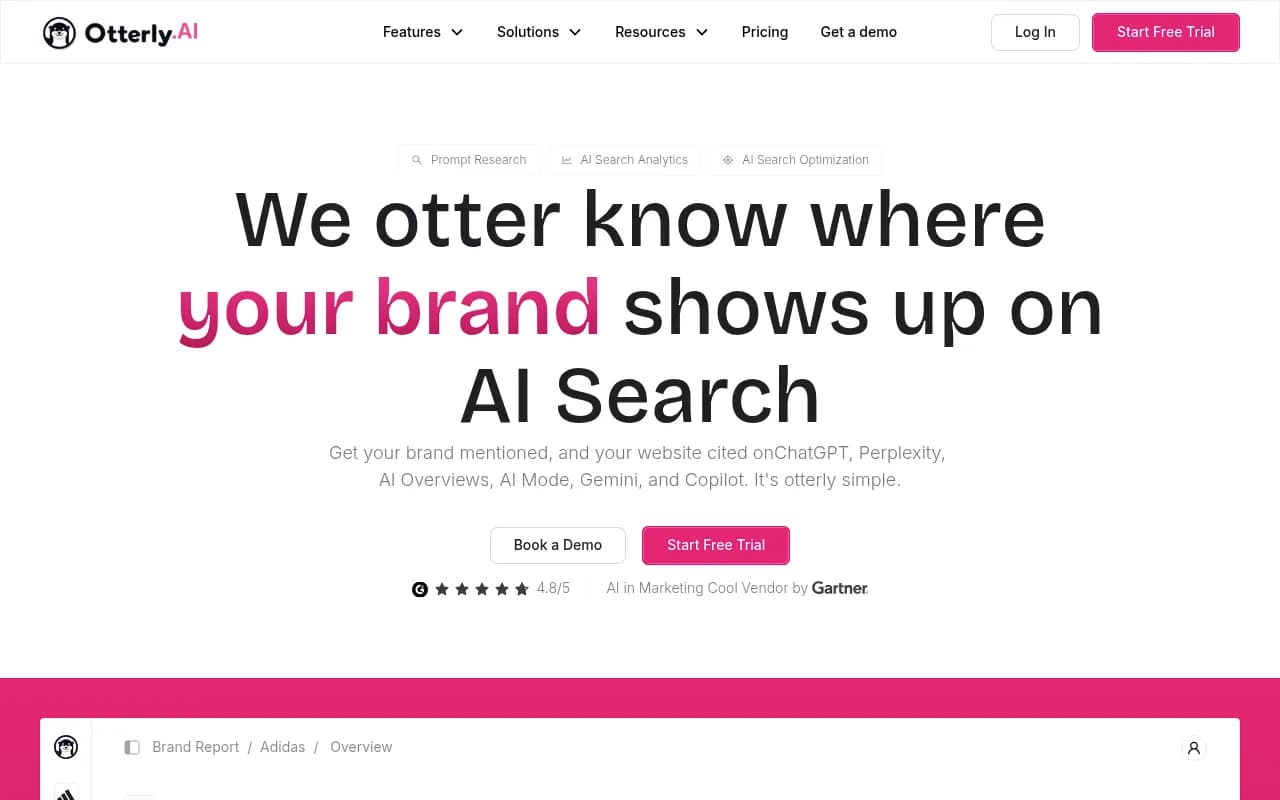
4. Otterly.AI -- best budget option for AI brand monitoring
If you're primarily looking for affordable AI visibility monitoring without the complexity of a full platform, Otterly.AI is worth considering. It tracks brand mentions across ChatGPT, Perplexity, and other models, and it's priced accessibly for startups and lean teams.
The trade-off is depth. Otterly.AI is a monitoring tool -- it shows you what's happening but doesn't help you change it. No content generation, no crawler data, no gap analysis. For teams that just want to keep an eye on AI mentions without committing to a full platform, it's a reasonable starting point.
5. Scrunch AI -- best for agencies tracking multiple brands
Scrunch AI is positioned as an AI search monitoring platform for brands and agencies. It's particularly useful if you're managing visibility for multiple clients, since it handles multi-brand tracking reasonably well.
It monitors AI-generated responses, tracks citations, and gives you competitive benchmarking data. Like most monitoring-focused tools, it stops short of helping you create content or fix the gaps it surfaces.

6. AthenaHQ -- best for teams focused on AI search research
AthenaHQ takes a research-heavy approach to AI visibility. It's good at surfacing how AI models construct their answers and which sources they pull from -- useful if you're trying to understand the mechanics of AI citation rather than just track your brand.
It's more of an analytical tool than an optimization platform. Teams that want to understand AI search behavior in depth will find it useful; teams that want to act on that understanding will need something else alongside it.

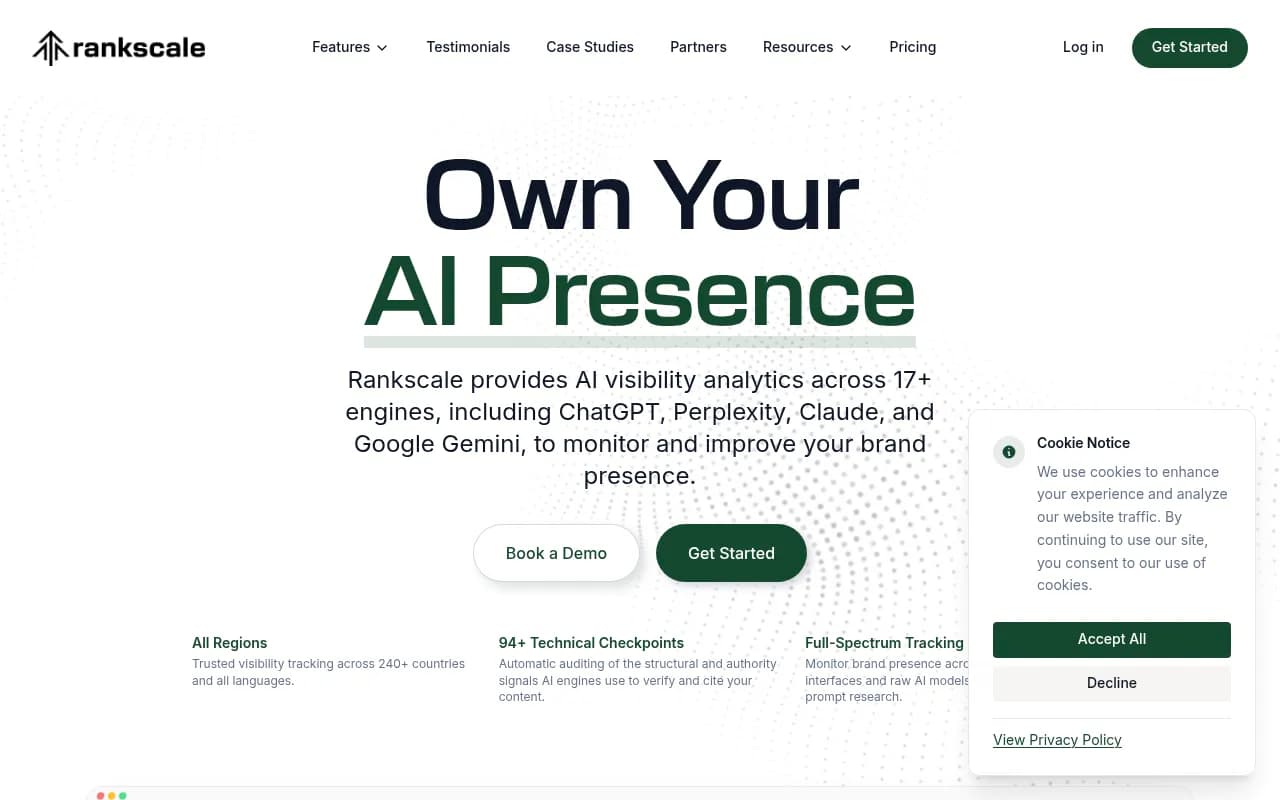
7. Rankscale -- best for tracking AI search rankings over time
Rankscale focuses specifically on rank tracking within AI search engines. If your main question is "are we moving up or down in AI search results for these prompts?", it gives you a clean answer.
It's not trying to be a full GEO platform -- it's a tracker. That focus means it does rank tracking well, but you'll need other tools for content creation, gap analysis, or crawler monitoring.
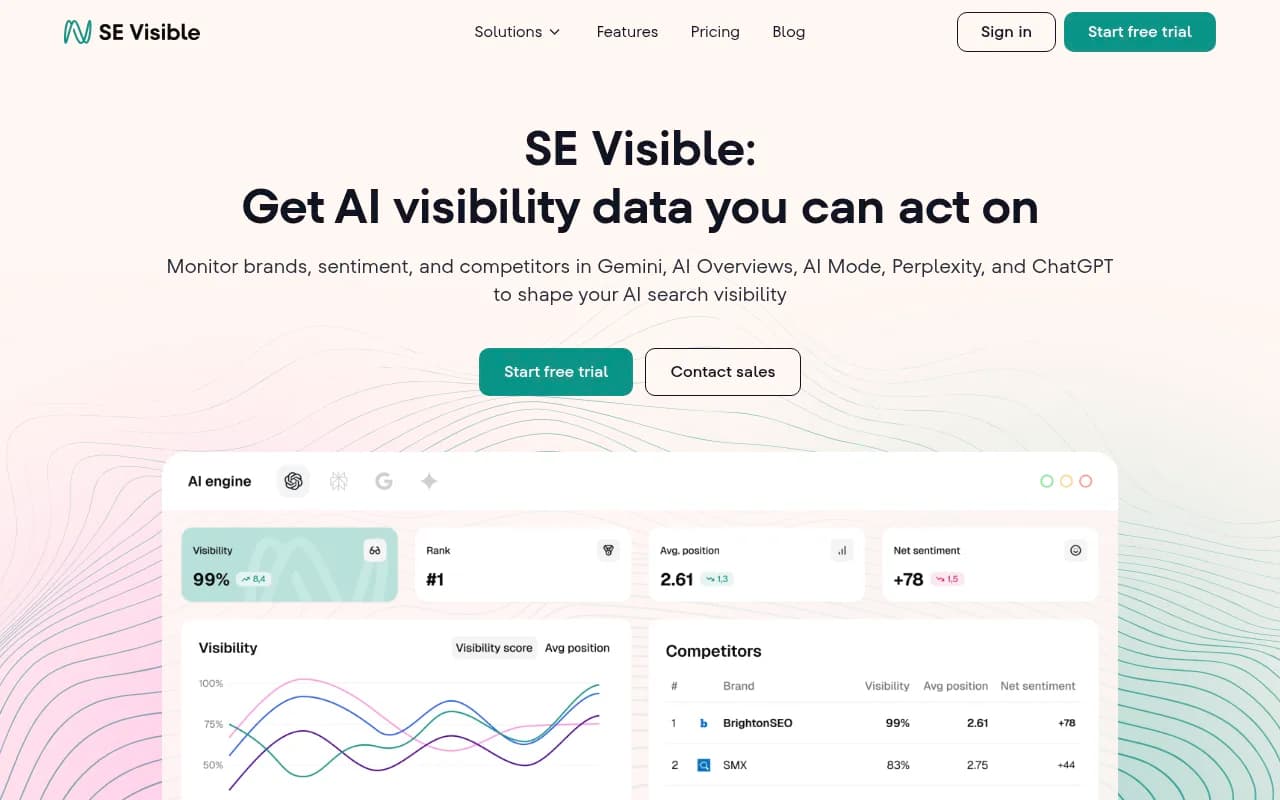
8. SE Ranking Visible -- best for teams already using SE Ranking
If you're already in the SE Ranking ecosystem, Visible is the natural extension into AI search monitoring. It adds AI visibility tracking on top of SE Ranking's traditional SEO data, so you get a combined view of how you're performing across both traditional and AI search.
The integration is the main selling point. As a standalone AI visibility tool it's less compelling, but for existing SE Ranking users it's an easy add.
Best AirOps alternatives for content optimization
9. Surfer SEO -- best for content optimization grounded in SERP data
Surfer SEO is one of the most widely used content optimization tools. It analyzes top-ranking pages for your target keywords and gives you a content score based on how well your article covers the topic compared to competitors.
It's not an AI visibility tracker -- it's focused on traditional and AI-influenced search rankings through content quality. But if the reason you're looking at AirOps alternatives is that you want better content optimization rather than visibility tracking, Surfer is a strong choice.

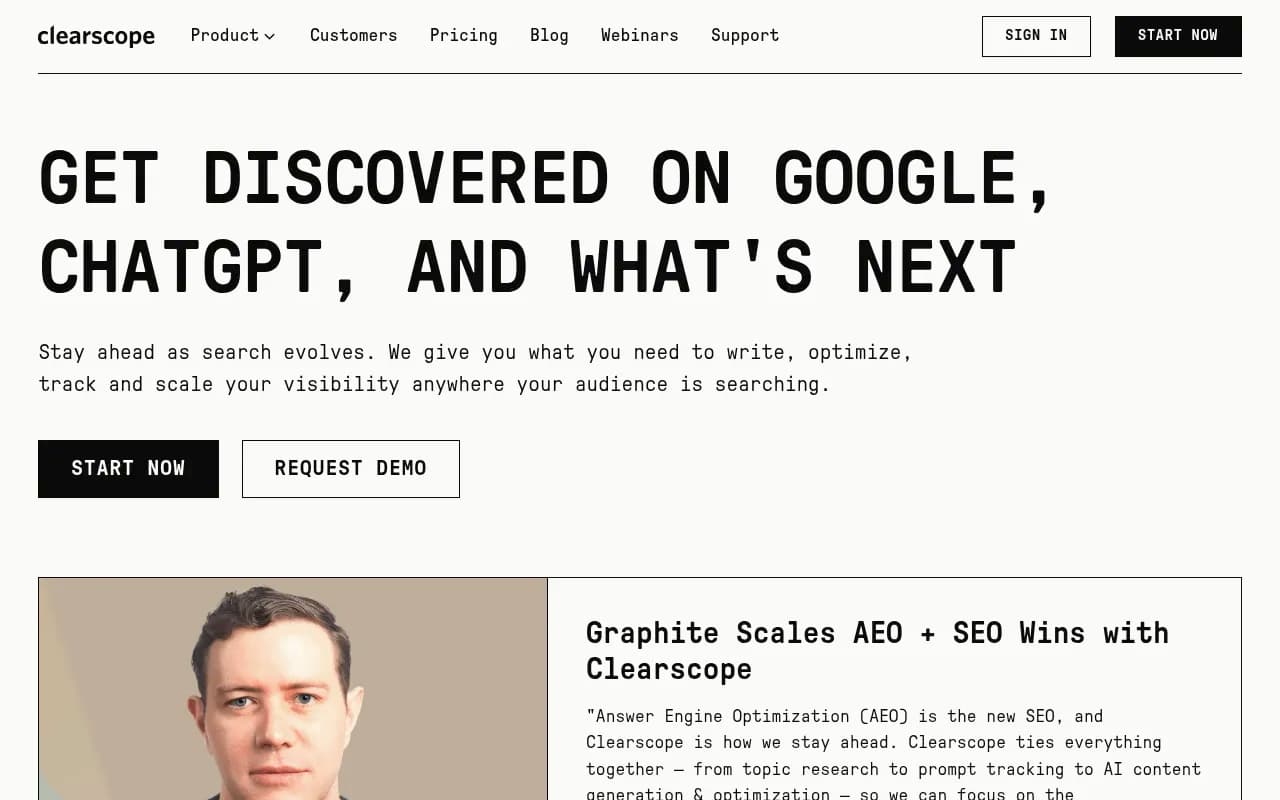
10. Clearscope -- best for content teams that prioritize editorial quality
Clearscope takes a similar approach to Surfer but with a cleaner interface and a stronger focus on editorial workflows. It integrates with Google Docs and WordPress, making it easy for writers to optimize as they write rather than after the fact.
It's particularly popular with content teams that have strong editorial standards and want optimization to feel like a natural part of the writing process rather than a technical checklist.
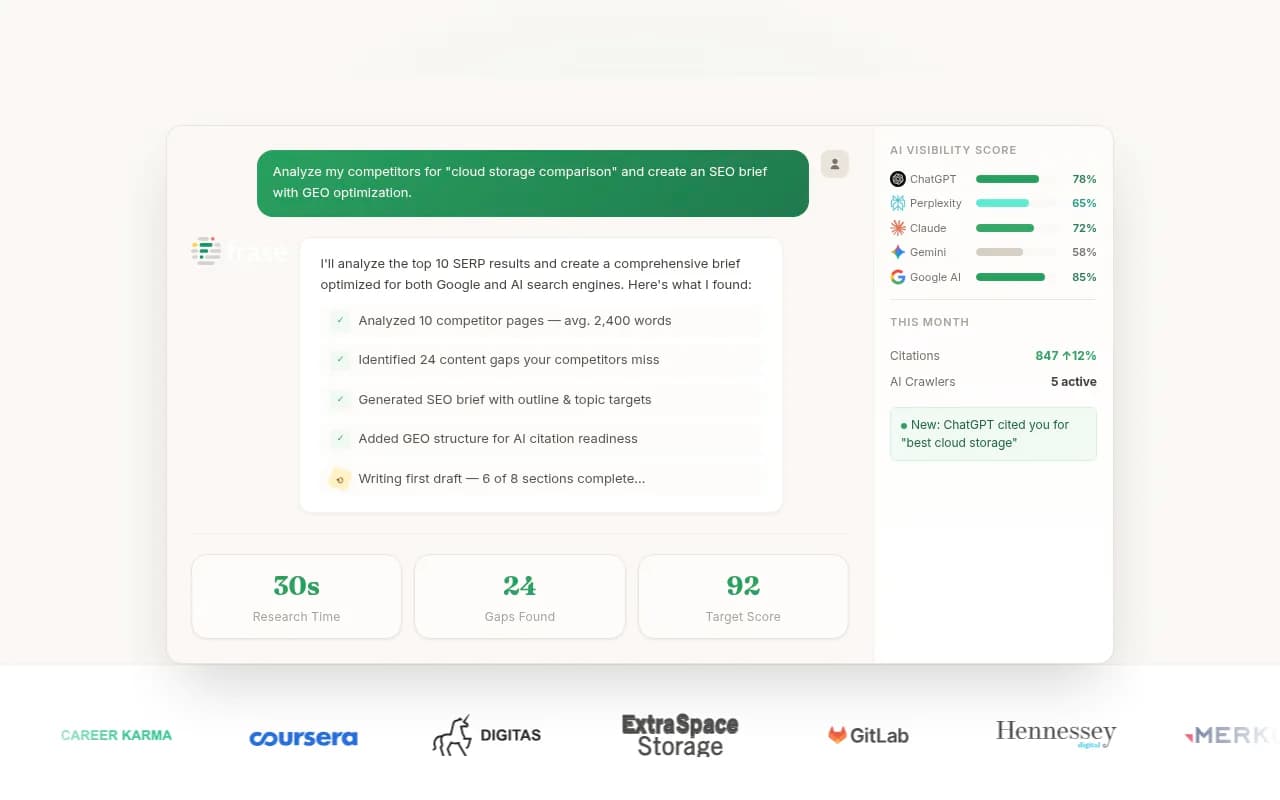
11. Frase -- best for content briefs and research automation
Frase combines content research, brief generation, and optimization in one tool. It's good at pulling together what's ranking for a topic and turning that into a structured brief your writers can work from.
If the AirOps workflow you're trying to replace is specifically the brief-and-research part of content production, Frase covers that well at a lower price point.
12. MarketMuse -- best for content strategy at scale
MarketMuse is built for content strategy rather than individual article optimization. It helps you identify topical authority gaps, prioritize which content to create or update, and build out content plans that cover a topic comprehensively.
It's more expensive than most alternatives here, but for larger content teams managing hundreds of pages, the strategic layer it adds is genuinely useful.
Comparison table
| Tool | Primary focus | Content generation | AI model tracking | Crawler logs | Starting price |
|---|---|---|---|---|---|
| Promptwatch | GEO + content optimization | Yes (AI agents) | 10 models | Yes | $99/mo |
| Profound | AI visibility analytics | No | Multiple | No | Custom |
| Peec AI | LLM brand tracking | No | Multiple | No | ~$49/mo |
| Otterly.AI | AI brand monitoring | No | Multiple | No | ~$29/mo |
| Scrunch AI | Agency AI monitoring | No | Multiple | No | Custom |
| AthenaHQ | AI search research | No | Multiple | No | Custom |
| Rankscale | AI rank tracking | No | Multiple | No | ~$49/mo |
| SE Ranking Visible | AI + traditional SEO | No | Multiple | No | Add-on |
| Surfer SEO | Content optimization | Partial | No | No | $89/mo |
| Clearscope | Editorial optimization | No | No | No | $170/mo |
| Frase | Content briefs | Partial | No | No | $45/mo |
| MarketMuse | Content strategy | Partial | No | No | $149/mo |
How to choose
The honest answer is that "best AirOps alternative" means different things depending on what you were actually using AirOps for.
If you used AirOps for content automation and workflow -- look at Surfer SEO, Frase, or MarketMuse for the content side. If you also want to understand how that content performs in AI search, add a visibility layer like Promptwatch or Peec AI.
If you were trying to use AirOps for AI search visibility -- it was never the strongest tool for that. You'll get much better data from a dedicated GEO platform. Promptwatch is the most complete option if you want to both track and act on visibility data. Profound or Peec AI work if you just need monitoring.
If you're an agency managing multiple clients -- Scrunch AI and Search Party are worth evaluating alongside Promptwatch, which has agency and enterprise tiers with multi-site support.
One thing worth being direct about: most of the monitoring-only tools in this list will show you that you have a problem but won't help you solve it. If you're going to invest in AI search visibility, it's worth choosing a platform that closes the loop from "we're invisible for this prompt" to "here's the content that fixes it" to "here's proof it's working." That's the gap most tools leave open.
Bottom line
AirOps is a capable content workflow tool, but it was never built to be a GEO platform. As AI search visibility becomes a real business priority, the tools that matter most are the ones that connect monitoring to action -- not just dashboards that show you where you're losing.
The alternatives above cover the full range, from lightweight brand trackers to full optimization platforms. Pick based on what you actually need: if it's visibility tracking plus content optimization in one place, Promptwatch is the strongest option in 2026. If you need focused content optimization without the AI visibility layer, Surfer SEO or Clearscope will serve you better than AirOps did.