Key takeaways
- ChatGPT has no fixed shopping ranking. A carousel belongs to one response, so a position only means something across many runs over time.
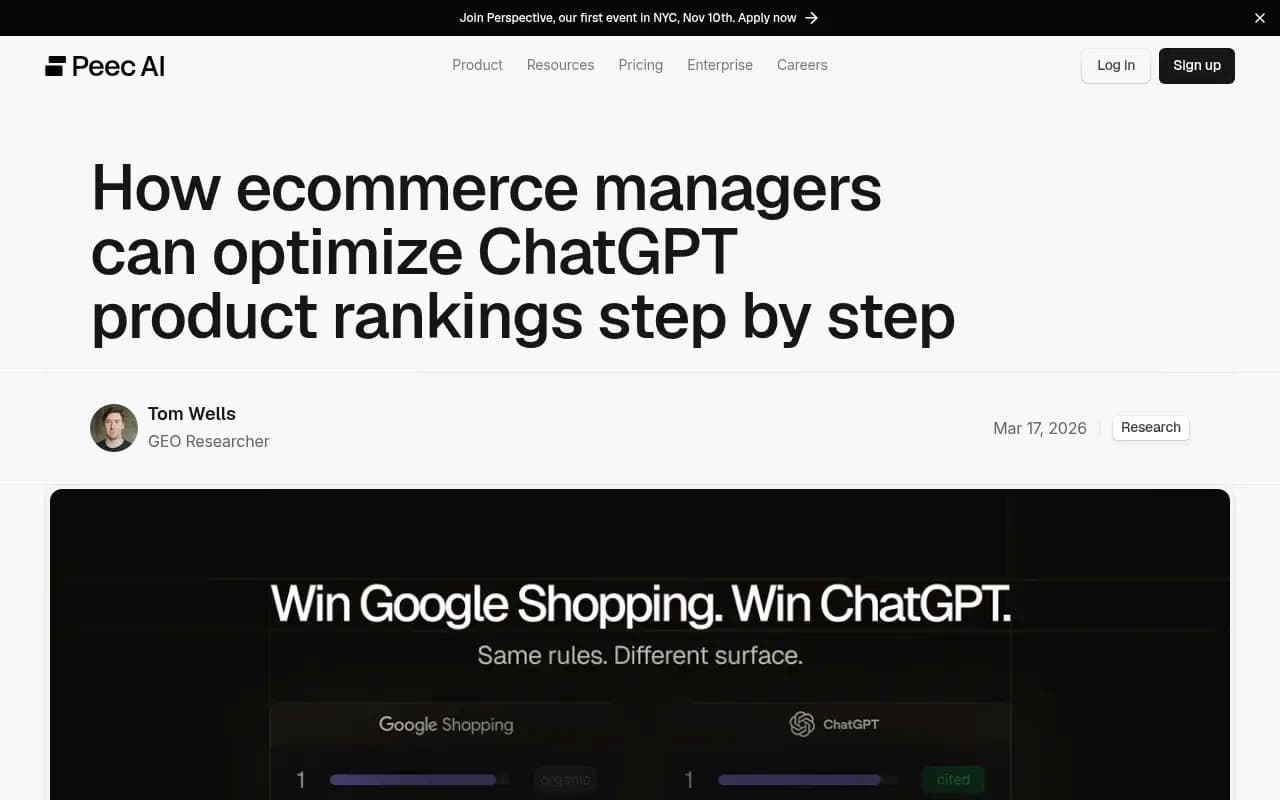
- Carousel products come mostly from Google Shopping. A Search Engine Land study of Peec AI data found 83% of carousel products strongly matched Google Shopping's top 40 organic results.
- Ecommerce teams need trackers that capture product cards and SKUs, not just brand mentions in text answers.
- Track category and budget prompts, run them daily, and compare patterns across prompts instead of celebrating one-off wins.
- Most "best of" lists are written by vendors who rank themselves first, this one included in the sense that we point to a vendor (Promptwatch) we have a relationship with. Test any tool on your own catalog before paying.
Why ecommerce needs a different kind of ChatGPT tracker
A SaaS brand cares whether ChatGPT names it in an answer. An online store cares about something more specific: did a product card with my item, my price and my merchant name show up, and where in the carousel did it land?
Generic brand-mention trackers miss that. They tell you ChatGPT said your brand name in paragraph two. They don't tell you that your hiking boot appeared in position 6 of 8 on Tuesday and vanished on Wednesday.
The volume is real. Stackline reports more than 84 million shopping-related questions per week from US consumers on ChatGPT (figure relayed through a Raccoon AI article, not verified against the original). Even if you treat that cautiously, shoppers are clearly asking.
How ChatGPT shopping carousels actually work
Before picking a tracker, you need the mechanics, because they decide what a tracker should measure.
Carousels are organic and attached to single responses
According to Promptwatch's carousel guide, OpenAI's help documentation says product results are chosen independently by ChatGPT, are not ads, and are not influenced by OpenAI partnerships. Each card shows a title, image, price, merchant, rating and review count. OpenAI says merchants are ranked by availability, price, quality, and whether the seller is the maker or primary seller.
The catch: the same prompt can show a carousel on Monday and plain text on Tuesday, and the products can change between runs. Promptwatch's own data on shopping feature usage found that ChatGPT attaches shopping features to only a low single-digit share of web-search responses overall, with far higher rates on commercial and transactional prompts. The rate also moves in steps, roughly doubling overnight in late May before falling back, which suggests OpenAI tunes when cards appear.
The Google Shopping connection
Peec AI's study, published on Search Engine Land on March 5, 2026, looked at 5,000 carousels, 43,000+ products and 1.1 million shopping fan-outs across 10 retail verticals. Key findings:
- Shopping fan-outs, the searches ChatGPT sends to Google Shopping, averaged about 7 words. Contextual fan-outs averaged 12 words, and the two sets were 98.3% distinct.
- About 60% of carousel products came from Google Shopping's top 10 and about 84% from the top 20.
- Bing-exclusive products were 0.16%.
- 45.8% were exact title matches to a Google Shopping listing.
In practice: a shopper's prompt like "waterproof trail running shoes for muddy spring races under $150" may turn into a shopping fan-out like "waterproof trail running shoes men". That short string is what your product has to rank for in Google Shopping. Keep titles identical across Merchant Center, the OpenAI feed and your product page.
Organic and sponsored carousels are separate channels
Trade coverage says OpenAI added product carousels to ChatGPT Ads in August 2026. Sponsored carousels are built from feed data and appear separately from the written answer. Promptwatch Data tracked ads in an average of 20.1% of web-search responses between May 20 and August 17, 2026, with the 7-day average at 32.4% (ChatGPT ads over time). If your tracker can't tell paid from organic placements, your numbers will blur two different things.
What to look for in an ecommerce ChatGPT tracker
Ranketta and Searchable both publish buying checklists. Boiled down, with my own opinions added:
- Product cards, not just text mentions. If it can't store the card with price, merchant and position, it isn't measuring shopping.
- SKU or catalog matching. Per Ranketta's pricing-page comparison, only Ranketta and Peec list SKU-level tracking. Treat that as a vendor claim and check each tool yourself.
- Sampling frequency. Searchable measured 1.74 fan-out searches per response across 6.9M responses, which tells you a single check is one sample. Daily runs are the floor.
- Fan-out visibility. You want to see the short shopping queries, since those are what you optimize in Google Shopping.
- Catalog connection. Shopify, Google Merchant Center or a feed.
- Whether it tells you what to change. A dashboard that reports a score and stops is only half useful.
- Pricing model. Cost scales with prompts times models times markets, not with catalog size. Plan a prompt set per category and per market, not per SKU.
The best ChatGPT rank trackers for ecommerce in 2026
Prices below come from vendor pages and vendor-written comparisons (Ranketta's table checked November 2, 2026; Searchable's list stated current to October 2026). Confirm everything on the vendor's own site.
| Tool | Ecommerce angle | Starting price (vendor-reported) | Best for |
|---|---|---|---|
| Promptwatch | Product card tracking, catalog matching, Shopping insights, content and feed actions | From $579/mo for Shopping (Business plan) | Stores that want tracking plus fixing |
| Ranketta | SKU-level tracking, merchandising credits | EUR 29/mo Tracker, EUR 79/mo Starter | Catalog-heavy stores on a budget |
| Peec AI | SKU visibility, win rate, shopping fan-outs, top merchants | EUR 85/mo Starter | Teams that want shopping fan-out data |
| Rankscale | ChatGPT Shopping across the customer journey, hourly sampling | Check vendor | Ecommerce teams wanting frequent sampling |
| Otterly.AI | Brand and prompt monitoring, no SKU tracking listed | EUR 29/mo Lite | Small teams starting out |
| Profound | Enterprise monitoring | Free 7-day trial, custom enterprise | Large brands |
| Semrush AI Visibility Toolkit | Fits existing Semrush workflows | $99/mo | Teams already on Semrush |
| Ahrefs Brand Radar | Custom prompts inside Ahrefs | From EUR 47/mo | Teams already on Ahrefs |
Promptwatch
Promptwatch is the one on this list I would look at first if you want to act on the data and not only watch it. Its ChatGPT Shopping tracking stores every product card with price, merchant and carousel position, and matches cards to your catalog by product ID. It shows which competitors ChatGPT picks instead of you, filterable by model, date range and monitor, and it covers Amazon Alexa product results too. Ads Radar separates sponsored placements from organic ones.
Beyond cards, it tracks category prompts with volumes and difficulty, shows query fan-outs per model, and logs AI crawler visits to your product pages so you can tell a crawl-access problem from a content problem. The Action Board turns the gaps into a prioritized to-do list, and the Content Agent can write and publish pages to WordPress, Webflow or Framer.
The honest caveats: Shopping insights start on the Business plan at $579/mo (EUR 499), with 350 prompts and daily or faster tracking, so it is not the cheapest route. Smaller stores that only want to watch a handful of prompts will find the entry-level trackers cheaper. Verify pricing at promptwatch.com/pricing. There is a 7-day free trial on monthly billing, and a free AI visibility report if you just want a first look.

Ranketta
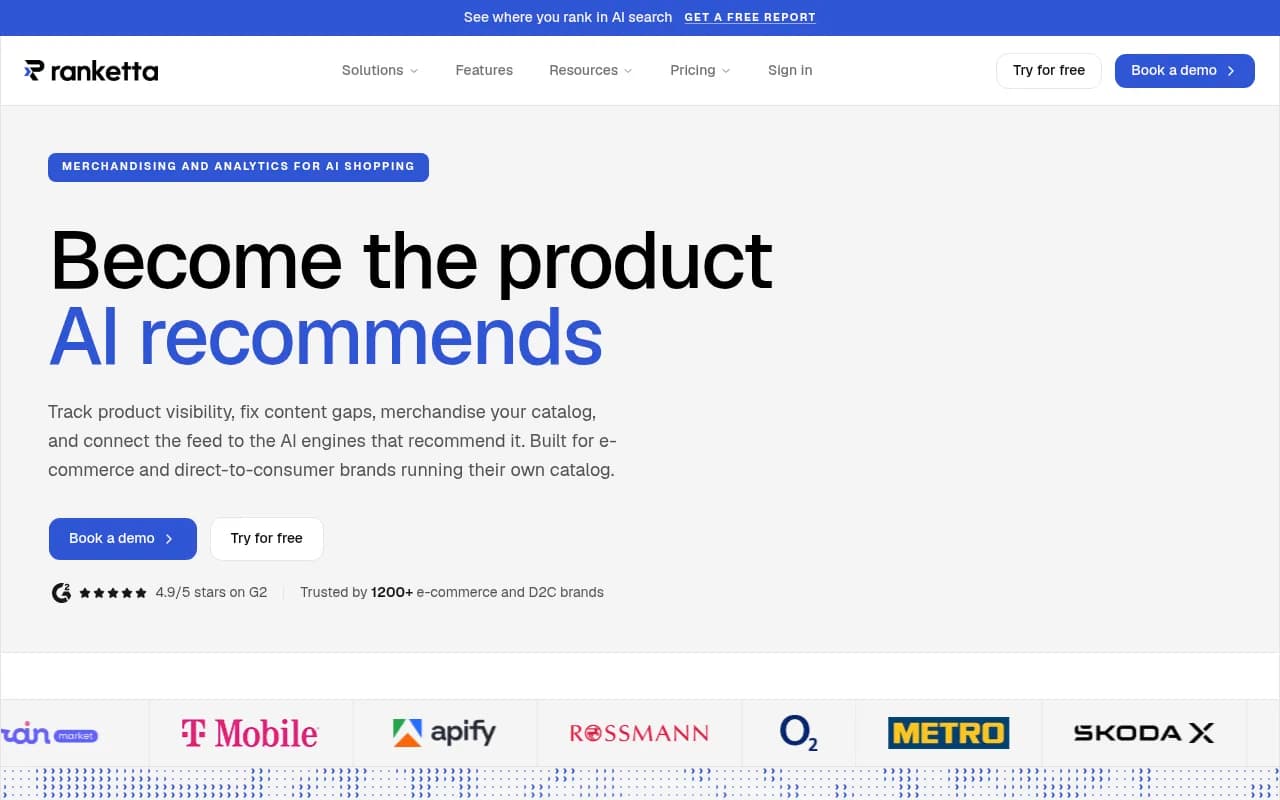
Ranketta is built around product-level tracking. Its Tracker plan is EUR 29/mo for 2 models, 30 prompts per model and 1 website, and Starter is EUR 79/mo with 3 models, 50 prompts per model and 5,000 merchandising credits. It's a vendor, and its own comparison table is where most of the competitor pricing in this guide comes from, so treat its framing with the usual skepticism. But a product-first tracker at that price is worth a trial if your catalog is large.
Peec AI
Peec AI has the research behind the carousel findings, and its Starter plan (EUR 85/mo, 50 prompts, 3 models, daily tracking) lists SKU-level visibility, position and win rate, with the catalog pulled from Shopify or Google Merchant Center. It also lists shopping query fan-outs, top merchants and shopping source visibility. Since the fan-out is the thing you can actually influence, that is a useful combination.

Rankscale
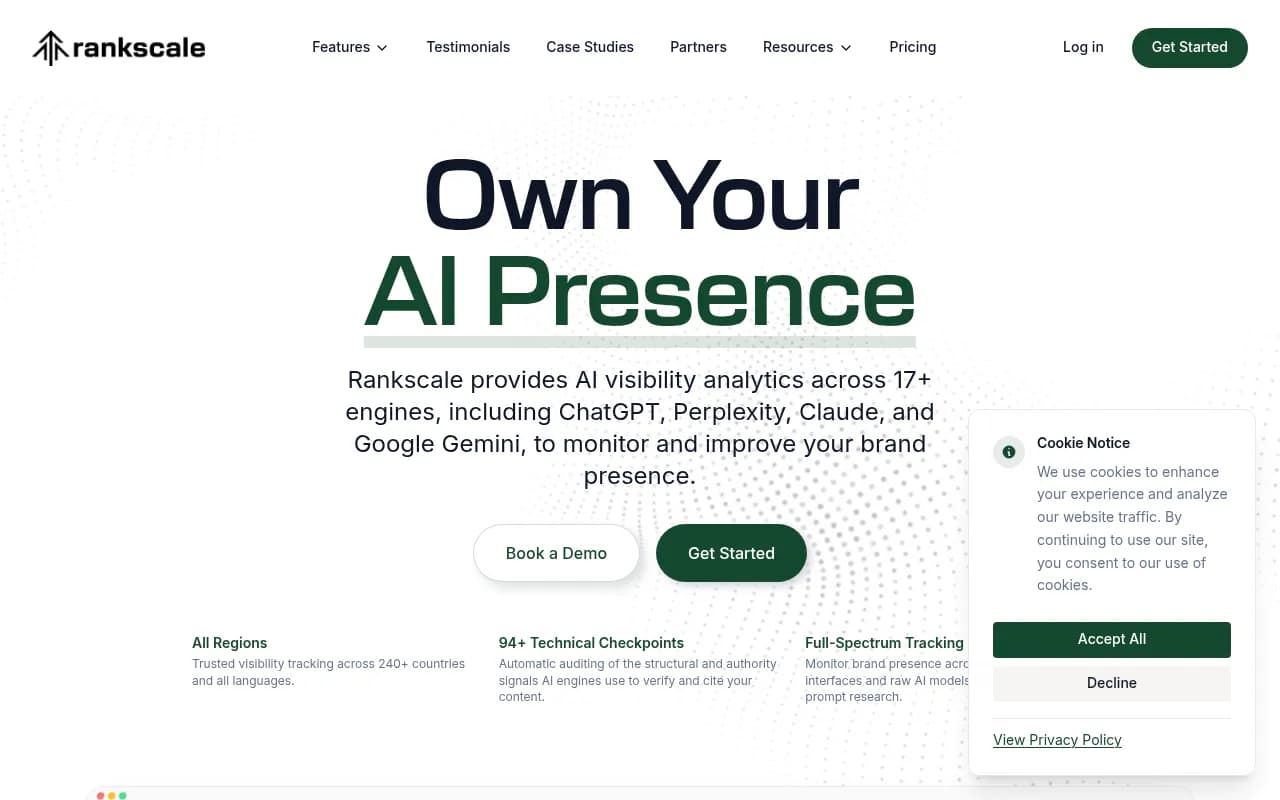
Searchable describes Rankscale as best for ecommerce businesses that want to track how products appear in ChatGPT Shopping across the journey from awareness to purchase, and says it can sample as often as hourly. I haven't verified its pricing independently, so check the vendor site. Note that Searchable ranks its own product first in that article, so weigh that list accordingly.
Otterly.AI, Semrush and Ahrefs
These are reasonable if you want broad brand monitoring and already live in those ecosystems. Otterly's Lite plan is EUR 29/mo for 15 prompts across 4 engines, and Standard is EUR 189/mo for 100 prompts with API and MCP access. Semrush's AI Visibility Toolkit is $99/mo for 25 prompts. Ahrefs Brand Radar custom prompts start at EUR 47/mo. None of them lists SKU tracking in Ranketta's comparison, so expect brand-level visibility rather than product-card detail.


Other ecommerce-specific options
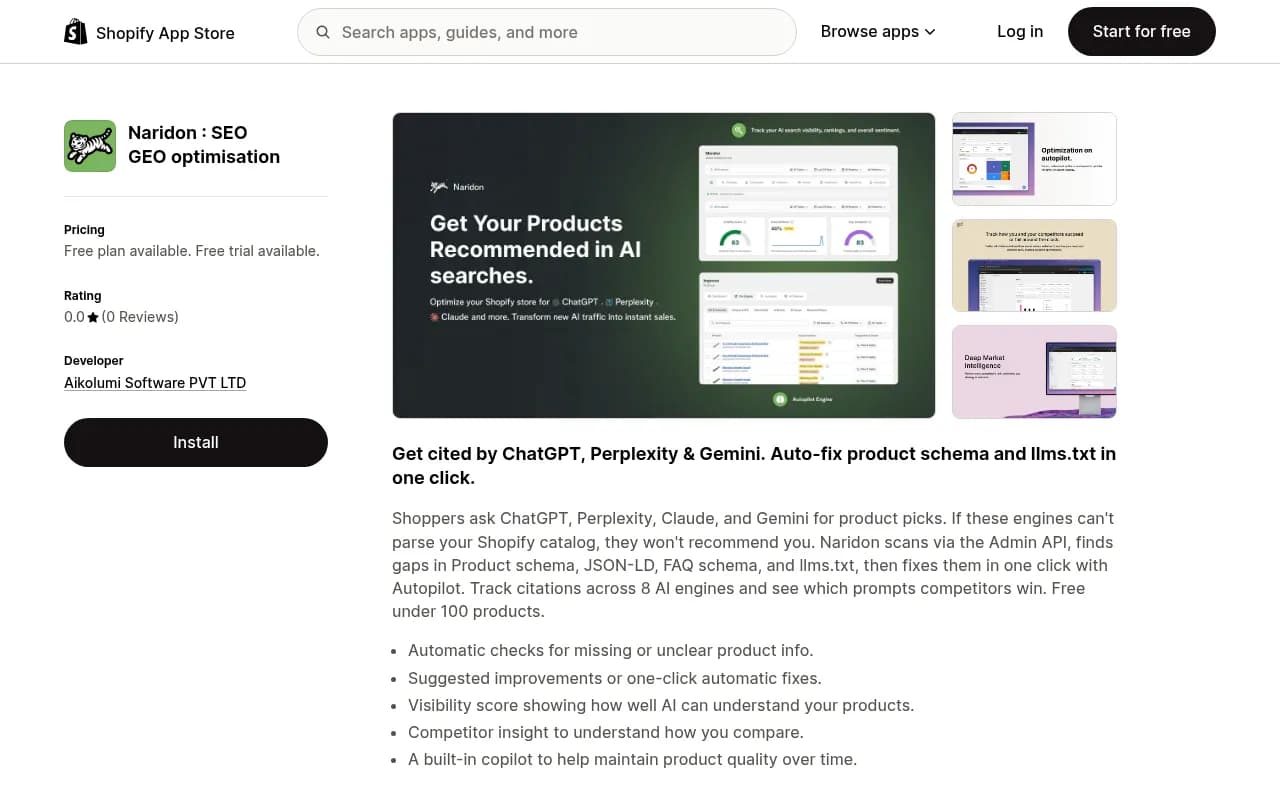
The catalog also has Alhena AI, Yotpo Discover and Naridon (Shopify-native), all pitched at ecommerce catalogs. I haven't compared their pricing, so run them through the checklist above.
Yotpo Discover

For broader lists, the GEO software directory at bestgeosoftware.com covers many more trackers.
Which prompts to track
Category and budget prompts are the core. Raccoon AI suggests patterns like "Best [category] for [audience]" and "Best [category] under [budget]". Add short, purchase-ready prompts such as "where to buy [product] online", which Promptwatch's guide says trigger carousels most reliably.
A starter set for a running-shoe store:
- best trail running shoes for beginners
- best waterproof trail running shoes under $150
- where to buy trail running shoes online
- [your brand] vs [competitor] trail shoes
- running shoes for wide feet
Split them by category and by market. A monitor's country and language should stay fixed so results don't blur across regions. Then look at patterns across prompts. If you appear for budget prompts but not audience prompts, that is a coverage gap in your product data and content, not a ranking quirk.
Common mistakes
- Treating one run as a rank. A single response is a sample. Use many runs over days.
- Tracking brand mentions without cards. Being named in text is not the same as showing up in the carousel. Mentions and citations differ too: ChatGPT can name a brand without citing its site, and the reverse.
- Mixing organic and sponsored carousels. They're separate channels with separate fixes.
- Optimizing for the long shopper prompt. The thing that has to rank in Google Shopping is the roughly 7-word fan-out.
- Inconsistent titles and prices across feeds. With 45.8% of carousel products an exact title match, mismatches hurt.
- Ignoring personalization. ChatGPT uses memory and custom instructions, so two people can get different answers to the same prompt.
A practical setup in one afternoon
- Export your top 5 categories and write 8 to 10 prompts per category.
- Pick two trackers from the table and run them on your own product list. Many offer trials.
- Check that cards, prices and merchants are captured, and whether your catalog matches.
- Review the shopping fan-outs and compare them to your Google Shopping rankings.
- Fix titles, price and availability data, Product schema, and feed consistency first.
- Re-check after a week of daily runs, not after one.
If you also care about whether AI bots can actually read your product pages, an AI crawler log feature like Promptwatch's crawler logs separates access problems from content problems. For more on the data side, see Promptwatch's ChatGPT citation share by content type, where product pages are the most cited type at 22.4% of citations (Sep 28 to Oct 4, 2026).
Bottom line
Pick a tracker by what it captures, not by its dashboard. For ecommerce, that means product cards, catalog matching and shopping fan-outs, sampled daily. Smaller stores can start with Ranketta or Peec. Teams that want tracking tied to content, feed and crawl fixes should look at Promptwatch. Whatever you choose, test it on your own products first.