Key takeaways
- Several credible ChatGPT trackers start below $100 a month, including Otterly.AI, Morningscore, ZipTie, Geoptie, Peec AI and Nightwatch. Prices differ between roundups, so confirm each on the vendor's own pricing page.
- The headline price is rarely the whole story. Prompt limits, refresh frequency, and how many AI engines are included change what you actually get.
- Most startups need 25 to 100 well-chosen prompts, not thousands. Pick the tool that covers your prompt count at daily or weekly refresh.
- Almost half of ChatGPT responses cite 10 or more domains, so a single yes/no "am I mentioned" check tells you very little. Look for position and competitor context.
- Most roundups online are written by vendors who rank themselves first. Treat those rankings with suspicion, including mine where I mention a product I have a stake in.
What a ChatGPT rank tracker actually does
ChatGPT has no page one. It breaks a question into sub-searches, pulls sources, and writes one answer that names a handful of brands. So "rank tracking" here means running a set of prompts repeatedly and recording whether your brand appears, where it sits in the answer, which sources are cited, and which competitors show up next to you.
That changes what you should buy. A traditional rank tracker checks a keyword against a result list. A ChatGPT tracker samples a probabilistic answer. One run is a sample, not a measurement, which is why refresh frequency matters more than it first appears.
There is also a question the cheap tiers rarely answer clearly: does the tool read the real ChatGPT interface or the API? The two can give different answers and different citations. Ask the vendor before you pay.
What the data says about how ChatGPT answers
Two findings from Promptwatch Data should shape how you evaluate trackers.
First, Promptwatch's report on unique domains per ChatGPT response (Sep 28 to Oct 4, 2026) found that 47.6% of responses with citations cite 10 or more domains, and 66.1% cite at least 8. For general, non-branded questions, 52.5% cite 10 or more. Answers are crowded. Knowing you were "mentioned" is a weak signal. You want position in the answer and the names of the competitors cited alongside you.
Second, Promptwatch's ChatGPT query fanout data shows ChatGPT's background searches getting shorter and more keyword-like. Average query length fell from about 117 characters in early December to roughly 53 in April. Your tracked prompts should read like how real people type, and your page headings should read like search queries. Separately, ChatGPT started using the site: operator at scale on August 8, 2026, jumping from about 0.4% to about 17% of fanout queries, so the way it searches keeps shifting. A tracker that only runs a fixed list once a week will miss some of that.
How to compare trackers on a startup budget
Before looking at tools, set five filters.
- Prompt count. Fifty prompts covers most early-stage startups: your category, your top five comparisons, and your core use cases. Count how many you need before you look at price tiers.
- Refresh frequency. Daily is better than weekly for catching changes. Weekly is fine if you are only watching a trend.
- Engine coverage. If ChatGPT is your priority, a ChatGPT-only plan can be enough. If your buyers also use Perplexity or Google AI Overviews, check which engines are included versus paid add-ons.
- Data source. Real interface or API. This affects how closely results match what a customer sees.
- What happens after the report. A dashboard that says you are invisible is only half of it. Check whether the tool suggests fixes or helps you produce content.
Comparison table: ChatGPT trackers under $100 a month
Prices below come from vendor and roundup pages gathered in 2026. Several differ between sources, and I did not verify every plan limit on the vendors' own sites. Treat this as a shortlist and confirm before buying.
| Tool | Starting price (reported) | Reported coverage or limit | Best for |
|---|---|---|---|
| Otterly.AI | $29/mo Lite | Multi-engine, cheapest paid entry; one roundup says Lite excludes Claude | Tight budgets, multiple brands |
| ZeroRank | $39/mo Starter | Broad engine list across 17 platforms (vendor claim) | Teams wanting broad coverage cheaply |
| Geoptie | $49/mo Starter | Seven engines including Claude (vendor claim) | Multi-engine coverage on a flat plan |
| Morningscore | $49/mo | Weekly updates, shallow analysis | Non-technical founders |
| ZipTie | $69/mo Basic, $99/mo Standard | Focus on actionable optimization | Teams that want clear actions |
| Nightwatch | About $39/mo plus AI add-on, or EUR 79 Starter in another source | Tracks ChatGPT alongside Google rankings | Teams already tracking classic SEO |
| Peec AI | $95/mo Starter (about EUR 89 in another roundup) | 50 prompts daily, ChatGPT as one of three chosen engines | Brand teams focused on how ChatGPT describes them |
| Profound | $99/mo Starter | 50 prompts, ChatGPT only | Teams that want a ChatGPT-only deep dive |
Note how the same product shows different prices across sources. That is why I would never choose from a roundup alone.
The tools worth shortlisting
Otterly.AI
Otterly is the cheapest paid starting point in most of the roundups I reviewed, at $29 a month. It is a monitoring tool: you set prompts, it tracks mentions and citations across engines. For a pre-revenue startup that just wants to see whether ChatGPT knows it exists, that is enough.

Peec AI
Peec sits near the top of the budget at $95 a month. Reported strengths are a citation share metric and a way to check what ChatGPT says about you. The catch is flexibility: ChatGPT is one of three engines you pick, and some engines are add-ons or enterprise-only. For 50 prompts tracked daily it is a clean fit.

ZipTie
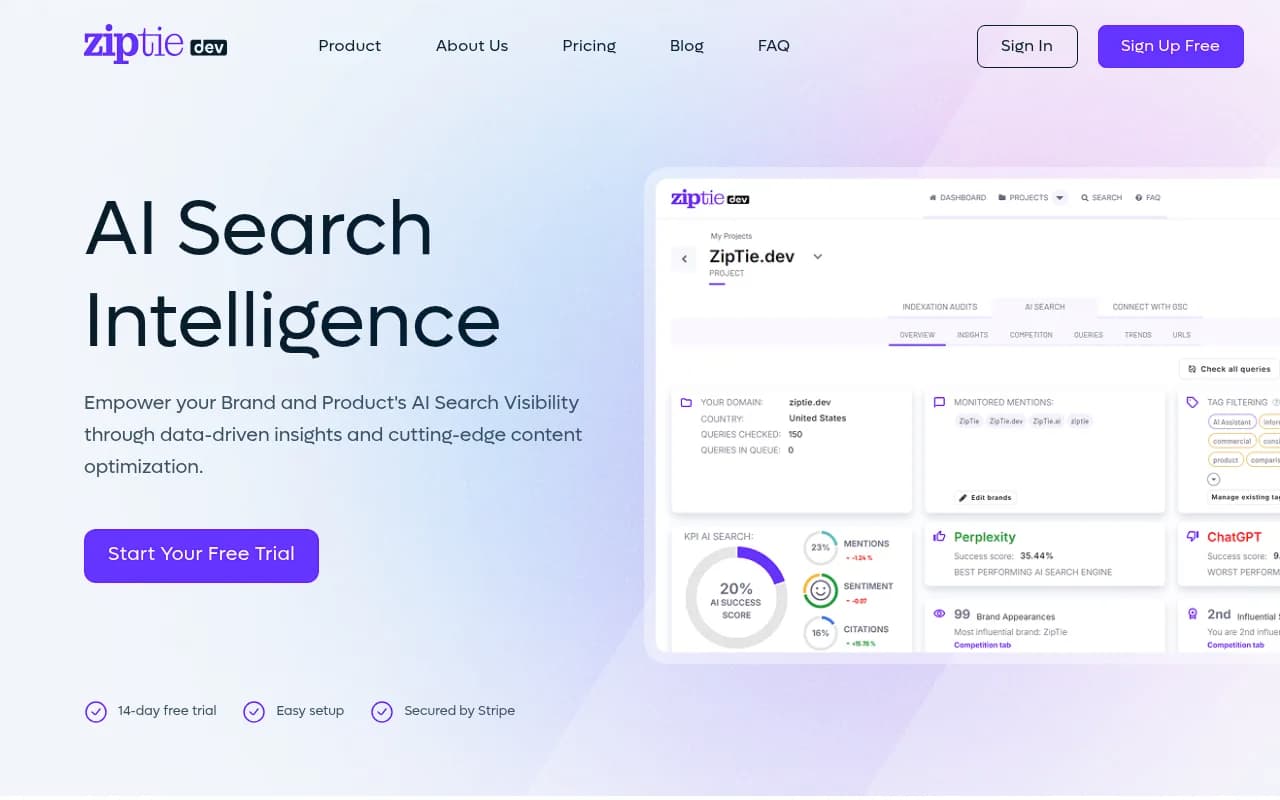
ZipTie starts at $69 a month and moves to $99 for the Standard tier. It positions itself around telling you what to do next instead of only reporting numbers, which matters if you have no dedicated SEO person.
Morningscore
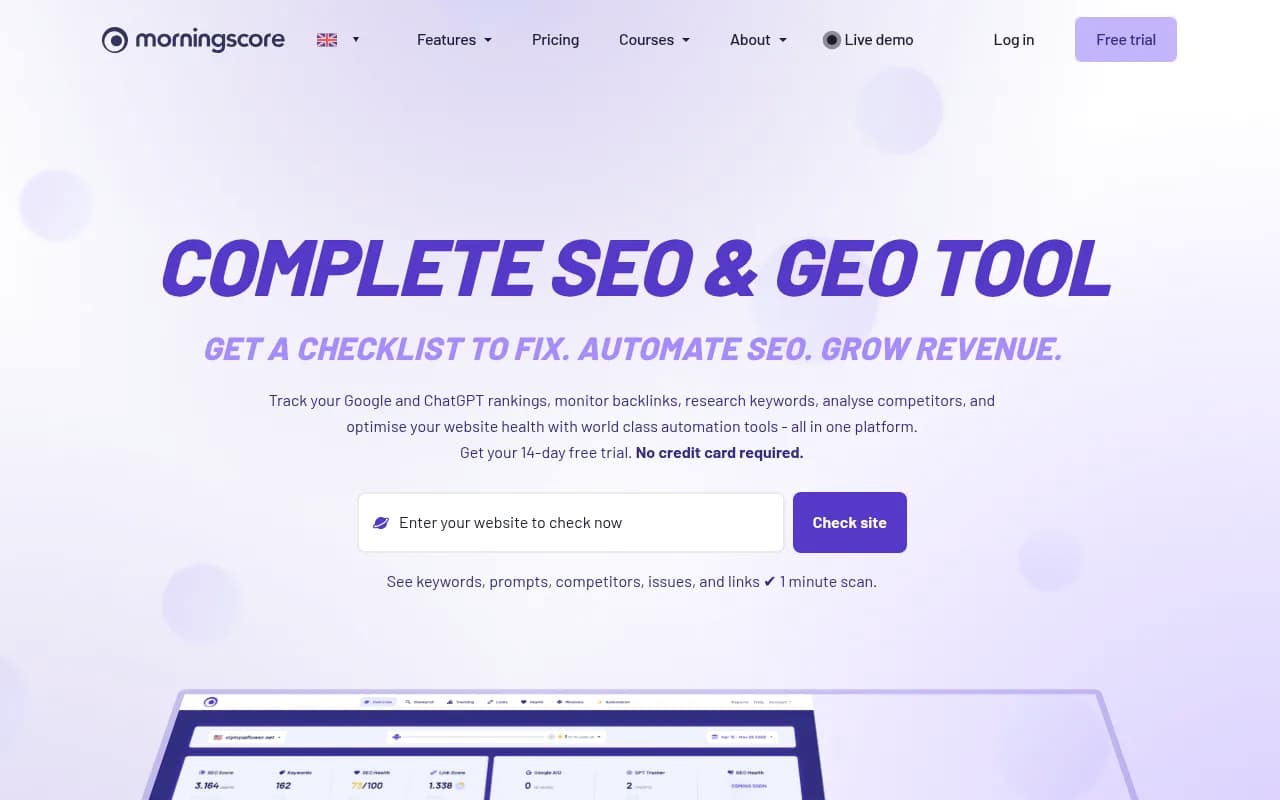
Morningscore at about $49 a month targets startups and non-technical teams. The trade-off is weekly updates and shallow analysis, so it works as an entry point rather than a long-term analytics layer.
Geoptie
Geoptie's Starter plan is reported at $49 a month with several engines, and it offers a free ChatGPT rank checker. Note that Geoptie authored one of the roundups I drew on, so its self-ranking should be discounted.
Nightwatch
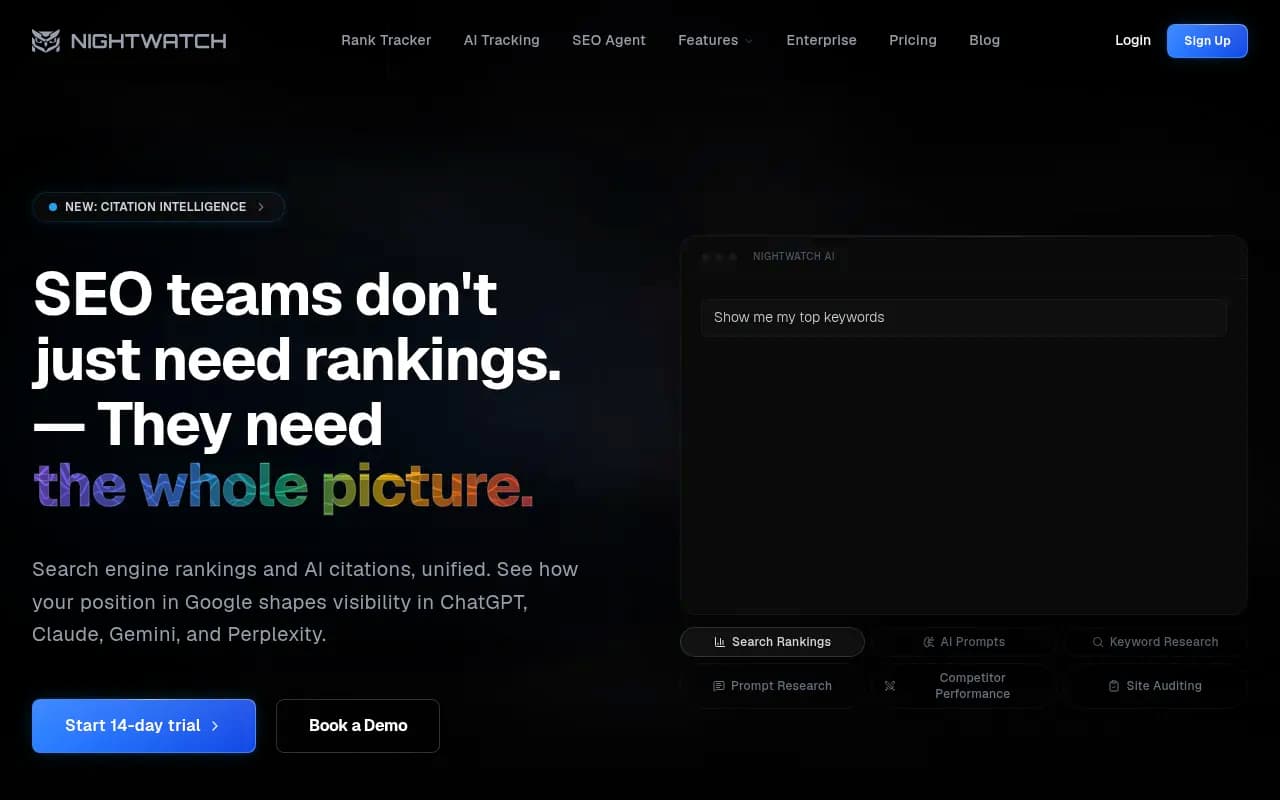
Nightwatch makes sense if you already track Google rankings and want ChatGPT in the same place. Pricing is reported differently across sources, so check whether AI tracking is an add-on.
Profound
Profound's Starter plan is reported at $99 a month, ChatGPT only, 50 prompts. It is an enterprise-leaning product that has a small entry tier, so expect to outgrow it into custom pricing.

Other budget-friendly options in the catalog
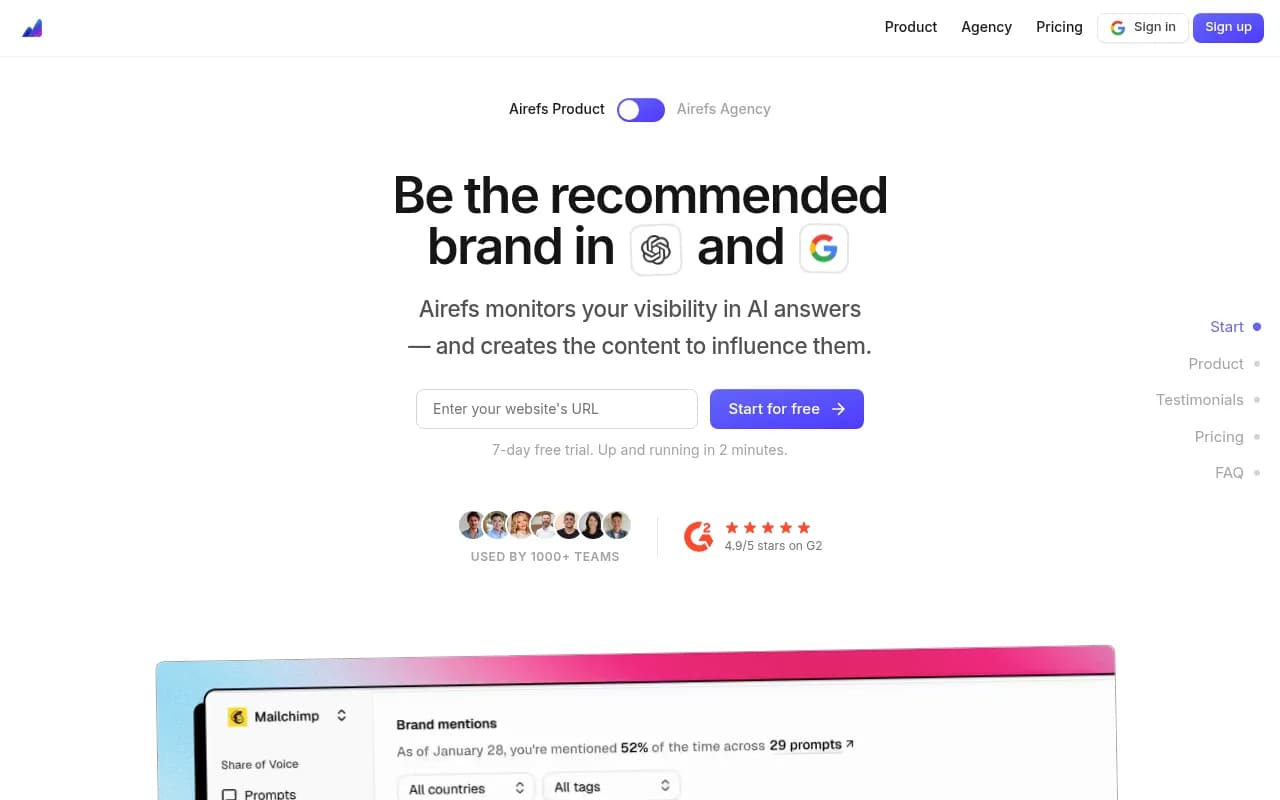
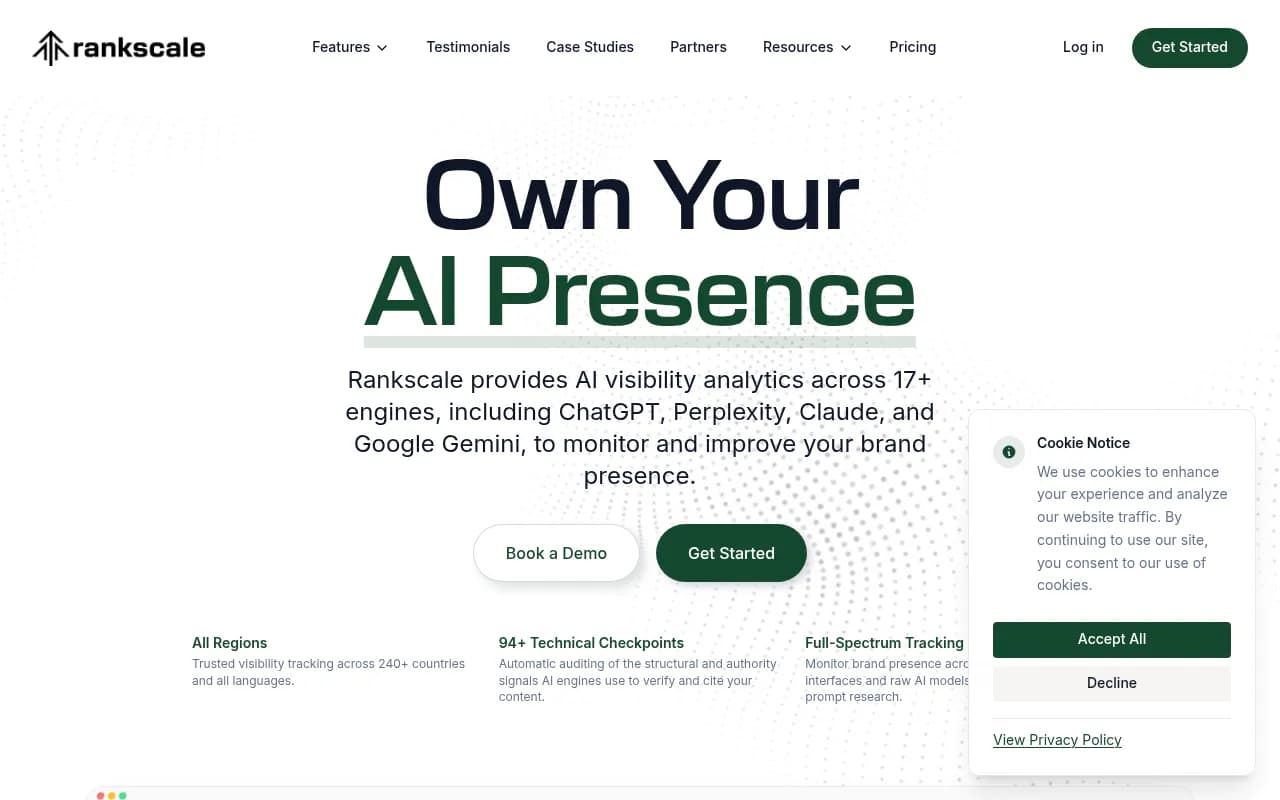
If none of those fit, Airefs, Rankscale, Searchable and Trakkr are worth a look. For a wider browse, the GEO software directory at bestgeosoftware.com lists more options.
Where Promptwatch fits for startups
Promptwatch is worth knowing about even though its Essential plan costs $95 a month, which technically fits under $100. That plan includes 1 project, 50 prompts, 6,000 responses, daily tracking, country tracking, visitor analytics, weekly site audits, Brand Narrative and Agent Chat, with every AI model tracked. Confirm current pricing at promptwatch.com/pricing, and note that crawler logs and AEO articles start on higher plans (Professional is $245 a month; the Content Agent starts at Business).
The reason a startup might pay for it over a plain tracker is the loop after the report. Promptwatch monitors real ChatGPT and other AI interfaces rather than only APIs, shows the sources and gaps behind the answers, and gives you an Action Board of prioritized work. If you only need a pulse check, a $29 tool is fine. If you want to know what to publish next, that matters more. The 7-day free trial and the free AI visibility report are a cheap way to test it first.

A reasonable startup setup
Here is the setup I would use at a seed-stage company.
- Run a free one-off check first. The free AI visibility report or a vendor's free checker shows whether ChatGPT mentions you at all.
- Write 30 to 50 prompts. Mix three types: general category questions with no brand name, "best X for Y" questions, and direct competitor comparisons. Unbranded prompts matter most, since that is where new customers find you.
- Pick a tracker with daily or at least weekly refresh and enough prompts to cover that list.
- Record a baseline for four weeks before changing any content, so you can tell whether later improvements are real.
- Look at cited sources, not just mentions. If competitors are cited from G2, Reddit threads or comparison pages you are absent from, that is your to-do list.
What the cheap tiers leave out
Be honest about limits. At under $100 you typically do not get AI crawler logs, which show whether bots can even read your site. You often do not get traffic attribution either, so you cannot tie a ChatGPT mention to a signup. And state or city tracking is rare at these prices.
Two workarounds exist. Use Google Analytics referral reports for ChatGPT traffic (noting that ChatGPT stopped sending a referrer on October 8, 2026, so tagging links with utm_source=chatgpt.com helps). And check your robots.txt with the free tools at promptwatch.com/free-tools/robots-txt-generator-for-ai and the Agentic Readiness Check, so you know AI crawlers are not blocked.
How I would choose
| Your situation | Start with |
|---|---|
| Pre-launch, just curious whether ChatGPT knows you | Free checkers, then Otterly.AI at $29 |
| Want several engines on a small budget | Geoptie or ZeroRank, verify limits first |
| No SEO hire, want clear next actions | ZipTie or Promptwatch Essential |
| Already track Google rankings | Nightwatch |
| Care how ChatGPT describes your brand | Peec AI |
| Need enterprise-style analytics later | Profound, expect a price jump |
One warning. Do not be swayed by the claim, repeated in one roundup, that 60% of organic traffic now comes from AI responses. I could not find a source for it and it is implausible. ChatGPT is large, but you do not need an inflated statistic to justify tracking it.
Final advice
Buy for the prompt count and refresh rate you need, ask whether the data comes from the real interface, and confirm the price on the vendor site. Then spend most of your effort on the content and sources that change what ChatGPT says, because the tracker only tells you where you stand. For more tools to compare, the AI rank tracking directory at ai-rank-tools.com is a good next stop.