Key takeaways
- No GEO tool is built only for insurance. You pick a general AI visibility platform and feed it insurance prompts, local intent and compliance rules.
- Most insurance agencies need three things: prompt tracking across several AI engines, a way to see which pages AI cites, and a way to fix gaps. Dashboards alone cover only the first.
- Local agencies should look at tools with location-level tracking. Larger brokers and MGAs should weigh multi-country coverage, crawler logs and enterprise security.
- Pricing runs from about $29 a month for light monitoring to well over $500 for full optimization stacks. Verify every number on the vendor site, because prices change often.
- Insurance content needs compliance review before it goes live, so a review inbox matters more than hands-off publishing.
Why insurance agencies need GEO now
Someone who types "best business insurance for a small contractor in Ohio" into ChatGPT does not get ten blue links. They get one synthesized answer that names a few agencies, carriers or comparison sites. If you are not in that answer, you are not in the consideration set.
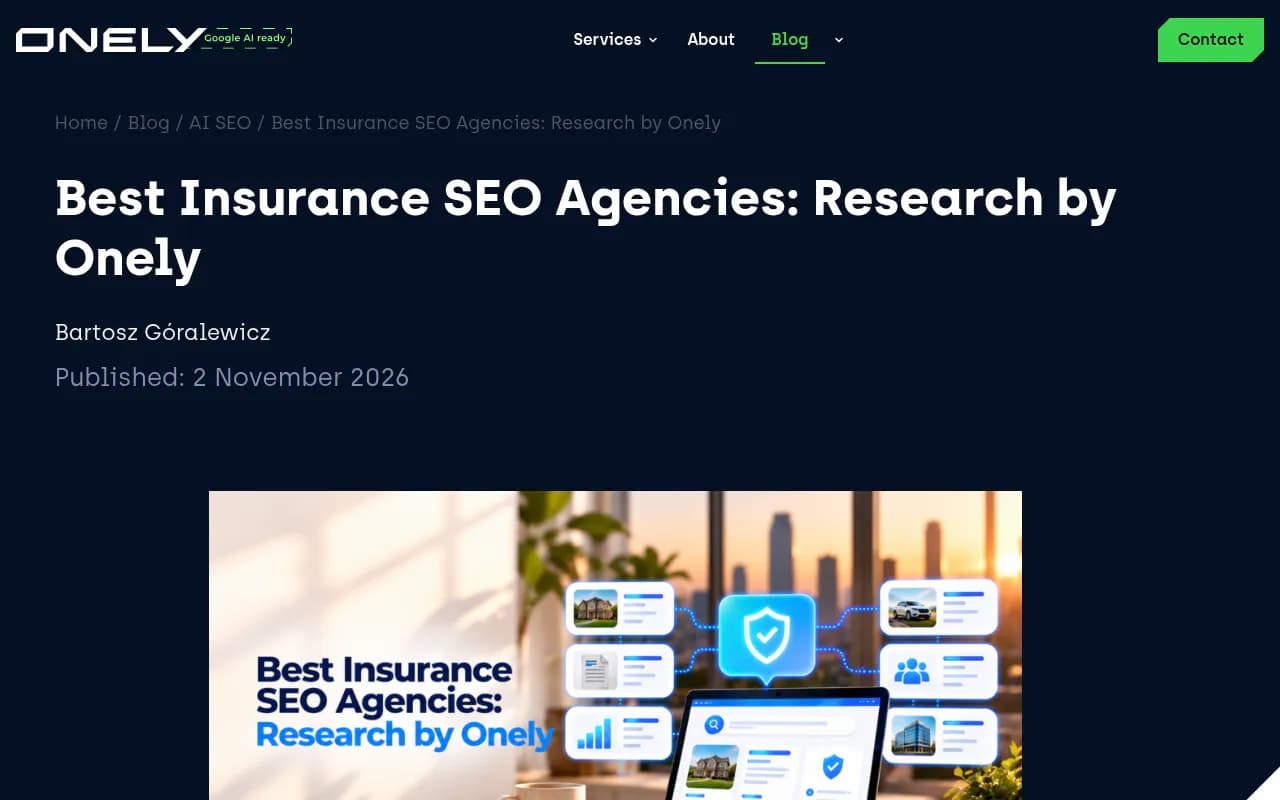
There is a wrinkle specific to this industry. Onely's research into how AI engines answer "best insurance SEO agencies" found that the answers are mostly written for local independent agents, and that Google's AI Overview borrowed names from fintech and B2B lists instead of insurance evidence. In other words, the AI answers in this vertical are patchy and often generic. That is good news if you publish clear, specific content, because there is room to be the source AI picks.
Nationwide's agent blog now tells its agents to expand SEO across Google, Bing and AI chats, and to use GEO and AEO to capture high-intent demand. The big carriers are telling producers the same thing you are reading here.
What GEO tools do (and what they don't)
GEO, or generative engine optimization, is the work of getting your brand mentioned and cited in AI answers. A GEO tool typically does some mix of these:
- Runs a set of prompts across ChatGPT, Gemini, Perplexity, Google AI Overviews, Claude and others, then records whether you appear.
- Shows which URLs the AI cites, yours or a competitor's.
- Scores sentiment and the claims AI makes about your agency.
- Logs AI crawler visits to your site.
- Helps you write or refresh content that closes the gaps.
It is not a replacement for your agency management system, quoting software or CRM. The AI tools you see in broker roundups from Perspective AI, Tabulera or Sonant (intake, submissions, policy review, AMS-embedded assistants) solve a different problem: running the agency. GEO is about being found in the first place. Both matter, but do not confuse them when you budget.
What insurance agencies should look for
Before comparing vendors, decide which of these matter for your shop.
Local and state-level tracking
Most independent agencies sell inside a few states or one metro area. A tool that only tracks national prompts will tell you very little. Look for state, city or coordinate-level tracking so "home insurance near me" is tested the way a local prospect would ask it.
Prompt coverage that matches how people shop for coverage
Insurance prompts fall into a few buckets: comparison ("best Medicare Advantage agent in Tampa"), educational ("what does a BOP cover"), branded ("is [Agency] legit") and quote-intent ("cheap auto insurance for new drivers"). Your tool should let you tag and group prompts by type, topic and persona.
Citation data, not just mention counts
A mention without a citation usually means AI knows your name but does not trust your site as a source. You need to see which pages get cited and which third-party sites (review platforms, directories, comparison sites) AI leans on instead.
A path from insight to published page
Monitoring-only tools stop at a score. If your marketing team is one person, you want the tool to suggest or draft the content, and to let you review it before it goes live.
Security and compliance posture
If you handle client data or sell into enterprise accounts, check certifications. ISO 27001 and GDPR compliance matter for larger brokers and for anyone with European operations.
What the data says about what AI cites
No Promptwatch Data report covers insurance directly yet, so treat the following as adjacent evidence, not insurance-specific proof.
In Promptwatch Data's content type report (Sep 28 to Oct 4, 2026), product pages were the most cited type in ChatGPT at 22.4% of classified citations, with landing pages at 16.8%. Listicles got 13.6%. For commercial prompts, product pages, landing pages, listicles and comparisons made up almost 70% of citations. Branded prompts lean on reviews: their share rises to 5.6%, more than three times the all-prompt average.
For an agency, that translates to concrete page types. Your coverage pages (commercial auto, cyber, Medicare supplement) are your "product pages." Your "best of" and comparison content is the listicle layer. Reviews on trusted sites feed branded prompts like "is [Agency] a good broker."
Shelf life varies too. Promptwatch's content half-life report found that news pages lose half their citations in about five weeks, while landing pages and docs hold on for months. Evergreen coverage pages beat rate-change news posts.
For health and Medicare agents, the healthcare citation report (Sep 9 to Oct 8, 2026) shows ChatGPT leaning on authoritative sources: nih.gov at 5.46% of healthcare citations, with cms.gov, healthcare.gov and medicare.gov all in the top 20. Government and public health sites together earned 7.06%. Reviews and directories were small. So if you sell Medicare plans, align your content with CMS and Medicare.gov guidance and link out to it.
Best GEO tools for insurance agencies and brokers
Promptwatch
Promptwatch is an end-to-end AI visibility platform rather than a prompt tracker. It monitors the real interfaces of ChatGPT, Google AI Overviews, AI Mode, Gemini, Perplexity, Copilot and more, then traces which pages get cited, flags content gaps, and writes and publishes pages through its Content Agent to WordPress, Webflow or Framer. IP-verified crawler logs show whether AI bots can actually read your site.
For insurance specifically, three things matter. Local GEO targeting pins a monitor to exact coordinates, so a multi-office agency can test "near me" queries per branch (Business plan and up). State and city tracking is on the same tier. Fact Check lets you mark an AI claim about your agency as inaccurate (say, a wrong coverage area or licence claim) and find the page teaching AI the wrong thing. And the review inbox in the Content Agent means nothing publishes without a human signing off, which is what compliance teams want.
Essential starts at $95/mo, Professional is $245/mo, and Business, the first plan with the Content Agent and local targeting, is $579/mo. Confirm current pricing at promptwatch.com/pricing. There is a 7-day free trial, and a free AI visibility report if you want a baseline first. Agencies that manage insurance clients can look at the agency plans.

Profound
Profound is the enterprise name in this space and raised $155M at a $1B valuation in February 2026. It has Agent Analytics and Conversation Explorer. Reported entry pricing is a $99 Starter plan limited to ChatGPT, with Growth around $399 to $499 depending on the source. That ChatGPT-only starter is a limitation for insurance, where AI Overviews matter a lot. Suits larger carriers and national brokers with budget. See Promptwatch vs Profound for a direct comparison.

Otterly.AI
Otterly.AI is the budget monitoring pick. Lite is reported at $29/mo for 15 prompts across 4 engines, Standard around $189 for 100 prompts. AI Mode, Gemini and Claude are paid add-ons. Good for a small agency that wants a simple weekly check. It does not write content or show crawler logs.

Peec AI
Peec AI is a clean prompt tracker with suggestions. Pricing reports vary (from about $95 or EUR 85 to 89 for 50 prompts, Pro around $245), so check the vendor page. Fine for a marketing manager who needs a shareable dashboard, less so if you need to execute fixes inside the same tool.

Birdeye Search AI
Birdeye Search AI offers local AI visibility with location-level tracking, which fits agencies with several offices and an existing review-collection routine. Reviews are a trust signal in branded insurance prompts, so pairing visibility with review management is sensible.
BrightLocal
BrightLocal started as a local SEO tool (rankings, listings, reviews) and now includes AI visibility. For a single-office agent whose main goal is map-pack and local AI results, it may be all you need.
Semrush AI Visibility Toolkit
If your agency already pays for Semrush, the AI toolkit is a low-friction add-on, reported at $99/mo per domain for 25 prompts. The prompt set is small and the AI-specific depth is shallower than dedicated platforms, but it keeps everything in one login.
Ahrefs Brand Radar
Ahrefs Brand Radar starts from around $199/mo. Good if your SEO person already lives in Ahrefs and wants a read on brand mentions across AI engines.

Scrunch AI
Scrunch AI is monitoring-focused with agent-ready pages for your site, at roughly $250 to $300/mo. Suits brokerages and agencies with a larger content footprint.

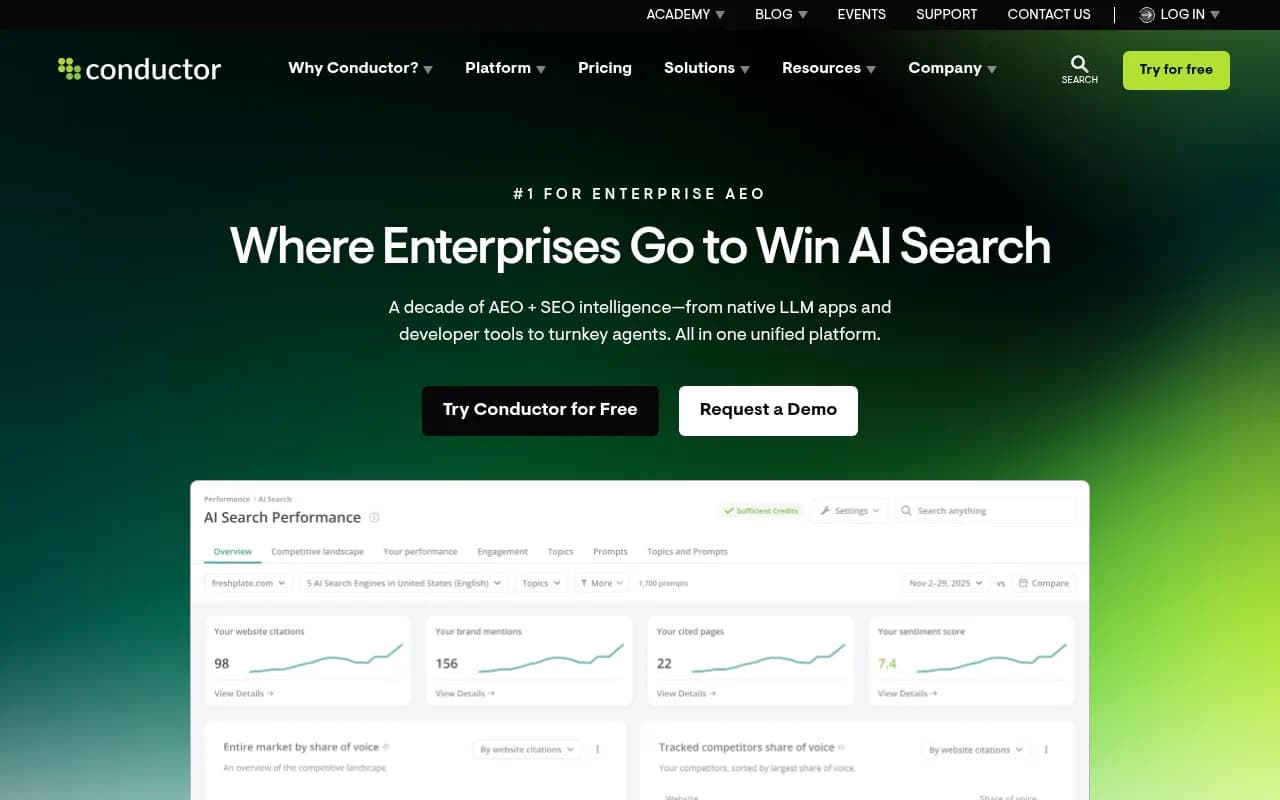
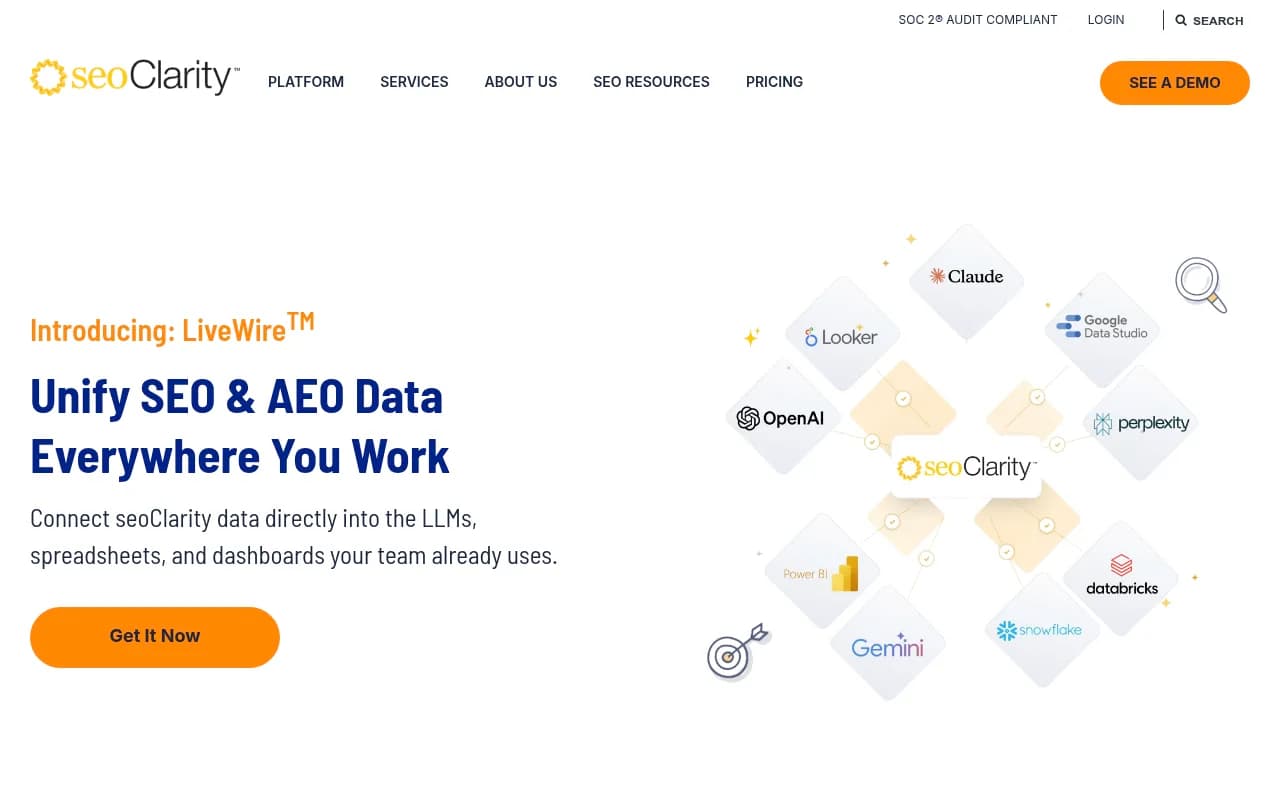
Enterprise suites: BrightEdge, Conductor and seoClarity
Large insurers and national brokers with in-house SEO teams often already run BrightEdge, Conductor or seoClarity. Conductor is quote-only with a reported median contract near $48,950 a year. Overkill for an independent agency, reasonable if AI search is one line item in a bigger enterprise SEO program.
Comparison table
Pricing below comes mostly from third-party and vendor-authored comparisons, so verify on each vendor site before buying.
| Tool | Reported entry price | Local or location tracking | Content creation | Best for |
|---|---|---|---|---|
| Promptwatch | $95/mo (Essential) | State, city and coordinate-level on Business | Yes, Content Agent with review inbox | Agencies and brokers who want to fix gaps, not only see them |
| Profound | $99 (ChatGPT only) | Limited info | Limited | Enterprise carriers and national brokers |
| Otterly.AI | $29/mo | Not a focus | No | Solo agents on a tight budget |
| Peec AI | About $95/mo | Country-level | No | Small teams needing a dashboard |
| Birdeye Search AI | Quote | Location-level | No | Multi-office agencies with review programs |
| BrightLocal | Varies | Strong local focus | No | Single-office local agents |
| Semrush AI toolkit | $99/mo per domain | Limited | Via wider Semrush suite | Teams already on Semrush |
| Ahrefs Brand Radar | From $199/mo | Limited | No | Teams already on Ahrefs |
| Conductor | Quote (about $48,950/yr median) | Enterprise | Workflow tools | Large insurers with SEO departments |
For more options, the GEO software directory at bestgeosoftware.com lists dozens of other platforms by category.
Which tool for which type of insurance business
Solo or single-office independent agent
Start with local. BrightLocal or Otterly.AI covers the basics for under $200 a month. Pair with a free baseline first: run the free AI visibility report to see how ChatGPT, Gemini and Perplexity describe you before paying for anything.
Multi-office independent agency
You need per-location tracking and a way to publish content without hiring a team. Promptwatch Business (local targeting at exact coordinates, Content Agent) or Birdeye plus a content tool are the realistic shortlists.
Benefits brokers and MGAs
Your buyers are HR leaders and producers, so prompts look B2B: "best benefits broker for a 200-person tech company." Comparison pages, case studies and documentation-style content do well. Look at Promptwatch Professional or Business and Profound if budget allows.
Enterprise carriers and national brokers
Security reviews, SSO, multi-country tracking and audit logs matter here. Promptwatch Enterprise (ISO/IEC 27001, GDPR, audit log, SSO), Profound, BrightEdge and Conductor are the usual conversation.
Hiring an agency instead
First Page Sage's 2026 insurance GEO agency ranking lists firms like Genevate, Focus Digital, Amsive, BrightFire and Neilson Marketing, but that list is published by a competing agency, so weigh it accordingly. If you would rather outsource entirely, 1001 SEO Media is a full-service SEO and GEO agency that works with Promptwatch for AI visibility, with no long-term contracts. Ask any agency the five questions Onely suggests: which insurance business they are built for, whether they work from customer coverage questions, whether they measure quotes and policies and not only rankings, how they handle compliance review, and what proof they have from a business like yours.
A practical setup plan for insurance prompts
Step 1: Build a prompt set from real buyer questions
Start with 30 to 50 prompts. Mix these types:
- Local commercial: "best commercial insurance broker in [city]"
- Coverage education: "do I need cyber liability insurance for a dental practice"
- Comparison: "[your agency] vs [competitor agency]"
- Branded trust: "is [your agency] legit"
- Product-specific: "Medicare supplement plans for [state]"
Pull ideas from Search Console queries, your quote-form fields and what your CSRs hear on the phone.
Step 2: Baseline, then read the citations
Run the prompts for two weeks. Look at who is mentioned, and more usefully which URLs are cited. Expect comparison sites, carrier pages and directories to show up. Those are targets for reviews and listings.
Step 3: Check crawler access
Many agency sites sit behind security plugins or CDNs that block AI bots. The free Agentic Readiness Check and AI Crawler URL Inspector show which bots can read your pages. Tools with AI crawler logs show whether bots actually visit.
Step 4: Fix the pages AI actually cites
Given the content-type data above, prioritize:
- Complete, factual coverage pages with eligibility, typical use cases and licensed states.
- A brand FAQ answering "are you licensed in X" and "which carriers do you represent."
- Comparison and "best for" content written honestly, including who you are not right for.
- Reviews on Google and the trusted sites AI cites for your category.
Step 5: Put compliance in the loop
Insurance content carries regulatory risk: misstated coverage, rate claims, licensing statements. Whatever tool drafts the content, route it through a review step. Use a Brand Book or knowledge base to hard-code approved language and disclaimers, and keep the review inbox on rather than auto-publish. I did not find solid research on state-by-state rules for AI-generated insurance content, so ask your compliance counsel before scaling.
Step 6: Measure policies, not just mentions
Visibility scores are a means. Connect AI-referred visits to quote requests. Note that ChatGPT stopped sending a referrer on October 8, 2026, so tag links with utm_source=chatgpt.com where you can and use a tool that counts them. The guide to attributing AI traffic walks through it.
Mistakes to avoid
- Buying a ChatGPT-only plan when your prospects also see Google AI Overviews.
- Tracking only national prompts when you sell in three counties.
- Publishing rate-change news and expecting lasting citations. News decays fastest.
- Treating AMS and intake AI tools as GEO. They help you serve leads, not attract them.
- Letting AI draft coverage descriptions with no licensed human review.
Where to go next
If you want a sense of the wider field, the AI rank tracking directory compares trackers side by side. For a first move, run a free baseline, pick 30 prompts that reflect how your clients really shop, and decide whether you need monitoring only or a tool that also fixes the gaps. For most agencies with a small marketing team, the second option saves more time than it costs.