Key takeaways
- GEO (generative engine optimization) for creators means getting your show, your name and your episodes cited when people ask ChatGPT, Perplexity, Gemini or Google AI Overviews for recommendations.
- Podcast audio is not what AI cites. Transcripts, show notes, episode pages and YouTube videos are. Your text layer is the product here.
- Platform choice matters more than it used to. Per Promptwatch Data (Sep 28 to Oct 4, 2026), social platforms were 0.46% of ChatGPT citations but 12.2% of Google AI Overviews citations.
- For most solo creators a lightweight tracker is enough. Networks, agencies and shows with sponsors benefit from a platform that also shows crawler access, traffic and content gaps.
- Pair a GEO tool with your normal production stack (Descript, Riverside, Castmagic and similar). They solve different problems.
Why creators need GEO at all
Podcasters have spent years worrying about Apple Podcasts rankings, Spotify search and YouTube titles. Those still matter. But a growing share of discovery now starts with a question typed into an AI assistant: "best podcasts about personal finance," "who is a good guest on supply chain," "what is the best tool for recording remote interviews."
The answer is a short list of names. If your show is not on it, you do not get a second page of results to fight for. That is the shift.
There is a second angle that applies to creators who sell things. Many of you also run a business: a course, a newsletter, a sponsorship product, a tool. The Presenc AI research on podcast tooling makes the same point from the vendor side: podcasters research tools through conversational AI before committing to subscriptions. So whether you are the show or you sell to shows, being cited in AI answers has become a real acquisition path.
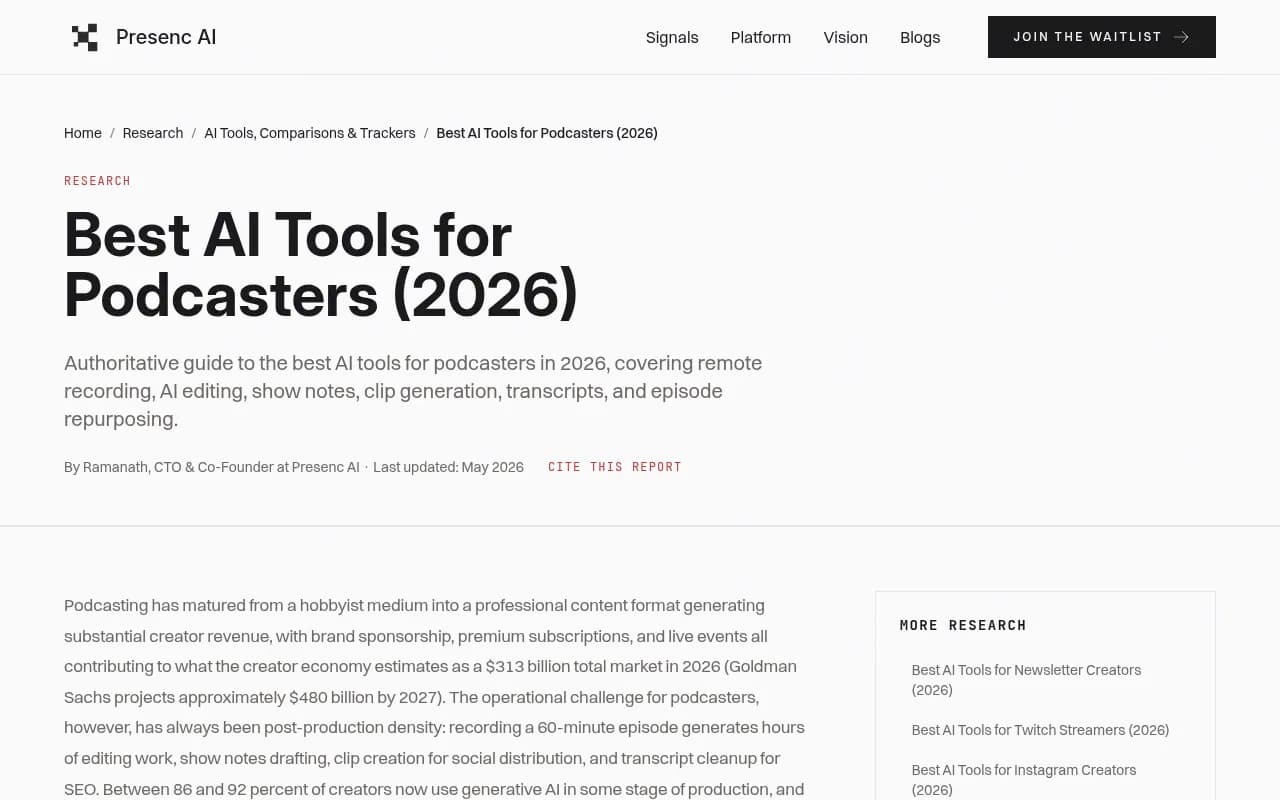
Most of the guides you will find (including the one above and the 26 AI tools for podcasters roundup) cover production: recording, editing, clips, show notes. Useful, but they do not tell you whether AI engines know your show exists. That is the gap this guide fills.
What AI engines actually cite from a podcast
This is the part that changes how you think about the work. AI search engines read the web. They do not listen to your MP3.
So the things that can earn a citation are:
- Episode pages with full transcripts or detailed show notes
- Guest and topic landing pages on your own site
- YouTube videos (with titles, descriptions, chapters and captions)
- Third-party pages that name you: guest posts, interviews, directories, listicles
- LinkedIn posts and, for Google surfaces, public Facebook and Instagram profiles
An episode that exists only as audio in a podcast app is close to invisible. An episode with a clean transcript and a page that answers a specific question is a candidate.
Which content types get cited
Promptwatch Data on ChatGPT citation share by content type (Sep 28 to Oct 4, 2026) shows product pages at 22.4%, landing pages at 16.8%, listicles at 13.6%, how-tos at 8.7% and documentation at 7.5%. Reviews are only 1.7%.
Translate that for a creator. A well-built page for your show (what it is, who it is for, who has been on it, links to the best episodes) behaves like a landing page. A "best episodes on X" page behaves like a listicle. Both are formats ChatGPT cites a lot. A bare episode feed does not fit any of these.
Shelf life matters too. According to Promptwatch's content half-life data, news pages lose half their citations in about five weeks, while landing pages and docs hold most of theirs for months. If you cover news, expect to refresh constantly. If you run an evergreen show, evergreen pages pay off longer.
Where YouTube fits
If you publish video, YouTube is your best bet on Google surfaces. In Promptwatch's social media citations report (Sep 28 to Oct 4, 2026), YouTube led Google AI Overviews at 4.28%. On ChatGPT, all social platforms together were just 0.46%, and LinkedIn was the top one at 0.3%.
Small channels are not shut out. In Promptwatch's YouTube citation data for February 2026, nearly 80% of cited videos had under 100K views and channels under 100K subscribers earned about 80% of citations. Topical fit beat audience size. The report's tactics are simple and cheap:
- Put the exact question in the video title
- Summarize the answer in the first lines of the description
- Add chapters
- Use accurate captions and spoken answers that stand alone
- Update titles and descriptions on back-catalog videos
Note that those February numbers are older, and by October YouTube's share on Perplexity had dropped to 0.79%. Treat platform shares as moving targets.
The Reddit trap
A lot of creator advice still says "get on Reddit." For ChatGPT, that has changed. Promptwatch Data shows reddit.com's share of ChatGPT citations fell from roughly 4% to 0.5% on August 14, 2026. Reddit is still cited on Google surfaces and Perplexity, so it is not worthless, but do not build your plan around it for ChatGPT.
What to look for in a GEO tool as a creator
Most GEO software is built for SaaS marketing teams. Creators have different needs. Here is what I would actually check before paying.
- Can it track your name and show title? Names are tricky. If your show is called "The Daily Grind" or your name is a common word, you need rules for what counts as a mention.
- Does it show sources? Knowing you are missing is half the story. Knowing which pages AI cites instead tells you where to get featured.
- Does it cover the engines your audience uses? ChatGPT, Perplexity, Gemini and Google AI Overviews at minimum.
- Can it track by market and language? Plenty of shows are local or non-English.
- Does it connect to traffic? If you sell sponsorships or products, AI referrals are a number sponsors will ask about.
- Is the price sane for one show? A $500 per month enterprise tool makes no sense for a hobby podcast.
The best GEO tools for podcasters and media creators
There is no tool built purely for podcasters. These are the general GEO platforms that fit creator use cases best, grouped by who they suit.
Promptwatch: best for networks, agencies and creator businesses
Promptwatch is an end-to-end AI visibility platform. It tracks how ChatGPT, Gemini, Claude, Perplexity, Google AI Overviews, Google AI Mode, Copilot and others mention and cite you, then helps you act on it. For a creator business that is useful in a few specific ways.
Citation and source reports show which Reddit threads, YouTube videos, LinkedIn posts and third-party pages AI leans on for your topic. That tells you where a guest appearance or a video would actually move the needle. Content gap analysis maps the prompts AI answers against pages you have, which is a decent way to decide what to publish next. IP-verified AI crawler logs show whether AI bots can even read your episode pages, which is a very common failure on sites built with podcast hosting templates. Visitor analytics measure what AI search sends you.
For a team publishing a lot of written assets from episodes, the Content Agent can write and publish to WordPress, Webflow or Framer. That plan tier is Business ($579/mo). Essential starts at $95/mo with 50 prompts, which is enough for one show. Confirm current prices at promptwatch.com/pricing. You can also start with the free AI visibility report to see how ChatGPT, Gemini and Perplexity talk about you before paying anything.

Media networks managing several shows should look at the agency plans (unlimited projects from $199/mo).
Peec AI: best for a simple tracker
Peec AI is a clean visibility tracker with suggestions. Good if you mainly want to see mentions and competitors for a handful of prompts and do the work yourself.

Otterly.AI: best budget monitoring
Otterly.AI is an affordable monitoring tool. It fits a solo creator who wants a weekly look at whether the show appears. It will not tell you much about crawlers or traffic.

Profound: best for large media brands
Profound is an enterprise analytics platform. A publisher or media company with a big budget and a research team might want it. For an independent creator it is overkill.

Semrush AI Visibility Toolkit and Ahrefs Brand Radar: best if you already use them
If your site is already in Semrush or Ahrefs, the AI add-ons are the least friction way to start. The trade-off is that they tend to be shallower on AI-specific data than dedicated tools.

Other options worth a look
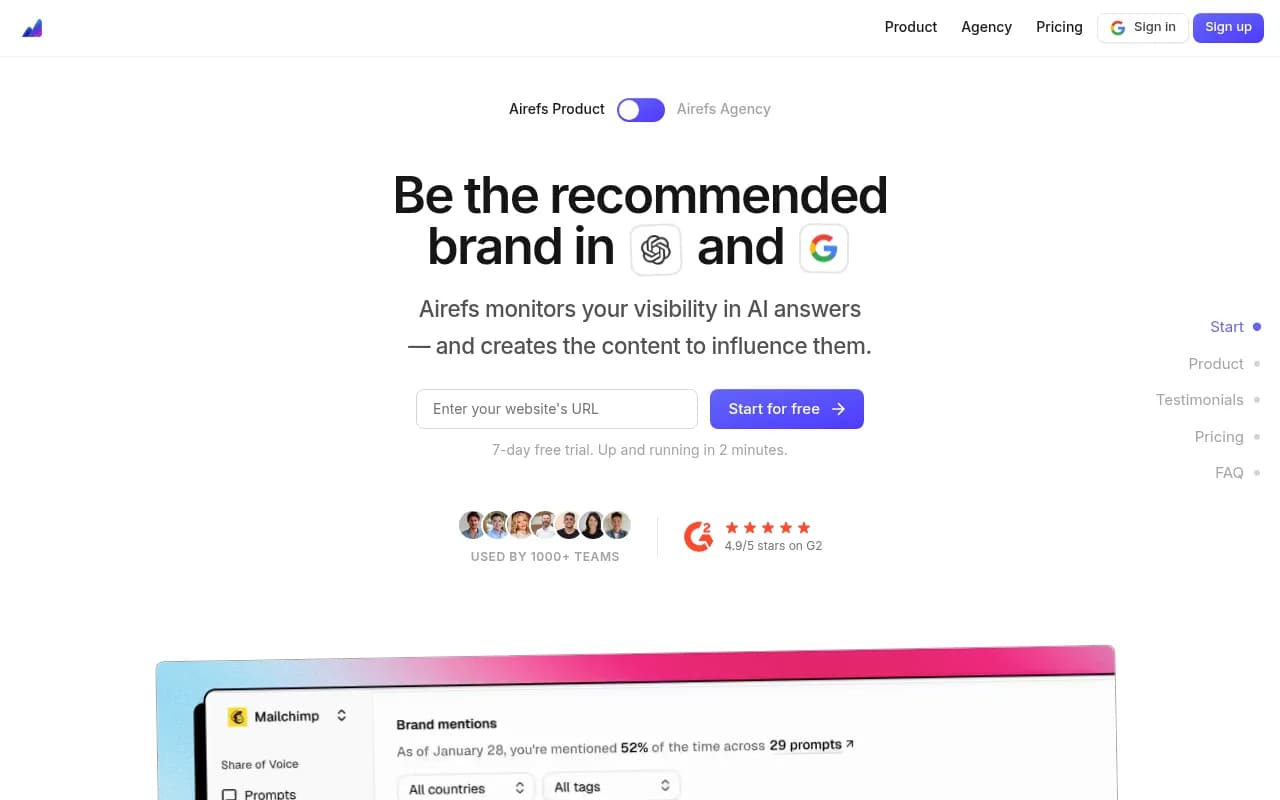
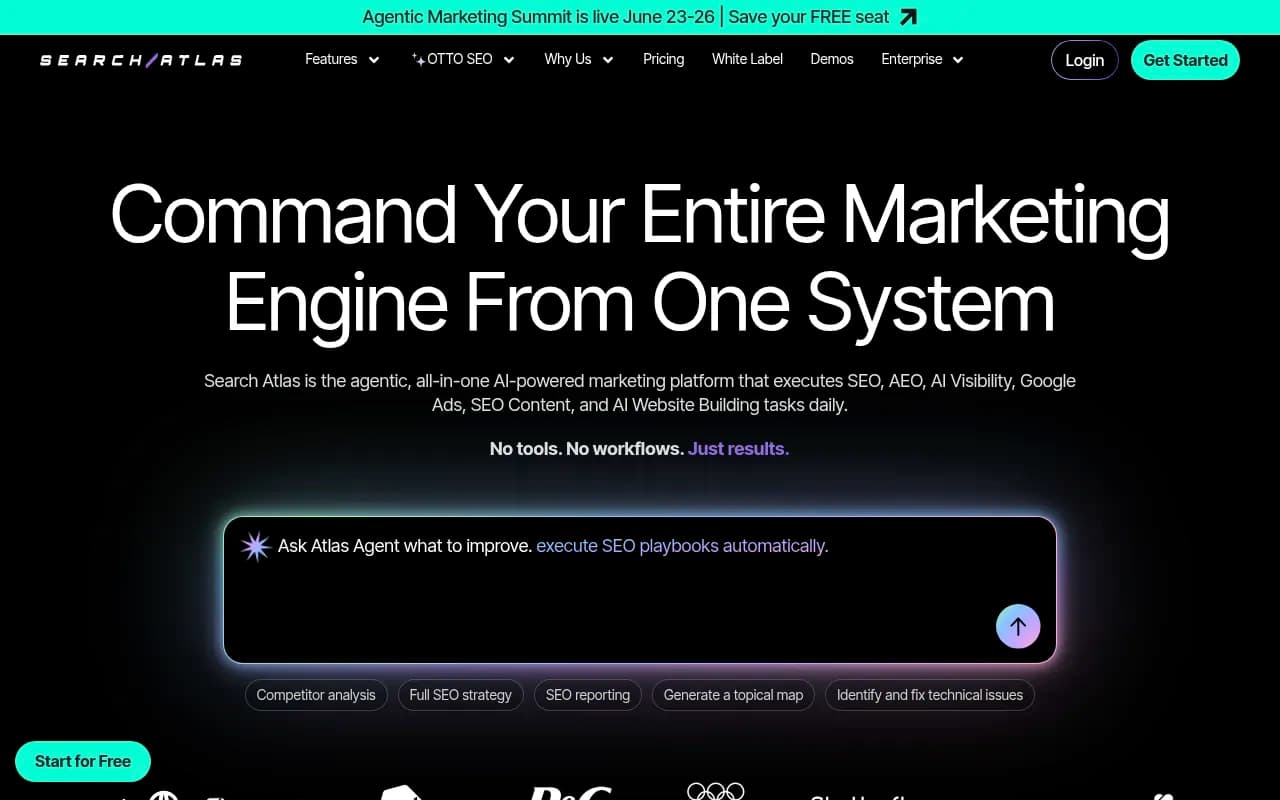
For cheap or niche needs, Airefs (affordable tracking), Elmo (open source, self-hosted) and Search Atlas (an all-in-one SEO suite) are worth checking.

You can browse more options at the GEO software directory.
Comparison table
| Tool | Best for | Tracks citations and sources | Crawler logs | AI traffic analytics | Content creation |
|---|---|---|---|---|---|
| Promptwatch | Networks, agencies, creator businesses | Yes | Yes (Professional and up) | Yes | Yes (Business) |
| Peec AI | Simple tracking with suggestions | Yes | No | Limited | No |
| Otterly.AI | Solo creators on a budget | Basic | No | No | No |
| Profound | Large media brands | Yes | Varies by plan | Varies by plan | No |
| Semrush AI toolkit | Existing Semrush users | Basic | No | No | Separate tools |
| Ahrefs Brand Radar | Existing Ahrefs users | Basic | No | No | No |
Check each vendor's current pricing and plan limits before buying, since they change often.
Your production stack still matters
GEO tools measure and diagnose. They do not edit your audio. The tools in the production roundups feed the text layer that AI engines read.
The Presenc AI guide singles out a few that map well onto GEO work:
- Descript for transcript-based editing and cleaner transcripts you can publish
- Riverside for remote recording with local capture and clean audio
- Castmagic for turning one episode into show notes, chapters, social posts and blog posts
- Adobe Podcast for speech enhancement
If you need written content help beyond your episodes, content optimizers like Surfer SEO and Clearscope sit in the same neighborhood as the SEO tools in our directory.
A practical workflow for one show
Here is a lean way to put this together without turning your podcast into a marketing department.
Step 1: Check where you stand
Run a free visibility scan. Ask ChatGPT, Perplexity and Gemini the questions a new listener would ask. Write down whether you appear, what is said about you, and which sources get cited instead.
Step 2: Build a text home for every episode
Publish a page per episode with a cleaned transcript, a short written summary in the first lines, guest names and a few direct questions the episode answers. Add chapters. Make sure the page is not blocked to AI crawlers. The AI crawler URL inspector and robots.txt generator for AI help here.
Step 3: Make a show landing page and a best-of page
One page that says what the show is, who it is for and who has been on it. One "best episodes about X" page. Both match formats AI cites a lot.
Step 4: Work your YouTube library
Rewrite titles to match real questions. Put the answer at the top of the description. Add chapters and fix captions. Do the back catalog, not only new uploads.
Step 5: Get named elsewhere
Guest appearances, directory listings, interviews and listicles that mention you are the third-party signals AI engines pull from. For Perplexity, add LinkedIn posts. For Google, keep public Facebook and Instagram profiles complete. Skip X.
Step 6: Track, then repeat monthly
Pick 20 to 50 prompts across your topic and your show name. Review monthly. Watch the pages that get cited and do more of that.
Who should pay for what
| Creator type | Budget | What to do |
|---|---|---|
| Hobby or solo show | Free to low | Manual prompt checks, free scans, YouTube and transcript cleanup |
| Full-time solo creator | Low to mid | One lightweight tracker plus episode pages |
| Creator with a product or course | Mid | Platform with traffic attribution and content gap analysis |
| Media network or agency | Mid to high | Multi-project platform, crawler logs, reporting |
| Enterprise publisher | High | Enterprise suite with security and governance |
Common mistakes
- Assuming audio gets cited. It does not. Text does.
- Tracking only the show name. People ask topic questions, not brand questions. Track those.
- Relying on Reddit for ChatGPT. The citation data does not support it any more.
- Copying the same transcript to ten places. Duplicates dilute pages. Keep one canonical page.
- Buying an enterprise platform for one show.
Where this is going
I do not think creators need to become GEO specialists. The work is mostly good publishing hygiene: readable pages, honest titles, answers up front. A tracking tool just tells you if it is working. Pick one that matches your size, run the workflow above for a quarter, and compare before and after.
If you want a human team to handle AI search strategy for a media brand, 1001 SEO Media runs GEO and content programs for publishers and brands.