Key takeaways
- Elmo is the most complete open-source AI visibility tracker right now: MIT license, Docker and PostgreSQL, a REST API, an MCP server, and a hosted cloud option if you tire of running it.
- Voyage (onvoyage-ai) is more of an agentic GEO toolkit than a dashboard. It is interesting, but check its license and setup yourself before committing.
- A DIY tracker on GitHub Actions costs almost nothing to start and teaches you how the metrics work. It is a small example repo, not a product.
- Self-hosted does not mean free. You pay for model API calls, and cost scales with prompts x engines x run frequency.
- Open source suits teams that want data ownership and auditable metrics. Teams that want crawler logs, traffic attribution and content execution usually end up on a hosted platform.
Why self-host an AI rank tracker at all
Most AI visibility tools are SaaS dashboards with per-prompt pricing. That works until you want your prompts and answers in your own database, or you want to read the code that computes a score instead of trusting a vendor's number.
That is the real pitch for open source here. Prompts, responses and metrics live in your own Postgres. You can change how a mention is counted. You can wire it into your warehouse without asking anyone for an export.
The catch is operational. You run the infrastructure, you hold the API keys, and you own the bill. I think that trade is worth it for a fairly narrow group: engineering-minded SEO teams, agencies with privacy-sensitive clients, and anyone who wants to experiment with measurement itself.
A quick disambiguation before we start. "Self-hosted AI" searches are dominated by something else entirely: running open-weight LLMs on your own hardware, like the models ranked in the Onyx self-hosted LLM leaderboard. That is a different problem. This guide is about tools that measure how AI engines talk about your brand, not about running a model locally.
What a tracker has to do
Before comparing projects, it helps to know what you are building or buying. A usable tracker needs to:
- Run a bank of prompts against several AI engines on a schedule.
- Detect whether your brand and competitors are mentioned, and where in the answer.
- Capture the cited sources.
- Store history so you can see trends.
- Report it in a form someone will actually read.
One point from the data matters a lot for DIY builds. According to Promptwatch Data on unique domains per ChatGPT response (Sep 28 to Oct 4, 2026), 47.6% of ChatGPT responses with citations cite 10 or more domains, and only 6% cite three or fewer. A single run of a single prompt tells you very little. Track many prompts, repeat them, and record position and sentiment, not just a yes/no on citation.
Also, ChatGPT's search behavior shifts in steps. Promptwatch's query fanout data shows average searches per response falling from 2.15 in early December to about 1.84 by early March, then to exactly 1.0 in April, with fanout query length dropping from roughly 117 characters to about 53. Prompts that matched last quarter can go stale, so re-audit after major model updates.
Elmo: the open-source default
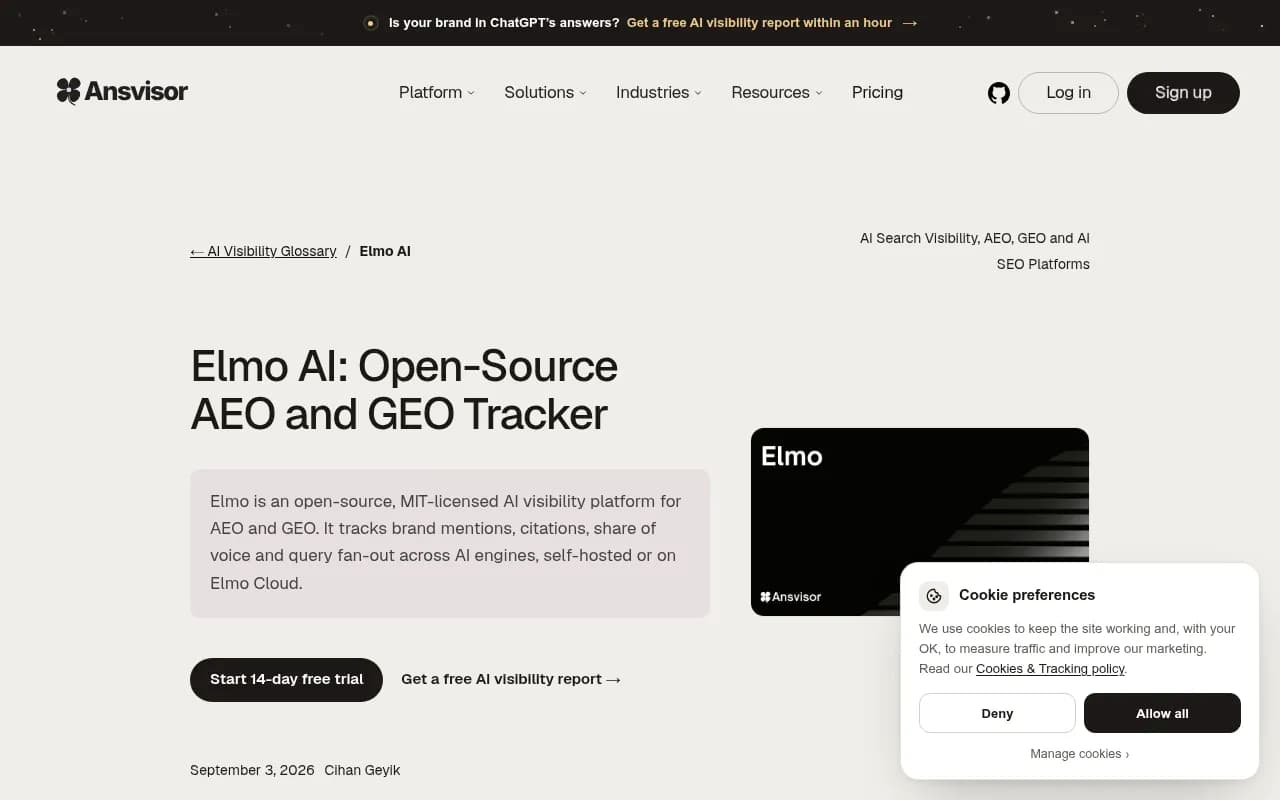
Elmo is published on GitHub at elmohq/elmo under the MIT license. It tracks ChatGPT, Google AI Mode, Google AI Overviews, Gemini, Perplexity, Claude and any OpenRouter model, and turns the results into visibility, share of voice, sentiment and position scores, plus citation and query fan-out analytics and ranked recommendations.

What you get
The self-hosted core runs on Docker and PostgreSQL, deployed with a CLI. There is no license fee and no per-seat charge. Elmo says self-hosting comes with unlimited prompts and every model, as long as you have keys for them.
The agent story is better than I expected from an open-source project. There is a REST API with TypeScript and Python SDKs, an MCP server and an agent skill, so Claude Code, Cursor or Codex can query your data and manage prompts directly. Agencies can white-label it.
What you do not get
Elmo does not do prompt-volume estimates, content generation, shopping-result tracking or geographic breakdowns. It measures what AI says about you and tells you what to change. The writing is on you.
The real cost
"Free" needs an asterisk. You bring API keys for each provider, and scraping consumer apps needs a scraping provider. Those bills scale with prompt count and run frequency. Elmo Cloud is the managed version: it starts with a ChatGPT-only tier and moves up to plans covering any four platforms, more brands and premium models, with unlimited seats plus API and MCP access on every cloud plan. Elmo offers a live demo, but its site does not list a free trial.
One caution on the numbers. The figures people quote for Elmo (462 GitHub stars, 1,158 commits, 14 contributors, 36 releases since July 2025, 374 commits in the last 90 days) come from a comparison page Elmo published itself. They are vendor claims. They look plausible for a young, active project, but check the repo before you rely on them.
Ansvisor, which also publishes open-source code, lists a self-host route from GitHub plus a 14-day free cloud trial. It is worth a look if you want to compare against Elmo, though note it also sells a hosted product and wrote the Elmo explainer I drew from.
Voyage: agentic GEO from onvoyage-ai
Voyage describes itself as the infrastructure layer for Generative Engine Optimization, building open-source infrastructure to monitor, optimize and monetize how AI models represent a brand. Its GitHub org is github.com/onvoyage-ai.
What is in the org
The main tracker repo is voyage-geo-agent, written in Python, with about 385 stars and 22 forks. It is pitched as agentic GEO that autonomously works on your AI search presence across ChatGPT, Claude, Gemini and Perplexity. The pipeline runs in four steps: research and analyze, site audit, content generation, then automated delivery, where agents open pull requests against your repos.
There is also gtm-engineer-skills, a Claude Code skill for AEO/GEO scoring with 16 foundational checks and 6 intelligence dimensions, at about 1.4k stars.
How I would treat it
Voyage is broader than a tracker. It tries to close the loop from measurement to content to a pull request, which Elmo explicitly does not. That is appealing and also riskier. Automated content that lands in your repo needs review.
Two cautions. First, the org page does not list a license or pricing, and I did not verify the voyage-geo-agent repo's license, setup or feature depth, so read the repo before building on it. Second, Voyage also pursues something it calls GEOFi, micro-payments for AI citations built on Coinbase's x402 protocol. That is a separate business from rank tracking.
Do not confuse it with Voyage AI (voyageai.com), the embeddings and reranker company. Different outfit entirely.
DIY: a GitHub Actions tracker
If you want to understand the mechanics, a small DIY tracker is a good weekend project. The public example repo razz1000/ai-search-rank-tracking-example-repo shows the pattern.
How it works
You fork the repo and add API keys. It samples OpenAI, Claude, Perplexity and Gemini, all optional and web-grounded. Setup is a prompt bank plus a brand config, and it scores mentions and citations. History is stored as JSONL files in a data folder, a REPORT.md is generated, and a weekly scheduled workflow runs the whole thing.
Honest limits
It is a small example repo: 9 commits, created Aug 1, 2026, last commit Aug 14, 2026. Treat it as a starting point, not a maintained product.
The commit history does contain a useful lesson. On Aug 10 the author switched the Claude model from claude-opus-5 to claude-haiku-4-5, with a basic web_search variant, to cut cost, and the tracker now records which model produced each result. That is exactly the pitfall to plan for. Cost is prompts x engines x run frequency, and model choice can swing it by a large factor. Logging the model per result also keeps your trend lines honest when you change it.
Extending a DIY build
A few additions make it far more useful:
- Run each prompt several times and average, since single answers vary.
- Store the full response and the cited URLs, not just a score.
- Track position in the answer, not only presence.
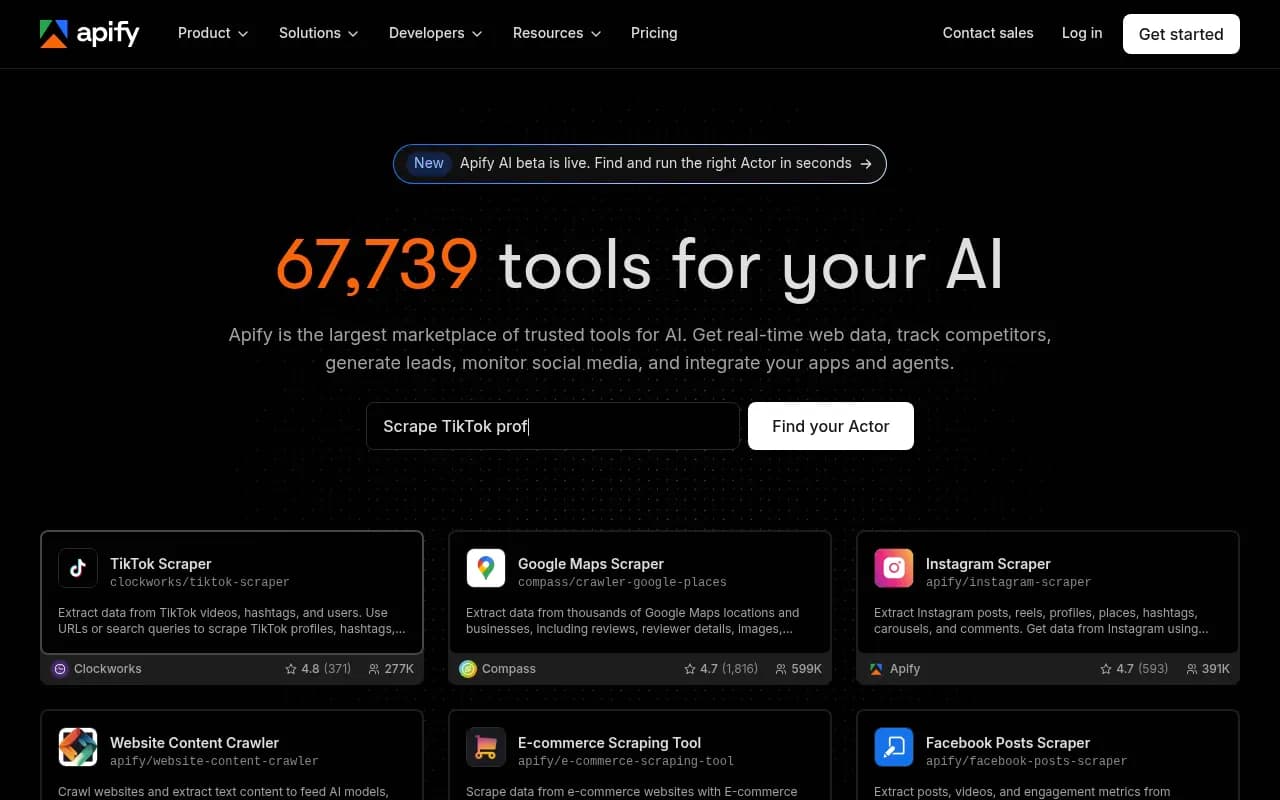
- Add scraping of the consumer interface if API answers differ from what users see. A scraping provider such as Apify or Bright Data can handle that part, and Firecrawl is handy for pulling your own pages into clean text.


Other open-source and lightweight options
The catalog has a couple more worth knowing about.
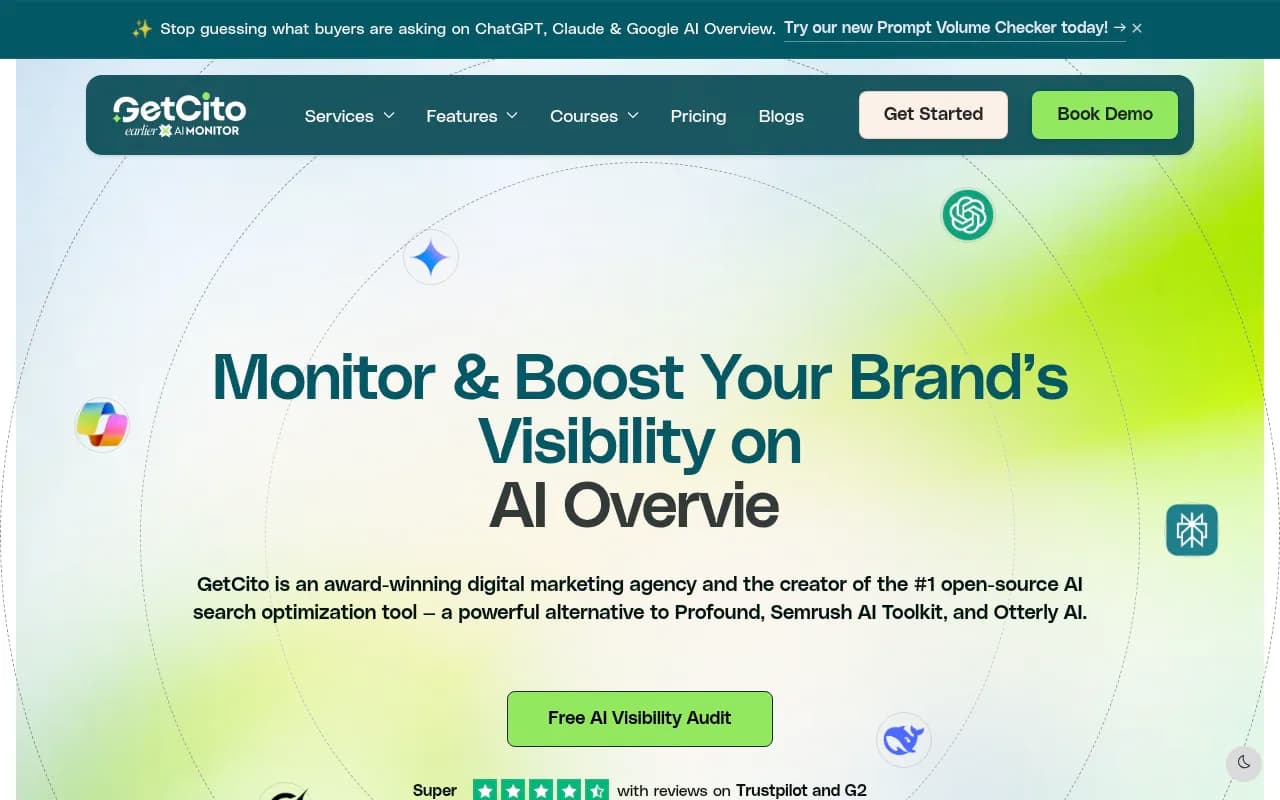
AI Monitor is described as an open-source brand mention tracker for AI answers. It is narrower than Elmo, which can be a feature if all you need is mention tracking.

AI Rank Tracker from DEJAN is an experimental language-association graph for LLM entities. It is a research-flavored tool rather than a prompt-monitoring dashboard, so do not expect it to replace the others.
For wider browsing, the directory at ai-rank-tools.com lists AI rank tracking tools beyond open source.
Side-by-side comparison
| Option | License / model | Engines covered | Strengths | Gaps | Best for |
|---|---|---|---|---|---|
| Elmo | MIT, self-host or Elmo Cloud | ChatGPT, AI Mode, AI Overviews, Gemini, Perplexity, Claude, OpenRouter models | Full dashboard, API, MCP, white-label | No prompt volumes, content generation, shopping or geo breakdowns | Teams that want data ownership with a real UI |
| Voyage (voyage-geo-agent) | Not listed on org page; verify | ChatGPT, Claude, Gemini, Perplexity | Agentic loop from audit to pull requests | Unverified license, maturity and setup | Engineering teams exploring automated GEO |
| GitHub Actions example repo | Public example repo | OpenAI, Claude, Perplexity, Gemini | Cheap, transparent, easy to modify | 9 commits, not maintained, no UI | Learning and prototypes |
| AI Monitor | Open source | AI answers (see repo) | Simple mention tracking | Narrower scope | Small, focused monitoring |
| Ansvisor | Open source plus cloud | ChatGPT, Gemini, AI Overviews, AI Mode, Bing AI Mode | Self-host option and 14-day cloud trial | Vendor also sells hosted product | Comparing against Elmo |
What self-hosting really costs
The license is free. Everything else is not.
- Model API calls for every engine you track.
- A scraping provider if you want what users see in the consumer apps rather than API answers.
- A server and database, plus someone to patch and monitor them.
- Engineering time to adapt the tool when engines change behavior.
The formula to keep in your head is prompts x engines x runs per period. Doubling your prompt bank and moving from weekly to daily runs multiplies the bill by around 14, before you notice. Start small, measure spend for a month, then scale.
I would also budget for drift. When ChatGPT changed how often and how it searches, any tracker built on stale prompt phrasing quietly produced less useful data. Someone has to own that.
When a hosted platform makes more sense
Open-source trackers answer one question well: what do AI engines say about us? They mostly stop there. If you also need to know whether AI crawlers can read your site, whether AI sends traffic that converts, and what to publish to close gaps, you are building a lot yourself.
That is where an end-to-end platform like Promptwatch fits. It tracks the real interfaces of ChatGPT, Google AI Overviews, Gemini, Perplexity and others, adds IP-verified AI crawler logs and visitor analytics, and has a Content Agent that writes and publishes pages against your visibility gaps, then checks whether they got crawled and cited. Business starts at $579/mo, Essential at $95/mo, and the details are at promptwatch.com/pricing. There is a 7-day free trial and a free AI visibility report if you want a baseline first.

Other hosted trackers worth a look if you want a simpler monitor without running infrastructure include Peec AI and Otterly.AI.


For a wider map of products, the GEO software directory is a good place to browse.
How to choose
| If you... | Pick |
|---|---|
| Want a polished open-source dashboard and an API for agents | Elmo, self-hosted |
| Do not want to run servers but like the codebase | Elmo Cloud |
| Want to experiment with automated GEO and pull-request workflows | Voyage's voyage-geo-agent, after checking the license |
| Want to learn how tracking works for near-zero cost | The GitHub Actions example repo |
| Need crawler logs, traffic attribution and content execution | A hosted platform such as Promptwatch |
My own rule of thumb: start with Elmo if you have an engineer who will own it, prototype with the DIY repo if you are not sure measurement is worth the effort, and move to a hosted platform when the work shifts from measuring to fixing.
Setup checklist for any self-hosted tracker
- Write 30 to 50 prompts that reflect how buyers actually ask, mixing organic, brand-specific and competitor comparison types.
- Pick two or three engines first, not all of them.
- Run each prompt multiple times and average the results.
- Log the model, date and full response for every run.
- Watch cost for a month before adding prompts.
- Re-audit your prompts after any big model release.
- Compare your results to a hosted baseline, such as a free AI visibility report, to sanity-check your numbers.
Final take
Open-source AI rank tracking is real now, not a toy. Elmo is the strongest of the lot, Voyage is the ambitious wildcard, and a GitHub Actions repo is a fine way to learn. Just remember that the license is the cheap part. The API bills, the maintenance and the prompt hygiene are where the actual cost lives.