Key takeaways
- Most AI visibility platforms price around multi-model coverage, so if you only care about one LLM (say, just ChatGPT, or just Google AI Overviews), you're often paying for tracking you'll never look at.
- Single-engine or low-cost entry tools like Otterly.AI ($29/month), GenRank, and Knowatoa are built for exactly this use case, while bigger suites like Profound or Evertune make more sense once you need cross-model comparisons.
- Watch out for stale pricing claims floating around the web. Profound, for example, no longer offers a $99 ChatGPT-only starter tier. It's gone to a free trial or custom enterprise pricing.
- If there's a real chance you'll need to expand beyond one model later (and most brands eventually do), a platform with a genuinely useful free tier, like Promptwatch, lets you start narrow and scale without switching tools.
- Price per prompt and per response matters more than the sticker price. A $29/month tool with 15 prompts can end up costing more per data point than a $95/month plan with 50.
Why "just one LLM" is a real use case, not a cop-out
I get why most roundups assume you want ChatGPT, Gemini, Perplexity, Claude, and Google AI Overviews all tracked at once. For a lot of brands that's the right call. But plenty of businesses have a narrower problem. A B2B SaaS company whose buyers live inside ChatGPT doesn't necessarily care what Grok says about them. A local service business watching Google's AI Overviews eat into map-pack traffic doesn't need Claude citation data. And agencies running a quick visibility check for a prospective client often just want a fast, cheap answer for one engine before committing to anything bigger.
The mistake is assuming you need the same tool everyone recommends for "complete" AI visibility. You don't. You need the cheapest, most accurate tool for the one model you're actually trying to win in.
What changes when you narrow the scope
When multi-model coverage is off the table, the calculus shifts:
- Price per prompt becomes the real comparison metric, not the headline subscription price.
- Depth beats breadth. A tool that does deep query fan-out analysis on ChatGPT alone is more useful than one that does shallow tracking across nine models.
- You can usually get away with a lighter free or low-cost tier, since you're not paying for tracking infrastructure you won't use.
- Switching cost matters. If there's any chance you'll need a second model in six months, check whether the tool's free tier or entry plan can simply be upgraded, rather than requiring a full platform migration.
The options, compared
| Tool | Model(s) tracked | Entry price | Free tier | Best for |
|---|---|---|---|---|
| Otterly.AI | ChatGPT, Perplexity, Google AI Overviews | $29/month | 14-day trial | Budget-conscious single-engine monitoring |
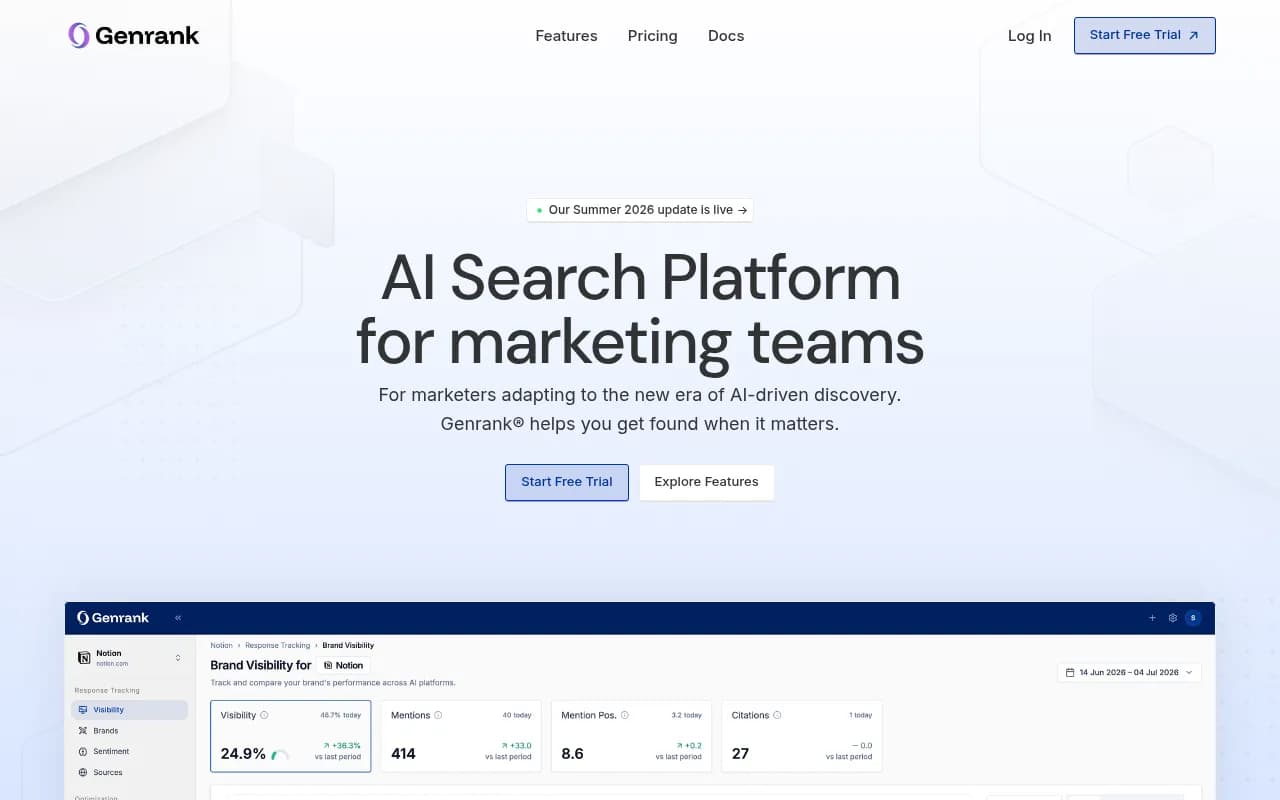
| GenRank | ChatGPT only | Low-cost, credit-based | Limited free checks | Teams that only care about ChatGPT mentions |
| Knowatoa | Google AI Overviews focused | Mid-tier | Trial available | Businesses worried about AI Overviews eating organic traffic |
| Peec AI | Multi-model, but usable narrow | €89/month | 7-day trial | Agencies wanting daily prompt tracking, can be scoped to one engine |
| Promptwatch | ChatGPT, Gemini, Claude, Perplexity, AI Overviews, AI Mode, Grok, and more | Free (Explore) / $95/month (Essential) | Yes, 10 prompts, ChatGPT only | Starting narrow with room to scale into full GEO later |
| Profound | ChatGPT, Claude, Google AI, Perplexity | Free trial (3 engines) / custom enterprise | Yes, limited trial | Enterprises that need cross-model data eventually |





The best picks by scenario
If your only concern is ChatGPT
ChatGPT is still the default answer engine for most consumers, and it's also the model most AI visibility tools were built around first. If ChatGPT is genuinely the only platform you care about, GenRank is built specifically to track and optimize brand mentions there, without the overhead of tracking five other models you'll ignore. Otterly.AI's Lite plan also covers ChatGPT (plus Perplexity and AI Overviews as a bonus) for $29/month, which is hard to beat if you just want a monthly number and some citation data.
Worth knowing: ChatGPT's citation behavior shifts more often than people expect. Promptwatch's data on ChatGPT citation drops after the GPT-5.3 rollout showed average citations per response falling across every model variant right after the update in March 2026. If you're only tracking one engine, these kinds of platform-level shifts can look like a visibility crash in your own dashboard when it's actually a model-wide change. A tool that shows you citation trend context, not just your own numbers, saves you from a panicked Slack message to your CMO.
If you're watching Google AI Overviews or AI Mode
For local businesses, publishers, and anyone whose organic traffic depends on classic Google search, AI Overviews is the one to watch, not ChatGPT. Knowatoa is built around exactly this: tracking how and whether your brand gets surfaced in Google's AI-generated answers. Semrush's AI Visibility Toolkit also covers AI Overviews well if you're already a Semrush customer, though it's overkill if AI visibility is all you need from it.
Content type matters a lot here. Promptwatch's research on AI Overviews citation types in July 2026 found product pages had overtaken listicles as the most-cited format by late July, a reversal from earlier in the year. If your content strategy is still built around listicles because "that's what AI cites," that assumption is already out of date for Google's surface specifically.
If you want the option to expand later without switching tools
This is the case most people underestimate. You start out thinking "I only need ChatGPT," and three months later your CEO asks how you're doing in Gemini because a competitor just announced a partnership and got name-dropped everywhere. If there's any realistic chance of that happening, it's worth starting with a platform that has a genuinely free single-model tier and an upgrade path, rather than a tool that locks you into one engine permanently.
Promptwatch's Explore plan is free and covers 10 prompts on ChatGPT only, which is enough to get a real read on a single-model problem before you pay anything. If you outgrow it, the Essential plan at $95/month unlocks all LLM tracking (Gemini, Claude, Perplexity, Grok, DeepSeek, Mistral, Copilot, AI Overviews, AI Mode) plus crawler logs, AEO article generation, and MCP/API access, without migrating your data or prompt history anywhere. That matters more than it sounds. Re-setting up prompt tracking, historical baselines, and competitor sets in a new tool a few months in is genuinely annoying.
If you're an agency doing one-off checks for prospects
Agencies often need a fast, cheap single-model read before pitching a client on a bigger GEO retainer. Peec AI's daily prompt tracking works here even though it supports multiple models, because you can simply scope your prompt set to the one engine the prospect cares about and ignore the rest. Otterly.AI works for the same reason at a lower price point.
Pricing traps to watch for
A few things I'd flag before you commit to anything:
First, headline pricing often hides prompt limits that make the real cost much higher. A $29/month plan with 15 prompts sounds cheap until you realize you need 40 to cover your actual brand and competitor set, and the next tier up costs three times as much.
Second, old pricing pages get cited constantly in "best of" roundups that don't get updated. Profound used to have a $99/month ChatGPT-only starter plan that a lot of 2025-era articles still reference. That tier is gone. Profound's current structure is a free trial covering three engines, or custom enterprise pricing, neither of which is a true single-model, low-cost option anymore. Check the actual pricing page before you budget around a secondhand blog post.
Third, some "single LLM" tools are really multi-model tools with a cheap entry tier that happens to only unlock one engine. That's not necessarily bad, it just means you're paying for infrastructure built for breadth even if you're only using a sliver of it. Sometimes that's fine (it means room to grow), sometimes it's just paying for complexity you don't need.
A quick decision framework
- Only ChatGPT, budget under $50/month: GenRank or Otterly.AI Lite
- Only Google AI Overviews/AI Mode: Knowatoa, or Semrush's toolkit if you're already paying for Semrush
- Might need to expand to other models within the year: Promptwatch's free Explore tier, upgrading to Essential when needed
- Agency doing one-off, per-client checks: Peec AI or Otterly.AI, scoped per engagement
- Enterprise with eventual multi-model ambitions regardless of today's single-engine focus: Profound, once you're ready to pay enterprise rates
If you're still weighing options beyond what's covered here, the GEO software directory at bestgeosoftware.com has a wider list of platforms by category, and surferstack.com covers broader software comparisons if AI visibility turns out to be just one piece of a bigger toolstack decision.
FAQ
Do I really need a dedicated tool if I only care about one AI model?
You can do a rough manual check by just asking the model your own brand prompts repeatedly and logging answers in a spreadsheet, but it doesn't scale past a handful of prompts and you'll miss shifts that happen daily. Even the cheapest dedicated tools automate that daily check and store historical trend data, which is the part that actually matters.
Will single-model tracking tools eventually force me to upgrade to multi-model?
Some will, some won't. Pure single-model tools like GenRank stay narrow by design. Tools like Otterly.AI, Peec AI, and Promptwatch support multiple models but let you scope usage to one, meaning there's no forced upgrade, just an option if you want it.
Is tracking one model enough to actually improve my AI visibility?
It's enough to know whether you have a problem on that one model. Fixing it usually still requires the same groundwork: clear entity signals, citable content, and a presence on the sources that model pulls from. For ChatGPT specifically, Promptwatch's top ChatGPT citation sources data is a useful sanity check on which domains actually get cited in your category before you invest in content for a format that model rarely pulls from anyway.